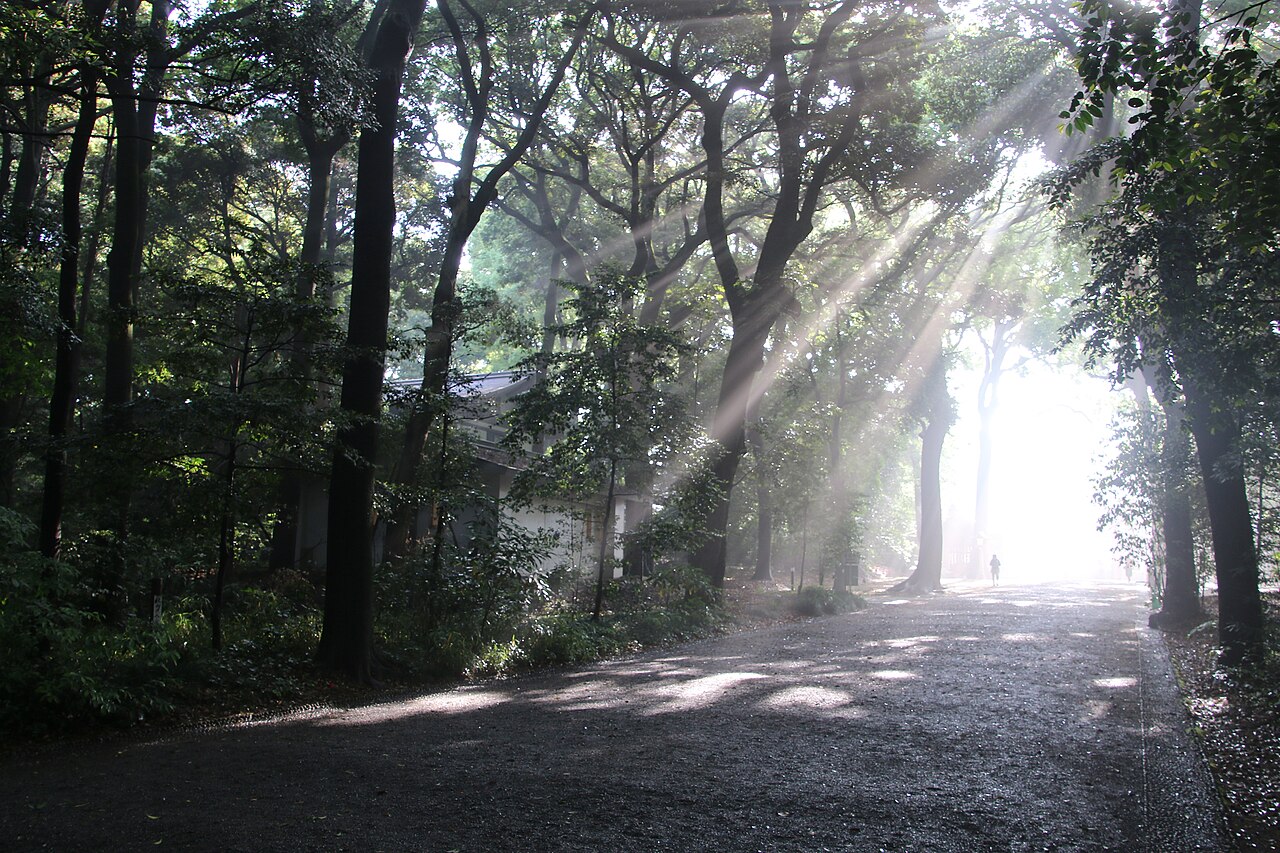
Beyond the torii gate of Meiji Jingu in Shibuya lies a sacred precinct surrounded by a large forest, made by planting trees donated from across the country. A walk here takes in the forest approach, the main shrine hall, and the Inner Garden with Kiyomasa's Well and the irises that Emperor Meiji had planted for Empress Shoken. In late autumn, Japanese pampas grass sways in the wind at the edge of the South Pond in the Inner Garden. The trees of Yoyogi Park form a dense green forest together with those of the neighbouring shrine, and Yoyogi Hachimangu adds a second shrine forest to the same walk.
With limited time, start with the forest approach and the main shrine hall, which stands near the centre of the precinct; the Inner Garden suits those who come for the well, the pond and the irises.
Walking the Forest Approach to Meiji Jingu
The precinct of Meiji Jingu is the size of fifteen Tokyo Domes and has three entrances. That scale shapes the walk: the main shrine hall stands near the centre of the precinct, so the approach from each entrance is about the same length. Passing the torii gate means entering a sacred precinct surrounded by a large forest.
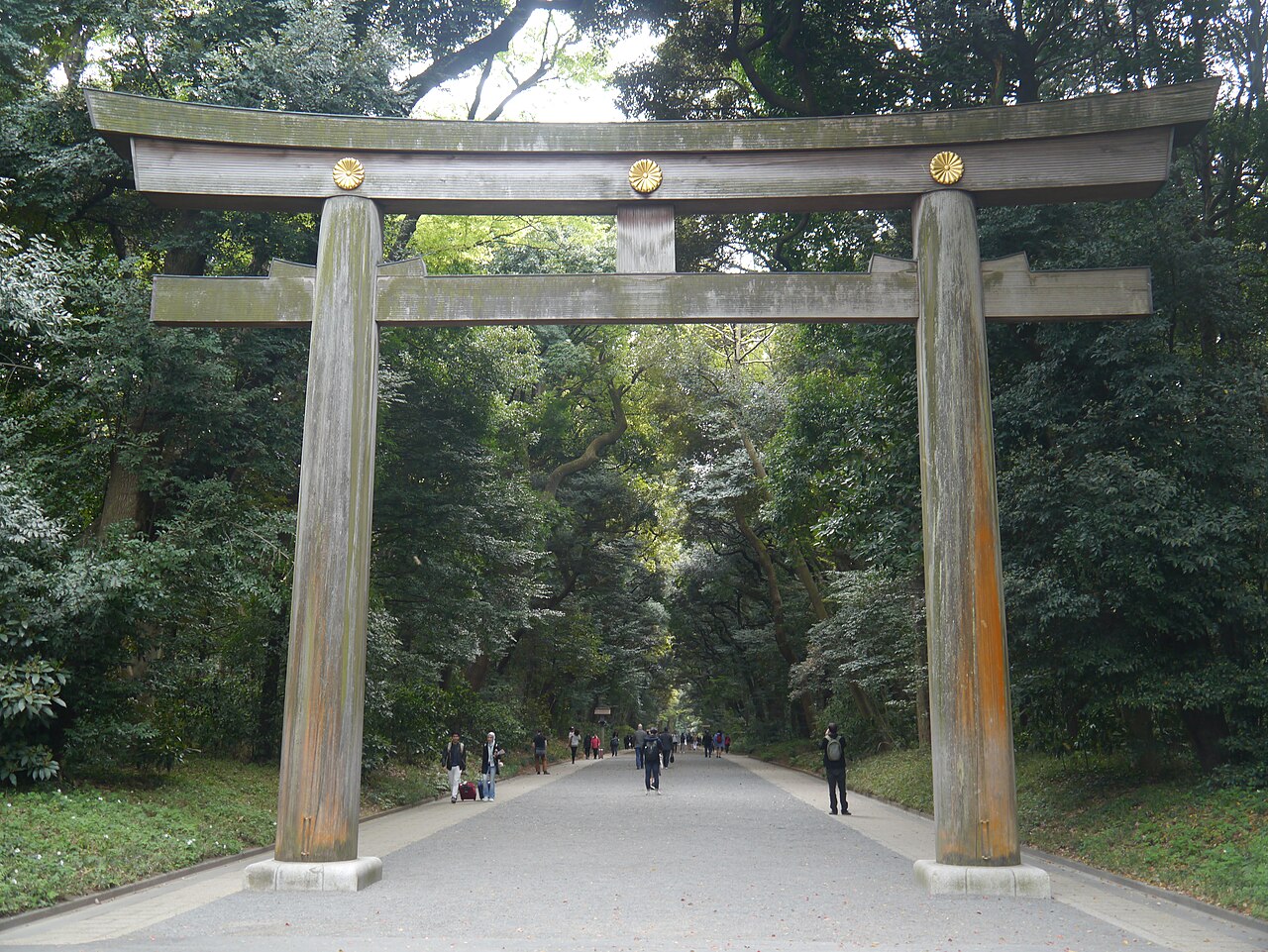
The forest was made by planting trees donated from across the country. Forestry experts chose evergreen broadleaf trees such as shii, kashi and kusu as its main constituent trees. When air raids burned many of the shrine buildings, the forest became a refuge for people and suffered no major damage. The wooden torii gate of Meiji Jingu is built in the Myojin style.
Walkers who care more about trees than buildings can treat the approach itself as the visit, since the forest was planted by design and came through the air raids without major damage.
The Main Shrine Hall and the Morning and Evening Offerings
The main hall of Meiji Jingu was damaged in the war and later restored. A morning offering, asa-mike, and an evening offering, yu-mike, are performed at the shrine.
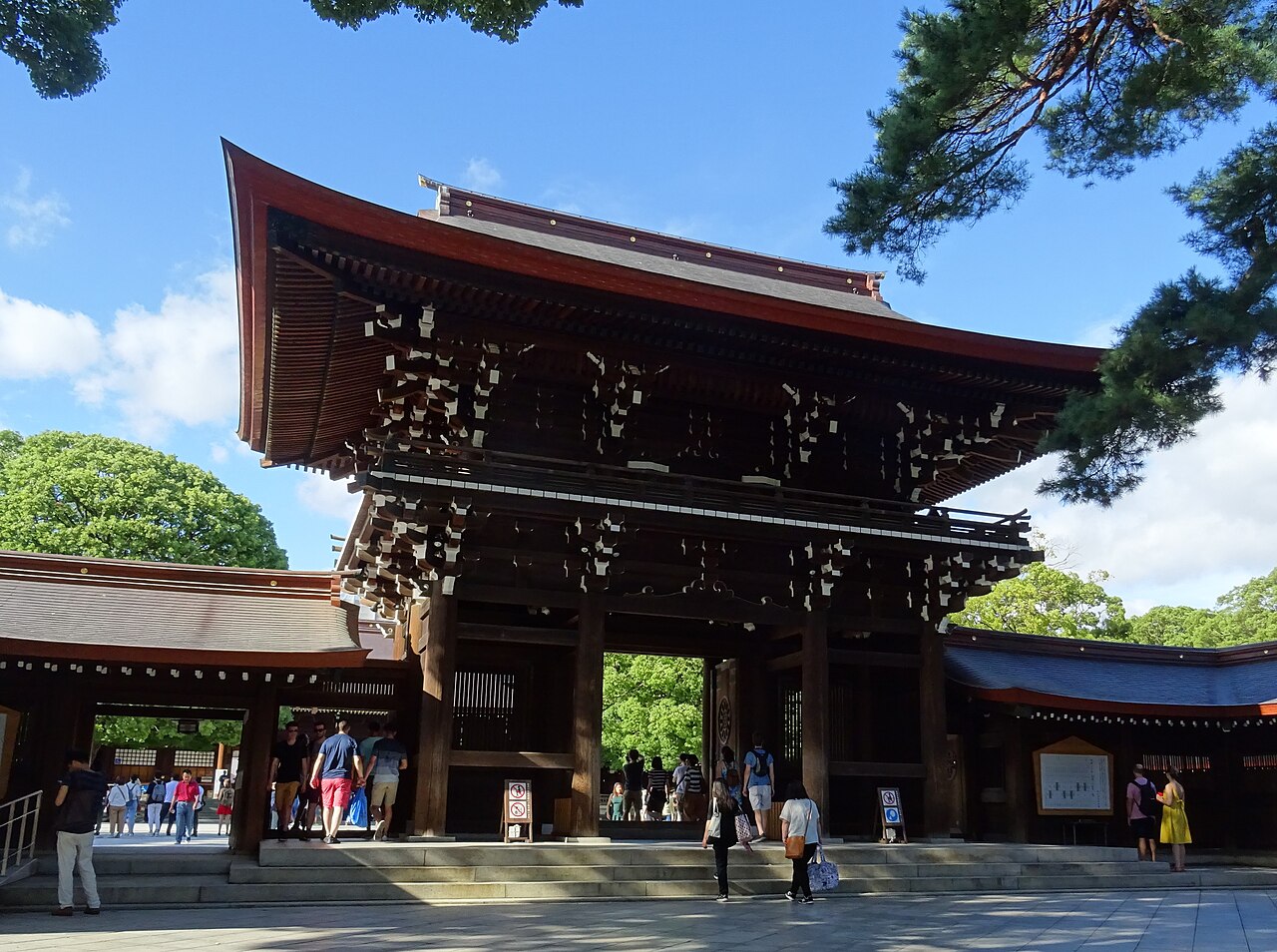
Other buildings in the precinct are tied to the enshrined deities. One was relocated from a hall connected with them. Kakuuntei was built by Emperor Meiji as a resting place for Empress Shoken and was later rebuilt.
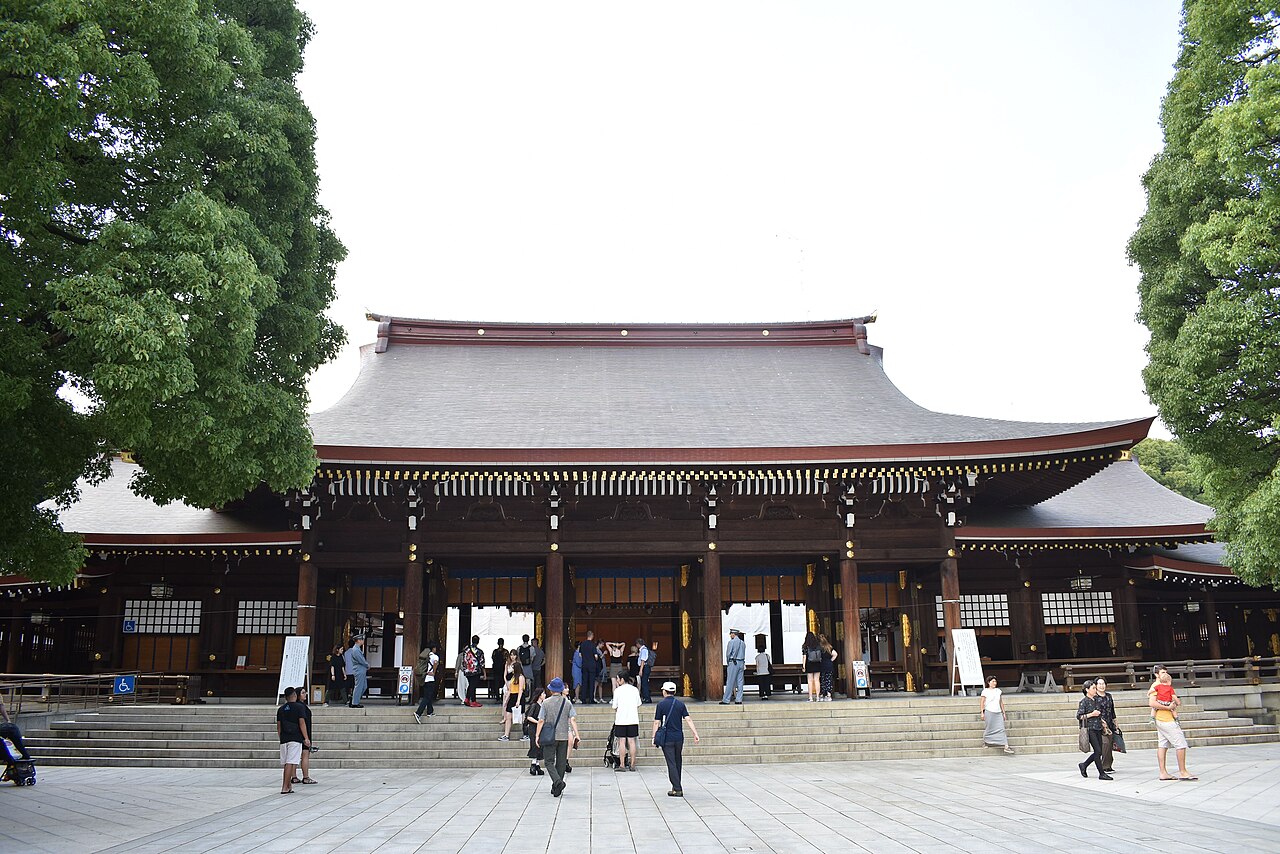
North of the main shrine building is a lawn area where visitors can spend time on the grass on fine days. The precinct also has cafes for use after worship. On a fine day the lawn is the place to pause after worship; otherwise the cafes serve the same purpose.
Meiji Jingu Gyoen: Irises, Kiyomasa's Well and the South Pond
Meiji Jingu Gyoen, the Inner Garden, has been the garden of the Kato and Ii families' lower residences since the early Edo period and retains traces of Musashino woodland. Emperor Meiji had irises planted here for Empress Shoken. Clear water welling up from Kiyomasa's Well feeds the iris field, which lies within a woodland of mixed trees. The garden also has a tea room and is open year-round.
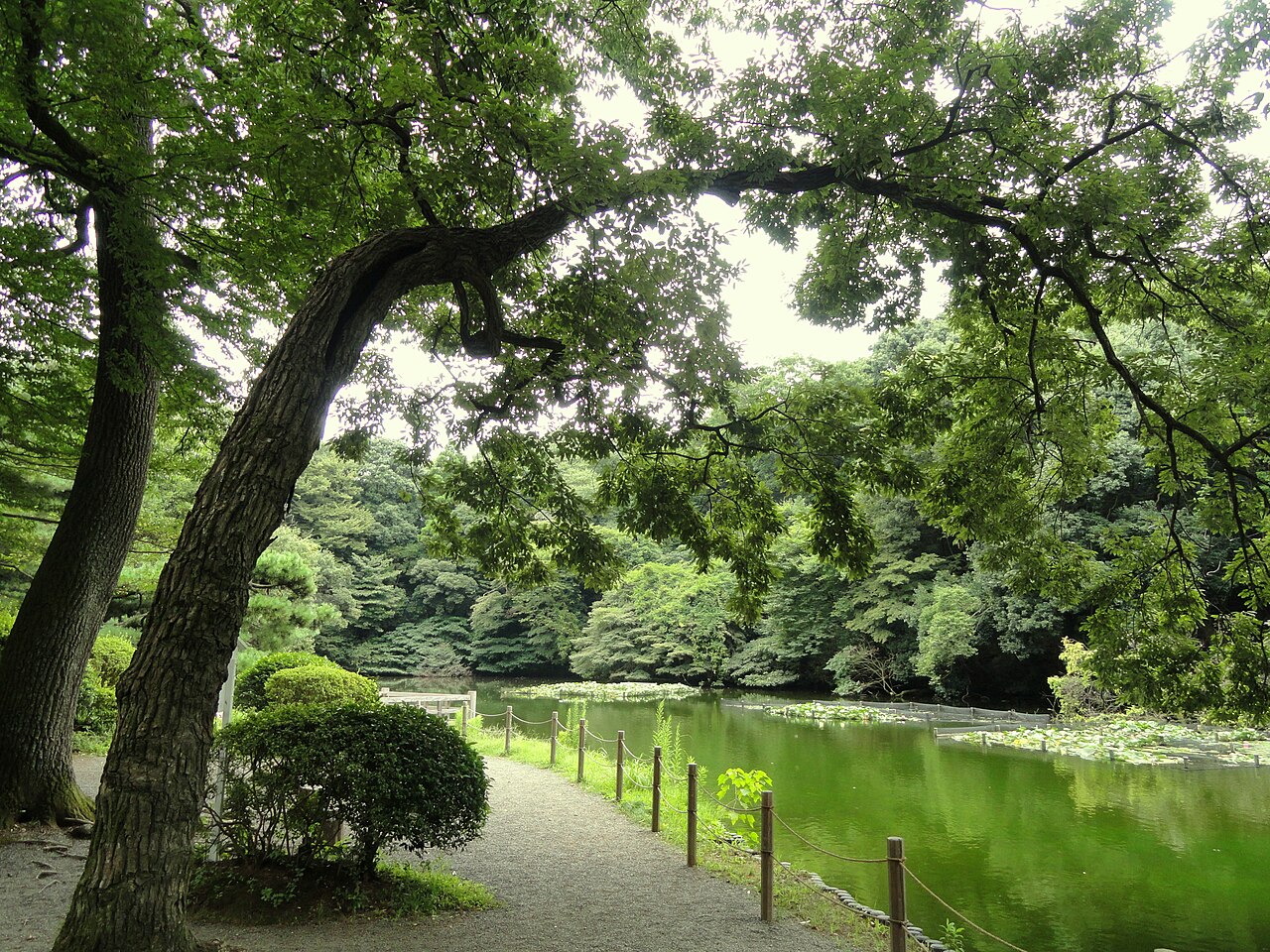
Kiyomasa's Well, Kiyomasa-no-ido, is said to have been dug by Kato Kiyomasa. It gives an average of sixty liters of water a minute at about fifteen degrees through all four seasons, and the flow continues all year. That steady supply is what a walker follows through the garden: the well is the source of the South Pond, and the water runs on under the Shinkyo bridge on the south approach into the Shibuya River.
At the South Pond, water lilies and kōhone flowers bloom in summer. Wild birds bathe around the pond, and migratory birds visit from late autumn to early winter. In late autumn, pampas grass sways at the edge of the pond, Senryo berries turn bright red in the thicket beside the approach path, and Tsuwabuki starts to bloom with yellow flowers in the shade of trees on the west lawn. Summer suits those who come for the pond flowers, and late autumn those who come for the birds and the berries.
Meiji Jingu Museum, the Treasure Museum and Yoyogi Park
Meiji Jingu Museum is an exhibition facility that stores items related to the enshrined deities, and it is the place to go for a deeper understanding of the shrine. The Treasure Museum stands in the northern part of the grounds, an early reinforced-concrete building modelled on the azekura style. It is open to the public only for limited periods, so a plan is better built around the Museum than around the Treasure Museum.
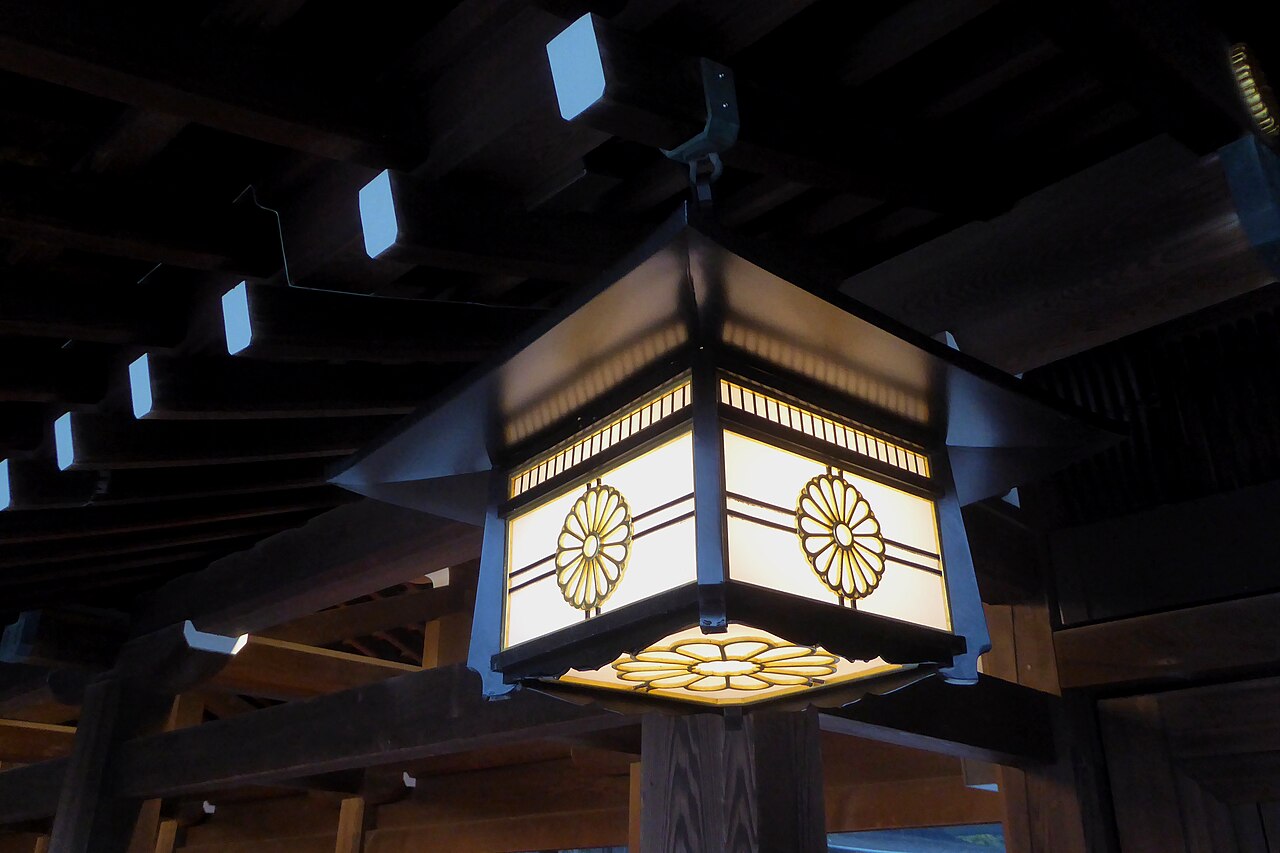
For a meal during the visit, Forest Terrace Meiji Jingu has restaurants, cafes and a food court.
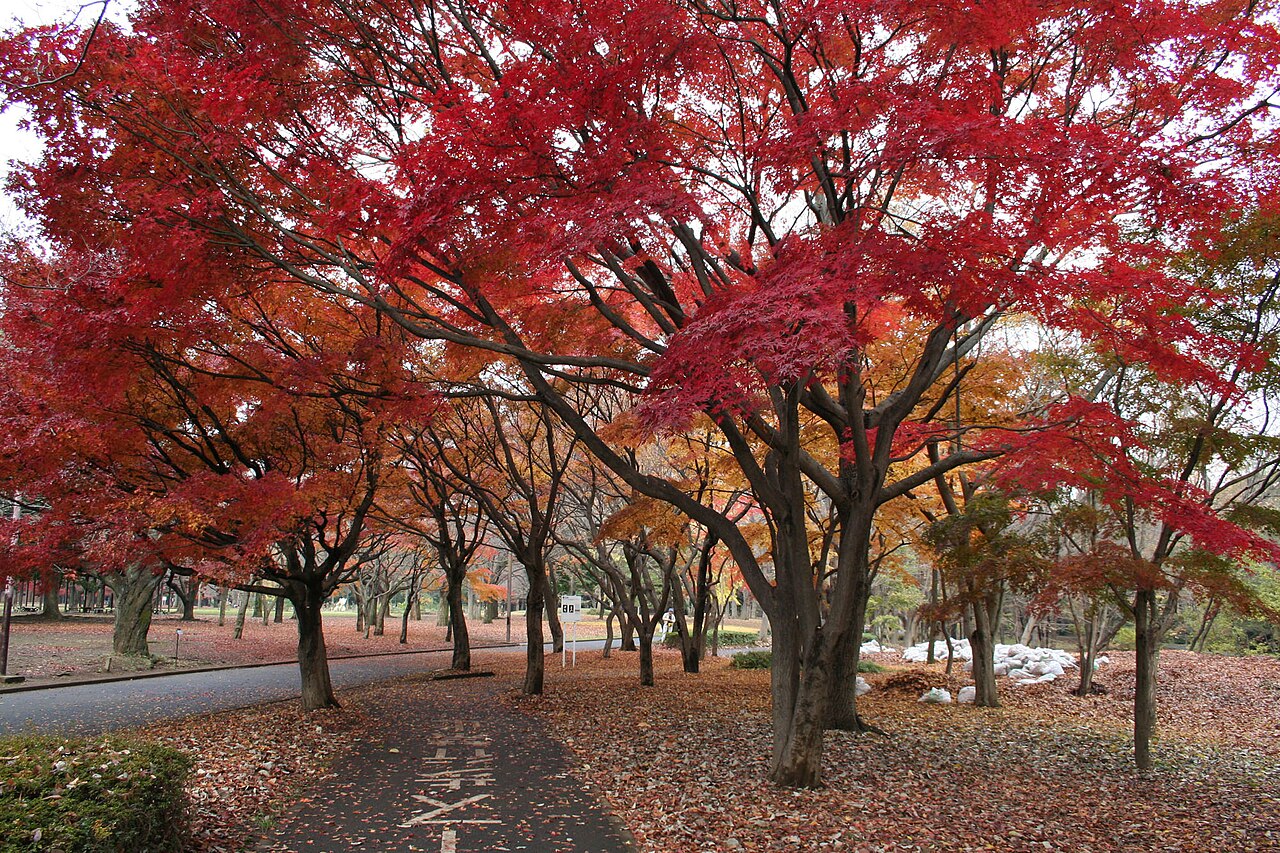
Yoyogi Park was formerly the Army Yoyogi parade ground, became the US military housing site Washington Heights after the war, and turned into a park after serving as the athletes' village of the Tokyo Olympics. Its trees, now fully grown, form a dense green forest together with those of the neighbouring Meiji Jingu. The park also has a water facility with fountains and a water corridor. To the right at the back of the Harajuku Gate stands the Olympic memorial lodge, once the Dutch athletes' lodging and now a café.
Yoyogi Hachimangu and the Jomon Dwelling Site
Yoyogi Hachimangu enshrines Emperor Ōjin, who is Hachiman. The shrine is said to have originated when a small shrine was built at the site of Moto-Hachiman and Tsurugaoka Hachimangu was enshrined there. Its grounds are a natural forest in Shibuya ward with varied vegetation, including Japanese chinquapin, camphor, zelkova and ginkgo trees, and various birds and insects can be seen in each season.
An excavation survey here found Jomon-period dwelling remains and the pillar holes dug in them, together with many earthenware and stone tools. The ancient dwelling remains have been restored, and some of the excavated items are kept in the exhibition hall next to the kagura hall. That pairing of a restored dwelling and its finds makes the shrine worth adding for anyone interested in archaeology as well as worship.
A lantern in the grounds was dedicated by residents who moved away to make way for the army parade ground where Yoyogi Park now stands, and it is inscribed with words of parting. On New Year's Eve, a bonfire kept by Boy Scouts lights the dark precinct, and children's festival music is performed at the kagura hall.
Festivals and Seasons: Yabusame, Irises and the Autumn Garden
Yabusame at Meiji Jingu is traced back to a ritual in which Emperor Kinmei prayed before the shrine of Usa Jingu and had targets shot from horseback. The Butokukai made a yabusame offering at the shrine, and an all-Japan association later made the offering every year.
At the spring and autumn grand festivals, a special stage is set up in front of the shrine and a Satsuma biwa performance is offered; Emperor Meiji was fond of Satsuma biwa. Culture Day is Emperor Meiji's birthday, and an imperial envoy is dispatched from the Imperial Court for the annual festival.
The rituals of Meiji Jingu follow the seasons. One ritual at the start of summer changes the deity's offerings, robes among them, to summer ones, and another at the start of winter changes them to winter ones. Other rituals purify the sins and impurities of the past half year and, as the new year approaches, of the past year. Early on New Year's Day, people pray for the Imperial House and the nation and renew the year's vows, and the Tsukinamisai monthly ritual continues through the year.
For the garden rather than the rituals, the choice is between the iris season and late autumn at the South Pond.
Getting to Meiji Jingu, Yoyogi Park and Yoyogi Hachimangu
New to rural buses and one-man trains? See how to ride them, step by step.
The entrances of Meiji Jingu are a short walk from JR, subway and private railway stations.
| Route | Item | Detail |
|---|---|---|
| Each Meiji Jingu entrance to the main shrine building | Walk | About ten minutes |
| JR Harajuku Station, Omotesando ticket gate west exit, to Meiji Jingu Museum | Walk | Five-minute walk |
| Meiji-jingumae (Harajuku) Station exit two, Tokyo Metro Chiyoda and Fukutoshin lines, to Meiji Jingu Museum | Walk | Five-minute walk |
| JR Yamanote Line Harajuku Station to Yoyogi Park | Walk | Three-minute walk |
| Yoyogi-koen Station, Tokyo Metro Chiyoda Line, to Yoyogi Park | Walk | Three-minute walk |
| Yoyogihachiman Station, Odakyu Line, to Yoyogi Park | Walk | Six-minute walk |
| Yoyogi-hachiman Station, Odakyu Line, to Yoyogi Hachimangu | Walk | About a five-minute walk |
| Yoyogi-koen Station exit toward Yoyogi-uehara, Tokyo Metro Chiyoda Line, to Yoyogi Hachimangu | Walk | About a five-minute walk |
If you would rather stay overnight, places to stay in Tokyo is a place to start.
To add a guided walk or city tour, browse tours and activities in Shibuya.
Hours and Fees
| Place | Item | Time or fee |
|---|---|---|
| Meiji Jingu Gyoen | Opening, March to October | Nine in the morning to half past four in the afternoon |
| Meiji Jingu Gyoen | Opening, November to February | Nine in the morning to four in the afternoon |
| Meiji Jingu Gyoen | Garden maintenance contribution | Five hundred yen; open all year without closed days |
| Meiji Jingu Gyoen | Iris peak viewing period | Early to mid June |
| Meiji Jingu Museum | Opening | Ten in the morning to half past four in the afternoon; last admission thirty minutes before closing |
| Meiji Jingu Museum | Closed | Every Thursday, but open if Thursday is a public holiday |
| Meiji Jingu Museum | Admission | One thousand yen general; nine hundred yen for high school students and younger |
| Yoyogi Hachimangu | Shrine office reception | Nine in the morning to five in the afternoon |
| Yoyogi Hachimangu | Setsubun festival | The third of February |
| Yoyogi Hachimangu | Yoimiya and Reitaisai | The twenty-second and twenty-third of September |
Fees and hours were checked against official sources on 18 November 2026.
Thinking of staying overnight?
Compare places to stay near Tokyo, Japan →
Disclosure: This post may contain affiliate links. If you book through them, we may earn a commission at no extra cost to you.