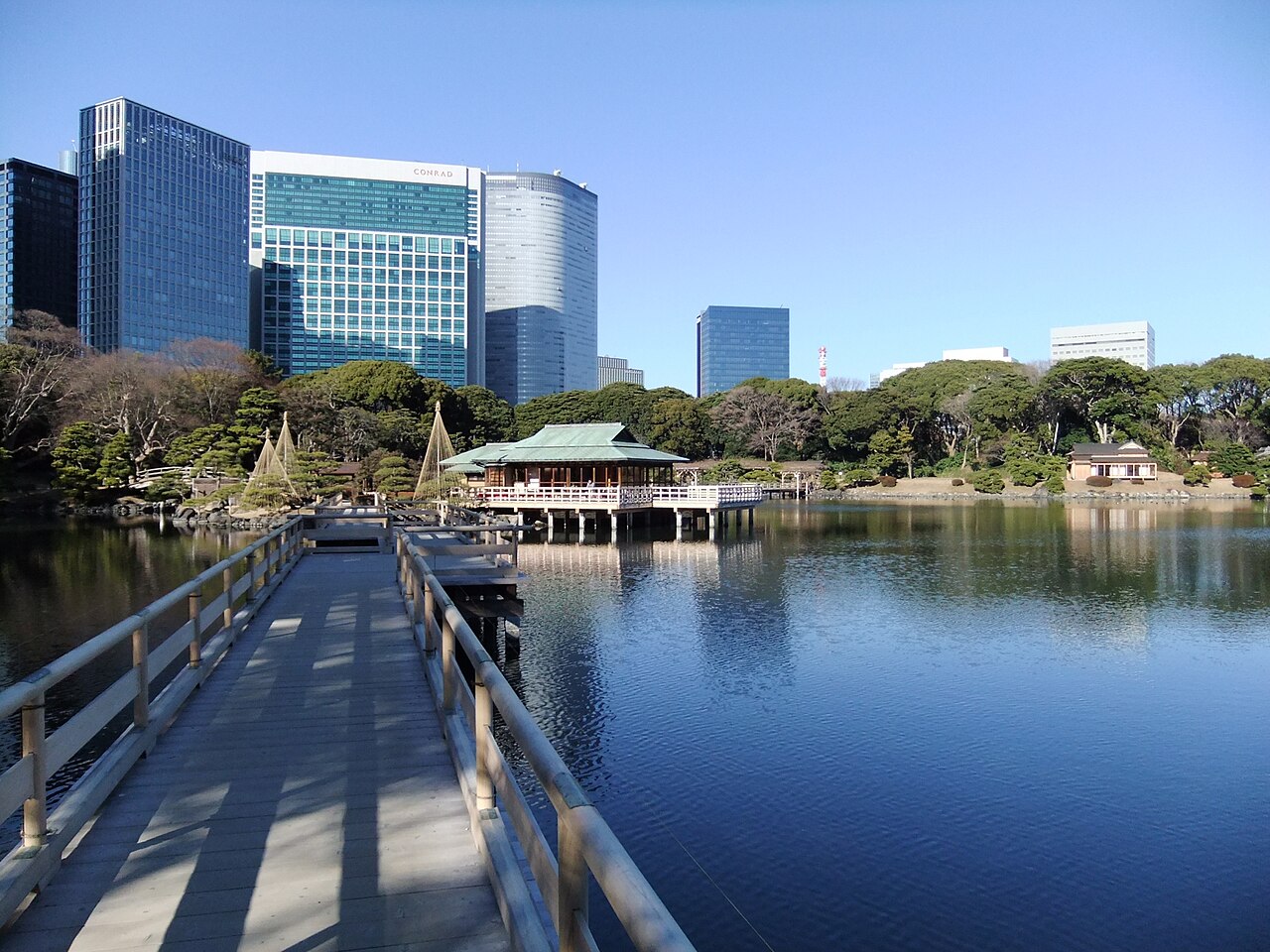
Hama-rikyu Gardens began when Matsudaira Tsunashige, the younger brother of the fourth shogun Ietsuna, reclaimed land from the sea at a former hawking ground of the Tokugawa shogun family and built a villa there. The garden was finished at the time of the eleventh shogun, Ienari, and has remained basically the same down to the present time. For anyone who wants to see a shogun family's garden in a layout that has changed little since it was finished, that continuity is the reason to come.
The Tidal Pond: Sluice Gates, Tide and the Saltwater Shore
The tide, more than any planting, is what sets this pond apart from the ponds of other gardens.
Watching the sluice gates is the way to understand the tidal pond, because they are opened and shut as the tide comes in and goes out to regulate the water level. The pond water is drawn from Tokyo Bay. It is the only remaining seawater pond in Tokyo. Among the Edo-period gardens of the city, no other has a seawater pond.
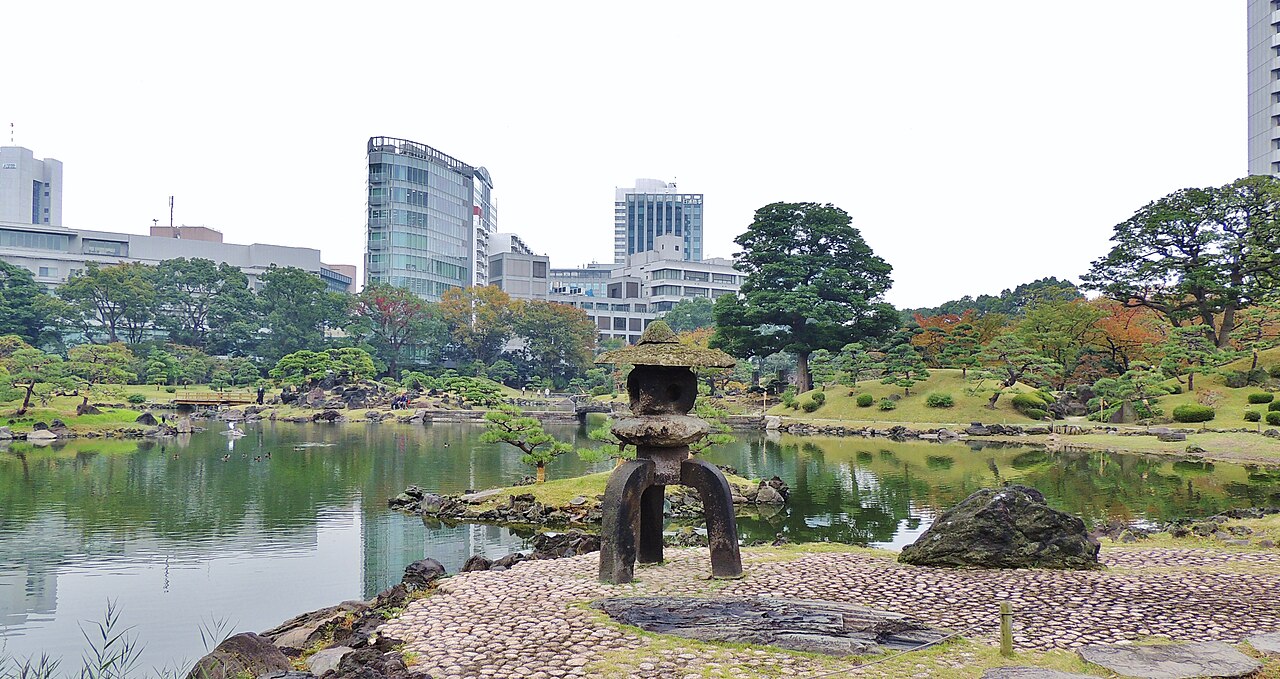
Looking among the rocks and stones placed around the pond turns up Benkei crabs, which live among them. Barnacles are attached to the same rocks. Saltwater fish live in the pond itself, including mullet, sea bass, goby and eel. In winter, migratory birds such as tufted ducks come to the pond.
The Teahouses and the Cypress Bridge to Nakajima
For a look inside restored buildings, start with the teahouses and the cypress bridge that leads to Nakajima.
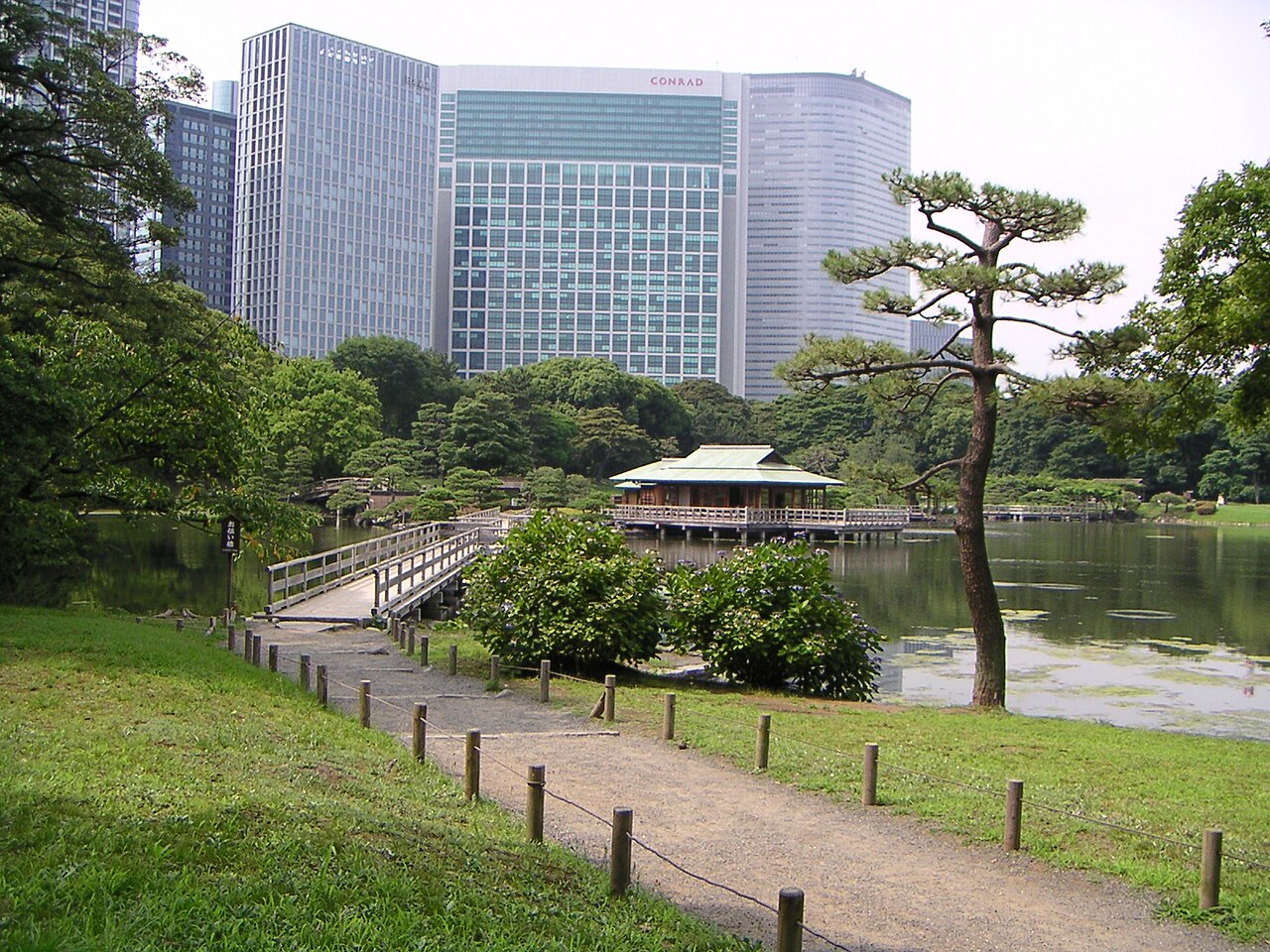
Crossing O-tsutai-bashi is how visitors pass between Kono-ji Shima and Nakajima. The entire bridge is made from hinoki, a Japanese cypress. Matcha is served at the teahouse on Nakajima, at the end of the crossing.
Looking at Matsu-no-ochaya, Tsubame-no-ochaya and Taka-no-ochaya means looking at reconstructions. The three teahouses were faithfully restored based on historical records. On some event days, people involved in the reconstruction explain anecdotes and highlights on site. Volunteer guides also explain the garden's history and highlights.
Taking off shoes is part of the visit when the teahouse interiors are shown for an event. Visitors enter Matsu-no-ochaya and Tsubame-no-ochaya, view the interior and listen to explanations. A guided tour of the teahouses is also held.
Pines and the Gardeners Who Tend Them
For seeing gardeners at work, and not just the trees they shape, the pine care demonstrations are the events to plan around.
Watching staff make a yukitsuri snow-rope is possible at viewing sessions held at times, where they explain the method while working on two black pines in front of visitors. Yukitsuri protects tree branches with ropes so they do not break under the weight of snow. Tokyo has little snowfall, and there the ropes go mainly on pine trees to create a winter landscape.
Watching midori-tsumi shows another side of pine care, in which new pine buds are picked off to adjust the shape of the tree. Gardeners demonstrate and explain the work at certain events. Branches and pine cones from before and after the care have been displayed, and visitors could watch the work being done up close beside the pines. Anyone may watch the demonstration.
Looking at the large old pine means looking at a tree planted when the sixth shogun, Ienobu, renovated the garden. It has survived to the present day. The old black pine has thick branches that extend low.
A Garden of Flowers: Rape Blossoms, Cosmos and Spider Lilies
For colour through the year, the flower field and the flower tree garden are the two places to head for.
Walking through the flower field in spring means walking among rape blossoms. Yellow cosmos and cosmos bloom there from summer to autumn. In some years white, pink, orange and yellow multicolour cosmos have been seen in the field, together with autumn leaves of the surrounding plum and cherry trees.
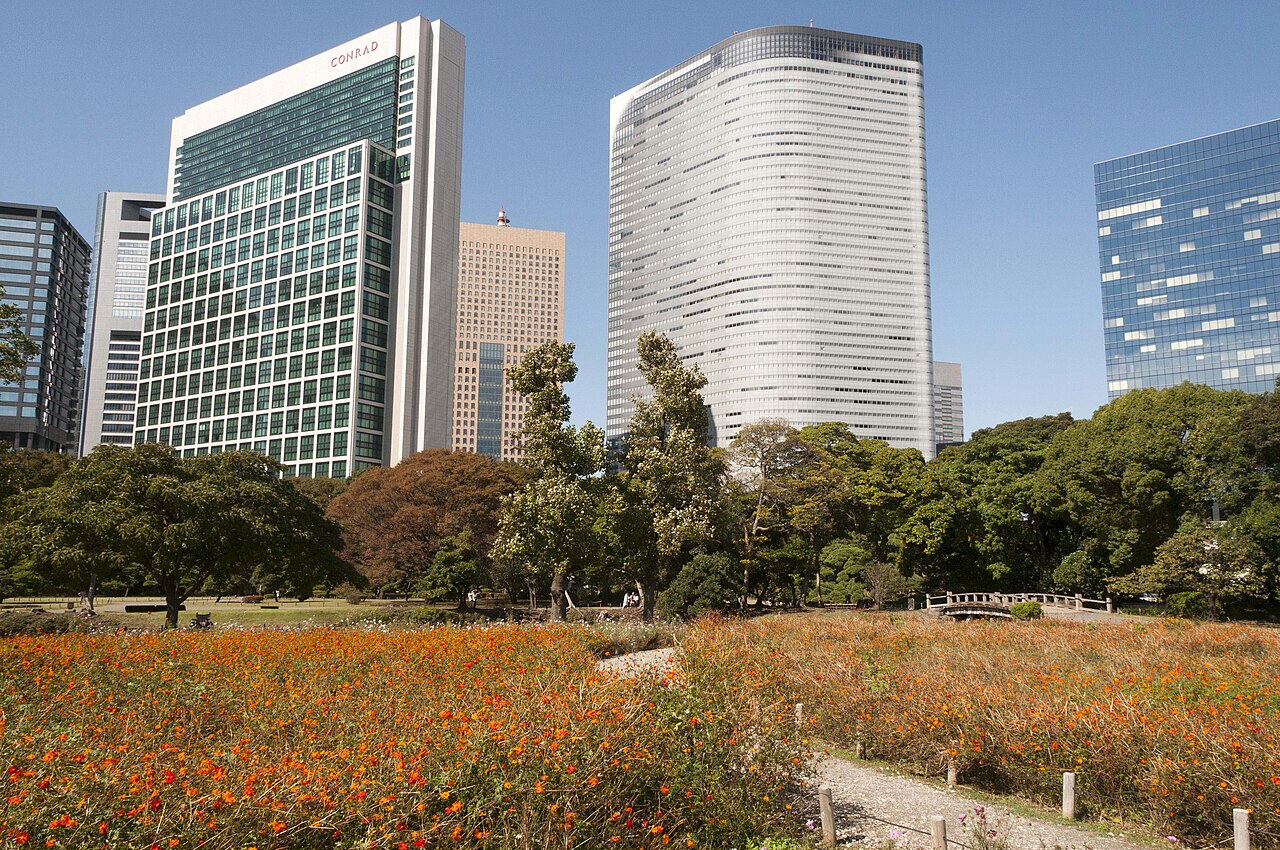
Smelling usugi-mokusei, an osmanthus that gives off a pleasant scent, is a reason to step into the flower tree garden. Spring flowers in vivid colours also bloom in that garden. Elsewhere in the grounds, higanbana, or spider lilies, and hagi, or bush clover, can be seen.
Checking the flower calendar helps in choosing a season. Its summer list includes crape myrtle and hydrangea, its autumn list spider lilies and Japanese maple, and its winter list peony and sasanqua. A Cherry blossom Festival is listed as the recommended spring event, and a Colored leaves Festival as the recommended autumn event.
Looking for peonies leads to the Peony Garden, which is planted with different types of peonies. Peony appears on the calendar's winter list. Late-blooming cherry trees are also among the garden's cherries.
After Dark and Under the Hawks: Moon Viewing, Falconry and Seasonal Events
On nights when the garden is lit and on certain event days, the lit paths and the old hawking ground become the reason to come.
Walking the garden at night is possible when it is lit up in time with the moon viewing. Garden paths and trees are faintly lit, and the staging uses light and shadow. A guided tour that introduces the teahouses and covers night-specific sights is also held at these times.
Listening to a flute is part of the evening at the moon-viewing platform, where moon-viewing dumplings and autumn vegetables are offered. Traditional performances including noh, satokagura, shakuhachi, shamisen and koto have been held daily during the event, with one or two performers on a rotating basis. Anyone planning around an evening event can look at places to stay in Tokyo before fixing a date.
Watching falconry, a traditional hawking technique, is possible at certain events in the garden, which was a shogun family hawking ground. Duck-hunting sites are also located in the garden. Garden staff explain the history of the riding-ground remains and the duck-hunting site while walking around them.
Trying archery has been offered at events, with association members instructing visitors in how to aim and in detailed movements. At the riding-ground remains, a horse is shown with their commentary. The demonstration covers how to ride in the Japanese equestrian style and the gaits.
Joining a guided walk is another way to go round the grounds. Volunteer garden guides lead a walk around the garden. Garden staff also guide visitors around what is a Tokugawa family villa that survives from the Edo period.
Getting to Hama-rikyu Gardens, Hours and Fees
New to rural buses and one-man trains? See how to ride them, step by step.
The boat from Asakusa lands at the garden, and a boat-and-garden tour is one way to pair the two. The times and prices below are as listed by the garden and the boat operator.
| Item | Details (as listed) |
|---|---|
| Boat from Asakusa | adults one thousand one hundred eighty yen, children four hundred seventy; about thirty-five minutes; disembark only; garden admission included |
| Children and adults on the boat | children are six to under twelve; adults twelve and over |
| On foot from the stations | seven minutes on foot from Toei O-edo Line Shiodome or Tsukiji-shijo Station, or from Yurikamome Shiodome Station |
| From Hamamatsucho Station | fifteen minutes on foot |
| Hours | nine to five, last entry four thirty; closed December twenty-ninth to January first |
| Admission | three hundred yen; one hundred fifty for ages sixty-five and over; free on May fourth and October first |
| Guides | free garden guide on weekends and holidays at eleven and two; English-language guide on weekends and the second and fourth Mondays at eleven |
Thinking of staying overnight?
Compare places to stay near Tokyo, Japan →
Disclosure: This post may contain affiliate links. If you book through them, we may earn a commission at no extra cost to you.