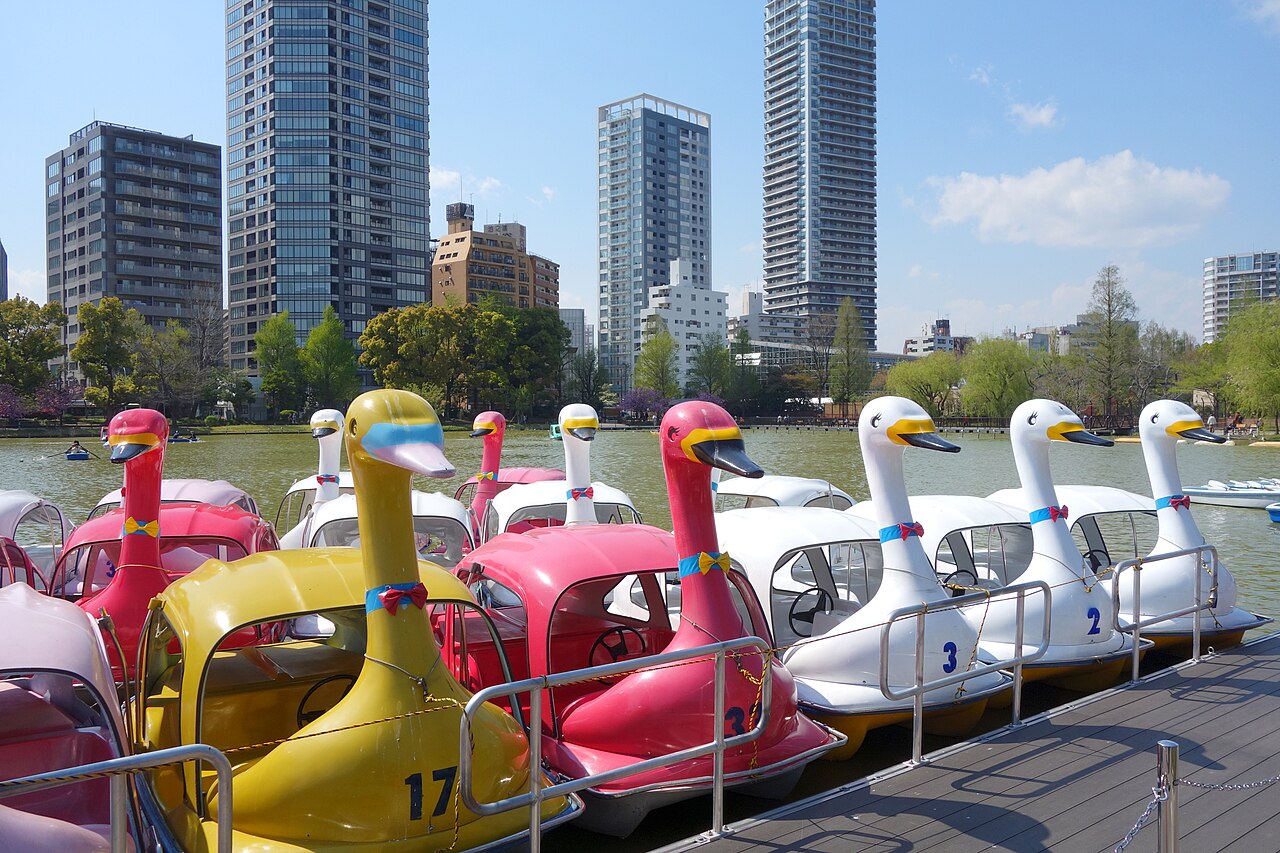
Visitors to Ueno Park can see cherry blossoms, then azaleas and satsuki, lotus flowers spreading across Shinobazu Pond, and colored leaves on the trees. At Ueno Zoo, an animal cart circles the Panda Forest in the West Garden. Kitchen cars sell light meals and drinks in the grounds of the Tokyo National Museum. The same grounds contain historic buildings and outdoor sculptures, which can be seen at any time.
The place suits visitors who want flowers, shrine carvings, animals and museum meals on one outing, and it sorts into three parts: the pond and its trees, the shrine with its peony garden, and the zoo with the museums.
Shinobazu Pond, Cherry Blossoms and Ginkgo Leaves: Ueno Park Through the Seasons
Shinobazu Pond has lotus that can be seen across its whole area. The flowers open in the early morning and gradually close toward midday. The Benten-do hall on the pond stands in an octagonal form, so that it can be visited from all four sides of the water.
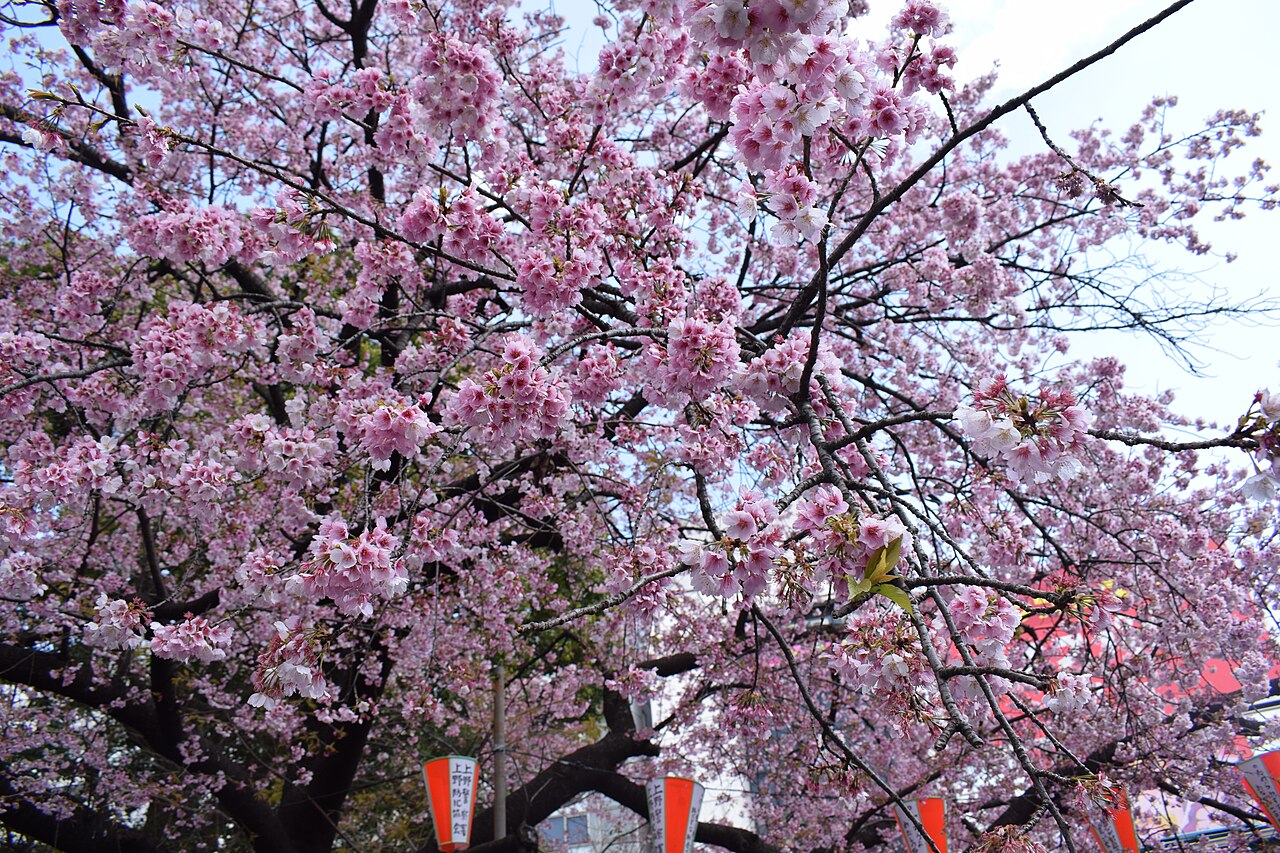
Kanhizakura trees at Ueno Park produce bell-shaped deep crimson flowers in early spring. Camellia flowers appear basically red, with tubular five-petaled blooms. Echizen narcissus can also be seen among the plants here, which gives a walk three flower shapes to tell apart: a bell, a tube and a narcissus.
Ueno Park ginkgo leaves turn bright green in summer and change to golden yellow before falling in late autumn. The hazenoki is an autumn seasonal word in haiku. At Ueno Daibutsu, the face of the Buddha is the part that is preserved, and a pagoda was built in the wish for its reconstruction.
The lotus is a sight for the early morning, because its flowers close toward midday, whereas the ginkgo leaves change over the year, from bright green to golden yellow before they fall.
Ueno Toshogu and Its Peony Garden: Dragon Carvings, Kagura and Winter Peonies
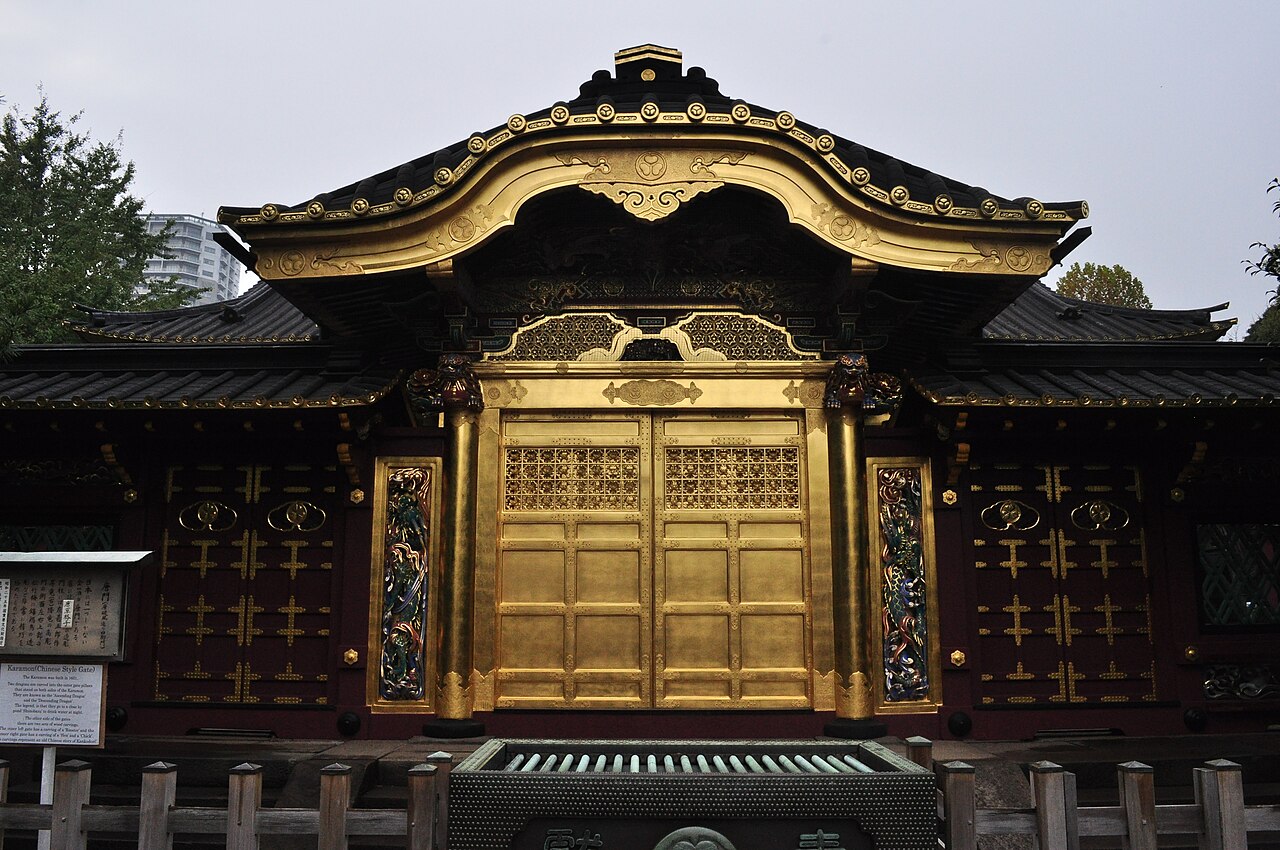
Ueno Toshogu holds traditional performing arts such as kagura and biwa at its Kaguraden. Visitors see rising-dragon and descending-dragon carvings on the pillars of the Karamon gate, and a legend says they go to drink the water of Shinobazu Pond every night. In the shrine's peony garden, the name winter peonies refers to varieties that bloom twice a year, in early spring and early winter.
Ueno Toshogu Peony Garden shows winter flowering trees such as rouba (wintersweet), mansaku and early-blooming plum alongside its peonies. From mid-April bleeding heart and rhododendron bloom, and from early May herbaceous peonies bloom. The peonies stand in a stroll-style Japanese garden, cultivated as one hundred and ten varieties and five hundred plants in spring and forty varieties and one hundred and sixty plants in winter.
If the plan in Ueno Park is carvings, the Karamon gate has the two dragons; if it is flowers, the peony garden has peonies, rhododendron and early-blooming plum.
Ueno Zoo Animal Cart and Shoebills, Plus Meals at the Tokyo National Museum
Ueno Zoo visitors can tell the shoebills apart by the color and number of the rings on their right legs. The animal cart runs automatically at low speed along its course. Along part of that course, panels in timeline form introduce animals that came to the zoo from around the world. The shoebills number four, one male and three females.
Tokyo National Museum visitors can eat curry and hashed rice in the grounds. In the Horyuji Treasures Gallery, a restaurant serves sushi and kaiseki cuisine made with seasonal ingredients. The garden on the north side of the main building has five tea houses arranged around a pond. A cafe restaurant in the central plaza of Ueno Park serves both meals and drinks.
The cart ride and the ring-marked shoebills pair with a plate of curry, hashed rice or sushi in the museum grounds, so the zoo and the museum work as two halves of one visit.
Half a Day in Ueno Park: Western Art Museum, Zoo, Tokyo National Museum and Toshogu
The National Museum of Western Art holds about six thousand works across paintings, sculpture, drawings, prints, manuscripts and crafts. The walk to it from the Park Exit of JR Ueno Station is one minute. Ordered by the listed walks from that exit, it comes first of the four stops for half a day in Ueno Park.
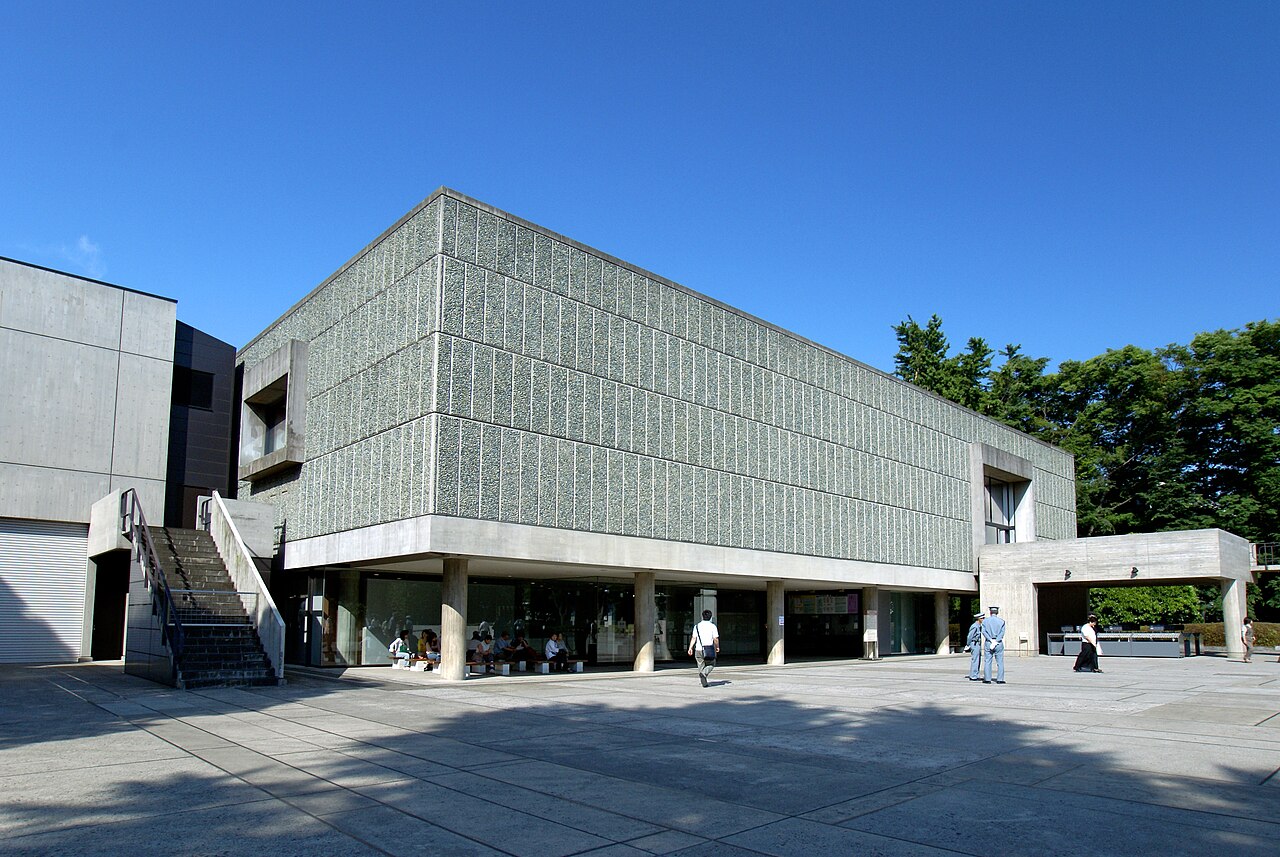
Ueno Zoo keeps about two hundred and fifty species and three thousand animals as a city-type zoo in central Tokyo. Its East Garden main gate is about five minutes on foot from the same exit. The Tokyo National Museum is a walk of ten minutes from the exit, and Ueno Toshogu is about ten minutes on foot from it. A visitor with half a day can pick the paintings, the animals or the shrine carvings first, since each stop is a walk of ten minutes or less from one exit.
Travelers who want a night nearby can compare places to stay near Ueno Park. Those who prefer to go round with a guide can look at guided tours that include Ueno Park.
Getting to Ueno Park, Hours and Fees
New to rural buses and one-man trains? See how to ride them, step by step.
The table gathers the listed walks, closing days and fees for Ueno Park and its main sights. When a Monday is a national holiday, the zoo shifts its closing day to the following day and both museums shift theirs to the following weekday.
| Item | Details (as listed) |
|---|---|
| Walk to Ueno Park | from JR Ueno Station about two minutes; from Keisei Ueno Station about one minute |
| From the JR Ueno Station Park Exit | National Museum of Western Art one minute; Ueno Zoo East Garden main gate about five minutes |
| Ueno Zoo | sixty-five and over, three hundred yen; junior high school, two hundred yen; closed Mondays; admission ends one hour before closing |
| Tokyo National Museum regular exhibition | general visitors one thousand yen; university students five hundred yen; closed Mondays |
| National Museum of Western Art permanent exhibition | nine thirty to five thirty, to eight Fridays and Saturdays; entry until thirty minutes before closing; closed Mondays |
| Ueno Toshogu viewing area | adults seven hundred yen; elementary school students three hundred yen; groups of twenty or more six hundred yen |
Thinking of staying overnight?
Compare places to stay near Ueno, Tokyo, Japan →
Disclosure: This post may contain affiliate links. If you book through them, we may earn a commission at no extra cost to you.