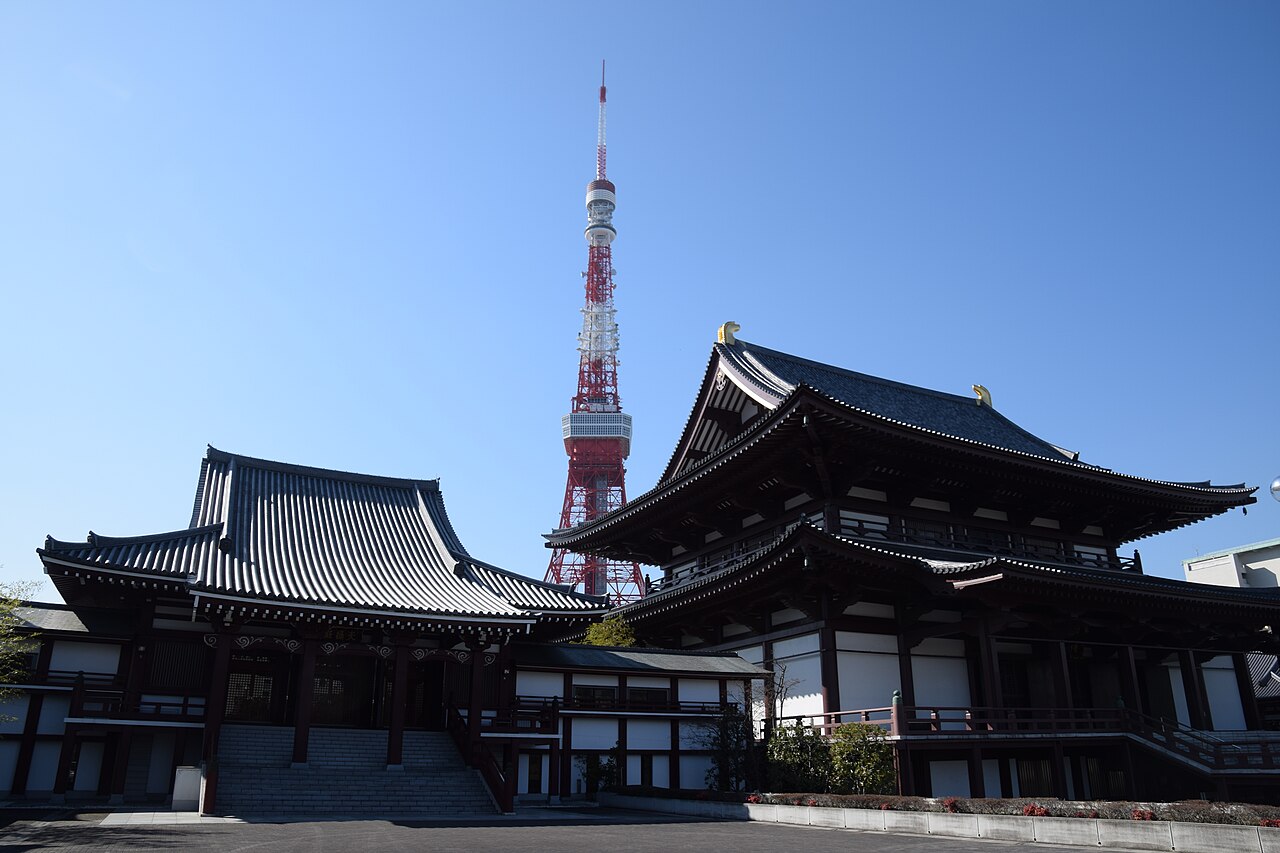
Tokyo Tower offers more than its Main Deck: open-air outside stairs climb from the roof of the Foot Town building at its base, with step-count signs, a small terrace space with views and a quiz along the way. In winter the tower's lighting uses warm orange lights, and a separate display runs at the top of every hour from sunset until midnight. Zojoji, one of the seven head temples of the Jodo sect, and the ring-shaped Shiba Park add a temple gate, the Tokugawa graves and a maple valley to the plan.
If time is limited, start with the outside stairs or the evening lighting at Tokyo Tower, then add the Sanmon gate at Zojoji and the Momijidani maple valley in Shiba Park. Those drawn to temple routine have a morning service at Zojoji every morning to plan around.
Beyond the Main Deck: Tokyo Tower's Outer Stairs and Top Deck Tour
Climbing Tokyo Tower on foot begins on the roof of the Foot Town building at its base, where the outdoor stair entrance has the steel framework directly overhead. From there, open-air outside stairs of about six hundred steps run up the tower. Step-count signs mark progress along the way, and a small terrace space with views and a Tokyo Tower quiz from the Nopon brothers break up the climb.
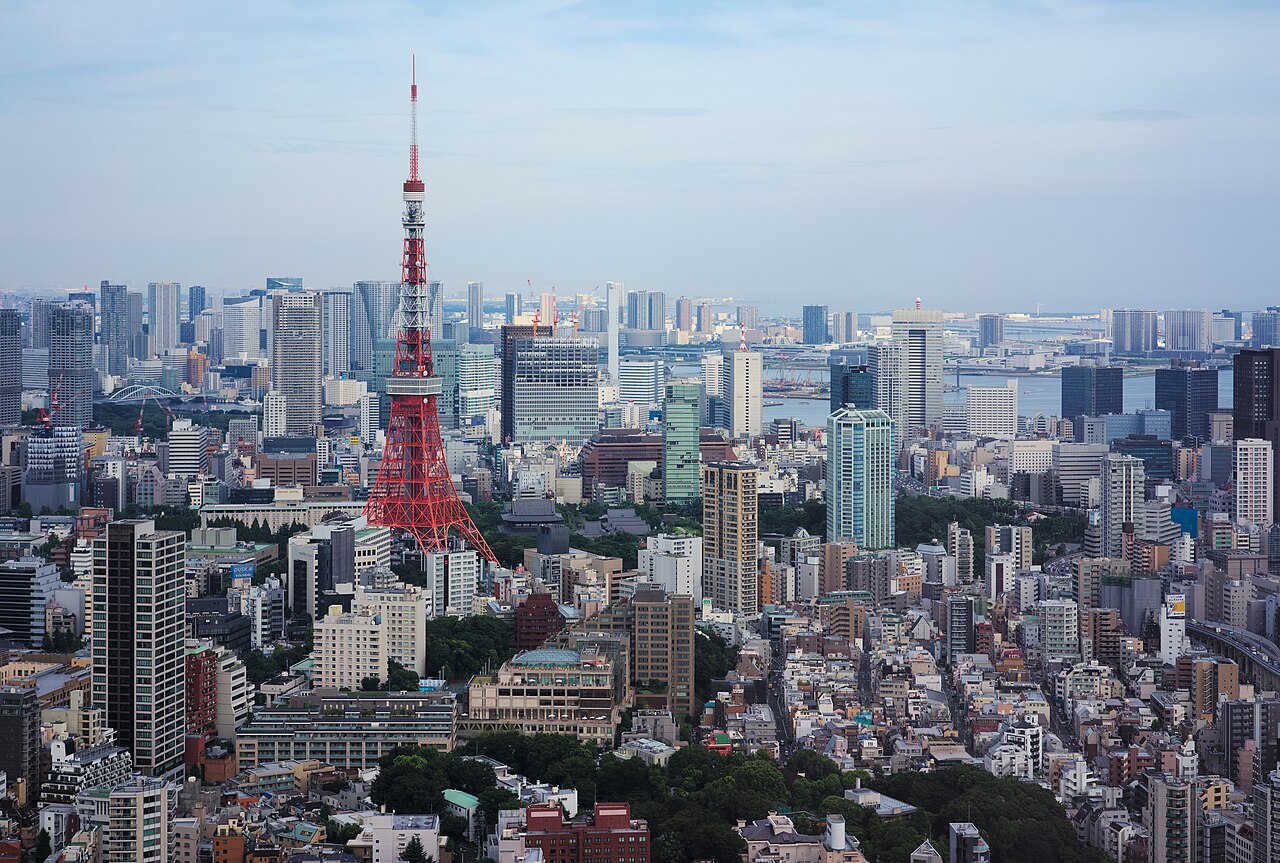
The stairs for going up run only on Saturdays, Sundays and public holidays, while the stairs for going down run every day, so a weekday visit can still include the walk down. The Top Deck Tour is another way to go beyond a single visit to the Main Deck. It covers the Main Deck as well, which can be used any number of times on the day, and the Maple Lounge can be used at will on the same day.
Tokyo Tower also offers a tea ceremony plan, whose first seating is a tatami seat in the south window corridor; its dates and charge are in the table below. With limited time, let the day of the week decide: the climb on a weekend or holiday, the walk down on any other day.
Tokyo Tower After Dark: The Lighting Shows
Tokyo Tower's lighting comes in two types, and one of them, the Infinity Diamond Veil, changes with the calendar. It lights up on Monday and Thursday evenings in the colour assigned to each month, so a return visit in another month shows a different colour. In winter, the tower's lighting uses warm orange lights.
The change from one Infinity Diamond Veil design to the next is a display of its own: the whole tower is wrapped in white light that blinks slowly. A separate display runs at the top of every hour from sunset until midnight, which gives anyone watching after dark a fixed moment to look up. For an evening with limited time, a Monday or a Thursday brings both the monthly colour and the hourly display.
Zojoji: The Sanmon Gate, the Bell and the Tokugawa Graves
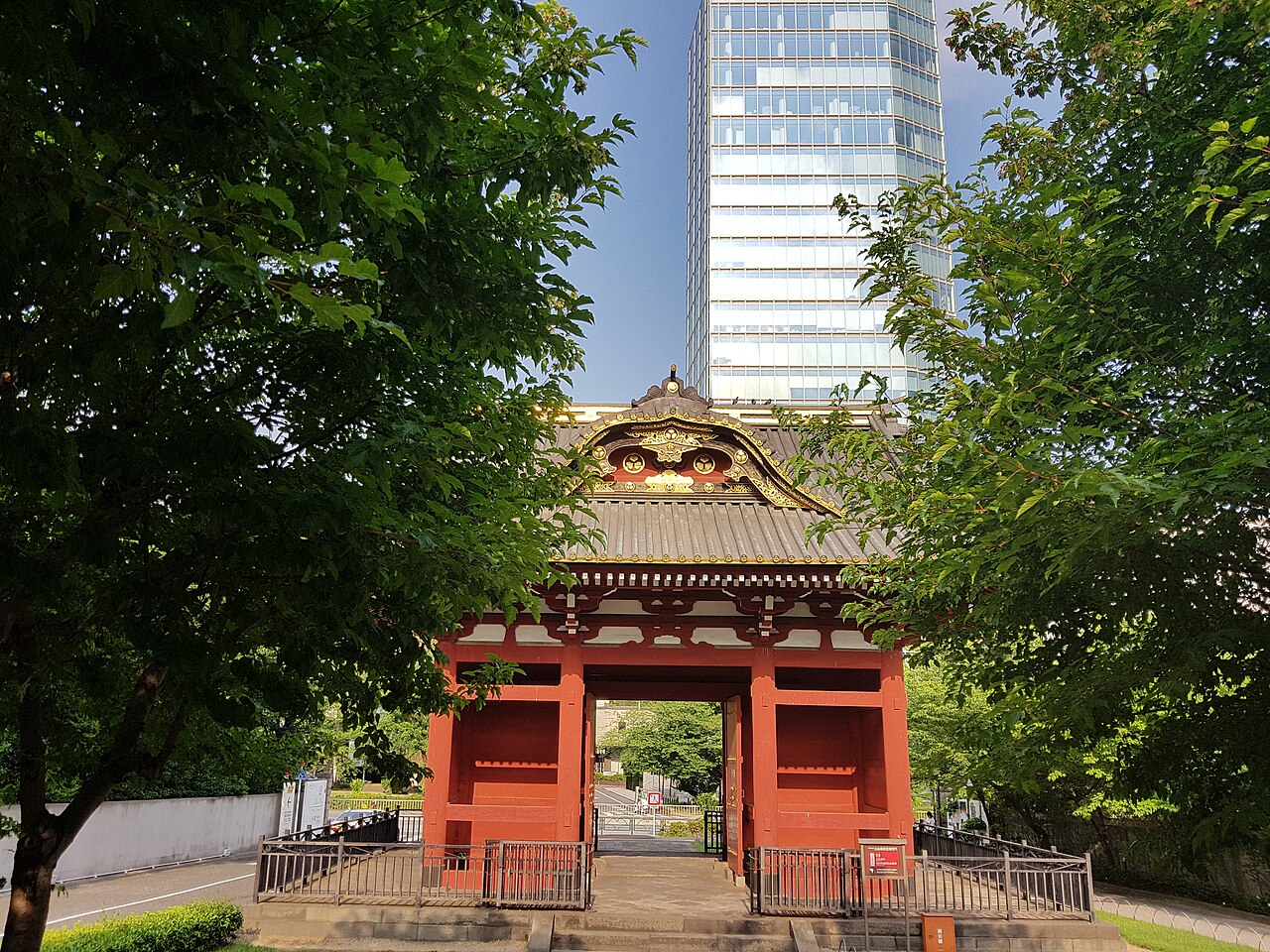
Passing through the Sanmon gate at Zojoji has a stated purpose: it is a gate for being freed from the three afflictions of greed, anger and foolishness. The temple it belongs to is one of the seven head temples of the Jodo sect, so the services described in the next section are those of a head temple.
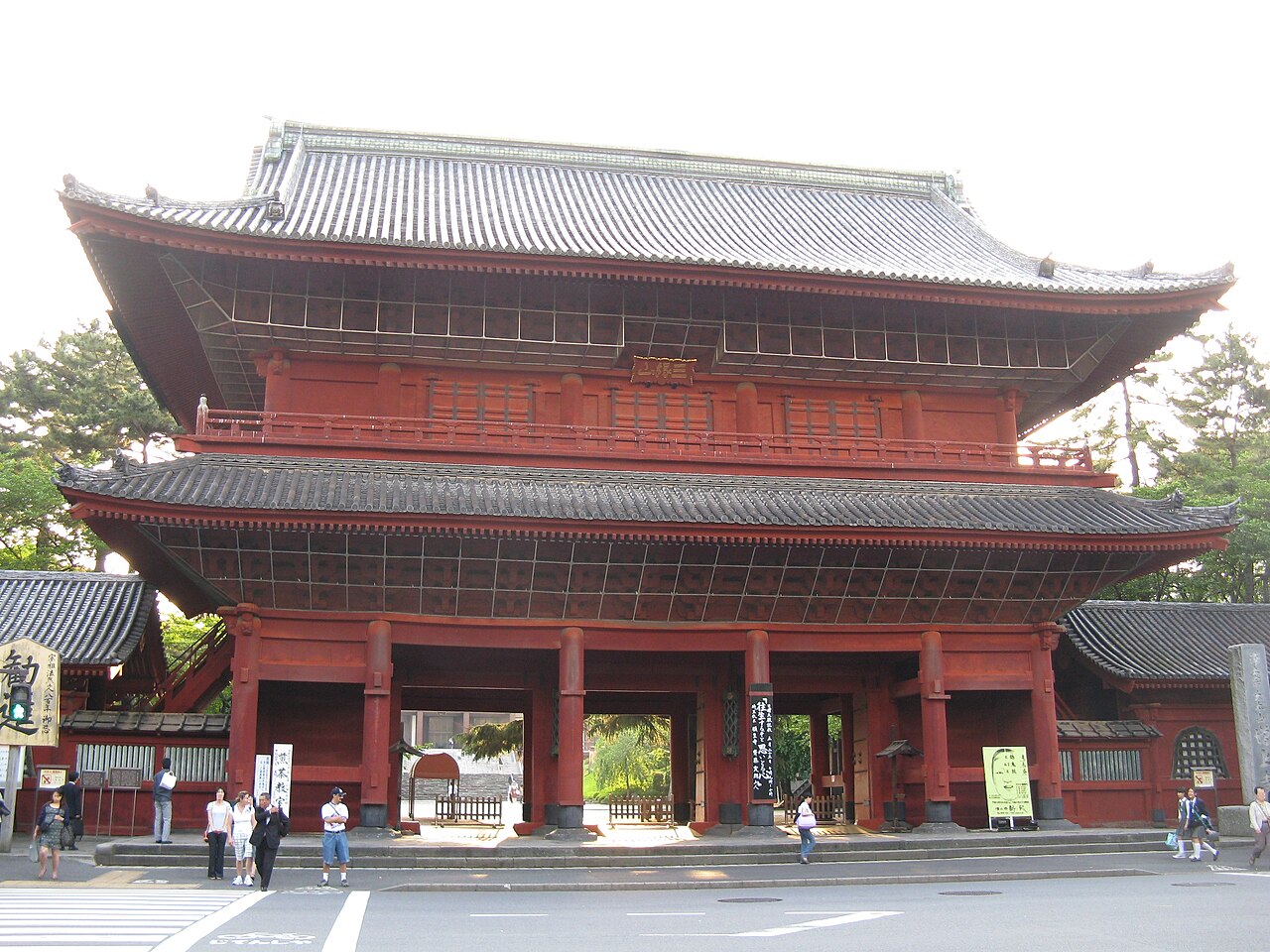
The gate is finished in vermilion lacquer, and its second floor enshrines statues of the Shaka Triad and the Sixteen Arhats. That floor is not open to the public, so the statues stay out of view and the gate is something to pass through rather than enter. The Sanmon is under conservation repair work at present; the planned period is in the table below.
The bell in the Zojoji bell tower is struck twice a day, in the morning and in the evening, which makes the two ends of the day the times to be there for it. TERA CAFE SHIEN ~ZOJOJI~ is the place for a break in between.
The graves of the Tokugawa shogun family at Zojoji are shown through a special viewing reception, which keeps different times on weekdays and on Saturdays, Sundays and holidays. The Tokugawa graves are closed for a stretch this autumn; the dates are in the table below. A combined entry also covers the Zojoji treasure exhibition hall, which suits anyone planning to see both.
Services, Sutra Copying and Seasonal Events at Zojoji
Zojoji's calendar begins with the daily round: a morning service is held every morning and a half-day memorial service every day. Sundays add a sermon in the Daiden main hall, and Thursdays a Hoshiki class, a study group on sutras centred on the daily service.
Sutra copying has a fixed place in the month, with the Shakyo-kai session held on the fourteenth of every month and the Betsuji Nenbutsu-e on the twenty-fourth of every month. The calendar also lists the Juya Hoyo service on the fifteenth and an evening of Enzan-ryu shomyo and gagaku on the twenty-eighth. Matching the date of a visit to one of these gives the day at the temple a centre.
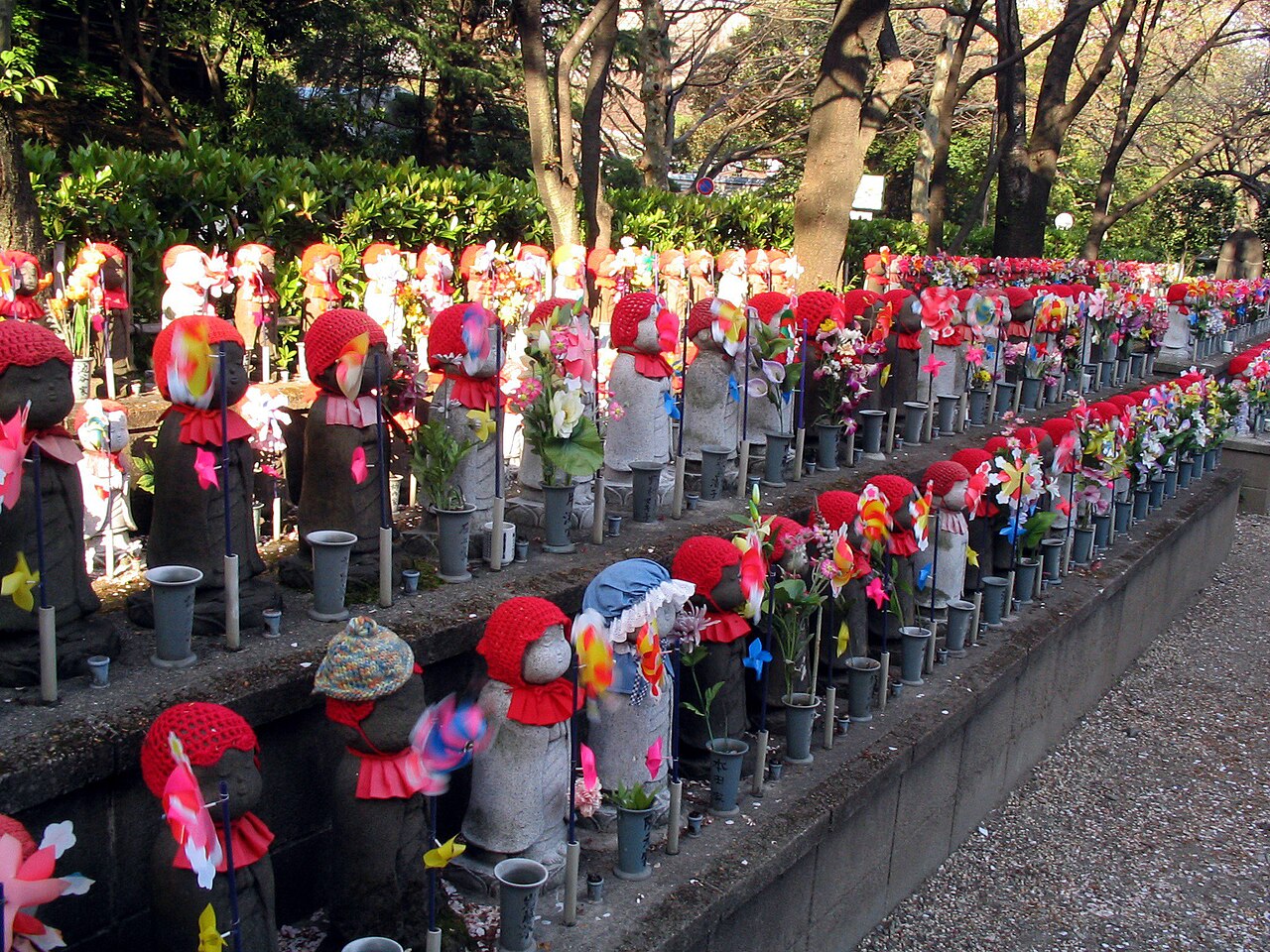
The seasons bring their own events. A Setsubun Tsuina ceremony with a bean-throwing event is held in winter, and the Gyoki Daie follows in spring. The child-rearing Jizo holds a major festival every spring and a Bon dance event in summer, so anyone planning around a single event should fix the season first and the day second.
Shiba Park and Shiba Toshogu
Shiba Park is ring-shaped, a form it took when the grounds of Zojoji were removed from it after the postwar separation of religion and state. Walking it therefore means following a loop rather than crossing a single block of green. Large trees such as camphor, zelkova and ginkgo stand here and there, and a baseball field and tennis courts serve as sports facilities.
The Momijidani maple valley is an artificial valley that has been restored, with maple trees planted throughout. A large zelkova tree stands beside the bridge midway along the stream, which makes the bridge a marker for the middle of the valley. With maples throughout, this is the part of the park to choose if only one corner fits the day.
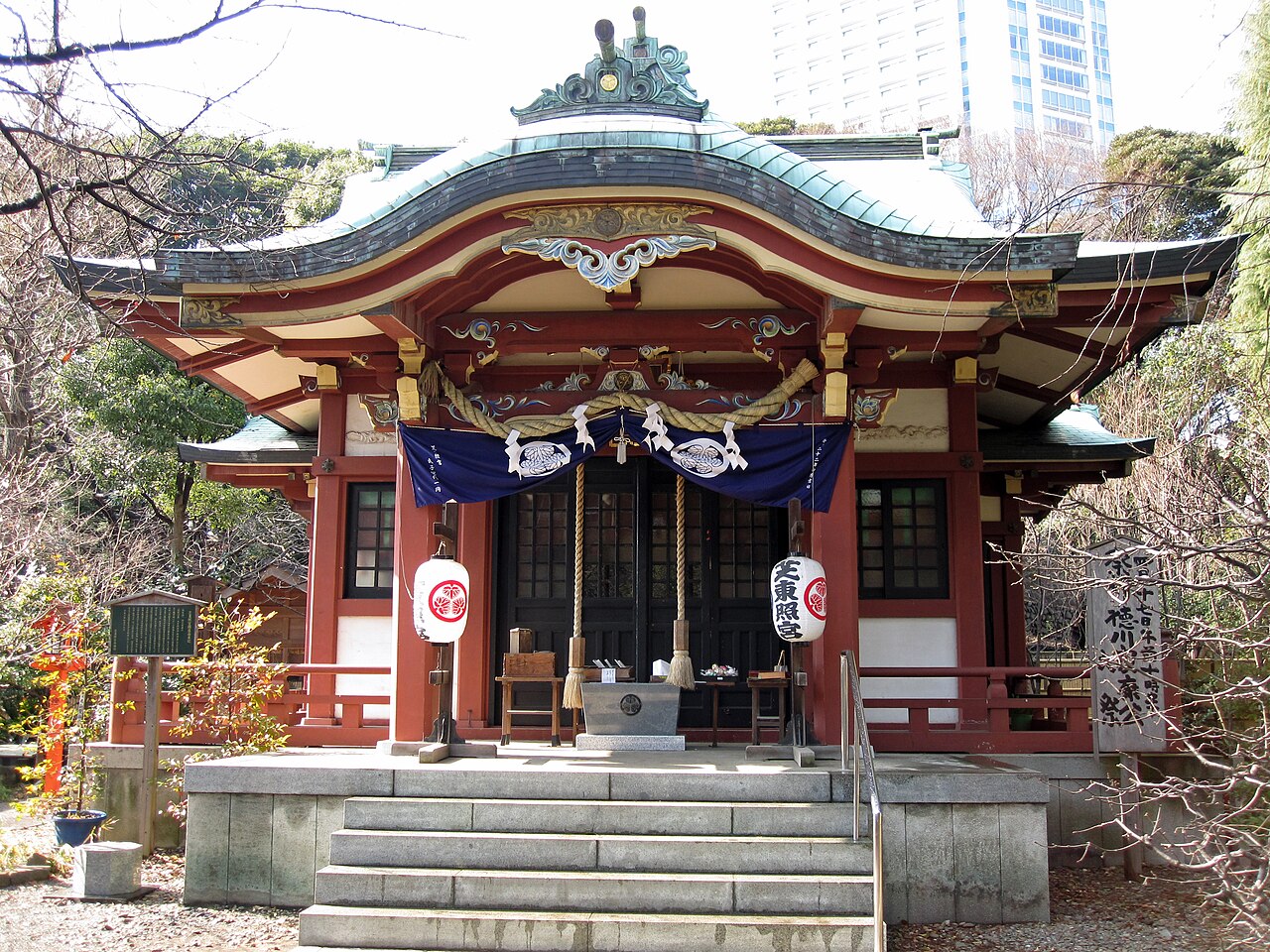
Shiba Toshogu was founded in the precincts of Zojoji, the Tokugawa family's funerary temple, which ties the shrine to the graves described above. It is located in the city centre and surrounded by abundant nature, and a statue at Shiba Toshogu is a designated Tokyo Metropolis Important Cultural Property.
Getting to Tokyo Tower, Shiba Park and Shiba Toshogu
New to rural buses and one-man trains? See how to ride them, step by step.
Tokyo Tower is a five-minute walk from Akabanebashi Station on the Oedo Line; the other walks are in the table.
| Route | Item | Detail |
|---|---|---|
| Tokyo Tower | Akabanebashi Station (Oedo Line, Akabanebashi exit) | Five-minute walk |
| Tokyo Tower | Kamiyacho Station (Hibiya Line) | Seven-minute walk |
| Tokyo Tower | Onarimon Station (Mita Line) | Six-minute walk |
| Tokyo Tower | JR Hamamatsucho Station (north exit) | Fifteen-minute walk |
| Shiba Park | Shibakoen Station (Toei Mita Line) | Two-minute walk |
| Shiba Park | Akabanebashi Station (Toei Oedo Line) | Two-minute walk |
| Shiba Toshogu | Onarimon Station (Toei Mita Line) | Two-minute walk |
| Shiba Toshogu | Daimon Station (Toei Asakusa Line and Oedo Line) | Five-minute walk |
If you would rather stay overnight, places to stay in Tokyo is a place to start.
Hours and Fees
Times at the Tokugawa graves change with the day of the week and include a dated closure; the table below has the details.
| Place | Item | Time or fee |
|---|---|---|
| Tokyo Tower Main Deck | Hours | Nine in the morning to eleven at night; last admission half past ten at night |
| Tokyo Tower Main Deck | Admission | Adults one thousand five hundred yen; high school students one thousand two hundred yen; children (elementary and junior high) nine hundred yen; infants aged four and over six hundred yen |
| Top Deck Tour | Hours | Nine in the morning to a quarter to eleven at night; last entry a quarter past ten at night; slots every fifteen minutes |
| Top Deck Tour | Fee | Web: adults three thousand three hundred yen, high school students three thousand one hundred yen, children two thousand one hundred yen, infants one thousand five hundred yen. Counter rates are listed as three thousand five hundred yen, three thousand three hundred yen, two thousand three hundred yen and one thousand seven hundred yen. Main Deck admission included |
| Tokyo Tower outside stairs | Days and times | Going up: Saturdays, Sundays and public holidays, nine in the morning to four in the afternoon. Going down: every day, nine in the morning to eight in the evening |
| Tokyo Tower tea ceremony plan | Days and fee | Second and fourth Saturdays of every month; three thousand nine hundred and eighty yen per person |
| Zojoji Tokugawa graves special viewing | Times | Weekdays eleven in the morning to three in the afternoon, last entry a quarter to three. Saturdays, Sundays and holidays ten in the morning to four in the afternoon, last entry a quarter to four. Closed every Tuesday unless it is a holiday. Closed from October twenty-seventh to December first |
| Zojoji Tokugawa graves special viewing | Fee | Adults five hundred yen; high school students and younger free; combined with the Zojoji treasure exhibition hall one thousand yen |
| TERA CAFE SHIEN ~ZOJOJI~ | Hours | Ten in the morning to five in the afternoon |
| Sanmon gate at Zojoji | Conservation repair work | Planned from January twenty twenty-five until June twenty thirty-two |
Fees and hours were checked against official sources on 18 November 2026.
Thinking of staying overnight?
Compare places to stay near Tokyo, Japan →
Disclosure: This post may contain affiliate links. If you book through them, we may earn a commission at no extra cost to you.