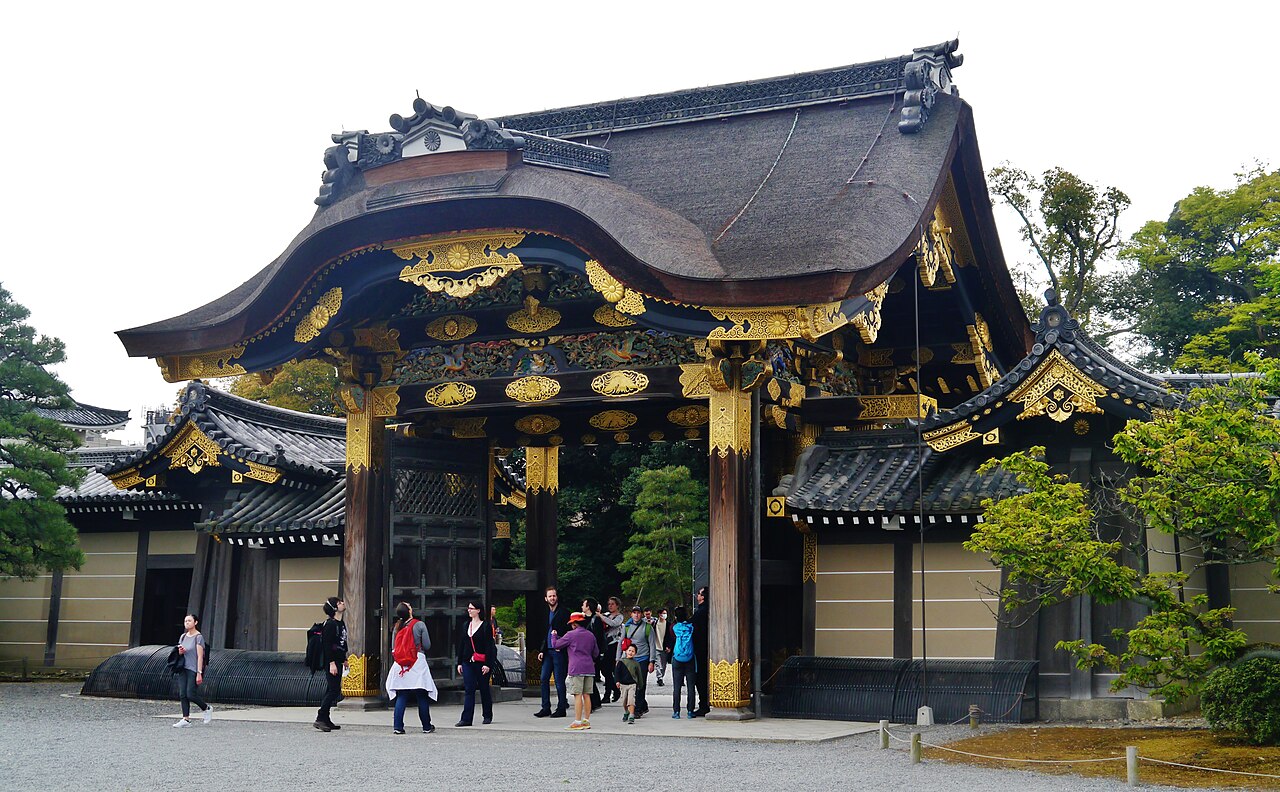
The corridor of the Ninomaru Palace at Nijo Castle makes a sound like a bird's call when a person walks on it. In the storage hall for the wall paintings, visitors can view the originals up close. From the tenshudai (castle keep base), the Honmaru Palace, its garden and the city of Kyoto can be seen. Ninomaru Palace, the Ninomaru Garden and the Karamon gate remain as elements of Momoyama culture.
The sounding corridor, the originals in the storage hall and the island pond in the garden each add something different to a visit to Nijo Castle.
Inside Nijo Castle: Ninomaru Palace Paintings, the Storage Hall and Honmaru Palace
Ninomaru Palace holds about thirty-six hundred wall paintings. The paintings depict pine, described as an auspicious plant that stands for prosperity continuing forever. The six buildings of the palace are designated a National Treasure. Tokugawa Ieyasu, the first shogun of the Edo shogunate, built Nijo Castle in sixteen oh three as a lodging for the shogun when visiting Kyoto.
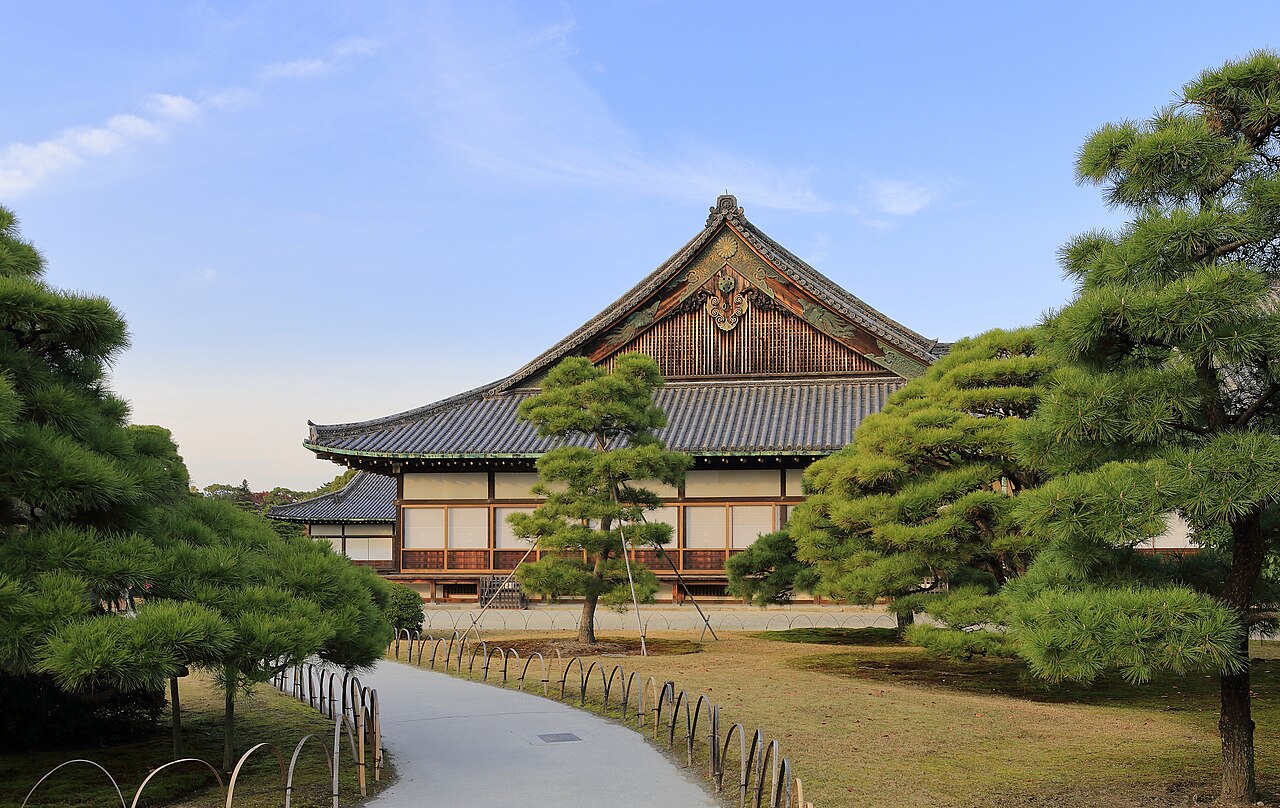
The Exhibition and Storage Hall keeps the wall paintings in movable panels arranged in the same layout as the palace. Panels are normally selected four times a year, by palace room or by theme, and moved to a glass-walled exhibition area. About thirty panels on average are displayed at one time, and the display period is limited to protect the works.
Honmaru Palace has carpets laid over the tatami and lighting such as chandeliers, installed after its relocation. One room becomes a Noh stage when the tatami are removed, with the corridor at its southwest corner as the hashigakari. One two-storey building has living rooms and bedrooms for the master of the palace. Its bedrooms and other rooms have mosquito-net hanging fittings shaped like chrysanthemums.
Nijo Castle runs a project that produces painting copies and swaps them with the originals inside the palace. The three interiors therefore work as a set: the palace shows paintings in their rooms, the hall shows originals up close, and Honmaru Palace adds carpets and chandeliers of a different kind.
The Gardens: Ninomaru Garden Ponds, a Japanese-Western Garden and the Large Rest Area
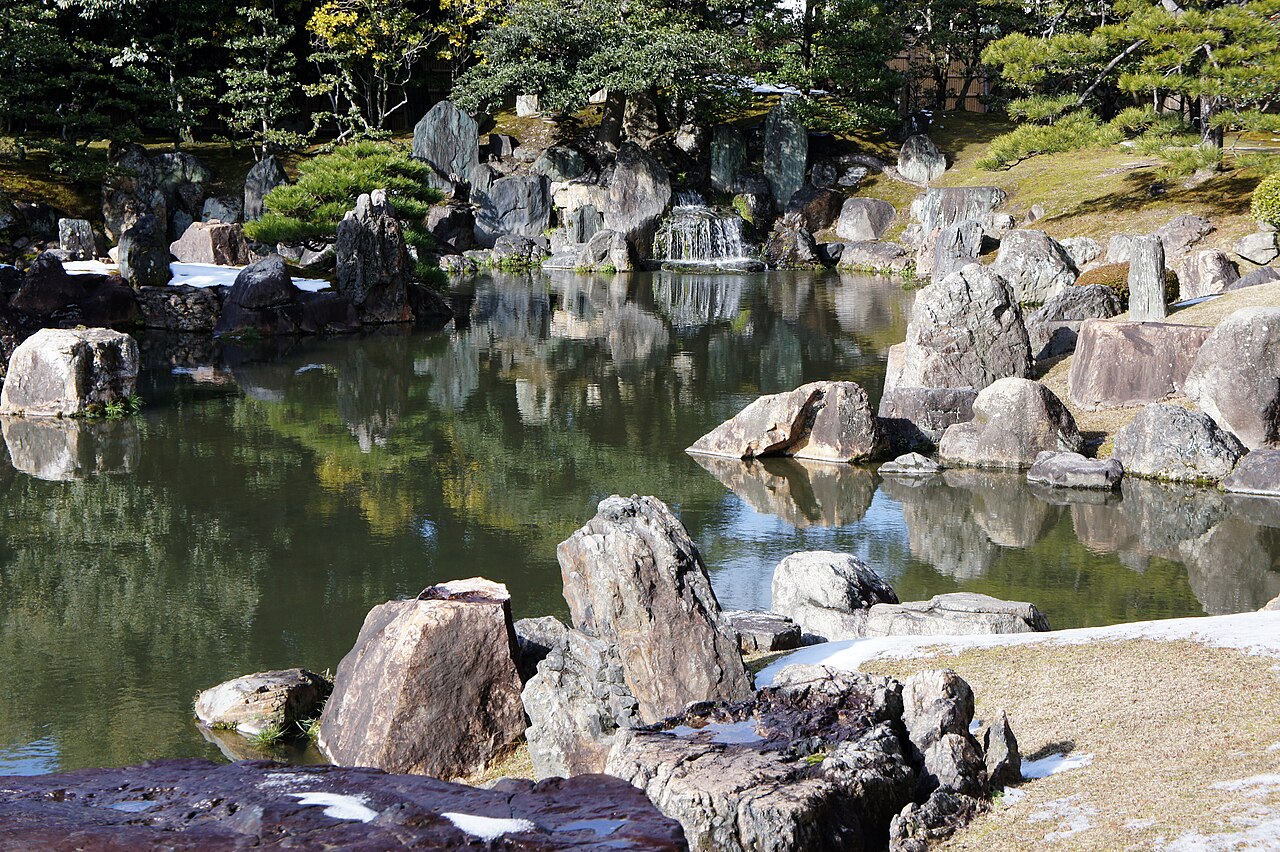
The Ninomaru Garden is a shoin-style garden whose pond has Hōrai Island in the center and crane and turtle islands to the left and right. It is arranged so that it can be viewed from three directions. The garden is designated a Special Place of Scenic Beauty.
A garden in a combined Japanese and Western style lies in front of the tea house. Its west side, where the tea house stands, is a Japanese garden, and its east side a Western-style lawn garden. The tea room serves matcha sets and sencha sets. On ordinary days that building is a rest place for castle visitors, with tea and similar refreshments.
The Large Rest Area serves tea and light-meal menu items. Original Nijo Castle goods and Kyoto souvenirs are sold there. Packed lunches brought by visitors may be eaten at the Large Rest Area.
If the plan is a pond with islands to look at, the shoin-style garden has it; if the plan is tea, the tea room beside the Japanese and Western-style lawn gardens serves matcha sets and sencha sets.
Cherry, Plum and Foliage Seasons in the Castle Grounds, Plus Shinsen-en
Cherry trees, about three hundred of them in fifty varieties, are planted across the grounds of Nijo Castle. Many visitors come from late March to April when they bloom. Cherry blossom illumination is held at the castle in a typical year.
Plum trees, roughly ninety in all, stand mostly in the southwest part of the castle grounds. Their flowering period is listed as mid February to late March, with the best viewing from late February to early-to-mid March. The tsutsuji (azalea) and the camellia each have a flowering period of their own.
Deciduous trees including cherry, maple, ginkgo and doudan-tsutsuji are planted in the grounds, and colorful red and yellow autumn foliage can be viewed. The autumn foliage period is listed as mid November to early December. Castle staff wrap the entire trunk of the cycad with straw matting for cold protection every year from late November to early December.
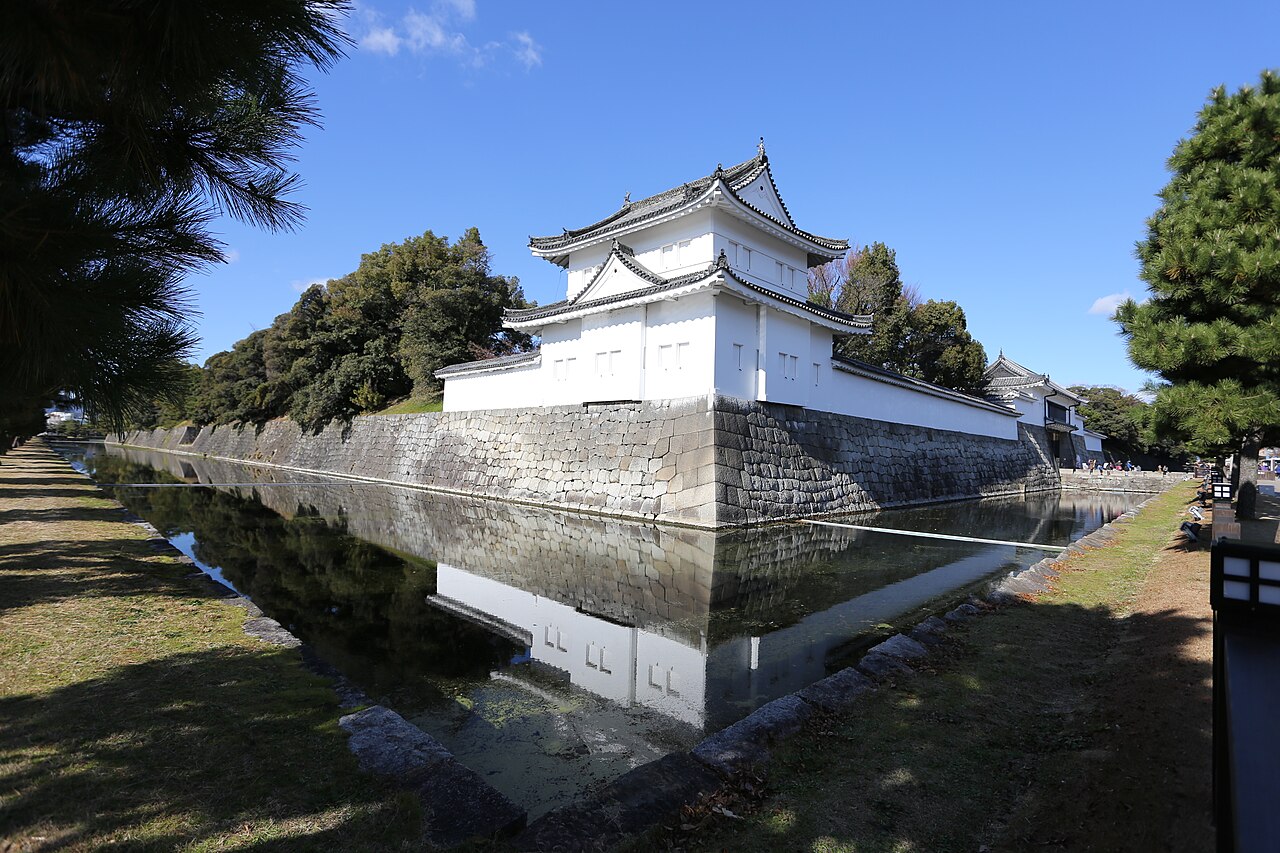
Shinsen-en holds a goma fire ritual in its precincts. When Tokugawa Ieyasu built Nijo Castle, spring water from Shinsen-en was taken in to fill the inner and outer moats of the castle. The pond at Shinsen-en is a large one that has existed since long ago, and after the Heian period emperors held boating and fish-viewing banquets there.
The cherry trees and the plum trees have different listed periods, whereas the straw-wrapped cycad belongs to the later part of the foliage period, so the date of a visit decides which of the three is on view.
Half a Day at Nijo Castle: Higashi-Otemon, Ninomaru Palace, the Garden and Honmaru Palace
Higashi-Otemon is one of twenty-two Nijo Castle buildings designated Important Cultural Properties. The six buildings of the Ninomaru Palace stand in a staggered diagonal line from southeast to northwest. The shoin-style garden was laid out for viewing from buildings of that palace, so the two go together in a half day.
Guide tours in Japanese and English lasting about sixty minutes are offered at the castle. The tour also guides visitors through areas outside the usual public route. The regular guided tour does not include viewing of Honmaru Palace. It takes about fifteen to twenty minutes from the Higashi-Otemon entrance to Honmaru Palace, so that palace is a separate leg to plan for.
Travelers staying overnight can compare places to stay in Kyoto near Nijo Castle, and those who prefer to walk the grounds with a guide can look at a guided tour that includes Nijo Castle.
Hours and Fees at Nijo Castle and Shinsen-en
The Exhibition and Storage Hall viewing ticket is one hundred yen, and an admission ticket is required separately. With a subway one-day pass or a subway and bus one-day pass, general individual admission is seven hundred yen on the day. Castle hours change by season, and the table gives the usual ones.
| Item | Details (as listed) |
|---|---|
| Admission (as listed) | general eight hundred yen, junior and senior high school four hundred yen, elementary school three hundred yen, general group seven hundred yen |
| Ninomaru Palace viewing (as listed) | with admission one thousand three hundred yen general, one thousand one hundred group; added after entry five hundred yen general |
| Honmaru Palace viewing (as listed) | advance reservation needed, admission separate; one thousand yen general |
| Usual castle hours (as listed) | eight forty-five in the morning to four in the afternoon, closing at five; closed December twenty-ninth to thirty-first |
| Palace reception (as listed) | Ninomaru Palace until ten past four, Honmaru Palace nine thirty to four; Ninomaru viewing suspended Tuesdays in January, July, August, December |
| Inside the grounds (as listed) | about fifteen to twenty minutes from the Higashi-Otemon entrance to Honmaru Palace; transportation IC cards accepted at the ticket office |
| Shinsen-en grounds (as listed) | six thirty in the morning to eight in the evening |
Fees and hours were checked against official sources on 21 November 2026.
Thinking of staying overnight?
Compare places to stay near Nijo Castle, Kyoto, Japan →
Disclosure: This post may contain affiliate links. If you book through them, we may earn a commission at no extra cost to you.