Otagi Nenbutsu-ji stands at the north end of the Saga and Arashiyama area, and from there visitors can walk downhill through the preserved Saga-Torimoto street to the bamboo forest, Togetsu-kyo Bridge and the main Arashiyama area. What there is to see on this route includes the luxuriant moss garden under the dense trees of Gio-ji Temple and the hillsides covered with carved rakan statues at Otagi Nenbutsu-ji. What visitors do at Tenryu-ji is look from the centre of the Hojo's veranda directly across the pond to an arrangement of several large standing rocks. On the Hozu River they ride a boat between mountains that line both banks.
This route suits visitors who want a moss garden, a pond garden with a cloud dragon, a maple-lined approach, rakan statues on the hillside and a boat ride down the Hozu River.
The Cloud Dragon in the Hatto at Tenryu-ji is painted in the happo nirami style, so the dragon appears to look directly at the viewer from wherever it is seen.
| Time guide | Place | What you do | Walk or stay |
|---|---|---|---|
| Morning | Saga-Arashiyama Station | Arrive from Kyoto Station by Rapid Service | About eleven minutes |
| Morning | Tenryu-ji | Look across the pond from the veranda | Thirteen minutes from the JR station |
| Midday | Otagi Nenbutsu-ji | See the carved rakan statues | About five minutes by taxi from the JR station |
| Afternoon | Hozu River | Ride a shared boat down the river | About two hours |
Looking Across Sogen Pond and Eating Shojin Ryori at Tenryu-ji
From the centre of the Hojo's veranda, looking directly across the pond, visitors can see an arrangement of several large standing rocks. The Sogenchi Garden uses borrowed scenery (shakkei), with the nearby mountains giving the garden added depth. The nearby hills of Arashiyama are drawn into the view and appear to be the next tier of the garden.
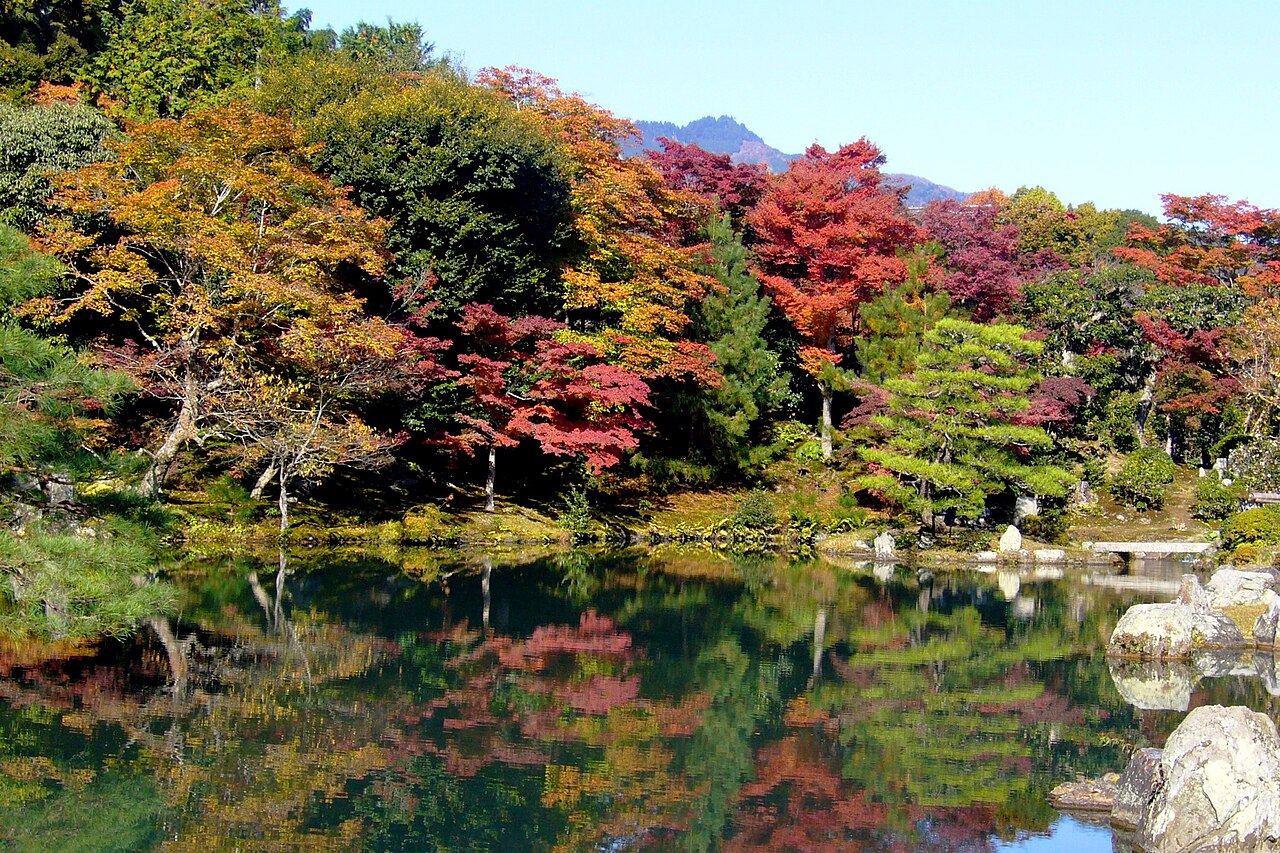
At Tenryu-ji, the maples show fall color in autumn, while spring changes what visitors might see on the distant hills. In spring visitors might see wild cherry blossoms or the stunted trunks of Japanese red pines there. The pond was named Sogenchi when Muso Soseki, removing mud to deepen the water, found a stone stele inscribed with the characters for "Sogen itteki".
Shigetsu is a large temple-style restaurant serving shojin ryori, the Zen vegetarian cuisine, and it is surrounded by the World Heritage gardens of Tenryu-ji. The Shigetsu menu changes with the season, so a meal here differs from one season of the year to another.
Walking the Bamboo Grove Path and Taking Matcha at Okochi Sanso
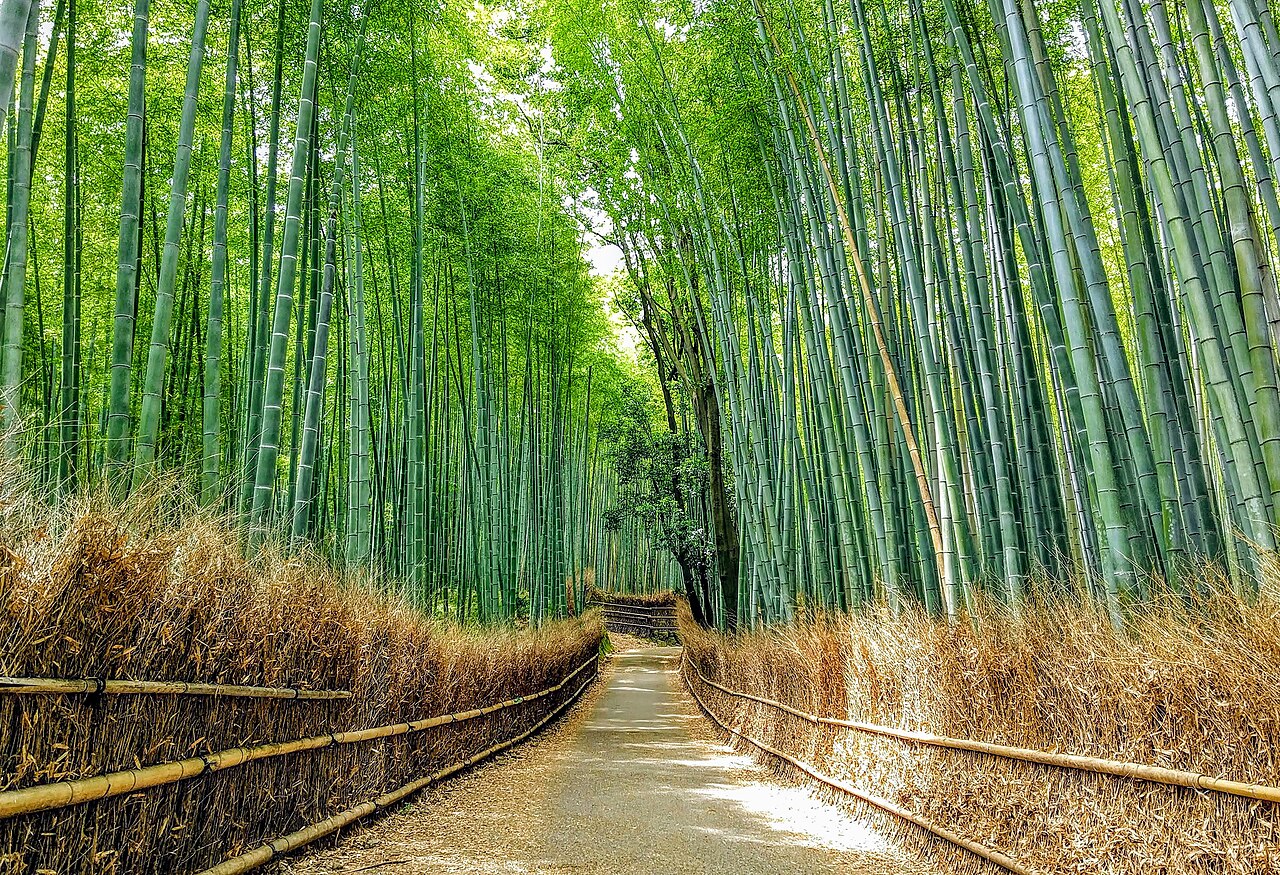
Countless bamboo trees cover the narrow path through the Arashiyama bamboo grove, and light streams into the grove in the morning and evening. Walking the bamboo grove path, visitors meet the fragrance of the bamboo and the greenery.
At Okochi Sanso, visitors can have a cup of tea before or after walking through the garden, with matcha green tea and sweets. The garden of Okochi Sanso incorporates borrowed scenery of Mount Hiei and the nearby Arashiyama-Hozukyo Gorge. The grounds include a modern Japanese-style building designated a Tangible Cultural Property and a Japanese garden with scenery in each of the four seasons.
A yudofu set meal uses traditional Kyoto Saga tofu, and diners can choose yudofu in winter, or in summer yudofu, karashi tofu or Miwa cold somen. The Sagano Gozen is a meal of dishes made with Kyoto vegetables and yuba, served with yudofu. Tofu dumplings are made after the order is received, and a seasonal bento is packed into a woven bamboo basket.
At Nonomiya, visitors first purify their hands at the temizuya hand-washing basin after entering the grounds. They then go to the main hall and worship in the manner of two bows, two claps and one bow.
Walking the Maple Approach of Nison-in and the Garden Path of Shishiku no Niwa
Inside Nison-in Temple, visitors can see Buddhist statues and sculptures designated as important cultural properties. Along the straight approach path, maple and cherry trees are planted alternately, and in autumn red and yellow leaves form a tunnel.
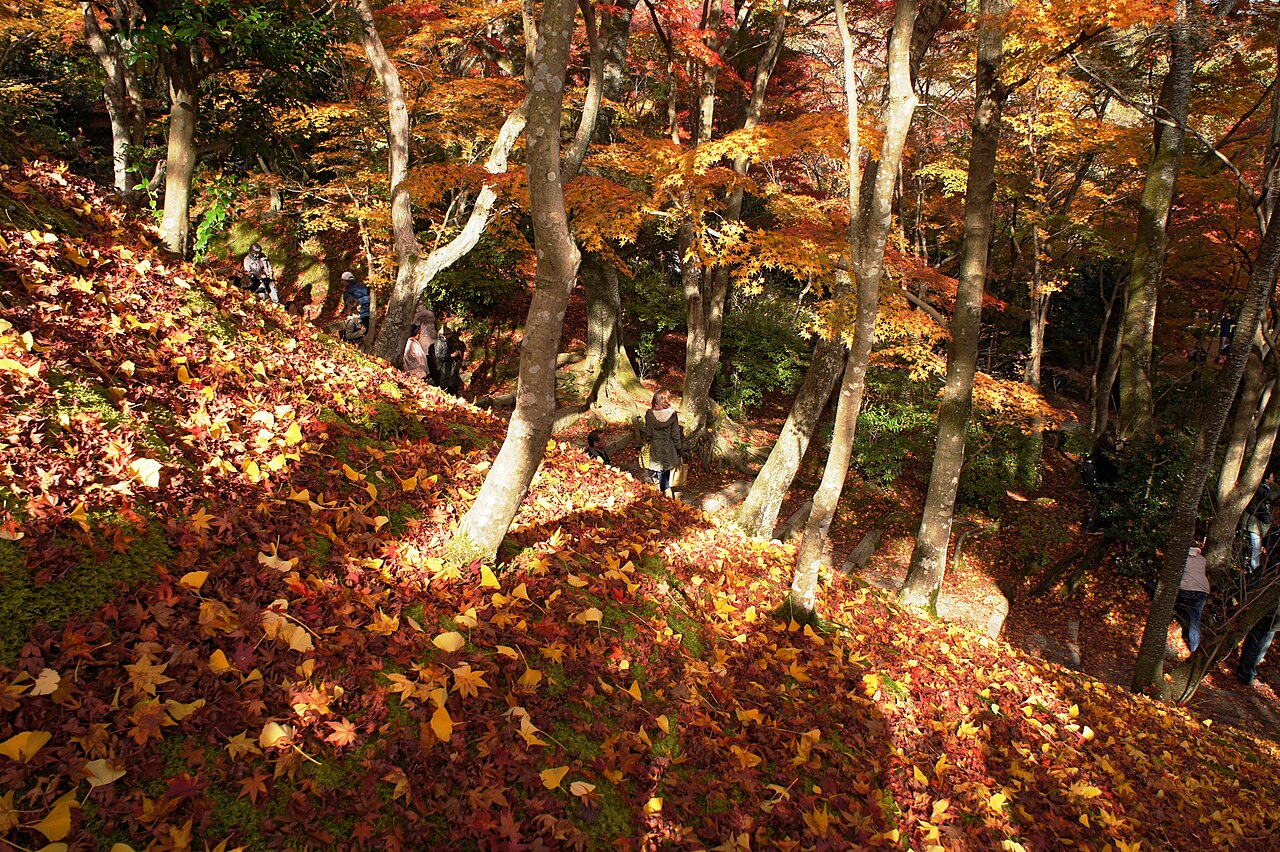
The approach path of Nison-in turns cherry-blossom pink in spring, is covered in deep layered green in summer, and has frost-bright trees in winter. At Jojakko-ji, the approach path can be seen through the lattice of black-painted square posts of the main gate.
Visitors walk Shishiku no Niwa hearing birdsong and the sound of the wind, and "Shishiku" in the name means "the Buddha preaches". The path under the maples is covered by foliage that gives cool green shade in summer and forms a crimson tunnel in autumn. In early spring, the fresh green of Shishiku no Niwa shows buds sprouting on the trees.
The Minogaki fence in the garden is made of bamboo twigs that are layered downward. In a stone arrangement, a stone shaped like a boat is placed for people who cannot cross the sea of suffering. Shishiku no Niwa was laid out by Zen monk Sakugen Shuryo in the Muromachi period and is a borrowed-scenery stroll garden taking in the Arashiyama landscape.
Seeing Moss, Haiku Tablets and Stone Statues From Gio-ji to Otagi Nenbutsu-ji
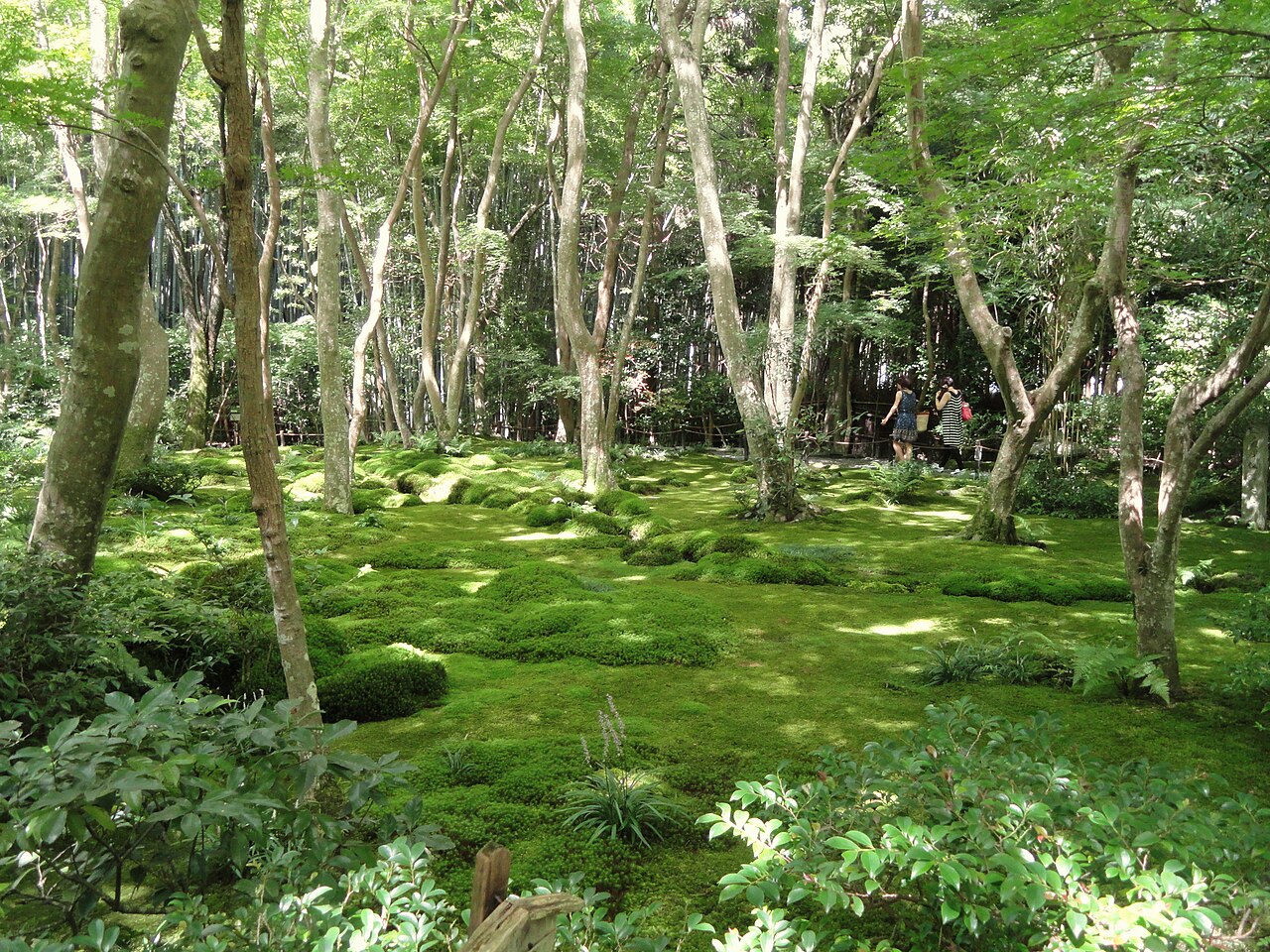
Gio-ji Temple is a temple surrounded by trees and by a luxuriant moss garden. The trees around it grow quite densely, and the temple is often covered in deep shade.
Rakushisha is a simple hermitage with clay walls and a thatched roof, in what was once a remote part of Kyoto. The grounds have stone tablets inscribed with haiku, and ink-brushed poems hang on the walls inside.
At Adashino Nenbutsu-ji, Sai no Kawara is a dedicated space in the centre of the precincts, enclosed by low stone walls. The markers gathered there stand in neat rows and include miniature five-tier pagodas, rounded headstones and simple statues of Buddhist deities. A tall thirteen-tier pagoda stands in the centre of the markers, and a seated statue of Amida Buddha overlooks the site.
At Otagi Nenbutsu-ji, one thousand two hundred carved statues cover the hillsides, and they are rakan, the followers of Buddha. Some rakan are posed in serious prayer, while others are smiling, laughing, or holding objects that hint at the carvers' hobbies and passions.
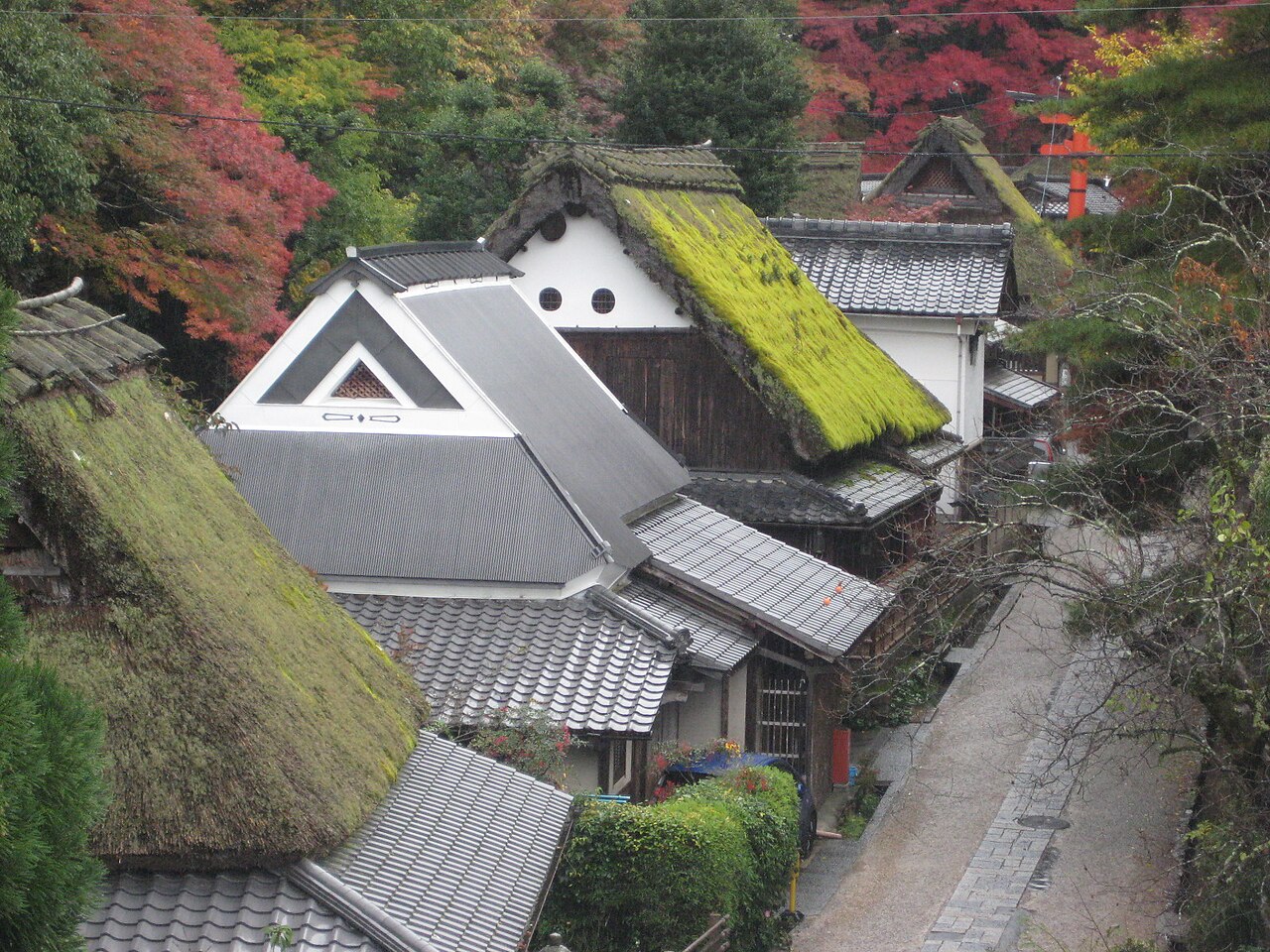
Visitors can directly touch a traditional building at the Kyoto City Sagatorimoto Machinami Preservation Hall, where the building and its interior are themselves the exhibits. A precisely restored model of the Atago Kaido townscape of the early Showa period is on display. The hall lies within the Sagatorimoto Traditional Buildings Preservation District, facing the Saganomeguri walking course past Adashino Nenbutsu-ji.
Riding the Hozu River Boat and the Sagano Romantic Train
Mountains line both banks of the Hozu River, and Atagoyama rises above them, showing and hiding itself ahead of and behind the boat at each bend. Rocky mountains, pine mountains and mixed-wood mountains stand along the river, and the scenery changes its look through the four seasons. The current of the Hozu River includes rapids and deep pools and varies greatly.
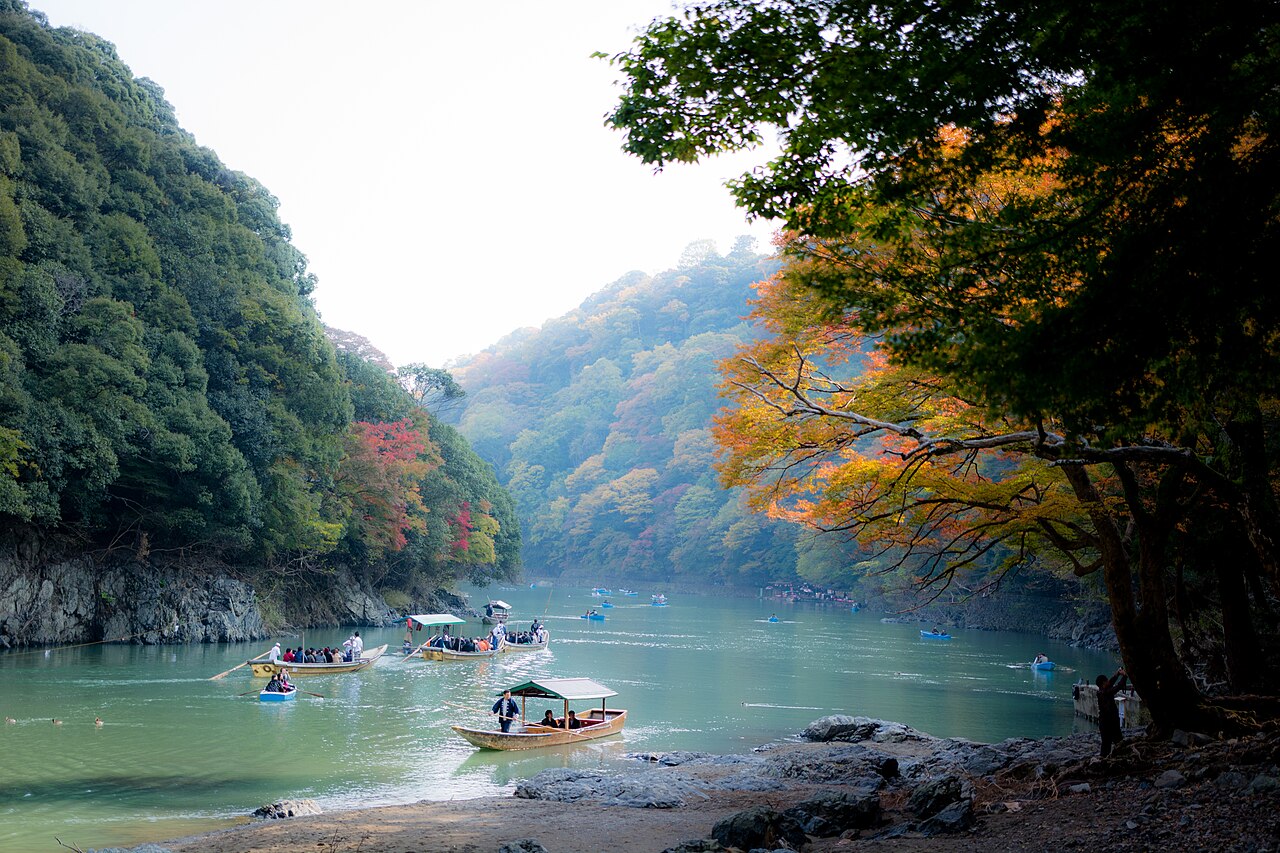
Large rocks and strangely shaped boulders are scattered on the riverbed, each with its own charm and each handed down with a story. The rocks carry marks left by the boatmen's poles and by ropes used to haul return boats up by hand, telling the history of the ride. In spring there are cherry blossoms along the river, and petals scatter in the river breeze.
In autumn the valley seen from the Sagano Romantic Train turns red and yellow, and trees dyed in those colours spread beyond the window. Lighting devices along the route illuminate the autumn leaves that color the valley, which is otherwise dark. In winter, snow-covered Arashiyama may be seen in the background from the Sagano Romantic Train, depending on luck and timing.
Getting to Arashiyama and Sagano
New to rural buses and one-man trains? See how to ride them, step by step.
| Route | Item | Detail |
|---|---|---|
| Kyoto Station, Rapid Service | To Saga-Arashiyama Station | About eleven minutes |
| Saga-Arashiyama Station | To Togetsu-kyo Bridge area | About eight minutes on foot |
| Nagatsuji-dori Street entrance | To Togetsu-kyo Bridge | Four minutes on foot |
| Arashiyama Station, Keifuku Dentetsu Arashiyama Line | To Tenryu-ji | Five minutes on foot |
| Saga-Arashiyama Station, JR Sagano Line | To Tenryu-ji | Thirteen minutes on foot |
| Shijo-Omiya Station, Randen Arashiyama Main Line | To Arashiyama Station | Twenty-four minutes |
| Shijo-Omiya Station, Randen Arashiyama Main Line | To Randen-Saga Station | Twenty-two minutes |
| Randen | One-day free ticket, adult | Seven hundred yen |
| Kyoto City Bus | Ordinary flat-fare section, adult | Two hundred thirty yen |
| JR Saga-Arashiyama Station | To Otagi Nenbutsu-ji, taxi | About five minutes |
| JR Saga-Arashiyama Station | To Otagi Nenbutsu-ji, walking | About one hour |
| Torokko Arashiyama Station | To Saga-Arashiyama Station | About twenty minutes on foot |
For an overnight stay in Kyoto, browse places to stay in Kyoto.
Hours and Fees
| Place | Item | Time or fee |
|---|---|---|
| Tenryu-ji | Hours | Eight thirty to seventeen hundred |
| Tenryu-ji | Last admission | Sixteen fifty |
| Tenryu-ji | Garden, high school and older | Five hundred yen |
| Tenryu-ji | Garden, elementary and middle school | Three hundred yen |
| Tenryu-ji | Cloud Dragon, special admission | Five hundred yen |
| Sagatorimoto Machinami Preservation Hall | Hours | Ten to sixteen hundred |
| Hozu River boat | Shared boat, adult | Six thousand yen |
| Hozu River boat | Shared boat, child | Four thousand five hundred yen |
| Otagi Nenbutsu-ji | Entry, children under ten free | One thousand yen |
Fees and hours were checked against official sources on 16 November 2026.
Thinking of staying overnight?
Compare places to stay near Kyoto →
Disclosure: This post may contain affiliate links. If you book through them, we may earn a commission at no extra cost to you.