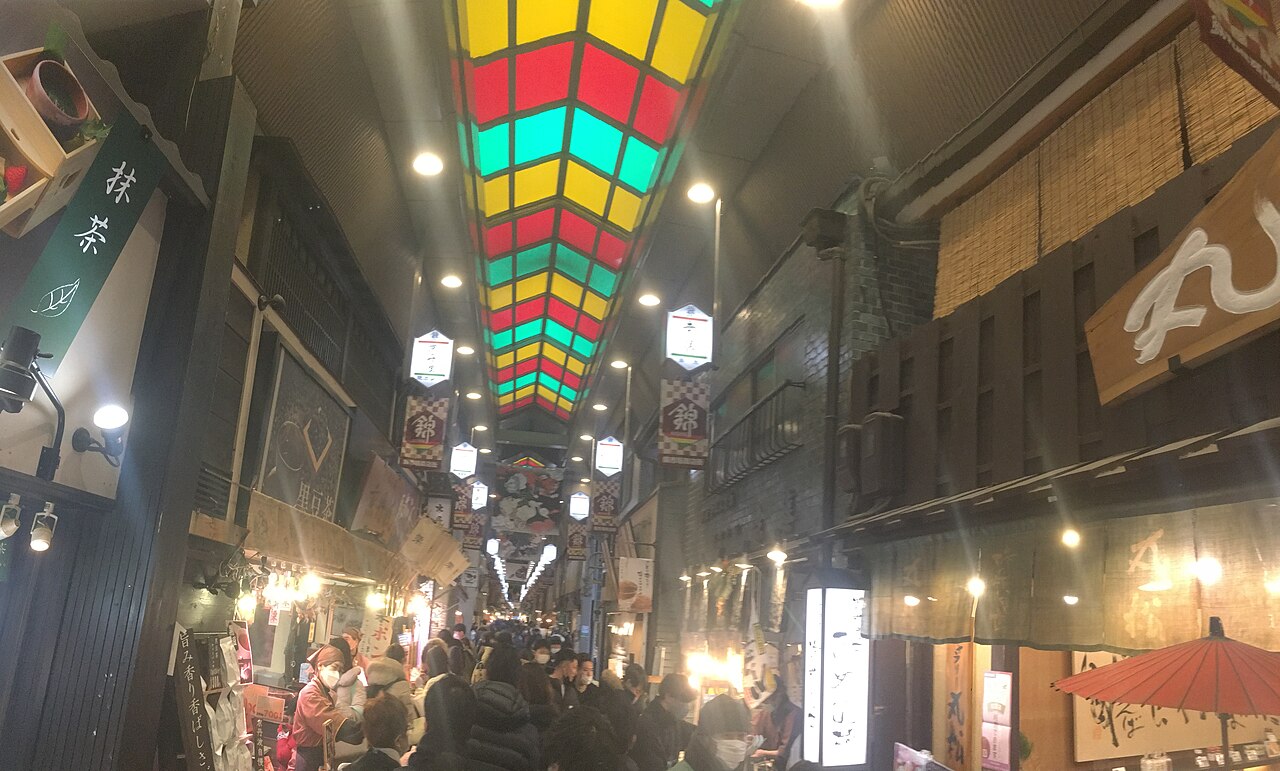
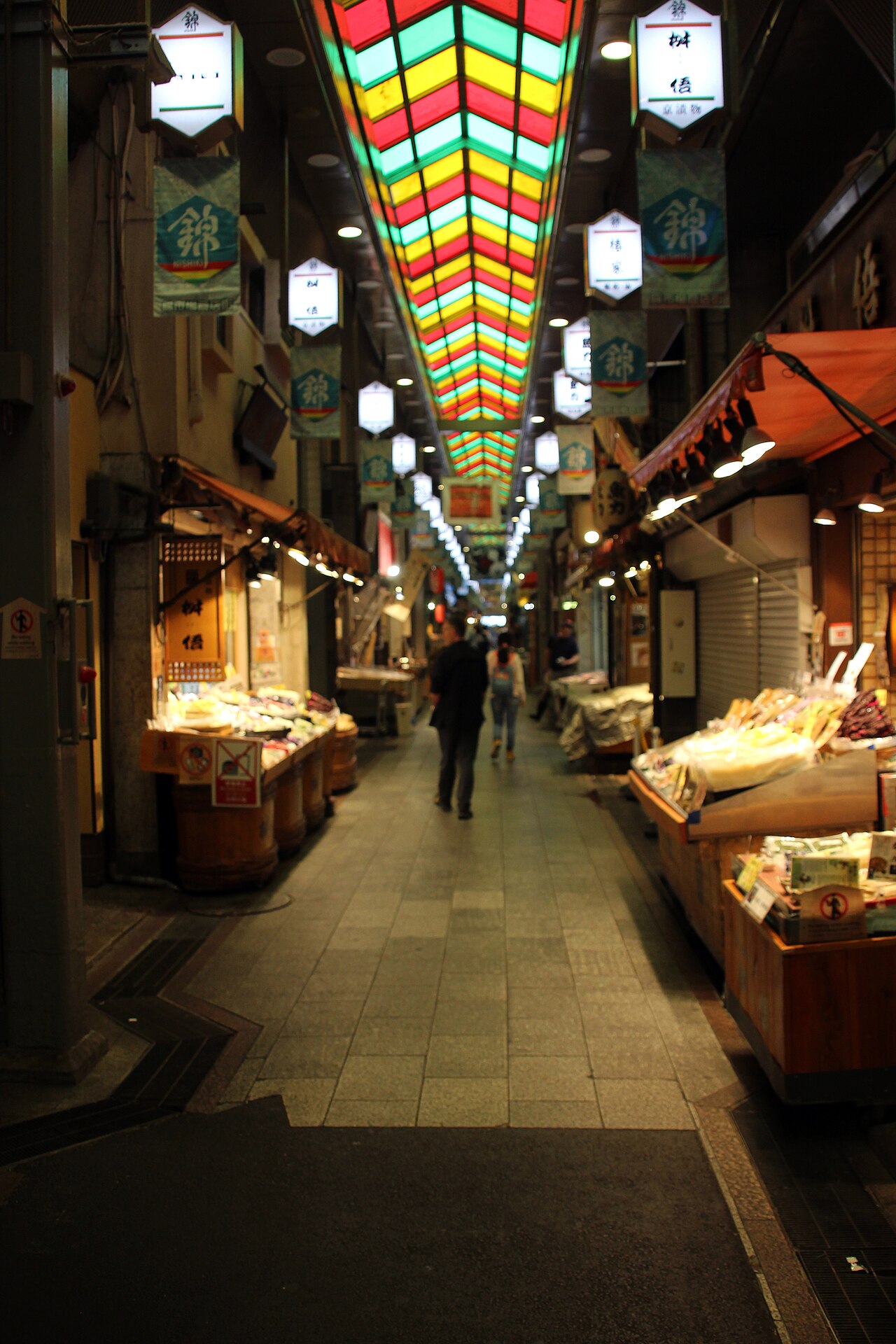
Nishiki Market fits its food into one street: Nishiki-koji runs from east to west, with shops lining both sides. Many of them cook on the spot, and many others sell processed foods that can be eaten right away. The red, yellow and green arcade keeps the stroll going on rainy days, and paintings by Ito Jakuchu appear on shop shutters.
For a visit built around eating, start with the skewers and takoyaki, move on to the dashimaki omelet shops, and end at the tsukudani counter where almost all the products can be sampled. Anyone who wants a shrine as well can add Nishiki Tenmangu, with its mechanical omikuji and its spring water.
Eating at Nishiki Market: Skewers, Takoyaki and Where to Stand
Eating here begins with picking a shopfront, because so many shops cook on the spot or sell food that is ready to eat. One shop builds its menu around grilled skewers and deep-fried skewers and works as both eat-in and takeout, which makes it a simple place to begin.
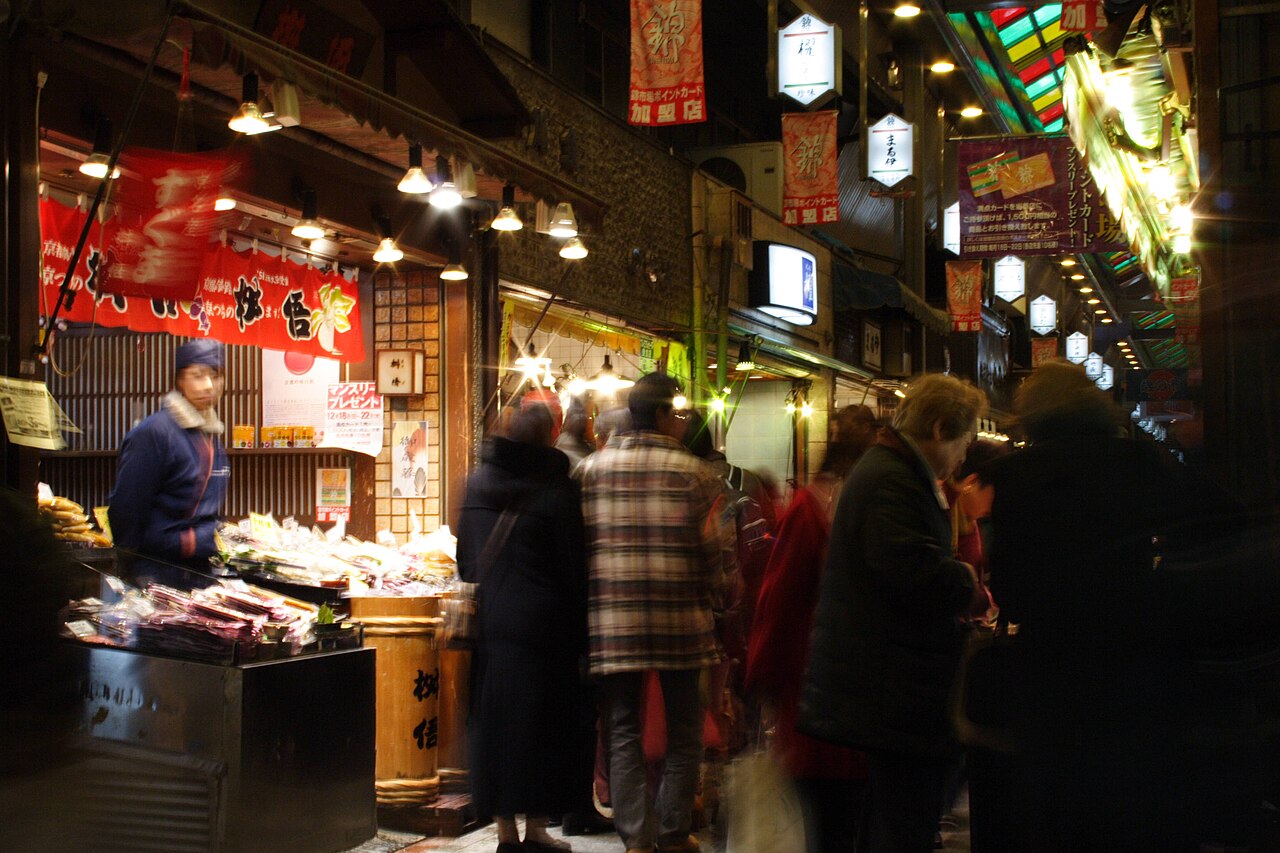
Karikari Hakase sells crispy takoyaki. Yakitori Torikatsu is a yakitori specialist that grills over selected charcoal on high heat, and its skewers are larger than usual. For something to sit down with, a shop serving Tango craft beer and sausages pours inside, and one omelet shop serves its fluffy grilled dashimaki for eating inside the shop.
The market's association asks visitors not to eat while walking. Eat in front of the shop where the food was bought, or inside it, before moving on. The reason is practical: walking through the market with food in hand can lead to trouble such as soiling other customers' clothes. Treat each purchase as its own short pause at one shop.
Fish Stalls, Oysters and Eel in the Morning Preparations
Preparation at one fish shop starts from six in the morning, and what follows is the day's sashimi, grilled dishes such as eel and salted mackerel, and simmered dishes set out for sale. The same shop has seats for eating those dishes on the spot. At another fish shop, the scent of fish being grilled drifts through the room.
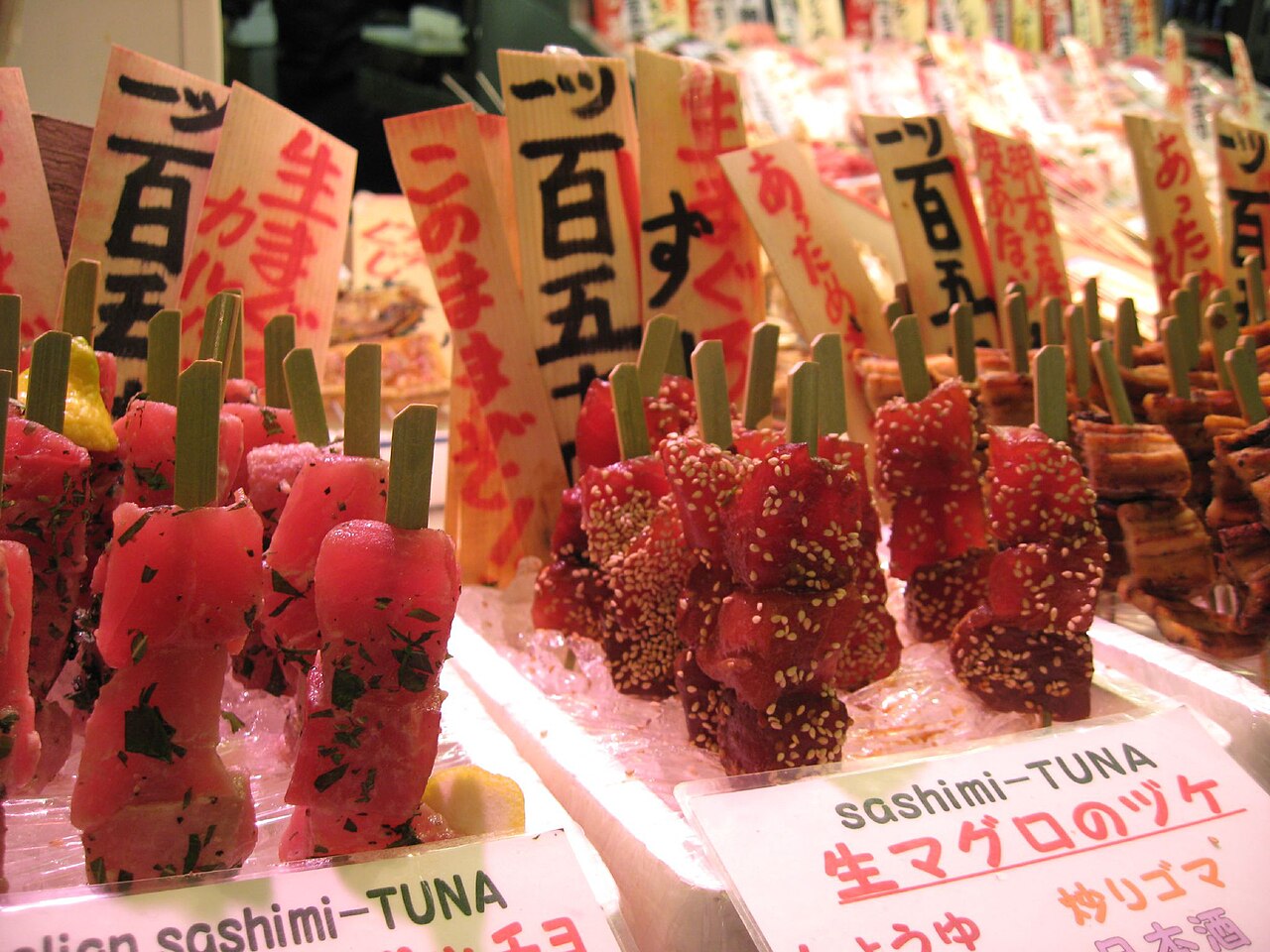
Oysters have their own specialist: a raw oyster shop in business for about one hundred years, which also puts sashimi, obanzai and tempura on its menu. One shopfront displays small packs of sashimi, shell-on oysters and fried pufferfish. Another shop cooks at the back, simmering sardines and mackerel with ginger and seasoning white fish lightly.
Daikokuya grills eel over charcoal with its secret sauce, and the west branch of Notoyo makes eel kabayaki grilled over binchotan charcoal its signature item. Because that branch handles river fish and needs to keep them alive, it uses Nishiki's groundwater for everything except washing.
A long-established shop founded four hundred years ago still has its old well as it was. Halfway down that well is a chamber once used to store fish and other food in the era before refrigerators. With the fish side of the market in mind, give time to the morning preparation, the oysters and the charcoal-grilled eel.
Pickles, Yuba, Namafu and Dashimaki
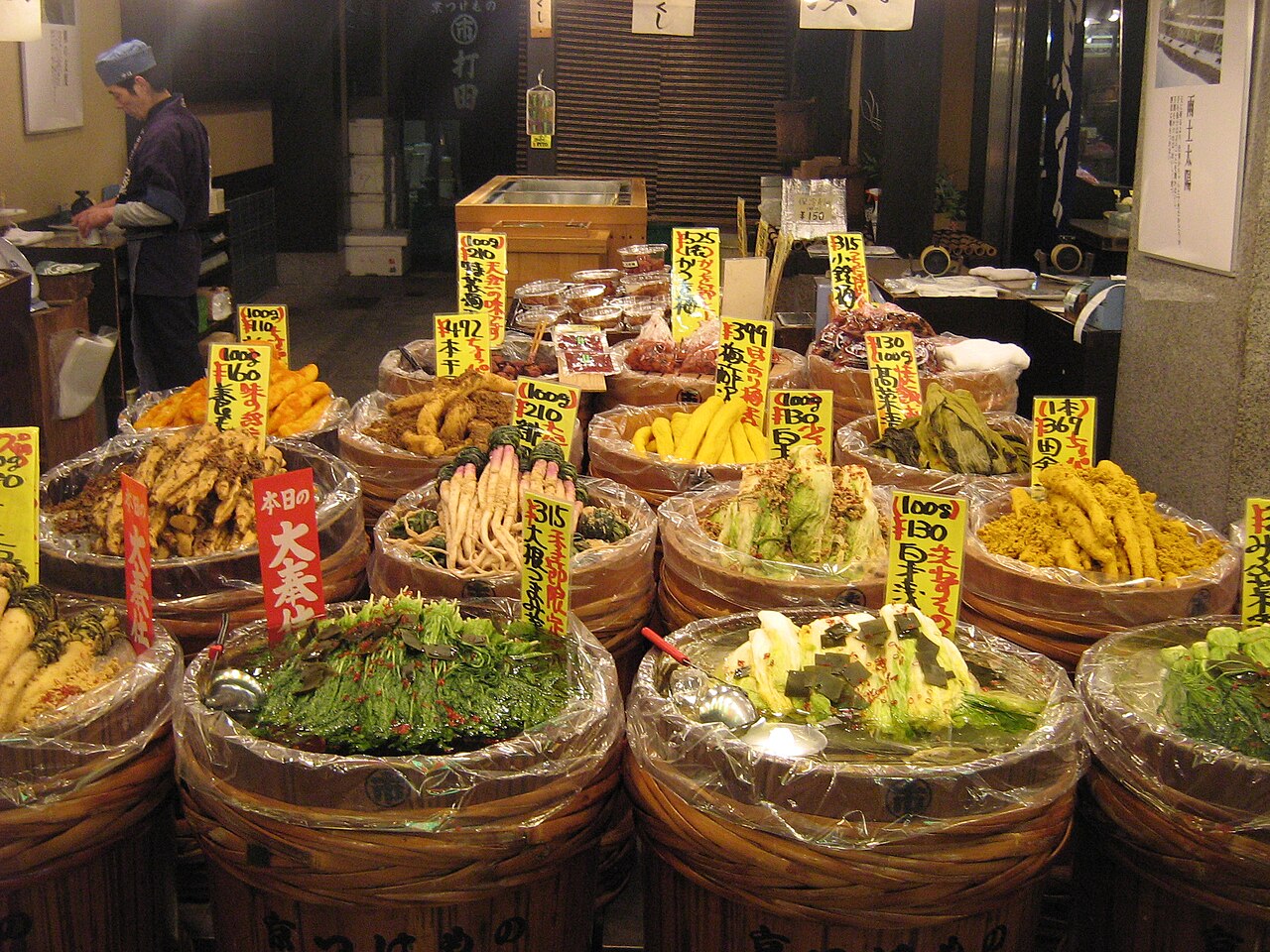
Pickle shops here each work in their own way. One pickles vegetables every day in the workshop at the back of the shop, and another makes asazuke from a yellow-cored Chinese cabbage pickled in low-salt kombu dashi. A third grows some of its Kyoto vegetables on its own farm, and a fourth adjusts the weights and salt with each season.
Soy foods and namafu make up another group of shops. A tofu shop displays tofu, fried tofu, ganmodoki and fresh yuba made in Yosano town in Tango. One namafu maker still shapes its namafu by hand without relying on machines, and another sells creative namafu in white, millet and mugwort types alongside namafu dengaku brushed with homemade miso.
Dashimaki, the rolled omelet, has its own specialists. At Miki Keiran the copper pans are much longer lengthwise than household pans, and the egg and dashi mixture is rolled quickly from the near side to the far side over high heat, a method called Kyo-maki. Tanaka Keiran bakes its dashimaki fluffy with plenty of dashi and no sugar.
Tsukudani, Sweets and Shops That Let You Sample
Sampling is built into the shopfront at KAI, a specialist in furikake, chinmi delicacies and otsumami snacks. The front is set up like a counter with products lined up on it, and almost all of them can be sampled. Nomura Tsukudani carries about one hundred kinds of tsukudani, enough to make choosing the main task there.
A senbei and nureokaki shop right inside the western entrance steams domestic rice, pounds it into mochi, brushes it with a secret soy sauce glaze and grills it. Another shop sells mainly Tanba black bean confectionery and has a spot at the back of the shop for eating and drinking.
Dried and salted fish are the take-home side of the market. Sankyo Suisan deals in salted and dried goods and in delicacies such as karasumi and konoko, and Hatanaka Shoten stocks takeaway items including miso-pickled fish and heshiko. If eating on the day matters more than taking food home, pass these by. One eatery has terrace seating instead.
Nishiki Tenmangu: Mechanical Omikuji, the Stroked Bull and Spring Water
Walking up to the mechanical omikuji at Nishiki Tenmangu Shrine sets it going: kagura music starts playing and a lion dance begins when a person approaches. The omikuji come in six types, including general, Japanese-English, love and children's versions, so choosing one is part of the visit.
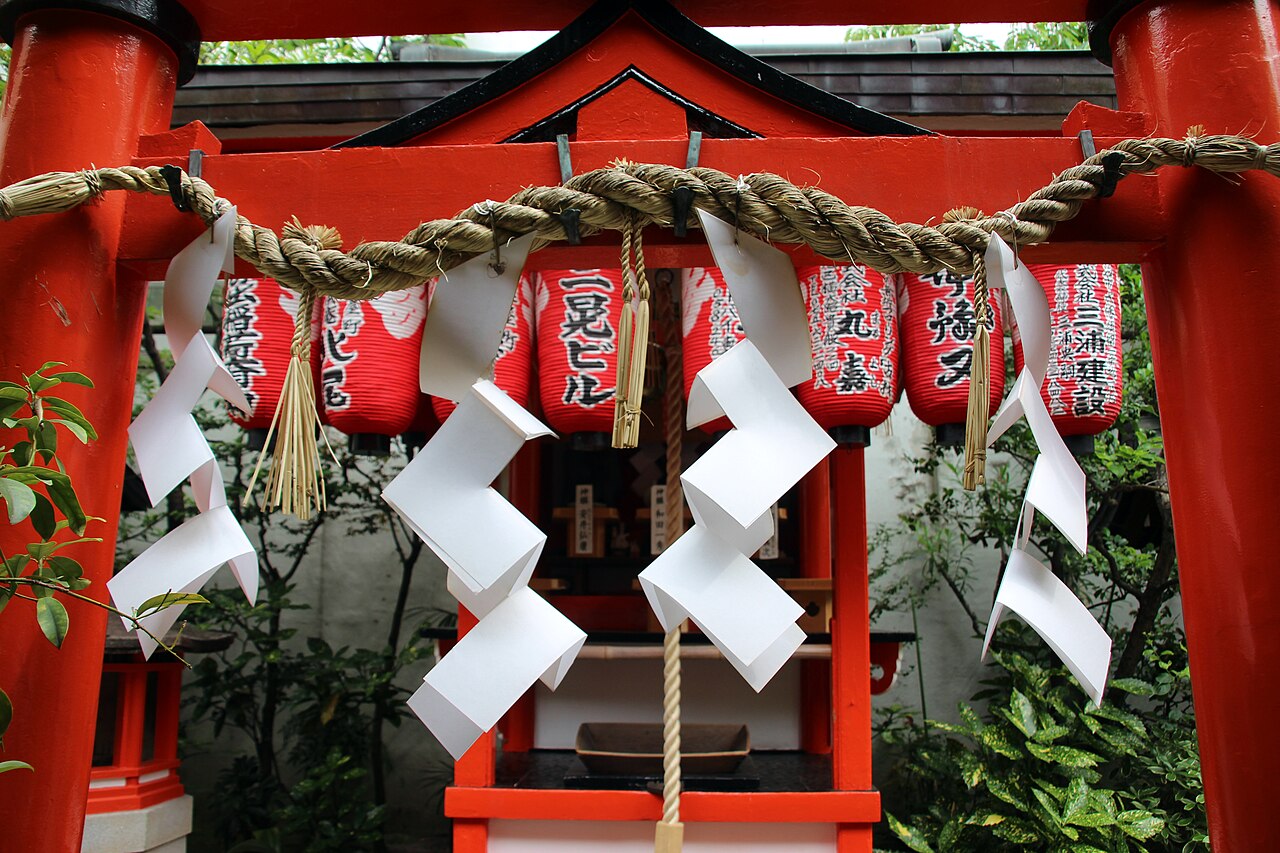
Pressing the button on the shrine's kamishibai robot makes wooden clappers ring out and starts the picture story. It tells the story from the birth of Sugawara no Michizane to the present with illustrations and audio. The shrine also has a reclining bull statue known as the stroked bull, dedicated as a symbol of diligence, compassion and health.
Nishiki no Mizu, the shrine's spring water, wells up from underground within the grounds, and many people come early in the morning to draw it. The shrine asks that the water be boiled before drinking, so it is something to carry away rather than to drink on the spot. Gion and Kiyomizu-dera each have their own guide.
Getting to Nishiki Market
New to rural buses and one-man trains? See how to ride them, step by step.
| Route | Item | Detail |
|---|---|---|
| Subway Karasuma Line | Shijo Station to Nishiki Market | about three minutes on foot |
| Hankyu Kyoto Line | Karasuma Station to Nishiki Market | about three minutes on foot |
| Hankyu Kyoto Line | Kyoto-Kawaramachi Station to Nishiki Market | about four minutes on foot |
| Keihan Main Line | Shijo Station to Nishiki Market | about ten minutes on foot |
| Kyoto City Bus route five from Kyoto Station | a city bus stop to Nishiki Market | about two minutes on foot |
| Hankyu | Kawaramachi Station to Nishiki Tenmangu Shrine | three minutes on foot |
| Keihan | Gion-Shijo Station to Nishiki Tenmangu Shrine | ten minutes on foot |
| City Bus routes four, five, seventeen and two hundred five | a city bus stop to Nishiki Tenmangu Shrine | five minutes on foot |
If you would rather stay overnight, places to stay in Kyoto is a place to start.
Hours and Fees
| Place | Item | Time or fee |
|---|---|---|
| Nishiki Tenmangu Shrine | Gate | opens at eight in the morning and closes at eight in the evening |
Fees and hours were checked against official sources on 19 November 2026.
Thinking of staying overnight?
Compare places to stay near Kyoto →
Disclosure: This post may contain affiliate links. If you book through them, we may earn a commission at no extra cost to you.