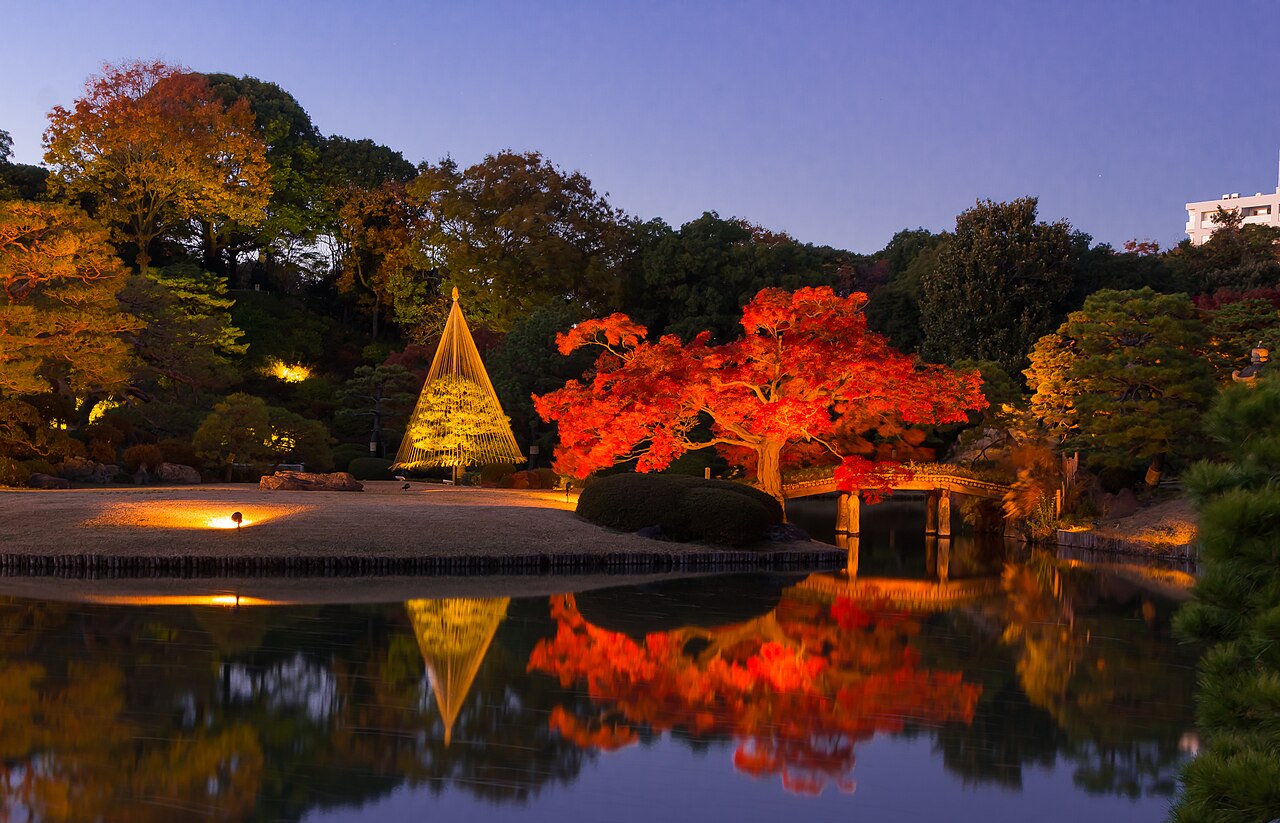
Walking around the pond at Rikugien passes islands, a stone bridge and a tea house beside a stream. Kyu-Furukawa Gardens sets a Western residence and a rose garden on a slope above a Japanese garden built around the Shinji pond. From late November to early December, Rikugien lights the autumn-foliage areas of its garden at night. At Kyu-Furukawa Gardens, roses can be seen until early December.
Rikugien Garden: Walking the Pond, the Stone Bridge and the Stream
Rikugien is a pond garden with islands, a stone bridge, a narrow path and a stream with a waterfall.
Standing at Deshio-no-minato puts Horaijima on the left and Naka-no-shima on the right. Naka-no-shima is an island in the pond that carries a pair of garden hills, Imo-yama and Se-yama. Looking across the water from this point takes in both islands and the hills together.
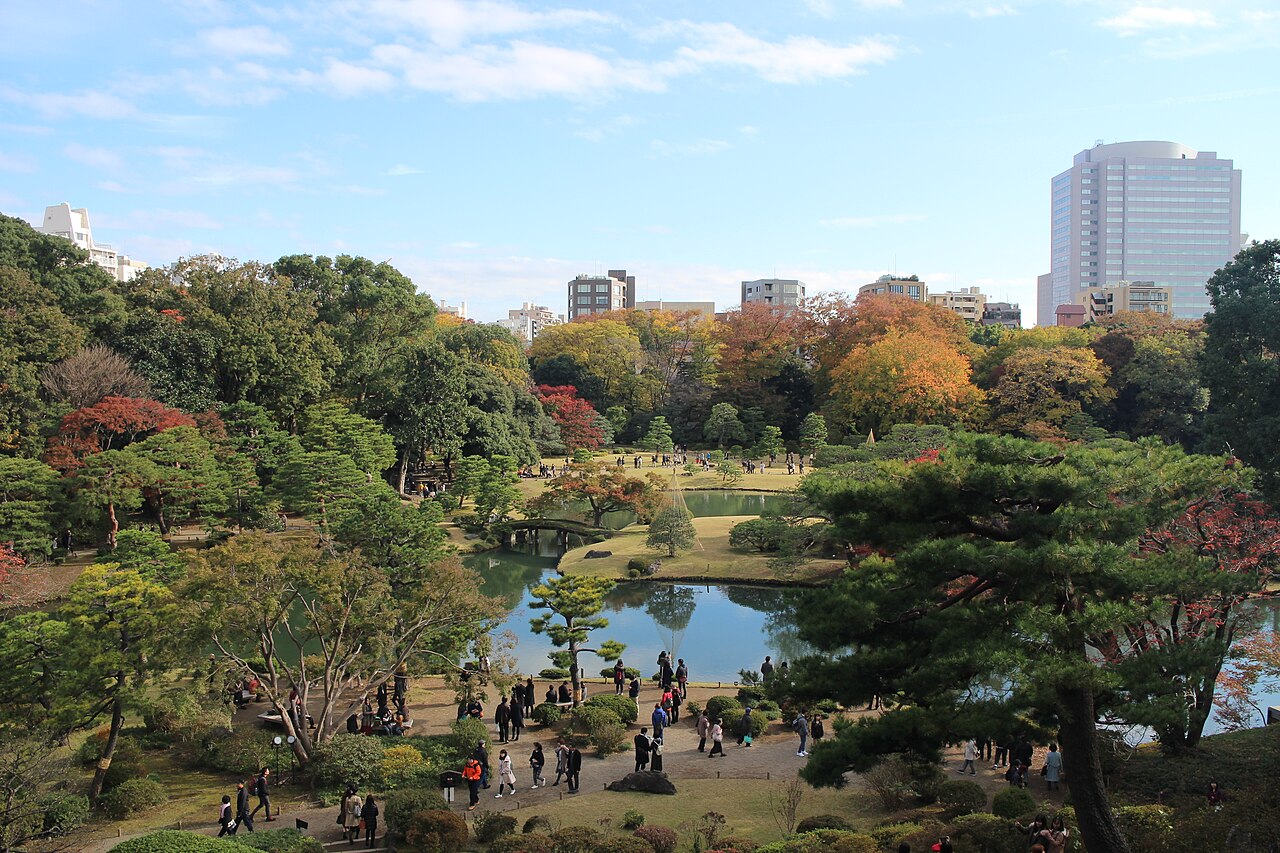
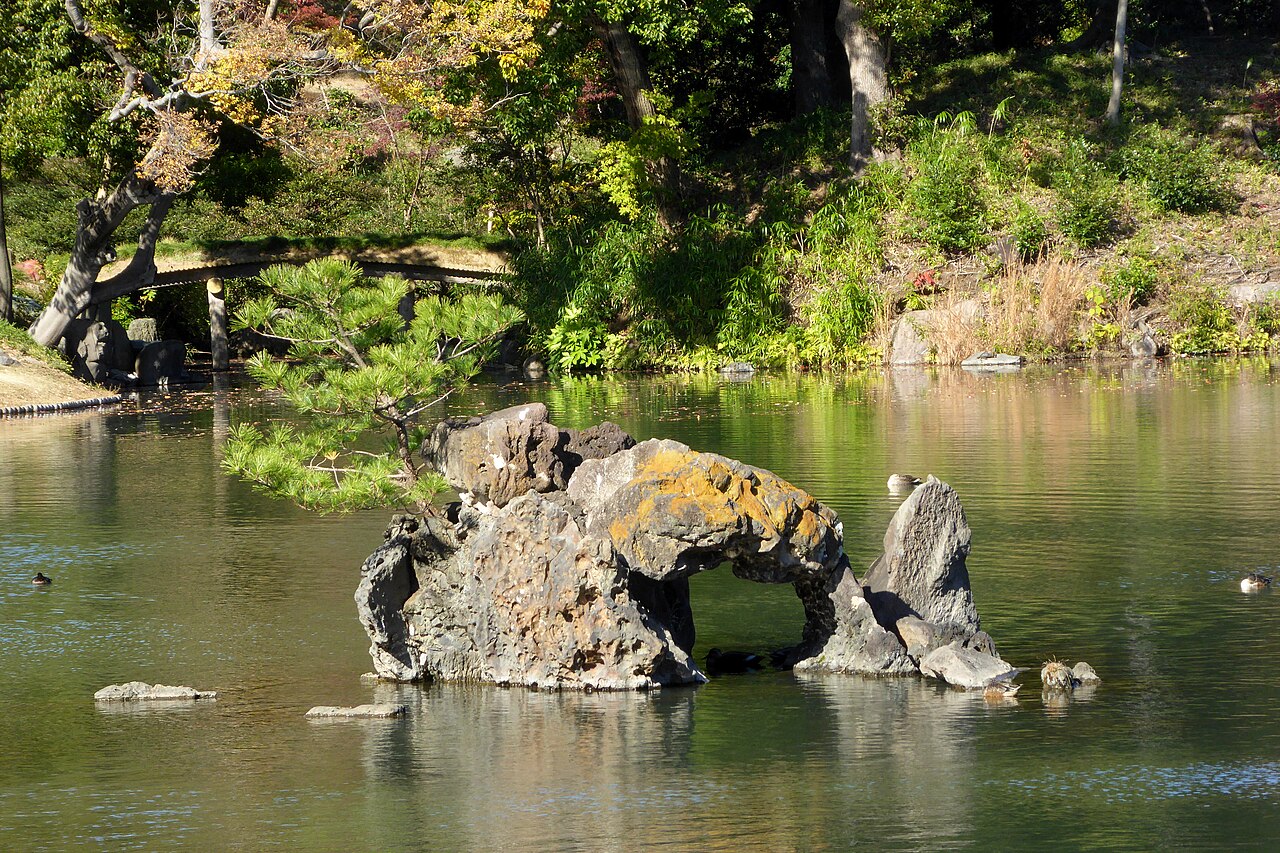
Walking the pond also brings Horaijima into view as a small island made of stones. The Togetsukyo stone bridge is built from big slabs of stone, so crossing it is a matter of stepping from slab to slab. Following Sasakani-no-michi takes the walk onto a very narrow path, which is likened to a strand of a spider's nest.
Stopping at Takimi-no-chaya puts visitors next to an arbor on a stream that runs through a gorge. A mountain stream runs through dark woodland here and comes down between rocks, throwing up spray. From the arbor beside the waterfall, the sound of the stream's descending water is audible.
Taking matcha at Fukiage Chaya comes with a view of the pond. The matcha set there pairs the tea with a seasonal-style fresh confection. Joining the garden guide is possible on weekends and public holidays, and an English-language guide for foreign visitors runs on some Sundays. Panels on display through early December introduce Waka-no-ura in Wakayama, the model for the garden design of Rikugien.
Rikugien Autumn Leaves and the Night Viewing Until Early December
Rikugien's autumn-foliage areas are lit at night from late November to early December.
Looking for autumn colour at Rikugien means looking at Iroha maple, ginkgo and doudan-tsutsuji, the trees named among its autumn-colour plantings. Following the garden's own foliage report from late November leads to the maples around Tsutsuji-no-chaya. The same report places ginkgo trees at the crossroads on the way from Takimi-no-chaya toward Fukiage.
Viewing Tsutsuji-no-chaya from near a bridge takes in the building together with maples, a pairing the garden's late-November report also pictures. It then turns to the pond, where it shows yukitsuri rope supports alongside autumn leaves. Because the report dates from late November, it describes that point in the season and not every day of the viewing period.
Returning in the evening is the way to see the night viewing, held from late November to early December. The garden shuts once in the late afternoon and admits visitors again in the evening, so the night visit is a separate entry from a daytime walk. The lighting is centered on the autumn-foliage areas of the garden.
Walking the garden during the night viewing passes a pine whose branch tips are illuminated. Video is projected onto the outer wall of a storehouse, and photo spots are set up at several places in the garden. Stopping at a matcha tea house, which serves every day of the night viewing period, adds a set of matcha and Japanese sweets, and the same counter sells Rikugien original souvenirs.
Kyu-Furukawa Gardens: The Japanese Garden, Its Pond and Waterfalls
The Japanese garden of Kyu-Furukawa Gardens is centered on the Shinji pond, with a dry waterfall, the Otaki waterfall and an island.
Walking down from the Western garden leads to the Japanese garden, because the Western part sits on the slope and the Japanese garden was made on the lower level of the grounds. Entering it means passing a dense planting based mainly on shii. The planting here differs from the bright Western garden.
Following the Otaki waterfall from its start shows a winding stream that becomes several stepped cascades and ends in a deep pool. The dry waterfall uses a karesansui device, which expresses a landscape without water, and is built of granite, blue stone and gorota stone in the valley behind the sandy shore of the Shinji pond. The pond itself is built of Kurama flat stone and Iyo blue stone.
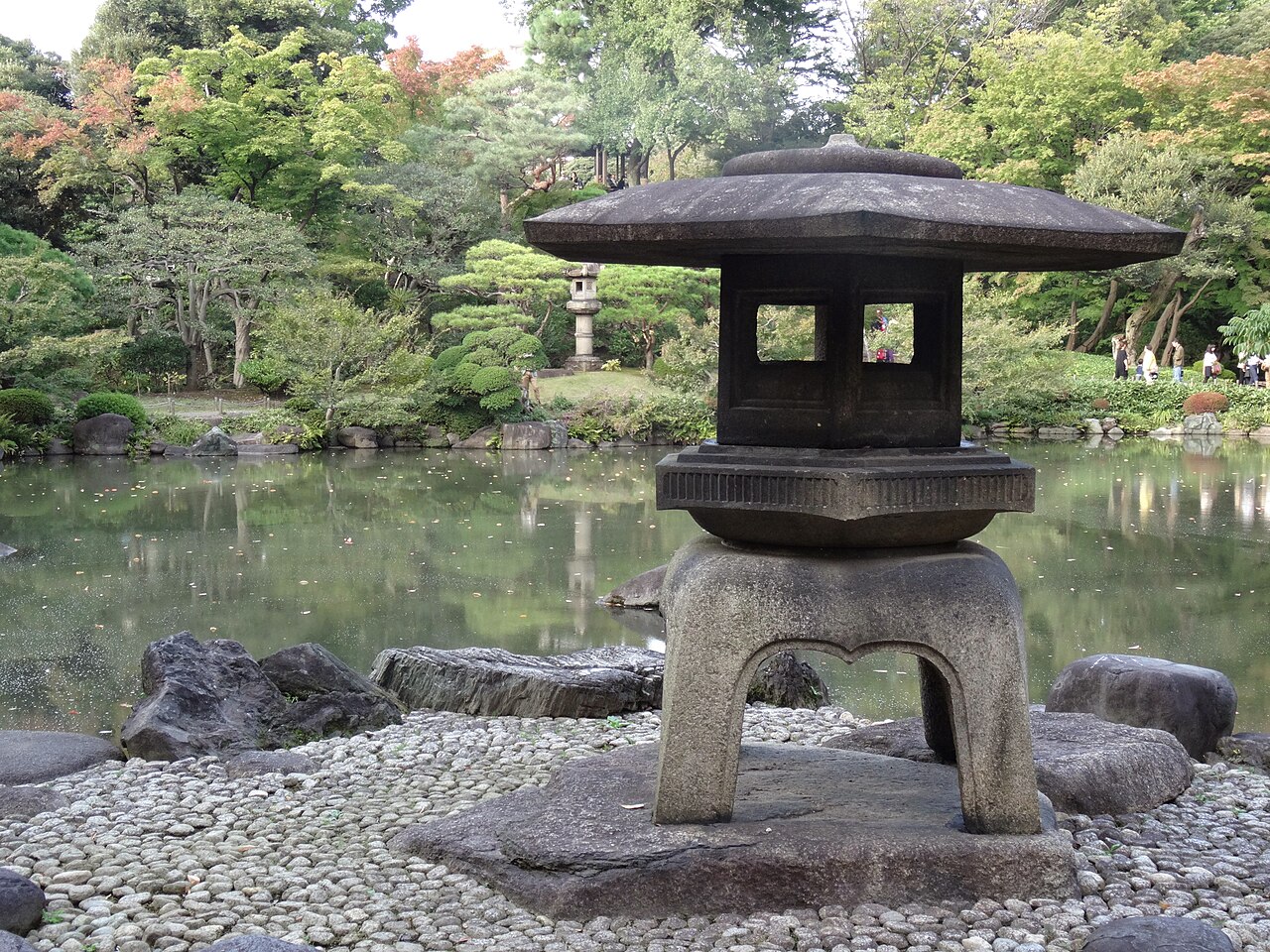
Visiting in November brings vermilion-red hazenoki leaves, which colour the Japanese garden while the colour of its trees deepens day by day. Looking beyond the ravine during the autumn event, which runs from early November to early December, shows a stone water basin that staff decorate every morning. Maple leaves that are changing colour are floated in the basin, and it shows a colour gradation.
Returning in winter changes the sights of the Japanese garden. The pines then carry yukitsuri supports with straw wrapping. The cycads are given frost protection, another seasonal sight of this garden.
Kyu-Furukawa Gardens: The Western Residence, Roses and Tea
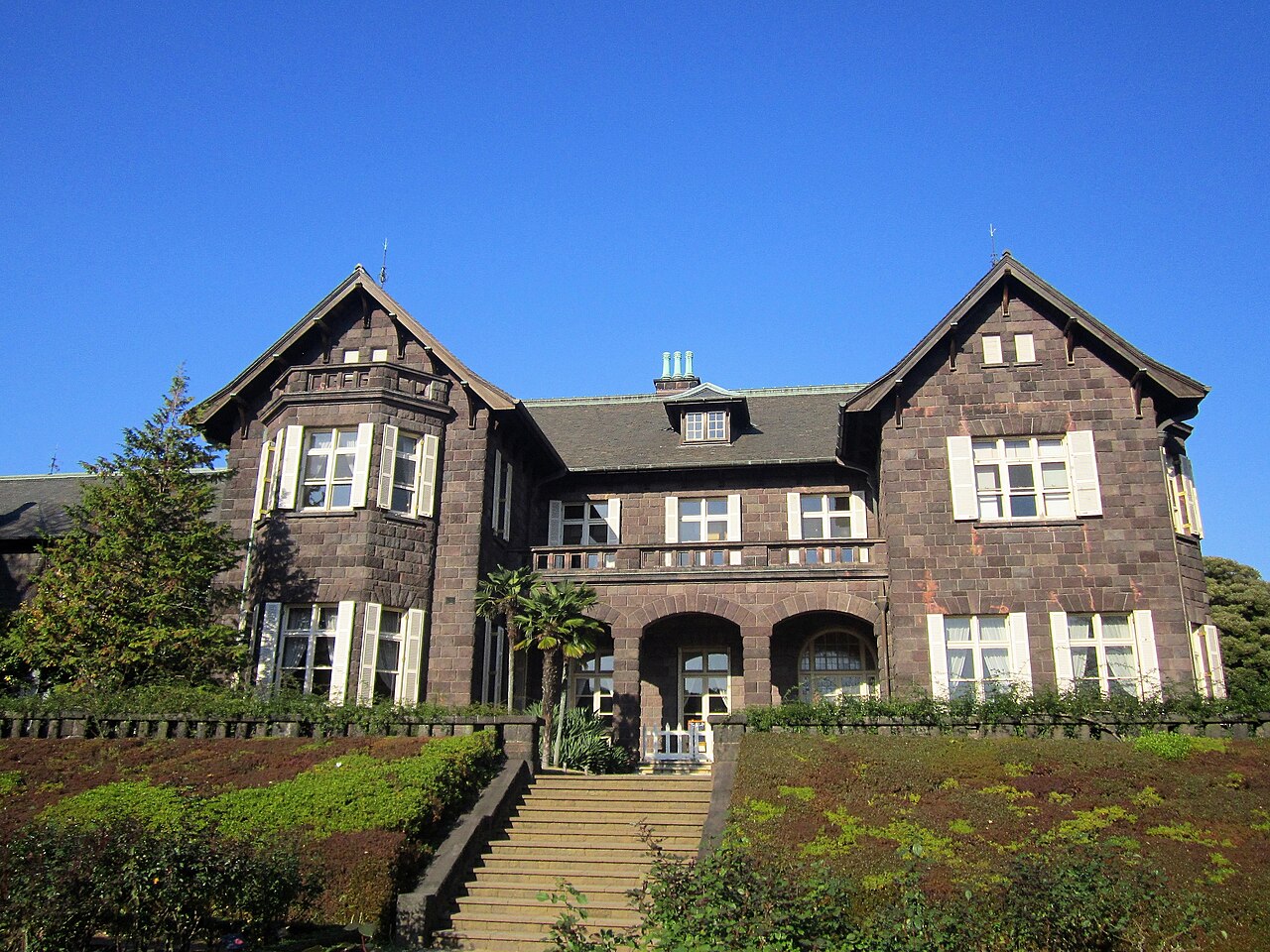
Kyu-Furukawa Gardens has a Western residence, a rose garden and a tea room inside the residence.
Approaching the Western residence means seeing a house and a Western-style garden that were both designed by the British architect Josiah Conder. The garden holds its autumn event from early November to early December. Visiting in that window combines roses with the autumn colour of the Japanese garden.
Walking through the rose garden is worthwhile until early December, while the roses are on view. In late November, a majority of the garden's rose varieties were in bloom. The rose garden becomes very crowded during the rose blooming period, so the Japanese garden below is a useful place to continue the visit.
Touring the Western residence without a guide follows a designated route on the ground floor through the hall, billiard room, study, drawing room, small dining room and large dining room, leaving out the Japanese-style rooms. Joining the guided tour adds the upper floor and the Japanese-style rooms, with commentary by museum staff. Ordering in the tea room, which occupies that last dining room, brings drinks and sweets such as pound cake, and a tea house in the garden serves matcha with dried sweets.
Buying rose ice cream or a bite-size rose yokan is possible at a shop that trades on weekends and public holidays, and on weekdays during event periods. Playing the garden's stamp rally, whose late period runs through late December, means answering quizzes or taking designated photos at spots in the garden to collect puzzle pieces. Participation requires a smartphone, and participants in this period receive a digital image for a phone wallpaper. Visitors staying overnight in the city can compare places to stay in Tokyo.
Getting to Rikugien and Kyu-Furukawa Gardens: Hours, Admission and Walking Times
New to rural buses and one-man trains? See how to ride them, step by step.
Details below follow the official guides.
| Item | Details |
|---|---|
| Rikugien | nine to five, entry until four thirty; three hundred yen, one hundred fifty for ages sixty-five and over; closed December twenty-ninth to January first |
| Kyu-Furukawa Gardens | nine to five, entry until four thirty; one hundred fifty yen; closed December twenty-ninth to January first; closes at noon on December fourteenth |
| Western residence of the Otani Museum | ten thirty to four thirty, last entry four; five hundred yen; closed Mondays |
| Rikugien night viewing, November twenty-fifth to December sixth | six to eight thirty in the evening, last entry seven thirty; advance ticket bought online one thousand yen; same-day ticket twelve hundred yen |
| Both gardens | shared ticket four hundred yen, two hundred for ages sixty-five and over; about eighteen minutes on foot between them |
| Time at Rikugien | about thirty minutes around the pond; about one hour for the whole garden, with a tea house stop |
| Walking from stations | Rikugien seven minutes from Komagome, ten from Sengoku; Kyu-Furukawa Gardens seven from Kami-Nakazato or Nishigahara, twelve from Komagome |
The autumn stamp rally of nine Tokyo metropolitan gardens, which runs until early December, includes both gardens and Hamarikyu Gardens.
Thinking of staying overnight?
Compare places to stay near Tokyo, Japan →
Disclosure: This post may contain affiliate links. If you book through them, we may earn a commission at no extra cost to you.