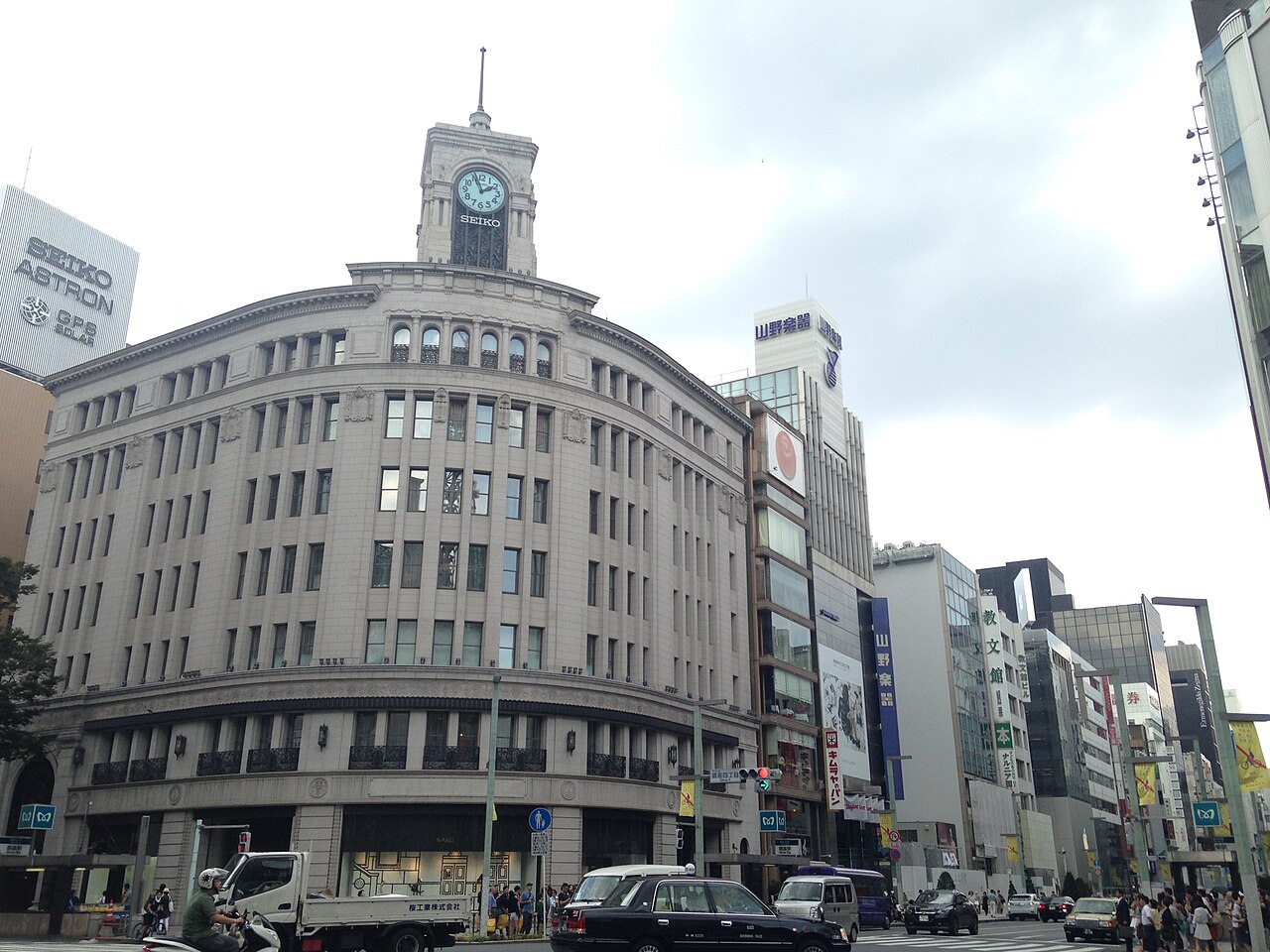
The restored gas lamps in Ginza are lit with gas, and the flames can be seen flickering. At Asahi Inari, a building's first floor is the worship hall and the main shrine is enshrined on the roof, connected to the ground by a pipe.
At a type foundry, pushing up part of the counter gives access to a workshop lined with type shelves. The Lion Beer Hall building has a muted pale-red exterior wall with a yellow Lion Beer Hall signboard.
Ginza-dori, Gas Lamps, GINZA SIX and Kabukiza
On weekends and public holidays, vehicle traffic is prohibited on Ginza-dori, the stretch of Chuo-dori from the first to the eighth block of Ginza, and only pedestrians can pass.
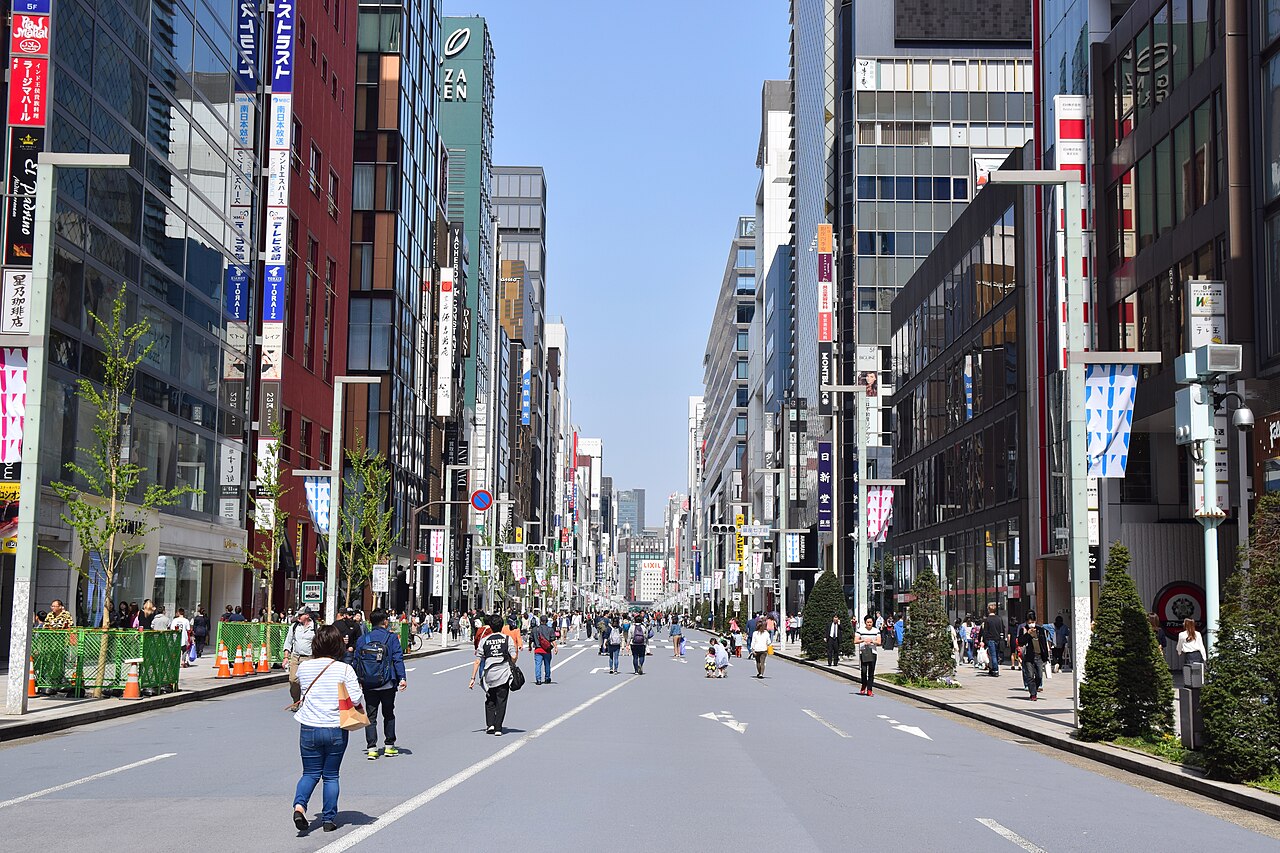
Four restored gas lamps stand along Ginza's gas lamp street, and the explanatory board is at the foot of the lamps.
At GINZA SIX, the teamLab Universe of Water Particles on the Living Wall is a video work depicting a waterfall whose appearance changes with the daily sunset. Patrick Blanc's Living Canyon is a vertical flat artwork that interweaves various plants, including species native to Japan, without using soil.
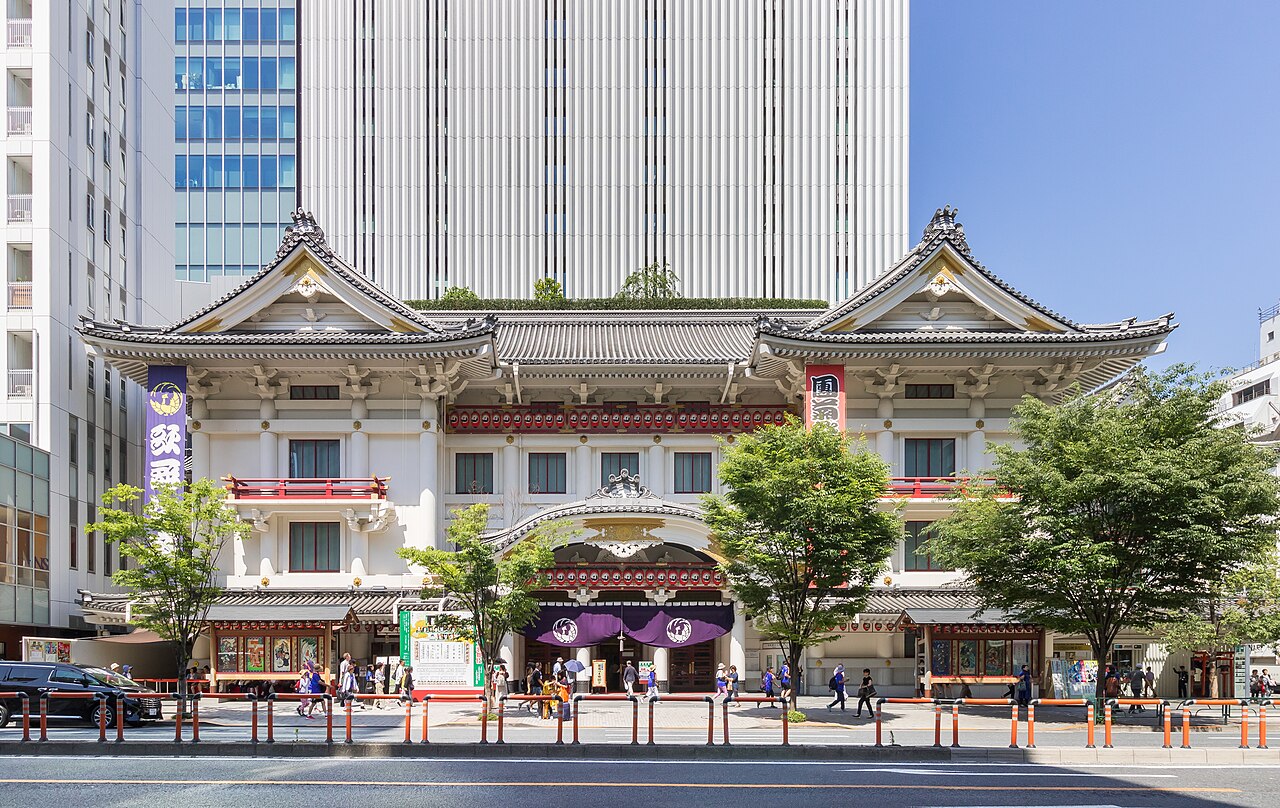
Kabukiza is a theatre where kabuki is performed throughout the year. Kobikicho Plaza sells stage photographs, called bromides, of the play being performed, from the middle of the performance month until the final day.
Small Shrines on Rooftops and in Alleys, from Kabuki Inari to Asahi Inari
Kabuki Inari Shrine faces Harumi-dori, and people who are not attending a performance can visit it to pray. A ceremony is held there on the first day and the final day of each kabuki run.
At Asahi Inari, the main shrine on the roof is connected to the ground by pipes filled with soil. The main hall on the rooftop can be visited while the building's elevators are running.
At Kōinari Shrine, the white wood and soft light of the new shrine building create a solemn atmosphere. The doors of the shrine building are opened only during special periods such as the Hatsuuma festival.
Toyoiwa Inari has two entrances, and its shrine hall is reached by going in between buildings.
A small Inari shrine stands in a narrow alley between Ginza Brick Street and Namiki Street in the fourth block of Ginza. Its banners are custom-made in a miniature size because the shrine is small, and the names of donors are handwritten to match the red of the banners.
Old Ginza: Post-War Stalls, Kyobunkan, Echigoya, Toraya and Itoya
Street stalls lined Ginza-dori after the war, and at night they were lit by acetylene lamps. They sold souvenirs, clothing, food and children's toys to US soldiers.
Inside the Kyobunkan building, handrails and window frames carry the look of an early Showa building, and an old fire-hose storage box stands in the wall beside the stairs to the basement.
A Ginza Birthplace Monument stands in front of Itoya, across the street from Echigoya.
The Toraya shop window displayed summery hats, including Panama hats, in the early summer season. On the first floor of Itoya, picture postcards and letter sets with a Christmas theme are displayed.
Behind the Main Street: Ginza Church, a School Building, a Type Foundry and a Barbershop
In the chapel of Ginza Church, the upper left and the back appear blue because outside light enters through blue glass. The Wednesday noon service is an Organ Meditation where visitors can hear pipe organ playing.
The three-storey school building is covered with ivy in spring, and its top-floor windows are all arched at the top. Seen from Sukiyabashi Park, the staircase on the school's rounded part leads up to the auditorium above the gymnasium.
At the type foundry, metal type is stored by the radicals of a Chinese-Japanese character dictionary. Behind the type storage shelves is a factory with casting machines and printing presses.
A folk-craft shop has its sign on Nishi-Ginza (Sotobori) street, in the eighth block, on the way toward Shimbashi. Small items such as teacups, small plates and hand towels stand out on its first floor, while the second floor displays clothing and large furnishings.
At a barbershop, Mozart music plays at a soft volume inside the shop, and three barber chairs are arranged with room to spare.
Breakfast, Bars, the Lion Beer Hall and Croquette Soba
The melon cocktail at TANAGOKORO THE BAR has a sweet melon aroma. The bar is a space in the basement of a building facing Chuo-dori, wrapped in the warmth of wood. The breakfasts at TASTE THE WORLD can be ordered all day.
At the Lion Beer Hall, the large round glass globes covering the bulbs have a polka-dot pattern modelled on beer foam, and several of the globes give off a soft light. The chandelier of small glass globes is in the shape of a bunch of grapes.
In one column's description, the croquette soba has long green onions scattered in the bowl, with a round, tsumire-like croquette floating at the centre. The shop owner described the croquette as minced chicken bound with grated yam and egg and lightly fried.
The author of one column recalls a sweet scent, like vanilla essence mixed with caramel, from the second-floor tearoom of the Fujiya Sukiyabashi store. The author recalls the first floor as a confectionery counter, with Christmas boot-shaped candy sets hung in a row in December.
Getting to Ginza
New to rural buses and one-man trains? See how to ride them, step by step.
| Route | Item | Detail |
|---|---|---|
| Tokyo Metro Ginza Station, the exit for GINZA SIX | To GINZA SIX | two minutes on foot |
| Tokyo Metro Ginza Station, the exit for Kabukiza | To the Kabukiza Theatre | five minutes on foot |
| Tokyo Metro Ginza Station, the exit connected to GINZA PLACE | To GINZA PLACE | directly connected |
If you would rather stay overnight, places to stay in Ginza is a place to start.
Hours and Fees
| Place | Item | Time or fee |
|---|---|---|
| Ginza pedestrian zone on Chuo-dori | Days held | Saturdays, Sundays and holidays |
| Kobikicho Plaza at Kabukiza | During performance periods | nine thirty in the morning to six thirty in the evening |
| Kobikicho Plaza at Kabukiza | Non-performance days | nine thirty in the morning to six in the evening |
| Kobikicho Plaza at Kabukiza | Stage photograph (bromide) | six hundred yen |
| G Info tourist information centre | Hours | ten thirty in the morning to five thirty in the afternoon |
| G Info tourist information centre | On December thirty-first | closes at four thirty in the afternoon |
| TOURIST SERVICE CENTER TERMINAL GINZA | Hours | nine in the morning to nine in the evening |
| Yagura at Kabukiza | Orisume bento boxes go on sale | nine thirty in the morning |
| bills Ginza | Morning menu served | eight thirty to eleven in the morning |
Fees and hours were checked against official sources between 19 November 2026 and 22 November 2026.
Thinking of staying overnight?
Compare places to stay near Tokyo, Japan →
Disclosure: This post may contain affiliate links. If you book through them, we may earn a commission at no extra cost to you.