Senso-ji is a Kannon sacred site whose principal image, Sho-Kannon, is commonly called Kannon-sama. The way in is Nakamise, the main approach, which runs between the Kaminarimon gate and the Hozomon gate. Past the main hall and the pagoda come smaller halls, a second gate and a calendar of festivals. On New Year's Eve the grounds gradually fill with worshippers after evening, as people wait for the new year to arrive.
With limited time, follow Nakamise from the Kaminarimon gate to the Hozomon gate and continue to the main hall. With longer, add the Eko-do hall northwest of the main hall and the Nitenmon gate to its east, and check the festival dates in the table at the end.
The Approach: Kaminarimon, Nakamise and the Hozomon Gate
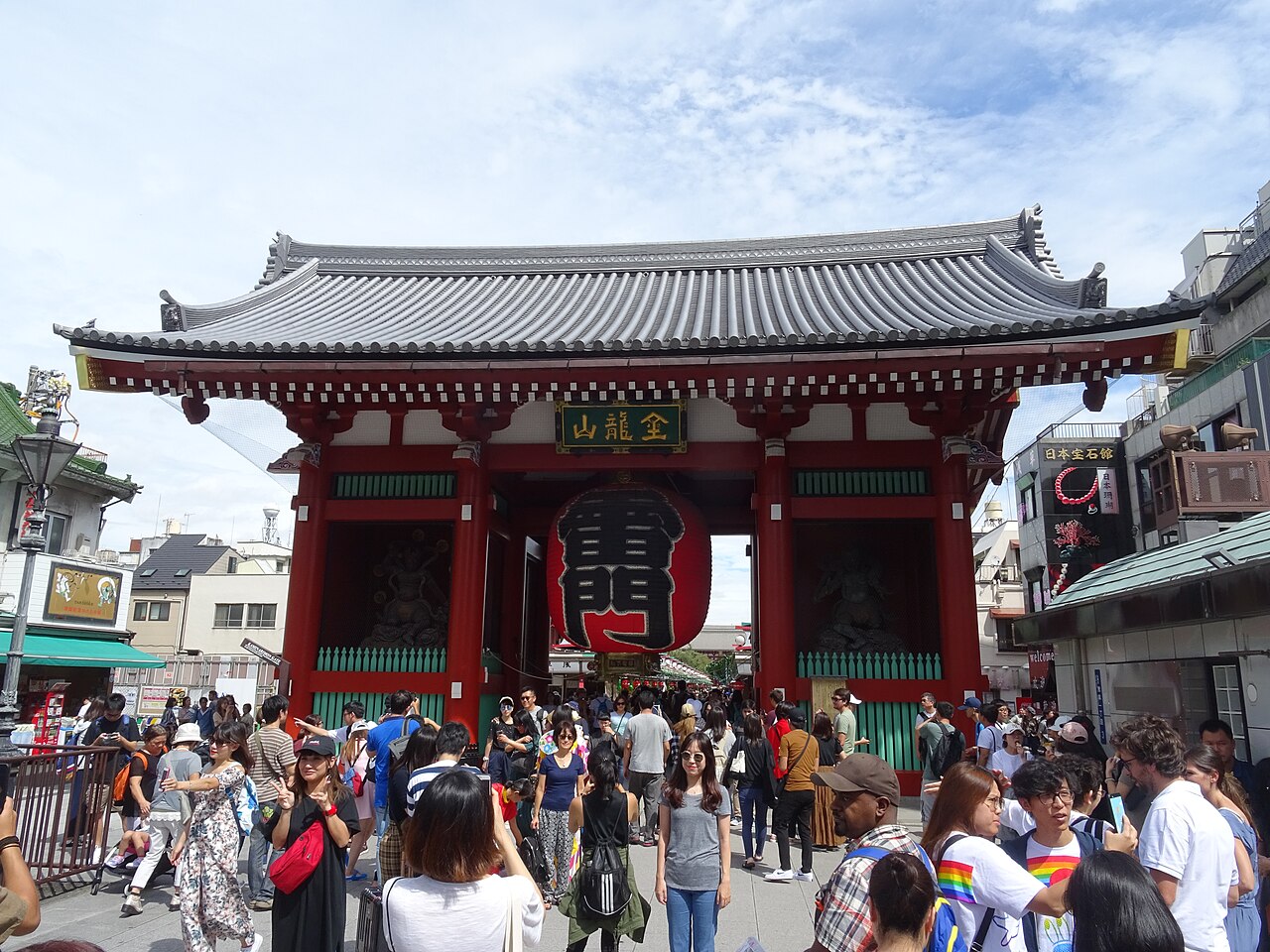
The Kaminarimon gate takes its name from the wind god and the thunder god enshrined on its left and right. Its large lantern is three point nine metres high and three point three metres wide, big enough that the dragon carving on its underside is a reason to look up from below. The current gate was rebuilt in the nineteen-sixties through a donation.
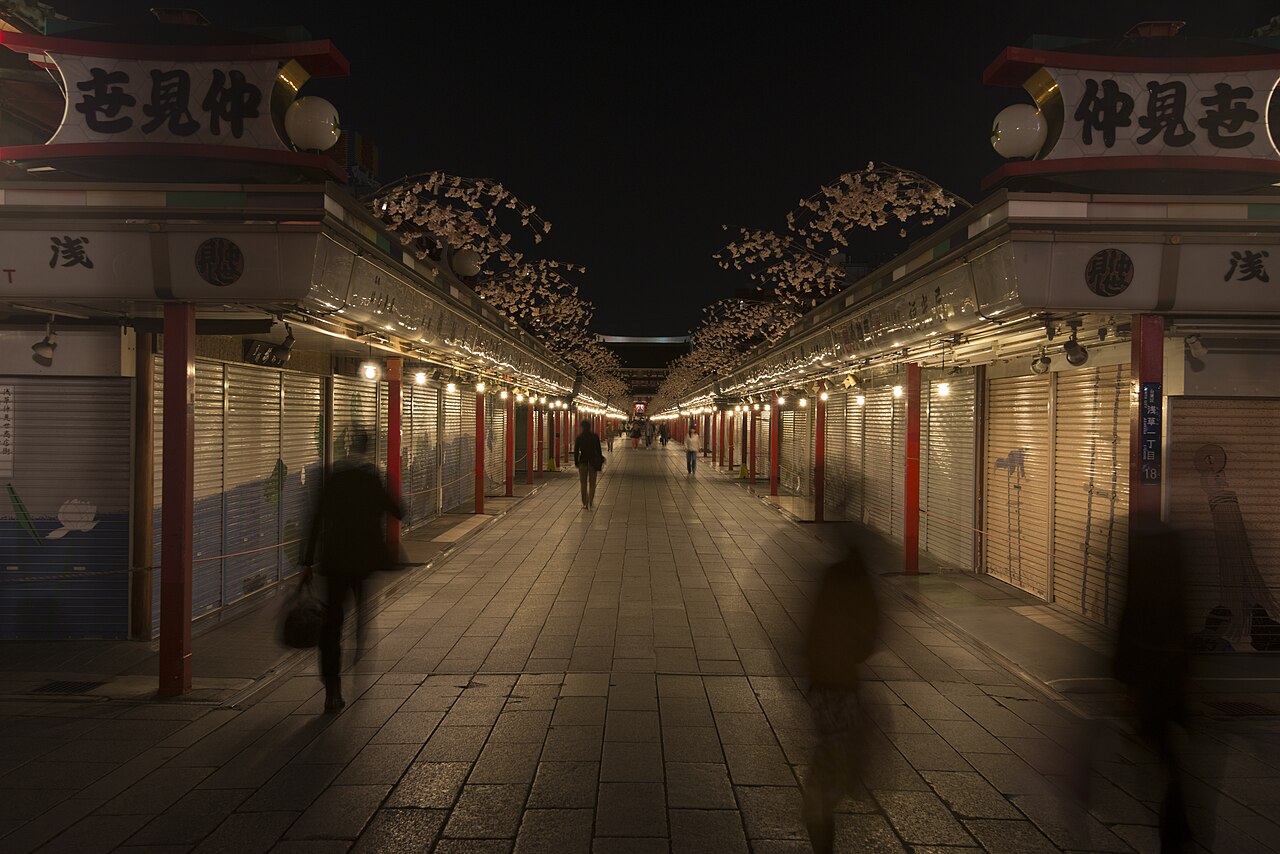
Nakamise stretches about two hundred and fifty metres from the Kaminarimon gate to the Hozomon gate, with vermilion-painted shops lining both sides. That length is the whole walk between the two gates, so the approach works as one continuous introduction to the temple.
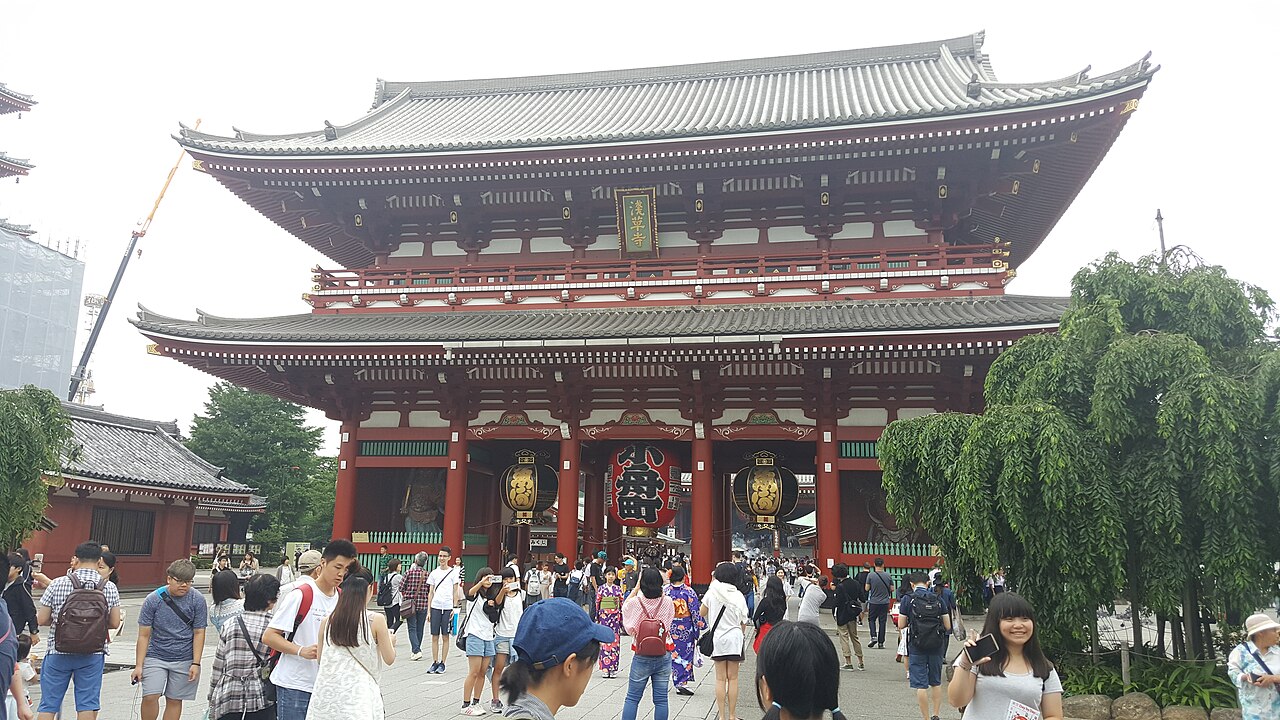
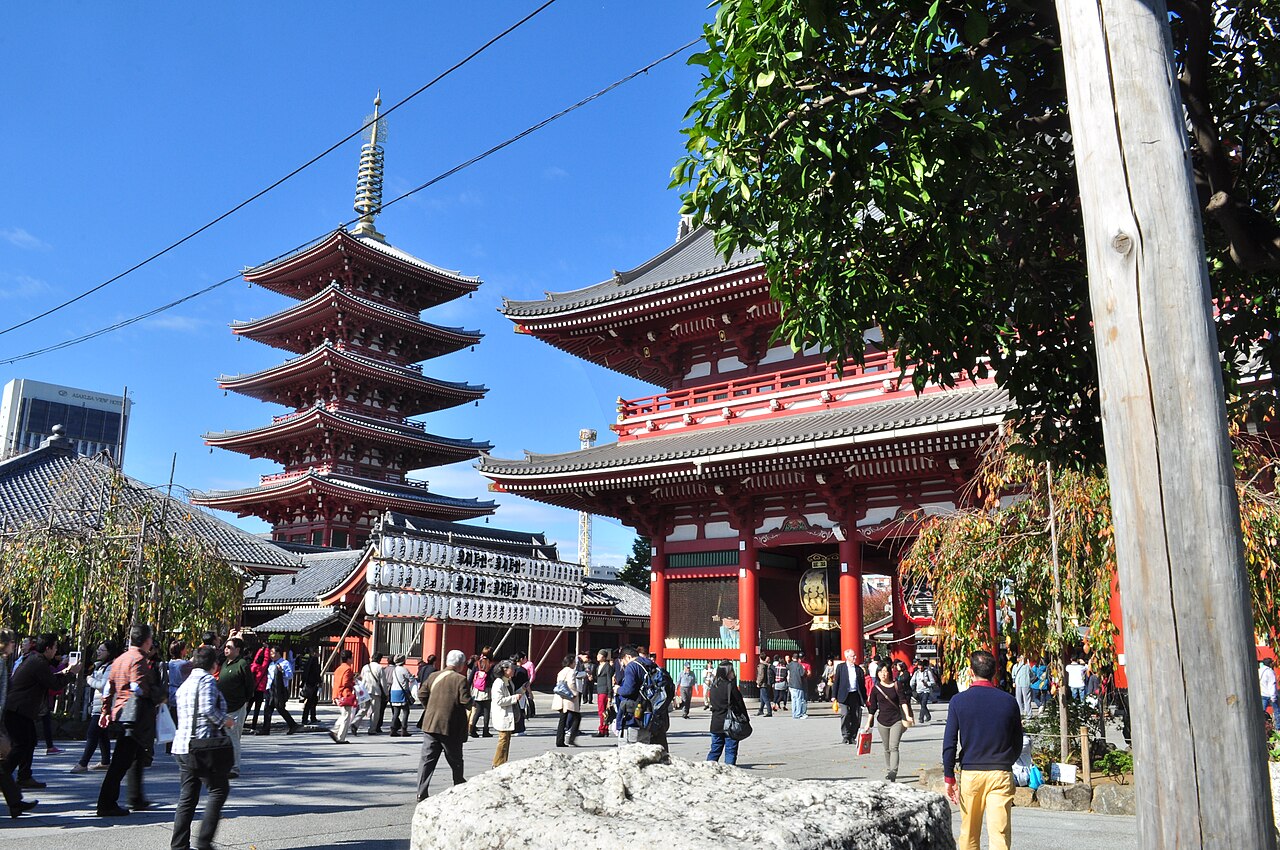
The first floor of the Hozomon gate is five bays wide: Nio statues are enshrined in the two bays at each end, and the central three bays form the passage, so walking through means passing between the Nio. The gate, rebuilt in reinforced concrete with a tiled roof, stores a set of sutras that is an Important Cultural Property of Japan.
The Main Hall, the Pagoda and the Water Pavilion
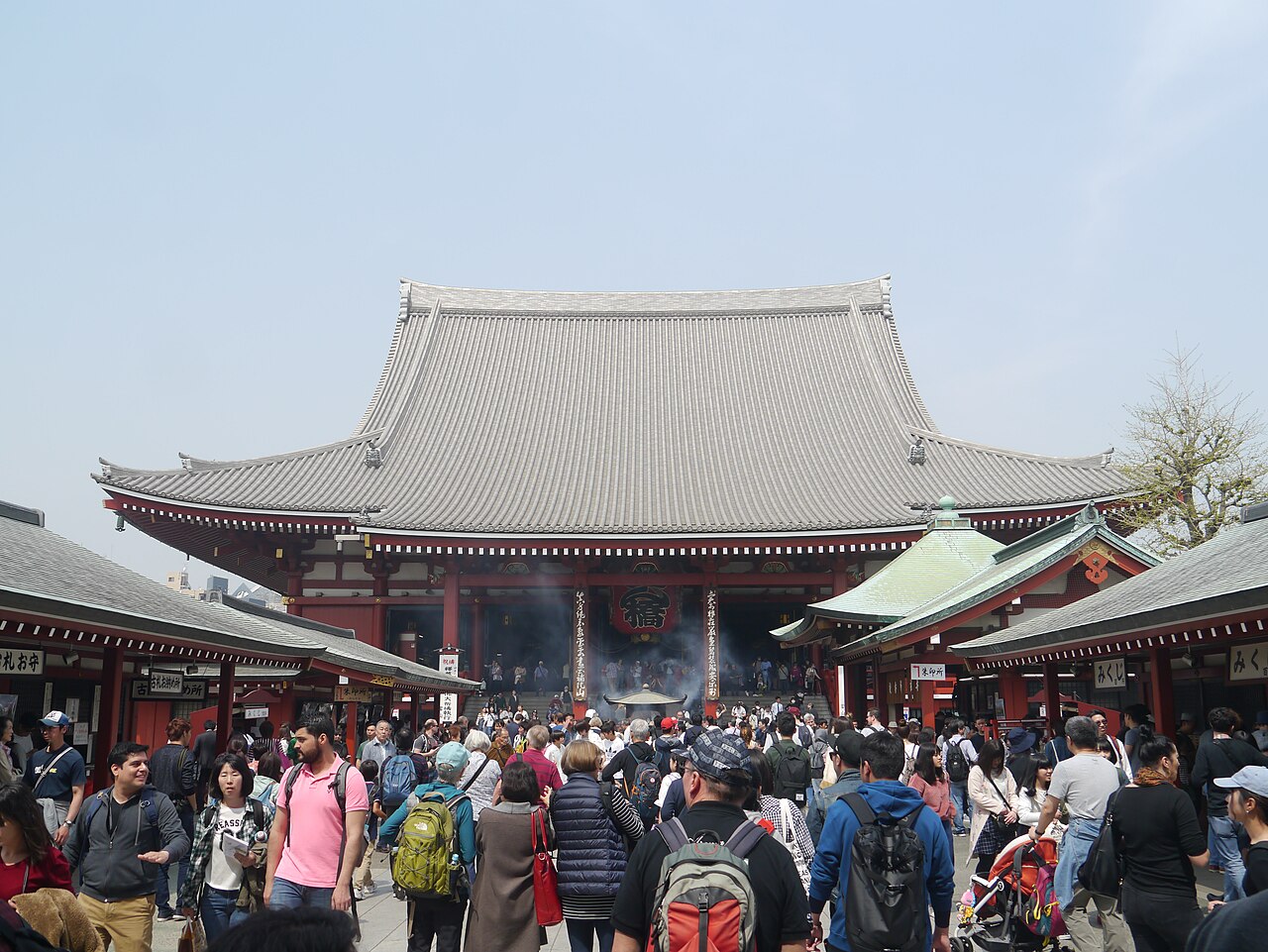
The main hall houses a statue that is not shown. Temple tradition places the appearance of the principal image in the early seventh century, when brothers casting a net kept catching the statue in place of fish and took it home. It is kept as an absolutely hidden image in a shrine locked many times over.
Climb the stairs of the main hall and a large lantern four and a half metres in diameter hangs from the porch overhead. Inside, the outer sanctuary rises about ten metres to a ceiling with three large paintings, a dragon in the centre and one painting on each side, so this is a hall for looking upward. The main hall opens early, and later in the cooler months; exact times are in the table.
The five-storied pagoda has a tower height of forty-eight point three two metres, or fifty-three point three two metres from the ground. Look at its foot as well as its top: from outside it appears to stand on the ground, but it actually stands on a platform-like building. Buddhist relics brought from the Isurumuniya temple in Sri Lanka are enshrined at the top level.
The water purification pavilion is on the right side in front of the main hall, with an ink-painting dragon on its ceiling and a dragon god statue above the octagonal water basin. If time is short, the porch lantern, the hall ceiling and the foot of the pagoda are the three things to look at.
Small Halls Around the Main Hall: Eko-do, Awashima-do and Zenizuka Jizo-do
Northwest of the main hall stands Eko-do, a hip-roofed hall with a gold-leaf shibi ornament on its roof. It enshrines the eight guardian deities of the zodiac signs, one for each birth year, so every visitor has one figure among the eight to look for. Eko-do is also the temple's goshuin office, giving goshuin of Sho-Kannon and of Daikokuten as proof of visit.
Awashima-do dates to the Genroku era, when the deity Awashima Myojin of Kada in Kii Province was invoked here. The stone lantern in front of it is said to protect children from insect-related ailments and smallpox when they pass beneath it. The Needle Memorial Service in winter is the main event centred on the hall.
Zenizuka Jizo-do enshrines the Six Jizo statues, and Kanei Tsuho coins from the Edo period are said to be buried beneath them. A stone statue that barely keeps its original form is called Kankan Jizo; the name is said to come from the metallic "kan kan" sound made when worshippers strike it with a stone while praying. Goshuin collectors should start with Eko-do, and the other two halls suit those drawn to the beliefs attached to a lantern and a stone statue.
Beyond the Main Hall: Nitenmon, Benten Hill and Chingo-do
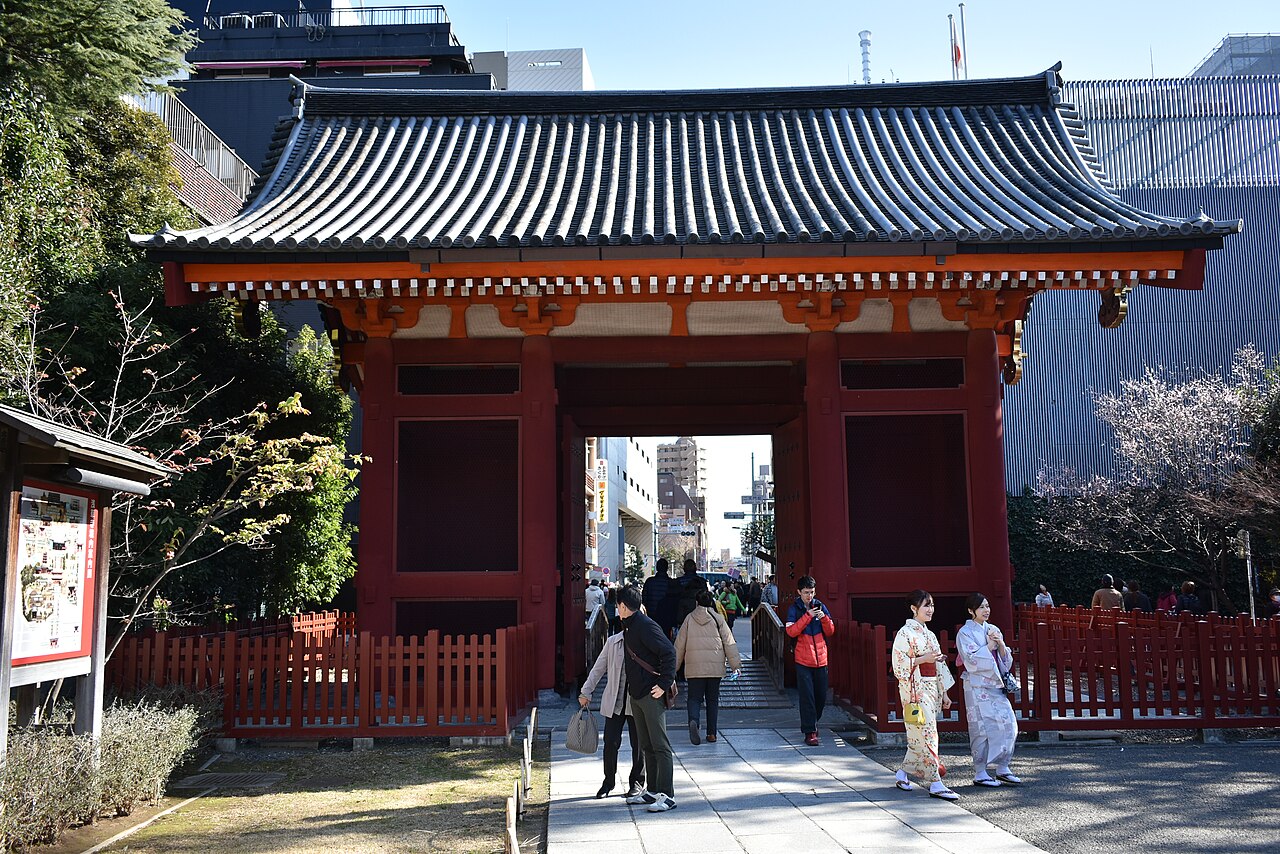
East of the main hall stands the Nitenmon gate, a wooden, vermilion-lacquered, eight-legged gate built in the seventeenth century as the east gate of Senso-ji and designated an Important Cultural Property of Japan. Facing it, the Jikokuten statue is on the right and the Zochoten statue on the left. Traces of the original bright colouring remain on the faces and armour of both heavenly kings, which is where to look.
The small hill southeast of the main hall is called Benten hill after the Benten hall on it, which enshrines Benzaiten, and a bell tower stands to the right as one faces that hall. The Dempoin garden is not shown to the general public, though it is sometimes specially opened at irregular times, so plan a walk without counting on it.
Chingo-do enshrines the tanuki living on the grounds as guardians of Dempoin, and both escaped burning in the Great Kanto Earthquake and the Tokyo air raids. With an afternoon, keep to the Nitenmon gate and Benten hill, east and southeast of the main hall, and add Chingo-do if the walk allows.
A Year of Festivals at Senso-ji
Bean-throwing by toshiotoko, men born in the year's zodiac sign, is the main event of Senso-ji's Setsubun-e. It takes place inside the hall during the Buddhist service and then on a special stage on the east side of the main hall, where the Shichifukujin no Mai dance follows.
The golden dragon parades through Nakamise and the grounds. It is about eighteen metres long, weighs about eighty-eight kilograms and is operated by eight people, so the thing to watch is how eight carriers move one long body along the approach. At Bussho-e, also called Hana-matsuri, small Hanamido halls are placed inside the main hall, in front of it and in front of the five-storied pagoda, and worshippers pour sweet tea over the newborn Buddha statue.
In summer the grounds are filled with about one hundred ground cherry stalls for the Hozuki-ichi market, and an evening visit still finds the market going, because its bustle continues until late at night. The ground cherries are vivid in colour and were once used as medicine, and wind chimes are sold as well.
Late in the year the Hagoita-ichi market lines the grounds with dozens of battledore stalls. On New Year's Eve the Joya no Kane follows a Buddhist service on Benten hill and begins at midnight. Three uncounted strokes come first and then one hundred and eight in succession, which takes about forty minutes, so hearing the whole sequence means staying well past the turn of the year.
Asakusa Shrine and the Sanja Festival
Asakusa Shrine's Sanja Festival begins with a grand procession of festival-music floats, kiyari performers and dances on the first day. On the second day, after the main ceremony, about one hundred neighborhood mikoshi gather at the shrine grounds, receive purification one at a time and are carried through their neighborhoods. The grounds are therefore the place to see them together before they disperse.
Asakusa Shrine has three mikoshi of its own. On the last day they are carried out of the grounds early in the morning, travel through the parish neighborhoods in three directions during the day and return after sunset, so the departure and the return are the moments when all three are at the shrine. During the procession they are shaken up, down, left and right in a ritual called tamafuri.
The Shinji Binzasara-mai, offered on the first day, is a dengaku dance designated a Tokyo Intangible Folk Cultural Property. Red and white paper is scattered to represent the sowing of rice seed, and sound is made with the sasara instrument.
Getting to Senso-ji
New to rural buses and one-man trains? See how to ride them, step by step.
| Route | Item | Detail |
|---|---|---|
| Tobu Skytree Line | Asakusa Station | Five-minute walk to Senso-ji |
| Tokyo Metro Ginza Line | Asakusa Station | Five-minute walk to Senso-ji |
| Tsukuba Express | Asakusa Station | Five-minute walk to Senso-ji |
| Toei Asakusa Line | Asakusa Station, exit A-four | Five-minute walk to Senso-ji |
| Accessibility | Multipurpose toilets | One to the right side of the Hozomon gate and one behind the main hall, each with wheelchair handrails, a diaper-changing seat and a baby chair |
If you would rather stay overnight, places to stay in Tokyo is a place to start.
Hours and Fees
| Place | Item | Time or fee |
|---|---|---|
| Senso-ji main hall | Opening | Six in the morning to five in the afternoon, and from October to March it opens at six thirty in the morning |
| Senso-ji | Telephone inquiries | Nine in the morning to four thirty in the afternoon, excluding Sundays and public holidays |
| Asakusa Shrine | Shrine office | Weekdays nine in the morning to four in the afternoon, and Saturdays, Sundays and public holidays nine in the morning to four thirty in the afternoon |
| Asakusa Shrine | Goshuin offering | Five hundred yen each |
| Asakusa Shrine | Goshuin book in three colours | One thousand yen each |
| Senso-ji | Bussho-e (Hana-matsuri) | April eighth |
| Senso-ji | Hozuki-ichi | July ninth and tenth |
| Senso-ji | Hagoita-ichi | December seventeenth to nineteenth |
| Senso-ji | Joya no Kane | December thirty-first, at midnight |
| Senso-ji | Golden dragon dance | March eighteenth and October eighteenth |
| Awashima-do | Needle Memorial Service | February eighth, with a Buddhist service at eleven in the morning |
| Dempoin garden | Access | Not open to the general public, but sometimes opened specially at irregular times |
Fees and hours were checked against official sources on 18 November 2026.
Compare options
See partner pricing and availability →
Disclosure: This post may contain affiliate links. If you book through them, we may earn a commission at no extra cost to you.