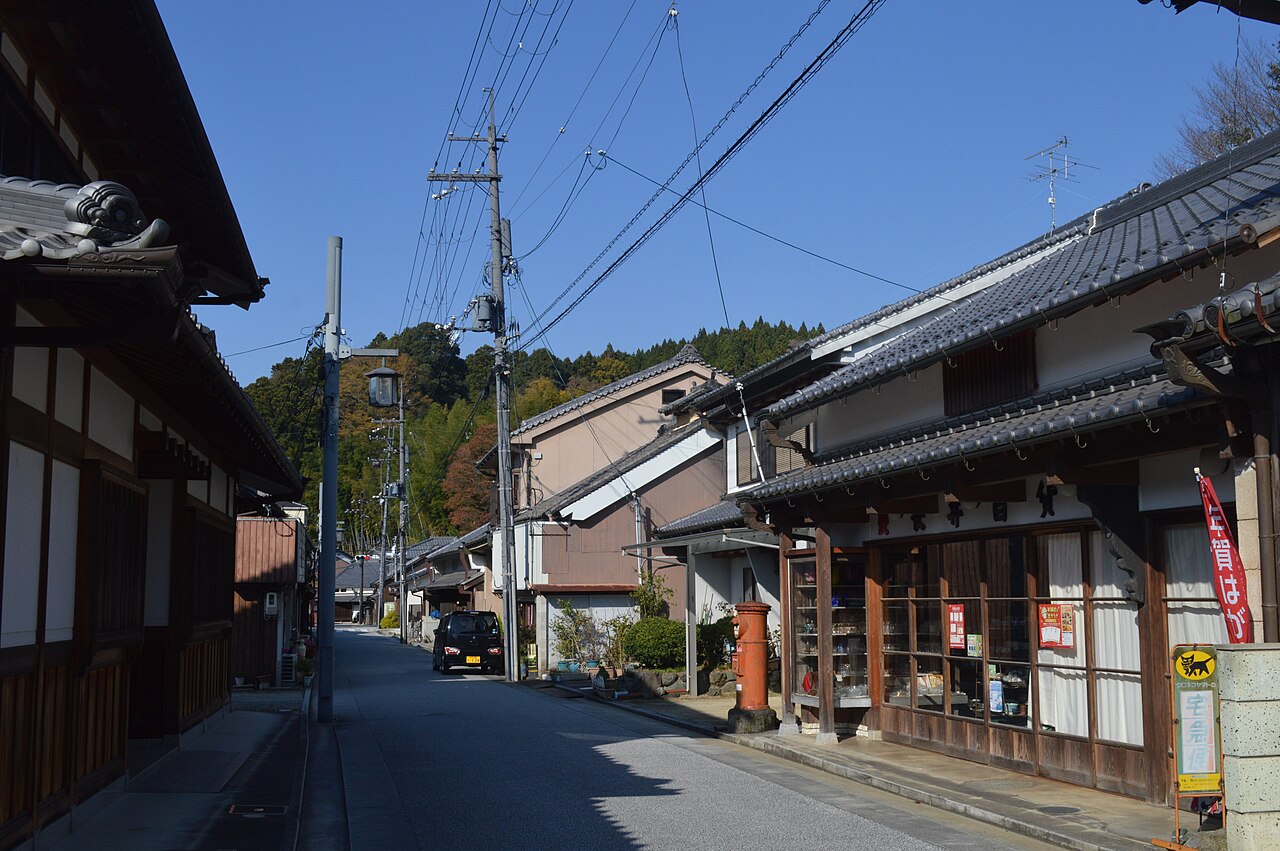
In Uda-Matsuyama in Nara, merchant houses dating from the Edo period to early Showa remain along the street as they were, with no large-scale alteration. Morino Medicinal Herb Garden has about two hundred and fifty kinds of medicinal plants and trees that can be seen throughout the four seasons. Kagiroi-no-oka Manyo Park is a hill with Manyo poem monuments scattered about.
Merchant Houses, Lattices and the Black Gate
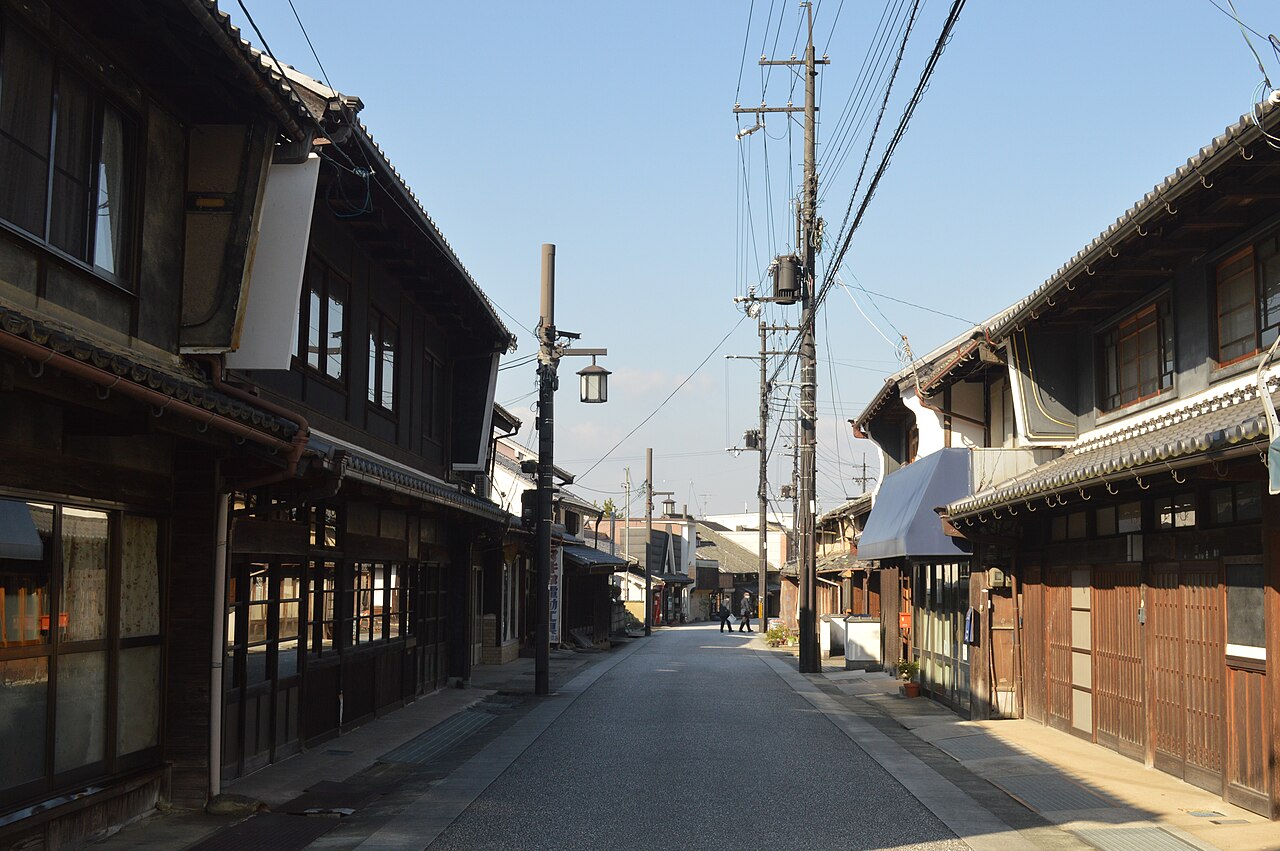
Visitors can walk along a historic street lined with merchant houses. The lattice design differs from building to building, and it reflects the occupation of the residents and the era. Reading the lattices one house at a time is a way to see who lived and worked along the street.
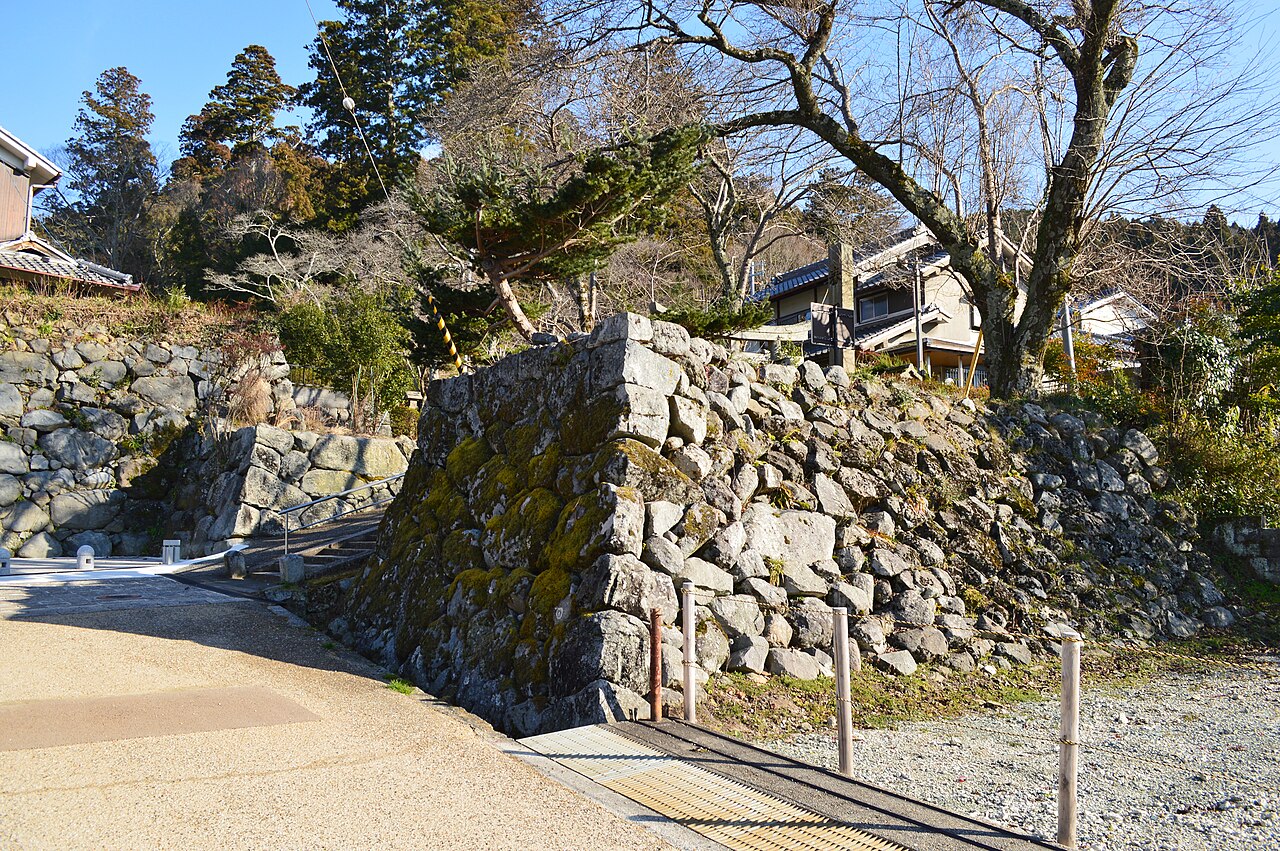
The Matsuyama west gate, Kuromon, is the west gate of the Uda-Matsuyama castle town. Its pillars and beams are painted black, which is why it is called Kuromon. The gate has a simple structure, with supporting posts and roofs only where minimally needed.
The gate was built by retainers of the Toyotomi family as the west gate of the castle. It stands at the entrance of the important preservation district for groups of traditional buildings, and passing through it begins the castle-town world.
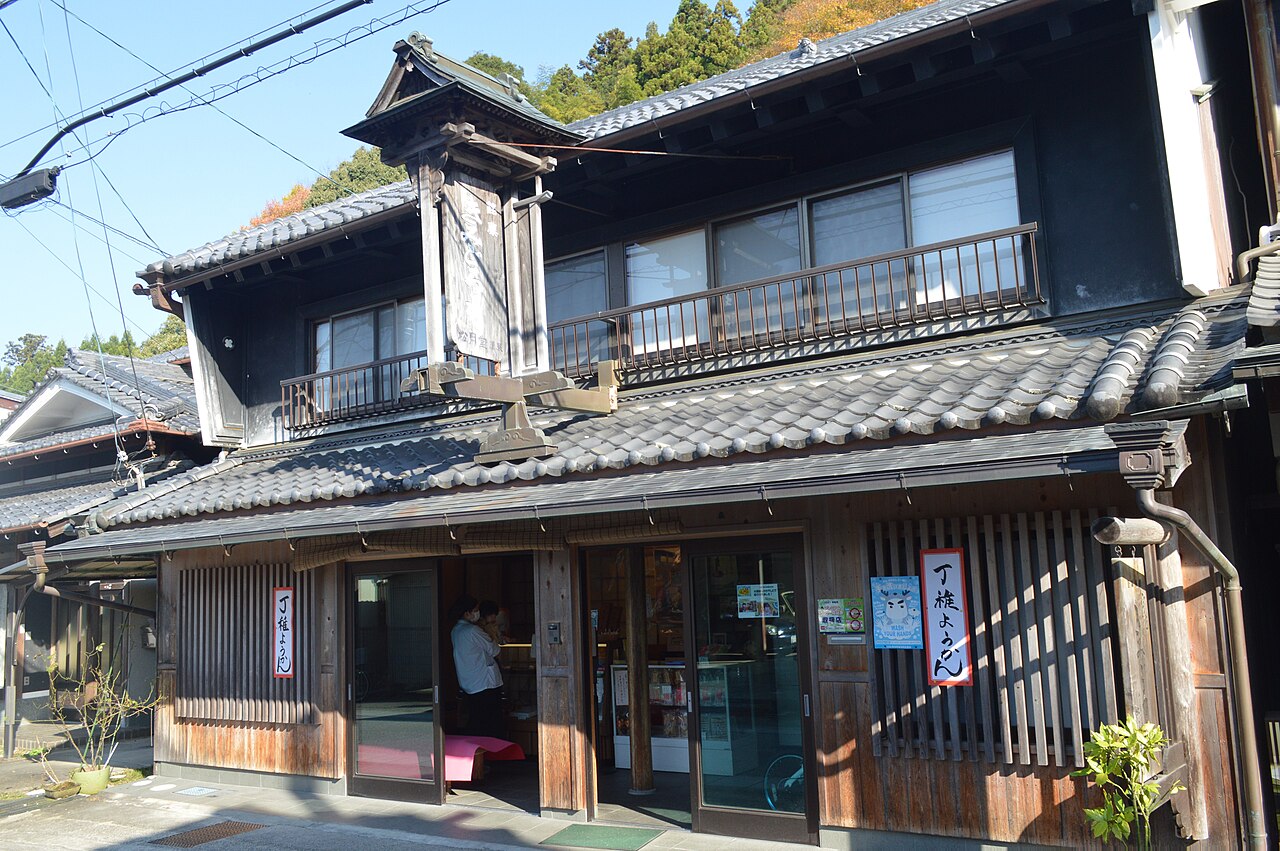
Processing kudzu and medicinal herbs required wide workspaces, and that industry is the background of the wide townhouses. The three storehouses of the Sawai house have a gabled form with tiled roofs and an exterior of burnt cedar boards and plaster walls. A sugidama cedar ball, the sign of a sake brewery, hangs at the entrance of the Kubo honke main building.
The Takeda house has lattice doors fitted into the front of the first floor, and two rows of round tiles on the large roof and eaves. At a hall in the castle town, visitors can view displays of excavated roof tiles.
Morino Medicinal Herb Garden and the House of Medicine
Morino Medicinal Herb Garden was opened in the Kyoho era by Morino Michisada, the head of the Morino family. The garden is designated a national historic site.
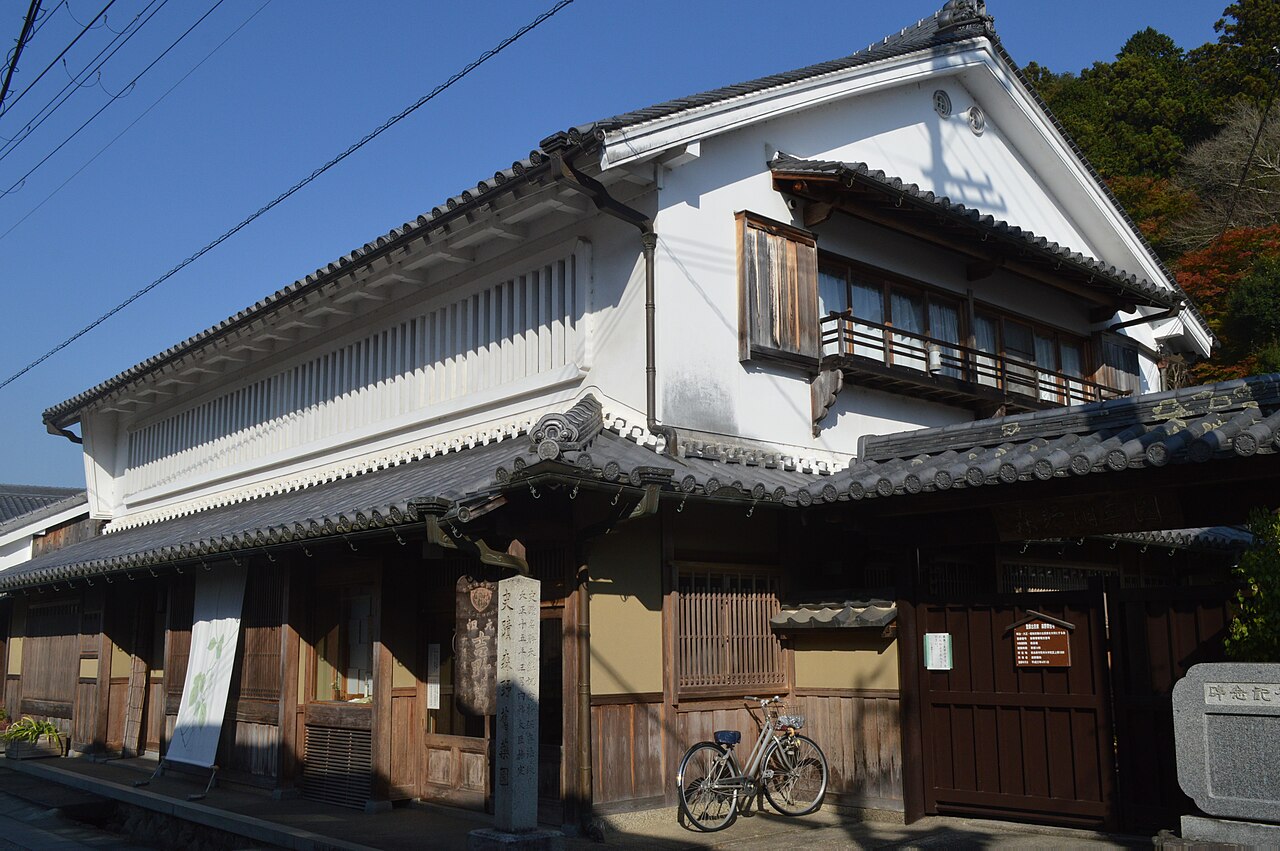
The House of Medicine is a renovated townhouse of the Hosokawa family, who ran a drug wholesale business, and it is said to date from the late Edo period. Inside are exhibits of materials on the Hosokawa family and Fujisawa Pharmaceutical, along with valuable signboards related to medicine.
A large Shoki signboard once hung at the former Fujisawa Pharmaceutical Tokyo branch is on display in the museum. The garden and the museum show two sides of the medicine trade in Uda-Matsuyama, the growing of the plants and the wholesale of the drugs.
Kudzu Sweets and Herb Meals in Uda-Matsuyama
A kudzu sweets cafe is directly run by a long-established kudzu maker, which is stated to be over four hundred and fifty years old. Kudzu noodles and kudzu mochi are made at the cafe after the order is received.
A temple serves a course meal that includes appetizer, sesame tofu, kudzu sashimi and tempura, all made with medicinal herbs. The temple is described as an old Shingon Omuro-school temple said to have been founded at the wish of a prince.
Manyo Poems on the Hill of Kagiroi and in Akino Hitomaro Park
Kagiroi-no-oka Manyo Park has a poem monument inscribed with a poem by Kakinomoto no Hitomaro. Manyo plants are planted in the park, and the Oouda settlement can be viewed from it.
Akino Hitomaro Park is a ruins park where an excavated site is preserved, with pit-dwelling-style and post-hole buildings restored. A statue of Kakinomoto no Hitomaro stands in the park grounds, and Manyo plants are cultivated there.
The park is known as the setting where Hitomaro accompanied the hunt of Prince Karu and composed a poem. A Kagiroi viewing gathering is held every year on the seventeenth day of the eleventh month of the lunar calendar.
Fireflies, Cherry Blossoms and Dahlia Petals Through the Year
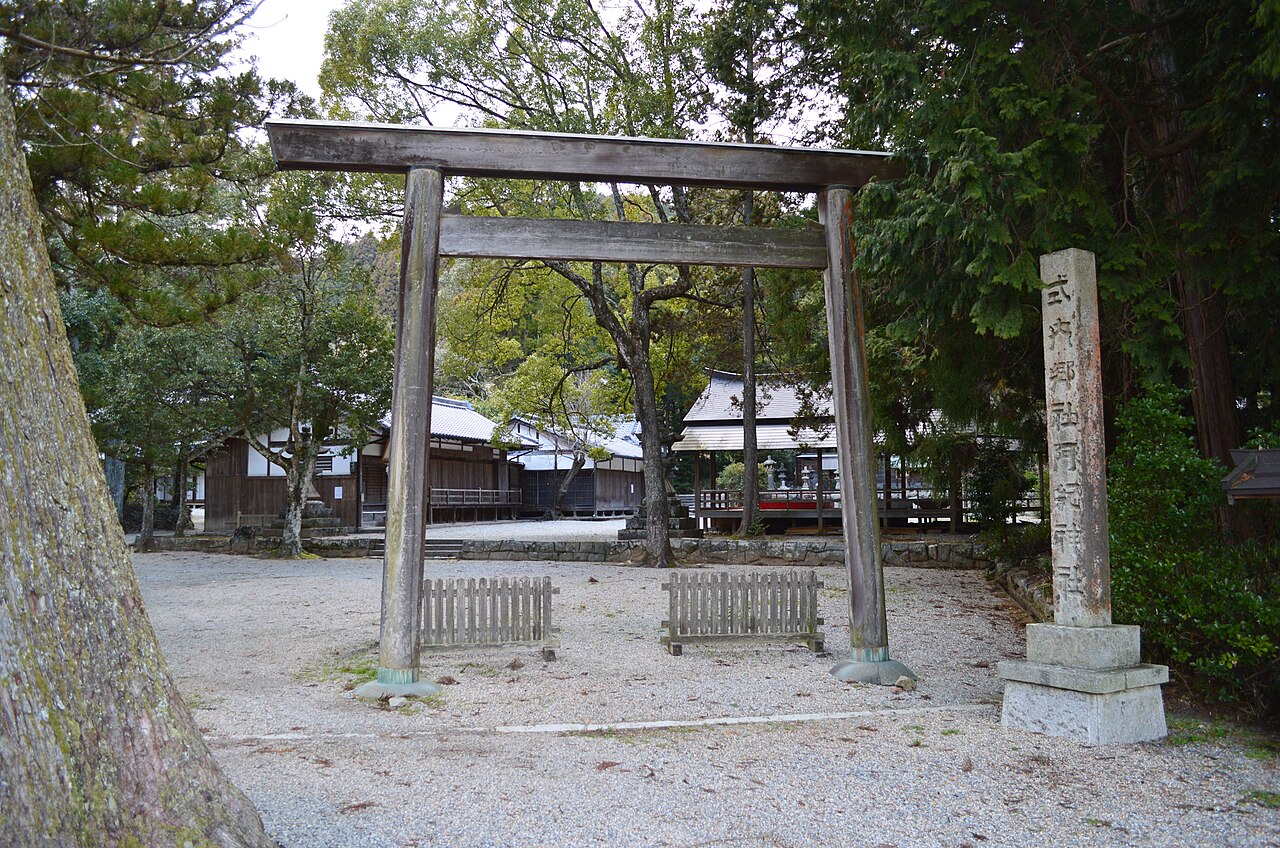
Aki Shrine's grounds are surrounded by cedar grove and hold a Shinmei-zukuri main hall and a noh stage donated by Oda Nagayori. Every June the Akino Hotaru Noh is performed at Aki Shrine, with several hundred fireflies released. In mid June, a firefly-lit twilight setting at the noh stage hosts a noh performance by firelight.
The Mataebei Sakura is listed with a viewing period of early to mid April. The Uda Matsuyama Hanakoji event is held on Saturdays and Sundays in late October, when dahlia flowers are spread over the alley Honzen-koji.
The dahlias are grown by producers and picked the day before the event, and volunteers spread them. The alley is lit up on Saturday night, and the flowers can be taken home from three in the afternoon on Sunday. Taken-home dahlias decorate the eaves of houses in the townscape.
A guesthouse in an old house was renovated from a former soy sauce brewery that is a hundred and twenty years old. If a single day feels short, there are places to stay in Uda.
Getting to Uda-Matsuyama
New to rural buses and one-man trains? See how to ride them, step by step.
| From | How | Time or distance |
|---|---|---|
| Osaka Uehommachi to Haibara Station | Kintetsu Osaka Line express | about forty-five minutes |
| Kyoto to Kintetsu Haibara Station | Kintetsu | about sixty minutes |
| Nagoya to Kintetsu Haibara Station | Kintetsu | about a hundred minutes |
| Kintetsu Haibara Station to the Oouda stop | Nara Kotsu bus, get off at the terminus | fifteen minutes |
| Oouda terminus stop to the town | on foot from the bus | about a five-minute walk |
| Roadside station in Oouda, parking lot | by car | free, holds ninety-five passenger cars |
Hours and Fees
| Place | Item | Detail |
|---|---|---|
| Morino Medicinal Herb Garden | Visiting hours | nine in the morning to half past four, irregular closure days |
| Morino Medicinal Herb Garden | Admission | five hundred yen per person |
| House of Medicine | Visiting hours | open ten in the morning to four in the afternoon |
| House of Medicine | Closed | Mondays and Tuesdays |
| House of Medicine | Admission | three hundred and ten yen for adults, one hundred and fifty yen for children |
| House of Medicine | Winter closure | closed from December fifteenth to January fifteenth of the following year |
| A temple's herb course meal | Price | four thousand five hundred yen, book ahead |
| A temple's herb course meal | Serving hours | eleven thirty in the morning to two in the afternoon, book ahead |
| A kudzu sweets cafe | Opening hours | nine in the morning to five in the afternoon |
| A kudzu sweets cafe | Closed | Tuesdays and Wednesdays |
Fees and hours were checked against official sources between 10 October 2026 and 20 November 2026.
Thinking of staying overnight?
Compare places to stay near Uda, Nara, Japan →
Disclosure: This post may contain affiliate links. If you book through them, we may earn a commission at no extra cost to you.