At Nakatanidou, yomogi mochi is pounded at high speed, with the pounder and the turner working in close coordination. At Kasuga Taisha, morning worship is held every day, and after reciting the norito at the main shrine, worshippers visit each shrine in turn. In Nara Park, deer come up one after another to a visitor holding deer crackers, and the garden cafe Kasuga Ninai Jyaya serves Manyo gayu porridge.
This route suits visitors who want shrine worship, deer and fresh mochi in one walk, built around two things that happen every day: morning worship at Kasuga Taisha and mochi pounding at Nakatanidou. Nakatanidou comes last because from early afternoon to before evening the shop has many customers and pounds a lot of mochi.
| Time guide | Place | What you do | Walk or stay |
|---|---|---|---|
| Morning | Nara Park, from Kintetsu Nara Station | Deer come up to visitors holding crackers | About eight minutes on foot |
| Morning | Kasuga Taisha main shrine | Morning worship, shrine by shrine | About twenty minutes |
| Ten thirty to sixteen thirty | Kasuga Ninai Jyaya | Manyo gayu porridge at the garden cafe | Three minutes on foot from the bus stop |
| Afternoon | Todaiji precinct | Hakkaku Toro lantern carvings, Nigatsu-do | Nigatsu-do: twenty-four hours |
| Before evening | Nakatanidou | Yomogi mochi pounded at high speed | Five minutes on foot from the station |
Nara Park Deer, Open Paths and Ukimido
Deer come up one after another to a visitor holding deer crackers, which are sold throughout the park. The deer that visitors can meet in Nara Park are a national natural monument and are wild animals. The park has no concept of entrances and exits, so visitors can enter from anywhere and go anywhere.
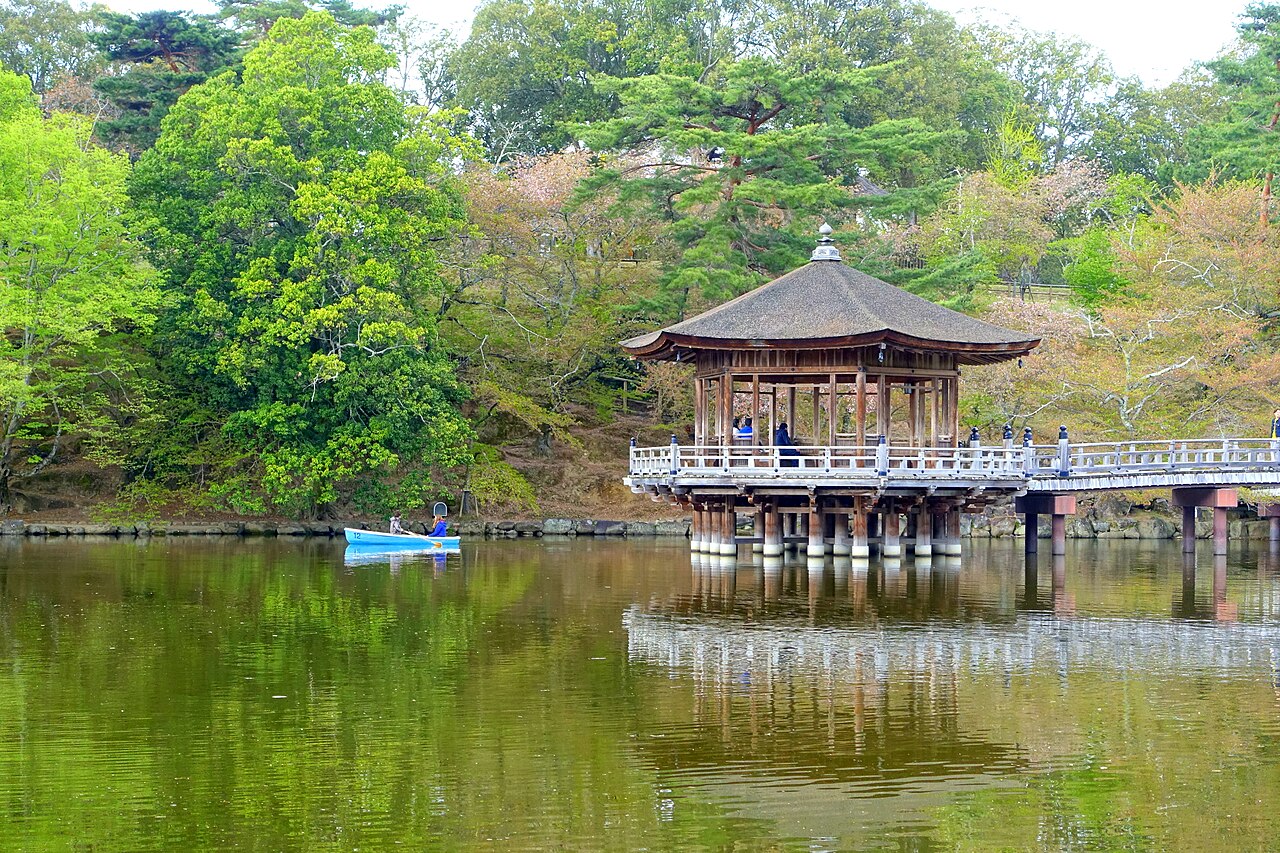
Ukimido is a cypress-bark-roofed hall in octagonal-hall style that floats on Sagi Pond in Nara Park. The hall stands at the water's edge, and the reflection of Ukimido appears on the water surface. Walking from Kasuga Taisha through the woods of Asaji-ga-hara leads to Ukimido at the end.
The park is divided into several areas where many deer gather and various events are held. It is united with Kasuga Taisha, Kofuku-ji, Todaiji and the National Museum, and also takes in the Kasugayama primeval forest. Nara Park spreads across the east side of Nara city, with a total area of about five hundred eleven hectares.
Kasuga Taisha Morning Worship, Manyo Garden and Museum
After reciting the norito at the main shrine, worshippers visit each shrine in turn during morning worship. In the Manyo garden, ceramic plaques of Manyo poems and plant explanations stand beside each plant. In the centre of the garden is a pond built to recall a Manyo-era garden. On its island, an old giant tree spreads with its trunk lying long along the ground.
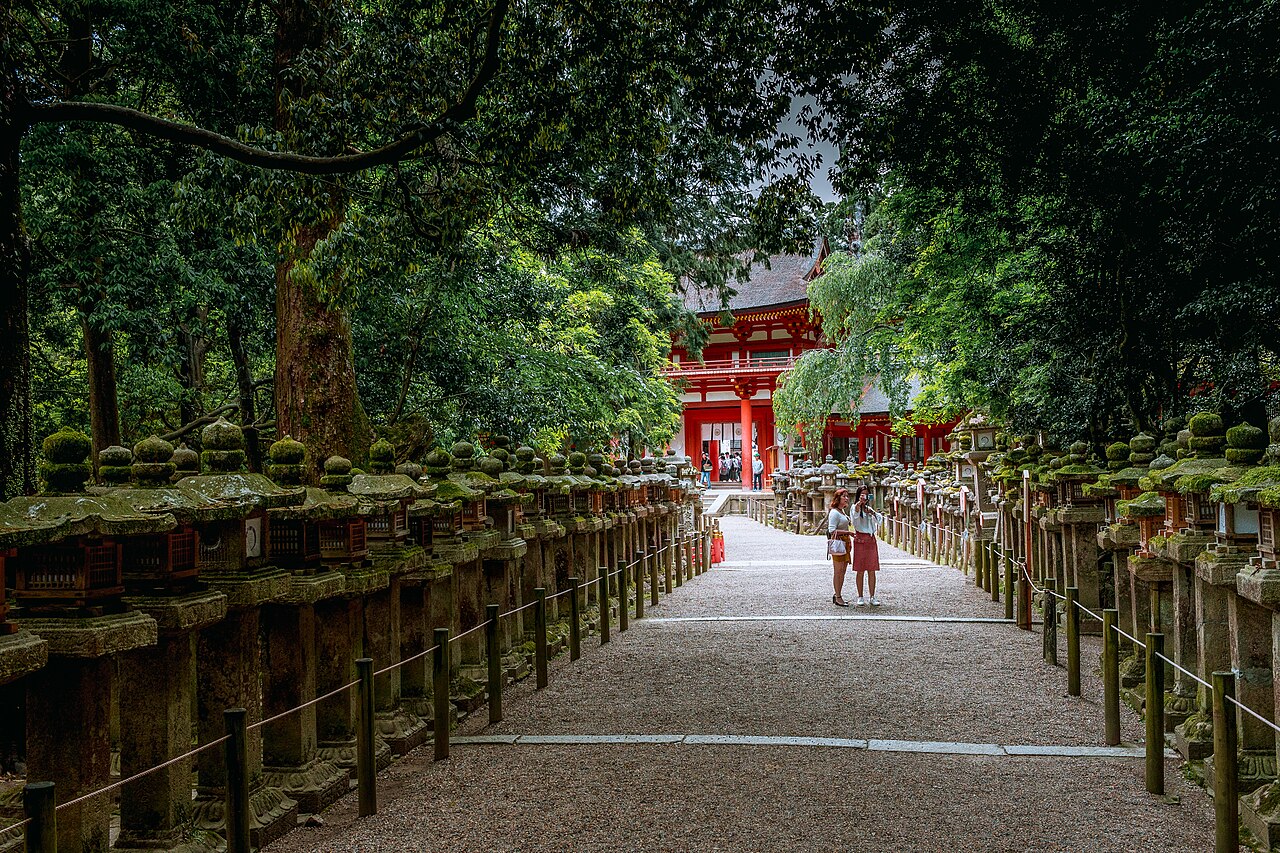
In one part of the garden, ancient rice and barley are planted alternately depending on the season. Many kinds of ancient rice can be seen there, and two-row barley, six-row barley and wheat can be compared and observed. Wisteria is the main flower of the Manyou Botanical Garden.
The entrance of the Kasugataisha Museum is an installation space expressing the Kasuga sanctuary with water and light, a calm place before viewing the treasures. In one work, drops of light-filled water come down, and ripples and water flows change the water surface. Another work shows a moving image of the shrine precincts projected on a special wire screen.
One hall of the museum is a space where the brightly coloured drum can be viewed up close, as nothing blocks the front. A small exhibition room uses low-reflection glass that minimizes reflections, so the crafts can be viewed in a better setting. The museum holds three hundred fifty-four National Treasures and two thousand five hundred twenty-eight Important Cultural Properties, among other cultural assets.
Kasuga Ninai Jyaya Manyo Gayu and Nara Dishes
Manyo gayu is a porridge with seasonal vegetables tied to the Manyoshu, made in a kelp stock and white miso style. The garden cafe Kasuga Ninai Jyaya also serves its food in the garden, among the scenery of the changing seasons. The stock draws out the flavour of Hokkaido kelp slowly and is finished with Nara Prefecture white miso, with rice selected to suit porridge.
The monthly side vegetables are domestic produce, handmade in the shop. A set meal includes Manyo gayu, kaki-no-ha sushi with two mackerel pieces, a seasonal sweet, a side dish and pickles. Kaki-no-ha sushi is pressed sushi of fish such as mackerel or salmon, cured in salt and wrapped in persimmon leaves. Chagayu is a Nara dish of cold cooked rice simmered in brewed hojicha tea.
The teahouse was a purifying teahouse where visitors ate food cooked over a pure fire, purifying body and heart before worship. In the late Edo period within the Kasuga Taisha precinct, a tea box and kettle were hung on a carrying pole, and a rice-cake sweet was served.
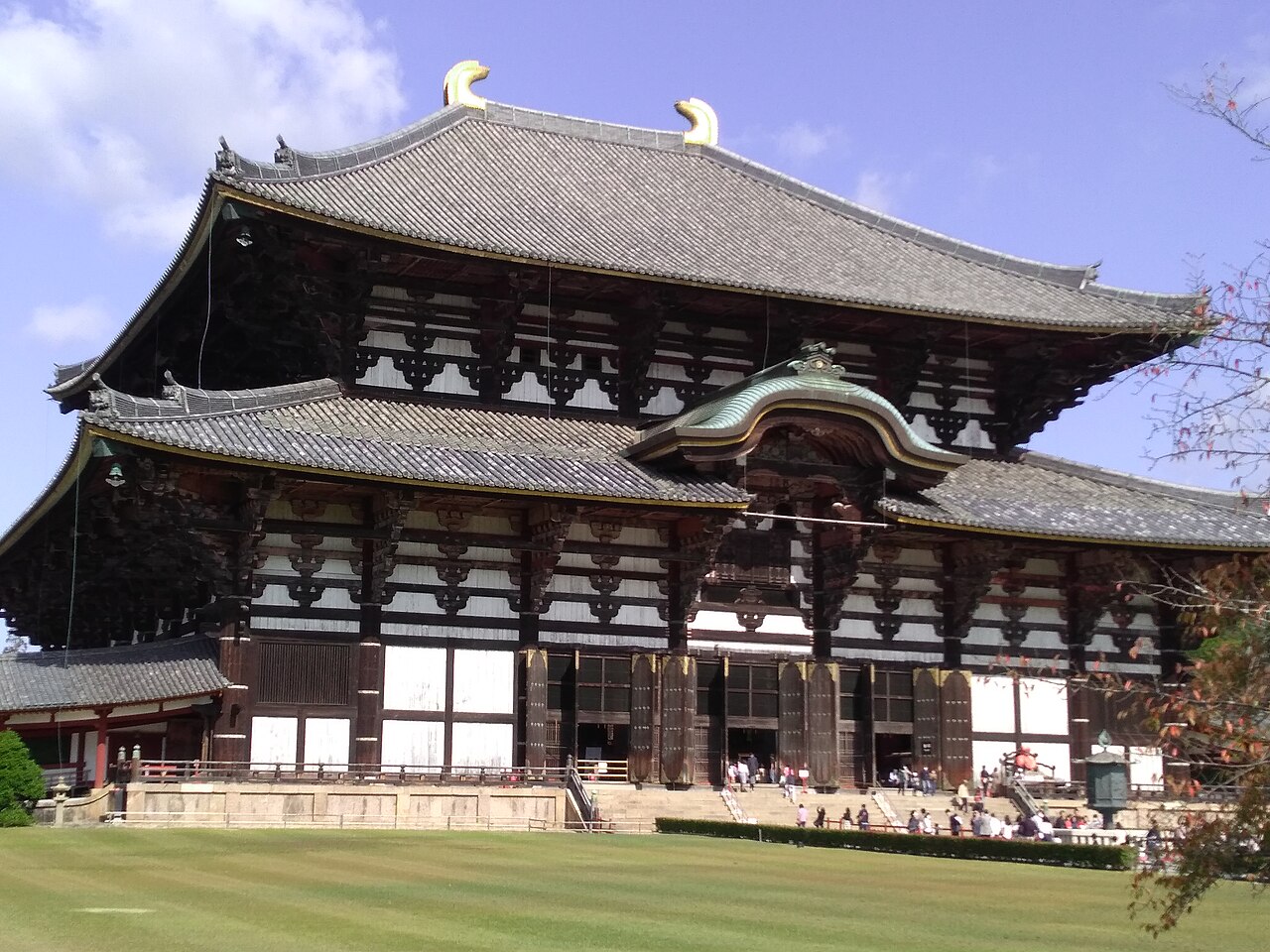
Todaiji Lantern Carvings, Nigatsu-do and the Museum
Visitors can see enshrined Buddha images in the second of the Todaiji Museum's five exhibition rooms, designed to evoke the inner sanctuary of Hokkedo. The museum holds permanent and special exhibitions, and the permanent one shows temple treasures including its principal image. At the entrance, a video presents Todaiji's history, including the thoughts Emperor Shomu put into the Great Buddha and recovery from war fires.
At Nigatsu-do, the service held in the hall can be listened to by visitors. The hall's acoustic effect and the layout of its inner sanctuary, outer sanctuary and worship hall suit the performance of the rites. Nigatsu-do takes its name from the Shunie rite being held in this hall in the second month of the old calendar.
The Hakkaku Toro lantern has relief carvings of lions running through clouds on its doors, set against a lattice-patterned openwork ground. The lantern dates from the founding of Todaiji and escaped damage in the repeated fires.
Nakatanidou Yomogi Mochi Pounded at High Speed
Customers come to the Nakatanidou storefront every day to watch the mochi pounding. The shop sells freshly made yomogi mochi produced by high-speed mochi pounding. The high-speed pounding is not a show but is needed to finish the mochi well.
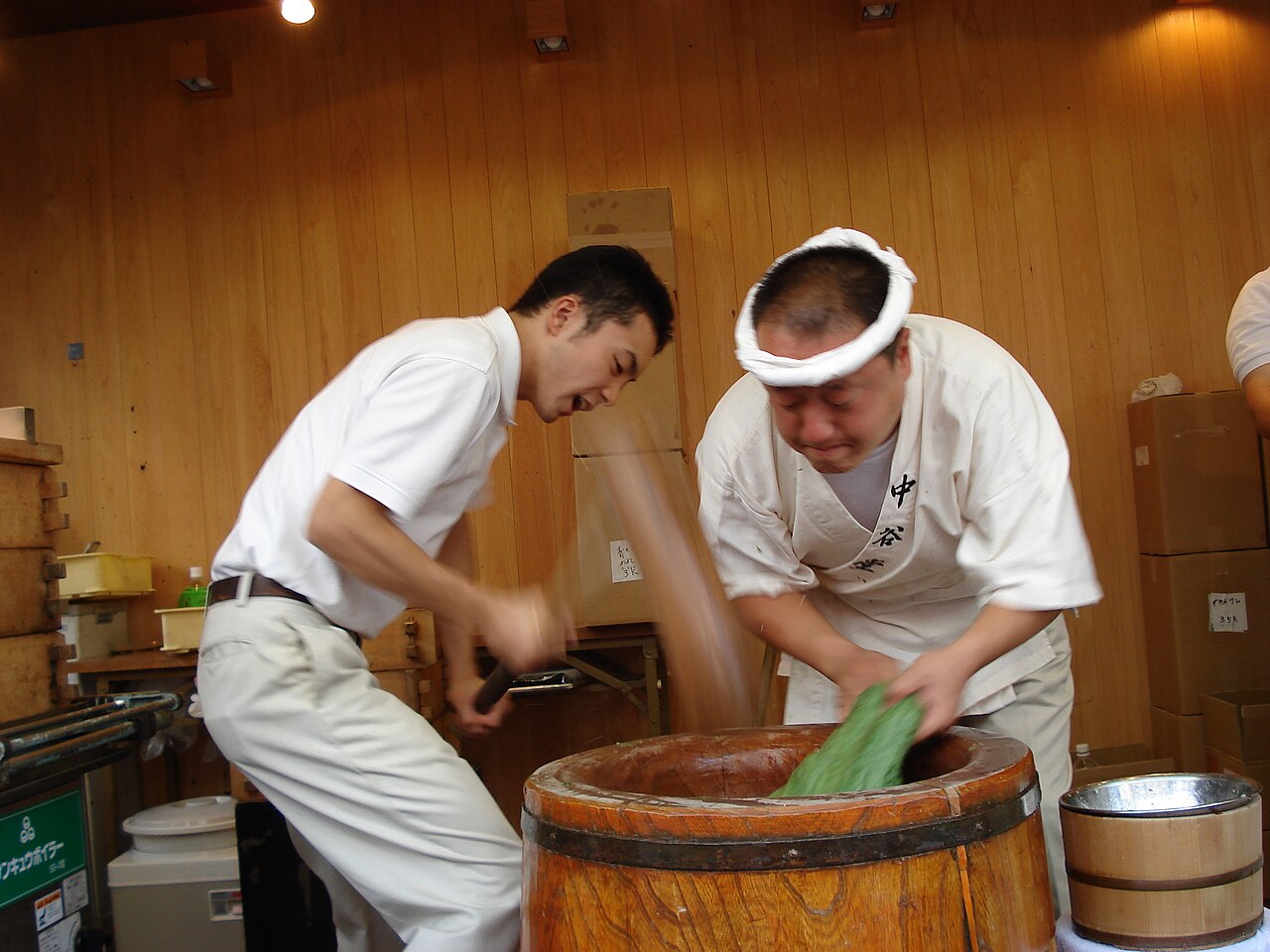
Steamed glutinous rice is pounded firmly while still hot and then finished, which gives soft mochi with firmness. The pounder and the turner work in close coordination when pounding mochi. The turner adds moisture to the mochi, watches its condition, and turns it in small or large turns in time with the person holding the pestle.
The shop pounds mochi as sales go, so as many customers as possible receive it freshly pounded, warm and soft. Its motto for the yomogi mochi is to keep it natural and old-fashioned, giving a somewhat nostalgic taste. The shop does not fix the times of mochi pounding. The number of sessions varies with sales and weather, at about ten to fifteen times a day.
Getting to Nara
New to rural buses and one-man trains? See how to ride them, step by step.
| Route | Item | Detail |
|---|---|---|
| Kintetsu Nara Station | To Nakatanidou | Five minutes on foot |
| Kintetsu Nara Station | To Nara Park | About eight minutes on foot |
| JR Nara Station | To Nara Park | About twenty minutes on foot |
| Nara Kotsu city loop bus | To Nara Park | About seven minutes |
| City loop bus stop | To Ukimido | Five minutes on foot |
| Kasuga Taisha approach bus stop | To Kasuga Ninai Jyaya | Three minutes on foot |
To stay overnight in Nara, browse places to stay in Nara.
Hours and Fees
| Place | Item | Time or fee |
|---|---|---|
| Kasuga Taisha main shrine | Hours, November to February | Seven hundred to seventeen hundred |
| Kasuga Taisha main shrine | Hours, March to October | Six thirty to seventeen thirty |
| Manyou Botanical Garden | Hours | Nine hundred to sixteen thirty |
| Kasugataisha Museum | Hours | Ten hundred to seventeen hundred |
| Kasugataisha Museum | Adult admission | Seven hundred yen |
| Kasuga Ninai Jyaya | Hours | Ten thirty to sixteen thirty |
| Todaiji Great Buddha Hall | Hours, November to March | Eight hundred to seventeen hundred |
| Todaiji Great Buddha Hall | Hours, April to October | Seven thirty to seventeen thirty |
| Todaiji | Adult admission | Eight hundred yen |
| Todaiji Museum | Hours, November to March | Nine thirty to seventeen hundred |
| Todaiji Museum | Hours, April to October | Nine thirty to seventeen thirty |
| Todaiji Museum | Adult admission | Eight hundred yen |
| Nakatanidou | Hours | Ten hundred to nineteen hundred |
| Nara Park | Hours | Twenty-four hours, free of charge |
Fees and hours were checked against official sources on 15 November 2026.
Thinking of staying overnight?
Compare places to stay near Nara →
Disclosure: This post may contain affiliate links. If you book through them, we may earn a commission at no extra cost to you.