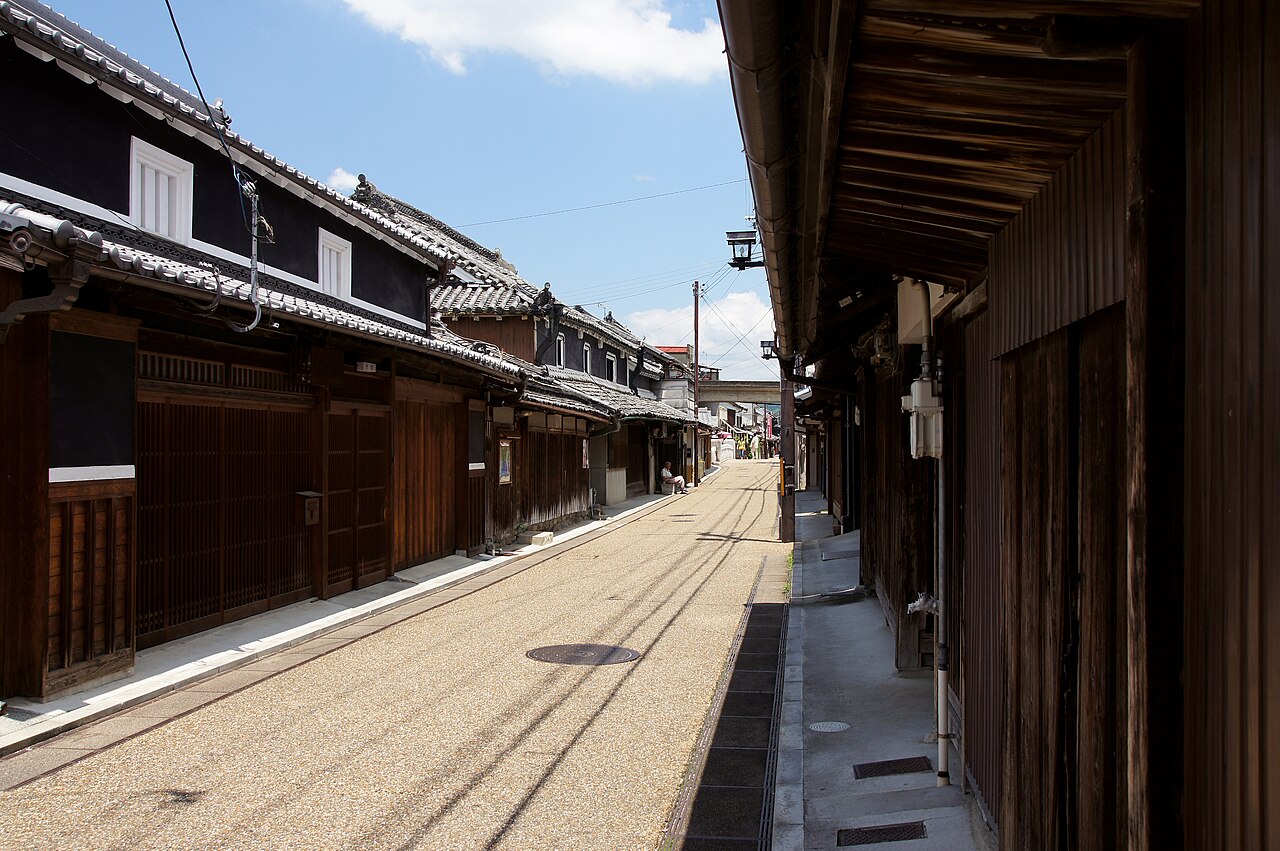
Shinmachi-dori in Gojo, Nara, has been selected as an Important Preservation District for Groups of Traditional Buildings, and its merchant houses are the draw. Kakinoha sushi began here: the people of Gojo added vinegared rice to mackerel slices and wrapped them in persimmon leaves from the hill behind their homes. Add persimmon sweets, quizzes at the Persimmon Museum and walking courses tied to the Tenchugumi, Bunraku and the Goshin Railway.
Gojo Shinmachi and Its Edo-Period Merchant Houses
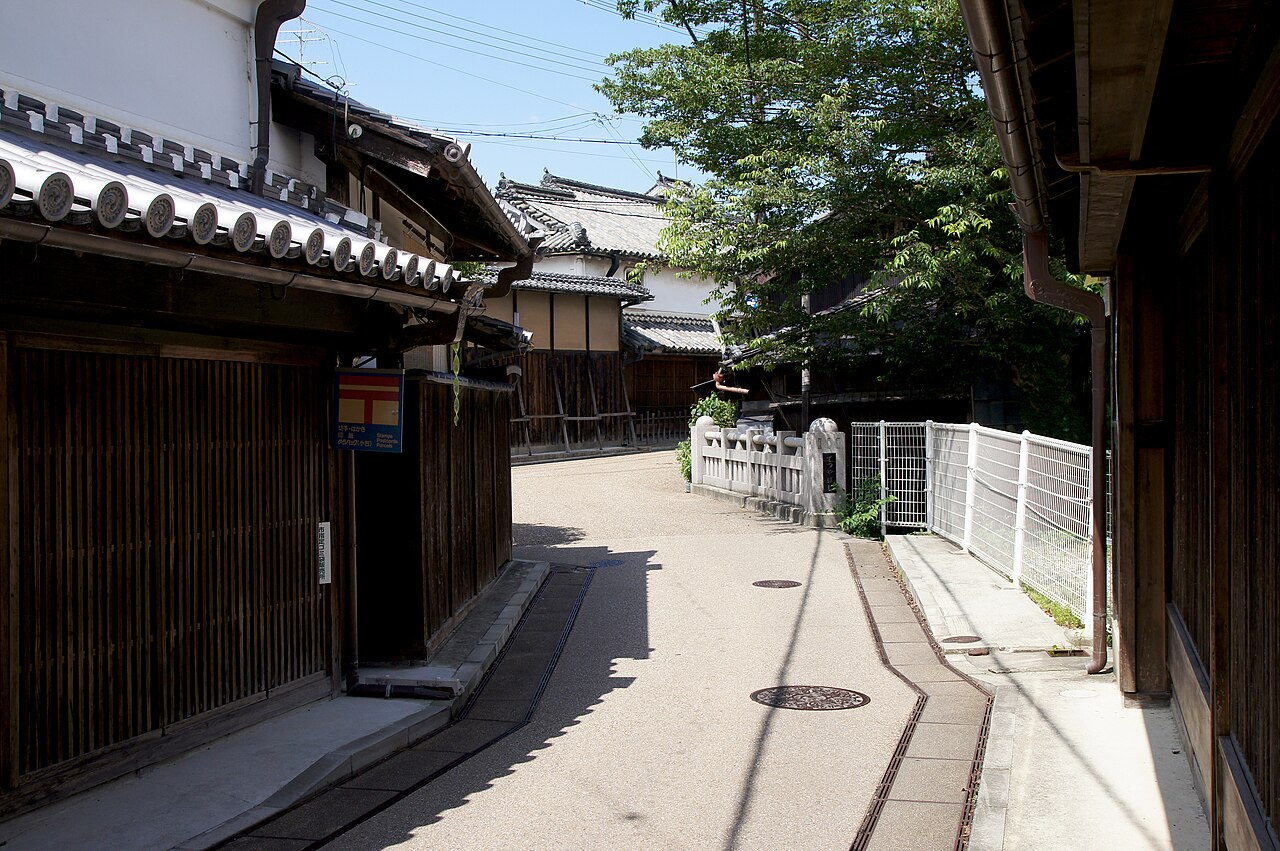
Shinmachi-dori developed as a post town and a commercial town, and that is the street you walk along in Gojo today. You can walk along the former Ise highway, where a streetscape of Edo-period merchant houses remains. On the old Kishu highway, you will find another streetscape that still keeps the Edo-period landscape.
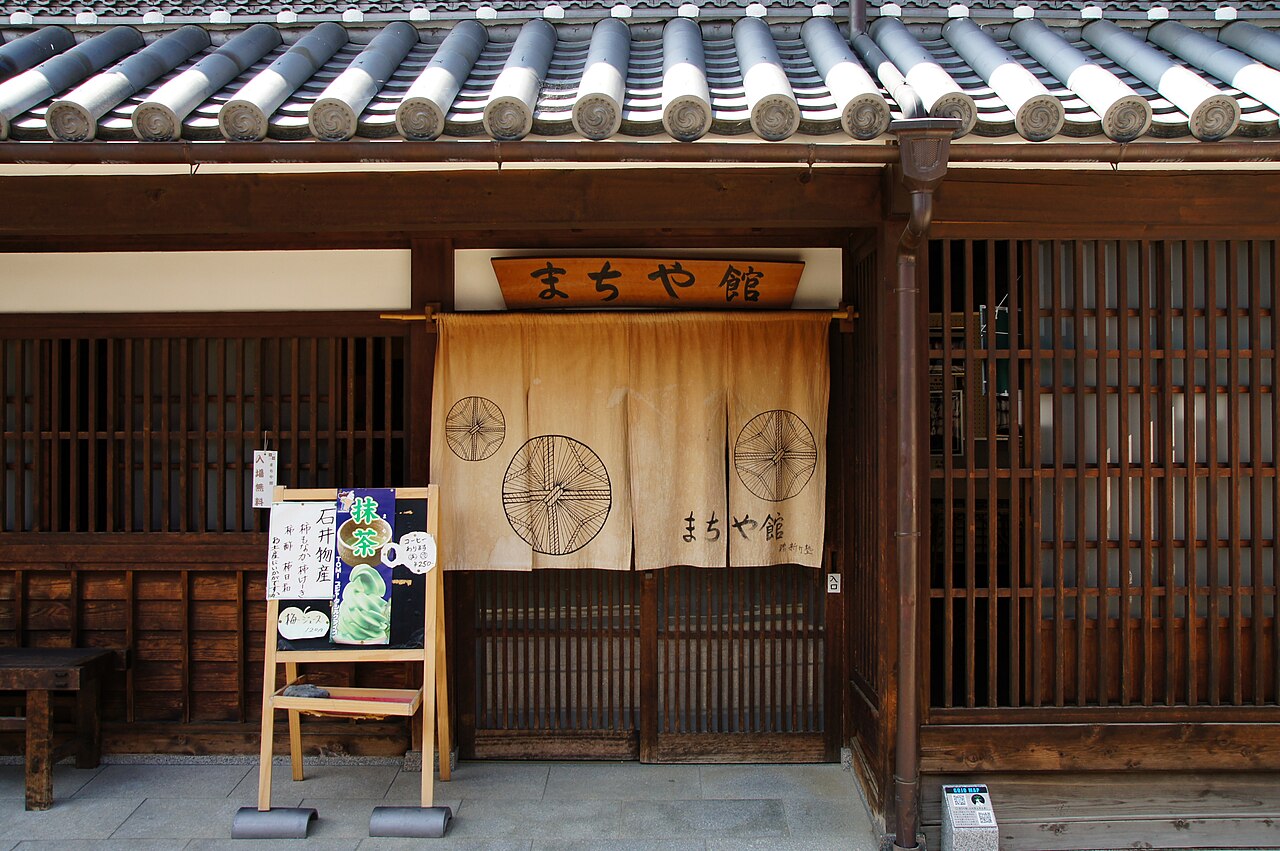
As you walk, you pass buildings that carry history from the Edo period and keep the features of each era up to the early Showa period. Stop in front of the Kuriyama residence and look up at the curve of its main-tile roof. Behind that roof, the interior of the house is assembled from thick pillars and beams.
The road leading east was the Ise highway and the road leading west was the Kishu highway. Gojo, in the southwest of the Yamato basin along the lower Yoshino River, was long a transport hub linking Osaka and Kii. If you want to see how the old roads shaped the town, walk Shinmachi-dori end to end rather than stopping at a single house or two.
Kakinoha Sushi and the Machiya Restaurants of Gojo
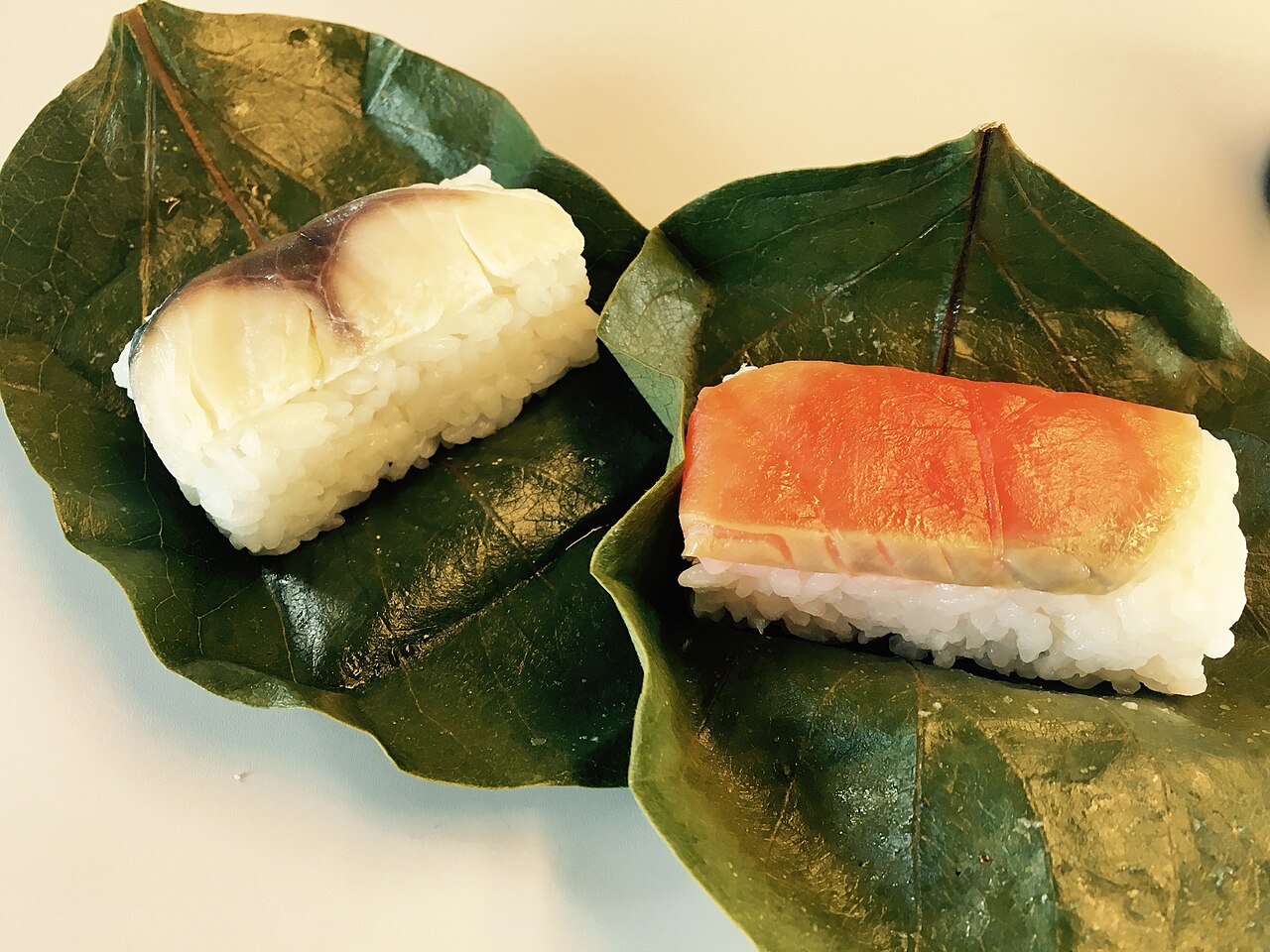
At Kakinoha Sushi Honpo Tanaka, you can try kakinoha sushi of mackerel or salmon slices set on sushi rice and wrapped in fragrant persimmon leaves. The mackerel came from Kumano-nada, salted and carried up the Kinokawa and Yoshinogawa rivers to Gojo. After two days under a weight, the scent of the leaves soaks in and the sushi is complete.
For a sit-down meal, you can eat in restaurants with a retro-modern character housed in machiya townhouses built two hundred fifty years ago. At Gojo Genbei, a machiya of that age on Shinmachi-dori, you can order Japanese food that values local seasonal ingredients.
At Kagioka, which also runs a fresh fish shop, you can choose sushi, kaiseki or kappo-style dishes made with fresh fish. For noodles, head to a local shop that makes its own noodles and a distinctive dashi, where curry udon and nabeyaki udon are popular.
At Restaurant Yoshinogawa, you can eat while looking out at the Yoshino River, with carp swimming inside and horigotatsu seating. At Inoue, an okonomiyaki restaurant, you eat surrounded by model airplanes and helicopters, autographed boards by Kazuo Umezu and Makoto-chan goods. If you want a meal in the old town, choose a machiya restaurant on Shinmachi-dori; for a river view, go to Restaurant Yoshinogawa.
The Persimmon Museum, Persimmon Sweets and Orchard Picking
At the Persimmon Museum, you can take on quizzes themed on persimmons and watch images made with laser discs and computers on a large television screen. The museum sits inside the fruit tree promotion center in Nishi-Yoshino, which researches fruit and local specialty products.
For something sweet, look for a persimmon sweets shop that makes and sells confections from persimmons grown in Nara's Nishi-Yoshino. Try its Kaki Koori: as the frost on the white frozen surface starts to melt, the brightly coloured persimmon inside becomes faintly visible.
In the mountains of Nishi-Yoshino, stop at Farmers Market Komorebi, a cafe, farm inn and direct-sales shop run by a persimmon farm. Pick up its dried persimmon fruit, made so that it can be eaten at any time regardless of season. At Cafe Komorebi, order the pizza baked in the owner's handmade stone oven, which the cafe itself recommends.
At Yukawa persimmon orchards, visitors in groups and families do persimmon picking while taking in the natural scenery, and the orchards are lively. If you like persimmons, start with the quizzes at the Persimmon Museum and save room for a Kaki Koori afterwards.
Tenchugumi, Bunraku and the Goshin Railway in Gojo
The Tenchugumi course takes about one hour on foot and leads you to sightseeing spots connected with the Tenchugumi. Sakurai-ji was used by the Tenchugumi as their headquarters, where they proclaimed the Gojo Provisional Government.
If Bunraku interests you more, take the Bunraku-themed course, which visits places related to Bunraku and Gojo Shinmachi. You can also follow a third course, which visits places related to the Goshin Railway.
If you would rather climb, choose the historic mountain trail course, which has many ups and downs. Wear trekking shoes or similar light hiking gear, and expect the course to call for good physical strength.
If you prefer a park setting, head to Furusato no Mori Park, which is a mountain walking path. If you have only a short walk, choose one of the three themed courses and save the mountain trail for a day with trekking shoes.
To stay overnight in the area, browse places to stay in Gojo.
Getting to Gojo
New to rural buses and one-man trains? See how to ride them, step by step.
| Leg | How | Time or cost |
|---|---|---|
| Shin-Osaka to Gojo | JR via Osaka and Oji | About 2 hours |
| Kyoto to Gojo | Kintetsu and JR via Kashiharajingu-mae and Yoshinoguchi | About 2 hours |
| Nagoya to Gojo | Shinkansen, Kintetsu and JR via Kyoto | About 3 hours |
| Osaka to Gojo by car | Via Prefectural Route 30 | About 60 km, about 1 hour |
Hours and Fees
| Place | What | Hours or fee |
|---|---|---|
| Gojo City volunteer guide | Fee | 2,000 yen for up to 20 people; larger groups pay per applicant |
| Gojo City volunteer guide | Break periods | 7/20 to the end of August and 12/20 to 2/15 |
| Gojo City volunteer guide | Booking | By 10 days before the desired date |
| Tourist information office at JR Gojo Station | Hours | 9:00 to 16:00 |
Fees and hours were checked against official sources on 8 November 2026.
Thinking of staying overnight?
Compare places to stay near Gojo, Nara, Japan →
Disclosure: This post may contain affiliate links. If you book through them, we may earn a commission at no extra cost to you.