Getting to Muroji
| Leg | How | Time | Fare |
|---|---|---|---|
| Muroguchi-Ono Station to Muroji-mae bus stop | Nara Kotsu bus | About fourteen minutes | Five hundred yen |
| Muroji-mae bus stop to the temple | On foot | About five minutes | No fare, on foot |
Admission and Hours
Pay six hundred yen per individual adult, five hundred yen per group adult, four hundred yen per individual child, or three hundred yen per group child. While the roof re-thatching lasts, entry to the Treasure Hall carries no extra charge.
Arrive within admission hours, half past eight in the morning to five in the afternoon. From December to March the hours are nine in the morning to four in the afternoon, so check official information before visiting.
The Treasure Hall takes visitors from nine in the morning to half past four in the afternoon. From December to March its hours are half past nine in the morning to half past three in the afternoon.
From the Bridge to the Pagoda
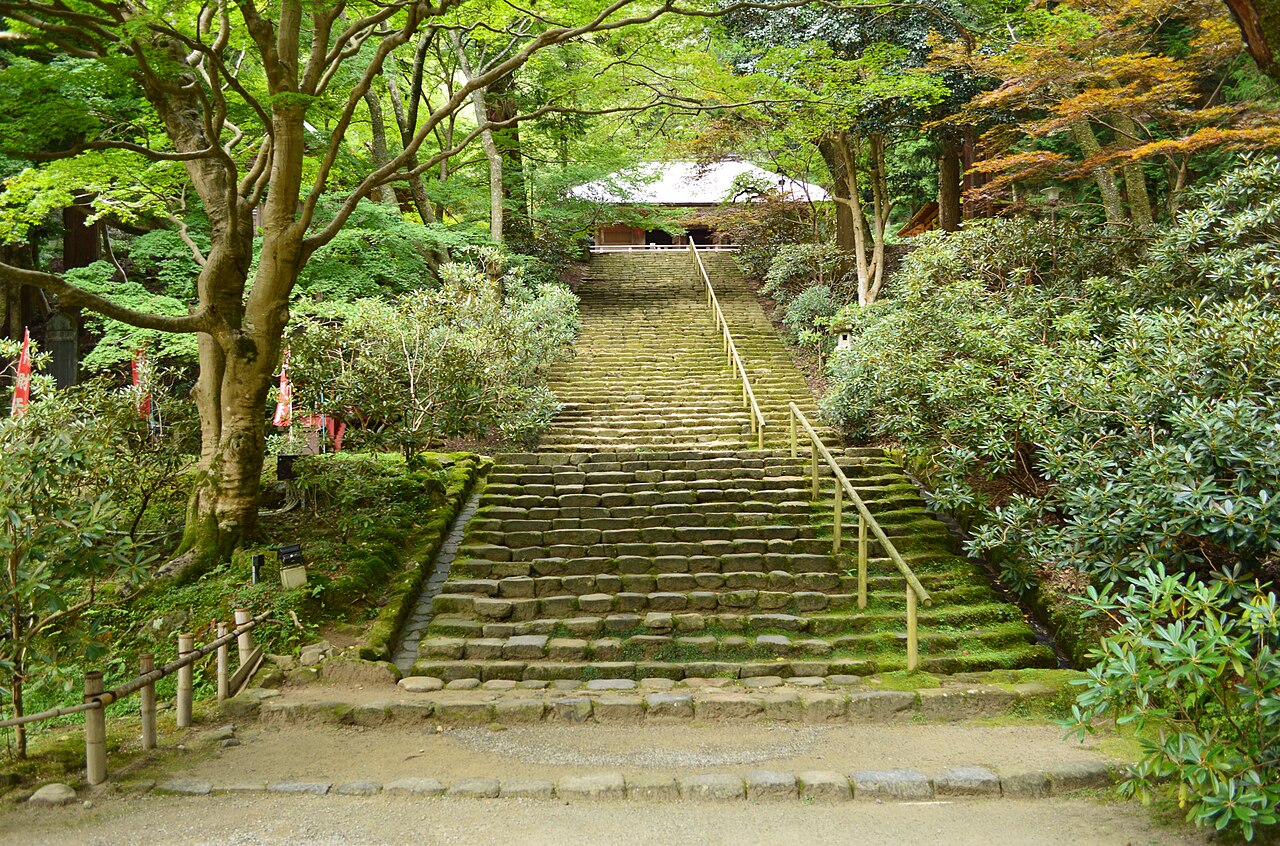
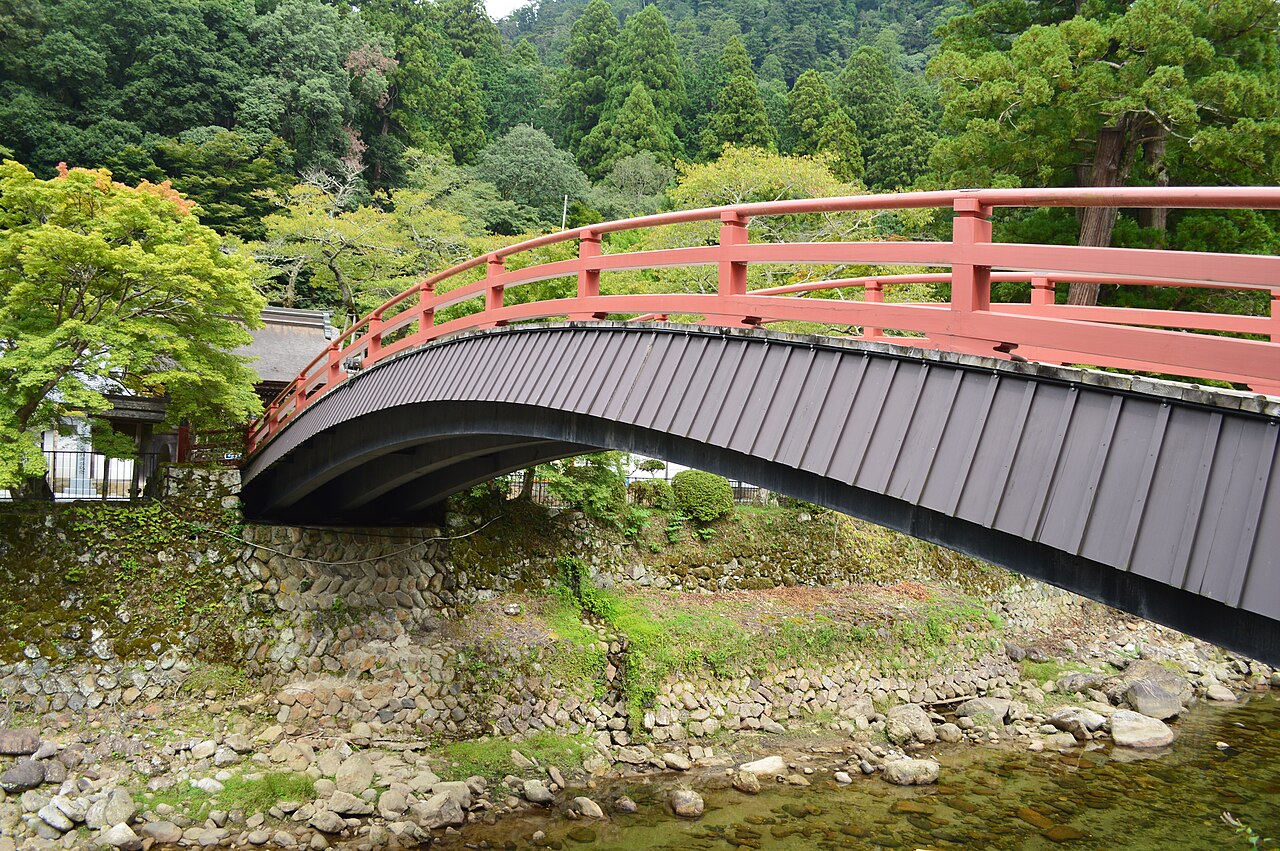
Cross the vermilion arched Taiko bridge over the Muro River in front of the temple gate. Just inside the Niomon gate, look left for a pond shaped like the Sanskrit character Vam. Beyond the pond, the approach continues as a wide stairway of natural stones called Yoroizaka.
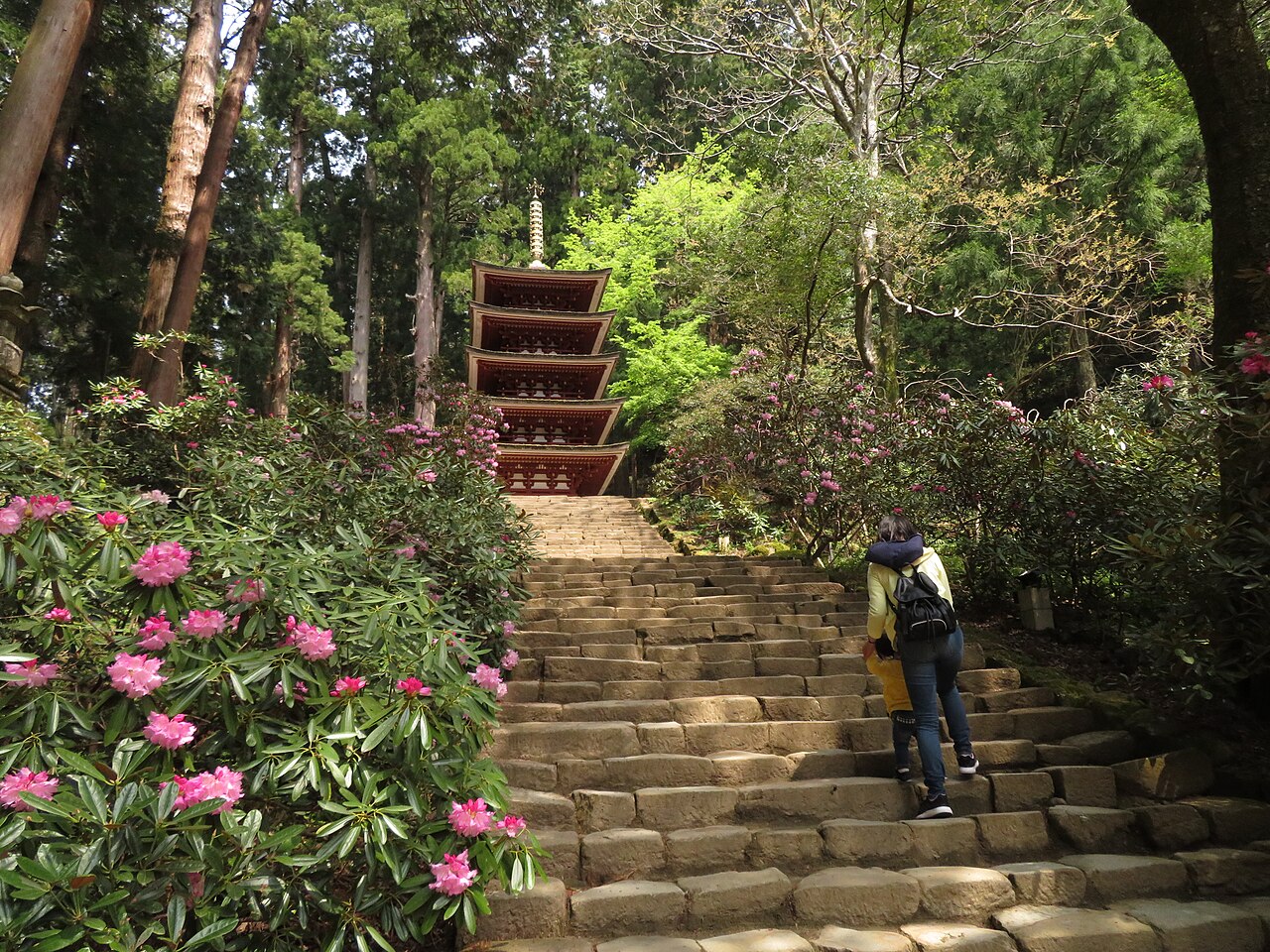
The five-storied pagoda is under roof re-thatching, due to finish by autumn of the ninth year of Reiwa, which is twenty twenty-seven. During the work, a temporary construction roof covers the pagoda and the Kondo, so their exteriors and the Kondo interior cannot be viewed. Muroji still receives visitors as usual, and the grounds, main hall, Miroku-do and Okunoin can still be entered.
The rhododendrons in the grounds begin to bloom from late April each year. Snow settles pure white on the cypress-bark-thatched roofs of the halls and pagodas.
Where to stay
Places to stay near Uda, Nara, Japan →
Disclosure: This post may contain affiliate links. If you book through them, we may earn a commission at no extra cost to you.
Halls, Statues, and the Treasure Hall
Head for the Treasure Hall, home to the Eleven-faced Kannon, a Jizo Bosatsu, six of the Twelve Heavenly Generals and a seated Shaka Nyorai. The Twelve Heavenly Generals, attendants of Yakushi Nyorai, guard the twelve directions and wear zodiac animals on their heads. Here too, the hidden Gochi Nyorai, normally enshrined inside the pagoda, can be viewed for a limited period during its restoration.
The Kondo is also under roof re-thatching, due to finish within the ninth year of Reiwa. Inside, the central standing Shaka Nyorai was first made as a Yakushi Nyorai. The flowing folds of its vermilion robe follow a style called Renpa, also named the Muroji style.
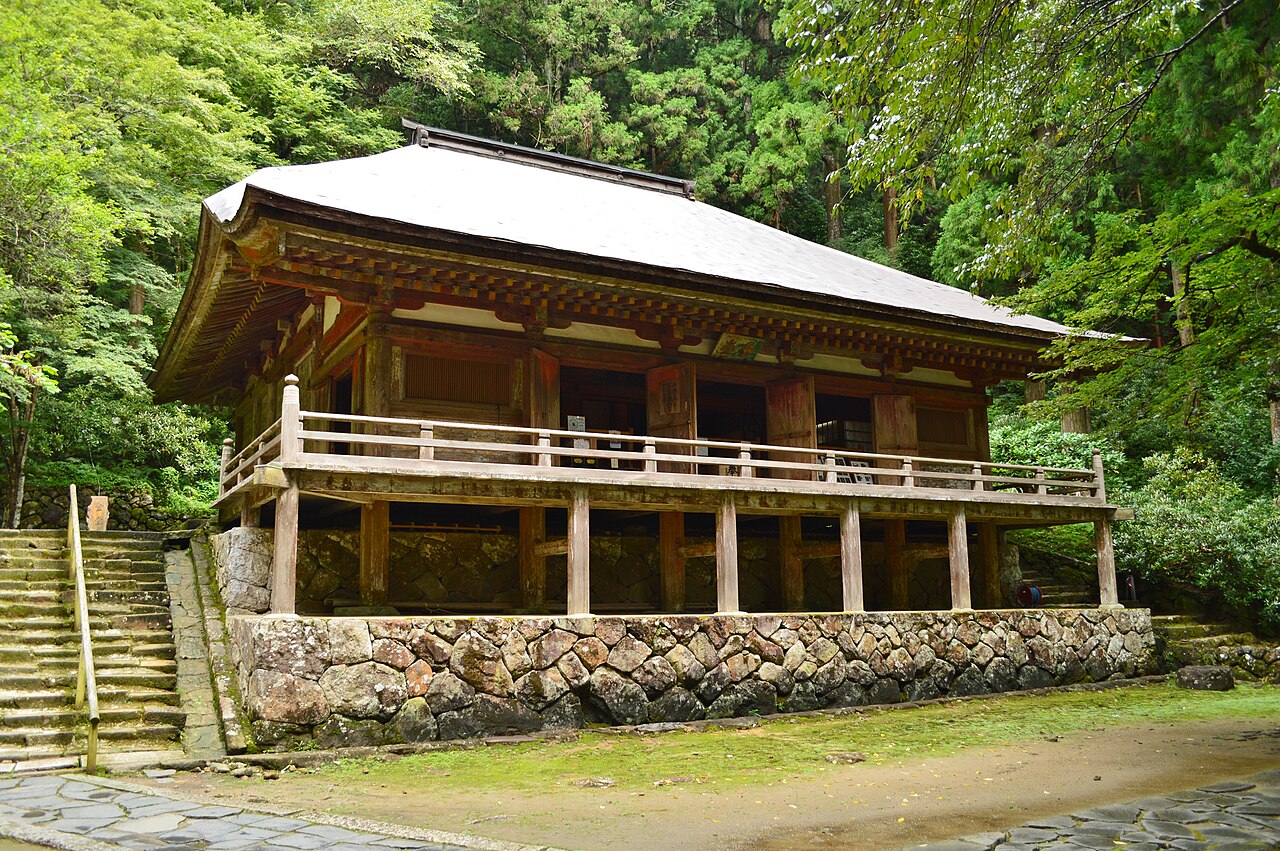
Stand before the main hall, the Kanjodo, whose Nyoirin Kannon in the front shrine is a gentle carving from one block of kaya wood. It is one of the three Nyoirin Kannon of Japan, alongside those of Kanshin-ji and Kanno-ji.
Continue to the Miroku-do, whose main image, a Miroku Bosatsu from the end of the Nara period, is a national Important Cultural Property. This small altar-style Miroku is cut from one piece of kaya wood, hands, heavenly robes and necklaces included.
In the late seventeenth century the Shingon monk Ryuko demanded separation from Kofuku-ji, and Muroji became an independent Shingon-sect temple. Its halls and pagodas were repaired through a donation from Keishoin, mother of the fifth Edo shogun Tokugawa Tsunayoshi. Four gate temples mark its boundaries, Choraku-ji in Taguchi to the east, Ono-ji in Ono to the west, Butsuryu-ji in Akahani to the south and Joroku-ji in Nabari to the north.
Ono-ji and the Carved Buddha Across the River
Walk five minutes from Muroguchi-Ono Station to Ono-ji. The admission fee at Ono-ji is three hundred yen. The Ono-ji cherry festival takes place from late March to mid-April.
Ono-ji, a Muroji-school Shingon branch temple whose principal image is a standing wooden Miroku Bosatsu, also goes by the name of the west gate of Muroji. Work on the stone Buddha began in the early Kamakura period at the prayer of Retired Emperor Gotoba, who came in person for its eye-opening ceremony. Across the Uda River, a giant Miroku is carved into the rock of the opposite bank.
Stop at the Uda City visitor information office, a one-minute walk from Muroguchi-Ono Station. The office is open from nine in the morning to five in the afternoon.
Muro Ryuketsu Shrine and the Dragon Cave
Ride the bus on from Muroji to Muro Ryuketsu Shrine, about five minutes. The adult one-way fare for that leg is two hundred twenty yen.
Muro Ryuketsu Shrine enshrines Takaokami, a deity of water, and is older than Muroji. From the Nara period into the Heian period, imperial envoys held rain-prayer rituals here. The Kasuga-zukuri main hall came from Wakamiya of Kasuga Taisha in Nara in the Edo period and is a Nara Prefecture designated cultural property.
At the autumn festival every October, two lions perform the Muro lion dance for a good harvest and against evil, a Nara Prefecture intangible folk cultural property. The Muro area is volcanic terrain full of odd rocks and caves, with places enshrining Dragon Gods, this shrine among them, scattered across it.
Walk about thirty minutes from the shrine toward Soni, by prefectural road and forest road, to the inner shrine at the dragon cave. Myokichijo Ryuketsu began as worship of the rock cave behind it, in a mountain stream, as the dwelling of the Dragon King. That rock cave goes by the name Myokichijo Ryuketsu, the auspicious dragon cave.
In front of the dragon cave, a clear stream from Mount Muro flows in the shape of a dragon. To give the temple, Ono-ji and the shrine an evening and a morning, look at places to stay in Uda.