This guide draws on a Meiji-era topographical survey of the Yamato plain, on the Japan Heritage story that the Agency for Cultural Affairs tells for Imai-cho, and on the admission and access details currently published by Kashihara City and its tourism association.
Imai-cho: The Merchant Town They Called "Imai on Land"
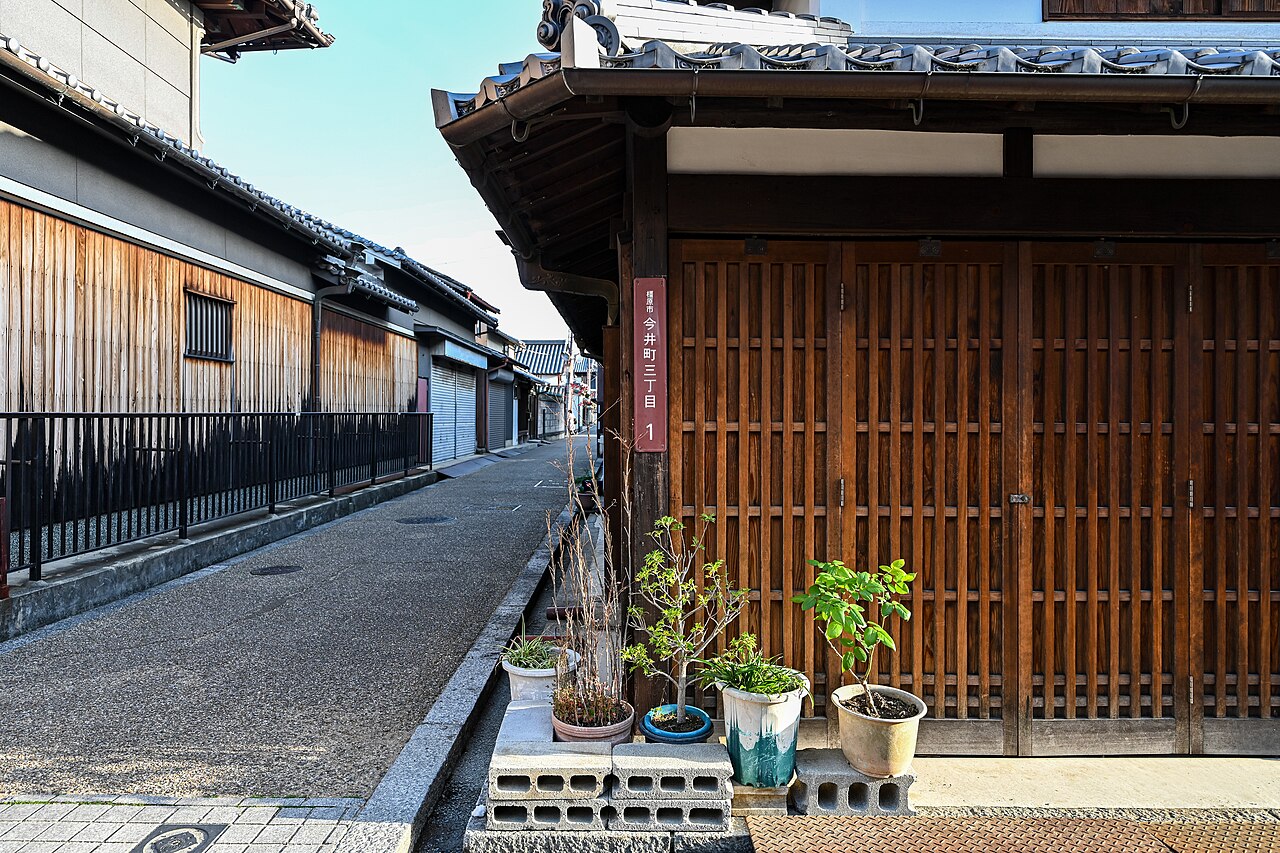
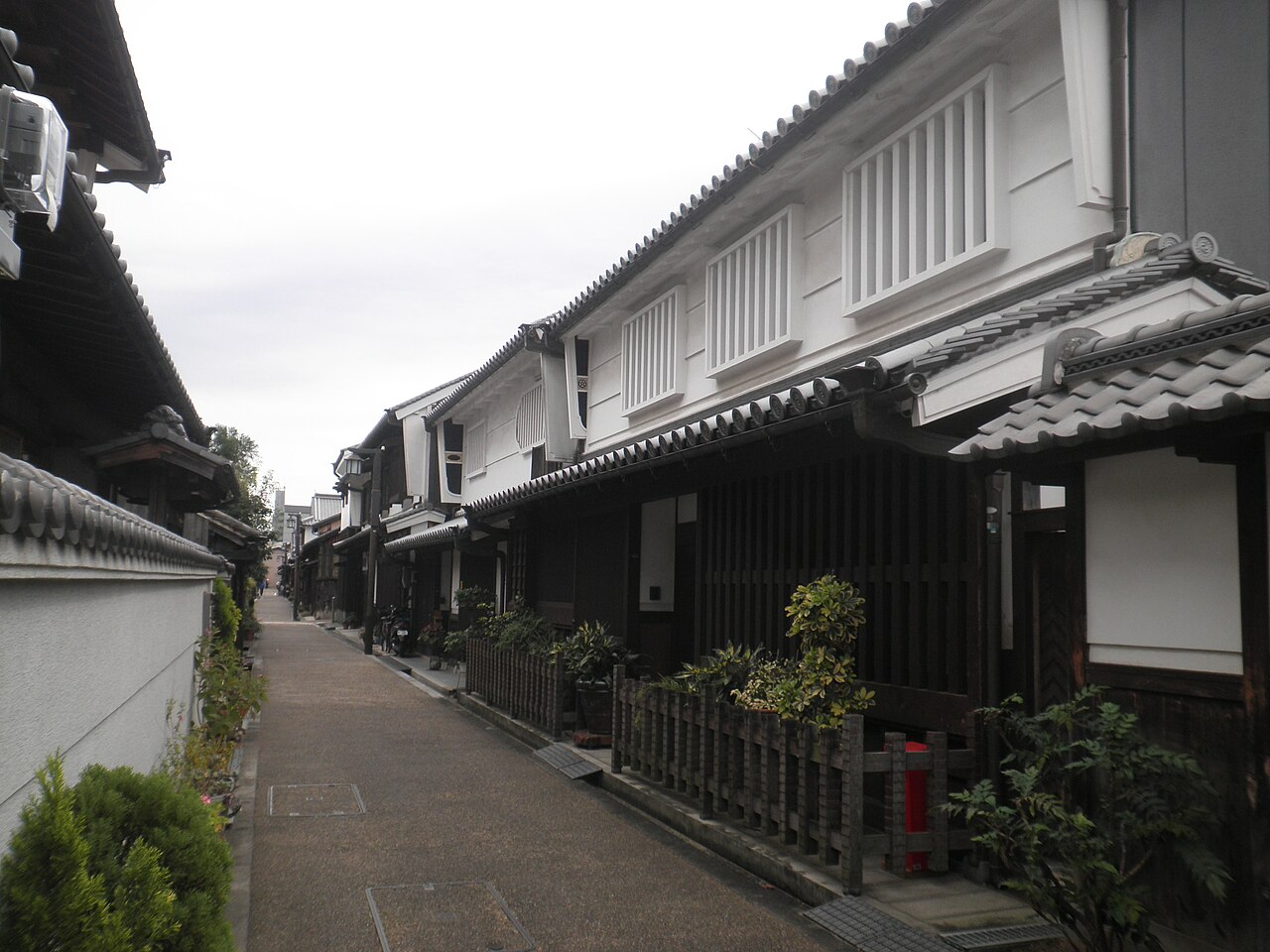
Imai-cho, in Kashihara, Nara Prefecture, is a town of lattice-fronted wooden houses whose name once carried weight far beyond the Yamato plain. The Japan Heritage story pairs it with the port of Sakai: the two were bound together through trade with the countries of Southeast Asia, and people spoke of Sakai of the sea and Imai of the land.
Together, the story goes, these two towns drove the Japanese economy from the Warring States period into the early years of Edo rule. That is a large claim for a place of narrow lanes and potted plants, and it goes some way to explaining the money that was sunk into the houses that still line those lanes.
A Meiji-era survey of the plain widens the frame to take in the neighbouring town of Yagi. Both Imai and Yagi are described as major producers of Yamato cotton, and Yagi as a busy commercial town where the markets were lively. The district office for Takaichi county is said to have been located in Yagi as well.
Where Imai-cho Sits on the Old Nara Roads
In the same survey, Imai is described as lying immediately west of Yagi, so close that the two are spoken of as a single area. Yagi in turn is said to lie about one ri, the old Japanese league, to the south of Tawaramoto. Read together, the entries put Imai beside the town that held the offices and the markets.
Three roads are described as running north to south: the Upper Road on the east, the Middle Road through the centre, and the Lower Road on the west, the last running from Tatsuta through Oji to Takada. Both Tawaramoto and Imai are said to have stood on the Middle Road, and Imai is described as a settlement on that route.
Water shaped the site as well. The Asuka River is said to rise on Mount Minabuchi, run between Oka and Tachibana, round the eastern foot of Amakashi hill, then turn northwest and flow into the ground between Imai and Yagi. It is worth looking for when you walk from one town to the other.
Getting There: Three Stations, Each a Short Walk Away
The Meiji survey already mentions a railway. The Unebi stop, in the area of today's Yamato-Yagi Station, is said to have been set down midway between Yagi and Imai so that a single station could serve both towns. The pattern holds today, with three stations within a short walk of the lanes, and the walking times are these:
- Kintetsu Yagi-nishiguchi Station to Imai-cho: about a five-minute walk
- JR Unebi Station to Imai-cho: about an eight-minute walk
- Kintetsu Yamato-Yagi Station to Imai-cho: about a ten-minute walk
- JR Unebi Station to Imanishi House: about a fifteen-minute walk
Which of the three you use matters less than it seems. Yagi-nishiguchi puts you closest to the lanes, JR Unebi is next, and Yamato-Yagi is only a little further. If your first stop is Imanishi House itself, allow the longer walk from JR Unebi, since that walk is nearly twice as long.
Where to stay
Places to stay near Kashihara →
Disclosure: This post may contain affiliate links. If you book through them, we may earn a commission at no extra cost to you.
What It Costs to Step Inside the Old Houses
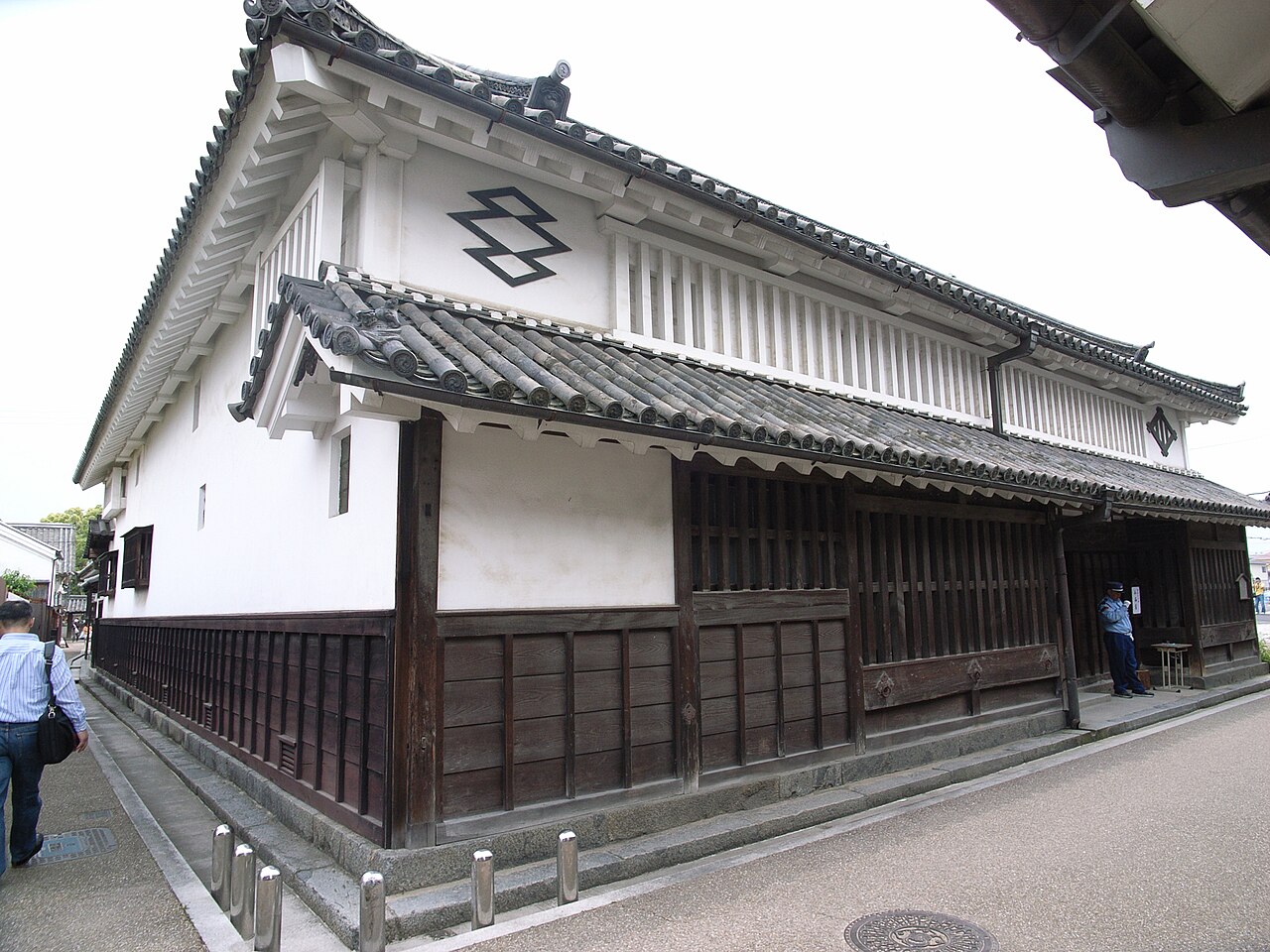
Two merchant houses are the paid stops covered here. Imanishi House is a large, heavy wooden residence with a stepped tiled roof and a white plaster gable end turned to the street. Takagi House is a two-storey house with white plaster walls and dark lattice fronts. Both charge a modest fee, and the amounts are set out below.
| House | Ticket | Price |
|---|---|---|
| Imanishi House | Adult | five hundred yen |
| Imanishi House | Middle school age and younger | two hundred and fifty yen |
| Imanishi House | Group of ten or more | four hundred yen |
| Takagi House | Average visiting cost | four hundred yen |
The rates are easy to hold in your head. A child of middle school age or younger pays half the adult price at Imanishi, and a group of ten or more pays the same four hundred yen that a visit to Takagi House costs on average. Bring some coins; the sums are small and easier to pay exactly.
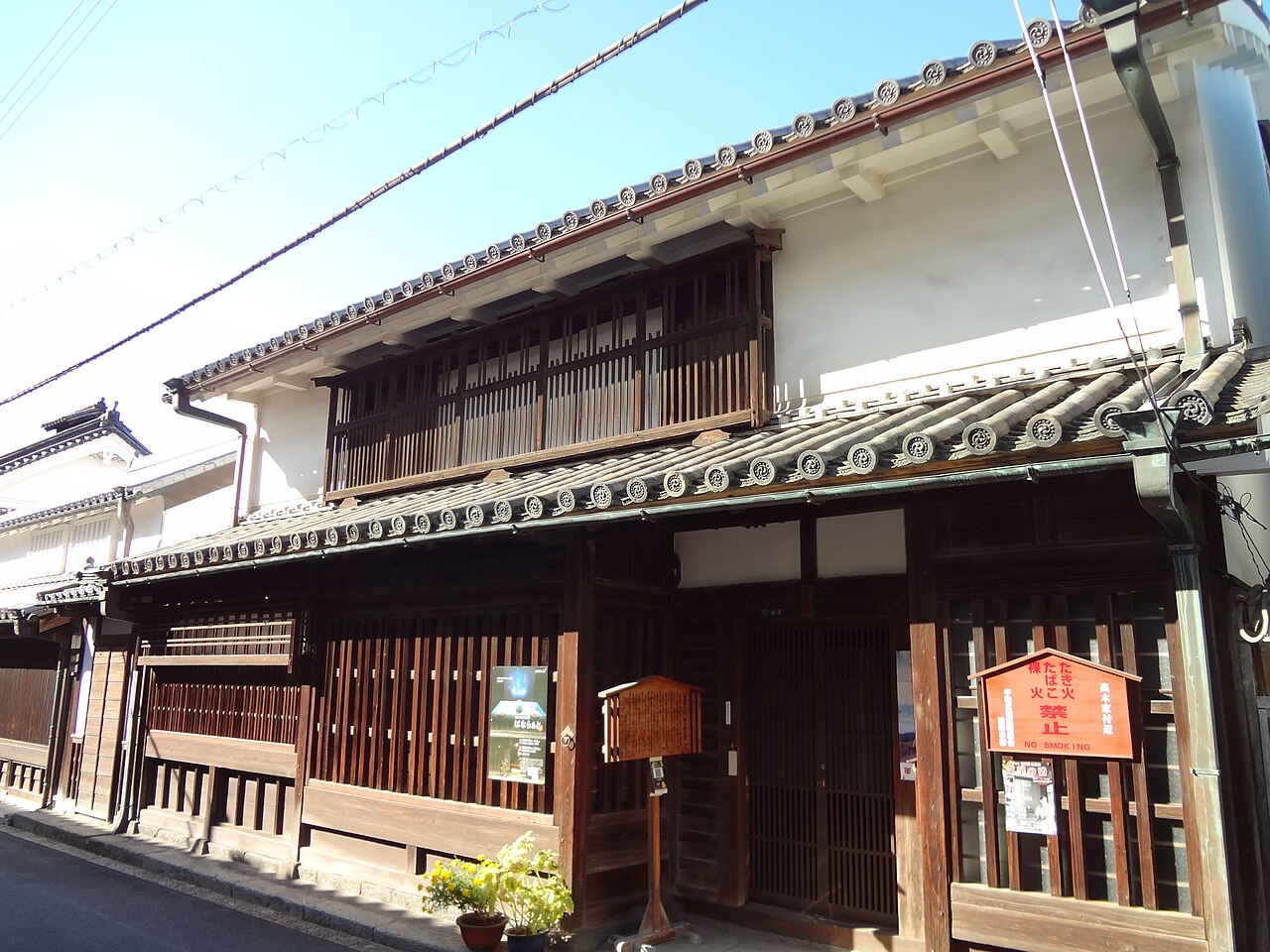
Takagi House stands within the same grid of lanes, and the red no-smoking board mounted beside its entrance makes it easy to pick out. It is the natural second stop once you have seen Imanishi, and the two together give a fair sense of how the town's merchants lived.
If You Arrive by Car: The Machinami Hiroba Lot
Driving is workable, and the lot to aim for is Machinami Hiroba, close to the old town. Its charges for a passenger car are set in bands by length of stay, so it helps to decide before you park whether you want a quick look or a proper afternoon among the houses.
- Thirty minutes or less from entry to exit: free
- Up to one hour: two hundred yen per use, per day
- Two hours or more: five hundred and twenty yen
The free half hour is enough to let a passenger out or to check that the lanes are what you expected before committing. If you intend to see both houses and wander at an easy pace, plan on the top band of five hundred and twenty yen and treat it as part of the admission budget.
Planning the Day: When Doors Are Shut
One date range matters if you are travelling over the holidays. Imai Machiya-kan, another of the townhouses you can enter, is closed for the New Year period from the twenty-fifth of December to the fifth of January, so check official information before visiting. Outside that window, the order that works is lanes first, then the houses.
The town rewards a slow pace, and it is small enough that a guide is a luxury rather than a necessity. If you would like company, a few guided tours are offered in Kashihara, the city around the old town. For an early start on the lanes, a night at a place to stay near Imai-cho is the simplest arrangement.