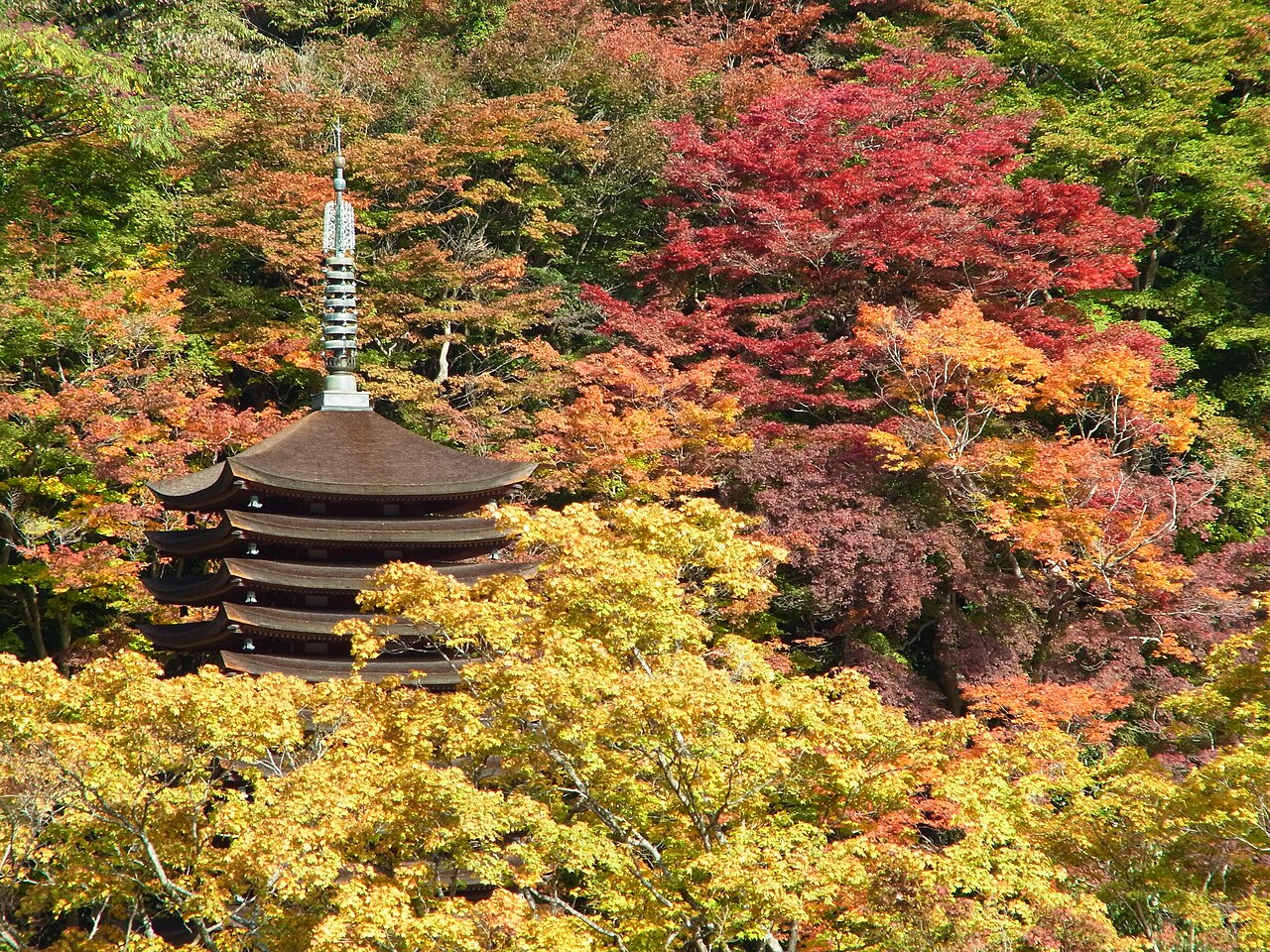
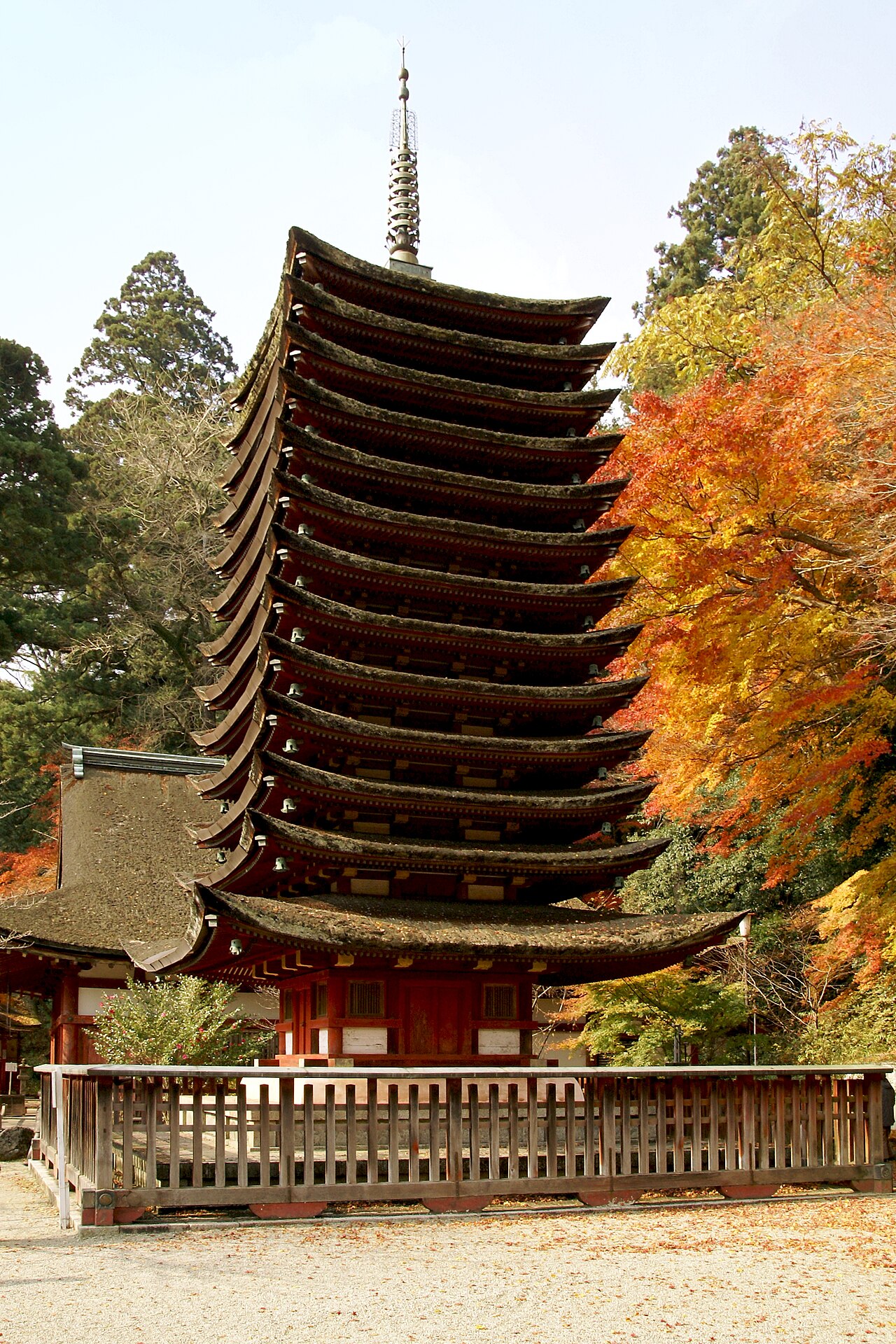
The thirteen-tier wooden pagoda, an Important Cultural Property, was founded in six hundred seventy-eight by the monk Joe and rebuilt in fifteen thirty-two. In spring and autumn, players in kemari costume dedicate the ball game of kemari here. At the Kentosai, fire is lit in the main hall's hanging lanterns and in every stone lantern of the grounds.
Getting to Tanzan Shrine
| Leg | How | Time or fare |
|---|---|---|
| Sakurai Station (south exit) to Tanzan Shrine | Bus via Shorin-ji, one an hour | About twenty-five minutes. An adult one-way fare of five hundred yen |
| Bus terminus to Tanzan Shrine | On foot | About three minutes |
| Sakurai Station to Tanzan Shrine | Taxi | About fifteen minutes |
Travelers planning an overnight stay can look at places to stay in Asuka.
The Thirteen-Tier Pagoda and the Old Lecture Hall
Walk up to the pagoda, which the monk Joe, back from Tang China, founded after reburying part of Kamatari's remains on the summit of Tonomine. Alongside it he also built a lecture hall, and he then named the temple Myoraku-ji.
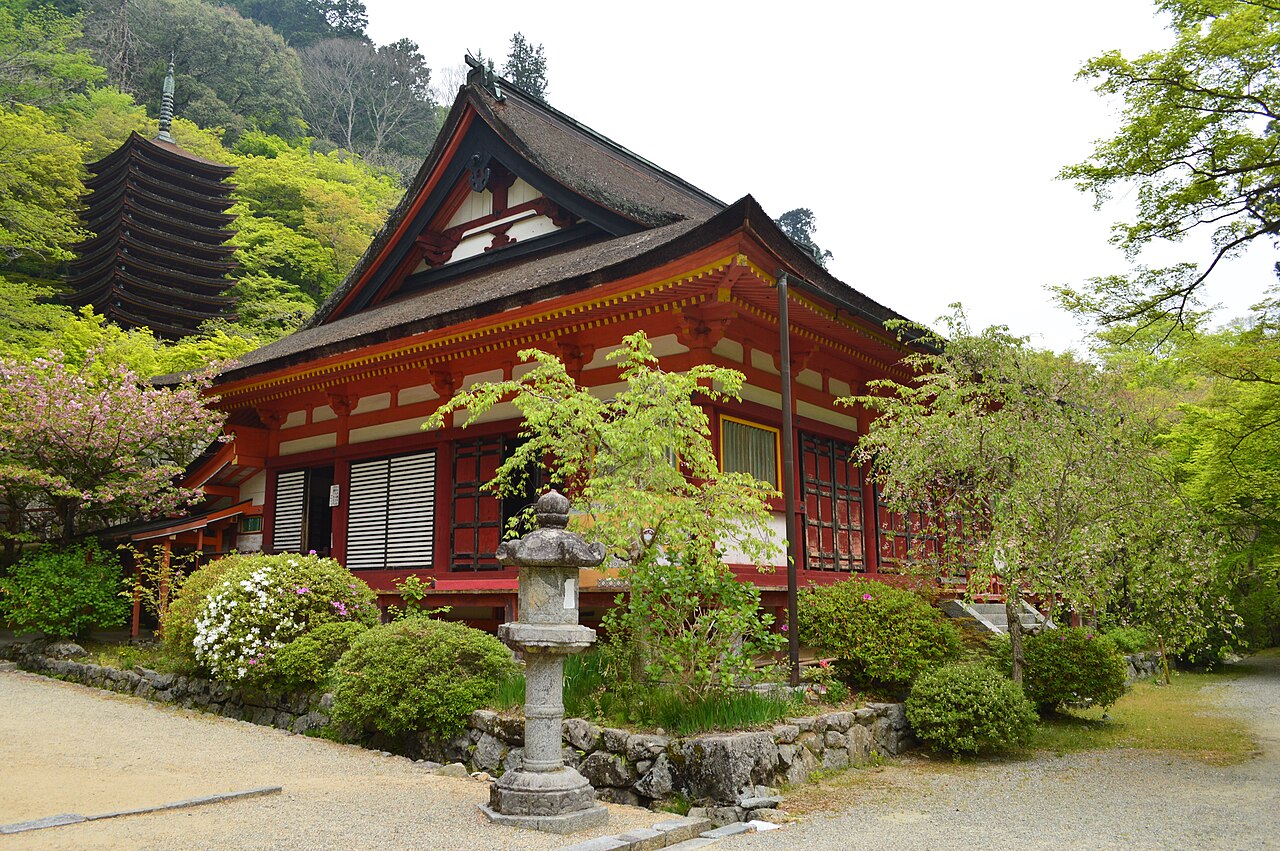
The Shinbyo Haisho, the former lecture hall, dates from the Asuka period, was rebuilt in the Edo period and is an Important Cultural Property. It served as the lecture hall of Myoraku-ji, and its placement follows the layout of a Buddhist hall set in front of the pagoda.
Where to stay
Disclosure: This post may contain affiliate links. If you book through them, we may earn a commission at no extra cost to you.
The Stage-Style Worship Hall and the Main Hall
Look up at the ceiling centre in the vermilion stage-style worship hall, built in fifteen twenty, and you see aloeswood. The main hall, an Important Cultural Property rebuilt in eighteen fifty, is a three-bay Kasuga-style building in vermilion and rich colours. A shrine hall three jo square was built in seven hundred one for a divine image of Kamatari.
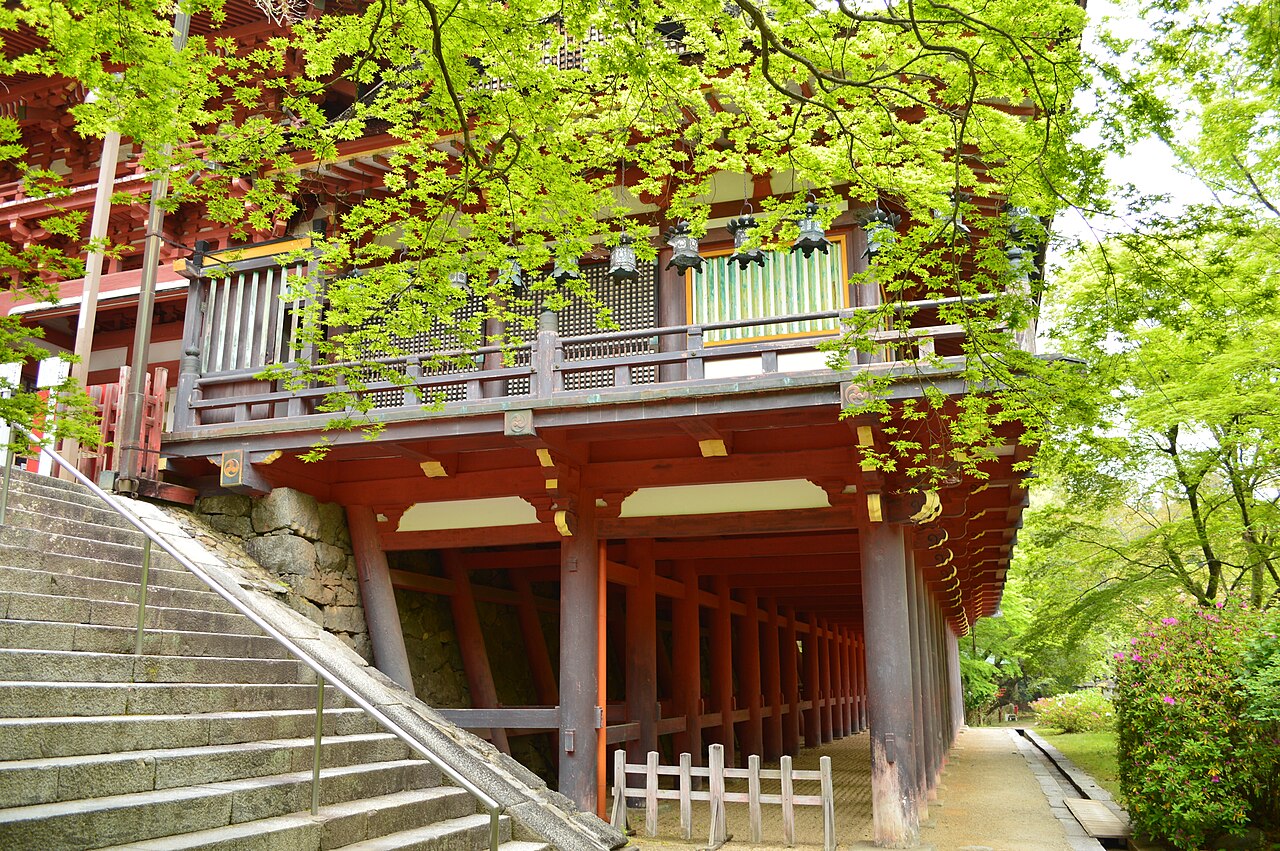
The present name of the shrine goes back to the names given to Tonomine after the private talk. The kemari festival is held each spring and autumn because the enshrined deity, Fujiwara no Kamatari, and Prince Naka no Oe met at a kemari gathering.
Autumn Maple Festival and Evening Light-Ups
If you come for the Momiji Matsuri, the autumn maple festival, note that it runs from the first of October to the sixth of December. The maple light-up runs from the fourteenth of November to the sixth of December, every day from sunset to half past eight in the evening.
An exhibition of shrine treasures runs from the first of November to the twentieth of December. The kemari festival takes place on the third of November at eleven in the morning. The Reitaisai, the main annual festival, is held on the seventeenth of November at half past ten in the morning.
An evening of gagaku court music with the bugaku dance Ranryo-o is held on the twenty-eighth of November at six in the evening. A goshuin stamp in an autumn paper-cut design, offered in October and November, costs one thousand yen.
Admission, Opening Times and Prayer Services
- Reception is from half past eight in the morning to four in the afternoon, the last reception time.
- Admission for an individual adult is seven hundred yen.
- Admission for an elementary school child is three hundred yen.
Follow the mountain path from the sign at its entrance, which gives twenty minutes on foot to Mt. Gohasetsu. Climbing to Mt. Gohasetsu and Santen Inari Shrine is possible until three in the afternoon, and the mountain closes at four in the afternoon.
Requests for a prayer service are taken from nine in the morning until half past three in the afternoon. The tamagushi offering for a prayer service or formal worship starts from five thousand yen and includes the mountain entry fee. Those who receive a prayer are given an amulet, a shrine talisman and an ema plaque.
After the shrine, travelers can compare hotels in Asuka for the night.