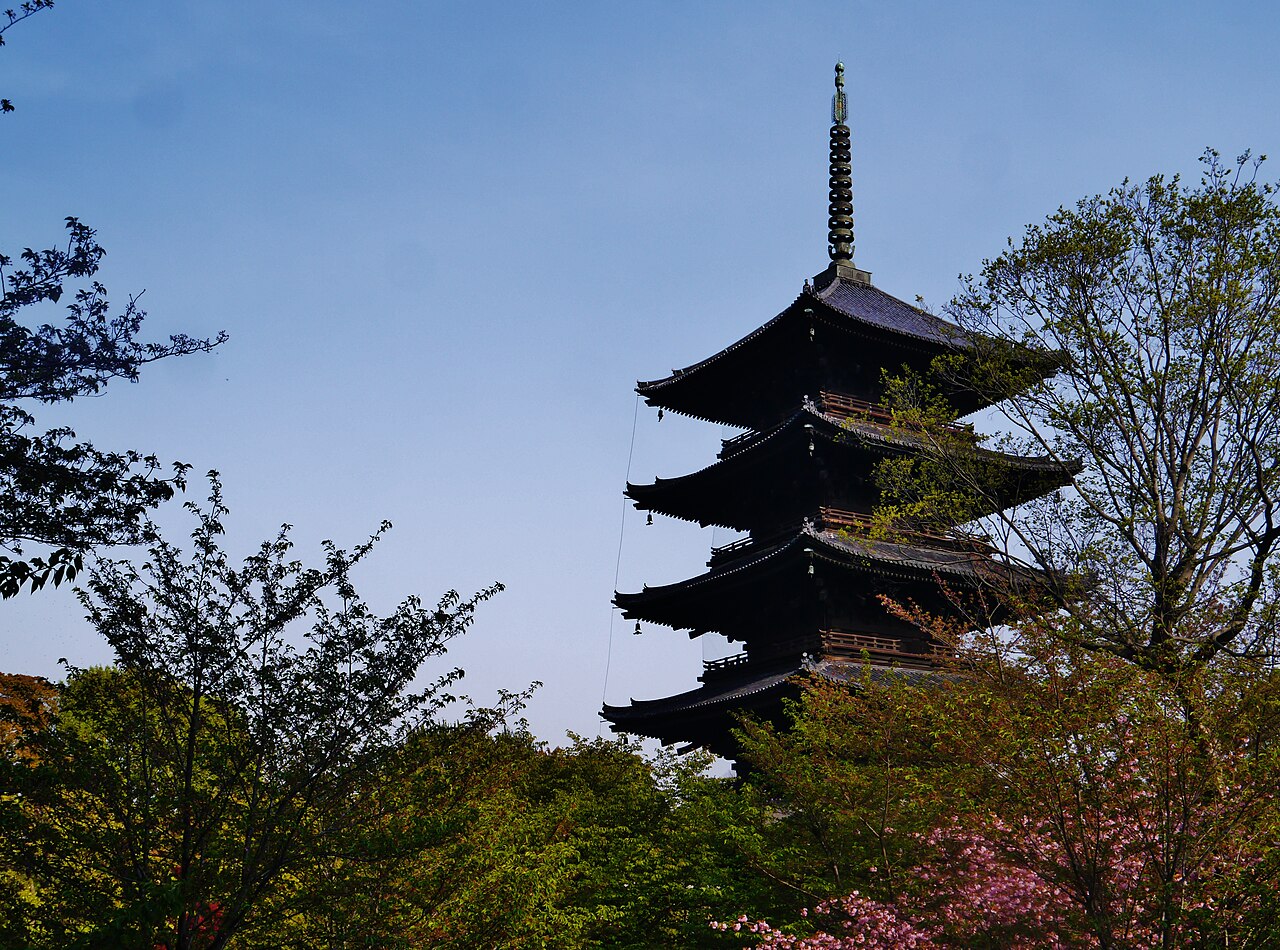
The grounds of Toji form a long rectangle, and the part of it where the main halls stand is nearly square. To-ji literally means East Temple, and it has survived to the present day while the temple on the west side no longer exists. Toji suits travelers who want a pagoda, halls of Buddhist figures and a monthly market within the same temple grounds.
Toji Pagoda: The Five-Storied Pagoda From Outside and Inside
If the pagoda is the draw, it is looked at from outside on a regular visit, whereas its painted first-story interior is shown during special viewings.
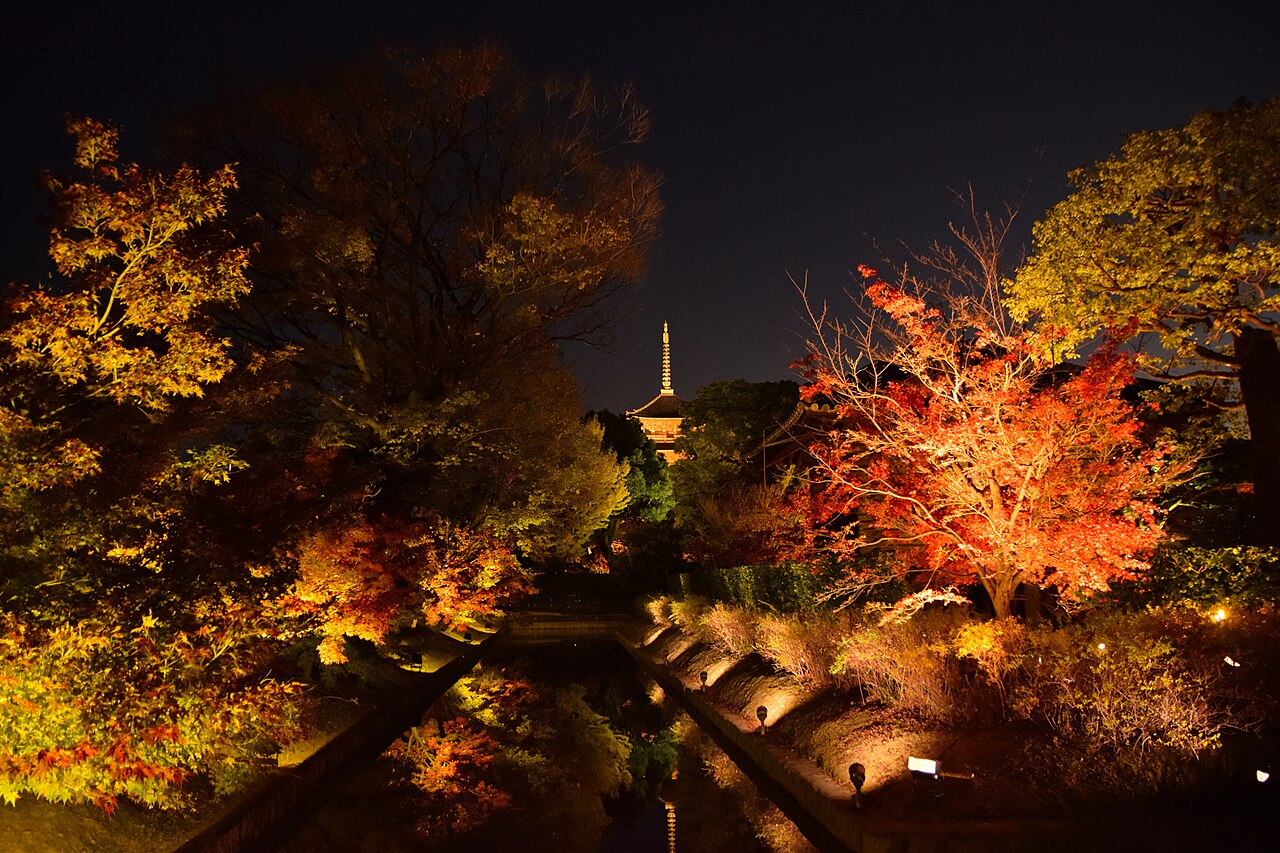
The Five-Storied Pagoda comes into view from the south-side windows of the Shinkansen. It stands on the temple grounds as a tower of five stories. Inside the first story is an esoteric Buddhist space painted in vivid colors. That first story is opened during special viewings, and on a regular visit people cannot go inside the pagoda, which is viewed from outside.
Toji's Lecture Hall: The Three-Dimensional Mandala of Dainichi Nyorai
Toji's Lecture Hall rewards looking at the whole arrangement rather than at one statue, because its figures were planned together as a three-dimensional mandala.
The Lecture Hall altar holds twenty-one Buddhist figures that Kukai placed there, centered on Dainichi Nyorai. Visitors who enter from the east are met first by Jikokuten. Kukai planned this three-dimensional mandala from the Miedo, the hall where he lived, and directed the construction work.
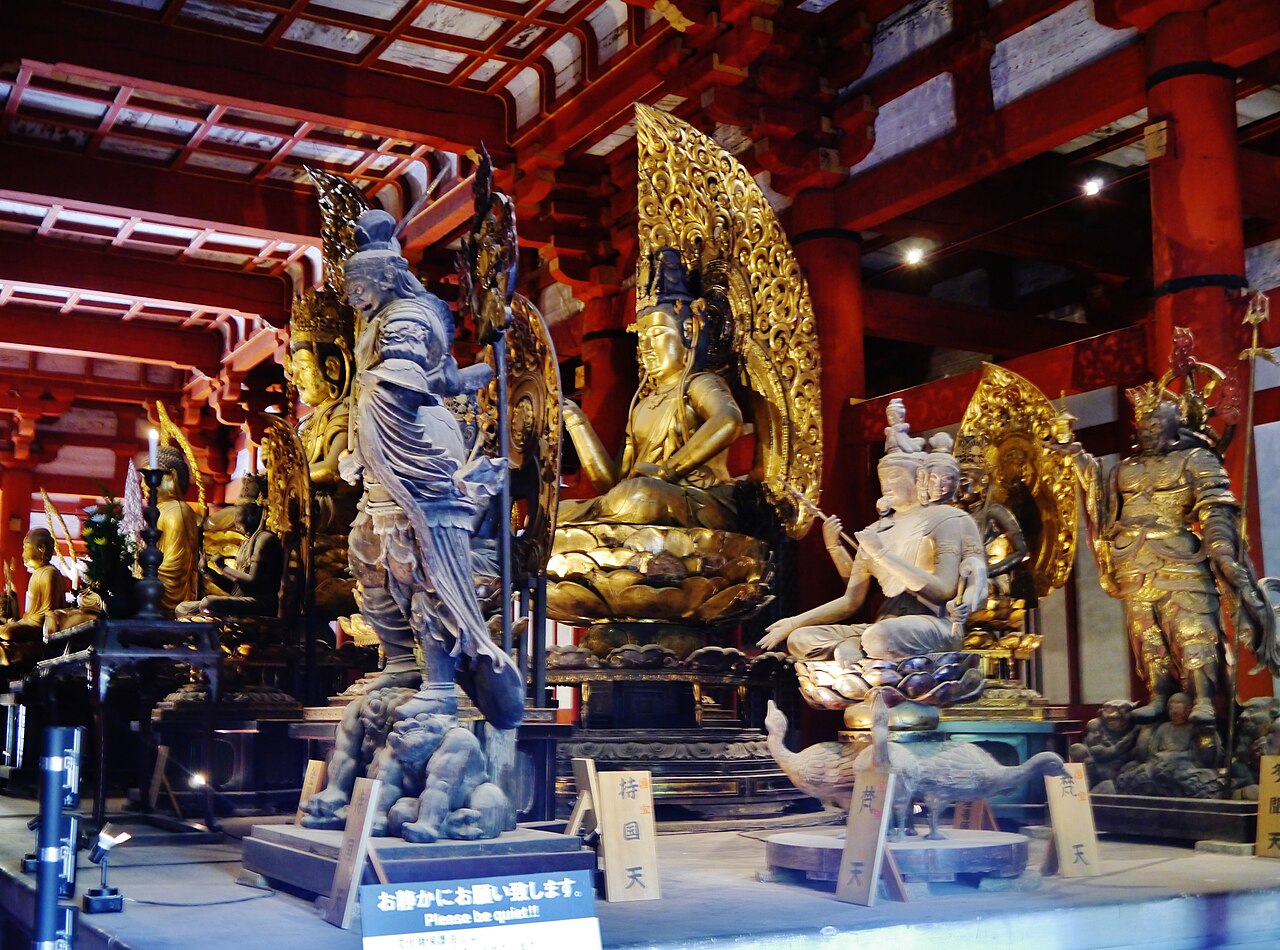
Dainichi Nyorai, the figure the others are centered on, forms a hand seal called Chiken-in. It is surrounded by Ashuku Nyorai, Hosho Nyorai, Amida Nyorai and Fukujoju Nyorai, and the five form the Five Wisdom Buddhas. Among them, Dainichi Nyorai alone wears a jeweled crown like a bodhisattva and is adorned.
Jikokuten, Zochoten, Komokuten and Tamonten guard the altar as the Four Heavenly Kings. Six guardian deities, including Bonten on the east side and Taishakuten on the west side, protect the fifteen Nyorai, Bosatsu and Myo-o figures of the hall. The Myo-o figure is shown with a wrathful face, holding a sword in the right hand and a rope in the left, with red flames behind it.
Kondo, Treasure Hall and Kanchiin: Healing Buddha, Bishamonten and Musashi Paintings
For Buddhist sculpture and painting beyond the mandala, the choices are the Kondo, Homotsukan and Kanchiin, each holding a different kind of work.
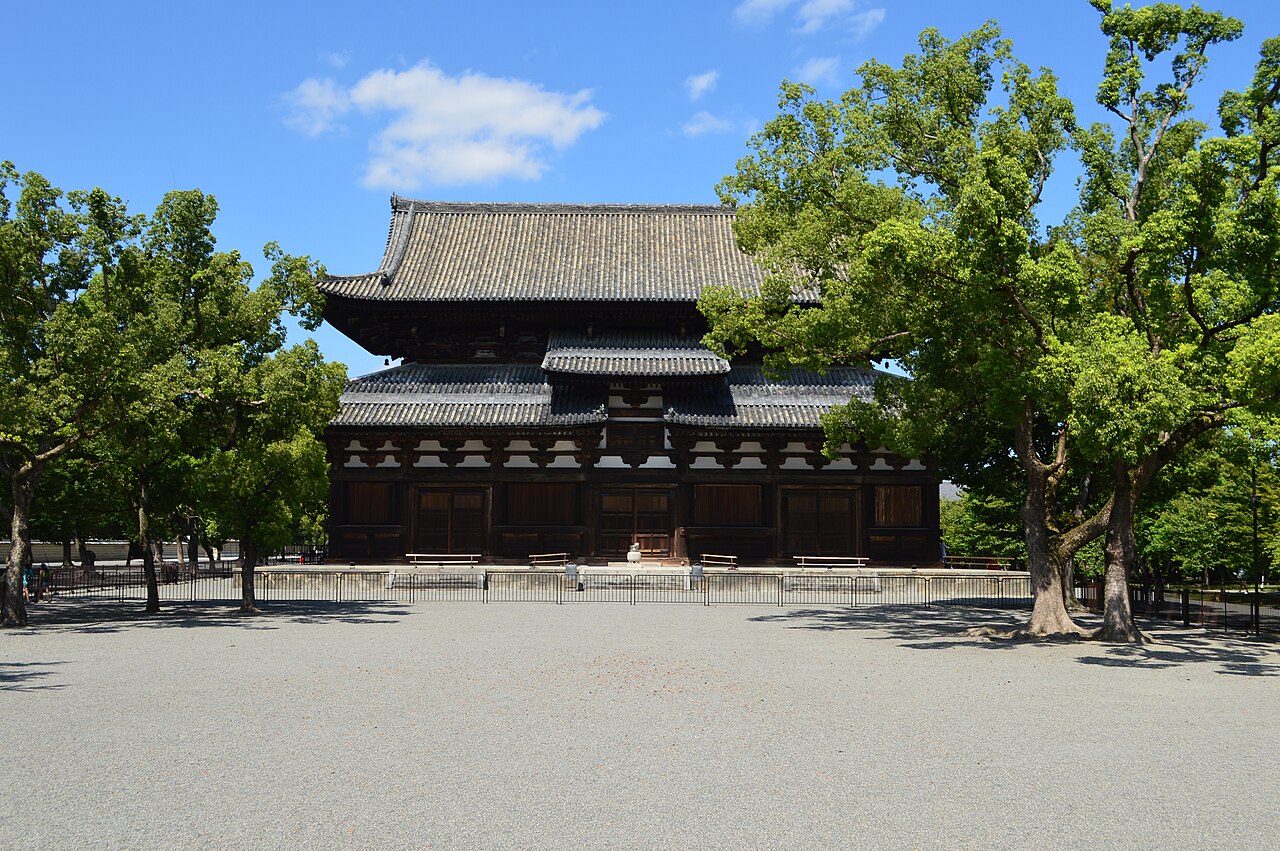
The Kondo enshrines Yakushi Nyorai as its main object of worship, together with Nikko Bosatsu and Gakko Bosatsu. Seven Buddha figures are arranged on the halo of the main image. The Twelve Divine Generals stand in a ring around the base of its pedestal.
Homotsukan, the Treasure Hall, houses the Tobatsu Bishamonten and displays temple treasures during its exhibition periods. The Tobatsu Bishamonten wears armor made of woven chain and is supported at the feet by the earth goddess and two demons. The Thousand-Armed Kannon Bosatsu was enshrined in this hall after restoration, a figure whose thousand hands covered the whole body like a halo.
Kanchiin keeps two paintings by Miyamoto Musashi, an eagle and a bamboo grove, in the upper room of its guest hall. The five statues in its main hall each sit on a lotus pedestal above a lion, an elephant, a horse, a peacock and a garuda. The tea room has many sliding-door paintings. The main hall stands on the east side of the guest hall.
Kobo-ichi Market on the Twenty-First: What the Stalls Sell
To shop rather than to look at statues, the twenty-first of each month is the day to plan around.
Kobo-ichi fills the precinct on that day with nearly a thousand stalls. The market is held across the whole of the grounds. Stalls sell handicrafts, plants and food, along with antique clothing and furniture and children's toys.
Miedo holds a memorial rite of gratitude on the twenty-first of every month, the same day as the market. Chinju Hachimangu, the shrine on the grounds, has a goma rite of its own. Visitors can watch that rite from outside the shrine building.
Shojinku at the Miedo: The Morning Ritual Visitors Can Attend
For a visit at the very start of the day, the Shojinku at the Miedo is the rite held every morning.
Shojinku begins at the Miedo every morning with offerings of a first tray, a second tray and tea. Ten rings of the bell sound first, and then the gate opens. The ritual ends with the bestowal on worshippers of the Buddha relics that Kukai brought back.
Miedo, where Kukai lived, stands in the northwest of the precinct in an area enclosed by an earthen wall. The hall in front of it is called Dainichido. Dainichido is now used as an Ekojo, a place for ancestral memorial services, and it houses the memorial tablets of Emperor Saga, Ashikaga Takauji and others.
A Half Day at Toji: Which Halls to Pair and in What Order
The Kondo, the Lecture Hall and the Jikido stand in one straight line, so the three halls pair naturally as a single pass. That layout represents Buddha, Dharma and Sangha. The pagoda could be added to the same pass. Those who prefer company for this stretch could take a guided tour of Toji and its pagoda.
The Miedo rite could come first on a visit, with the three halls in the line after it. The Treasure Hall and Kanchiin could be kept for the same visit if time allows. On a market day, Kobo-ichi could take the first part of the visit and the halls the rest. Travelers planning that early start could look at places to stay in Kyoto for the night before.
Getting to Toji, Hours and Tickets
New to rural buses and one-man trains? See how to ride them, step by step.
| Item | Details (as listed) |
|---|---|
| Gate | opens at five in the morning and closes at five in the afternoon |
| Kondo and Kodo | open eight to five, last entry four thirty; adults eight hundred yen, high school four hundred, junior high three hundred |
| Kanchiin | open nine to five, last entry four thirty; six hundred or three hundred yen |
| Treasure Hall | open only during exhibition periods, nine to five; combined ticket entry ends four, or three thirty with the hall |
| Kobo-ichi market | twenty-first of each month; stalls mostly open by eight, begin closing around four; some close early in rain |
| Shojinku at the Miedo | daily at six; arrive at the Karamon or west gate by about five fifty; relic bestowed about six twenty |
| Getting there | JR Kyoto Station Hachijo exit fifteen minutes on foot; Kintetsu Toji Station ten minutes on foot |
Times and fees above are as listed. The pagoda interior and Homotsukan are opened only during special periods, so the temple's own schedule decides those visits. Miedo can be visited freely from six in the morning until the gate closes.
Thinking of staying overnight?
Compare places to stay near Kyoto →
Disclosure: This post may contain affiliate links. If you book through them, we may earn a commission at no extra cost to you.