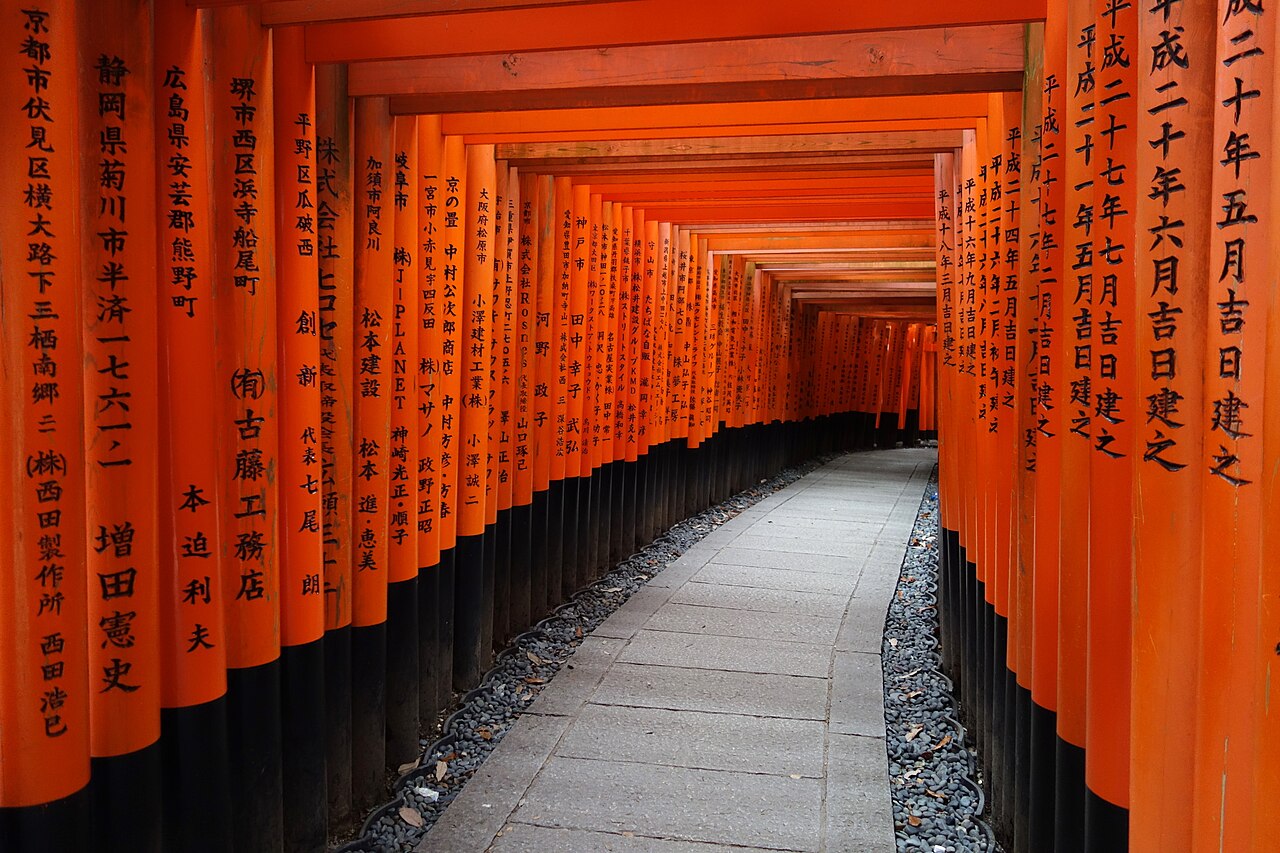
At Fushimi Inari Taisha, rows of vermilion-lacquered torii run along the mountain approach like a tunnel. The Yotsutsuji looks out toward a range of the Nishiyama mountains in the distance. At the fire festival, music and a dance are performed in the faint light of a garden fire.
This route walks the Senbon Torii, stops at the Kumataka-sha pond, climbs to the Yotsutsuji, eats along the back approach and, on festival days, meets the rites at Gozendani, leaving out the full circuit of the mountain.
Many statues of foxes, the messengers of the deity Inari Okami, stand at Fushimi Inari Taisha.
| Time guide | Place | What you do | What you find or how far |
|---|---|---|---|
| Morning | Fushimi-Inari Station | Arrive on the Keihan Main Line | A five-minute walk east to the shrine |
| Morning | Senbon Torii | Walk the row of vermilion torii | The torii become somewhat sparse beyond it |
| Late morning | Kumataka-sha | Look at the pond worship place | Green mountain shadows reflect in the pond |
| Midday | The Yotsutsuji | Look out from the Yotsutsuji | The Nishiyama mountains in the distance |
| Afternoon | Back approach | Eat inari sushi and sweets | Restaurants and souvenir shops line the way |
| Afternoon | Inari Saryo | Try matcha sweets in the rest house | Matcha parfait and matcha ice cream |
Walking Into the Vermilion Tunnel of the Senbon Torii
Walking the mountain approach means passing under vermilion-lacquered torii that stand in a row like a tunnel. The Senbon Torii is the row of vermilion torii on the way from the main shrine to Okusha Hohaisho. The torii are painted in the same vermilion as the shrine buildings, a finish called inari-nuri.
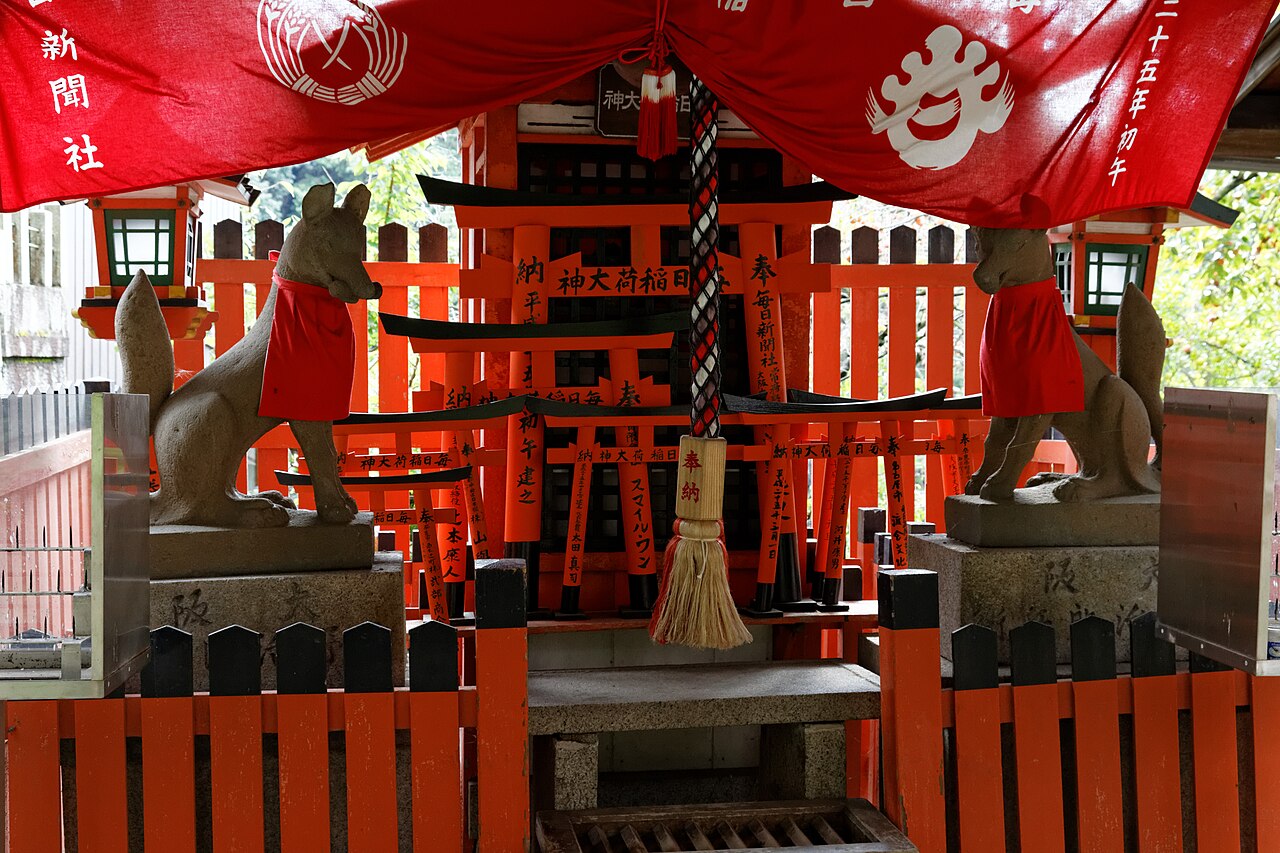
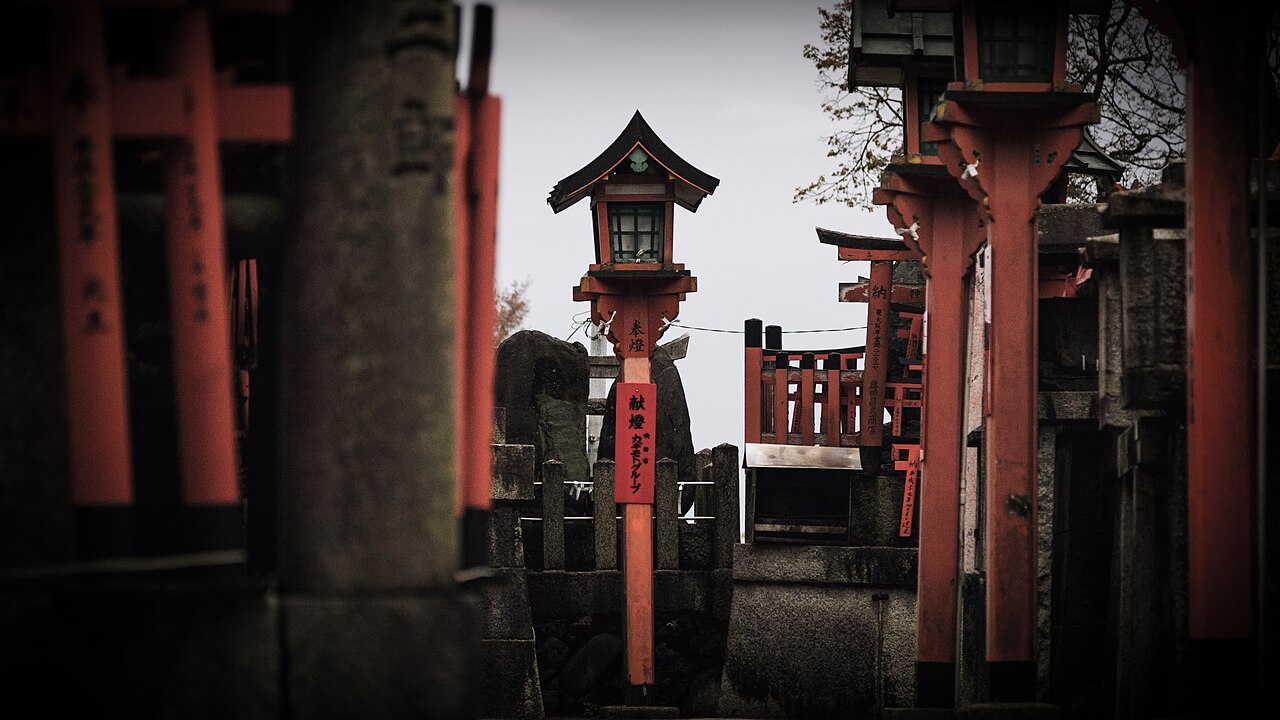
Keep walking beyond the Senbon Torii and the rows thin out, with the torii becoming somewhat sparse. Several thousand vermilion torii stand along the approach paths, and countless o-tsuka stone shrines are grouped on the mountain. Watch for the fox statues too: there are many, and the fox is the messenger of the deity Inari Okami.
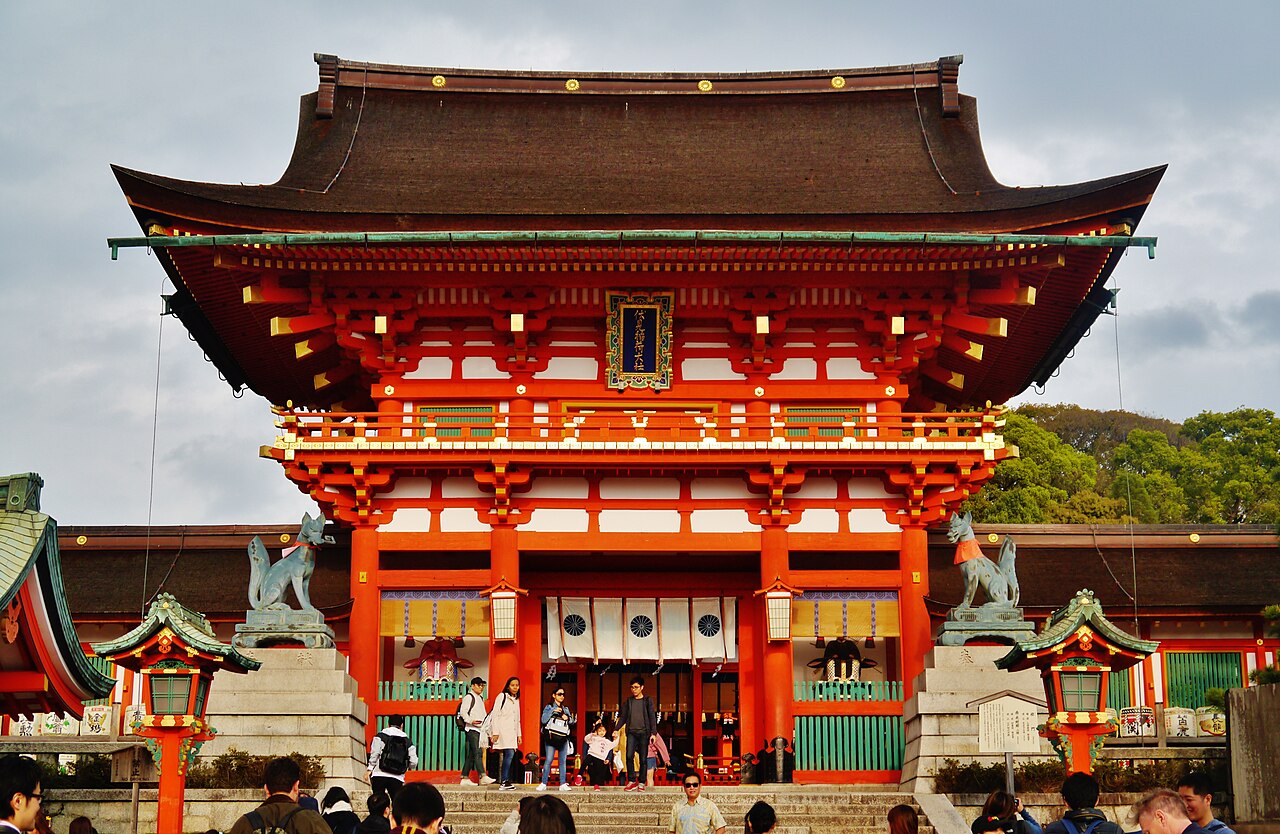
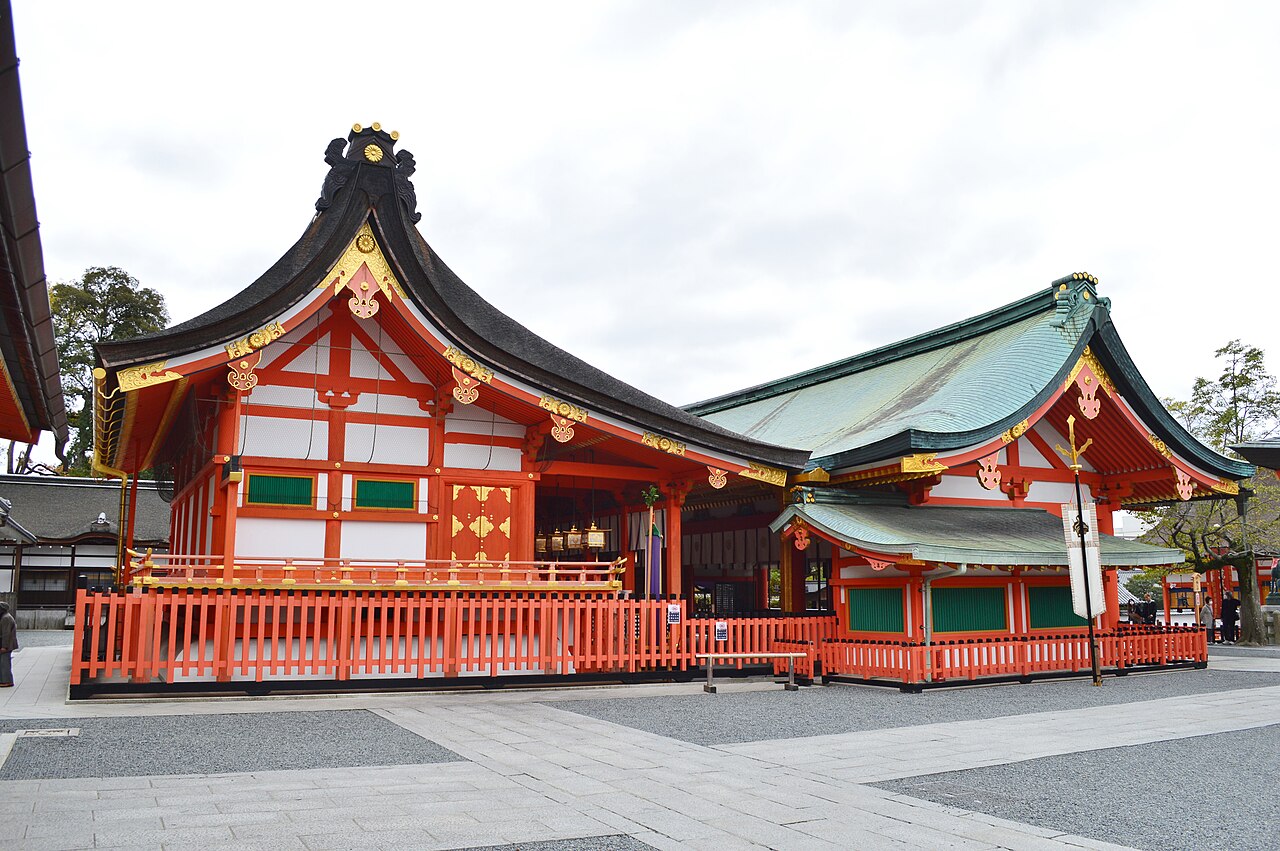
Notice how widely the vermilion is used: it is a color said to counter magical powers, found in ancient palaces, shrines and temples. The Romon gate of the shrine is attributed to construction by Toyotomi Hideyoshi in the Tensho era. Walk the Senbon Torii and turn back at Okusha Hohaisho for a short visit, or go on beyond it where the torii become somewhat sparse.
Climbing Mount Inari Past Okusha, Kumataka-sha and the Yotsutsuji
Climb beyond the rows of torii to Okusha Hohaisho, generally known as Oku-no-in, which lies east of the main hall. At Kumataka-sha, look across the pond, also called Kodama-ga-ike, where green mountain shadows are reflected beyond a vermilion fence. The worship place there is built on a stone-piled platform jutting into the pond, where the o-tsuka of Kumataka Okami is enshrined.
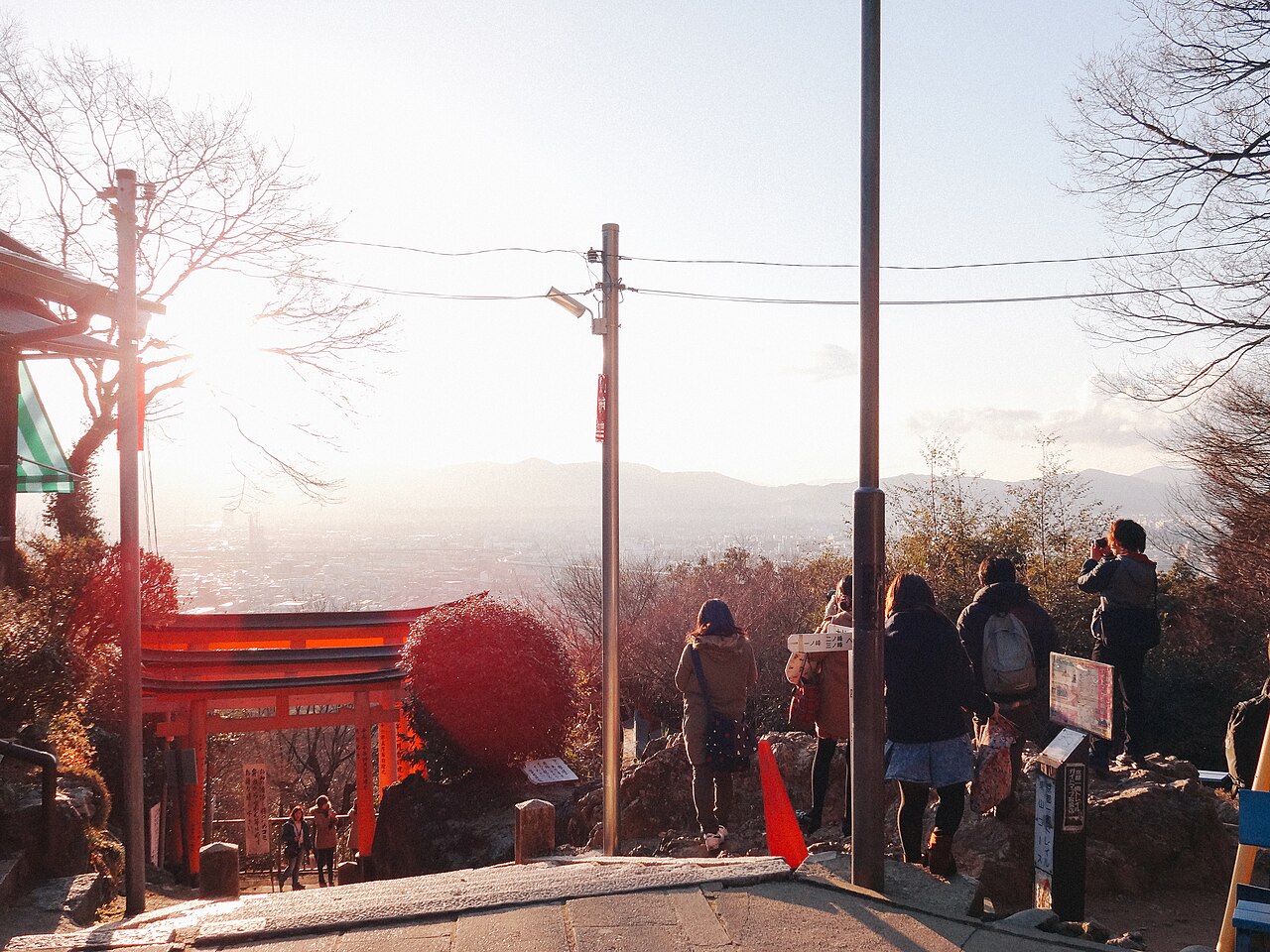
Look out from the Yotsutsuji and a range of the Nishiyama mountains can be seen in the distance. At Kojinmine, the view opens up behind the shrine site, taking in the area from central Kyoto city northward. Rest where the worship path levels out: flat areas at key points have tea houses and temizuya.
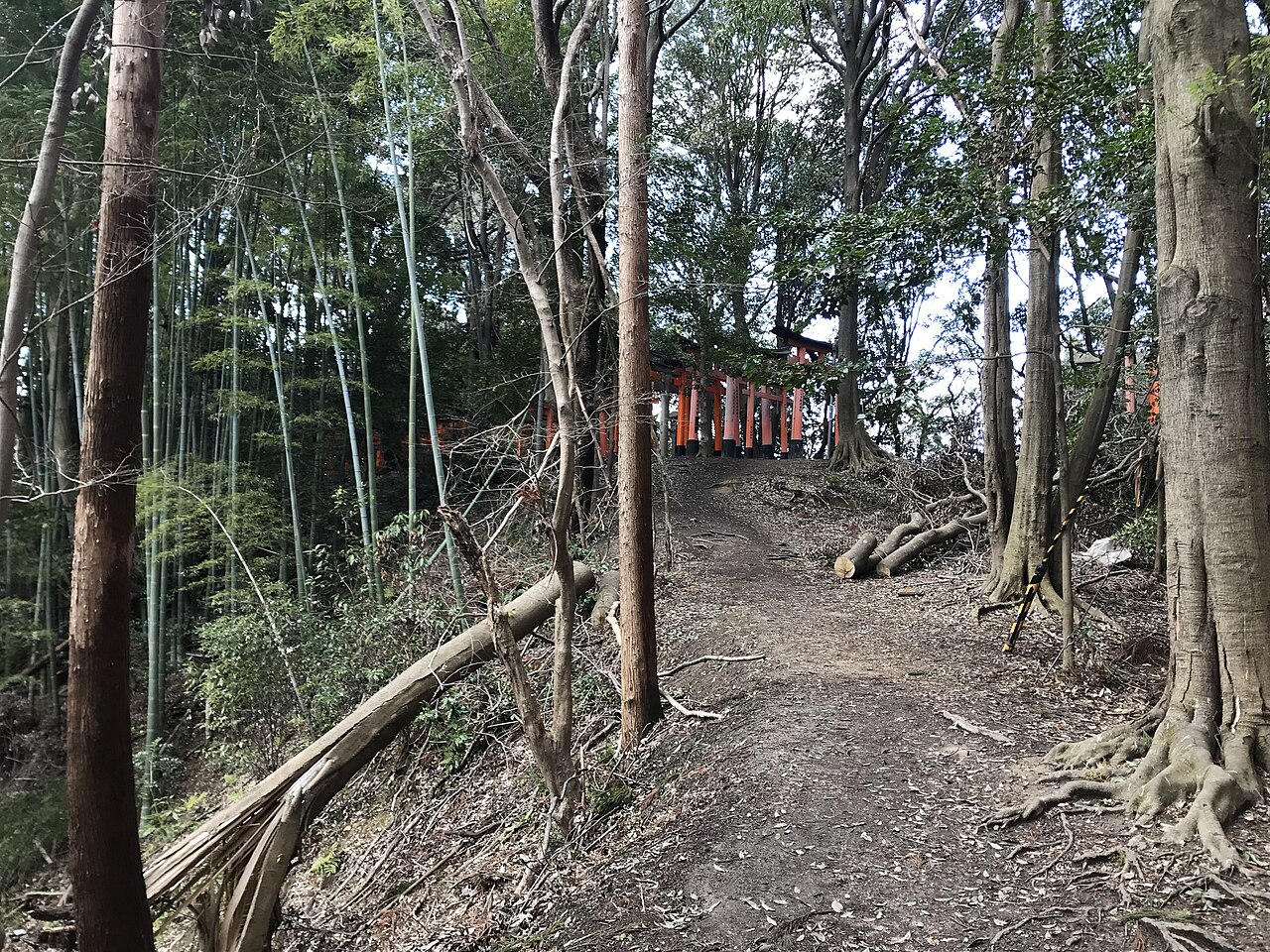
Walk the full Oyama-meguri and the route visits the shrines, sacred sites and mounds scattered on the mountain, reaches the summit and returns. The mountain being climbed, Mount Inari, is the southernmost peak of the so-called Higashiyama Thirty-six Peaks. With less time on the mountain, the Kumataka-sha pond makes a turning point; with more, the Yotsutsuji adds the view toward the Nishiyama mountains.
Eating Along the Back Approach: Inari Sushi, Sweets and Sukeroku
Try the inari sushi sold at Hanaya, a shop that stands on the back approach to the shrine. Around Fushimi Inari, almost all of the inari sushi handled is triangular in shape. Sukeroku sushi is the choice for variety, a combination of inari sushi and rolled sushi.
Sample the hand-baked white miso and sesame sweet of the approach streets for its slight thickness and firm bite. Warabimochi here is shaped like an egg instead of being set in a square mold. At Inari Saryo, inside the rest house, visitors can have sweets such as matcha, parfait and matcha ice cream.
Taste Fushimi togarashi, a long, soft, sweet pepper that is grilled or simmered with jako. Peel black soybean edamame and large beans appear, each wrapped in a thin purple skin. The inari sushi of the approach streets is sweetly simmered fried tofu stuffed with sushi rice. Start with inari sushi from the back approach, then add a hand-baked sweet or the egg-shaped warabimochi.
Ceremonies Through the Year, From the Sacred Rice to the Fire Festival
At Gozendani on the mountain, priests and attendees place sake in earthen cups on the sacred stone and pray for abundant harvests and family business prosperity. At the outer worship hall, a bean-throwing event follows the day's ceremony and is repeated later in the day. At the shrine front, worshippers are given a charm for business prosperity and household safety.
Tea seats are set up at the shamusho office and tea houses for the tea offering ceremony performed by the Urasenke iemoto. At the Hitaki fire festival, worshippers burn fire-offering sticks at the ritual site in the shrine garden and chant a prayer. Songs and a flute are played one after another in the faint light of a garden fire while a dance is performed.
The harvested rice is offered to the deity at the Niiname festival, and the rice straw is burned at the Hitaki fire festival. Which rite a visit meets depends on the season, so check whether the Setsubun festival or the Hitaki fire festival falls within your dates.
Getting to Fushimi Inari Taisha
New to rural buses and one-man trains? See how to ride them, step by step.
| Route | Item | Detail |
|---|---|---|
| Keihan Main Line | Fushimi-Inari Station | Five-minute walk east |
| JR Nara Line | Inari Station | Immediate walk |
| City Bus Route Minami Five | Inari Taisha-mae stop | Seven-minute walk east |
| Keihan Line | Gion-shijo to Fushimi-Inari | About twenty-two minutes |
For an overnight stay in Kyoto, browse places to stay in Kyoto.
Hours and Fees
| Place | Item | Time or fee |
|---|---|---|
| Grounds | Visits | Twenty-four hours a day |
| Prayer reception | Hours | Eight-thirty to sixteen-thirty |
| Hanaya main shop | Business hours | Nine to seventeen-thirty |
| Shrine car park | Closed | Thirtieth December to sixth January |
| Whole visit | Time with the mountain circuit | One hundred twenty minutes |
Fees and hours were checked against official sources on 17 November 2026.
Thinking of staying overnight?
Compare places to stay near Kyoto →
Disclosure: This post may contain affiliate links. If you book through them, we may earn a commission at no extra cost to you.