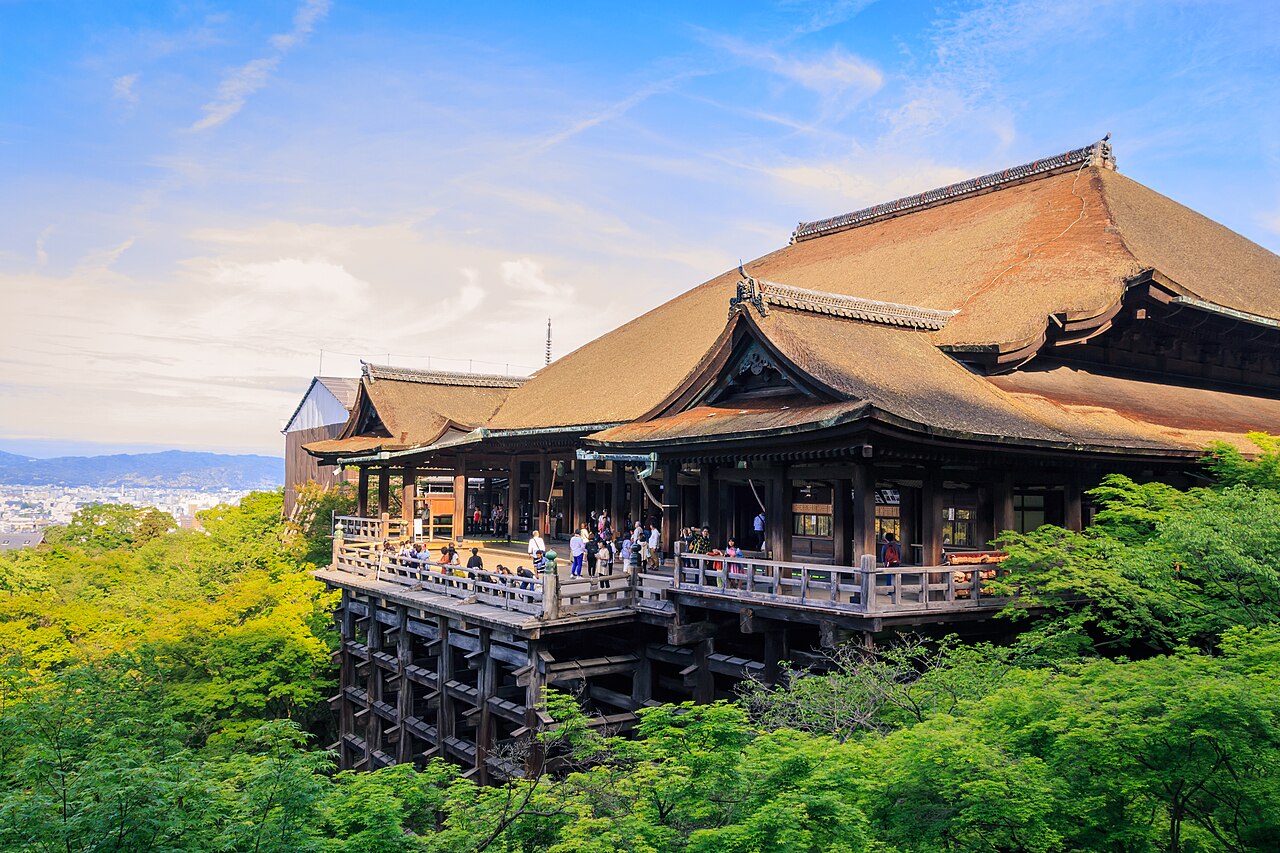
Kiyomizu-dera stands on the mid-slope of Mt. Otowa in Kyoto, part of the UNESCO World Cultural Heritage "Historic Monuments of Ancient Kyoto". A stage projects from its main hall, and at the Otowa waterfall visitors scoop the water with a ladle and pray. During the autumn night viewing, the main hall and stage are lit up amid colouring leaves. Sannenzaka, on the approach, is a narrow road of stone paving and stone steps.
With limited time, start with the stage and the Otowa waterfall below it, then walk Sannenzaka, the stone-step slope that leads to Kiyomizuzaka. Travellers drawn to building craft have the pillars and nail-less joinery under the stage, and shoppers have the seven-spice shop and the sweet shops on the approach.
The Stage and Main Hall of Kiyomizu-dera
The stage projects from the main hall and is about thirteen metres high, on a hall built into the slope of Mt. Otowa. Eighteen pillars under the floor support it, and its joinery uses no nails at all. What that height shows a visitor is a framework of pillars joined without a single nail.
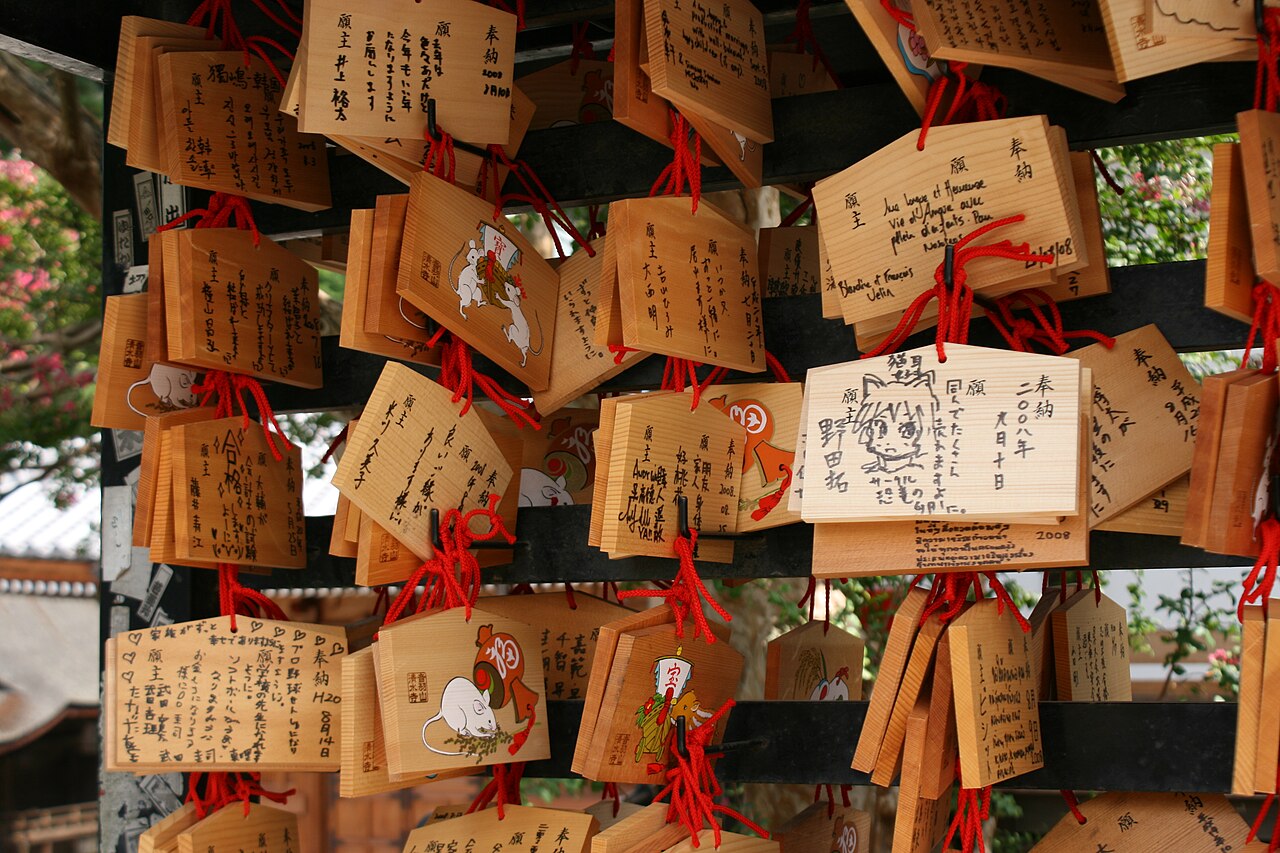
The main hall is a national treasure with a hip-roofed construction, a cypress-bark roof and a shinden-style design. Its stage is floored with boards and sits between wing corridors that project at the front left and right. The hall enshrines a standing eleven-faced, thousand-armed Kannon, the principal image of the temple, whose eleven faces and forty-two hands express great compassion.
Kiyomizu-dera was founded in the year seven hundred seventy-eight, and most of its current halls were rebuilt in sixteen thirty-three, so the buildings a visitor walks through are largely the work of that rebuilding. Anyone who cares how old halls are put together can give the stage and main hall the larger share of a visit.
Otowa Waterfall, Tainai-meguri and the Pagodas
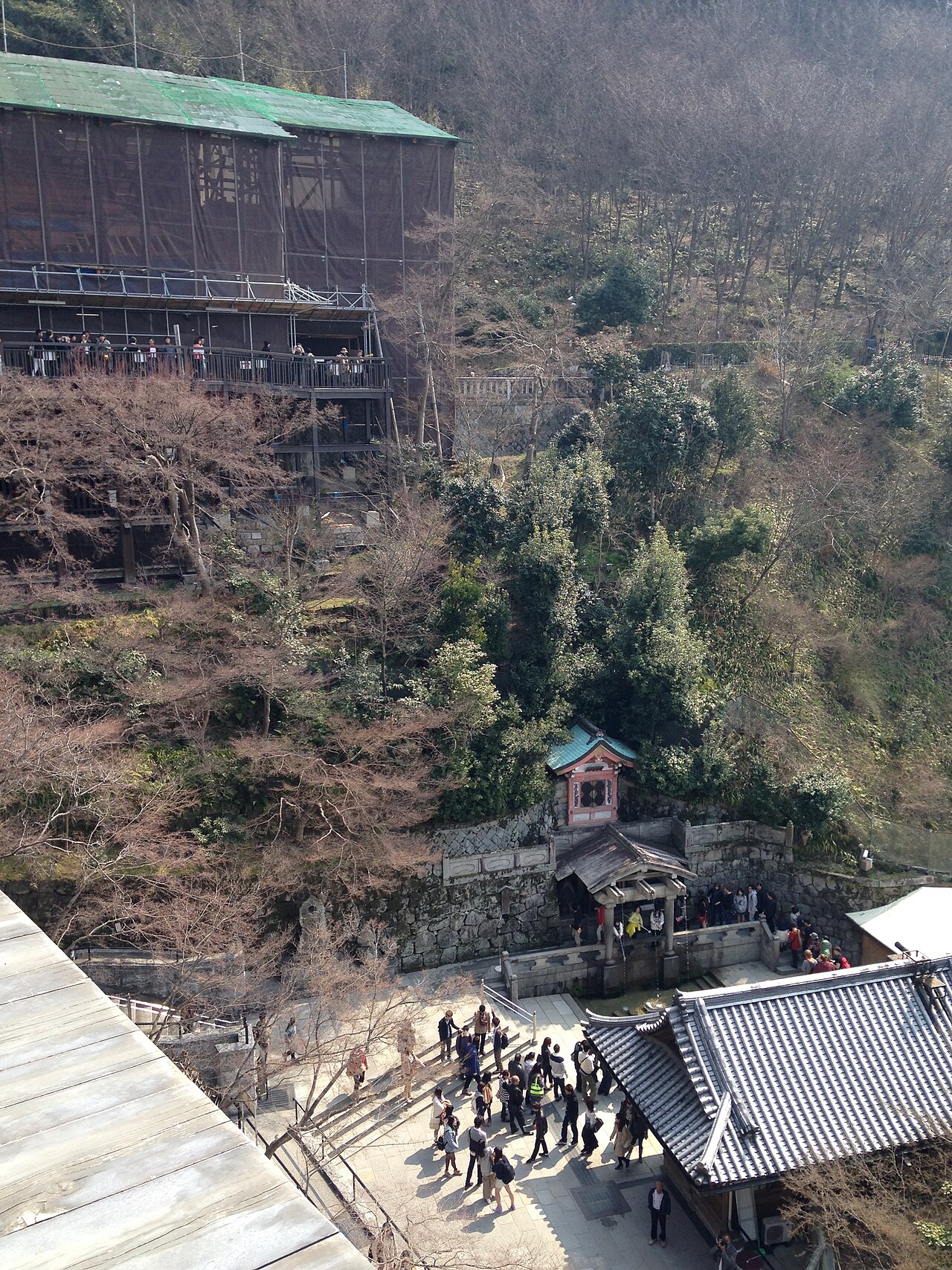
Otowa waterfall lies below the stage, where the flow of the Otowa River is led to the Okunoin and drops from three spouts. Each of the three streams is one that visitors catch with a ladle before praying, and many people pray while standing under the waterfall. The water was found by Kenshin, took the name of the waterfall and has kept flowing since.
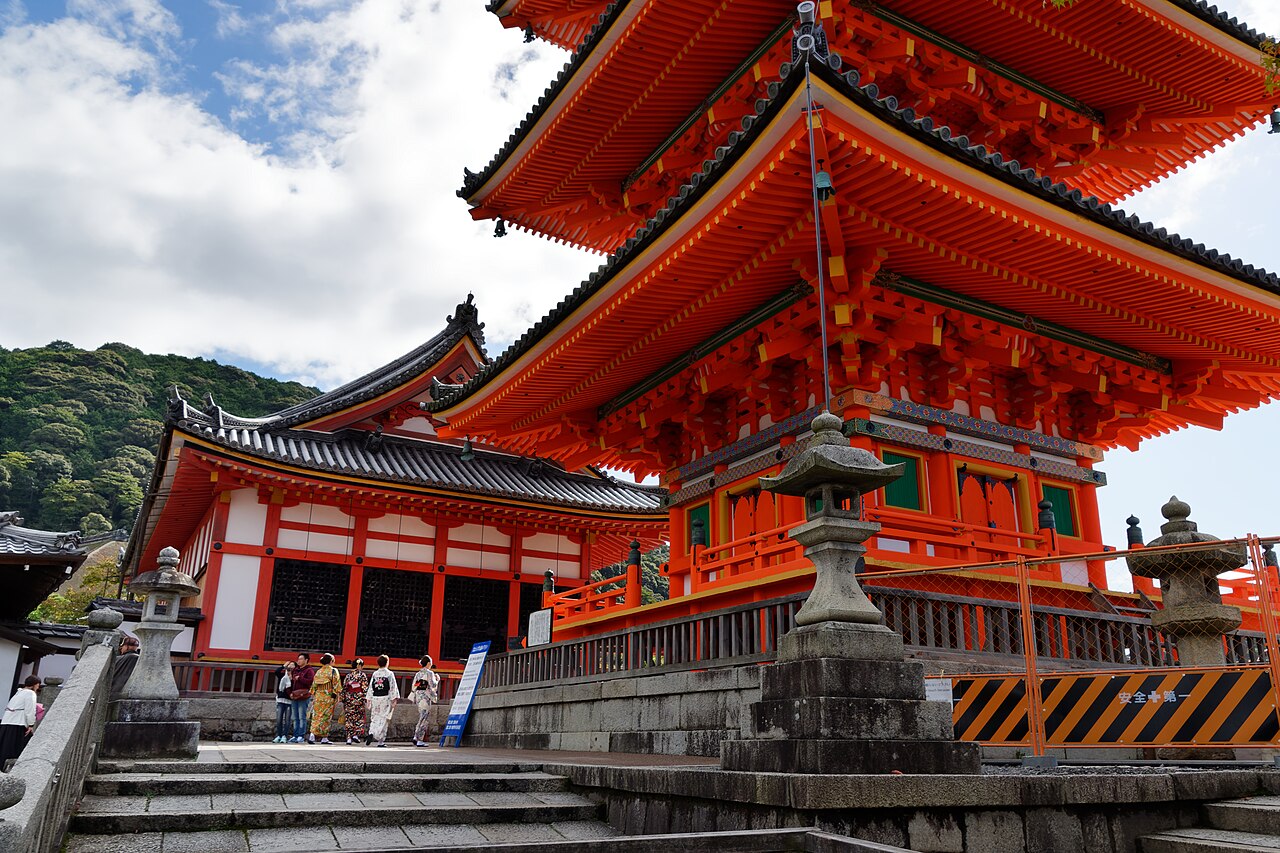
At the Zuigudo hall, visitors can do tainai-meguri. The three-storied pagoda, Sanjunoto, was founded in the year eight hundred forty-seven, and the building standing now is an Edo-period rebuilding of sixteen thirty-two. Across the valley from the stage is the Koyasu pagoda, where the prayers are for childbirth. Travellers who came for a pagoda therefore have two to look for.
The Niomon gate burned down in fourteen sixty-nine, was rebuilt around the year fifteen hundred, and was dismantled and repaired in two thousand three, so the gate is a rebuilding that has since been taken apart and put right. The Kyodo hall hosts the Nehan-e on the fifteenth of February every year, which adds a ceremony to a visit on that date.
Cherry Blossoms, Autumn Leaves and Night Viewing
Cherry blossoms at Kiyomizu-dera are listed as at their best from late March to early April, and autumn leaves from mid-November to early December. Spring and autumn are therefore the two seasons to plan around when blossoms or leaves are the reason for the trip. In other seasons the stage, the waterfall and the pagodas remain the subject of a visit.
Night special viewing is held three times in twenty twenty-six, in spring, summer and autumn, and the visiting day runs later into the evening on those dates. The autumn viewing is held every year: the main hall and stage are lit up amid colouring leaves, and the Jojuin garden is shown to the public as a special viewing.
A blue beam of light sent out from the temple is described as lighting the streets of the old capital. The summer viewing is Senninmairi, with a special viewing of the inner sanctum of the main hall. An autumn evening therefore brings the lit hall, the stage and the garden into one visit.
Two observances come round every month. Fudoson Ennichi is held on the twenty-eighth of each month at Otowa no Taki and in front of the Fudoson treasure, and Kannon Ennichi is held on the seventeenth and eighteenth. Travellers whose dates miss the blossom and leaf seasons can check whether a stay covers one of these days.
Walking Sannenzaka and Ninenzaka
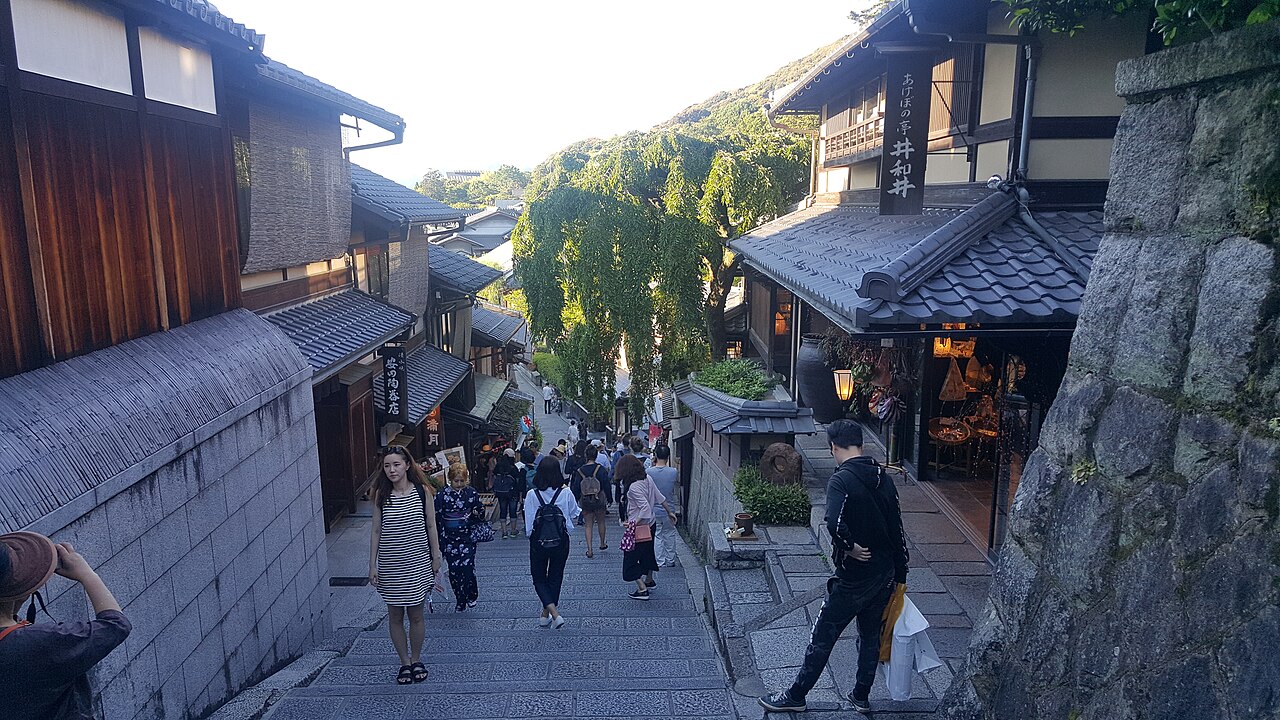
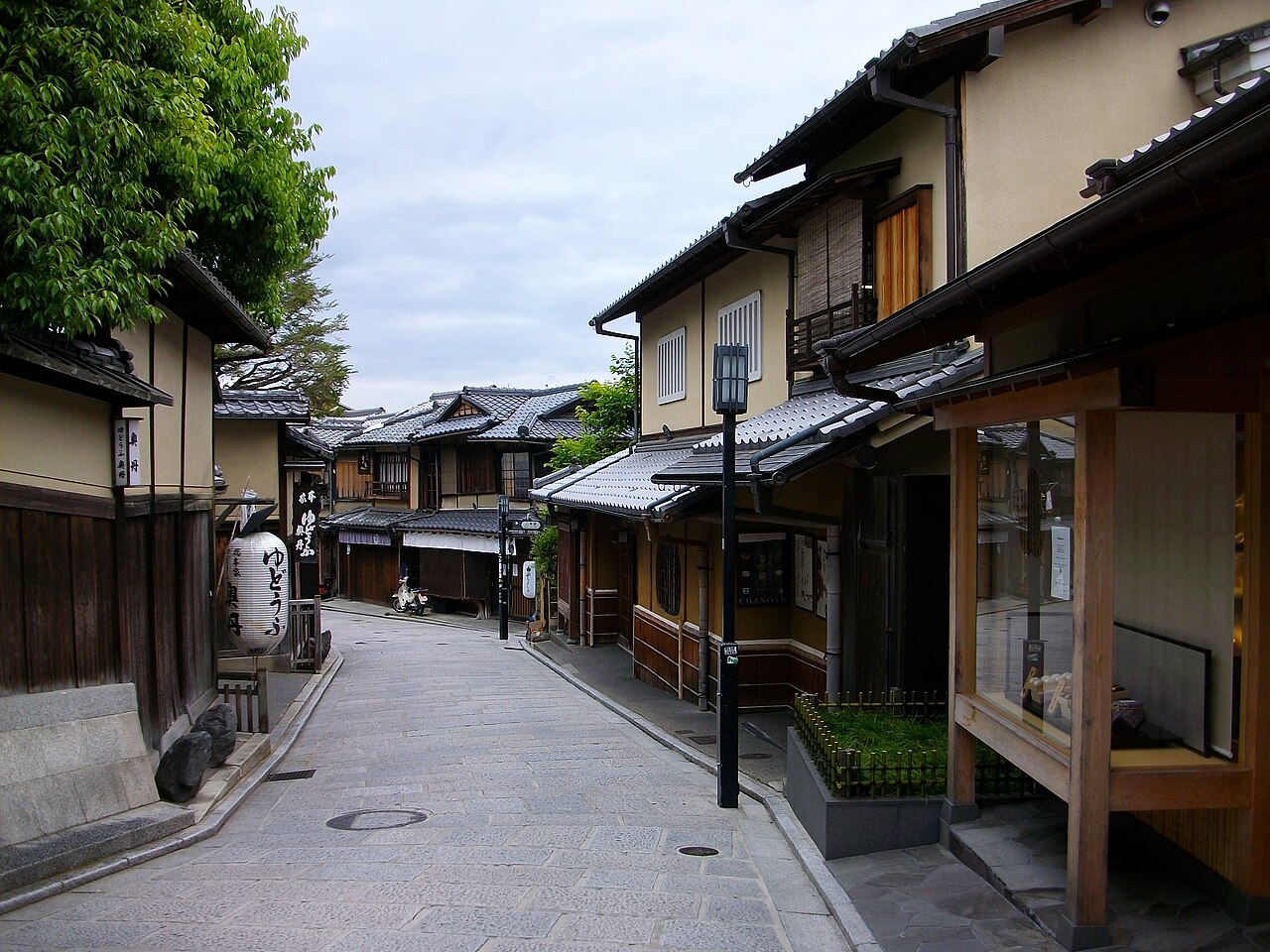
Sannenzaka is a stone-step slope leading from Yasaka to Kiyomizuzaka. Its narrow road of stone paving and stone steps is lined with historic sites, temples and shops selling Kiyomizu ware, Nishijin textiles and bamboo crafts. The town formed along these old approach paths to the shrines and temples, in an area developed before the Heian-kyo period.
The slope carries three names, each a reason people climbed it. Sannenzaka is said to come from its opening in the third year of Daido, and Sanneizaka from worshippers praying for childbirth at Kiyomizu. Zainenzaka is said to mark where people prayed their wishes again after worshipping at the temple. A charm here has a gourd return the soul that left a person who tumbled, and gourd shops once lined the street.
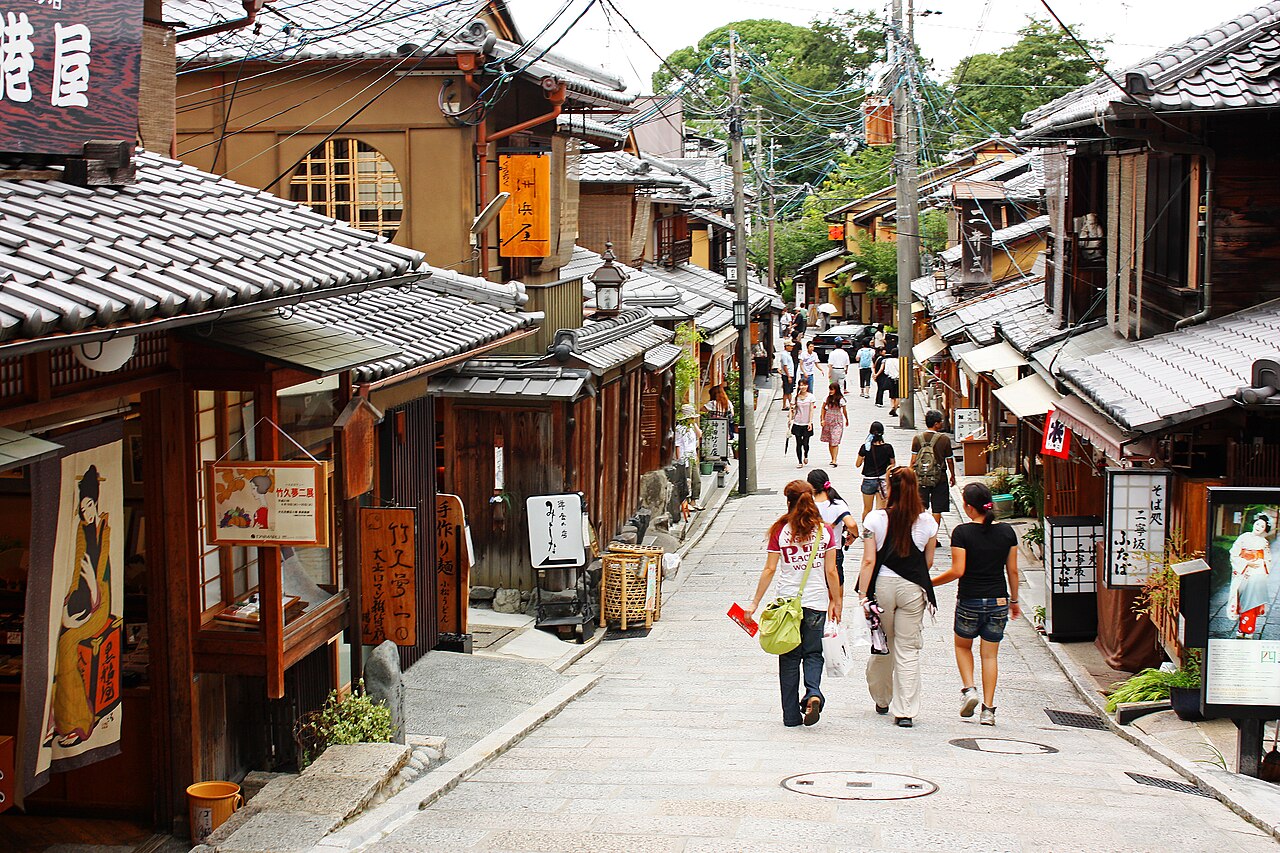
Ninenzaka is a small slope that continues beyond the stone-paved Sannenzaka on the road from Yasaka to the temple. It holds the remains of the residence where a painter and poet spent nearly two years. For a stop indoors, a small museum of metalwork, lacquerware and cloisonné shows art objects from the end of the Edo period to the Meiji era.
Kyoto City designated the Sannenzaka district a traditional buildings preservation district in nineteen seventy-six, and it was selected as one of the first national Important Preservation Districts for Groups of Traditional Buildings. That designation is the reason the walk suits anyone who wants old buildings along the route as much as the temple at its end.
Shichimi, Sweets and Souvenirs on the Approach
Shichimiya Honpo, a condiment specialty shop, faces the junction of Kiyomizuzaka, Gojozaka and Sannenzaka and has hung its noren curtain on the approach for three hundred fifty years. Its seven-spice blend is built from seven ingredients: chili pepper, white sesame, black sesame, sansho pepper, aonori, green perilla and onomi. The blend has no additives at all, so it belongs in a refrigerator and should be eaten early.
Beyond shichimi, the shop sells a sansho powder made from carefully selected domestic sansho pepper and a seasoning that concentrates the flavour of chicken for stir-fries and ramen. It also sells a dashi pack made from powders of seafood, mountain vegetables, kelp and shiitake mushrooms, and a potato snack made with Calbee in two varieties.
Elsewhere on the approach, one shop stocks yatsuhashi and Kyoto pickles, another gives its whole first floor to handmade original sweets, and another offers handmade confectionery. Shops for objects stock Kyoto dolls and kokeshi dolls, Nishijin textiles and Yuzen accessories, and prayer beads and incense sticks in an interior where the scent of incense drifts. A pottery workshop offers Kiyomizu-yaki painting, a souvenir made rather than bought.
Getting to Kiyomizu-dera
New to rural buses and one-man trains? See how to ride them, step by step.
| Route | Item | Detail |
|---|---|---|
| Kyoto Station to Kiyomizu-dera | Kyoto City Bus route two hundred six to Gojozaka bus stop | Then a ten-minute walk |
| Kiyomizu-michi bus stop to Ninenzaka and Sannenzaka | Walk from the city bus stop | Ten minutes |
| Gojozaka bus stop to the Sannenzaka preservation district | Walk from the city bus stop | About five minutes |
| Kiyomizu-Gojo Station to Kiyomizu-dera | Walk from the Keihan Electric Railway station | About twenty-five minutes |
| Tokyo to Kyoto Station | Shinkansen | About two hours fifteen minutes |
| Kyoto City Bus, flat-fare section | Ordinary fare | Adults two hundred thirty yen; children one hundred twenty yen; transportation IC cards can be used |
| Tourist express bus | Adult fare, twelve years and older | Five hundred yen |
| Kiyomizu-dera grounds | Parking | No parking lot within the grounds |
If you would rather stay overnight, places to stay in Kyoto is a place to start.
Hours and Fees
| Place | Item | Time or fee |
|---|---|---|
| Kiyomizu-dera | Opening hours | Six in the morning to six in the evening; until half past six in summer; no regular closing day |
| Kiyomizu-dera | Night special viewing periods in twenty twenty-six | Spring: March twenty-seventh to April fifth. Summer: August fourteenth to sixteenth. Autumn: November twenty-first to thirtieth |
| Kiyomizu-dera | Hours during night special viewing | Until half past nine in the evening; reception ends at nine in the evening |
| Kiyomizu-dera | Autumn light-up and night special viewing admission | Adults five hundred yen; elementary and junior high school students two hundred yen |
| Kiyomizu-dera | Jojuin garden special viewing in autumn | Adults six hundred yen; elementary and junior high school students three hundred yen |
| Shichimiya Honpo | Business hours | Half past nine in the morning to half past five in the evening, varying by season |
| Shichimiya Honpo | During the autumn night special viewing period | Business hours extended to half past eight in the evening |
| Small museum of metalwork, lacquerware and cloisonné | Opening hours | Ten in the morning to five in the evening; admission until half past four |
| Small museum of metalwork, lacquerware and cloisonné | Admission | Adults one thousand yen; junior high, high school and university students six hundred yen; elementary school students three hundred yen |
| Kiyomizu-yaki pottery workshop | Opening hours and activity fees | Ten in the morning to five in the evening; clay hand-building from three thousand three hundred yen and painting from one thousand five hundred yen, tax included |
Fees and hours were checked against official sources on 19 November 2026.
Thinking of staying overnight?
Compare places to stay near Kyoto →
Disclosure: This post may contain affiliate links. If you book through them, we may earn a commission at no extra cost to you.