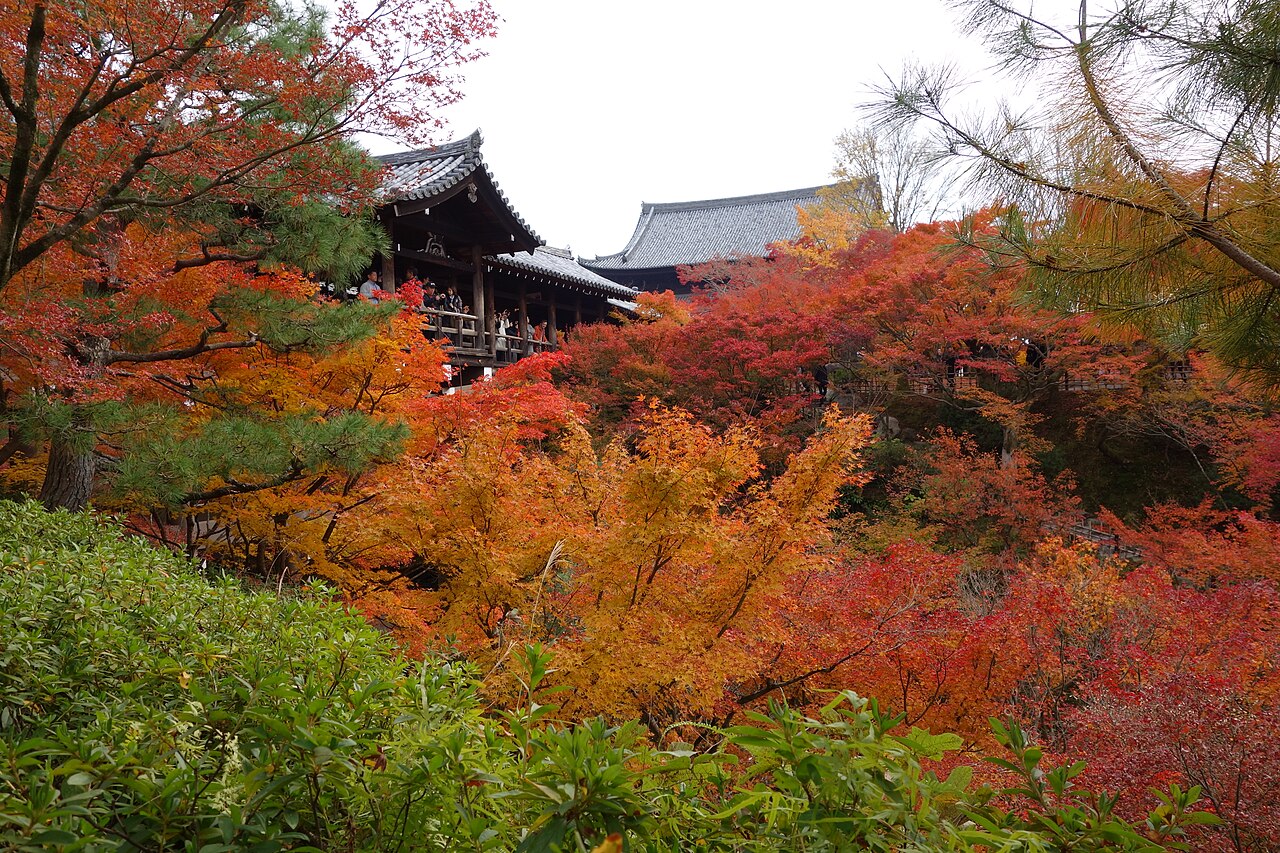
Looking down from Tsuten-kyo, a covered bridge, visitors see maples spreading out below it. Around the Hojo, gardens of sand, moss and azalea lie on the east, west, south and north sides. Along the shaded paths between the sub-temples, one garden has azaleas shaped like a cloud behind sand that stands for the ocean. This autumn, special openings and viewings add limited-period visits to the Sanmon gate, Ryogin-an and the bridge area.
Looking Down on the Maples from Tsuten-kyo and Walking On to Engetsu-kyo
Tsuten-kyo and Engetsu-kyo are the bridges to walk for the valley and the maples below.
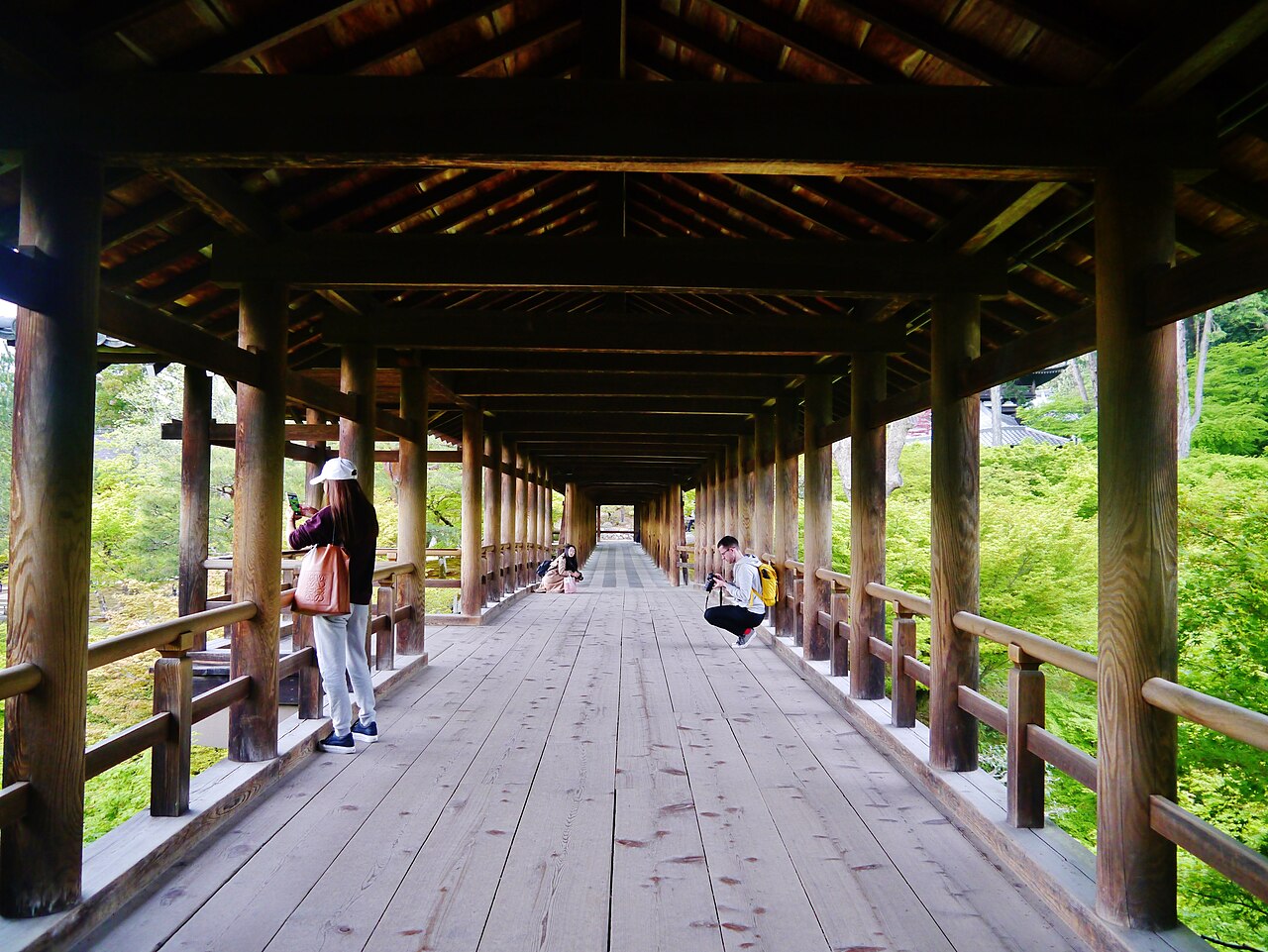
Crossing Tsuten-kyo means walking a covered bridge corridor that spans the valley and links the main hall to the Kaisando. Visitors look down from the bridge on the maples planted there, which spread out below it. Starting here puts the look-down view ahead of the gardens and the sub-temples.
Looking for one particular tree adds a detail to search for among the maples. The three-lobed maple, whose leaf tips are divided and which turns golden-yellow, is said to be the Chinese maple that Shoichi Kokushi brought from Song China.
Walking the grounds from west to east brings the wooden bridges in turn: the Gaun bridge, Tsuten-kyo and Engetsu-kyo. The valley can be viewed from them, and a temple complex stands in a row across the valley of the Sannohashi River. Tsuten-kyo and the Gaun bridge are counted among the Tofukuji Sanmeikyo, the temple's named bridges.
Continuing east leads to Engetsu-kyo, a wooden covered bridge over the upstream part of the Sannohashi River. This bridge on the east side has a calm atmosphere. Because it stands at the eastern end of the row, it works as the last stop of a west-to-east walk.
Comparing the Hojo's Four Gardens with a Sub-Temple's Cloud-Shaped Azaleas
The Hojo's gardens and one sub-temple garden show different ways of arranging stones, sand, moss and azalea.
Walking around the Hojo takes in gardens on its east, west, south and north sides, designed by Shigemori Mirei. The east garden is composed of cylindrical pillars, river sand, moss and a double hedge behind, and nothing else. The pillars are foundation stones formerly used at the Tosu, set at high, medium and low heights in a rhythmic composition.
Moving to the west garden shows a checkerboard made with clipped azalea and edging stones, expressed through a clear color contrast between the azalea and white river sand. On the north side the checkerboard is small and made by reusing cut stones. It is nearly regular at the start, then breaks down, and ends in single, separately placed stones, while the line that divided moss and sand there is now completely covered by moss.
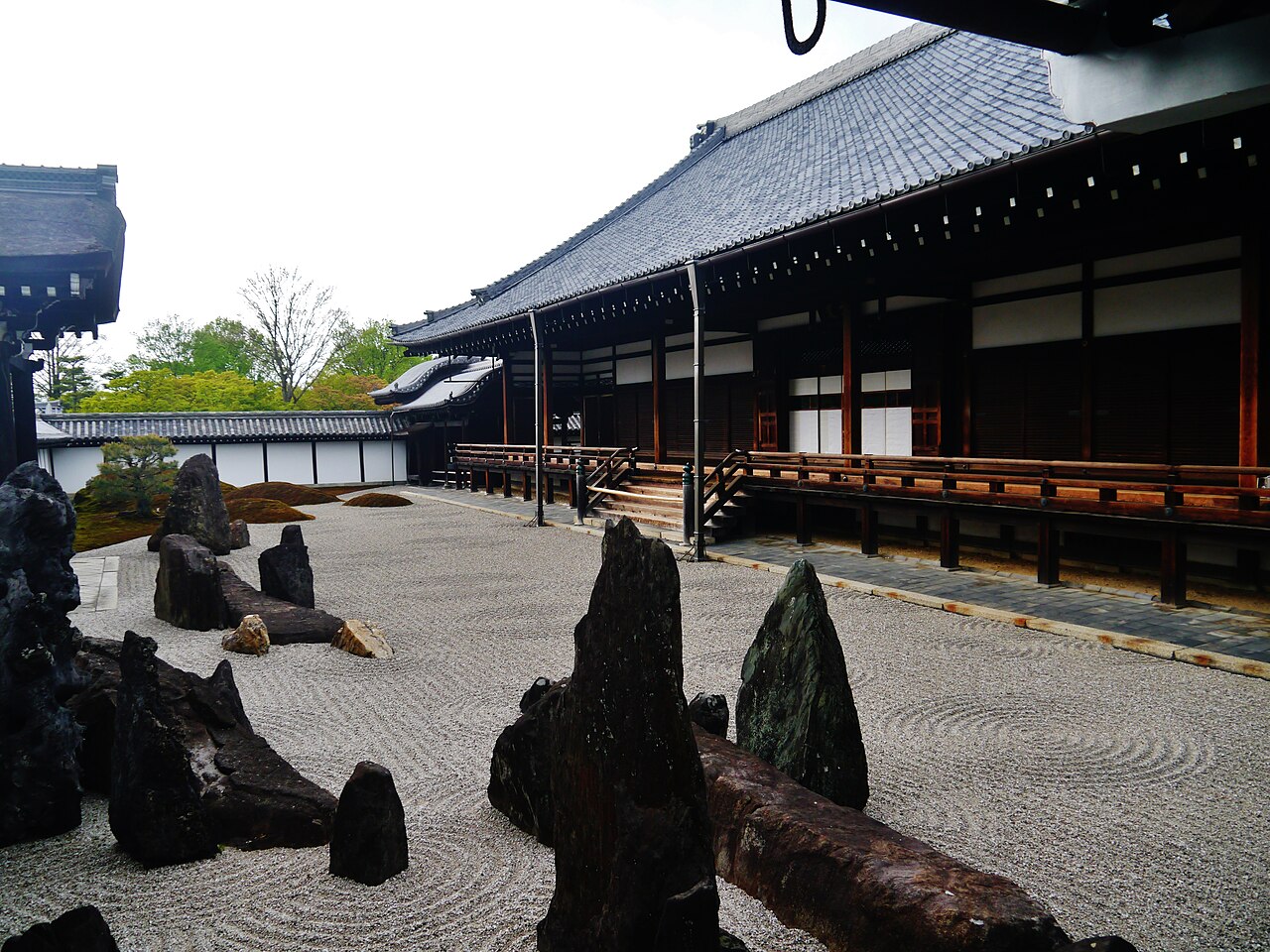
Turning to the south garden, visitors find stone arrangements that represent immortal islands, with long stones laid horizontally and balanced against upright ones, beside moss mounds that use no stones. Across the Hojo gardens, materials such as cut stones are reused, following the Zen teaching that nothing should be wasted. Comparing the sides with that in mind, the same reuse produces pillars in the east and a checkerboard in the north.
Putting a donation into the bamboo tube at the entrance is how visitors enter one sub-temple, where the front garden just inside the gate enshrines a guardian deity of victory. Its garden Hashintei uses sand to represent the ocean, with a triple-stone arrangement floating on it and standing stones lined up in a diagonal line. Raising the eyes behind those stones brings the satsuki and azalea, clipped into a large cloud-pattern shape, and then the tea house Ragetsuan into view.
Following the Shaded Paths Between the Sub-Temples
The earthen walls, the sub-temples and the paths in the shade of trees are what a walk away from Tsuten-kyo adds.
Entering the precinct means stepping inside earthen walls that enclose the temple and its sub-temples. The name Tofuku-ji was taken from the major temples of Nara, Todai-ji and Kofuku-ji. A path leads between the sub-temples, so the walk between them is part of the visit as much as any single hall.
Following that path means walking a bent route in the shade of trees. Along it are sub-temples, including one where a Fudo Myoo of Fujiwara no Michinaga is enshrined and where a goshuin, a temple stamp, can be received. Asking for the stamp there gives the walk a stop with something to carry away.
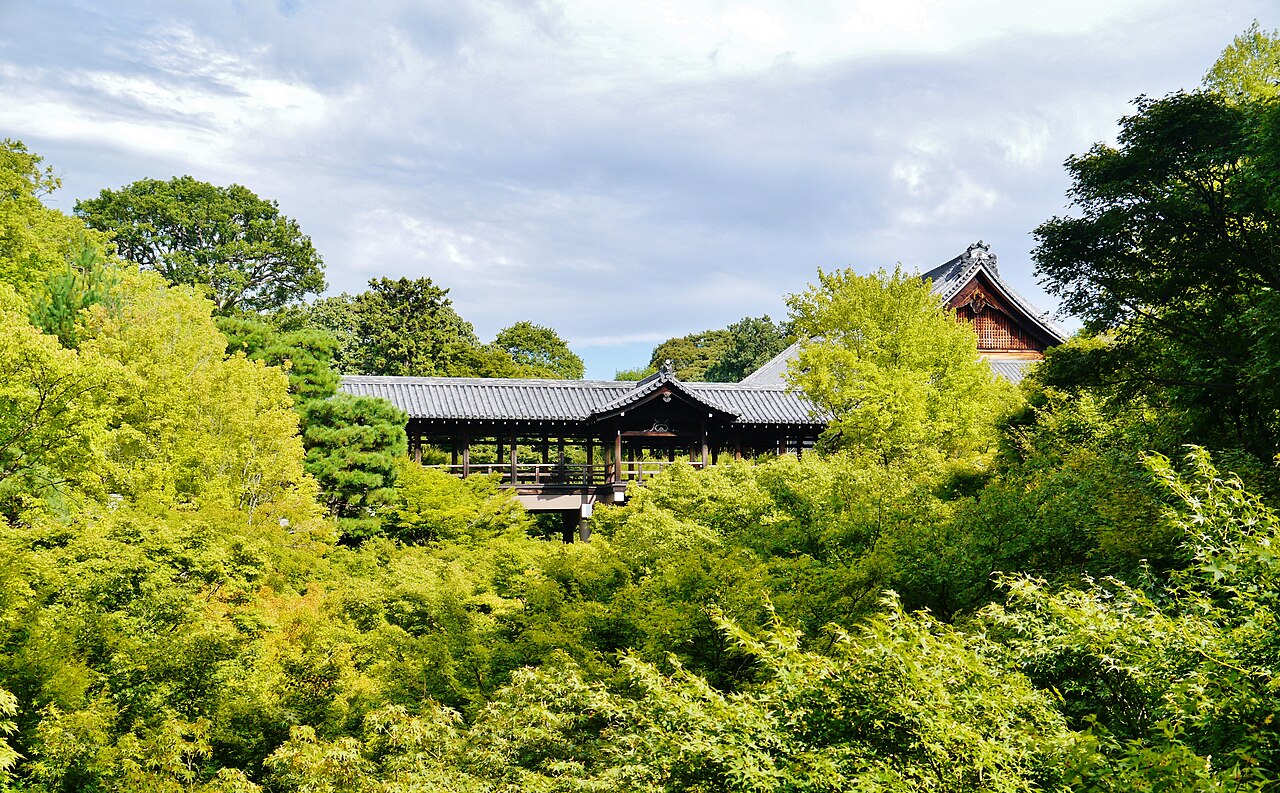
Returning to Tsuten-kyo outside the autumn-leaf season is also recommended, for example in the season of green maple leaves. Fresh green leaves come in spring and early summer, and in winter the bridge itself can be seen clearly. Visitors arriving outside autumn therefore have a reason to walk onto the bridge as well.
Autumn Special Openings: Sanmon Gate, Early-Morning and Night Viewing
The Sanmon gate, Ryogin-an and the early-morning and night viewings run for a limited period this autumn. The dates are: the Sanmon gate and Ryogin-an openings from November seventh, the autumn viewing from November fourteenth, the night viewing from November eighteenth and the early-morning viewing from November nineteenth, all to December sixth.
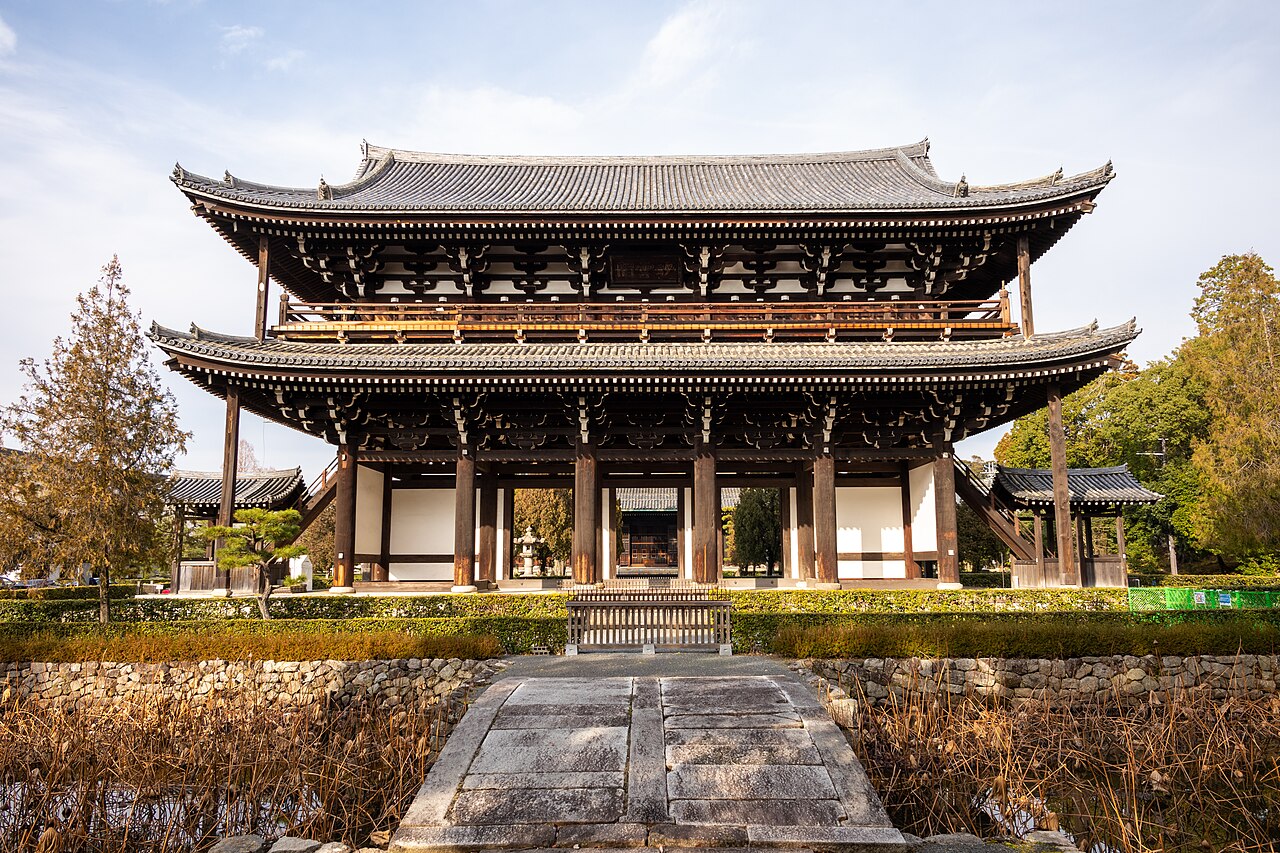
Going up to the upper floor of the Sanmon gate during its opening, visitors find statues enshrined on an altar and richly colored paintings on the ceiling and pillars. From that floor the whole Rakunan area can be seen. Planning the gate into a visit makes sense for anyone who wants a view outward as well as the look-down from the bridge.
Entering Ryogin-an during its opening shows gardens unlike each other. The south garden consists of white sand spread over the ground and nothing more. The west garden is an abstract arrangement of stones depicting a dragon rising to heaven from the sea, stirring up black clouds.
Applying in advance is required for the early-morning private viewing, which covers the Tsuten-kyo area and the Hatto hall. Visitors who enter within its reception time can stay after general viewing begins, though re-entry is not possible. Asking for a goshuin has to wait until the goshuin counter takes requests later in the morning, at a separate charge paid on site, and tripods, monopods, stepladders and selfie sticks cannot be used.
Booking ahead is likewise required for the night private viewing of the Tsuten-kyo area and the Hatto. Reception is electronic: giving a name, showing the booking screen or bringing printed material is not accepted. Goshuin are not given out during the night viewing, so visitors who want the stamp should plan a daytime or early-morning entry instead.
Getting to Tofukuji, Hours and Fees
New to rural buses and one-man trains? See how to ride them, step by step.
Hours, fees and routes below follow the official pages.
| Item | Details |
|---|---|
| Admission | Hojo garden: adults six hundred yen, children three hundred yen; Tsuten-kyo and Kaisando: the same |
| Hours | April first to October thirty-first: nine to four, gate closes four-thirty; December seventh to March thirty-first: nine to three-thirty, gate closes four |
| Autumn hours, November fourteenth to December sixth | Tsuten-kyo eight-thirty to four, Hojo garden nine to four |
| Autumn admission, November fourteenth to December sixth | Tsuten-kyo and Kaisando: adults one thousand yen, children five hundred yen; the common ticket is not sold |
| Sanmon gate and Ryogin-an openings, November seventh to December sixth | nine to four, entry until three-thirty, adults one thousand yen, pupils five hundred yen |
| Early-morning and night viewing | advance booking required; early morning from November nineteenth, night from November eighteenth, both to December sixth |
| Getting there | about ten minutes on foot from Tofukuji Station (JR Nara Line, Keihan); bus from Kyoto Station about fifteen minutes, then about a four-minute walk |
For an overnight stay, compare places to stay in Kyoto. For a Kyoto day that pairs with Tofukuji, see the Fushimi Inari walk. For another Kyoto temple visit, see the Eikando guide.
Thinking of staying overnight?
Compare places to stay near Kyoto →
Disclosure: This post may contain affiliate links. If you book through them, we may earn a commission at no extra cost to you.