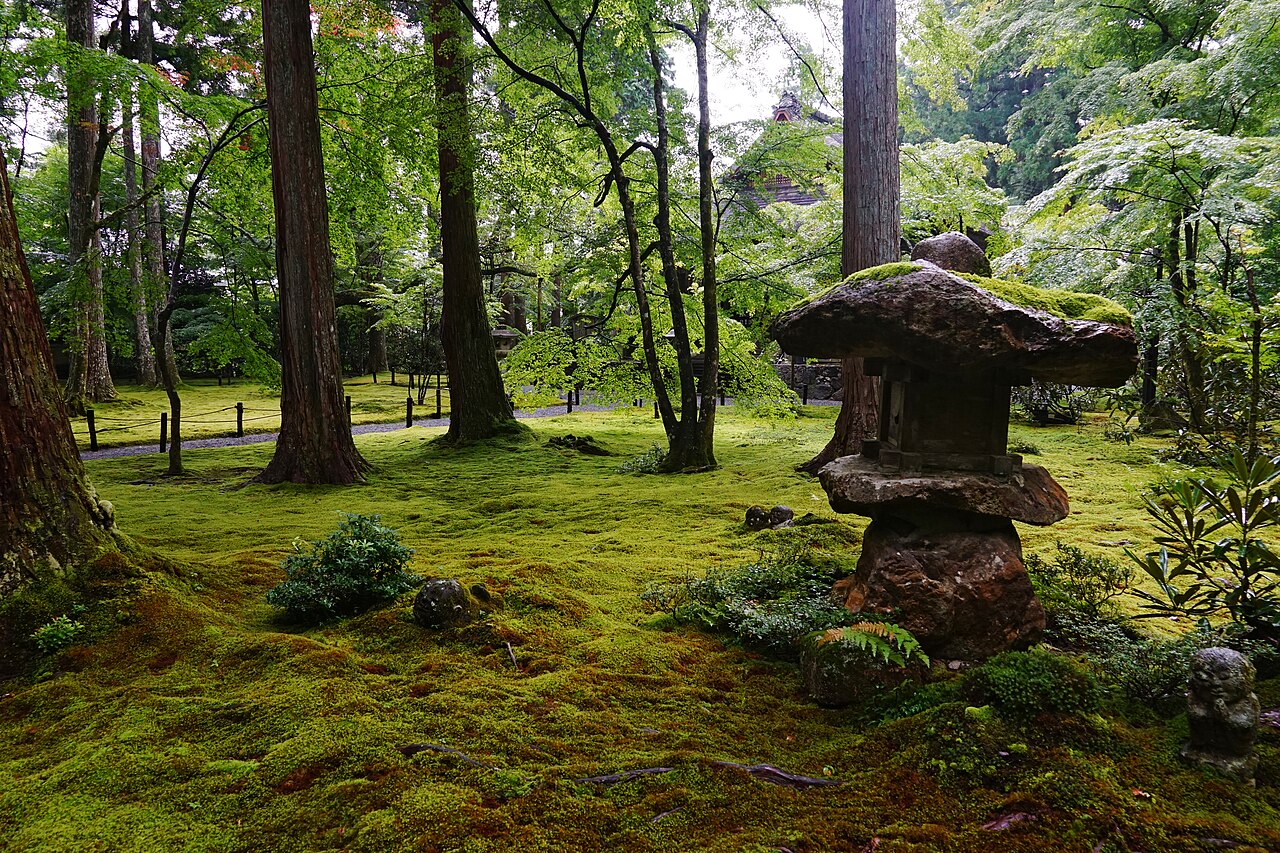
Ohara is a farming valley folded into the hills north of Kyoto, a place of thatched roofs, terraced fields, and temples strung along a small river. It belongs to the city on the map, yet it keeps the pace of the countryside.
Why the valley stays quiet
The guidebook is candid about when the calm breaks: cherry-blossom weeks, the autumn-leaf season, and the days when school trips come through. Outside those windows, the valley settles back into stillness, and you can hear the river and the wind in the cedars between one temple gate and the next.
The temples themselves gather in two clusters, one on each side of the valley:
- Sanzen-in, the monzeki temple with the moss garden
- Jikko-in, with its paired gardens and mountain wildflowers
- Hosen-in, home of the framed garden and its ancient pine
- Shorin-in, a hall raised for tendai chant
- Raigo-in, where the shomyo tradition of chanted liturgy took root
- Jakko-in, the convent of the Heike story, across the fields to the west
The eastern cluster around Sanzen-in can be walked in half a day; give it a full day if you want the western side too, with time to sit down somewhere warm in between.
Sanzen-in and the moss gardens
Sanzen-in is a monzeki temple, and its principal image is Yakushi Nyorai, the Buddha of healing. From the valley's terminal it is a walk of about ten minutes. Inside, the famous ground is the moss: a soft green floor spreading beneath maples and cedars, with stone lanterns and small carved figures half-sunk in it.
Just north of Sanzen-in stand Jikko-in, Shorin-in, and Hosen-in, close enough that you drift from one to the next. Jikko-in keeps two gardens, Keishin-en and the former Rikaku-in garden, planted with around a hundred and twenty kinds of mountain wildflowers. Shorin-in was raised early in the eleventh century by the priest Jakugen as a hall for tendai chant, and Raigo-in, further up the eastern path, is held to be the place where the shomyo tradition began.
Hosen-in is the one the guide's writers linger over: you sit on the tatami with a bowl of matcha and view the garden as a single framed picture, past a five-needle pine said to be roughly seven hundred years old, listening for the twin suikinkutsu water-harps under the veranda. The corridor ceiling here is the one known as the blood ceiling.
Jakko-in and the west side
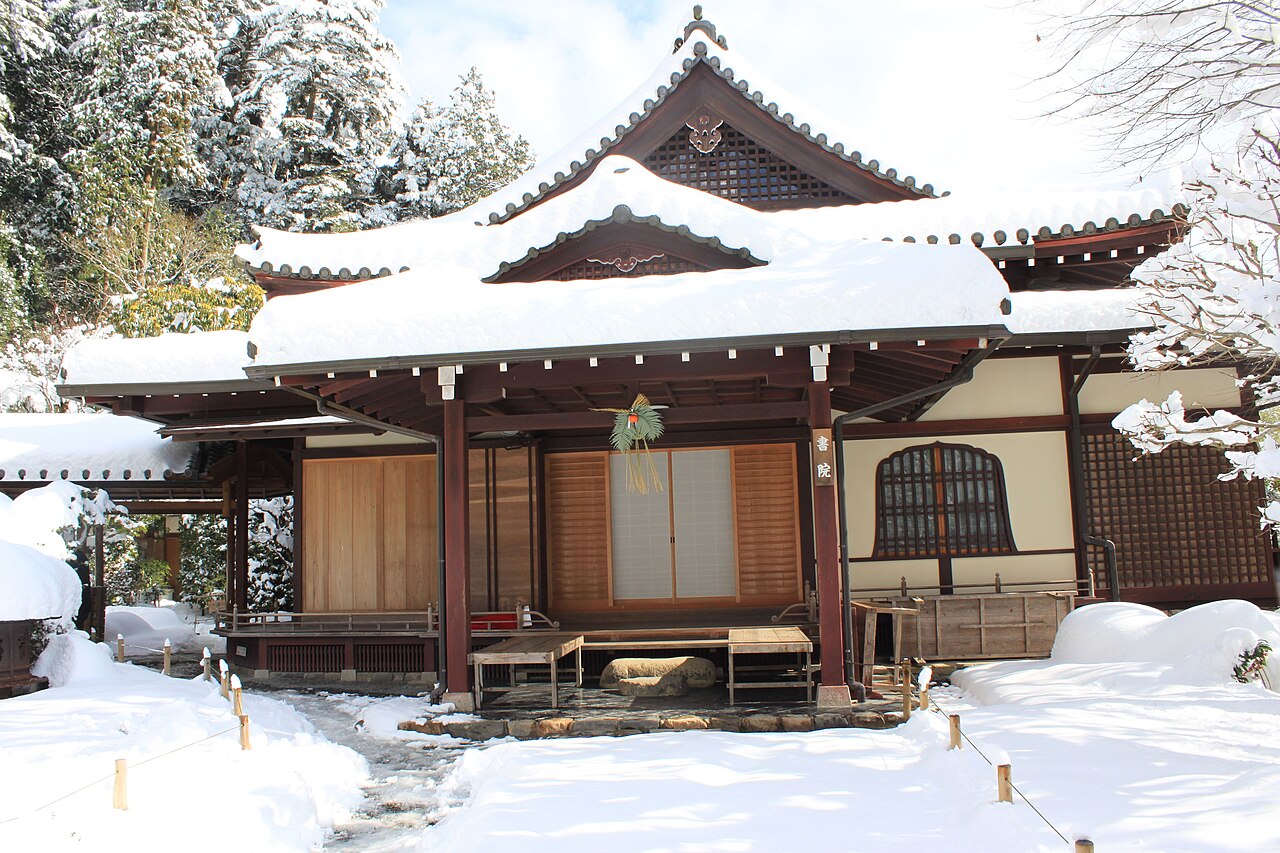
Across the valley floor, past vegetable fields and farmhouse walls, the lane that guidebooks call the Ohara-me no Komichi leads west to Jakko-in. Temple tradition holds that it was founded by Prince Shotoku, and it is the convent where Kenreimon-in Tokuko lived out her last years after the Taira clan's defeat at Dan-no-ura, praying for the family she had lost. The Tale of the Heike is bound to this place, and the garden is kept so that it still carries the air of her years of retreat.
The main hall was lost to fire at the turn of this century and rebuilt a few years later, holding to the lines of its Momoyama-era predecessor. When winter snow comes to the valley and rests on the roofs, the convent's smallness and quiet feel closest to the story it keeps.
Walking the satoyama paths
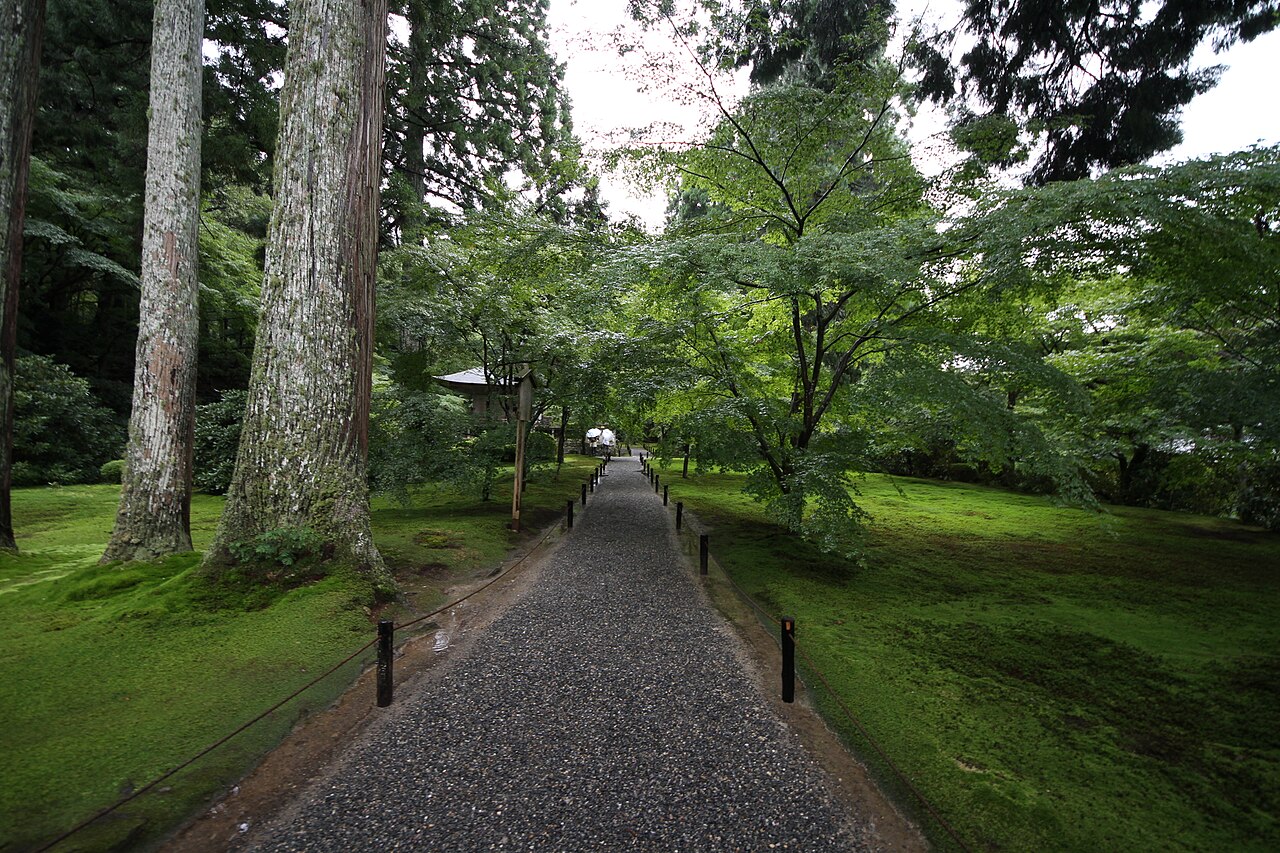
The pleasure of Ohara is as much the walking as the temples. Paths run between hedgerows and rice fields, along the river, and up into the cedar woods, and the transitions are gentle enough that you barely notice leaving the village for the forest. Beyond Raigo-in, a short way up the mountain path, guidebooks point to Otonashi-no-taki, the "soundless waterfall."
Near Sanzen-in's gate, guidebooks note the shops selling shibazuke, the purple pickle the valley is known for, alongside tea houses where a warm cup at a farmhouse table is the right way to end the loop before the ride back into the city.
Getting there
The way in is simple.
Without a car
- Kyoto Bus line 19 runs from the Kokusaikaikan-eki-mae stop to Ohara, and the one-way fare is 360 yen.
- The ride takes about 20 minutes.
The guidebook adds a practical note on crowds: catching the Ohara service at Kokusaikaikan-eki-mae, rather than at Kyoto-eki-mae, makes the busy-season crush much easier to dodge. Guidebooks place the Ohara terminal roughly midway between Sanzen-in and Jakko-in, with both sides of the valley within walking distance of it.
By car
- From the Kyoto-Minami interchange, the drive is about 60 minutes by way of Kawabata-dori.
- From the Kyoto-Higashi interchange, it is about 40 minutes by way of Route 143 and Shirakawa-dori.
- From the Biwako Ohashi bridge, it is about 30 minutes by way of Route 477.
If you would rather leave the logistics to someone else, you can look over guided day tours of Ohara and let a local guide handle the valley while you watch the fields go by.
New to rural buses and one-man trains? See how to ride them, step by step.
Where to stay
Disclosure: This post may contain affiliate links. If you book through them, we may earn a commission at no extra cost to you.
Admission and opening times at Jikko-in
- Adults pay 600 yen at Jikko-in.
- University students pay 600 yen.
- Junior-high and high-school students also pay 600 yen.
- Children pay 300 yen.
- Jikko-in receives visitors from 09:00 to 16:00, and the span shifts a little with the seasons.
Go on a weekday morning outside the blossom and leaf seasons, and you may have the moss, the framed garden, and the chanting halls very nearly to yourself.