In 2024, Kamakura recorded 15,942,524 visitors. Numbers on that scale change what a day trip feels like, and the response has moved past complaint into policy. The Japan Tourism Agency includes the Kamakura area in its national program for preventing and curbing overtourism. The Enoden railway has ended sales of regular group tickets to ease congestion, and the city has run a social experiment giving local residents priority entry to the Enoden during peak holiday crowding.
If you are drawn to Kamakura but dread sharing it with everyone else, that instinct deserves respect rather than a workaround. The region around Tokyo holds quieter places that deliver the same pleasures — you just need to know which pleasure you are chasing.
The case for going anyway — at 8:00
First, the honest caveat: an early start salvages a lot. Kotokuin, home of the Great Buddha of Kamakura, opens its grounds at 8:00 in the morning. Admission costs 300 yen for adults. The Buddha stands about 11.3 meters tall. An 8:00 arrival gives you a chance of taking that in before the day's numbers build.
But if you would rather not plan your morning around outrunning other people, the rest of this page is for you.
First, decide what Kamakura meant to you
Kamakura is several trips in one — grand temples, holy hills, the seaside, old streets — which is exactly why everyone goes. Pick the one thread you cared about most, and a quieter destination usually does it better.
| What you wanted from Kamakura | Quieter alternative |
|---|---|
| Grand temple architecture | Naritasan, Jindaiji |
| A shrine that crowns a mountain | Mount Mitake, Mount Tsukuba, Mount Hodo |
| Green valleys and a proper walk | Okutama, Nokogiriyama |
| The seaside | Enoshima |
| Old streets and small-town texture | Kawagoe, Kururi |
| Water as scenery | Nagatoro |
If it was the temples: Naritasan, Jindaiji, Nihonji
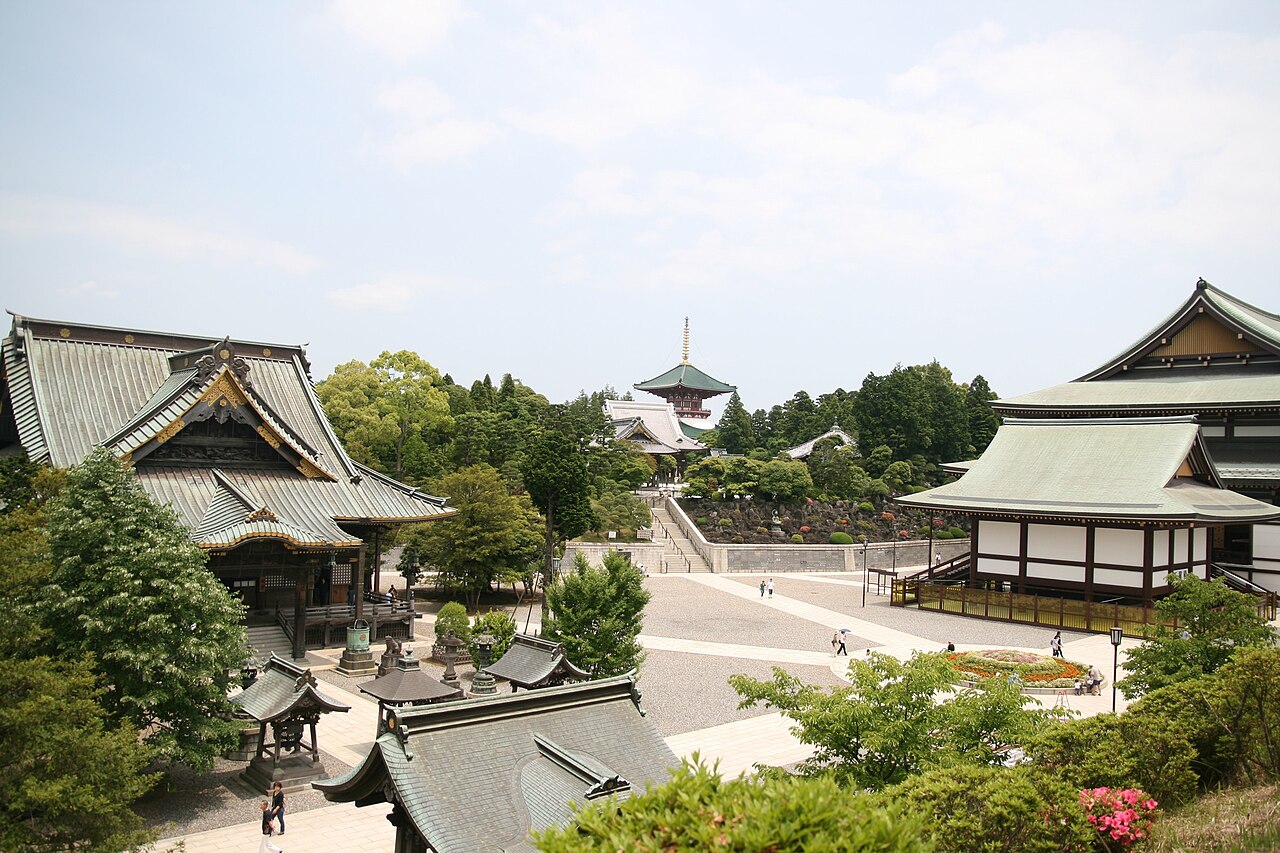
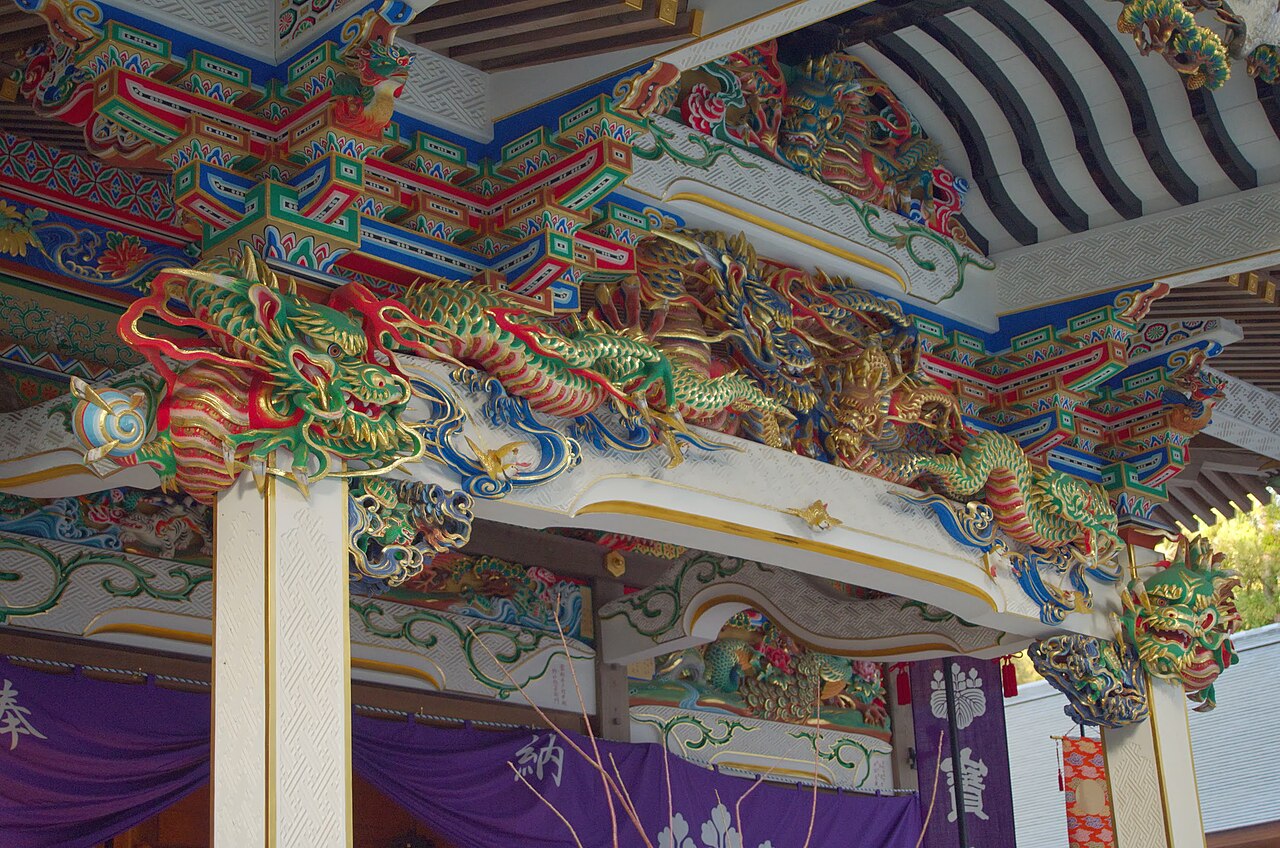
For sheer temple grandeur, consider Naritasan. In the temple chronicle 成田山通志, the temple — formally Jingo-Shinshoji — is described as standing in the town of Narita in Chiba's Inba County, an area historically designated Shimousa Province. In the same chronicle the main hall, rebuilt in the 1850s under head priest Shogaku, is described as a large keyaki-timber structure with fourteen-ken sides, its exterior encircled by five hundred carved rakan figures and its ceilings and panels carrying paintings by Edo-period artists including Kano Kazunobu. That is ornament worth standing in front of at length — easier when nobody is pressing at your back.
If early quiet is the whole point, Jindaiji opens its gate at 6:00 each morning. The gate closes again around 17:00 each evening. A third option, Nihonji on Nokogiriyama, charges an adult entry fee of 700 yen, payable at the mountain's management offices when you arrive — entry to a mountain, not a courtyard.
Compare options
See partner pricing and availability →
Disclosure: This post may contain affiliate links. If you book through them, we may earn a commission at no extra cost to you.
If it was the holy hills: Mitake, Tsukuba, Hodo, Okutama
Part of Kamakura's pull is sacred ground set against wooded hills; several genuine sacred mountains within day-trip range do that at full scale. On Mount Mitake, Musashi Mitake Shrine stands at the 929-meter summit. The shrine enshrines Oguchimagami, a Japanese wolf deity known affectionately as Oinusama — an unusual patron by any measure.
Mount Tsukuba is the easy-access choice: the fastest rail connection is the Tsukuba Express, Akihabara to Tsukuba Station in a minimum of 45 minutes. The 地球の歩き方 J00 日本 2023~2024 guidebook describes the solemn gate (随神門) at Tsukuba Shrine as built in the late Edo period and forming the ceremonial approach to the mountain.
Mount Hodo brings the oldest story. Recorded in 地球の歩き方 J07 埼玉 2023~2024, Hodosan Shrine's origins are said to lie about 1,900 years ago, when — as the legend tells it — Yamato Takeru climbed the peak drawn by its scenic beauty and enshrined three deities: Kamuyamato Iwarehiko no Mikoto, Oyamatsumi no Kami, and Kagutsuchi no Kami. Take that as tradition rather than history — but it is the kind of tradition that gives a mountain its weight.
For valley walking rather than summit shrines, Okutama has formal pedigree: in a 1961 mountaineering guide, 奥多摩山岳会編『奥多摩』(山と溪谷社、アルパイン・ガイド16), the area is described as incorporated into Chichibu-Tama National Park — Japan's 16th national park — on 10 July 1950.
If it was the sea: Enoshima
If what you wanted was salt air, Enoshima is the candid answer. In 地球の歩き方 J00 日本 2023~2024, the island's main attractions are described as Enoshima Shrine, the observation lighthouse called the Sea Candle, the Samuel Cocking Garden — established on the estate of a Meiji-era British merchant — and natural sea caves. Admission to the Sea Candle costs 800 yen for adults and 400 yen for children. If crowds worry you here too, borrow the tactic that works at Kotokuin and aim for the edges of the day.
If it was the old streets: Kawagoe and Kururi
For merchant-town streetscapes, Kawagoe is the fastest in practice: まっぷる 埼玉 川越・秩父・鉄道博物館'27 gives the Tobu Tojo Line's "Kawagoe Limited Express" at a fastest 26 minutes from Ikebukuro to Kawagoe Station. The same guide lists general admission at Kitain at 400 yen for adults. If Kawagoe still sounds too discovered, Kururi is the deeper cut: in 地球の歩き方 J08 千葉 2023~2024 a compact walking circuit is described as linking the castle hill, Kururi Shrine, the Takasawa famous-water well, and the Yoshizaki sake brewery — all close enough together that a half-day town walk works without a car.
If it was simply water: Nagatoro
And if the memory you are chasing is water moving past a town, look to Nagatoro. In 地球の歩き方 J07 埼玉 2023~2024 it is described as a scenic gorge town in the northern Chichibu Basin in Saitama Prefecture, with the Arakawa River flowing north to south through the center of town.
How to commit
Choose one destination, not three; quiet is mostly a function of not rushing. Whichever you pick, the pattern that rescues Kamakura works everywhere: arrive early, stay past the point where you would normally leave, and let the place empty around you.
Compare options and book: Tokyo day trips, Kawagoe tours, and Naritasan tours.
Kamakura will still be there — with 15,942,524 visitors a year, it can spare you for a day.