Nagatoro is the closest place to Tokyo where you can drift down a real gorge in a wooden boat poled by a boatman — a river cruise that has been running since the steam-train era, past cliffs and a vast natural rock terrace. This guide has the checked 2026 prices and times for the boat ride, the car-free route from Ikebukuro, and the timing tricks that let you enjoy one of Saitama's most famous sights in relative calm.
Why Nagatoro is worth the trip
The Arakawa River cuts straight through this small town at the northern edge of the Chichibu Basin, and the stretch of gorge here is designated both a National Scenic Spot and a National Natural Monument. What makes Nagatoro different from other river towns is that everything sits within walking distance of one small station: the boat cruise, the rock terrace, a shrine-topped mountain, and a street of shaved-ice shops. You step off a rural railway line and the gorge is simply there.
The river cruise (Nagatoro Line Kudari)
The classic way to meet the gorge is from water level. The Nagatoro Line Kudari runs traditional flat-bottomed wooden boats steered by boatmen with long poles, sliding between canyon walls and over a few lively rapids.
The numbers, checked against the operator's official pages:
- Fare: adults (junior-high age and up) 2,000 yen, children (age 3 and up) 1,000 yen. In the busiest holiday periods this rises to 2,200 and 1,100 yen.
- Two main courses, each about 3 kilometers and about 20 minutes on the water.
- Season: roughly March 10 to December 4, from 9:00 to around 16:00. In the first and last weeks of the season, hours shorten to 10:00–14:30.
- Tickets: sold same-day at the ticket office, one minute on foot from Nagatoro Station. Boats leave every 10 to 40 minutes as they fill. The day can end early once same-day tickets run out, so ride first and sightsee after.
- Winter: in January and February the regular cruise pauses, and the operator instead runs boats fitted with heated kotatsu tables — a slower, warmer glide through the empty winter gorge.
One honest caveat: the river is in charge. After heavy rain, or in strong wind, cruises stop. When the water is too low, the boats switch to a gentler loop cruise around the rock terrace instead of the full descent. If the boat ride is the whole point of your trip, have a flexible plan.
The Iwadatami rock terrace
A short walk from the station, the riverbank opens into the Iwadatami — literally "rock tatami" — a natural terrace of crystalline schist roughly 600 meters long, stepping down to the water like a floor of stone mats. This is ancient seabed, pushed deep underground, folded, and lifted back into daylight; the exposed fault faces across the river form a red wall known as the Chichibu Red Wall, and the bedrock is pocked with circular potholes drilled by stones spinning in the current.
Geologists call this place "the window of the Earth." The German geologist Naumann came here in 1878 to study the exposed strata, and Nagatoro is remembered as the birthplace of Japanese geology. None of that is required reading to enjoy it: you can wander the terrace freely at any hour, find a flat slab away from the boat landing, and watch boats slide past below the cliffs. Early morning on the Iwadatami, before the first cruises, is the quietest Nagatoro gets in the green season.
Getting there from Tokyo without a car
- Fastest and most comfortable: from Ikebukuro, the Seibu Railway's Laview limited express reaches Seibu-Chichibu in as fast as 77 minutes (limited-express ticket 900 yen on top of the base fare, all seats reserved). From Seibu-Chichibu it is a short walk to Ohanabatake Station on the local Chichibu Railway, which trundles down the valley to Nagatoro Station.
- Slower, cheaper alternative: the Tobu Tojo Line from Ikebukuro to Yorii, then the Chichibu Railway up the valley to Nagatoro. No limited-express ticket needed.
- Worth knowing: the Chichibu Railway sells an all-line one-day pass, the Chichibu-ji Yu-yu Free Kippu, for 1,700 yen (children 500 yen), available year-round in digital form. If you plan to ride the line more than a couple of times — say Nagatoro plus the Chichibu town area — it pays for itself quickly. Limited express and steam-train seats cost extra on top of it.
Nagatoro Station itself, a small country station that keeps its original appearance, is the hub for everything in this guide; there is a tourist information office directly in front of it.
Where to stay
Places to stay near Nagatoro →
Disclosure: This post may contain affiliate links. If you book through them, we may earn a commission at no extra cost to you.
A quiet half-day that works
- Arrive mid-morning and go straight to the Line Kudari ticket office — riding early beats both the crowds and the risk of tickets running out.
- After the boat, walk the Iwadatami at your own pace. Most visitors cluster near the landing; the terrace is long, and a few minutes of walking finds you open rock.
- Lunch in the streets between the station and the river — this is where Nagatoro's famous natural-ice shaved ice lives, and in summer the popular shops draw serious queues. Go before noon or accept the wait.
- If you have the afternoon and energy, the same town holds Mount Hodo: a ropeway, a mountaintop shrine, and long views over the valley. We cover it in a separate guide — Mount Hodo — and it pairs naturally with the river for a full day.
The brick bridge and the steam train
Between Nagatoro and the neighboring town of Minano, the railway crosses the Arakawa on a brick-piered bridge completed in 1914. On days when the Chichibu Railway runs its SL Paleo Express steam locomotive, the bridge becomes one of the region's best-loved photography spots — smoke, river, and mountains in one frame. The steam train runs only on selected days and its seats are reserved in advance, so treat catching it as a bonus rather than a plan.
When it is quiet — and when it is not
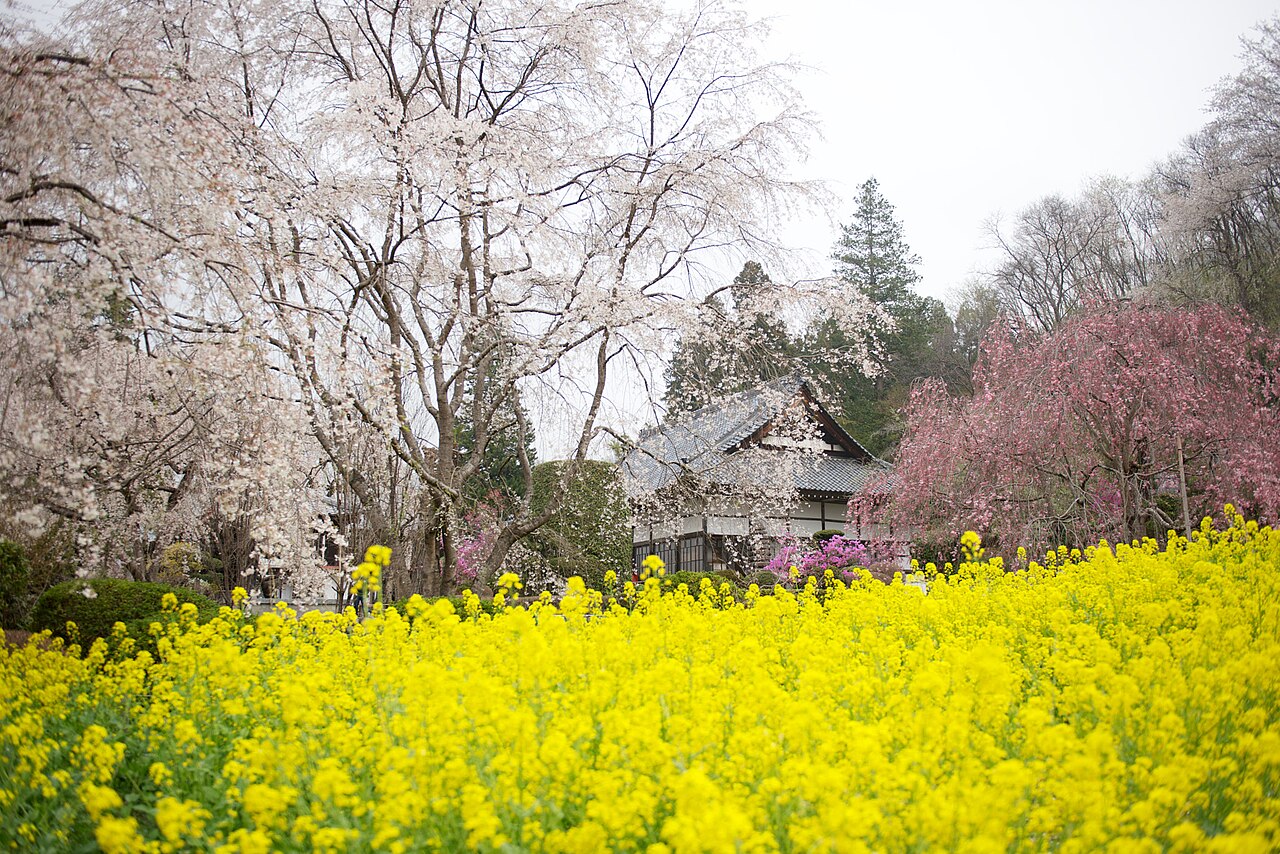
- Late March to late April: Nagatoro's cherry blossom avenues are counted among Japan's top hundred blossom spots, and this is the town at its most crowded. Beautiful, but not quiet.
- Summer weekends: the river and the shaved-ice shops pull big crowds. Come on a weekday, early.
- May–June and autumn weekdays: the sweet spot. Green or turning leaves over the gorge, boats running, queues short.
- January and February: the kotatsu boats and cold, clear air make this the secret season. The town is close to empty on weekday mornings.
Whatever the season, the pattern is the same as everywhere in this series: arrive before the day-trippers, do the headline activity first, and let the afternoon be the slow part.
For more car-free escapes in every direction from Tokyo, see our full comparison: Quiet Day Trips from Tokyo Without a Car.
Compare options and book via our partner links: Chichibu and Nagatoro day trips and guided tours on GetYourGuide.