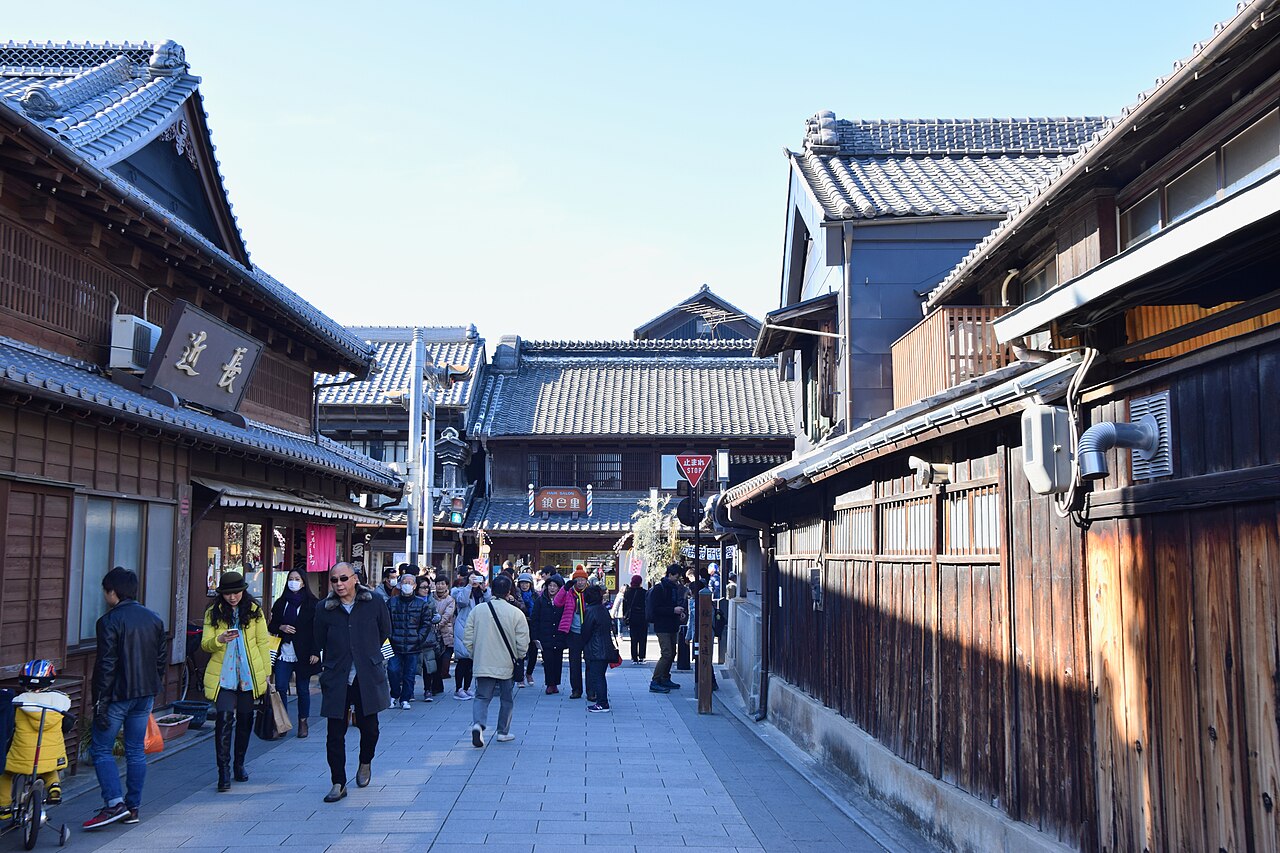
Kawagoe keeps a street of clay-walled merchant storehouses, a wooden bell tower that still sounds over the town, and a temple hall moved here from Edo Castle — and the Tobu limited express reaches it from Ikebukuro in as little as 26 minutes. This guide walks through the storehouse streets and Kitain with their real hours and admission, and shows how the loop bus links the sights, so the day stays slow rather than rushed.
Along Ichibangai and the storehouse streets
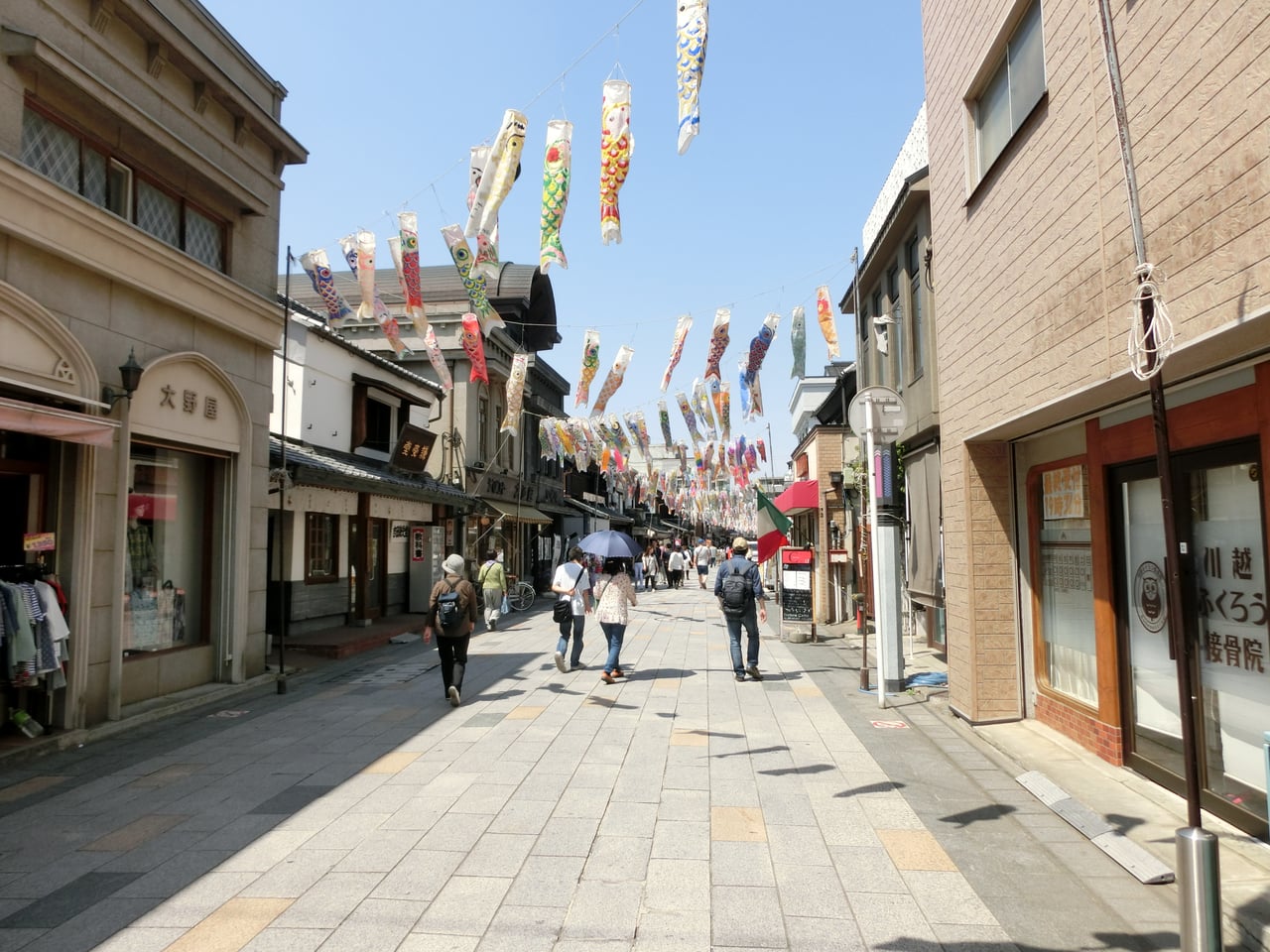
Ichibangai is the main street of Koedo (Little Edo) Kawagoe, its clay-walled storehouse buildings rebuilt in the Meiji era after a great fire. The Bell of Time (Toki no Kane) has stood as a symbol of Kawagoe since the early Edo period and still sounds over the town today. A handicraft shop called Mingei Tsuchikane stocks finely made miniatures of Kawagoe's landmarks, from the Bell of Time to Kitain's rakan (arhat) statues. Around Ichibangai and the neighbouring Kashiya Yokocho (the candy-shop alley), specialist shops have made the district known for its sweet-potato snacks. Kashiya Yokocho keeps the mood of the Shōwa era, with visitors young and old browsing among old-fashioned sweet shops.
A little history of Kawagoe
In the Muromachi period, the Ogigayatsu Uesugi lord Mochitomo established Kawagoe Castle, and his retainer Ōta Dōshin, the father of Ōta Dōkan, laid out the town below it. The Battle of Kawagoe, one of the great night battles of the warring-states era, saw the Hōjō defenders of the castle rout a far larger allied army. The old poetic place-name Miyoshino, an utamakura (a place-name used in classical verse), was matched in Edo-period geographic study to the district later gathered under the name Kawagoe.
Where to stay
Disclosure: This post may contain affiliate links. If you book through them, we may earn a commission at no extra cost to you.
Kitain and its grounds
Kitain is a temple founded in the Heian period, largely lost to fire and later rebuilt when the shogun Tokugawa Iemitsu had a hall from Edo Castle moved to the site. Its grounds hold a well-known group of stone rakan figures, each carved with its own expression. At the main hall, worship and the issuing of omamori (protective charms) run from 9:00 to 16:30. On Sundays and holidays the same hours run until 16:50. Reception for a visit closes 30 minutes before the grounds close. Admission for adults is 400 yen. Admission for children of elementary and junior high school age costs 200 yen. Kitain is closed to visitors from December 25 to January 8. It is also closed on the afternoon of February 2 and on February 3.
Quiet corners near the castle
Kawagoe Castle's Honmaru Goten (the main palace hall) survives as a rare example of late-Edo daimyo architecture, keeping a broad tatami audience chamber, the chief retainers' room, and a karahafu (undulating gabled) entrance. According to local tradition, Miyoshino Shrine is the birthplace of the children's song "Tōryanse", its narrow approach recalled as the scene behind the lyrics.
Getting around by the Koedo Loop Bus
The Tobu Tojo Line's Kawagoe Limited Express reaches Kawagoe Station from Ikebukuro in as little as 26 minutes. A one-day unlimited Koedo Loop Bus pass costs 600 yen for adults and 300 yen for children. A single ride on the loop bus costs 220 yen for adults and 110 yen for children under 12. For passengers with a physical, intellectual, or mental disability, including those certified under the Child Welfare Act, and one accompanying caregiver, the one-day pass costs 300 yen each, with no separate discount for children. For those same passengers and a caregiver, a single ride costs 110 yen, or 50 yen for the section between Kawagoe Station's west exit and Honkawagoe Station only.
Compare options and book via our partner links: guided walks and day tours on GetYourGuide, or tours and experiences on Klook.