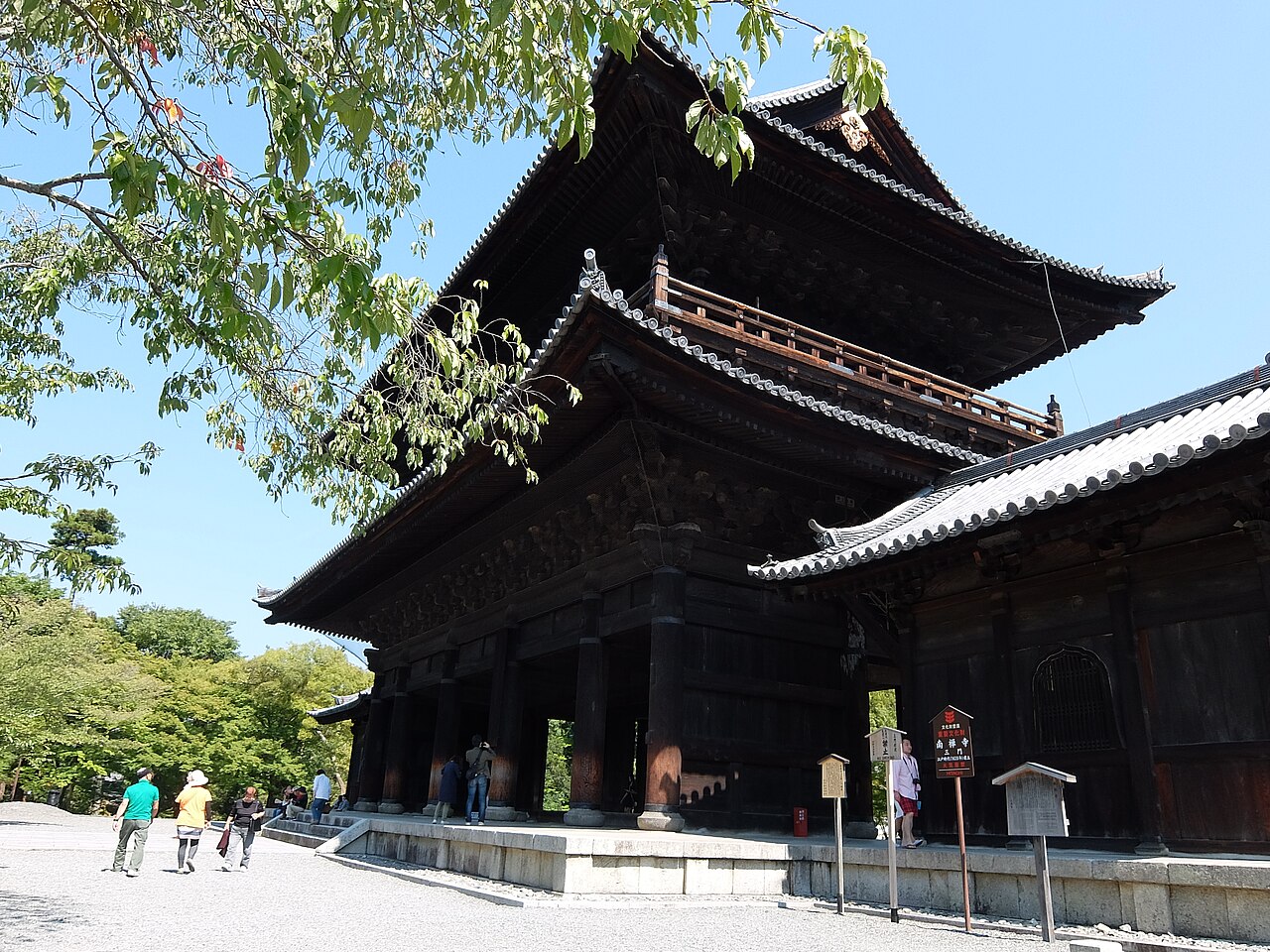
Nanzen-ji sits on Dokushuho, also called Nanzen-ji-yama, one of the mountains a little away from the bustle of the town, and time flows slowly there. Walking the precincts early in the morning, visitors hear the sutra chanting of the monks in training. The Sanmon, Hatto and Hojo halls stand in a straight line, with twelve sub-temples around them.
This route runs from the Nejirimanpo tunnel and the aqueduct through the Sanmon, Hatto and Hojo to the Nanzen-in garden and a yudofu lunch at Junsei, and leaves out the Keage Water Purification Plant and the sightseeing boat on the Lake Biwa Canal.
A coiled dragon is painted on the ceiling of the Hatto, above a stand of huge zelkova pillars.
| Time guide | Place | What you do | Walk or stay |
|---|---|---|---|
| Morning | Keage Station | Take the Tozai Line and head for the grounds | Ten minutes on foot |
| Morning | Nejirimanpo tunnel | Walk the brick tunnel toward the aqueduct | Eight minutes on foot |
| Midday | Sanmon and Hatto | Look up at the painted ceilings | Walk or stay |
| Midday | Hojo | Sit with the garden and the painted rooms | Walk or stay |
| Afternoon | Junsei | Eat yudofu in the garden | Five minutes on foot |
Walking Through the Nejirimanpo Tunnel to the Red-Brick Aqueduct
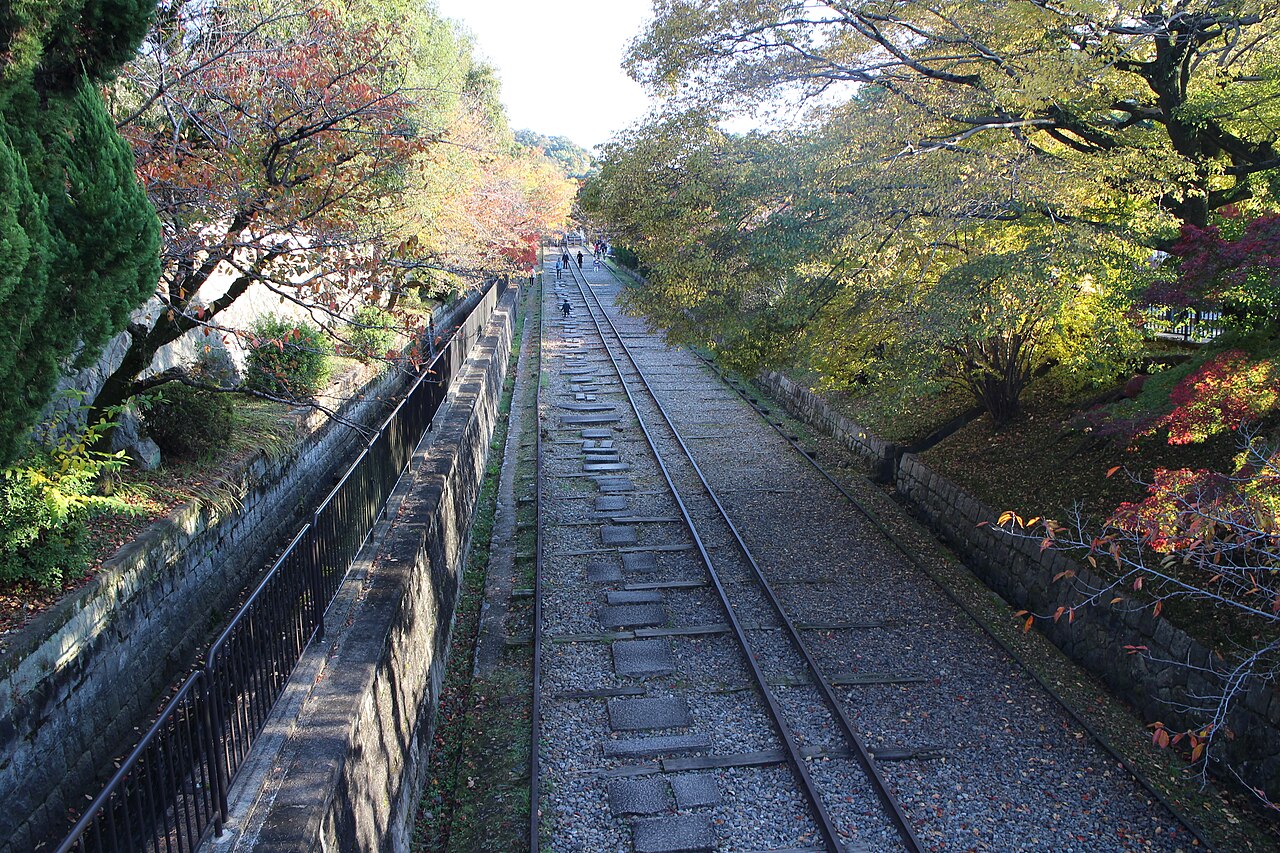
Walking through the brick tunnel of the Nejirimanpo brings visitors into contact with the air of the Meiji era. The tunnel exists for crossing beneath the Keage Incline, and its bricks are laid in a spiral. Because of that spiral, the tunnel looks as if it were swirling, which makes the crossing more than a way under the slope.
Come out into the temple grounds and the red-brick aqueduct crosses them, built to carry the Lake Biwa Canal in the Meiji era. Its red-brick arches blend with the aged look of Nanzen-ji rather than standing apart from the temple around them. In spring the aqueduct is lined with cherry trees, a seasonal detail that sets that time of year apart on this walk.
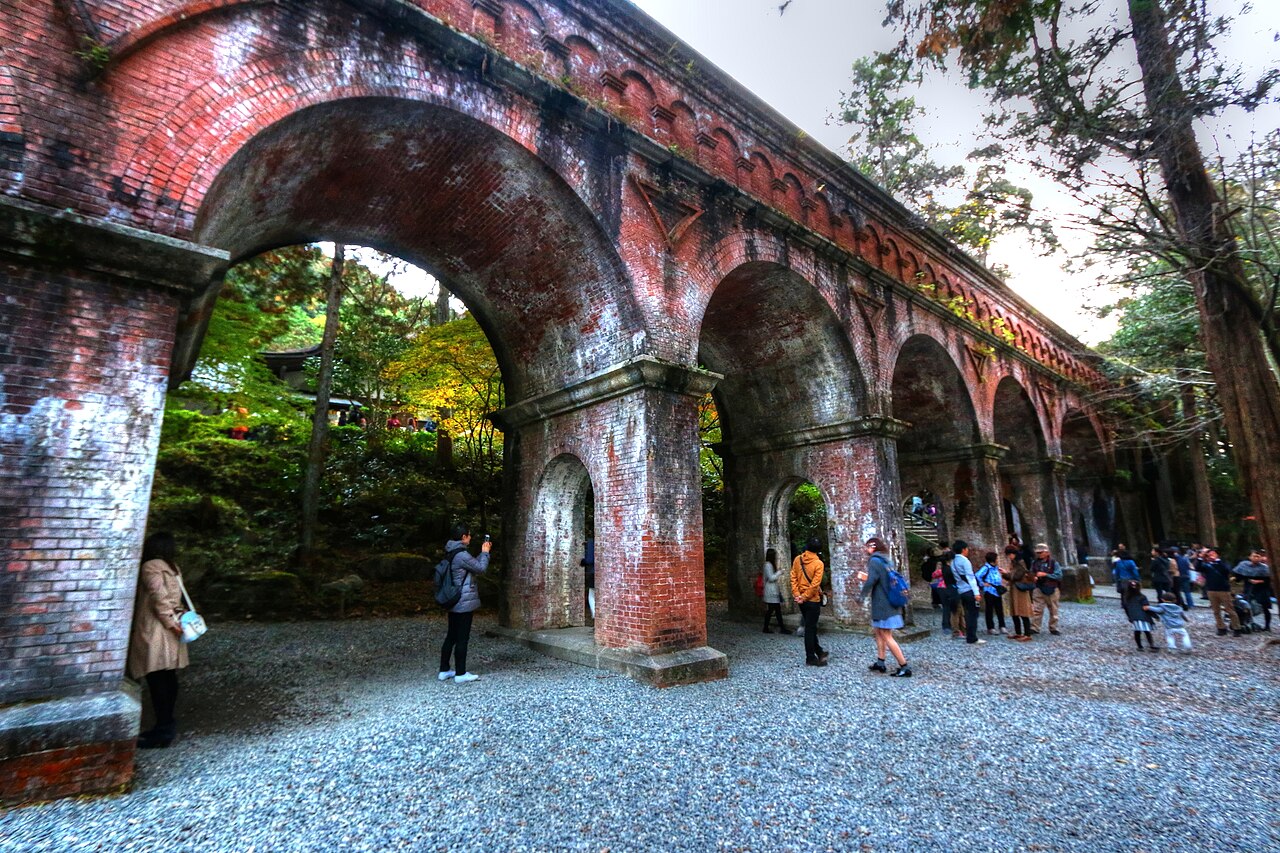
Trace the aqueduct through the grounds, and the walk follows a branch that turns north from the first canal at Keage. The canal itself is a waterway drawn from Lake Biwa toward the city of Kyoto. Anyone short on time can start with the Nejirimanpo, since the tunnel is a shortcut into the grounds and the aqueduct comes next on the walk.
Looking Up at the Sanmon and Stepping Into the Hatto
Climb to the upper floor of the Sanmon, and the whole of Kyoto city spreads out in view. Overhead, the ceiling carries richly coloured paintings of phoenixes and heavenly beings, and a seated principal image stands before the inner sanctuary. The gate itself is a two-storey structure in Zen style with a hipped-gabled tile roof, an Important Cultural Property donated by Todo Takatora.
The Sanmon is said to have been donated to pray for the repose of a retainer killed in the Summer Siege of Osaka. Monks sweeping the precincts clean are also part of what there is to see among the halls. In the autumn early-morning special viewing, a monk guides the group to the fusuma paintings and the Sanmon's inner sanctuary, which are not normally seen.
Step into the Hatto, where the floor is paved entirely with tiles and Shaka Nyorai sits between figures riding a lion and an elephant. The present hall is a rebuilt one; the original was lost to fire in the Onin and Bunmei wars. Go up into the Sanmon first for its painted ceiling and the view over Kyoto, and step into the Hatto afterwards.
Sitting With the Hojo Garden, Its Painted Rooms and a Bowl of Matcha
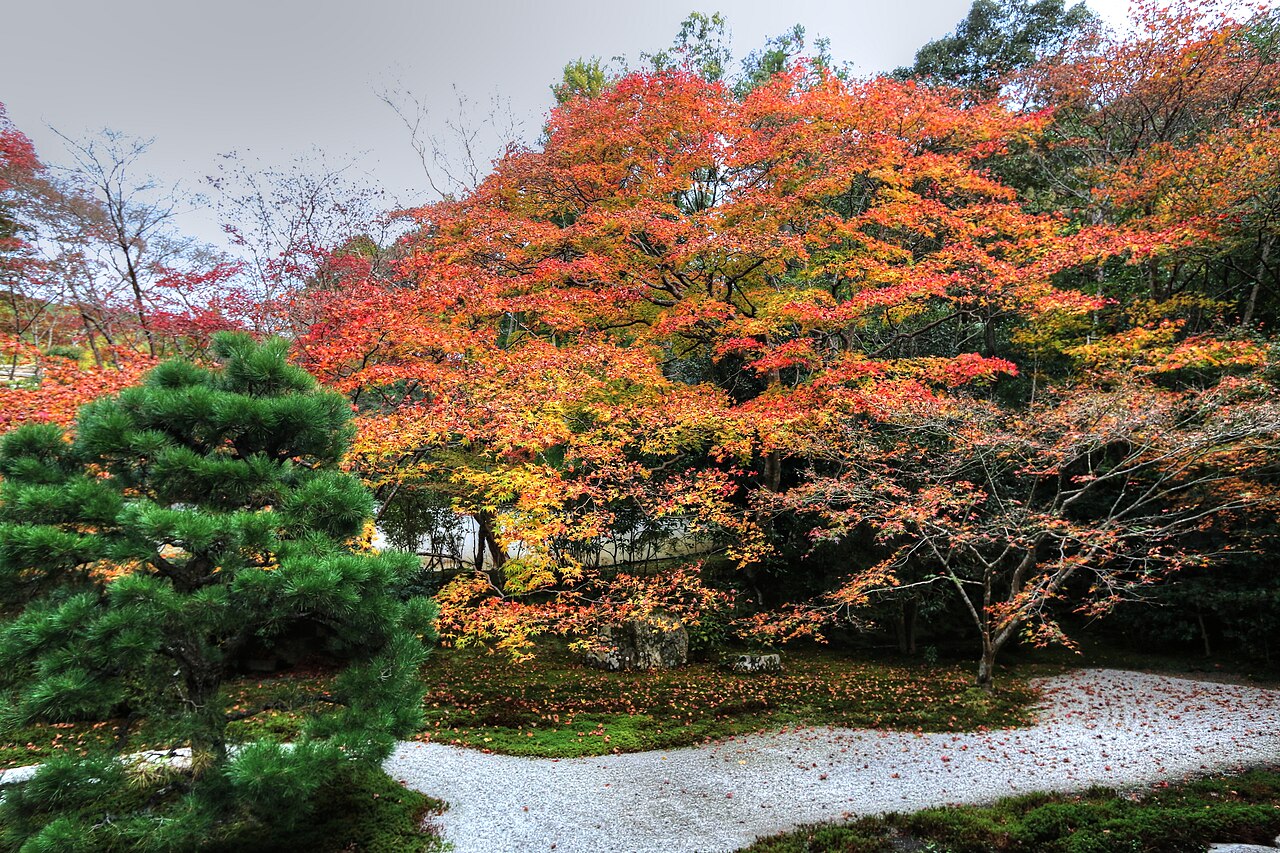
Sit facing the garden in front of the Daihojo, a dry landscape garden said to be the work of Kobori Enshu. The Hojo behind it is a national treasure made up of the Daihojo and the Kohojo joined at its back. Many of the wall and screen paintings inside are designated Important Cultural Properties, so the rooms deserve as much time as the garden.
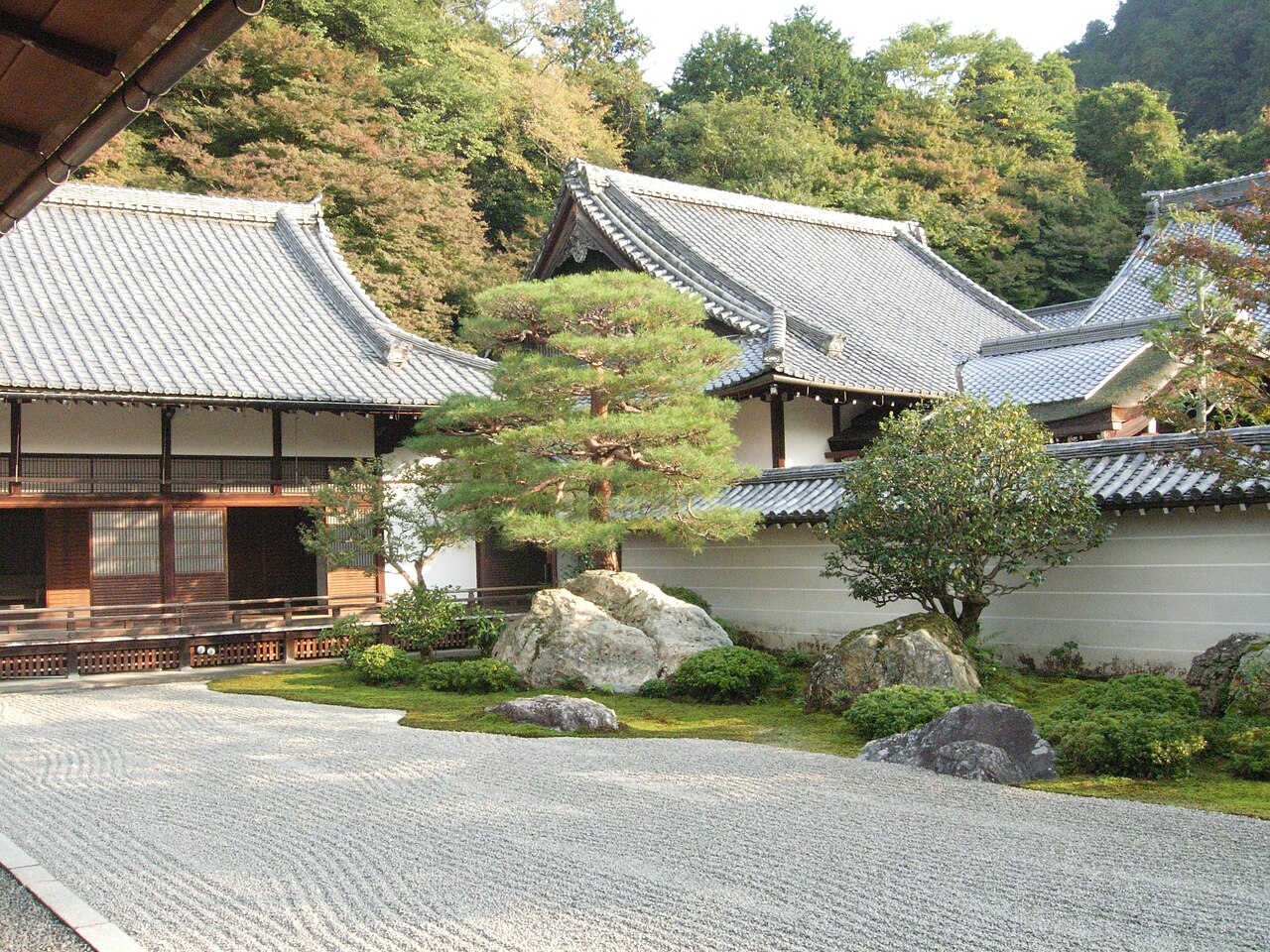
Move through the painted rooms of the Hojo, where the Kohojo holds a set of paintings designated an Important Cultural Property. Eighty-four newly painted wall panels are also shown in the Hojo, restored from digital photographs in the colours of the early to mid Edo period.
Drinking matcha while looking at a waterfall is the thing to do in the room on the right. To the left of the main quarters stands a grand entrance with a gable, and a study hall beyond it leads to the Hojo. After the garden in front of the Daihojo, the matcha room with its view of a waterfall gives a place to pause.
Following the Garden Paths of Nanzen-in and the Sub-Temples
Follow the path around the Nanzen-in garden, a late Kamakura-period pond-stroll garden that keeps its early appearance and is surrounded by deep woods. A stone arrangement of a waterfall stands at the back left, and the upper pond is shaped like a dragon with an island in the centre. Long off-limits to visitors for garden restoration, it is shown as a limited special viewing.
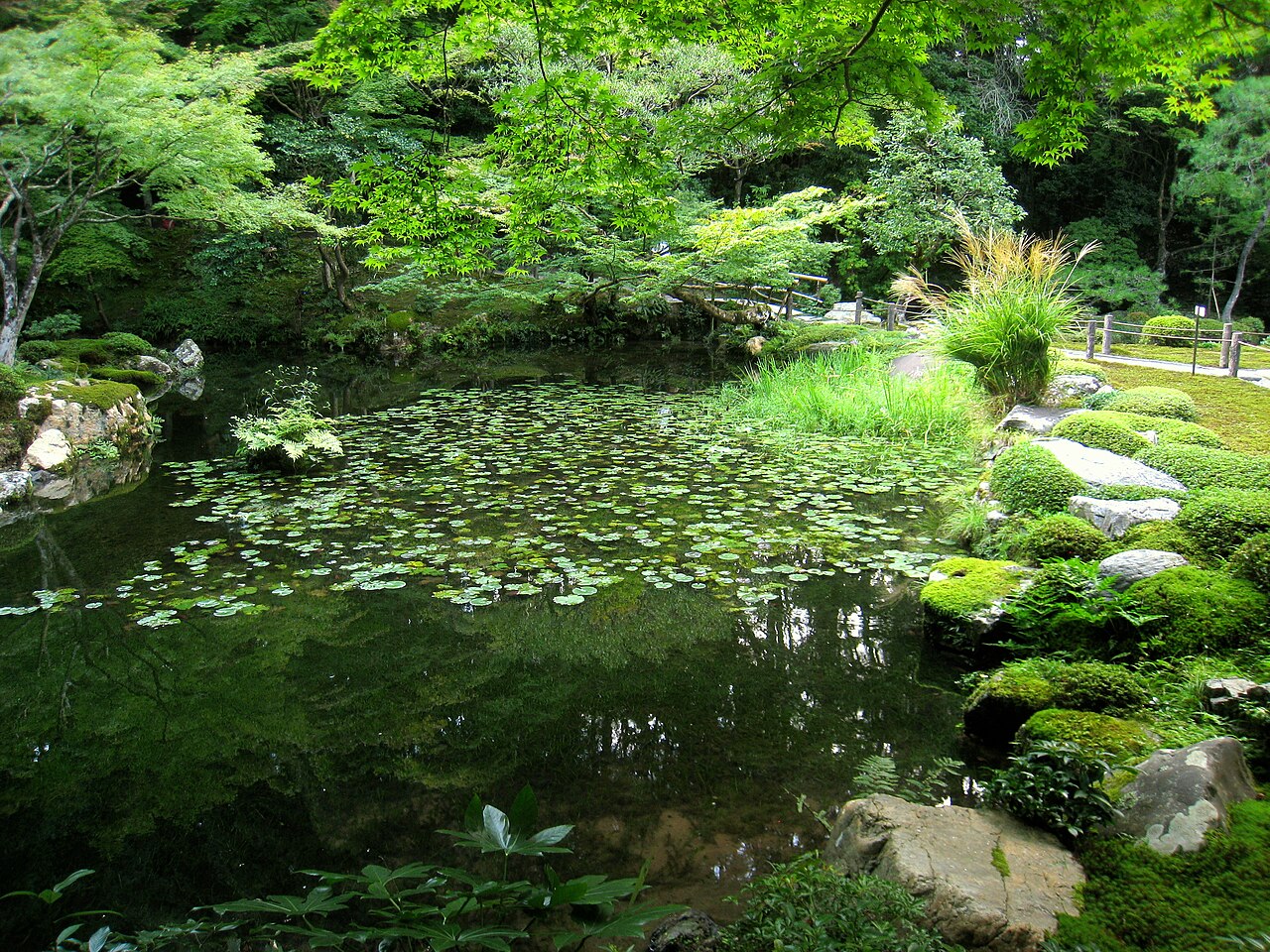
Look for the crane and the turtle in the dry-landscape garden at Konchi-in, where both are represented with trees and stones. The garden also signifies lasting prosperity, which gives the two animal shapes a meaning beyond their outlines.
Enter a sub-temple that began as a hermitage for its east garden of white gravel and moss. The Nanzen-in site is where Emperor Kameyama became a monk in a detached palace that was donated to become a Zen temple. Nanzen-in is the garden to choose for ponds and deep woods, Konchi-in the one for a crane and turtle in trees and stones.
Eating Yudofu in the Garden at Junsei
Order the yudofu course at Junsei and the main pot is a choice between yudofu and yuba. The tofu is made with domestic soybeans and comes with a specially made yudofu sauce. Its own sweetness and a lingering bitterness of soybeans are what the simmered tofu brings to the table.
Making the yuba is part of the meal, since diners make it themselves from soy milk, the same base as tofu. Freshly made and raw, it has a distinctive texture and a rich soybean flavour. The yudofu, made with kelp stock, is marked by a smooth texture on the tongue.
Walk the strolling garden afterwards, where a stream murmurs and brightly coloured carp and freshwater crabs live in the streams and ponds. Tofu itself came from China in the Nara period and was used in temple vegetarian cooking. If there is room for a sit-down meal, the yudofu course gives a reason to stay a while longer in the garden.
Getting to Nanzen-ji
New to rural buses and one-man trains? See how to ride them, step by step.
| Route | Item | Detail |
|---|---|---|
| Tozai Line | Keage Station to the grounds | Ten minutes on foot |
| Tozai Line | Through the Nejirimanpo tunnel | A shortcut into the grounds |
| City bus | From the nearest stop | Ten minutes on foot |
| Keage Station | Exit two to Junsei | Five minutes on foot |
| City bus line five | To Junsei | Ten minutes on foot |
| Nejirimanpo tunnel | To the aqueduct | Eight minutes on foot |
| Kyoto subway | Transport IC cards | Can be used |
| Cars | In front of Nanzen-kaikan | Passenger cars park |
For an overnight stay near Nanzen-ji, browse places to stay in Kyoto.
Hours and Fees
| Place | Item | Time or fee |
|---|---|---|
| Hojo garden, Sanmon | Hours, March to November | Eight forty to seventeen hundred |
| Hojo garden, Sanmon | Hours, December to February | Eight forty to sixteen thirty |
| Hojo garden, Sanmon | Last reception | Twenty minutes before closing |
| Hojo garden, Sanmon | No admission | December twenty-eighth to thirty-first |
| Hojo garden, Sanmon | Adult, per site | Six hundred yen |
| Hojo garden, Sanmon | High school student, per site | Five hundred yen |
| Hojo garden, Sanmon | Primary and junior high, per site | Four hundred yen |
| Junsei | Lunch | Eleven to fourteen thirty, last order |
| Junsei | Dinner | Seventeen to nineteen, last order |
| Junsei | Payment | Cash and credit cards |
| Nanzen-in | Viewing | Limited special viewings only |
| Matcha room | Matcha | Paid |
Fees and hours were checked against official sources on 17 November 2026.
Thinking of staying overnight?
Compare places to stay near Kyoto →
Disclosure: This post may contain affiliate links. If you book through them, we may earn a commission at no extra cost to you.