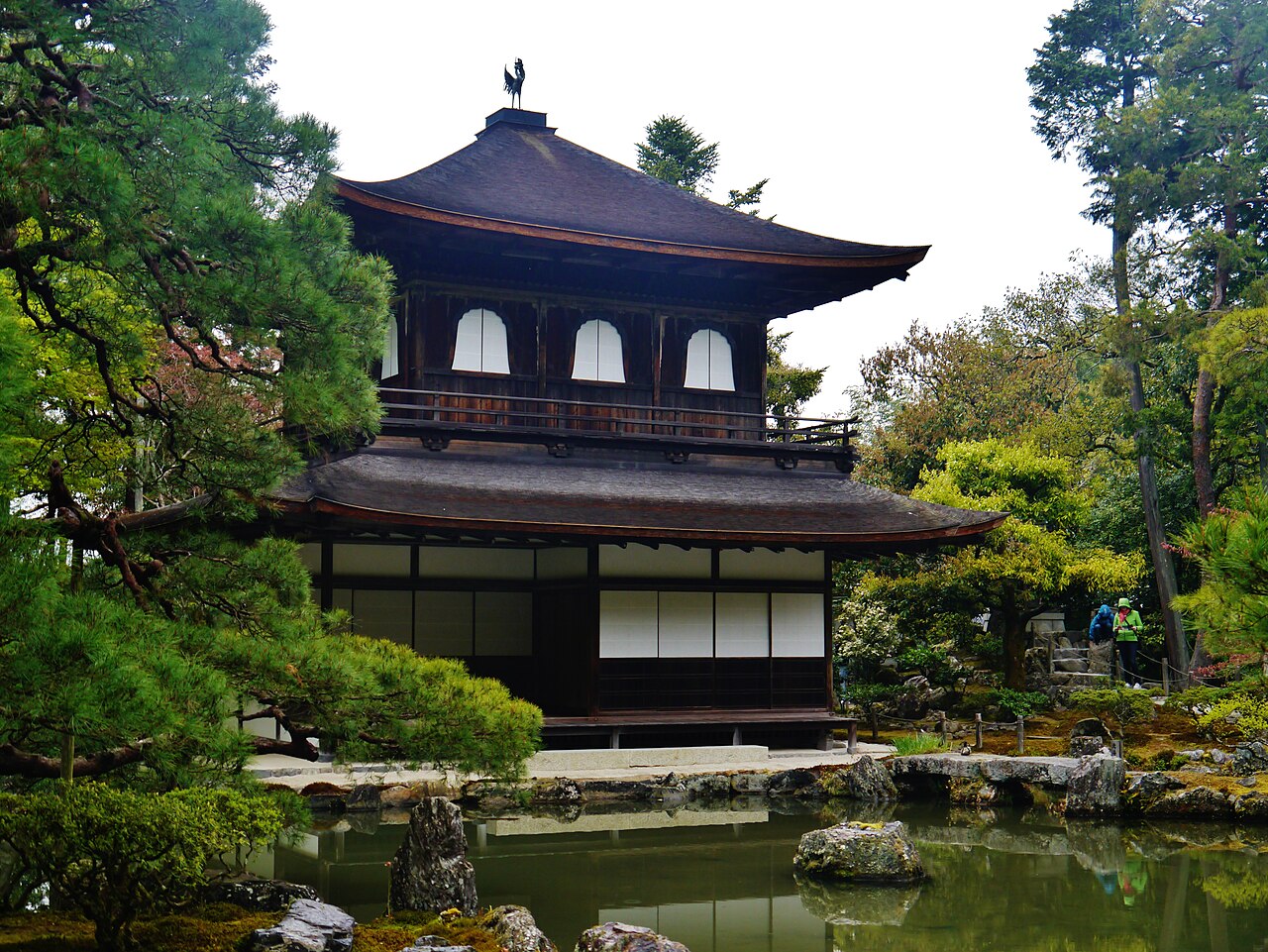
Ginkakuji is a temple garden arranged around a pond, with the national treasure Ginkaku, also called Kannon-den, on its west side and the national treasure Togu-do on the northeast. From the temple, the Philosopher's Path is a walking path of about two kilometers that ends toward Nanzen-ji, more precisely at Nyakuoji Shrine. Beside the path the Shirakawa river flows from north to south, while the man-made Lake Biwa canal flows from south to north. About four hundred cherry trees, mainly Somei-Yoshino, line the path.
Seeing the grounds of Ginkaku-ji takes about thirty minutes, so with limited time, start with the garden and its sand mounds and give whatever remains to the canal and the small temples and shrines along it. The walk suits anyone who would rather look at piled sand, canal water and old trees than go inside buildings.
A Bamboo-Fenced Approach, Sand Mounds and a Hillside Path at Ginkaku-ji
A bamboo-fenced path leads from the Somon gate to the Chumon gate, and entering Ginkaku-ji begins there. The fence is a style particular to this temple. It closes in a narrow approach, and that narrow space is the first thing the temple shows.
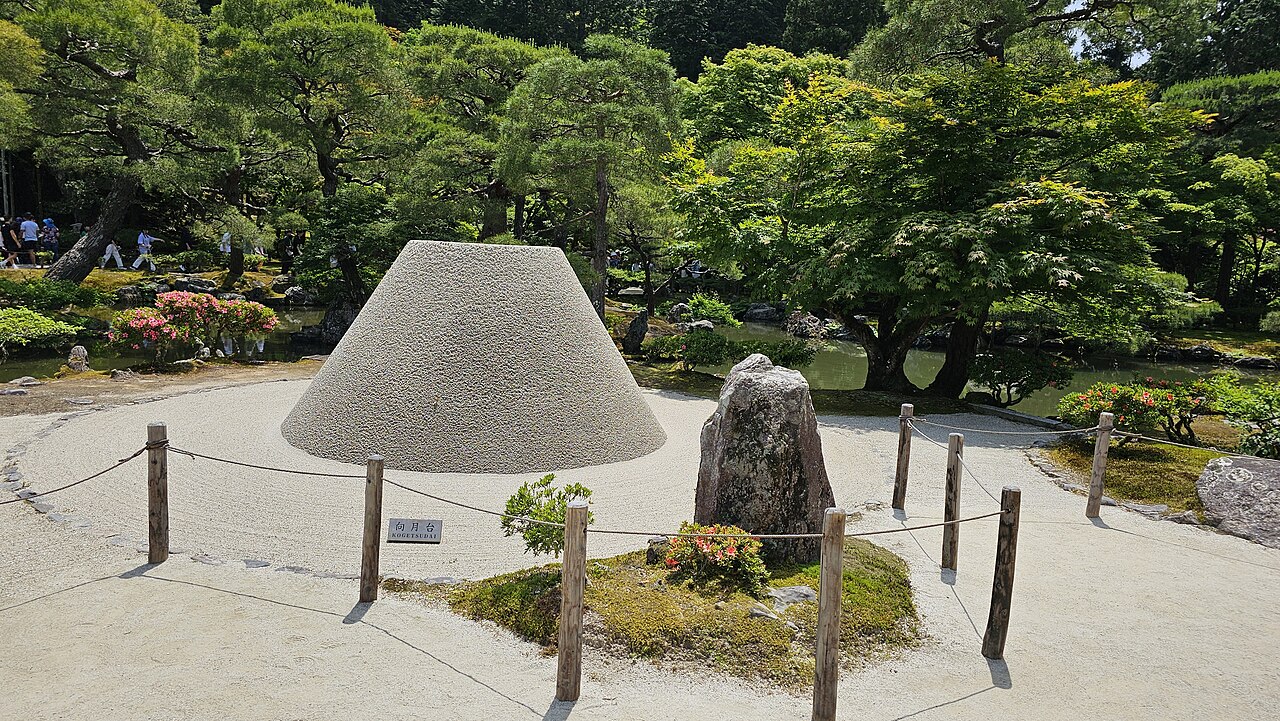
In front of the Hojo, the main hall, lie two forms made of white sand. Ginshadan is sand piled in tiers, and it expresses ripples; Kogetsudai is a mound shaped like a truncated cone. The lower garden around them is a pond-strolling garden, so the sand is seen as part of a circuit that also takes in the water.
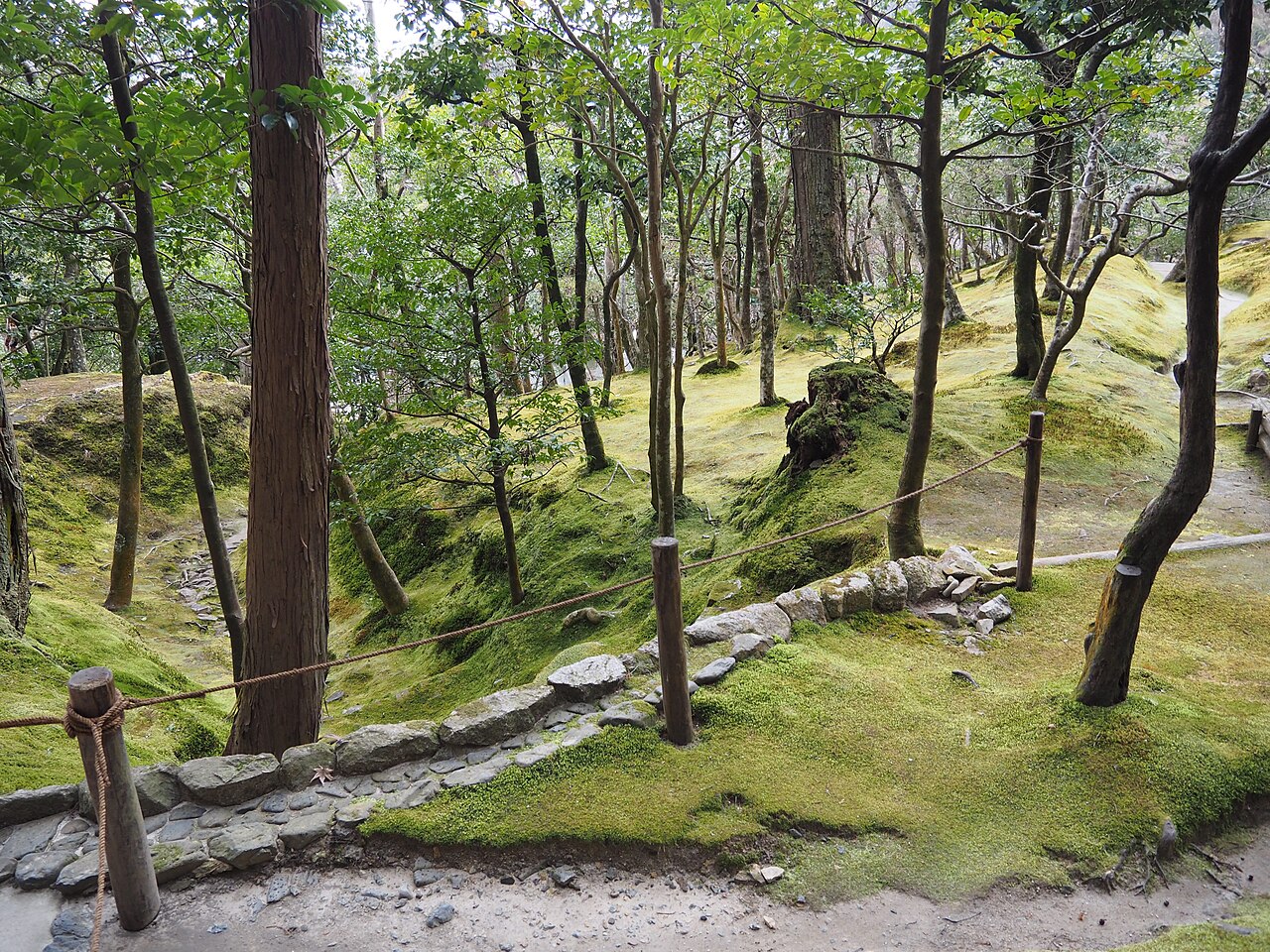
Water from the Sengetsusen drops at the south-east end of Kinkyo Pond and is led into the lower garden, where Ginkaku, the Silver Pavilion, and Togu-do stand. Climbing the eastern hillside from that lower garden leads to the spring Ochanoi. The temple stands at the foot of Daimonji-yama, so the visit takes in a hillside as well as a pond.
Cherry Trees, Canal Water and Birds Along the Philosopher's Path
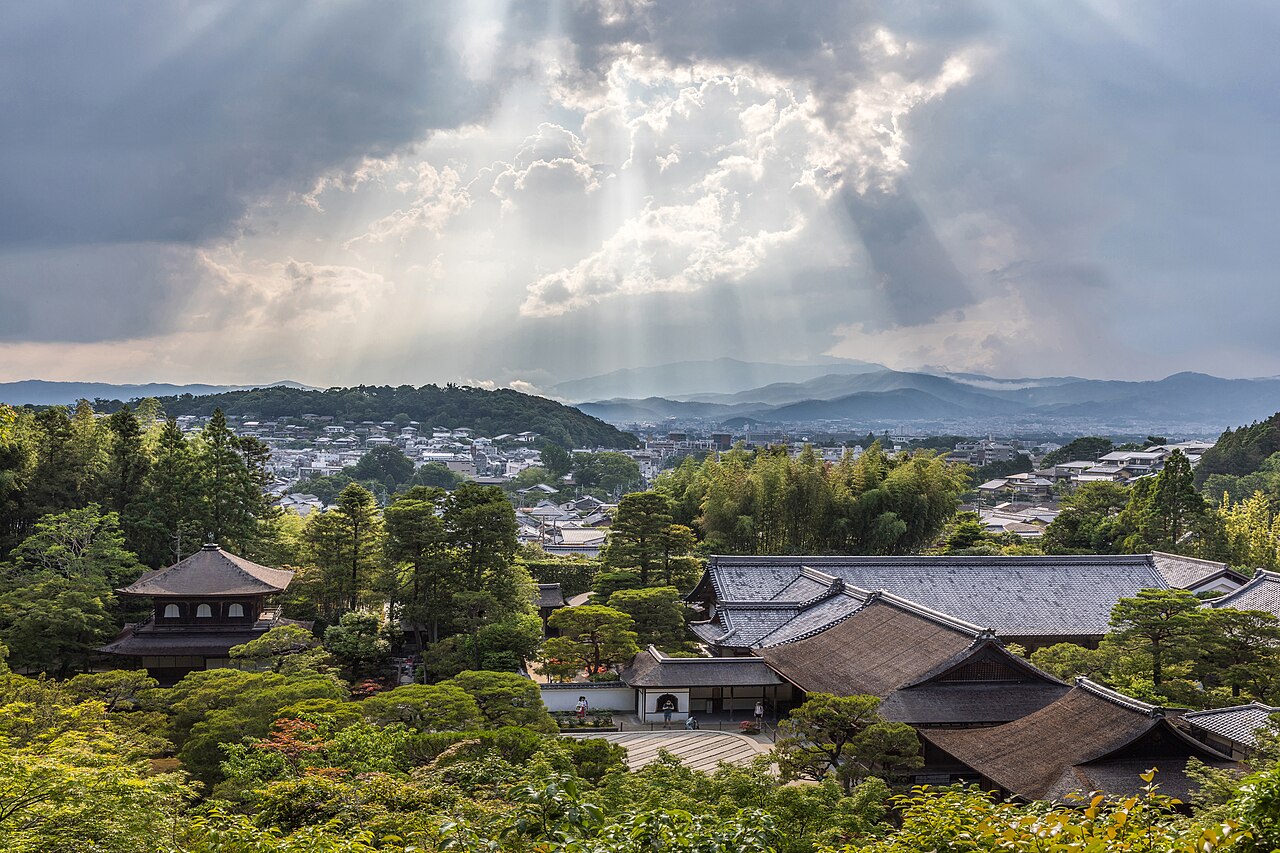
Follow the Lake Biwa canal and the walk stays at the foot of Daimonji-yama, where the water flows slowly. Rows of Sekisetsu cherry trees, donated by a Japanese-style painter, stand along the path. Cherry trees were planted from the Ginkakuji-michi intersection to the area of Senshin Bridge, so that stretch is the one to walk for the trees.
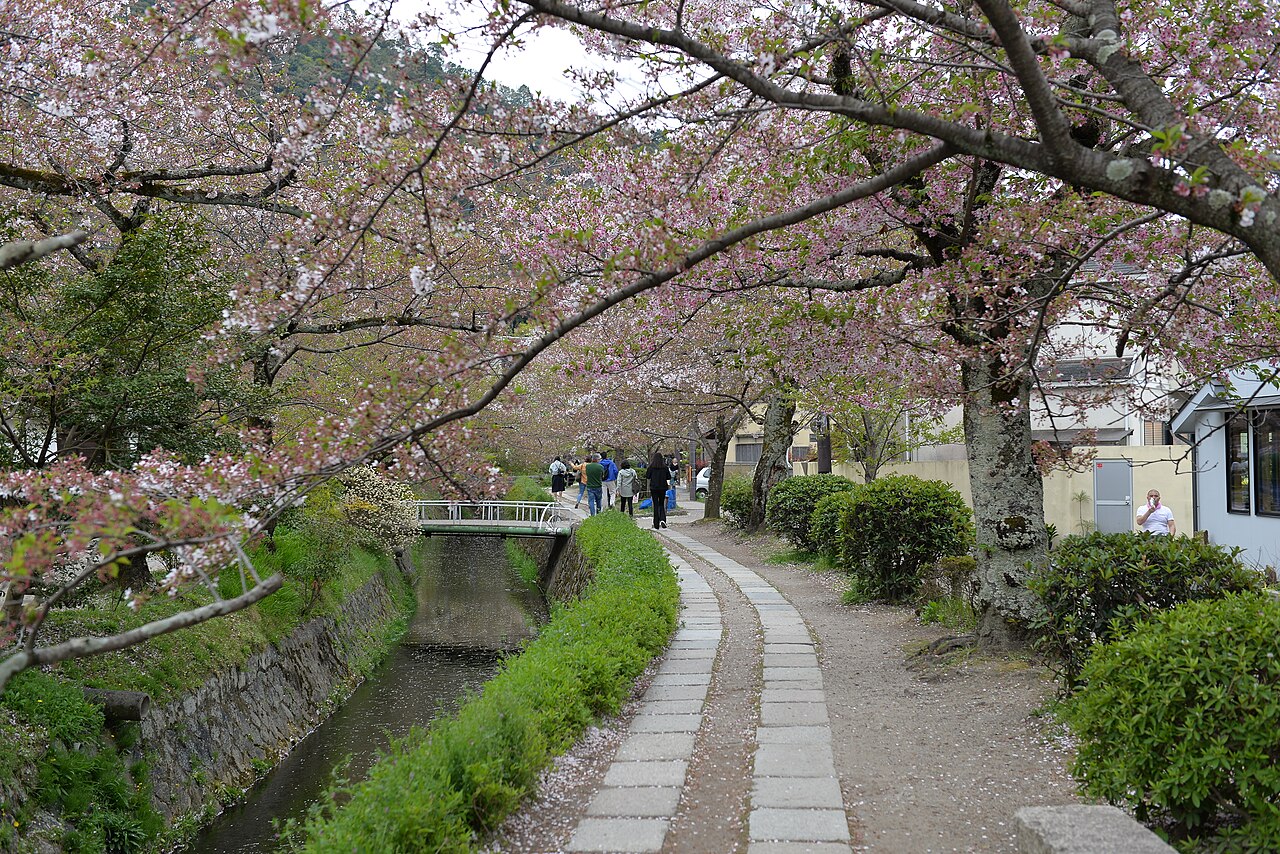
The canal is a habitat as well as a route. Carp and black bass are among its fish, and shellfish such as freshwater clams live there too, a reason to look down into the water as well as up. Birds listed for the path include varied tit, Japanese tit, pygmy woodpecker, long-tailed tit, bush warbler, white-eye and little egret.
The path is named after a Kyoto University professor and philosopher who walked it every morning absorbed in thought. That origin suggests how to use it: walk without a fixed list, and let the canal, the cherry trees and the birds set the pace.
White Sand Mounds and a Camellia Courtyard at Honen-in
White sand marks the way into Honen-in. Just inside the temple gate, mounded white sand stands on both sides, a feature called Byakusadan. The mounds represent water, and passing between them signifies entering the pure precinct with body and mind cleansed. A water pattern is drawn on the sand, so the meaning can be read on the surface itself.
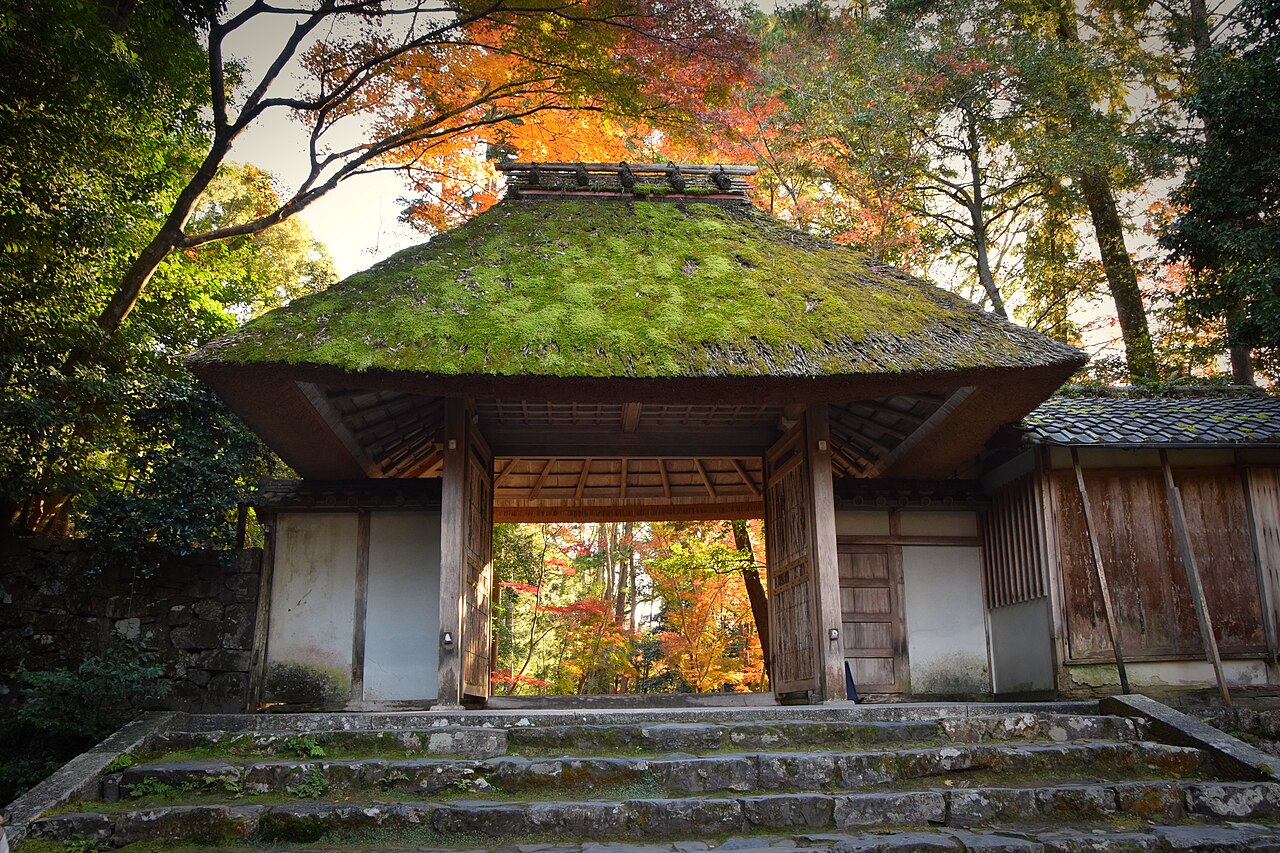
The grounds also hold a pond and a spring that wells up. The approach from the main gate to the main hall can be walked except during memorial services and similar occasions, while the interior of the buildings is not normally opened to the public. Plan the visit around the gate, the sand and the approach instead of the rooms.
A chiri-tsubaki, a tree of the camellia family, grows in the courtyard on the north side of the main hall. The courtyard is small, so most of the crown spreads out above the roof. Its flowers come in varied colours: red, pink, white, red-and-white and mottled.
Komainu Statues at Otoyo Shrine, Azalea Hedges at Anraku-ji and Stones at Reikan-ji
Animal statues stand in front of the shrine buildings inside Otoyo Shrine. The komainu rat at the Daikoku shrine that holds a water jewel is associated with matchmaking, childbirth and prosperity, while the rat that holds a scroll is said to bring blessings for love matches and academic success. Foxes stand before the Inari shrine building because the fox is the Inari deity's messenger.
A monkey statue before the Hiyoshi shrine building stands as a monkey guarding Mount Hiei, and a kite statue before the Atago shrine building represents a kite that guards the mountain from the sky. Finding each animal in turn is a simple way to go round the grounds.
Old trees fill out the shrine. Two nagi trees standing side by side are said to be a tree of good fortune. A camellia about four hundred years old and a weeping red plum about two hundred and fifty years old add long-lived trees to look for alongside the statues.
Anraku-ji has a thatched-roof gate leading into a garden filled with clipped satsuki azalea hedges. In the garden of Reikan-ji, cedar moss covers the ground, rare camellia varieties bloom and many standing stones form a bold arrangement. The hills at Nyakuoji Shrine hold strange rocks, old trees and a waterfall.
Planning a Walk From Ginkaku-ji Along the Canal
Ginkaku-ji lies at the northern end of the Philosopher's Path, which makes the temple a natural place to begin. The path follows the canal between the temple and the area of Nyakuoji Bridge, so a walk that starts in the garden heads south with the water alongside.
Because the canal flows from south to north, that direction runs against the current. Honen-in, Otoyo Shrine and the other small temples and shrines can be fitted in as interest allows, and the far end of the path points toward Nanzen-ji. Nanzenji has its own guide.
Getting to Ginkakuji and the Philosopher's Path
New to rural buses and one-man trains? See how to ride them, step by step.
| Route | Item | Detail |
|---|---|---|
| City Bus route one hundred from Kyoto Station | Get off at the Ginkakuji-mae stop | the stop for Ginkaku-ji |
| Walk from the Ginkakuji-mae bus stop | To Ginkaku-ji | about five minutes on foot |
| Walk from the Ginkakuji-michi bus stop | To Ginkaku-ji | about ten minutes on foot |
| Subway | Keage Station (a subway station) to the Philosopher's Path | about fifteen minutes on foot |
| Walk from the Kinrin-shako-mae bus stop | To Honen-in | about ten minutes on foot |
If you would rather stay overnight, places to stay in Kyoto is a place to start.
Hours and Fees
| Place | Item | Time or fee |
|---|---|---|
| Ginkaku-ji | Visiting hours from March first to November thirtieth | eight thirty in the morning to five in the evening |
| Ginkaku-ji | Visiting hours from December first to the end of February | nine in the morning to four thirty in the afternoon |
| Ginkaku-ji | Adults, high school age and older | one thousand yen |
| Ginkaku-ji | Elementary and junior high school students | five hundred yen |
| Ginkaku-ji | Admission with a disability-related reduction | one hundred yen |
| Ginkaku-ji | Time to see the grounds | about thirty minutes |
Fees and hours were checked against official sources on 19 November 2026.
Thinking of staying overnight?
Compare places to stay near Kyoto →
Disclosure: This post may contain affiliate links. If you book through them, we may earn a commission at no extra cost to you.