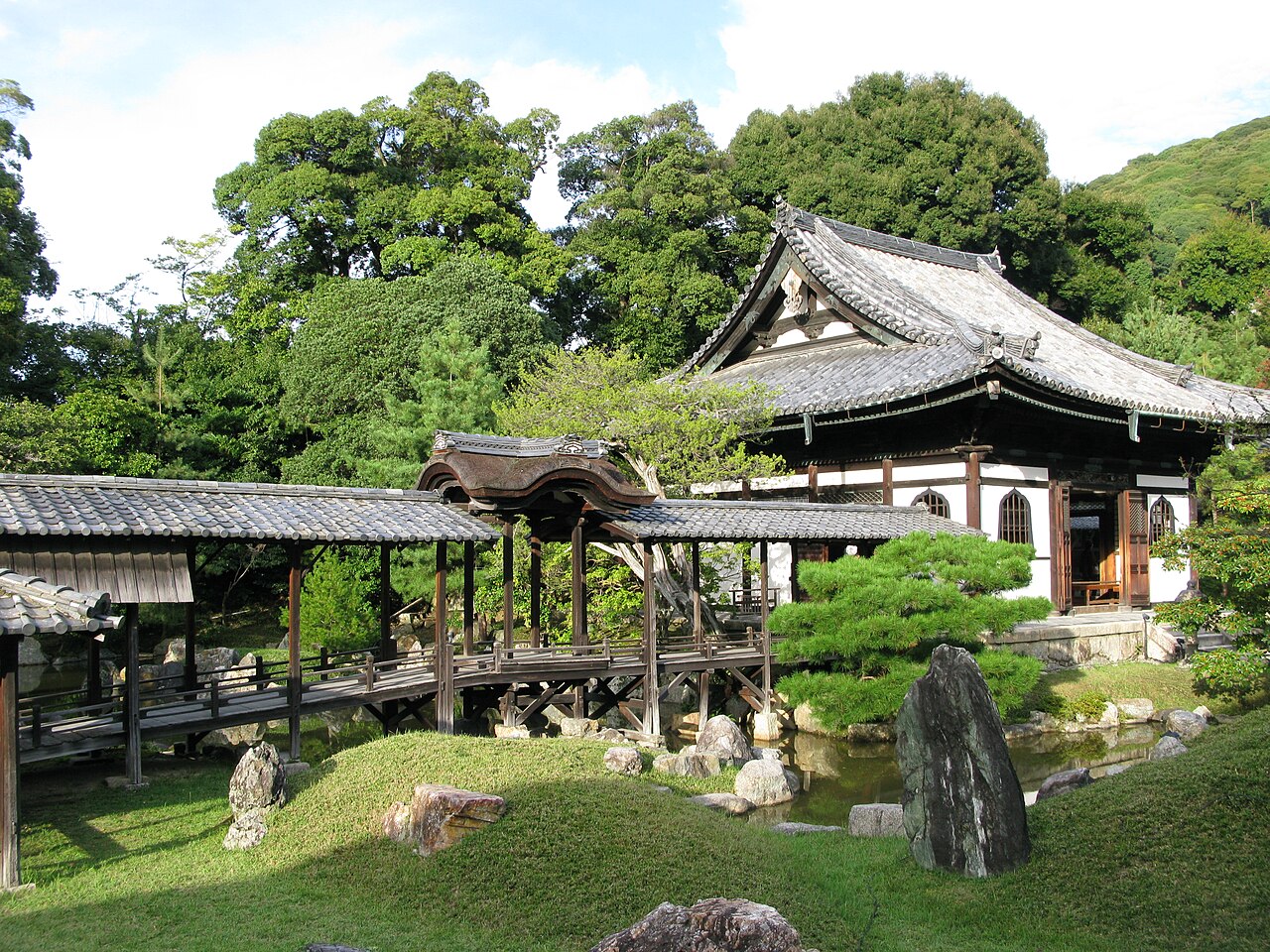
Circling the pond garden at Kodaiji leads past ponds and covered corridors to a bamboo grove inside the same garden. Kodaiji's Kaizando, Otamaya, Kasatei, Shiguretei, front gate and Kangetsudai are designated as Important Cultural Properties of Japan. At Entokuin, visitors draw lines in white sand with a tool. Nene-no-michi, a stone-paved road in front of the temple gate, runs from north to south.
Kodaiji Garden: Ponds, Covered Corridors and the Bamboo Grove
Kodaiji's garden combines ponds, corridors and a bamboo grove, with Higashiyama as borrowed scenery.
Circling the garden means following a pond-stroll layout that uses the Higashiyama hills as borrowed scenery. The ponds and the corridors spread around the Kaizando, which puts that hall at the middle of the layout. The pond garden spreading east and west around the Kaizando is said to be the work of Kobori Enshu.
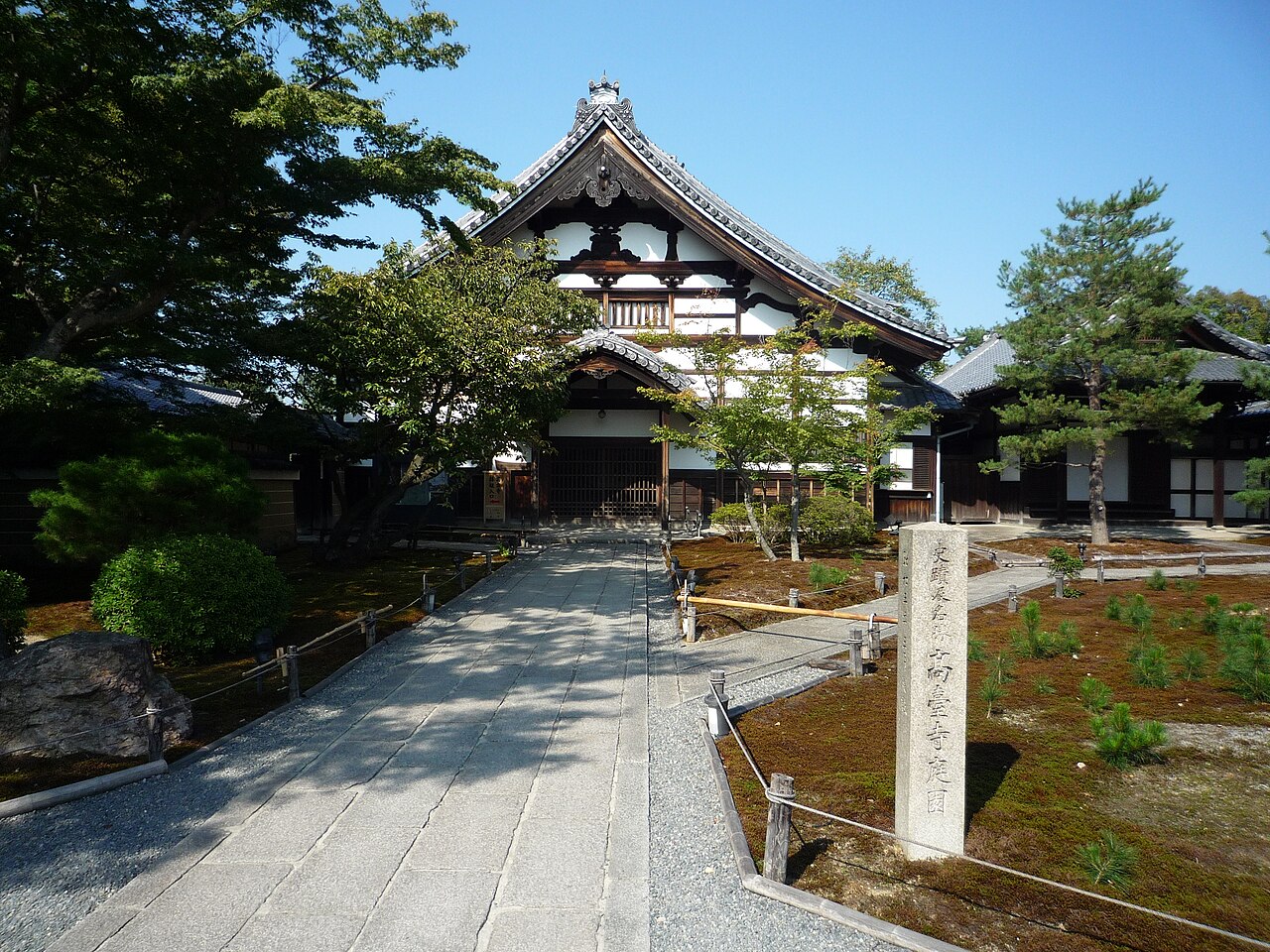
Passing the buildings on the circuit takes in a group of nationally designated Important Cultural Properties. The Kaizando, Otamaya, Kasatei, Shiguretei, the front gate and Kangetsudai all carry that designation. The Kaizando, Otamaya and the tea houses Kasatei and Shiguretei are from the time of the temple's founding. The bamboo grove is inside the temple garden, so visitors who came mainly for the bamboo walk the same circuit as everyone else.
Seeing the Kyakuden belongs to a daytime visit. The Kyakuden hall has been completed in a new form. It is shown by day only and cannot be seen during the night viewing, so anyone who wants the Kyakuden as well as the garden should arrive in daytime.
Returning for this autumn's evening viewing, which runs until mid-December, changes what the garden shows. This year's program includes a projection mapping presentation in the garden in front of the main hall. Autumn colors in the garden appear dimly lit by soft lights.
Entokuin: A Dry Garden, Zen Programs and the Daikokuten Service
Entokuin offers a dry garden, sand lines, sutra copying and a Daikokuten service.
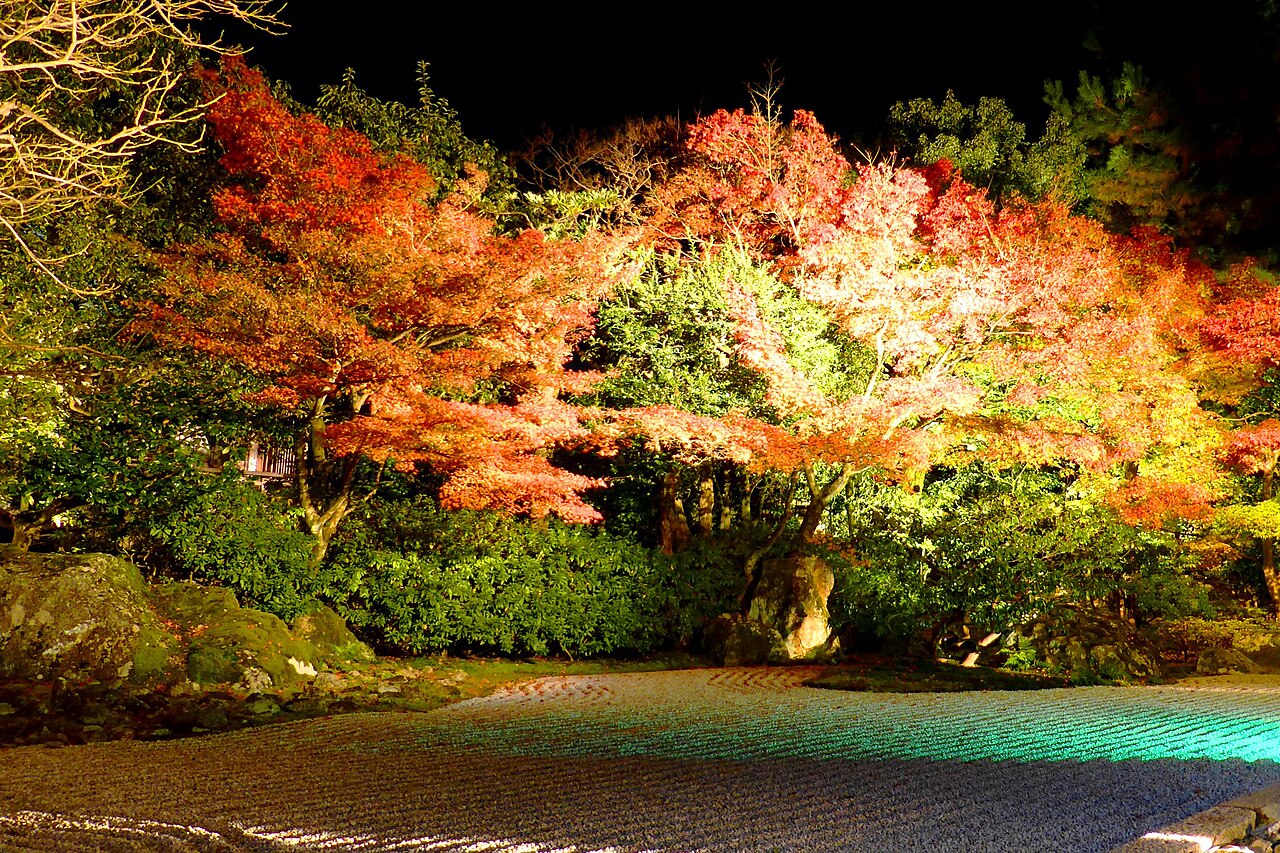
Viewing the north garden at Entokuin shows a pond-strolling layout built as a dry landscape garden. The garden was moved from the front garden of Kita-no-Mandokoro's residence at Fushimi Castle and keeps its original form almost unchanged from the Momoyama period. In the autumn-leaf season, the night illumination shows red maple leaves spreading over rock arrangements that stand out in the dark, and maple trees grow within the grounds. The south garden has sand raked into lines.
Looking at the sliding doors adds painting to the gardens. The painting of a white dragon is in the central room in front of the principal image of Entokuin, and the dragon is depicted rising toward the sky at once from raging waves. Entokuin also holds sliding-door paintings by Hasegawa Tohaku, including the "Summer Painting" and the "Winter Painting".
Joining the Zen programs at Entokuin takes no reservation. Visitors draw lines with a tool in the sand of the dry garden, copy a sutra by writing every character carefully, or trace a Buddha image with a pen while praying. After the prostration program, a goshuin card can be taken home as a sign of connection with the Buddha. Zazen can be done on the main hall veranda facing the garden, and the keisaku stick is not used.
Touching the Sanmen Daikokuten is the prescribed way of worship at Entokuin. The figure, the guardian deity of Toyotomi Hideyoshi, has Daikokuten at the center with the face of Benzaiten on the right and the face of Bishamonten on the left. Attending the monthly Daikokuten service adds a set order to that gesture: a large drum, in fine weather only, then the abbot's sermon, then prayers.
Writing a wish message starts with a slip in the shape of a gourd, with a desk and brush provided. The message is floated on the water of a gourd-shaped hand basin. The slip dissolves and sinks, and the characters for Sanmen Daikokuten remain drifting on the water surface. The abbot gathers the wish messages collected from the basin, pours them into a gourd mold and consecrates them in a prayer ritual.
Matcha in a Raku Bowl at Entokuin
Entokuin serves matcha in a hand-made Raku bowl, and visitors can whisk their own.
Drinking matcha at Entokuin means drinking from a Raku tea bowl. The bowl used for the matcha is handmade by the head priest. A bowl of matcha comes with a choice of sweets, and that choice sets which serving arrives.
Picking between the servings comes down to what accompanies the bowl. Matcha is served with a memo-slip bearing Toyotomi Hideyoshi's death poem, or with a gourd-shaped kinatsuba. The pattern on the memo-slip may change with the season.
Whisking the matcha is left to visitors who wish to do it, with a bamboo whisk. The tea room has no ventilation equipment, so guests are asked to avoid perfume and similar items. A separate offering tea performance includes a commemorative folding fan and a visit to the small tea room.
Nene-no-michi and Ishibe-koji: Paved Lanes, Sweets and Yuba
Nene-no-michi and Ishibe-koji are paved lanes with sweets, yuba and a museum.
Walking Nene-no-michi means following a stone-paved road that extends north to south, centered on the front of Kodaiji's temple gate in Higashiyama. Power lines are buried underground along the road. Paving is laid along it as well, and both measures are there to protect the scenery.
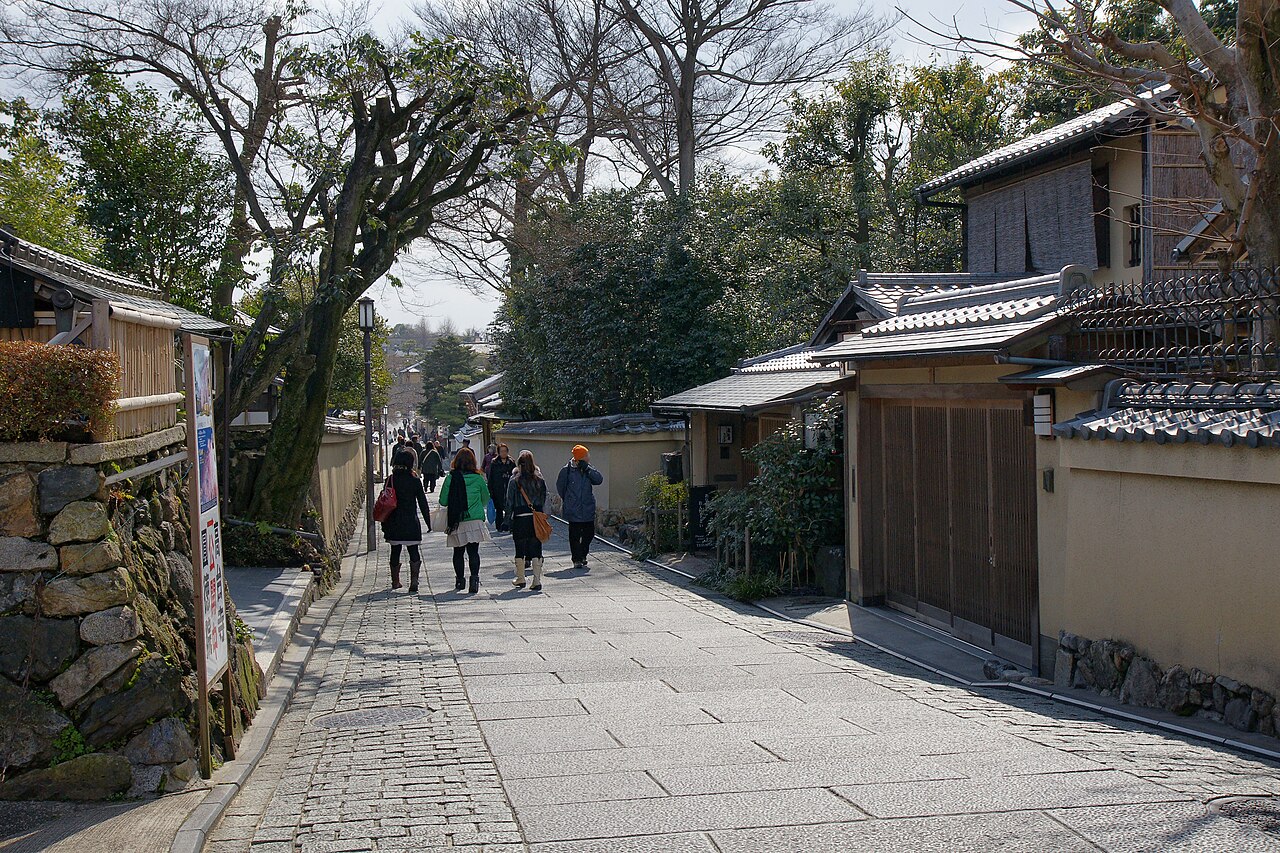
Following Ishibe-koji links the temple side to Gion, because the alley connects Shimogawara-dori in Gion with Nene-no-michi, the road below Kodaiji. The alley is laid with paving said to use paving stones of the Kyoto city tram, a streetcar that was abolished. Tall stone walls run along both sides of the path.
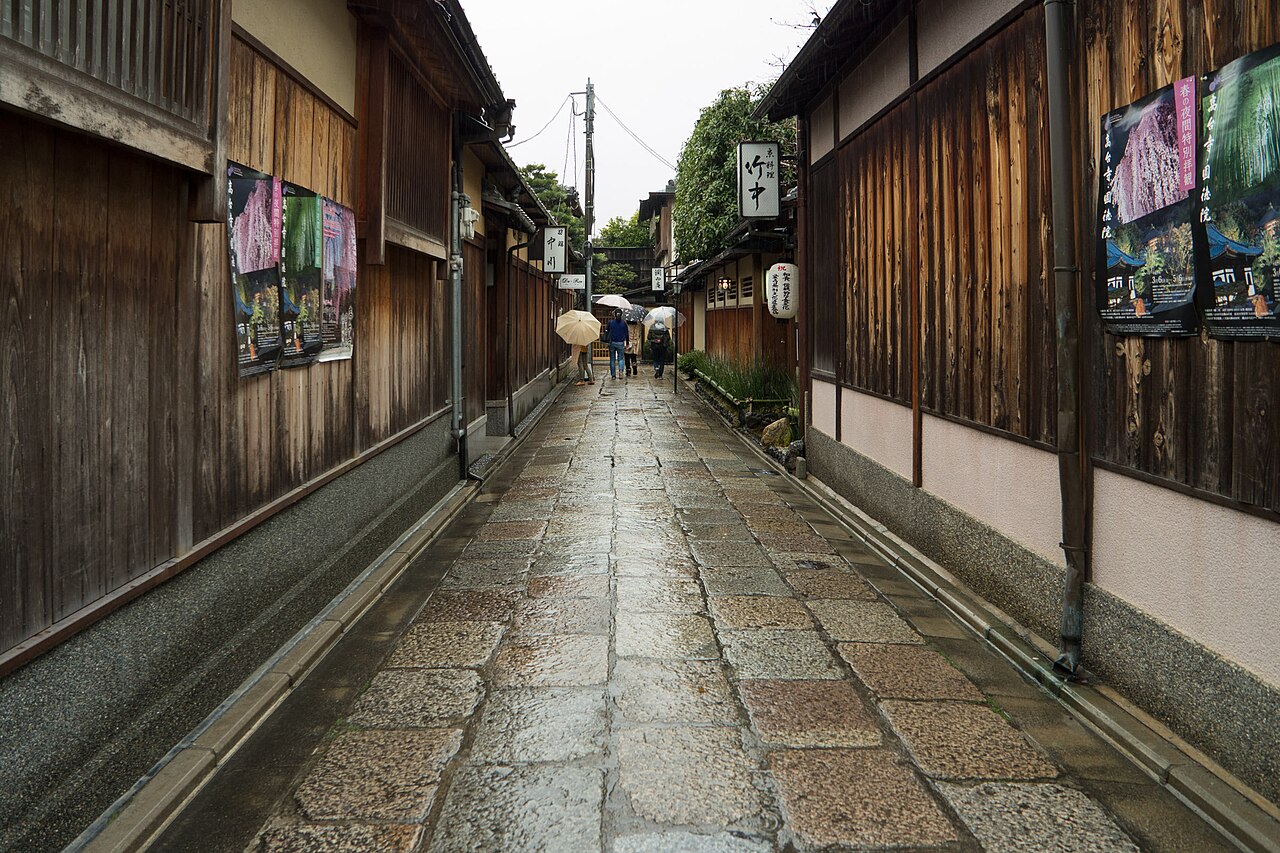
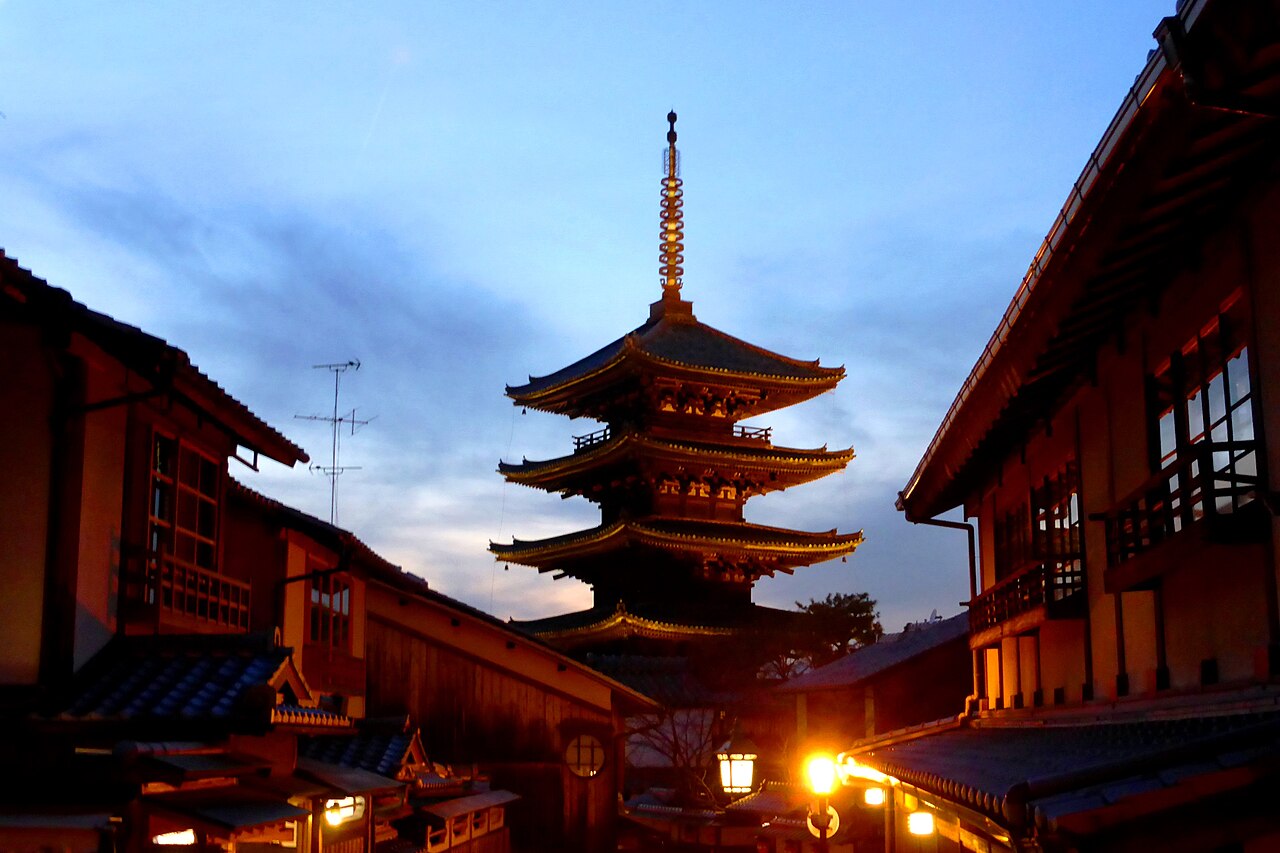
Stopping to eat or drink rounds out the walk. Noan is a shop that serves Japanese sweets and tea. Hashiba serves home-made Kyoto fresh yuba dishes with a view of the Yasaka pagoda, and Yume Coffee serves siphon coffee in cups.
Visiting Kodaiji's museum adds an exhibition to the walk. It is hosting a special exhibition, running into late January, of the Daizuigu Bosatsu, a Bodhisattva statue. Hideyoshi is believed to have acquired the statue as a child and to have carried it with him whenever he went into battle as a samurai. The exhibits show the statue with its attendants Bishamonten and Kichijoten. For an overnight visit, see places to stay in Kyoto.
Getting to Kodaiji: Walking Times, Hours and Fees
New to rural buses and one-man trains? See how to ride them, step by step.
Details below follow the official guides.
| Item | Details |
|---|---|
| Kodaiji hours | nine in the morning to five-thirty in the evening, last entry at five |
| Autumn night special viewing | October twenty-three to December thirteen, twenty twenty-six; lights on at five in the evening, last entry nine-thirty, gate closes at ten |
| Kodaiji admission | adults eight hundred yen, junior high and high school students four hundred yen |
| Entokuin hours and admission | ten in the morning to five in the afternoon last entry, gate closes at five-thirty; adults five hundred yen, junior high and high school students two hundred yen |
| Combined discount entry | Kodaiji and Entokuin twelve hundred yen |
| City bus | route two-zero-six from Kyoto Station to the Higashiyama Yasui stop, then about seven minutes on foot heading east; route two-zero-seven about five minutes from Keihan Gion-Shijo Station |
| Entokuin monthly service | Daikokuten service on the third of each month, at eleven in the morning and two in the afternoon; payment is cash only |
For Hanamikoji, the Shirakawa Canal, Yasaka Shrine and Kenninji, see the Gion day trip. For the stage and the slopes of Sannenzaka and Ninenzaka, see Kiyomizu-dera.
Thinking of staying overnight?
Compare places to stay near Kyoto →
Disclosure: This post may contain affiliate links. If you book through them, we may earn a commission at no extra cost to you.