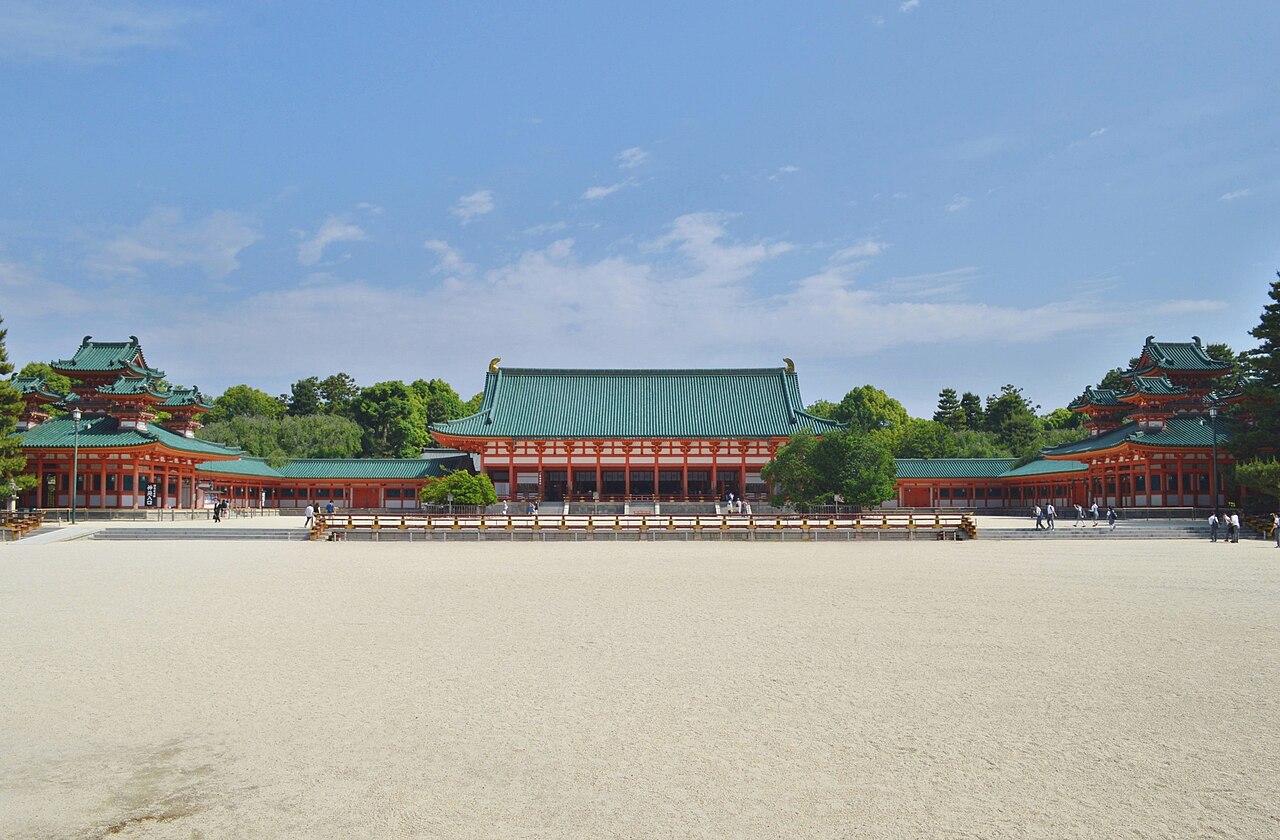
Visitors to Heian Shrine pass through the vermilion-lacquered Otenmon and walk toward the Daigokuden, among buildings that reproduce the Chodoin, the main government hall of Heian-kyo, at a reduced scale. Hanging lanterns line the corridors between the hall and the gate, and the Shinen garden, designated for its scenic beauty, has flowers that change with the seasons. Because the lacquered gate, the hall and a garden of Meiji Period design belong to the same shrine, a visit takes in buildings and planting together.
Through the Otenmon: the Daigokuden Courtyard, Corridors and Lanterns
Walking from the Otenmon to the Daigokuden (outer hall of worship), then along the corridors, follows the layout in order. The buildings reproduce the Chodoin of Heian-kyo at about five-eighths scale. The gate and the hall are Important Cultural Properties, as are the Soryuro and Byakkoro towers. The Ryubidan is raised a step in front of the towers' south side.
Following the corridors from the Daigokuden to the Otenmon, visitors pass the hanging lanterns hung along them. The openings of the lanterns are decorated with the four guardian deities. The same lanterns hang at the Kagura-den and the Gaku-den, and both of those buildings are National Registered Cultural Properties.
Stopping at the temizuya for purification comes before going to the front of the main hall. The center of the approach is regarded as the path of the deity, and visitors are asked to refrain from walking in the center. At the front, visitors remove hats and straighten their posture. Worship there follows two bows, two claps and one bow.
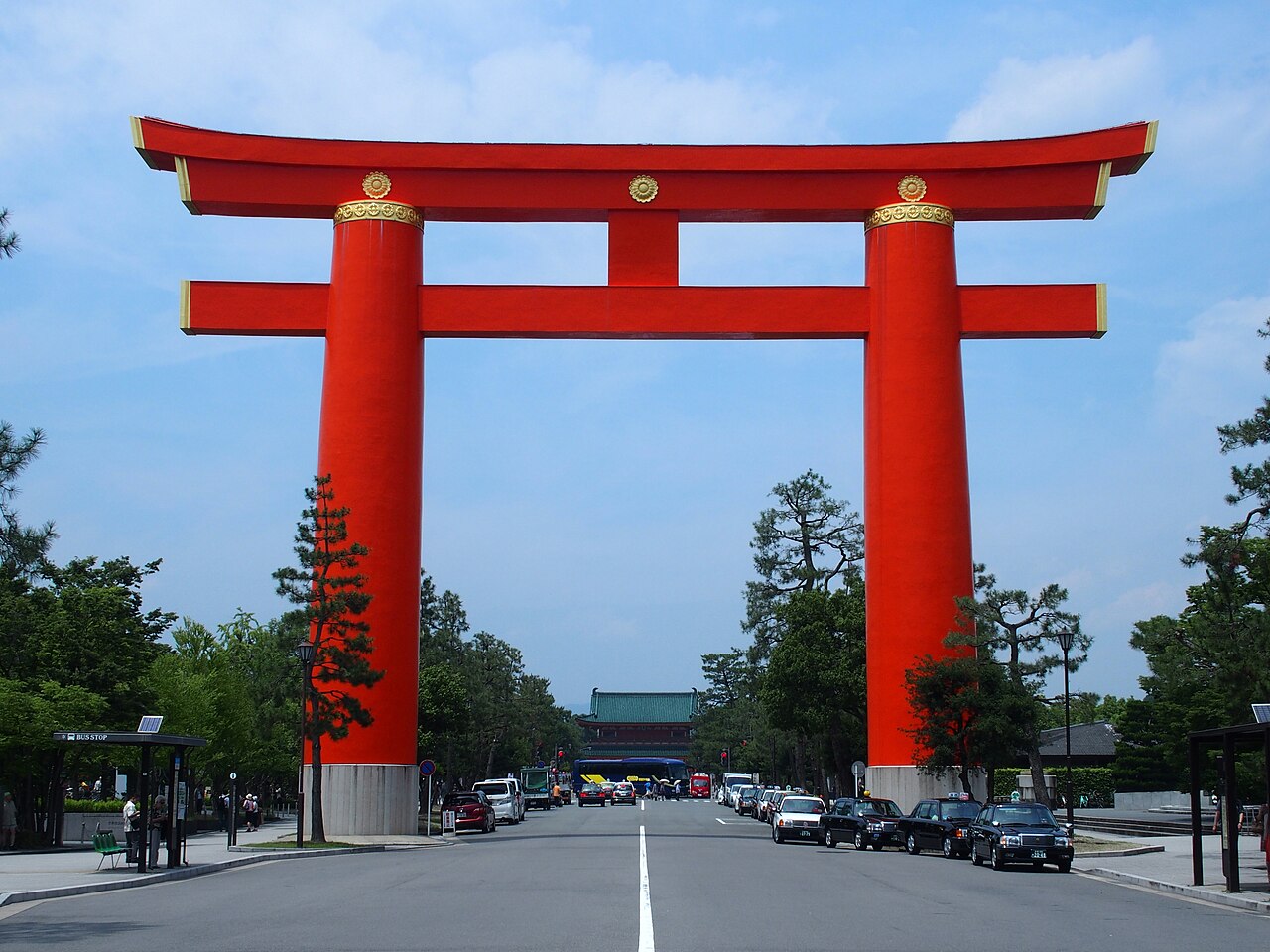
Standing before the shrine, visitors face a place dedicated to Emperor Kammu and Emperor Komei, the earliest and the final emperors to rule Kyoto. The shrine was built in eighteen ninety-five to mark the eleven-hundredth anniversary of the founding of Heian-kyo (Kyoto). Its buildings are a partial replica of the Imperial Palace of the Heian Period.
Looking at the goshuin books, visitors find a design of the guardian deities that protect the capital. Other books are embroidered with the cherry tree of Sakon and the orange tree of Ukon, or with a figure dancing the Heian no Mai. Wishes are written on ema and placed on the ema rack.
Into the Shinen Garden: Stones, Lanterns and Pond Water
Visitors drawn to ponds, stonework and lanterns can stop at the Taiheikaku, the Garyukyo stepping stones and the lanterns. The Shinen garden, a National Site of Scenic Beauty, represents Meiji Period garden design, and its pond water comes from the Biwako Canal. A Kyoto City tram kept in static preservation in the South Shinen is an Important Cultural Property.
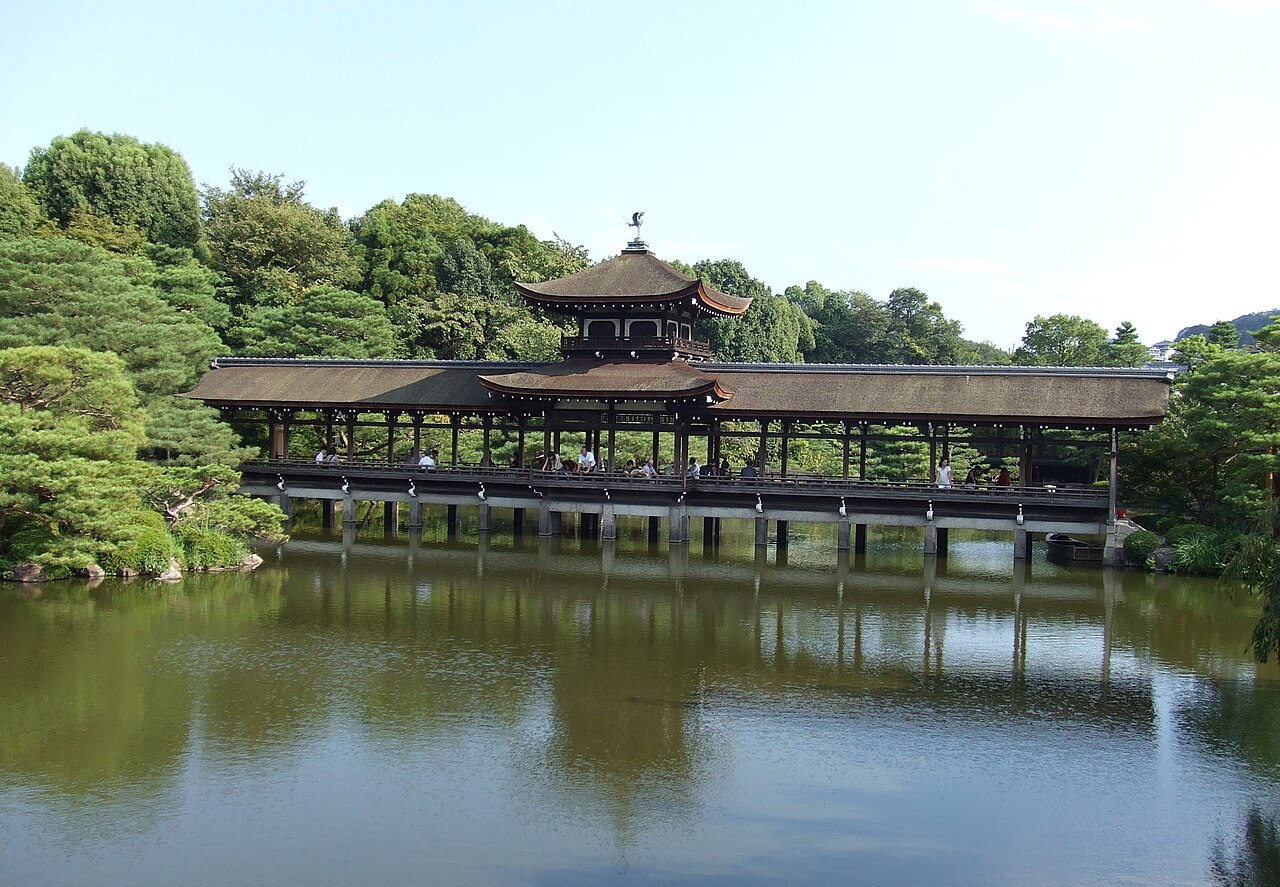
Resting at the Taiheikaku, a bridge pavilion, visitors see the surroundings blend into the pond and a scene with depth spread out. The pavilion stands on the shore of Seiho Pond, as does the Shobikan. Beyond both buildings, a broad view takes in Mount Kacho as borrowed scenery.
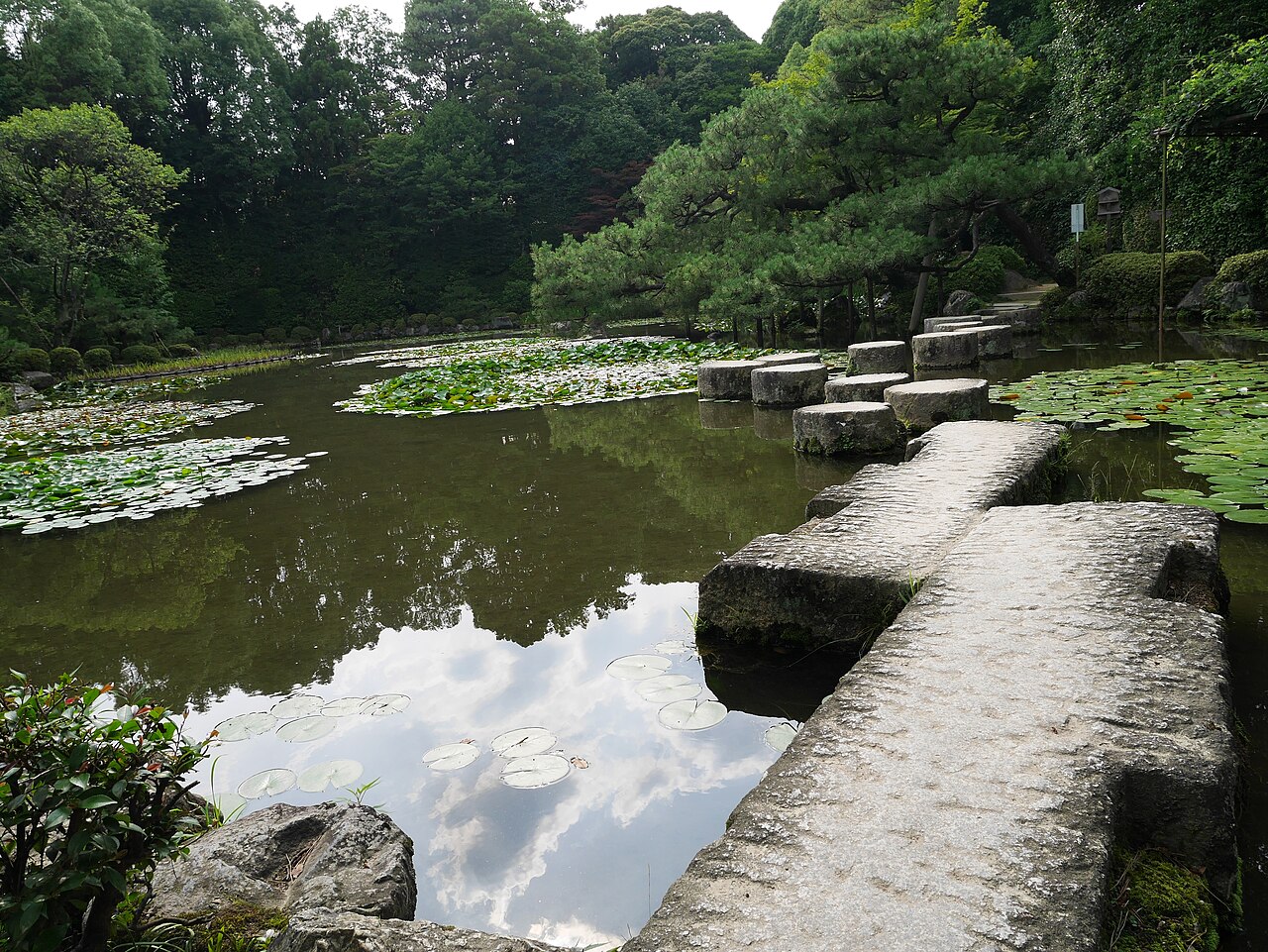
Following the Garyukyo stepping stones leads to an island in the pond, with kakitsubata irises growing in clusters around it. The Garyukyo uses bridge piers from the Sanjo Ohashi and Gojo Ohashi built by Toyotomi Hideyoshi in the Tensho era. The crane and tortoise islands, topped with pines, float in the pond and represent Mount Horai.
Following the stream leads in gentle curves from Soryu Pond in the Middle Shinen to Byakko Pond in the West Shinen. A stone set in the stream of the East Shinen has a stripe pattern that matches the sound of the stream. In the West Shinen, a set of stones is said to symbolize the figures of the Buddhist triad.
Looking at the lanterns shows the central part where the lamp is set and an opening facing the front. A lantern in the South Shinen is turned to show well from a garden pavilion. The Middle Shinen has a multi-tiered stone tower with openings on every side. Other lanterns are of a type also called Kirishitan lanterns, though accounts differ.
The Garden Through the Seasons: Autumn Leaves, Cherry Blossoms and Snow
Timing a visit means picking a garden: Middle Shinen for autumn leaves, South Shinen for cherry blossoms, East Shinen for snow. Middle Shinen leaves are in season from mid-November to late November. In cool morning air, trees begin turning red and golden from the leaf tips. Leaves stirred by wind catch the light, then drop onto the water in small ripples.
Passing through the entrance gate of the South Shinen, visitors see red weeping cherry trees covering the sky before anything else. The double-flowered weeping cherry trees are in their viewing season in spring. The Heian-no-Sono in the same garden is planted with plants named in Heian-period books, with an introductory passage.
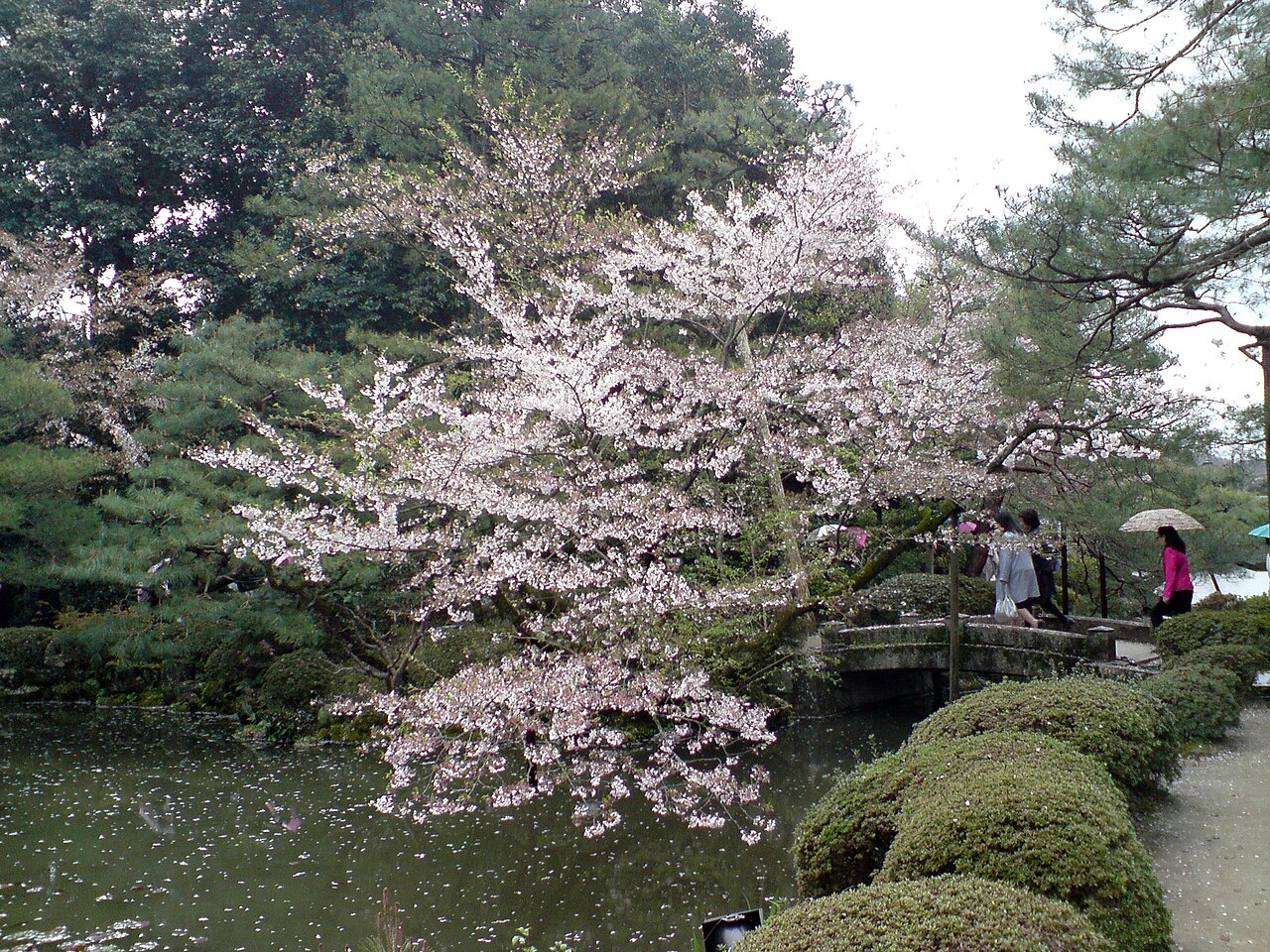
Visiting from early May to late May shows Soryu Pond colored by kakitsubata irises. In early June, with hanashobu irises at their peak, the Yatsuhashi bridge spans Byakko Pond. The East Shinen has snow scenery in winter. Because the garden's flowers change with the four seasons, a visit can be planned around the city, and places to stay in Kyoto are listed for the area.
The Jidai Matsuri Procession: Flutes, Drums and Calls
Planning around the Jidai Matsuri suits visitors who fix their dates ahead, because it is held every year on October twenty-second. The festival is postponed in case of rain. The procession is led by the sound of flutes and drums.
Watching the procession pass, visitors see gagaku court musicians. The Muromachi section has an umbrella at its center, festival musicians and dancers. At the head, spear bearers, umbrella bearers and box bearers give calls and perform movements. Umbrellas cannot be used during the procession even if rain begins, and visitors are asked to bring rain capes.
Getting to Heian Shrine, Hours and Fees
New to rural buses and one-man trains? See how to ride them, step by step.
The reception place for prayers is on the left side of the Daigokuden, the building in front.
| Item | Details (as listed) |
|---|---|
| From Higashiyama Station on the Tozai Subway Line, exit one | about a ten-minute walk |
| Keihan Line, Sanjo Station or Jingu-Marutamachi Station | about a fifteen-minute walk |
| JR Kyoto Station | about thirty minutes by city bus on routes five or one hundred, then a five-minute walk north |
| Shrine grounds | open at six in the morning; close at six in the evening (March to September), half past five (October), five (November to February) |
| Shinen garden | opens at half past eight in the morning and closes with the grounds; last entry is thirty minutes before closing |
| Shinen garden admission | six hundred yen for adults; three hundred yen for children |
| Prayer | received from nine in the morning to four in the afternoon; takes about twenty minutes; no reservation needed, but a wait is possible |
Thinking of staying overnight?
Compare places to stay near Kyoto →
Disclosure: This post may contain affiliate links. If you book through them, we may earn a commission at no extra cost to you.