Hiroshima Peace Memorial Park lies at the uppermost part of the delta where the former Ota River, the Honkawa, branches from the Motoyasu River. Thirty-five monuments and memorials stand in the park, among them the Cenotaph for the A-bomb Victims, the Atomic Bomb Dome and the Children's Peace Monument. Any visitor can ring the Peace Bell.
Looking at the Atomic Bomb Dome and Standing at the Cenotaph
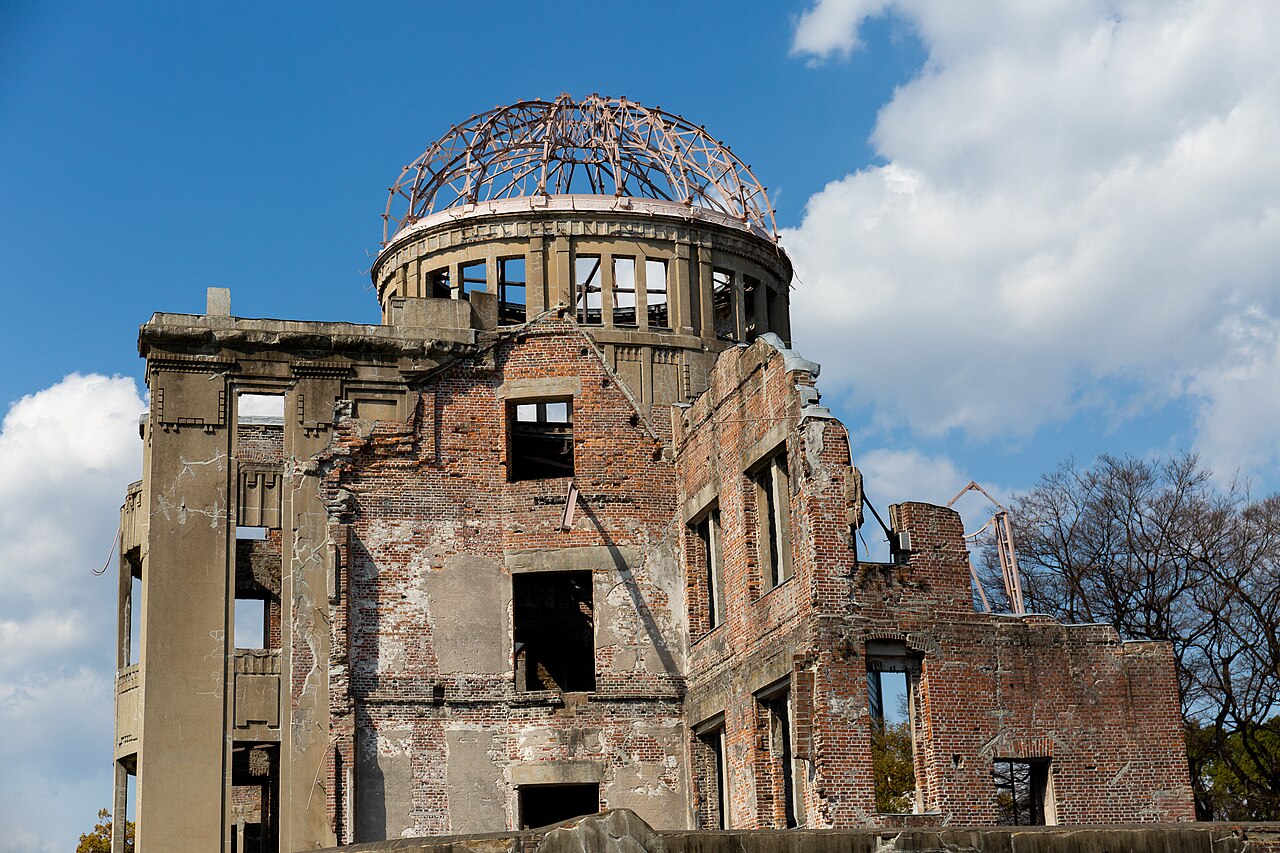
The Atomic Bomb Dome stands almost as it was when bombed. The original, designed by a Czech architect as the Hiroshima Prefectural Product Exhibition Hall, was a three-storey brick building with a five-storey stair hall and an elliptical dome on top. After the war, citizens named the remains for the shape of the steel frame at the top.
The Dome was entered on the World Heritage List.
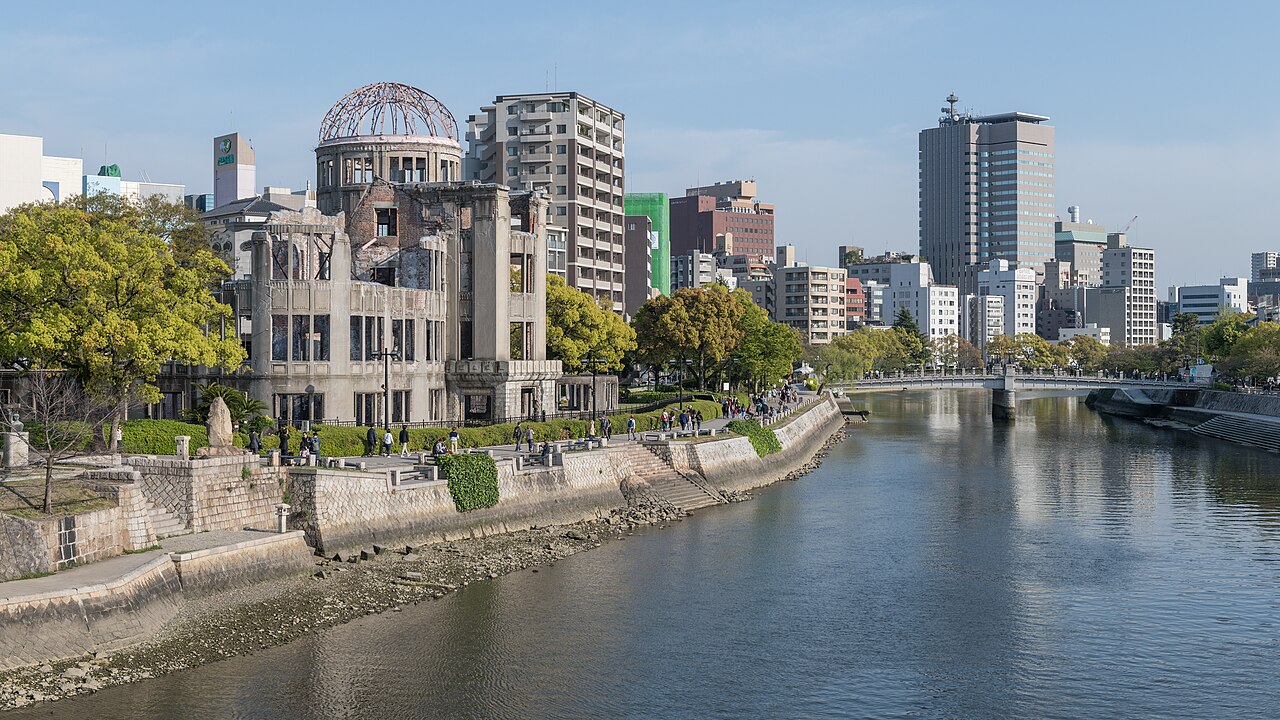
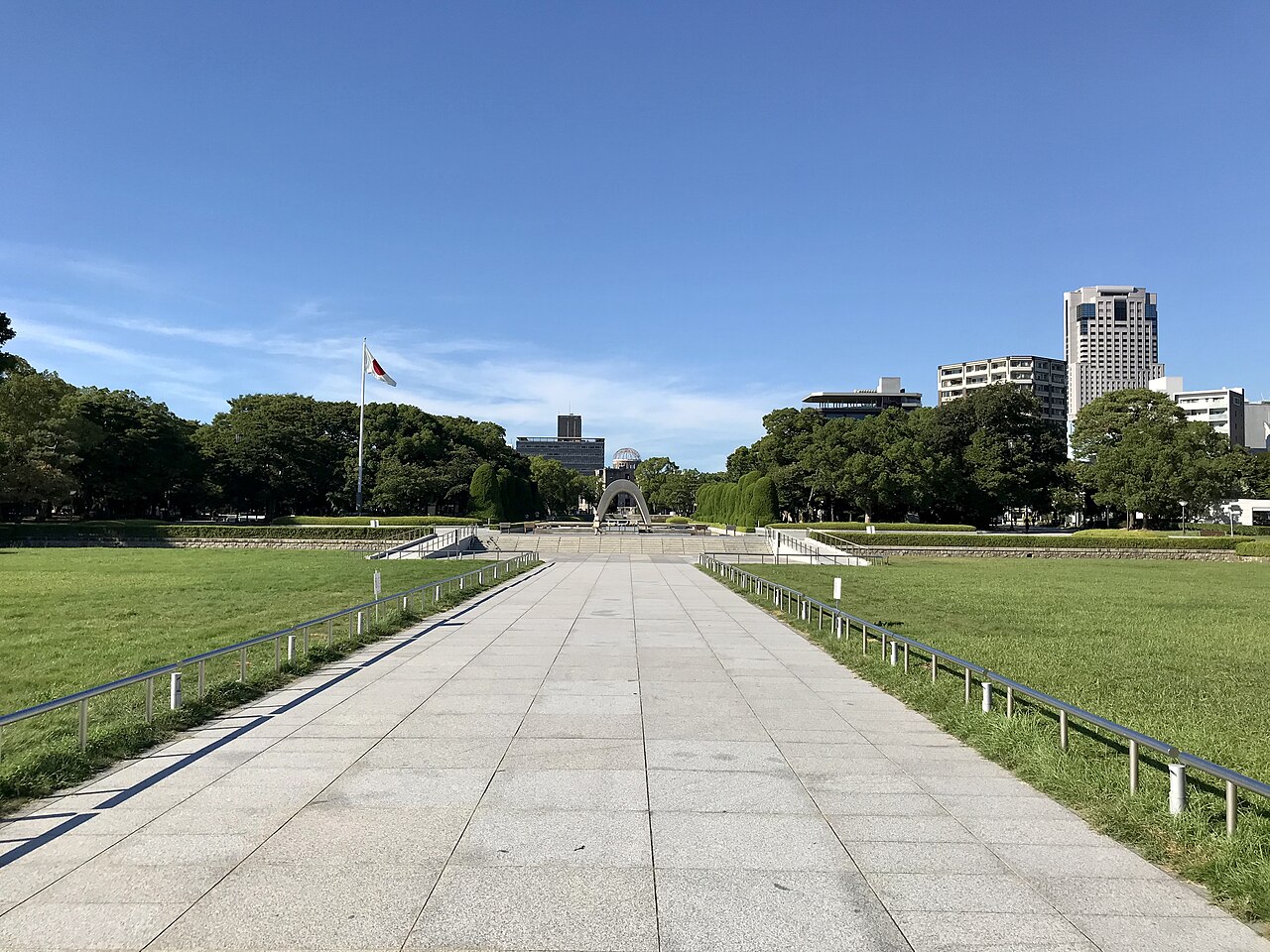
A register of the victims' names is kept in the stone chamber at the centre of the Cenotaph for the A-bomb Victims. Its inscription is words by which all people pray for the repose of the victims and vow not to repeat the error of war. The Pool of Peace is designed so that the cenotaph appears to rise up out of it.
Ringing the Peace Bell and Offering Paper Cranes
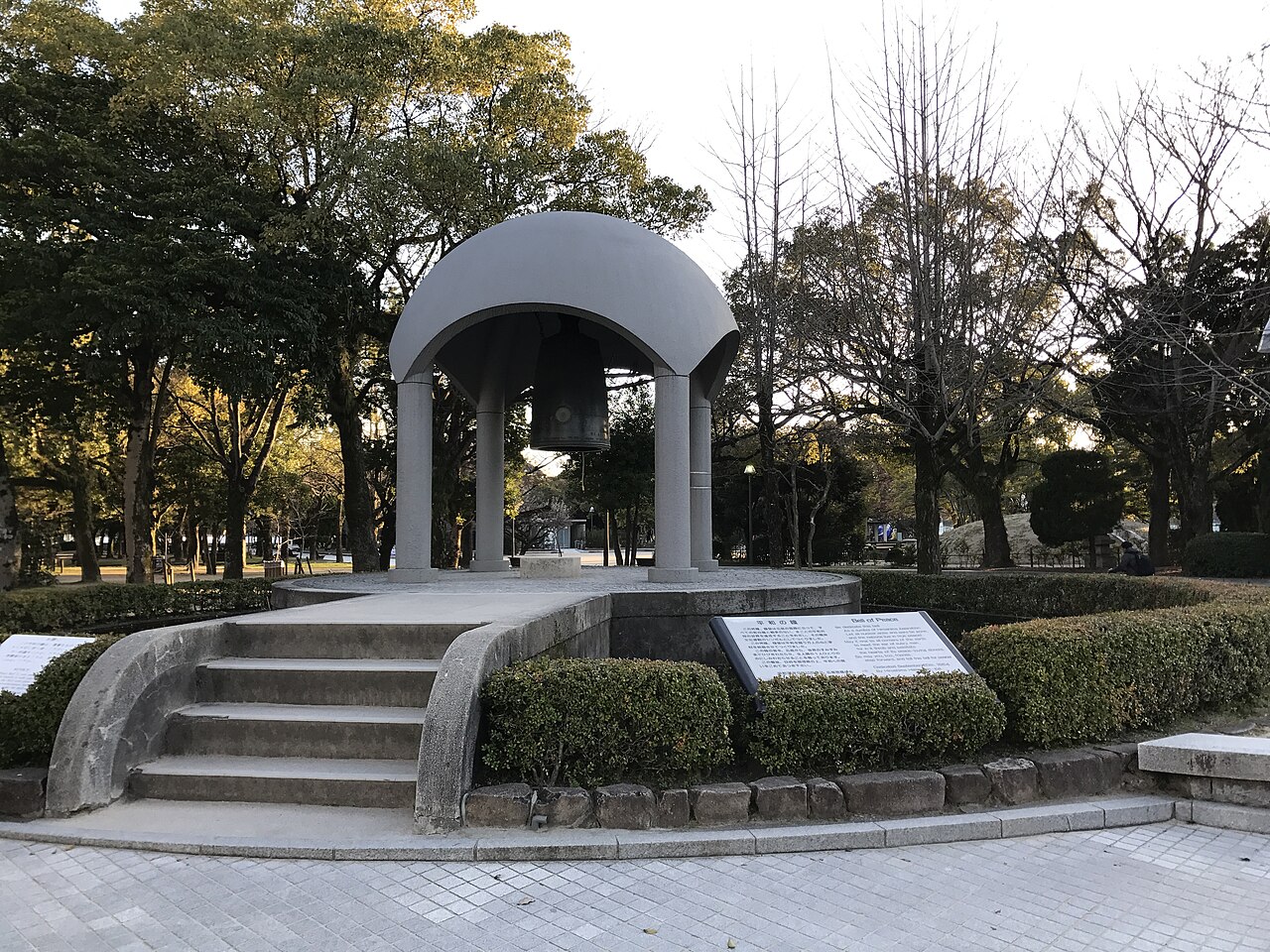
A world map without borders covers the whole Peace Bell, and an atomic symbol marks the part that strikes it. The people who visit strike the bell themselves, and its sound, rung in the wish for peace, was chosen by the Ministry of the Environment as one of the hundred soundscapes of Japan to be preserved.
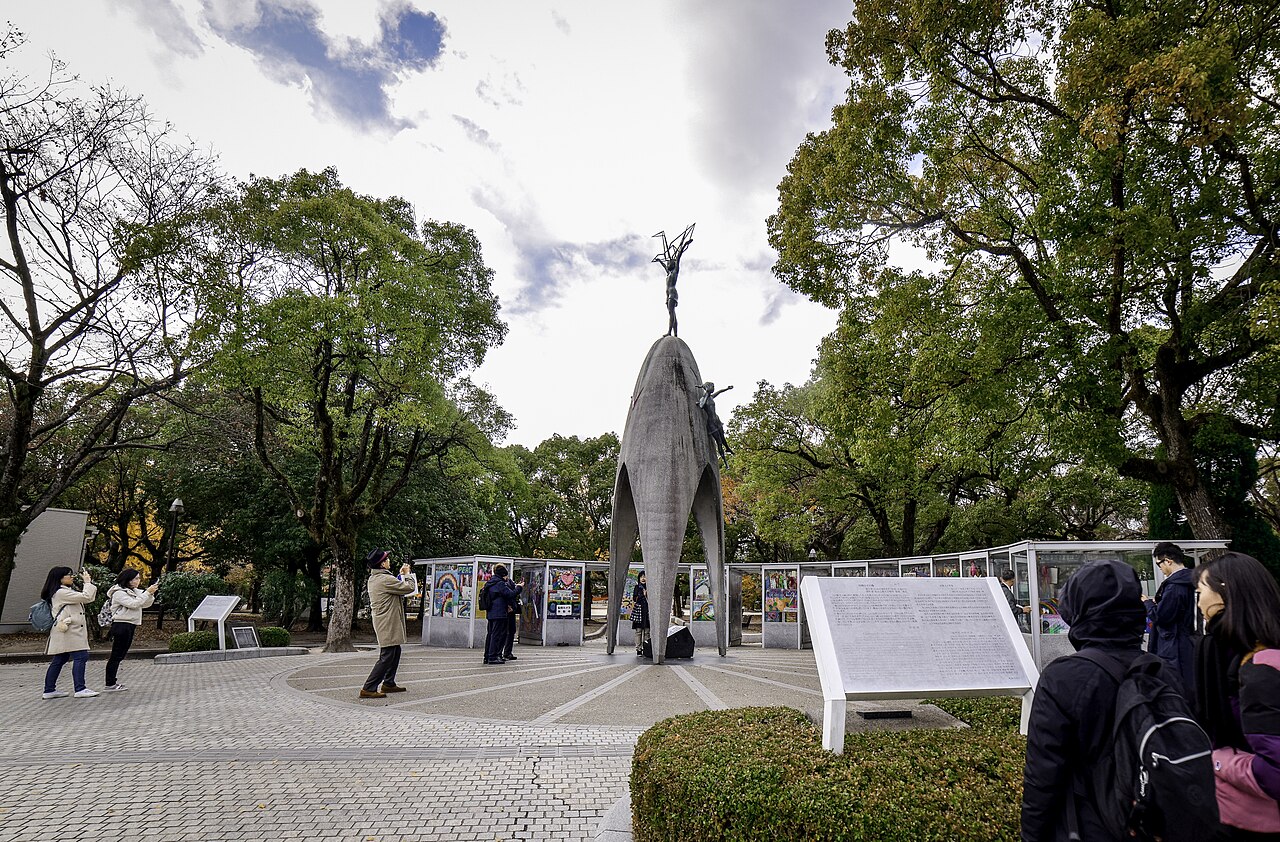
The Children's Peace Monument is nine metres high, and a bronze statue of a girl holding up a golden paper crane stands at its top. It was built after classmates of Sadako Sasaki, who died of leukemia, called for donations, in memory of the many children who died in the atomic bombing.
Inside the tower hangs a bell modelled on a dotaku bronze bell, with a golden crane hung below it, and it sounds like a wind chime. A paper crane booth around the monument lets visitors offer paper cranes.
Resting at the Rest House, the Piano and the Basement
The Rest House is described as the only building that retains traces of its pre-bombing appearance. Built as a kimono store in reinforced concrete, it is a retro building in a pale orange colour, and from the windows of its second-floor cafe hall the Motoyasu River and the Atomic Bomb Dome can be seen.
The basement level can be visited; it received the blast of the atomic bomb without collapsing and keeps its form. The Piano Cafe displays Akiko's piano, an American-made upright that belonged to a schoolgirl who died from the atomic bombing in Hiroshima, and scars from glass fragments remain on its side.
The cafe offers coffee, café latte, ice cream and sweets.
Touring the Peace Memorial Museum With Audio Guides, Volunteers and Survivors' Talks
Audio guides are lent to visitors who tour the permanent exhibition of the Hiroshima Peace Memorial Museum, and the guide explains the atomic bomb materials in detail. Volunteers explain the exhibits at the museum and the cenotaphs and monuments in and around the park.
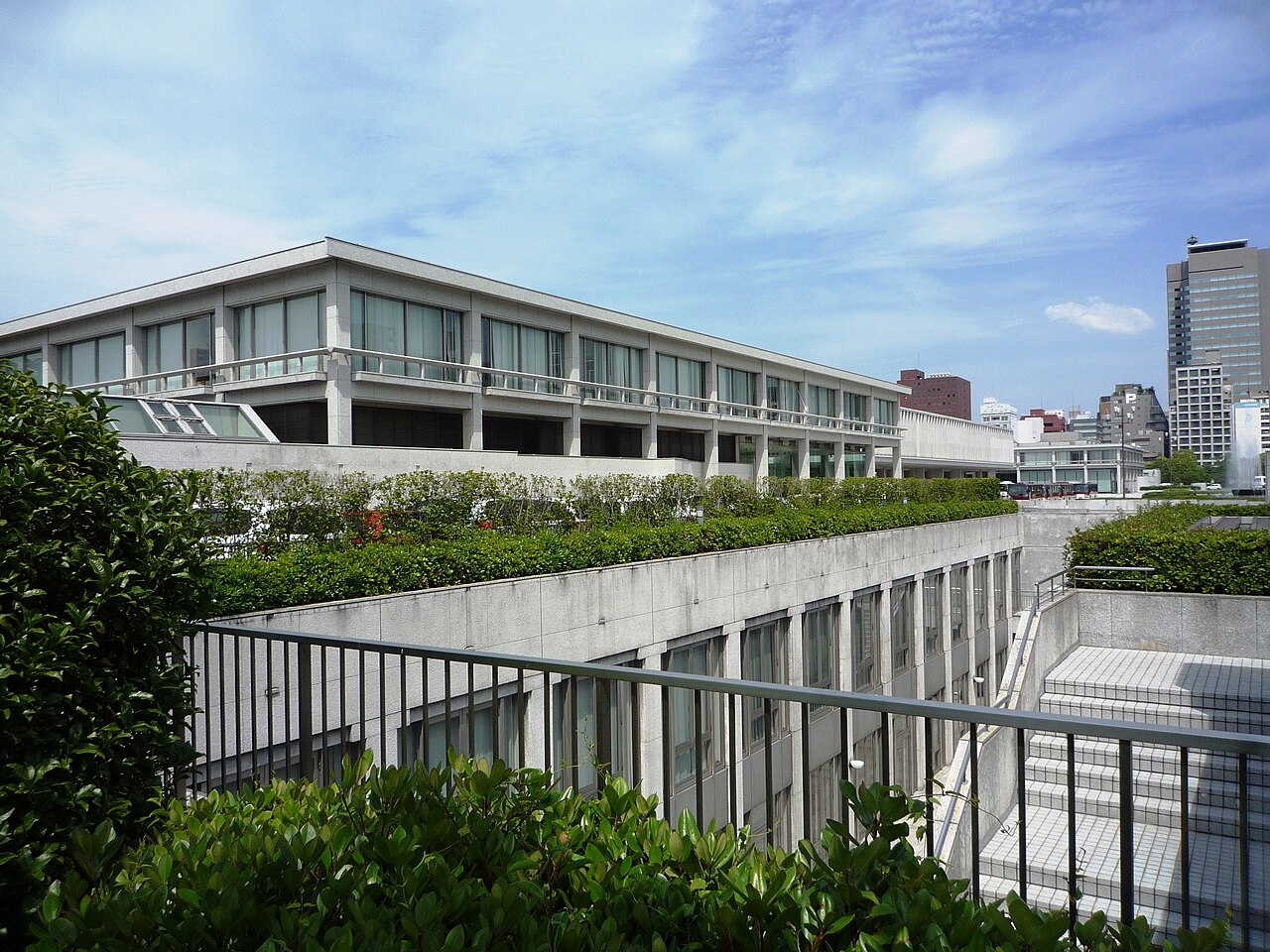
In the East Building, talks by successors who hand down survivors' experiences, and by family successors, can be heard three times a day in Japanese and once a day in English, with no advance booking and no charge.
The Peace Memorial Ceremony in the Park and Lanterns on the Motoyasu River
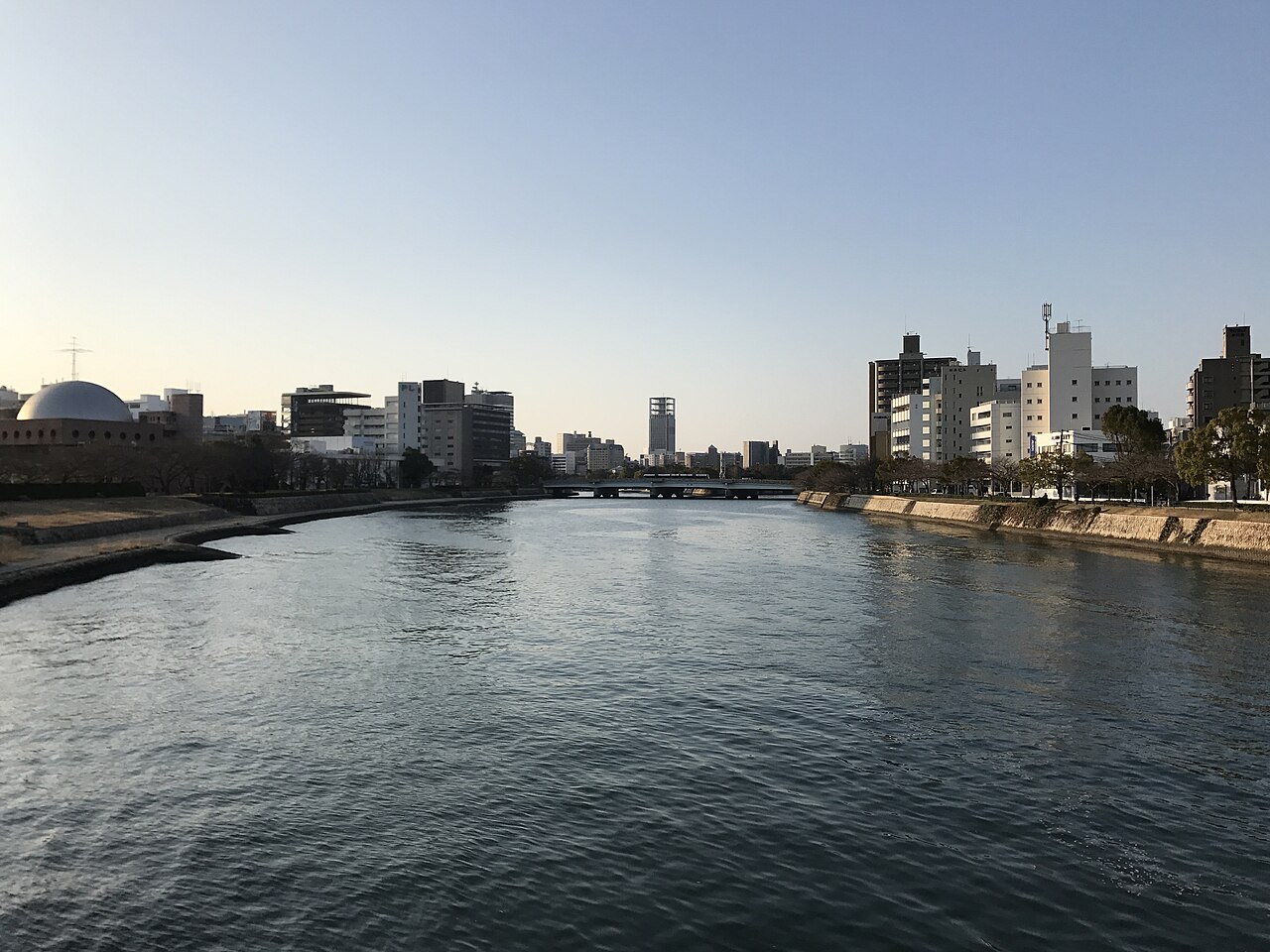
On the sixth of August, the Peace Memorial Ceremony is held in front of the cenotaph, attended by many Hiroshima citizens including bereaved families, to console the spirits of the victims and pray for lasting world peace. At the moment the bomb was dropped, the peace bell and a siren are sounded and a minute of silence is observed.
The lantern floating in the evening closes the day's peace events. At the Peace Message lantern floating, participants apply at the reception tent and write a message for peace on a dedicated lantern paper.
Participants line up toward the lantern-floating zone opposite the Atomic Bomb Dome, receive the lantern from staff, have it lit, go down to the embankment and float it on the river. At peak times the line can take about one hour.
Strolling Shukkeien Garden Through the Seasons
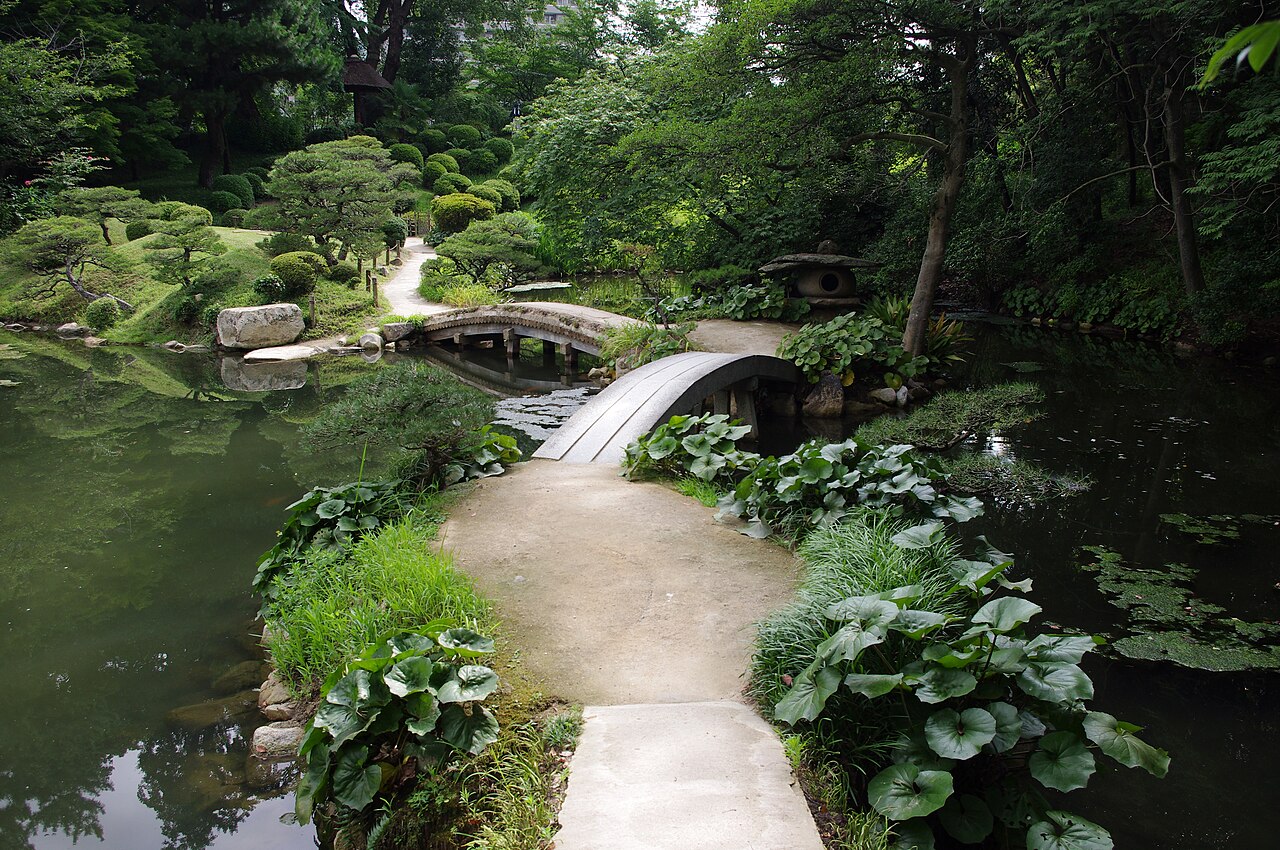
Shukkeien is a green garden in the central part of Hiroshima city, described on its own page as a place that makes visitors forget the city's bustle. From one peak the whole garden can be looked over.
The seasonal flowers are cherry and peach in spring and plum and camellia in winter, with fresh green trees in summer and autumn leaves in autumn. The garden holds memorial monuments, a large ginkgo tree that survived the atomic bombing, and a bridge.
Eating Hiroshima Okonomiyaki at the Griddle
Okonomiyaki is described as a symbol of postwar reconstruction and Hiroshima's soul food, and its name means to put in what one likes and eat it.
Hiroshima okonomiyaki is made on a large iron griddle, where the batter is spread thin in a circle and cooked, topped with plenty of vegetables including cabbage, bean sprouts and green onions, and steamed. Soba noodles are layered on top and cooked, then okonomiyaki sauce and green laver finish it.
Sitting in front of the iron griddle at a restaurant lets visitors watch the cooking, and the standard order brings pork, egg and soba noodles. People eat from the hot plate with a spatula or chopsticks, or take it to a plate first, each in their own way.
Getting to Hiroshima Peace Memorial Park
New to rural buses and one-man trains? See how to ride them, step by step.
| Route | Detail |
|---|---|
| Streetcar from JR Hiroshima Station | About twenty-five minutes |
| Sightseeing loop bus from JR Hiroshima Station | About seventeen minutes |
| Route bus from JR Hiroshima Station | About twenty minutes |
| Taxi from JR Hiroshima Station | About fifteen minutes |
| Walk from the Atomic Bomb Dome streetcar stop | About ten minutes |
| Loop bus from the Shukkeien stop to the Atomic Bomb Dome stop | About seven minutes |
| Streetcar fare, flat across all lines | Two hundred forty yen adult, one hundred twenty yen child |
| Parking | No parking lot for general private cars |
For an overnight stay in Hiroshima, browse places to stay in Hiroshima.
Hours and Fees
| Place | Detail |
|---|---|
| Museum, March to July | Seven thirty in the morning to seven in the evening |
| Museum, August | Seven thirty in the morning to eight in the evening; closes at nine in the evening on the fifth and sixth |
| Museum, September to November | Seven thirty in the morning to seven in the evening |
| Museum, December to February | Seven thirty in the morning to six in the evening |
| Museum last admission | Thirty minutes before closing |
| Permanent exhibition rooms, advance reservation | Entering during seven thirty to eight thirty in the morning and the following time slots requires an advance online reservation |
| Museum closed days | The thirtieth and thirty-first of December |
| Museum permanent exhibition, adults (university students and above) | Two hundred yen, or one hundred sixty yen each for groups of thirty or more |
| Peace Message lantern floating | One thousand yen per lantern, applied for at the reception tent |
Fees and hours were checked against official sources between 17 November 2026 and 19 November 2026.
Thinking of staying overnight?
Compare places to stay near Hiroshima →
Disclosure: This post may contain affiliate links. If you book through them, we may earn a commission at no extra cost to you.