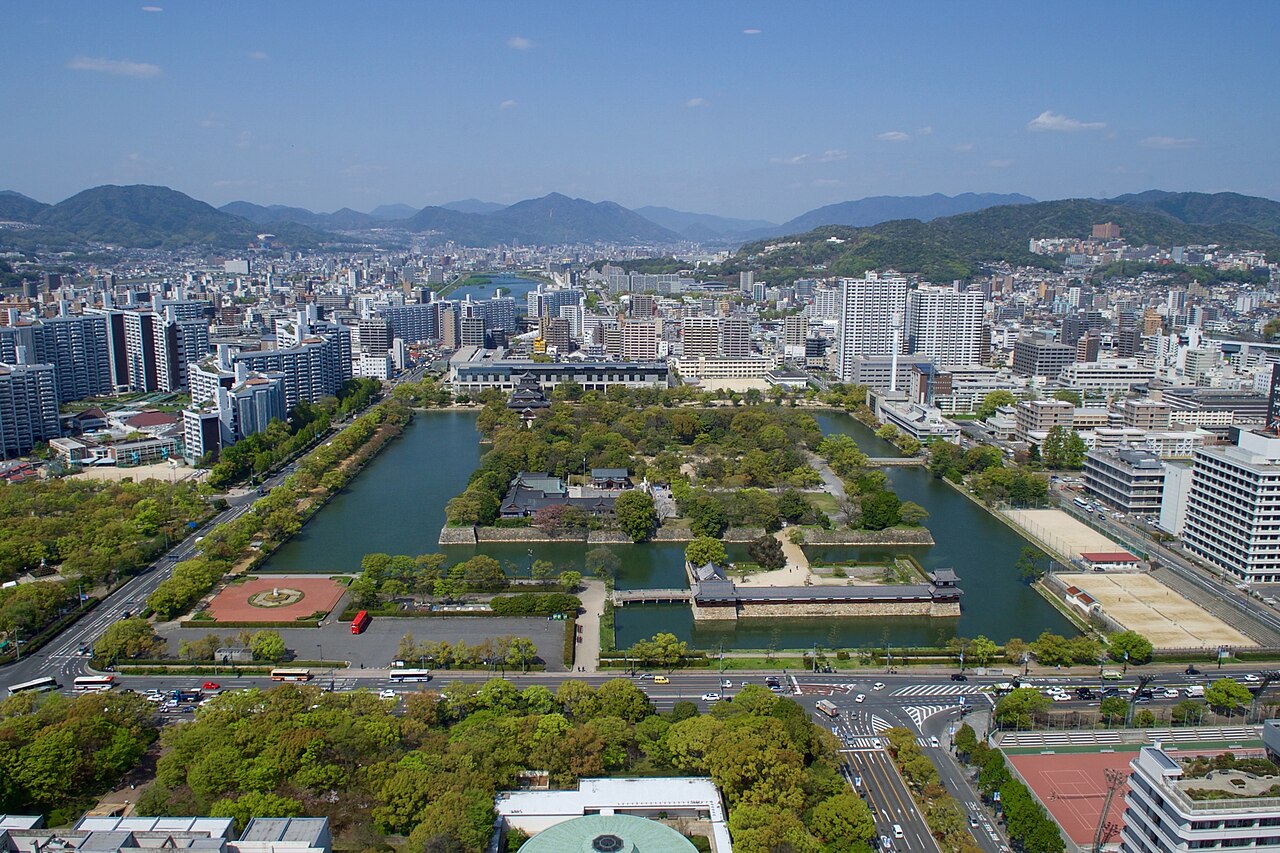
Crossing the Gomon bridge over the inner moat brings visitors to the Omote-gomon gate, the turret gate at the entrance to the Ninomaru of Hiroshima Castle. Inside the gate, the restored Ninomaru buildings have a wooden interior, and visitors take off their shoes to go in. The keep can be seen from outside, and one castle site also holds stone walls with marks on them, trees that survived the atomic bomb, a shrine where prayers are offered and a cruise boat that goes around the moat.
Crossing the Gomon Bridge Into the Ninomaru and Its Wooden Turrets
Taking off shoes at the entrance is the condition for stepping inside the restored buildings of the Ninomaru, so the visit starts outside on the bridge. Visitors cross a timber bridge over the moat and arrive at the Omote-gomon gate. The gate is a turret gate, the type called a yaguramon, and it stands at the entrance to the Ninomaru. On its east side the Ninomaru is linked to the Sannomaru by this bridge.
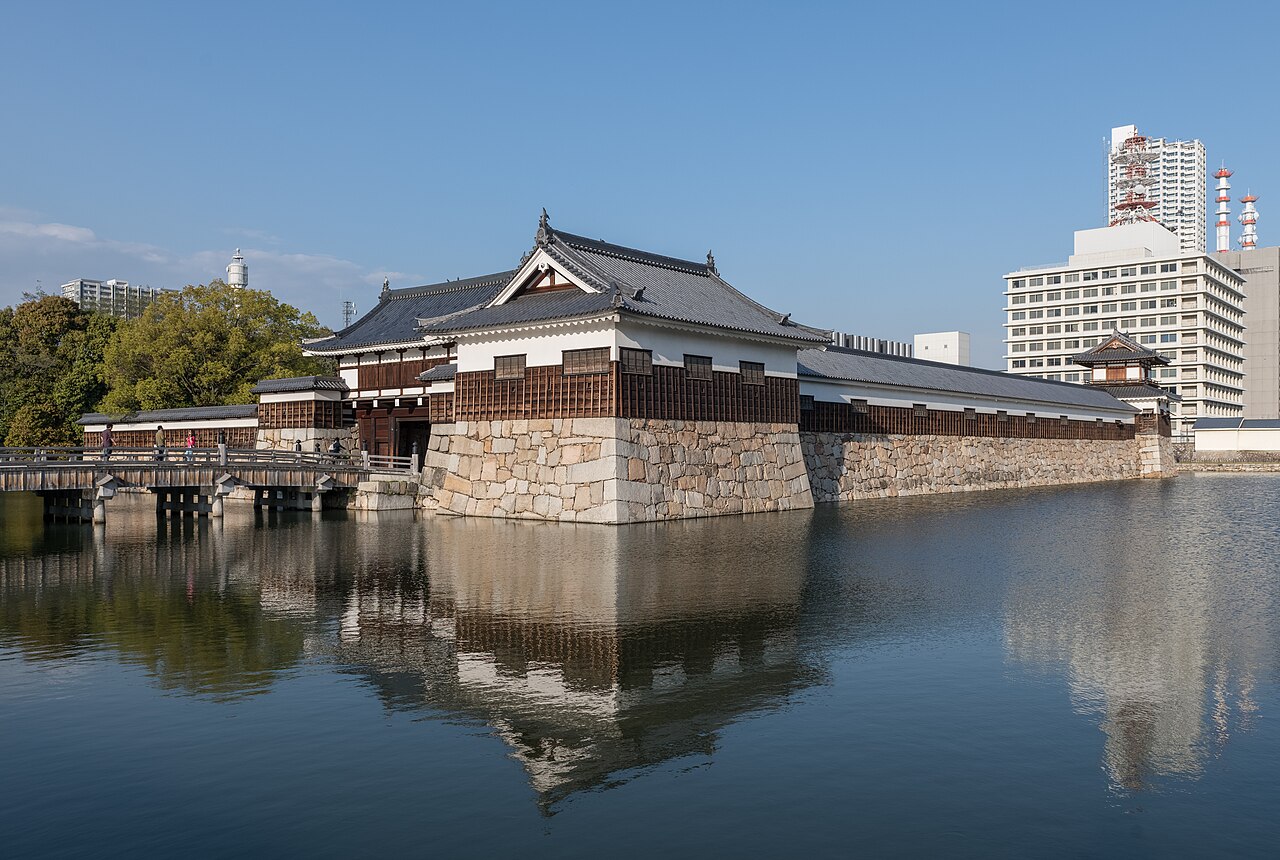
Walking along the Ninomaru, visitors see the Tamon-yagura, which connects the Taiko-yagura and the Hira-yagura. These turrets and the gate are the reconstructed buildings of the Ninomaru. The Taiko-yagura is where a drum announced the time and the opening and closing of the castle gates. The Ninomaru itself is a small section south of the main enclosure, built as an umadashi, an area ringed by a moat that guards an entrance.
Leaving shoes behind is the step before the interior, because visitors are asked to take them off to protect the buildings, which are made of wood. Shoe lockers are installed at the entrance, and removed shoes go into them. Next comes the interior of the reconstructed gate and turrets.
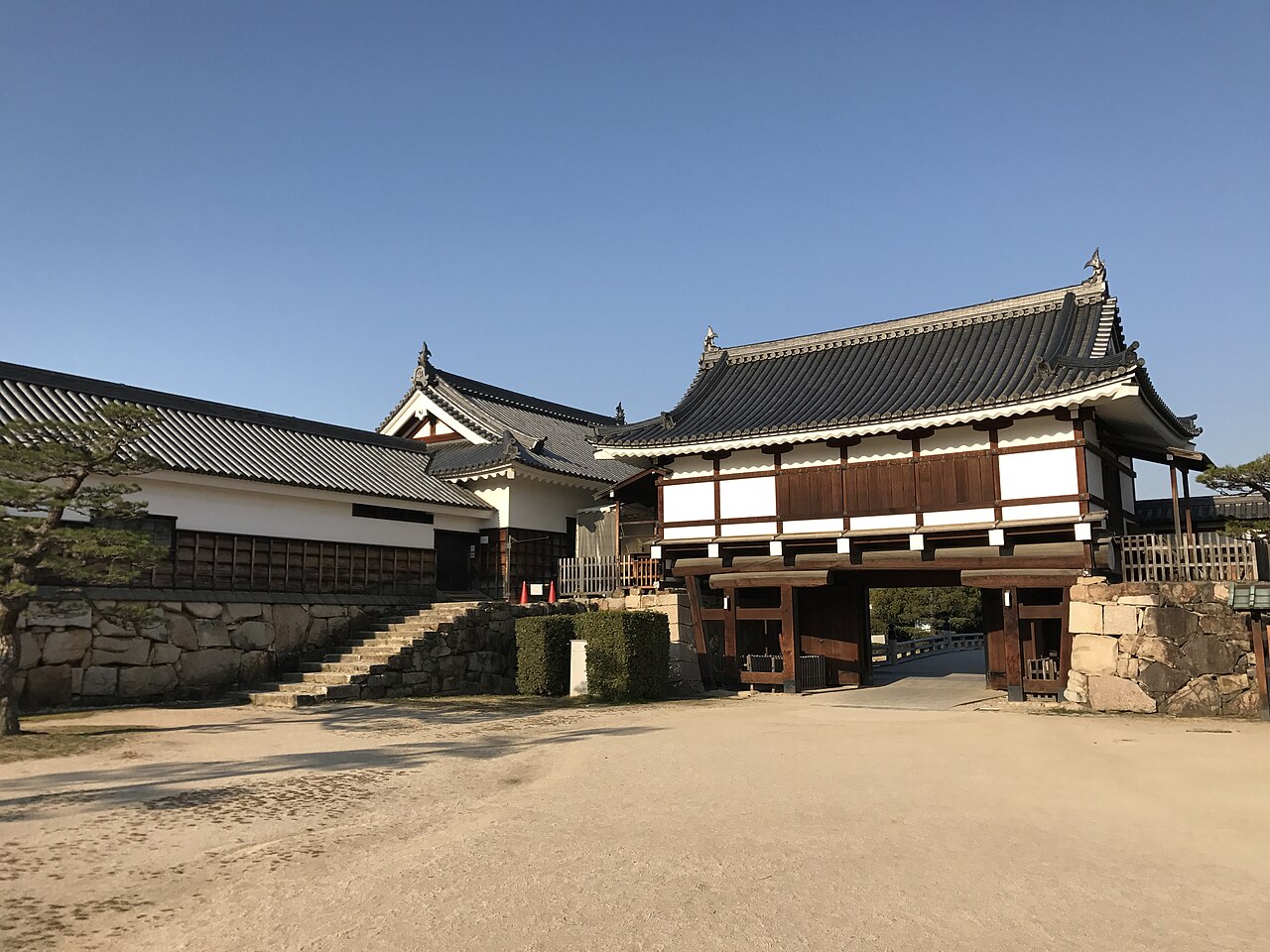
Walking on from the Ninomaru, visitors cross an earth bridge to reach the Honmaru. The layout of the castle fixes the order, which runs over the bridge, through the gate and the Ninomaru, and then across the earth bridge. The Ninomaru works as the outwork that protects the entrance gate of the Honmaru.
Walking the Honmaru Grounds to the Keep Exterior, Stone Walls and Stamp
Walking the Honmaru leads to a keep that is seen from outside, so the stops along the way are the engraved marks on the stone walls and the stamp at the keep entrance. Visitors walk in over an earth bridge, on the approach that ran through the gates of the Honmaru on its south and east sides. Those gates were laid out with a square space inside and outside them. The inner moat surrounds the Honmaru.
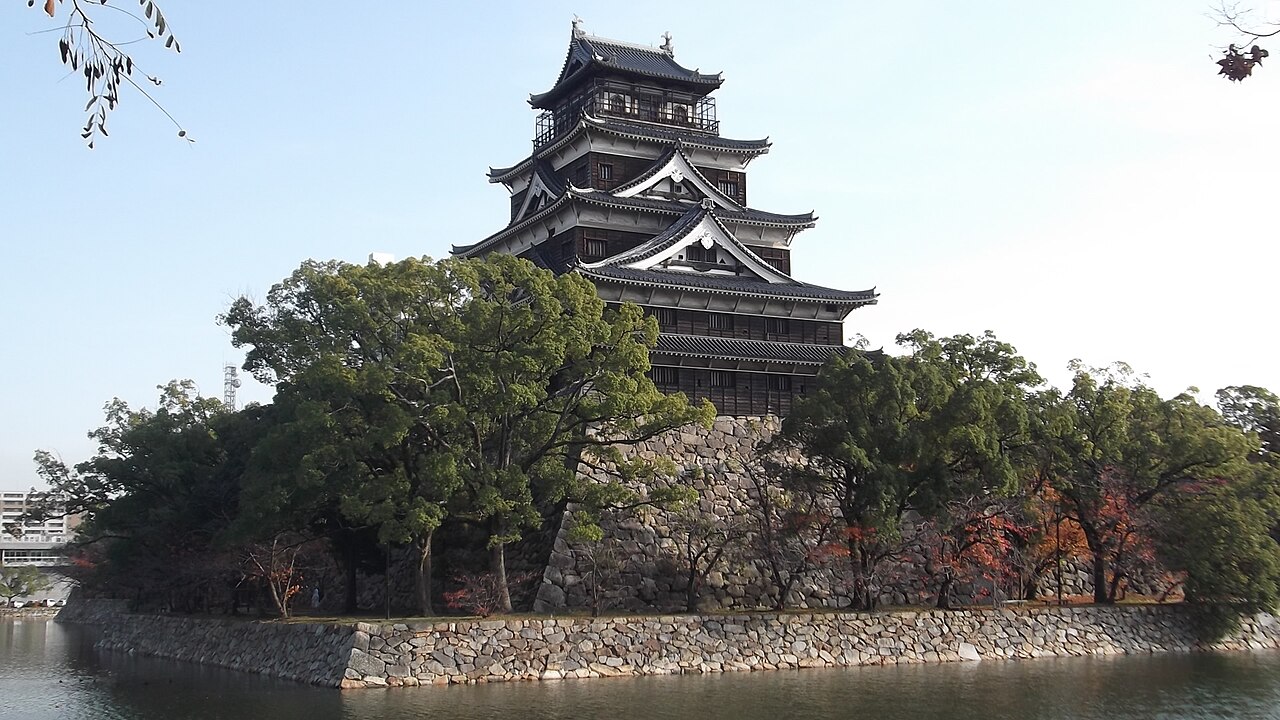
Looking at the walls of stone, visitors find various marks on them, called engraved marks. The walls are thought to have been built in the period when Fukushima Masanori was lord. Next comes the keep, whose building remains and whose exterior can be viewed. It stands at the northwest corner of the upper level of the Honmaru, the level that held the lord's residence.
Finding the stamp for Japan's top hundred castles means walking to the keep entrance. The stamp is set outdoors there, in the passage in front of the entrance. A puzzle game set in the Hiroshima Castle area runs from April to the following March.
Finding the Atomic-Bombed Trees by the Ninomaru and the Daihonei Site
Looking for the atomic-bombed trees means heading to the eucalyptus and the Maruba-yanagi (giant pussy willow) at the Ninomaru site and to the Kurogane holly in front of the Daihonei site. The eucalyptus was exposed to the atomic bombing, and no other eucalyptus among the bombed trees survives. It broke midway up its trunk in a typhoon, sprouted again and has continued to grow. The tree is greatly deformed and has many dead branches.
Staying on the Ninomaru site, visitors find the Maruba-yanagi. Its trunk is hollow, a result of bomb damage. The tree is recovering as a result of measures taken to restore its vigor. No other Maruba-yanagi survives among the trees exposed to the bombing.
Looking next for the Kurogane holly, visitors find the trees standing in front of the place where the Daihonei stood. They endured the bombing and survive as trees. Of the Daihonei building, a Western-style structure of wood, the foundation is what remains today.
Boarding the Moat Cruise Around Hiroshima Castle
Boarding the cruise boat that goes around the moat depends on the day, because it runs on its listed operating days. Visitors board at the Sannomaru, on its west side. From there the boat goes around the moat of Hiroshima Castle.
Listening is part of the ride, as announcements on board explain the history and highlights of Hiroshima Castle during the cruise. The cruise operates on weekends, public holidays, spring holidays and days with matches at the soccer stadium.
Visiting Hiroshima Gokoku Shrine Inside the Castle Grounds
Visiting for a childbirth prayer, a prayer against misfortune, a baby's shrine visit or Shichi-go-san changes what to bring and what is received. Visitors see a large bronze carp statue on each side of the worship hall. Before a prayer, the term for the offering is written on the upper part of an offering envelope. The full name of the person making the prayer is written below it.
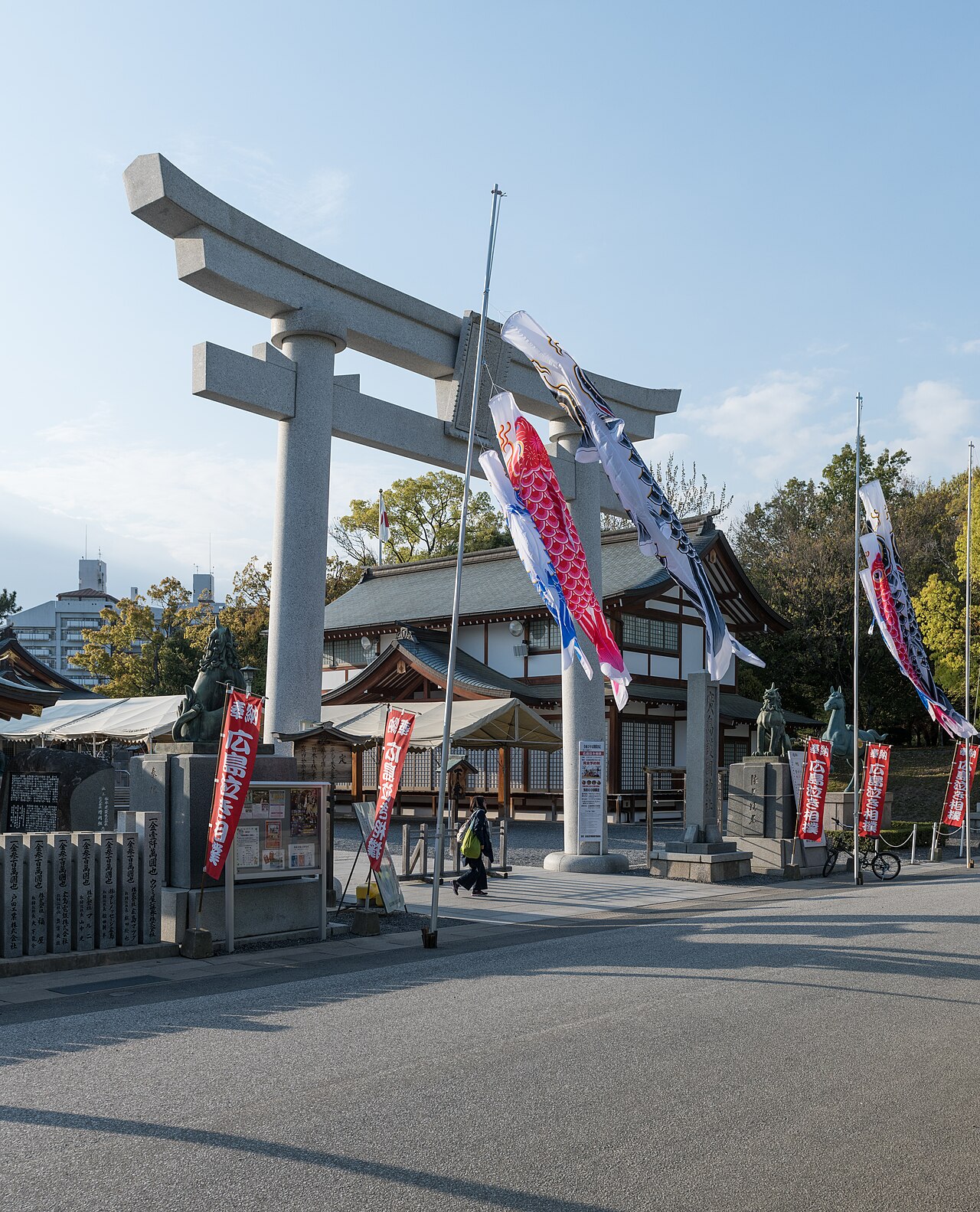
Bringing a belly band to a childbirth prayer lets it be offered and purified together, and corset-type and girdle-type bands are also acceptable. For a prayer against misfortune, women can bring items such as a sash or necklace and men items such as a tie or belt, long items worn on the body, to be purified. Families visit with a baby some weeks after birth, on a day count that differs for boys and girls, to give thanks and pray for healthy growth.
Receiving items follows some prayers, and Shichi-go-san prayers are accepted throughout the year. After a Shichi-go-san prayer, visitors receive charms and chitose candy, among other items. The rice from the shrine is put into the rice cooker at home together with the household rice, cooked and eaten. The arrow charm has no fixed rule, but it is enshrined in a clean place higher than eye level, such as a tokonoma alcove.
Returning old charms and talismans to the shrine comes at the end, and in January they are burned at the January bonfire event. At that event a rite of thanks to the charms and amulets is performed, and then the fire is lit with a purified fire. The event is not a place where anything can be burned. For fire prevention, the fire is arranged to be put out by sunset.
Getting to Hiroshima Castle, Ninomaru Hours and the Keep Closure
New to rural buses and one-man trains? See how to ride them, step by step.
| Item | Details (as listed) |
|---|---|
| Ninomaru hours | April to September, nine to seventeen thirty with entry until seventeen hundred; October to March, nine to sixteen thirty with entry until sixteen hundred |
| Ninomaru closing days | December twenty-ninth (Tuesday) to thirty-first (Thursday); also December eighth (Tuesday) |
| Keep | closed since March of twenty twenty-six; the exterior can still be viewed |
| Parking | the Sannomaru lot charges two hundred ten yen per thirty minutes; about five minutes on foot to the keep |
| On foot from Hiroshima Station | about twenty-five minutes |
| Hiroshima Gokoku Shrine | ten minutes on foot north of the bus center |
| Moat cruise | about twenty minutes; adult fare one thousand yen, tax included; runs on weekends, public holidays, spring holidays and soccer-match days |
Rooms in Hiroshima are listed in places to stay in Hiroshima. The grounds of the castle ruins have no parking lot of their own. Tree felling and pruning near the stone walls is scheduled from early October to early December of twenty twenty-six to protect the walls.
Thinking of staying overnight?
Compare places to stay near Hiroshima →
Disclosure: This post may contain affiliate links. If you book through them, we may earn a commission at no extra cost to you.