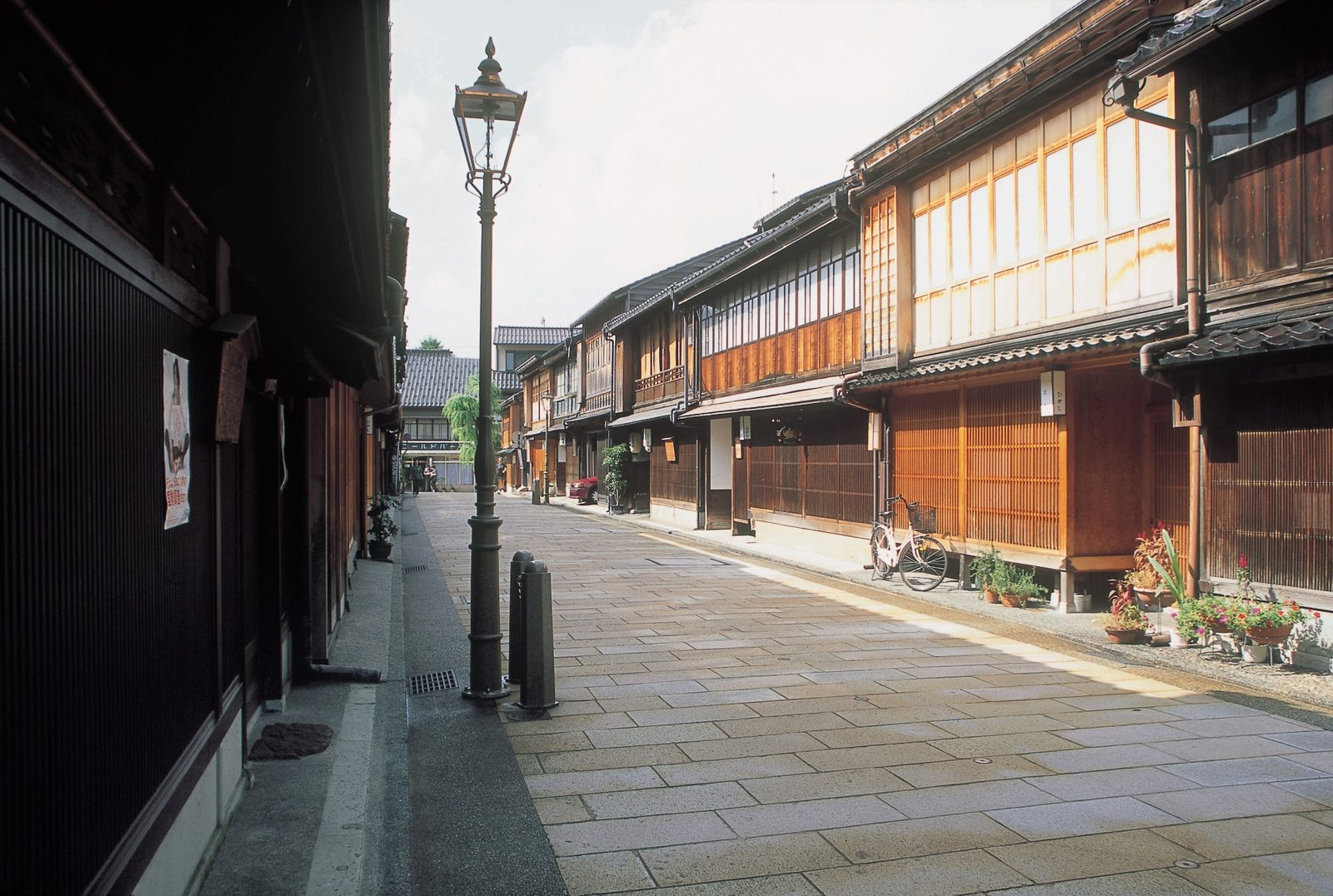
The Hiromi square is where Higashi Chaya is usually photographed, with the camera pointed along the street. Bars and izakaya that can be entered casually stand in the district, some of them in former teahouse buildings. At the Kinpakuya Sakuda main store, a gold-leaf craftsperson explains how the leaf is made, and visitors can see the work up close. At Fujinoya, a teahouse here, Kanazawa geisha dance, drum performances and ozashiki games are offered. For visitors who want a street of teahouses to photograph, geisha arts in a teahouse room and gold leaf seen at close range, Higashi Chaya pairs the Hiromi square with the rooms of Kaikaro, the ozashiki at Fujinoya and the leaf work at Kinpakuya Sakuda.
Higashi Chaya Streets and Kazuemachi: Lattice Fronts, Slopes and Guided Walks
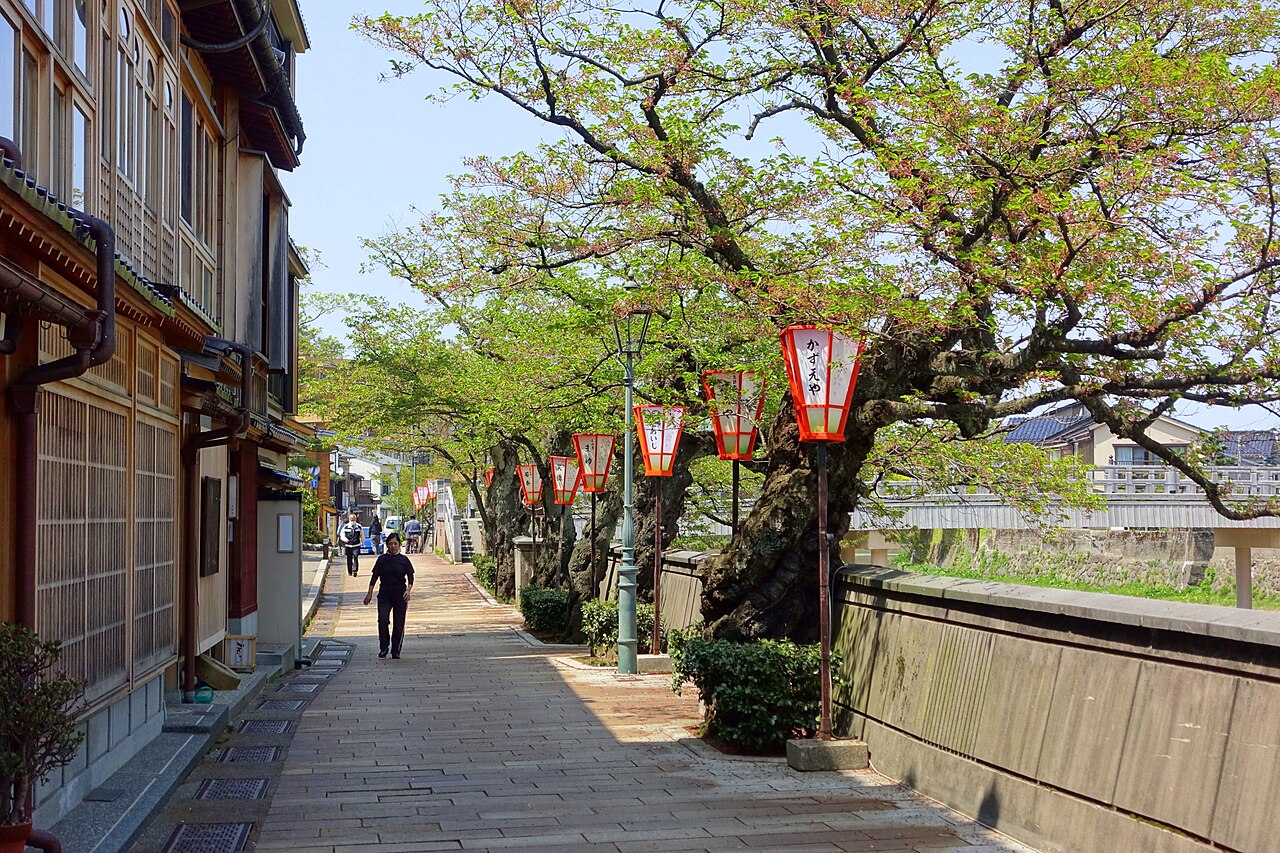
Higashi Chaya is a district to walk with an eye on the lattices of its houses, whose details are worth noticing. Five teahouses operate here with a little over ten geisha, and entry to a teahouse requires an introduction from a special person. Visitors who ride a rickshaw get the puller as a guide, because every rickshaw course comes with that service.
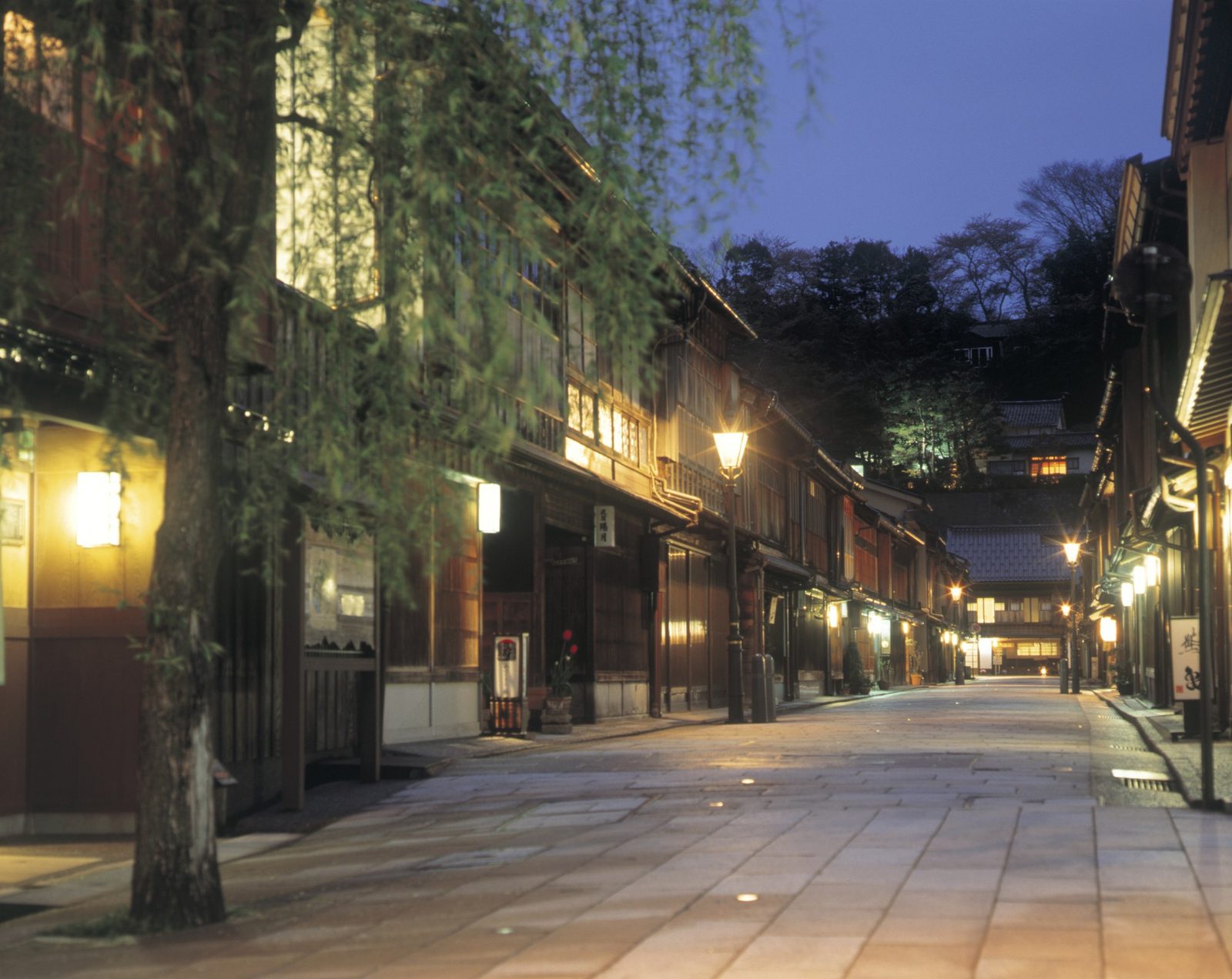
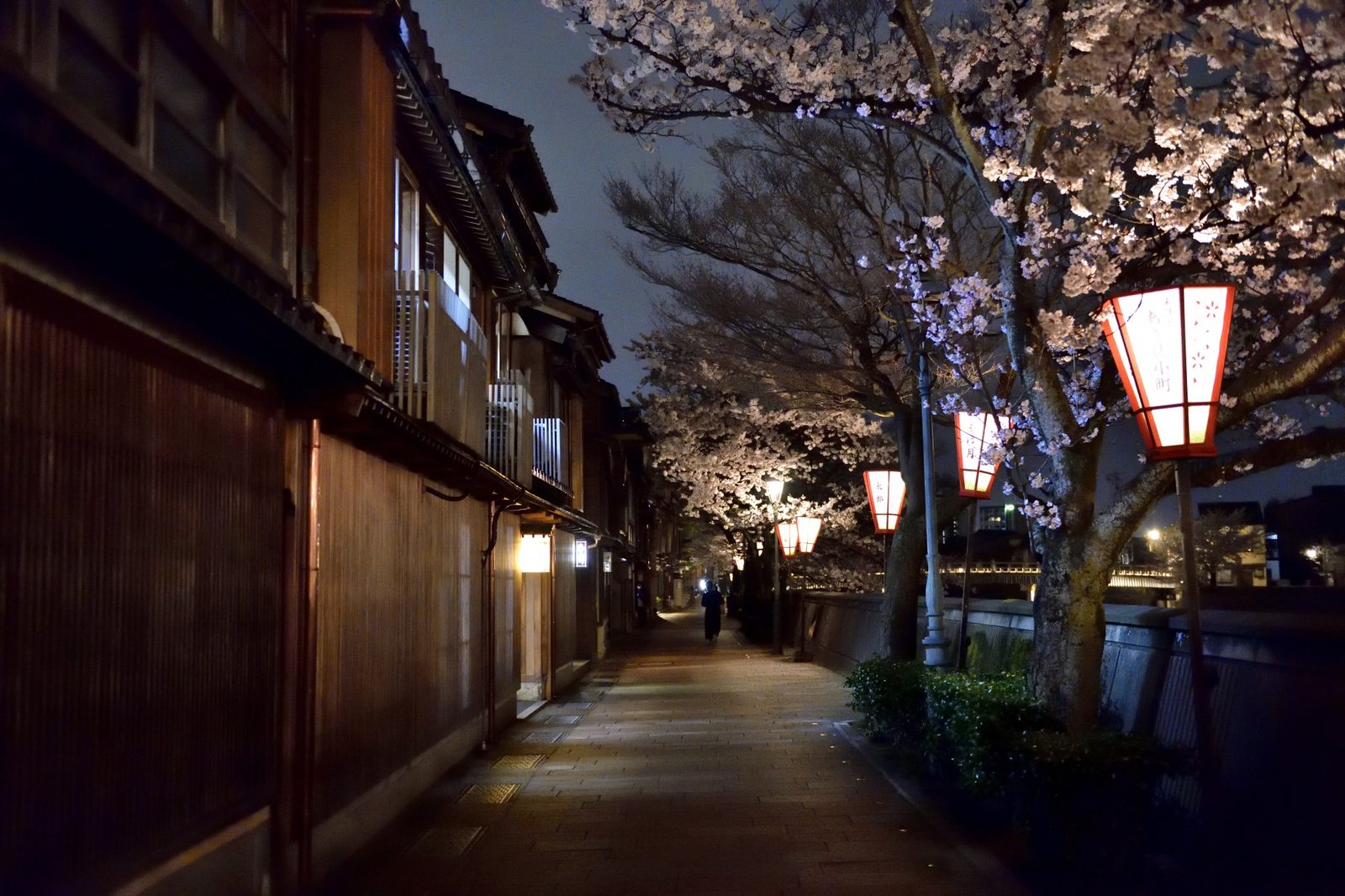
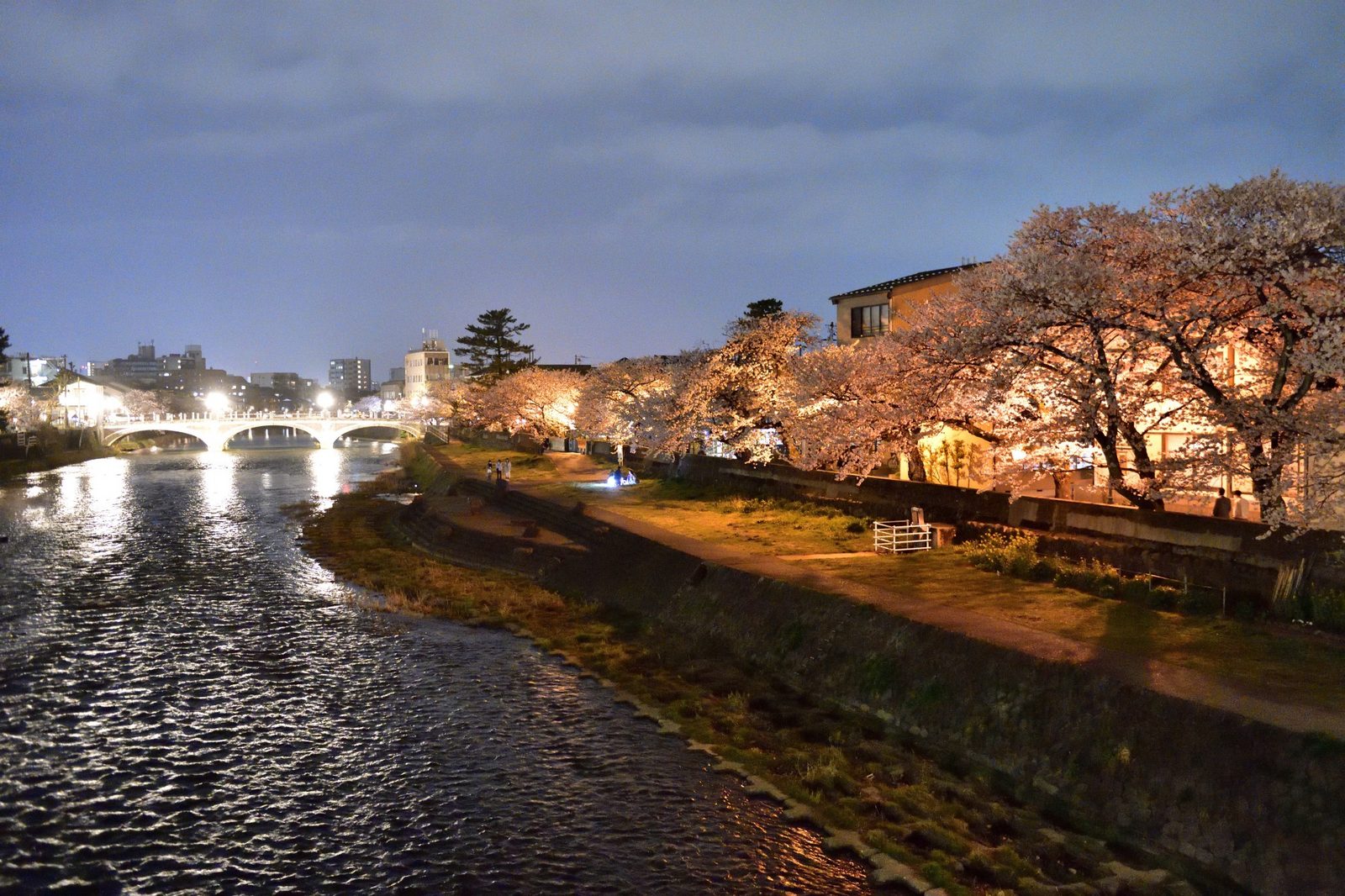
Kazuemachi has narrow alleys to walk, with two named slopes along them. Visitors can also see the restored inner moat of Kanazawa Castle in this teahouse district. Its streets, with their narrow alleys and lattice windows, are selected as a nationally designated Important Preservation District for Groups of Traditional Buildings.
Higashi Chaya Kyukeikan stations volunteer guides who show visitors around the surrounding area. The name these guides go by is a Kanazawa dialect word with a meaning close to hello. The building they work from is a restored machiya townhouse of the type built in the Edo period.
If the plan is to be shown around rather than to wander alone, the volunteer guides at Higashi Chaya Kyukeikan fit it, and a rickshaw course brings the puller's guide service with it.
Geisha District Teahouses: Shima, Ochaya Museum, Enyukaikan, Soyu and Fujinoya
Shima serves matcha in a separate building, where it can be had while looking at the garden. At the Ochaya Museum, the courtyard has a suikinkutsu, and the sound of delicate water echoes from it. The Shima teahouse building remains as it was first built, with the guest room on the upper floor, and is designated a national Important Cultural Property.
Asanogawa Enyukaikan teaches visitors about the history of Higashi Chaya, geisha banquet games, teahouse architecture and teahouse culture. It provides Kanazawa geisha ozashiki sessions and presents the city's teahouse culture through a theater and exhibits. Soyu offers tea ceremony sessions for tourists and beginners. Its tea room is in a machiya townhouse inside a traditional buildings preservation district.
Fujinoya holds its geisha ozashiki in the main room, together with drinks and otoshi. A Kanazawa geisha customarily visits the mayor of Kanazawa before her debut, and this is one of the local cultures the city values. Fujinoya itself is a teahouse in the Higashi Chaya district.
Shima and the Ochaya Museum are buildings to look around, whereas Soyu and Fujinoya are rooms where a tea ceremony or an ozashiki is offered to the guest.
Kanazawa Gold Leaf, Sweets and Crafts: Hakuichi, Katani, Bikazari Asano and Ame no Tawaraya
Hakuichi's main store lets visitors see, touch, buy and eat items related to Kanazawa gold leaf. Kanazawa Katani, a shop run directly by a Kanazawa gold-leaf maker, offers a gold-leaf pasting program. At Hakuichi, a gallery sits above a cafe and a shop.
Kanazawa Bikazari Asano has a workshop space where visitors apply gold leaf and make their own original craft item. At the Nousaku workshop, visitors can make accessories using tin or brass, and the attached cafe, Higashi Chaya TeaRoom, serves dumplings and Japanese sweets in tin vessels. The Asano shop interior is based on a lattice motif and carries works by artists in Ishikawa traditional crafts such as Kutani ware, Kaga Yuzen and Kanazawa gold leaf.
Ame no Tawaraya offers candy packing at its main store, where visitors scoop the candy from a large tub with bamboo chopsticks and pack it. Issho serves hojicha in artists' vessels in its tea space, including a seasonal hojicha that changes monthly. The first-generation founder of the candy shop created its candy after seeing mothers who could not produce breast milk and wondering whether a nutritious food could take its place.
Gold-leaf pasting at Kanazawa Katani, candy packing at Ame no Tawaraya and hojicha at Issho each add a different thing to a Higashi Chaya visit: one to make, one to pack and one to drink.
Utasu Shrine and Utatsuyama Park Above the District
Utasu Shrine is regarded as having its origin in an old mirror dug up from the bank of the Asano River, which bore rabbit and dragon patterns, and in the enshrining of a deity. Utatsuyama Park has a viewing hill from which visitors can see the landscape spreading from Kanazawa Port toward Kahoku Lagoon. The park spreads across the Utatsuyama area overlooking Kanazawa city.
For a Higashi Chaya visit with room for more than the teahouses, Utasu Shrine supplies the story of the old mirror and Utatsuyama Park supplies the view toward the port.
A Half Day in Higashi Chaya: Hiromi Square, Kaikaro, Gold Leaf and Kazuemachi
One half day in Higashi Chaya could take in four named places. The square called Hiromi is the one for the camera, since the standard shot of the district is taken there along the street. Kaikaro is the one to go inside: visitors can tour the whole building, including a tea room with tatami woven from gold-leaf mizuhiki, a red Wajima-lacquer staircase, a Kaga Yuzen bridal noren and a room where evening banquets are held.
The Hakuichi main store adds the part that involves the hands and the appetite, as a place to touch and buy gold-leaf items and to eat them as well as look. Kazuemachi is the fourth place, with its slopes along the narrow alleys and the restored moat. These four places can be linked by choosing one thing at each: a photograph, a tour of rooms, a gold-leaf item and a walk through alleys.
Those planning to stay overnight can look at places to stay in Kanazawa. There are also tours listed for Higashi Chaya.
Getting to Higashi Chaya, Hours and Fees
New to rural buses and one-man trains? See how to ride them, step by step.
| Item | Details (as listed) |
|---|---|
| Car (as listed) | about ten minutes from Kanazawa Station |
| Bus (as listed) | Hashiba-cho stop, served by the Kanazawa Castle Town Loop Bus, or Asanogawa Ohashi stop; about five minutes on foot from either |
| Shima (as listed) | adults five hundred yen; junior high school students and under three hundred yen; nine thirty to five thirty outside the winter season |
| Kaikaro (as listed) | general admission seven hundred fifty yen; ten to five, which may vary with banquets and similar events |
| Ochaya Museum (as listed) | general five hundred yen, elementary and junior high three hundred yen; nine thirty to five, last entry four thirty; closed Thursday |
| Asanogawa Enyukaikan (as listed) | general four hundred yen; ten to five; closed Sunday and over the year-end and New Year period |
| Yasue Gold Leaf Museum (as listed) | three hundred ten yen; nine thirty to five; closed Tuesdays, year-end and New Year, and exhibition changeovers |
The fees and hours above are as listed. The two bus stops above are the ones listed for Higashi Chaya.
Thinking of staying overnight?
Compare places to stay near Kanazawa →
Disclosure: This post may contain affiliate links. If you book through them, we may earn a commission at no extra cost to you.