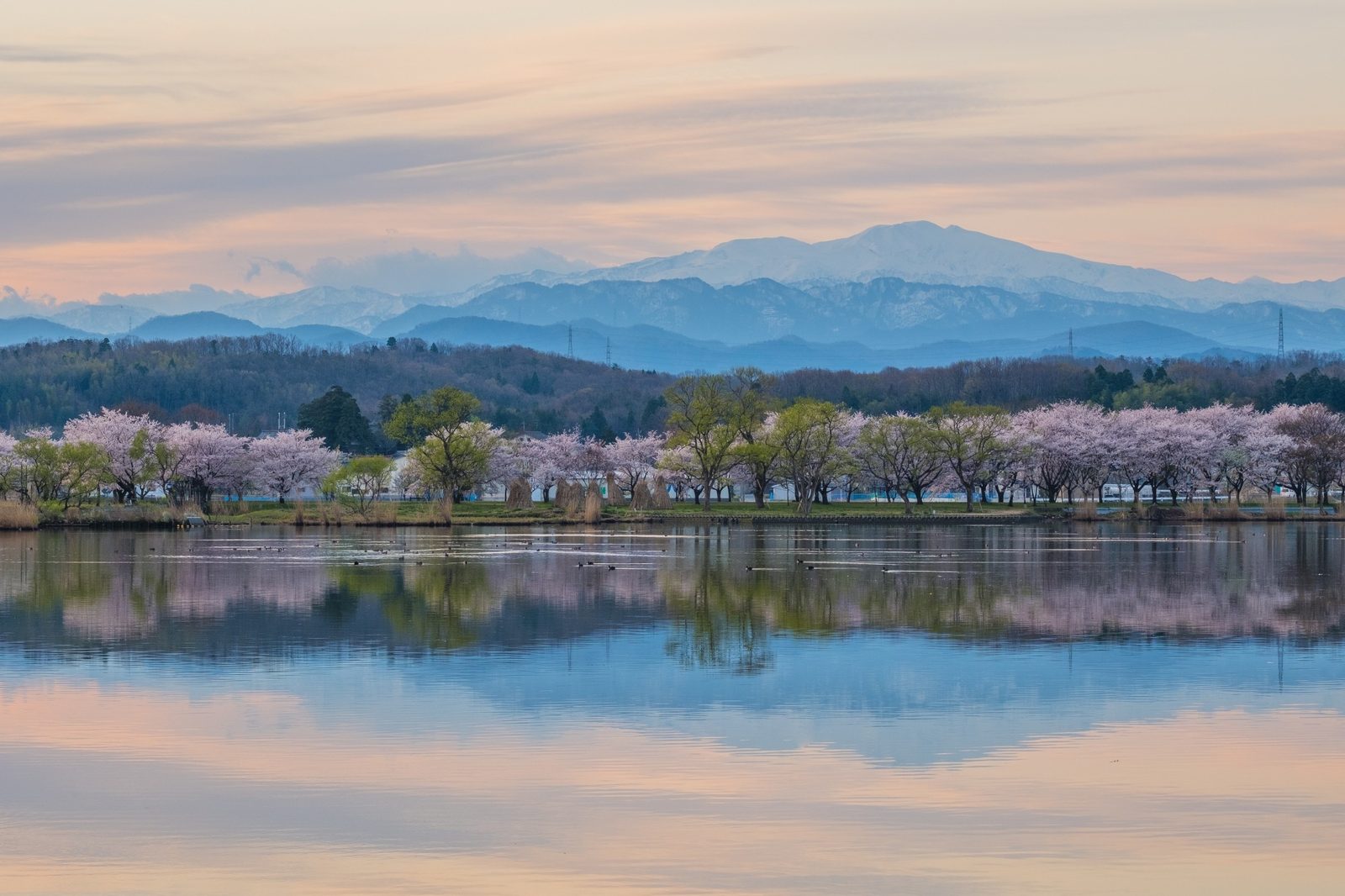
Komatsu in Ishikawa pairs a former copper mine with a lake, a pine-grove barrier site and a pottery tradition, and the pleasure is in how different they are from one another. Along the Mine Road at Ogoya, life-size dioramas stand in the old tunnel, walkers and joggers follow a circuit path round Lake Kibagata, and at Ataka three statues stand among pines on the seaward side of a shrine. Kutani ware adds another thread, with a wood-fired kiln of a kind used since the Edo period for overglaze painting and a factory where pottery stone is turned into clay. It is a town for people who like to see how things were made and then walk it off.
Lake Kibagata and the Roadside Station
Lake Kibagata draws walkers and joggers onto a circuit path that rings the water, and a full lap makes a first chapter for the day. In the early morning a local canoe club practises on the lake, and the sound of paddles cutting the water echoes quietly across it.
Beside the roadside stop a walking path is laid out, and climbing the small hill behind it gives a view over the Komatsu plain. The farm-products shop at the stop sells vegetables and fruit grown in Komatsu, along with sake, sweets and crafts, and rice of various brands is sold by weight.
Komatsu udon is the local noodle, kneaded with Mt. Hakusan subterranean water so that it is firm and smooth going down the throat, and one restaurant serves it freshly made in a dashi broth. Walk the circuit first and leave the shop and a bowl of udon for afterwards; the lake sets the pace and the food rewards it.
Ogoya Mine Road and the Yusenji Copper Mine Park
Ogoya Mine Museum exists to pass on the industrial heritage and culture of the Ogoya copper mine, with tools of the time, mined minerals and photographs of the period on display. Along the Mine Road, a former tunnel of the mine, life-size dioramas are set up, and the inside stays cool all year.
Ogoya mine was a main local industry and a railway was laid for it, and the Poppo Kisha exhibition hall next to the museum keeps three of its locomotives and other vehicles on show.
Yusenji Copper Mine Park, on a second former copper mine, has a walking path past a high chimney and two smelting furnaces at the smelter site, the shaft site, a hill of discarded mine waste and machine mounting bases. The shaft site has concrete walls and a lid, and a small window in the lid lets visitors look into a shaft once dug deep. Trees surround the paths and a breeze blows while walking. Take the Mine Road first for how the work was done, then the park for what it left behind.
Kutani Ware: the Nishikigama Kiln and CERABO KUTANI
Nishikigama is the name of a traditional wood-fired kiln used since the Edo period for the overglaze painting of Kutani ware, and at CERABO KUTANI the step before any painting is on show, as visitors watch Hanasaka pottery stone being turned into porcelain clay. In the clay factory a machine called a stamper crushes the pottery stone into clay, and that pounding is where a piece of Kutani ware begins.
In front of the factory, the process of making Kutani ware is displayed from quarrying through forming to painting, so the stamper and the kiln take their places in one sequence.
A Japanese restaurant in Komatsu serves its dishes on local Kutani ware and local lacquerware. Take the kiln first for what it is, then the displayed process, and finish with a meal on the ware itself; the sequence turns a craft name into something held in the hand.
Ataka Barrier Pines and the Hikiyama Floats
Ataka Barrier site is a pine grove on the seaward side of a shrine, and it is a historic site. In the grove stand three statues and a monument marking the barrier site. Two of the statues were raised for one figure's wisdom and courage and another's sense of justice, and the third was added later, so the three together now stand for wisdom, benevolence and courage for anyone walking among the pines.
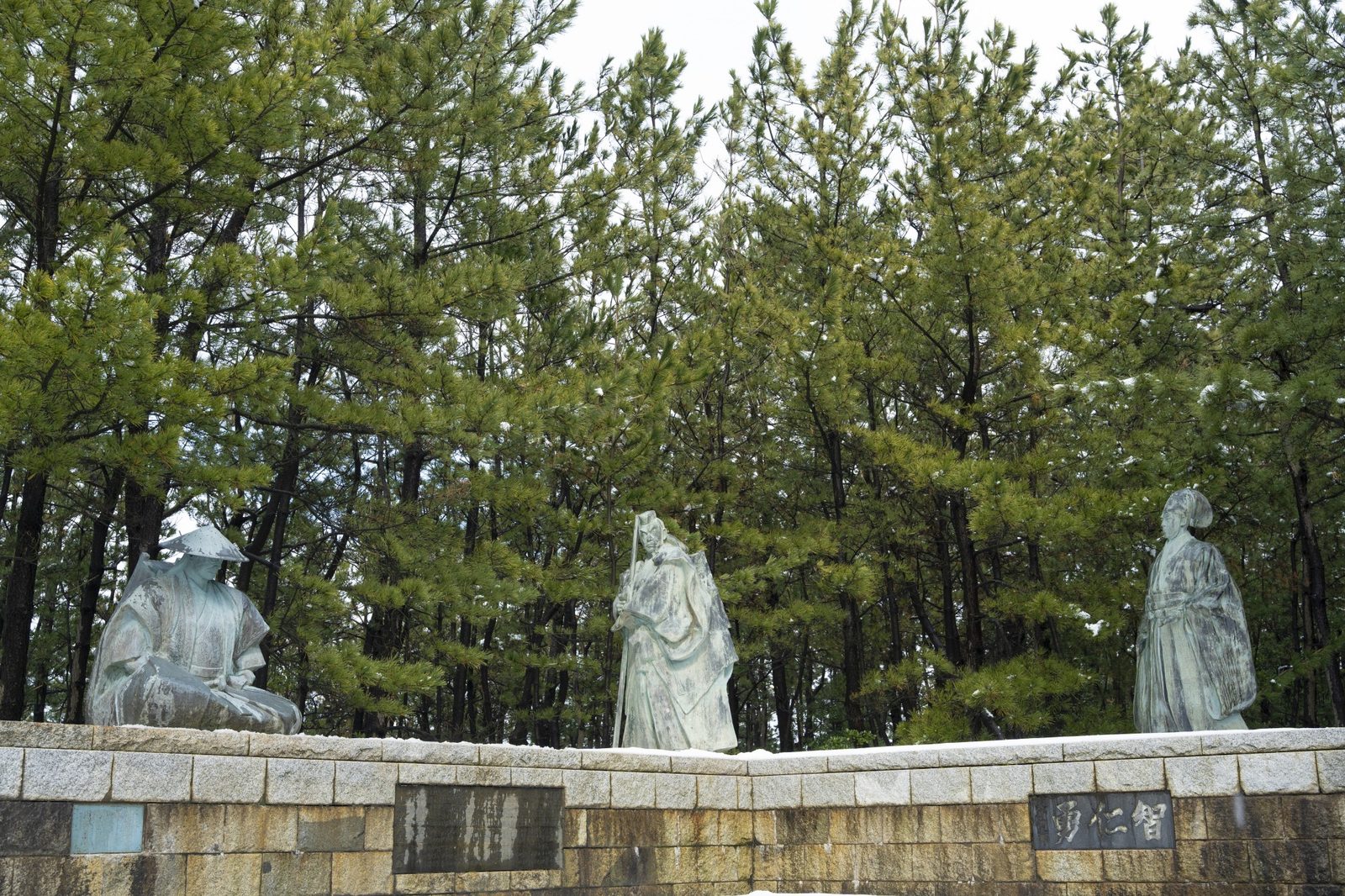
West of the city centre, the Ataka coast was selected for the national list of white-sand and green-pine coasts. Children have performed kabuki on the hikiyama floats for more than two and a half centuries, and in the parade the floats are lit up and shine golden, a tradition seen as light rather than read as history.
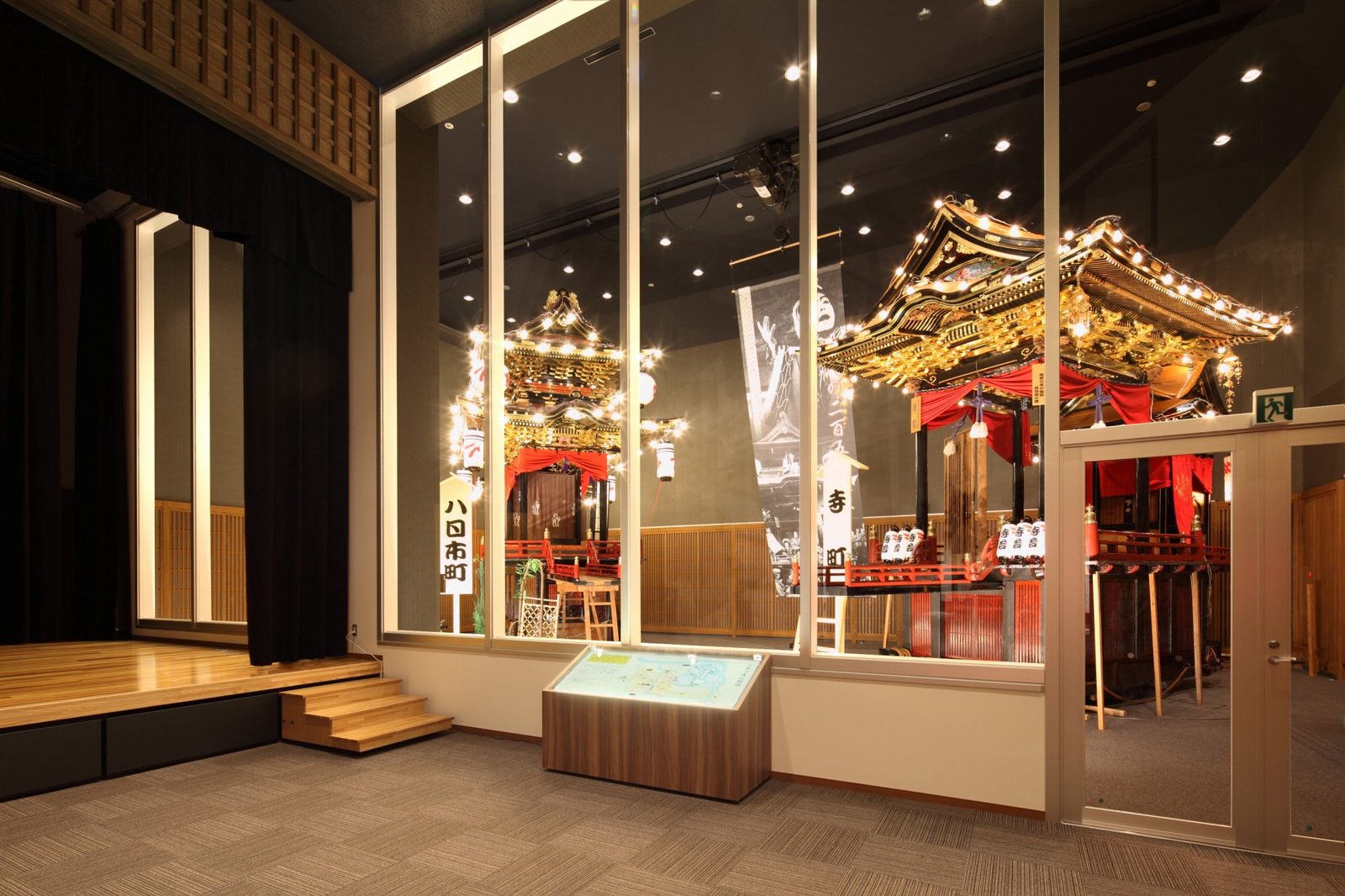
The parade belongs to the grand festival of two of the town's shrines, with the children's kabuki at its centre. With one afternoon, take the pine grove and its statues first and keep the hikiyama for the town: the grove holds the story, the floats the spectacle.
Machiya Streets, Soft Serve and Local Flavours
Machiya townhouses still line a street in Komatsu, and one machiya, once a cosmetics shop, is now a soft serve shop. The regular soy milk soft serve contains white sesame and has a toasty taste, sweetened with rice koji amazake and agave syrup rather than sugar.
KOMATSU BREWING is in a building that was once a candle shop and is eighty years old, and its thick beams and pillars remain inside as they were. A local fried chicken is soaked in shio-koji and sake lees, coated in rice flour and fried, and a butcher's shop soaks its grilled pork in a sauce topped up since the grandfather's generation.
A katsuobushi shop lets visitors shave their own and take it home, and a tea shop prepares three kinds of tea for a tasting workshop. For anyone who eats along a street, the soft serve, fried chicken and grilled pork make a route in themselves. After the machiya street, the soft serve machiya and the beamed KOMATSU BREWING building, it makes sense to look at places to stay in Komatsu.
Stone Bridges, Quarry Tools and a Forest Park
Arched stone bridges over two small rivers were built from local stone from the Meiji era into the early Showa period, and the stonework is still there to walk out to. Eleven such bridges once stood; five remain, with one more in an adjoining district, so the search for them is part of the walk.
A quarry site forms a maze-like space, and stonemasons' tools from the local quarries, including hammers, pickaxes, chisels and other carving tools, are displayed at a small nature school.
Ikoi no Mori has two large lawn plazas with a slide, and its hiking course has little change in height, with rest spots along the way for forest bathing. A thatched-roof old farmhouse relocated from the foot of Mt. Hakusan stands in the park. Take the stone first and the forest second: the bridges and quarry show what was cut from the hills, and Ikoi no Mori is a walk with little effort among what grows there.
Getting to Komatsu
| Leg | How | Time and estimate |
|---|---|---|
| Komatsu Station to the central area of Lake Kibagata | Community bus from the station | About 20 minutes |
| Komatsu Station to the Ogoya mine museum | By car | About 30 minutes |
| Komatsu Station to the Nishikigama Exhibition Hall | On foot | About 10 minutes |
| Komatsu Station to the Ataka Barrier site | Local bus on the Ataka line, then on foot | About 10 minutes on foot from the stop |
| Komatsu Station to the Ataka Barrier site | By car | About 15 minutes |
| Komatsu Station to the hikiyama exchange hall | On foot from the west exit | About 5 minutes |
New to rural buses and one-man trains? See how to ride them, step by step.
Hours and Fees
| Place | What | Hours or fee |
|---|---|---|
| Ogoya mine museum and Mine Road; Nishikigama Exhibition Hall | Hours | 9:00 to 17:00 |
| Ogoya mine museum and Mine Road; Nishikigama Exhibition Hall | Closing days | Both closed Wednesdays (unless a national holiday) and the day after a national holiday (unless that day is a Saturday, Sunday or holiday); Ogoya also in winter (Dec 1 to Mar 24); Nishikigama also during exhibit changeovers and at year-end and New Year, with last admission half past four and cash only |
| Ogoya mine museum | Admission | 500 yen (group 400 yen); free for high school students and younger |
| Nishikigama Exhibition Hall | Admission | 300 yen (group 250 yen); free for high school students and younger |
| Story hall at the Ataka Barrier | Hours and closing days | 9:00 to 17:00, with last admission at 16:30; closed Wednesdays and over the year-end and New Year period |
| CERABO KUTANI | Hours | 10:00 to 17:00, with last admission at 16:30 |
Admission at the story hall and at CERABO KUTANI is three hundred yen, or one hundred and fifty yen for high school students and younger.
Where to stay
Places to stay near Komatsu, Ishikawa, Japan →
Disclosure: This post may contain affiliate links. If you book through them, we may earn a commission at no extra cost to you.