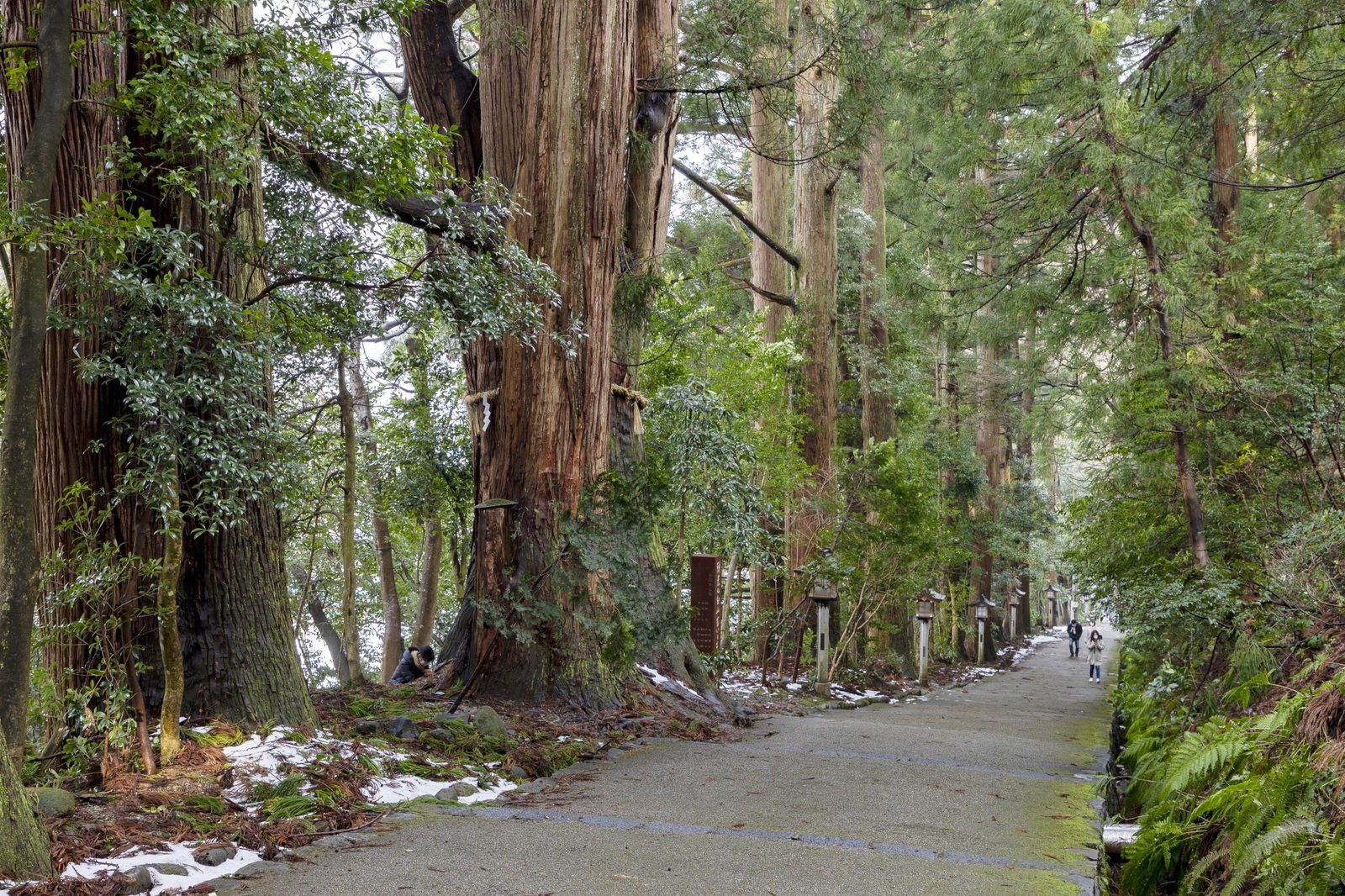
This guide covers one thing: a day trip from Kanazawa to Shirayama Hime Shrine by way of the town of Tsurugi, with the practical details of getting there and what to look for inside the grounds. It does not cover the climbing routes on Hakusan itself or the old pilgrim paths that lead up to the summit.
Getting to Shirayama Hime Shrine from Kanazawa
There are two ways to reach the shrine from Kanazawa Station. One is a taxi straight from the station to the shrine. The other is by rail: change at Nishi-Kanazawa Station from the IR Ishikawa Railway to the Hokuriku Railway at Shin-Nishi-Kanazawa Station, ride out to Tsurugi Station, and finish with a short taxi ride to the shrine.
| From | To | How | Time |
|---|---|---|---|
| Nishi-Kanazawa Station (IR Ishikawa Railway) | Shin-Nishi-Kanazawa Station (Hokuriku Railway) | Walk (transfer) | about 1 minute |
| Shin-Nishi-Kanazawa Station | Tsurugi Station | Hokuriku Railway train | about 28 minutes |
| Tsurugi Station | Shirayama Hime Shrine | Taxi | about 5 minutes |
| Kanazawa Station | Shirayama Hime Shrine | Taxi, direct from the station | about 50 minutes |
- Tsurugi Machi-aruki Coupon: 1,200 yen, sold year-round except December 28 through January 6.
- The coupon includes a 200 yen discount coupon for Kanaya Taxi, valid for one ride only.
Tsurugi: the old market town along the way
Tsurugi sits in the Kaga district of Ishikawa Prefecture and is described as lying roughly four ri south of Kanazawa, or about sixteen kilometers. The town stands on the north bank of the Tedori River at the point where the river bends west, on the seam where the Kaga plain meets the hills behind it.
That position made the town a natural crossroads, and it grew into a busy market where the produce of the surrounding mountains and fields was gathered for sale. Tsurugi was also a major producer of leaf tobacco, known as Tsurugi tobacco, and in the Meiji era a first-class leaf tobacco monopoly office stood in the town.
Records from the Meiji era put the population at about four thousand four hundred people. In those years Tsurugi lay roughly two ri and twenty-four chō southeast of the Matsutō stop, the present-day Matsutō Station. That distance is described as a bit more than ten kilometers, and a horse-drawn tramway connected the two towns at the time.
The town also holds the grave of Ogawa Seisai, remembered as a forerunner of the pro-imperial loyalists in the Kaga domain during the closing years of the shogunate. It is worth a slow look before you move on, because from Tsurugi Station the shrine is only a short taxi ride away.
Origins and a shrine that moved four times
Shirayama Hime Shrine stands in Sannomiya, once part of Kawachi village and today Sannomiya-machi in Hakusan City, roughly fifteen chō southeast of Tsurugi, or a little over a kilometer and a half. The grounds you walk through today, however, are not where the story begins, and the shrine has moved more than once.
Shrine tradition holds that the shrine was first founded in the seventh year of Emperor Sujin's reign, a date traditionally placed around ninety-one BCE, and that its first home was Funaoka-yama, a hill to the northeast of Tsurugi. From that hill, the old accounts describe a series of moves that took several centuries to complete.
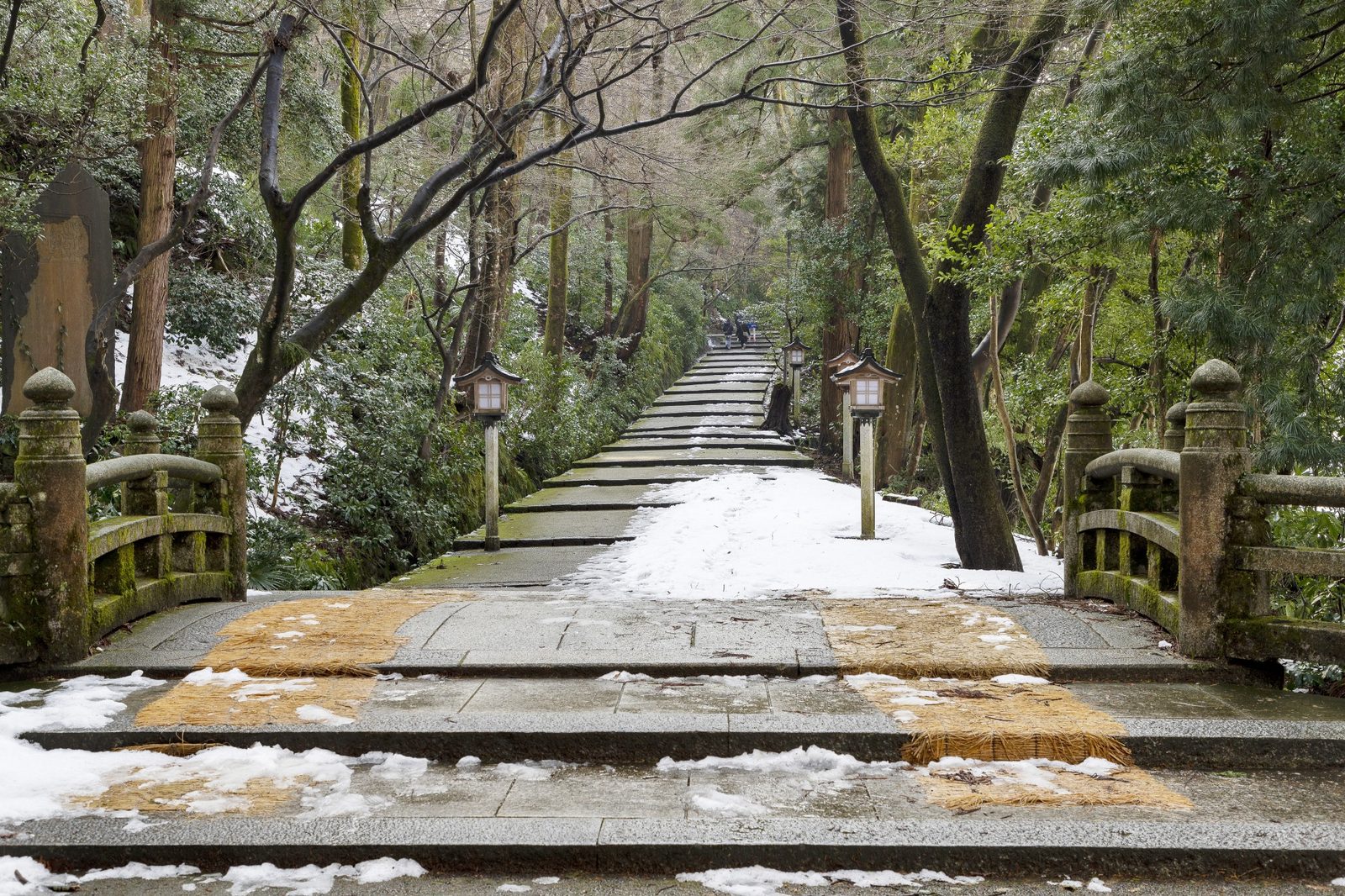
In the second year of Reiki, seven sixteen, an imperial order moved the sanctuary southwest to the grove of Akudo. In the fourteenth year of Kōnin, eight twenty-three, the buildings moved again, this time to Shirayama village. After the main shrine burned down in the twelfth year of Bunmei, fourteen eighty, it was moved to the site it occupies now.
From the Kyūan era, eleven forty-five onward, the shrine long remained under the authority of Enryaku-ji on Mount Hiei, in the blended Shinto-Buddhist form common at the time. In the first years of Meiji the resident monks were removed, and in the sixth month of the fourth year of Meiji the shrine was ranked as a minor national shrine.
Where to stay
Places to stay near Hakusan, Ishikawa →
Disclosure: This post may contain affiliate links. If you book through them, we may earn a commission at no extra cost to you.
From Koshi's ichinomiya to head shrine of the Hakusan faith
That Meiji ranking as a minor national shrine was only the latest of several titles. The shrine had originally been counted as the ichinomiya, the first-ranked shrine, of the old province of Koshi. When Koshi was divided into the provinces of Kaga, Echizen and Etchū, it came to be called the ichinomiya of Kaga instead.
Three deities are enshrined here: Shirayama Hime Ōkami, also known as Kukurihime no Mikoto, together with Izanagi no Mikoto and Izanami no Mikoto. Today Shirayama Hime Shrine, in Hakusan City in Ishikawa Prefecture, is the head shrine of more than three thousand Hakusan shrines across the whole of Japan, and the faith they share looks to one mountain.
Hakusan is counted among the three celebrated mountains of Japan and has long been revered as a seat of the white gods, a focus of mountain worship. Ships crossing the Sea of Japan are said to have used the peak as a landmark, so it came to be honored as a god of the sea as well as the mountains.
The shrine buildings and grounds
The honden, the innermost sanctuary, was rebuilt in the seventh year of Meiwa, seventeen seventy. Around it stand a hall of ritual prayer, a connecting hall, the haiden worship hall, a hall for sacred food offerings, the shrine office and a storehouse for ceremonial implements, all of them built after the fourteenth year of Meiji.
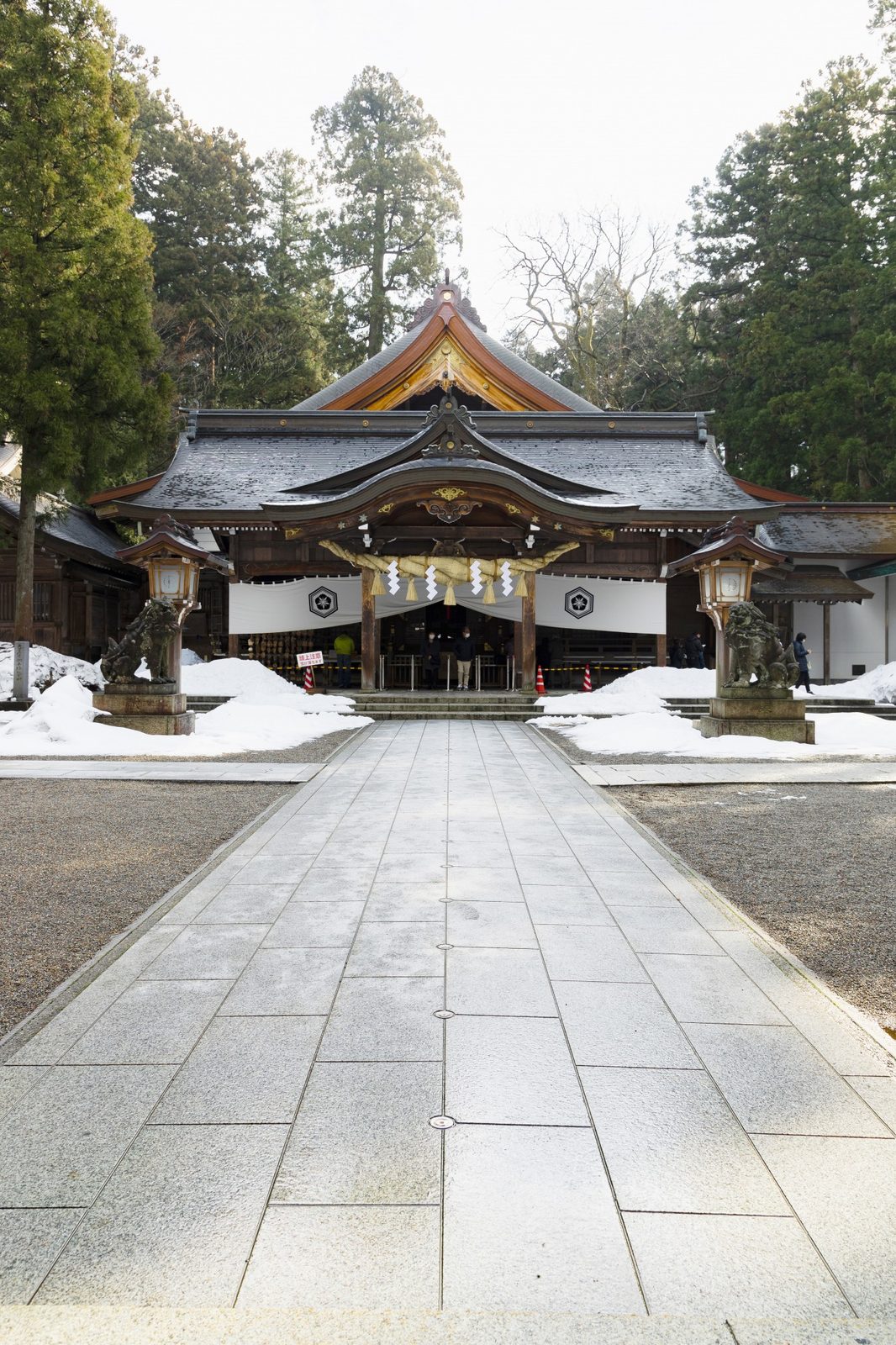
The guardian lions before the shrine are said to have been donated by Fujiwara no Hidehira, a powerful lord of Ōshū in the north. After the Meiji Restoration the precinct was fixed at a little over three thousand eight hundred tsubo. Behind the buildings rises Tsukioshi-yama, and to the northwest lies Funaoka-yama, held to be the shrine's ancient site.
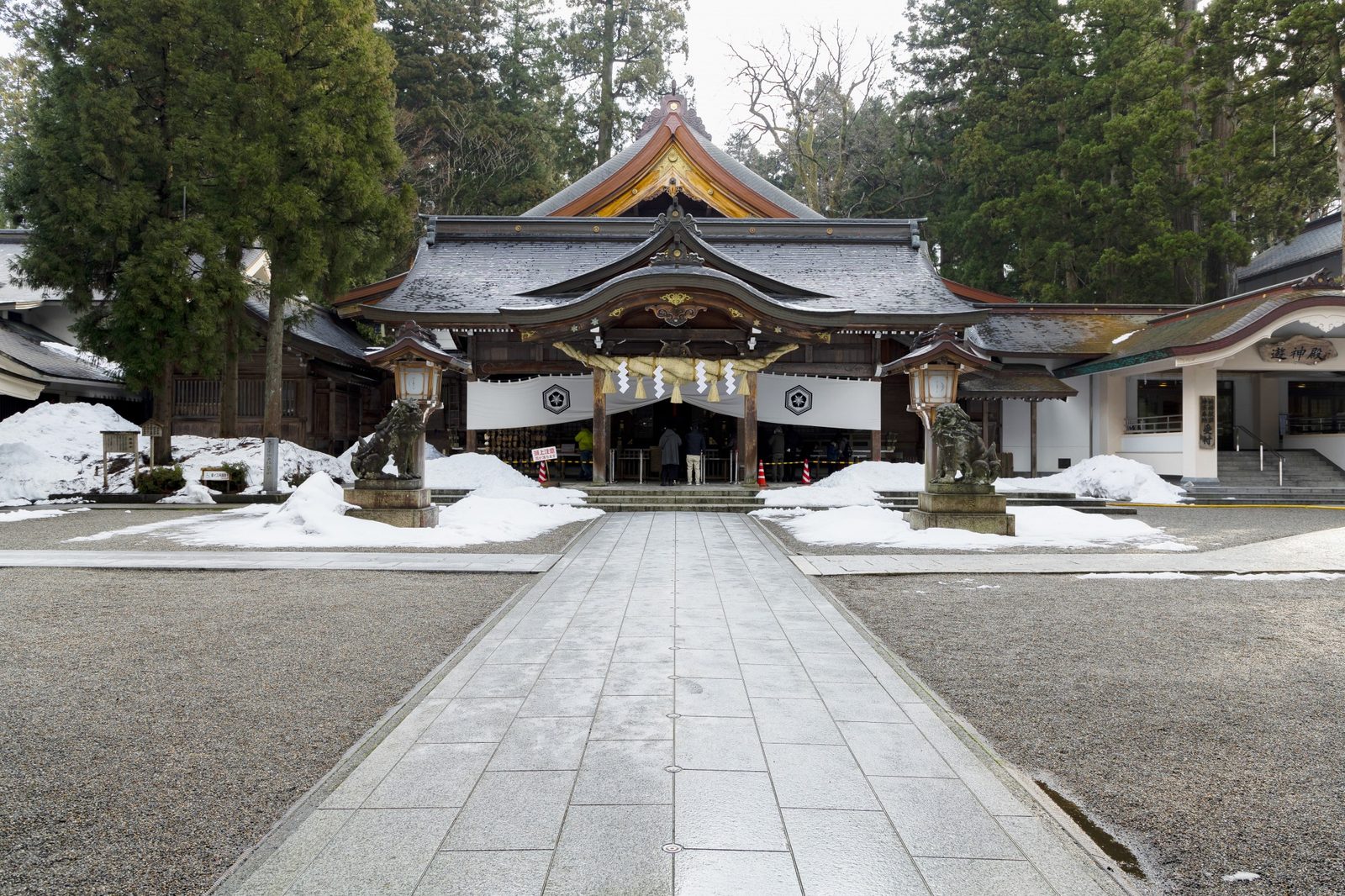
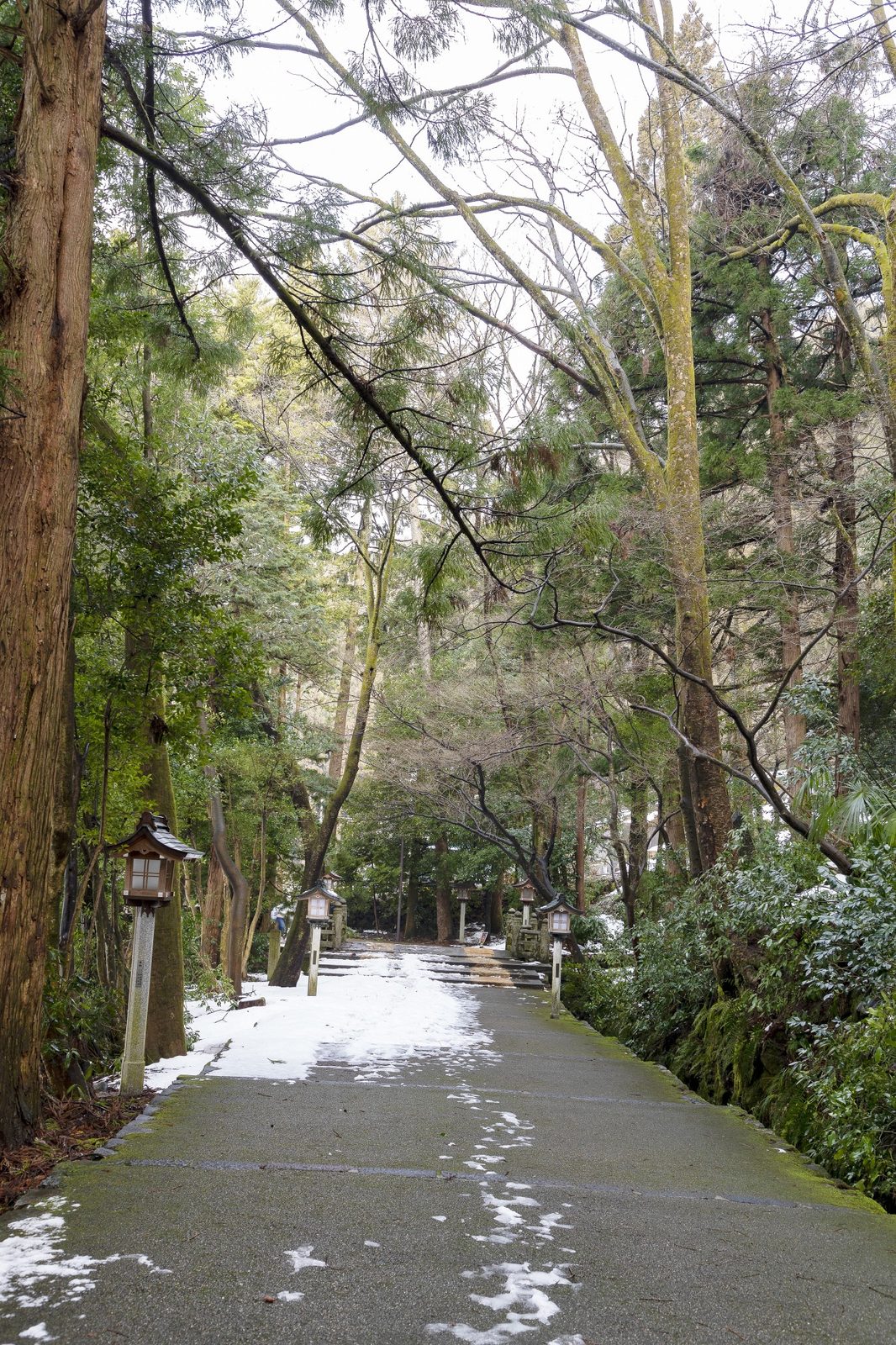
Old trees grow thickly across the grounds, and cherry and maple grow along both sides of the approach, so the scene shifts with each season. Two cascades lie close by: Biwa-daki is described as lying about one chō to the north of the grounds, and Utaura-daki about half a ri to the south, roughly two kilometers away.
Visiting: admission, hours, and the Treasure Hall
Paying your respects at the shrine costs nothing; admission to the precinct itself is free of charge. The Treasure Hall (Hōmotsukan) is a separate matter, with its own adult admission fee and viewing hours that change with the season. The shrine's address puts it in Sannomiya-machi, Hakusan City, and the figures below are the ones to plan around.
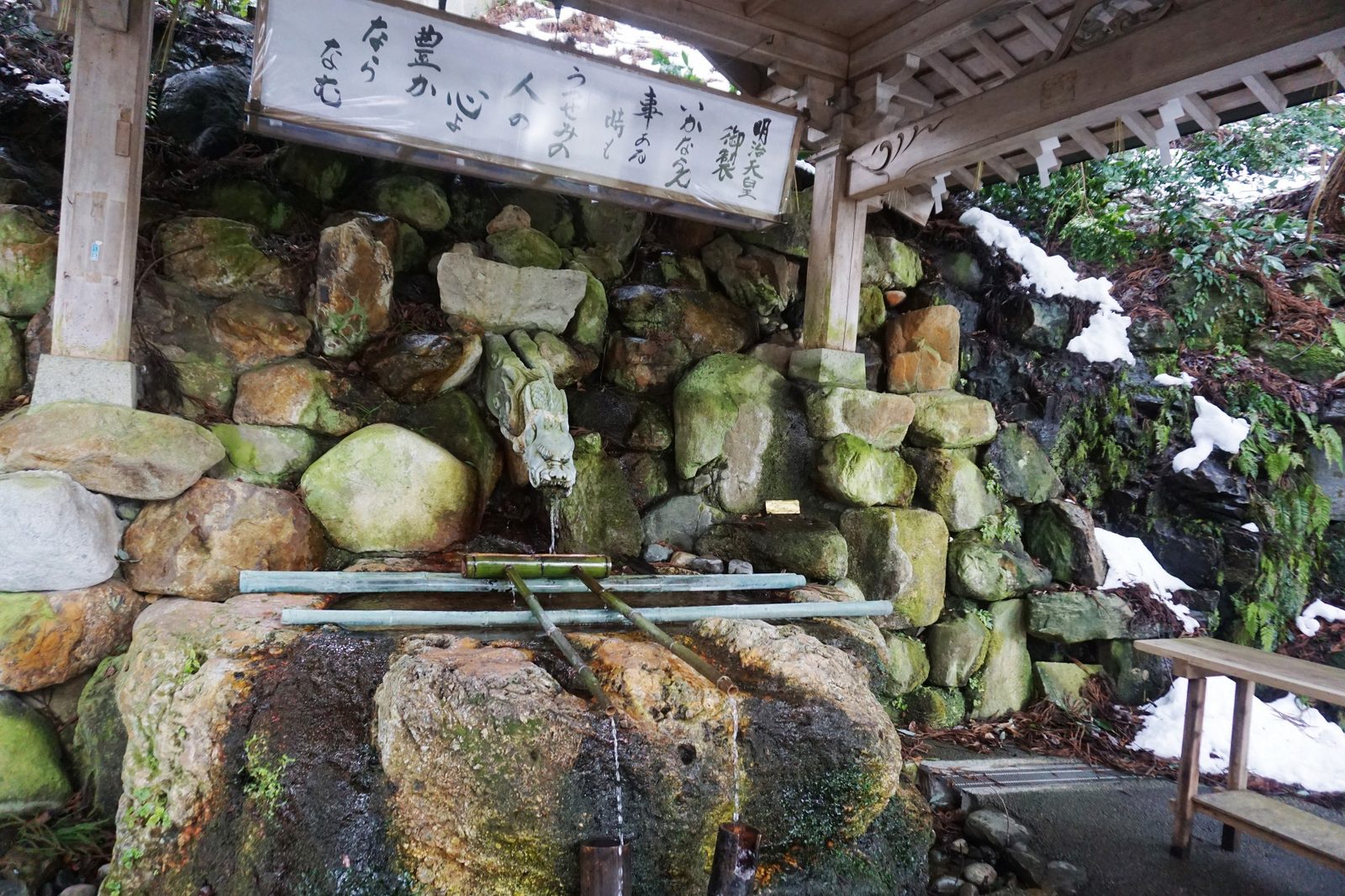
- Treasure Hall (Hōmotsukan), individual adult admission: 300 yen.
- Viewing hours, April through October: 9:00 to 16:00.
- Viewing hours, November: 9:30 to 15:30.
Hours and fees do change, so check official information before visiting. If you would rather stay the night than ride back to Kanazawa, there are places to stay in Hakusan, the city the shrine calls home, and a second morning gives you time to see Tsurugi at an easier pace before the train back.