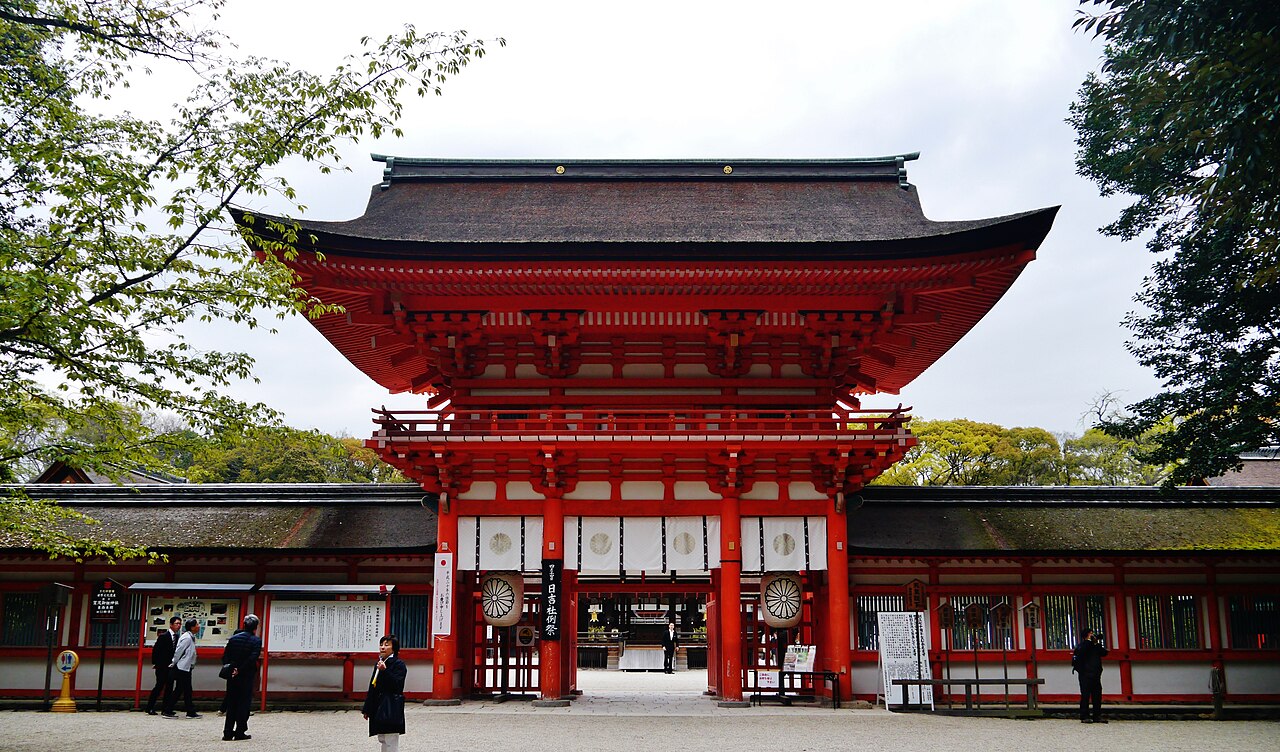
Shimogamo Shrine stands at the point where the Kamo River and the Takano River meet. A prayer for the success of Heian-kyo was first offered at this shrine before that capital was built. Its national treasure main halls, its many other cultural properties and the Tadasu no Mori, a forest that still keeps its ancient vegetation, give a trip here both architecture and woodland to look at.
Walking the Tadasu no Mori: Stream, Ancient Trees and the Autumn Tunnel
Compared with going straight to the main halls, following the forest and its clear stream south to Kawai Shrine makes the approach part of the visit.
Walking south from the main hall, visitors stay inside the Tadasu no Mori as far as Kawai Shrine. The forest runs that whole way within the precinct. In the middle of it, the route passes a site that has been used for rites since ancient times. Kawai Shrine, an auxiliary shrine of Shimogamo Shrine, then stands among the trees at the southern end.
Following the path, look for the clear stream that flows through the forest. The woodland preserves the appearance of the original wilderness, and its long-established vegetation remains. It is a primeval forest that covers the shrine grounds.
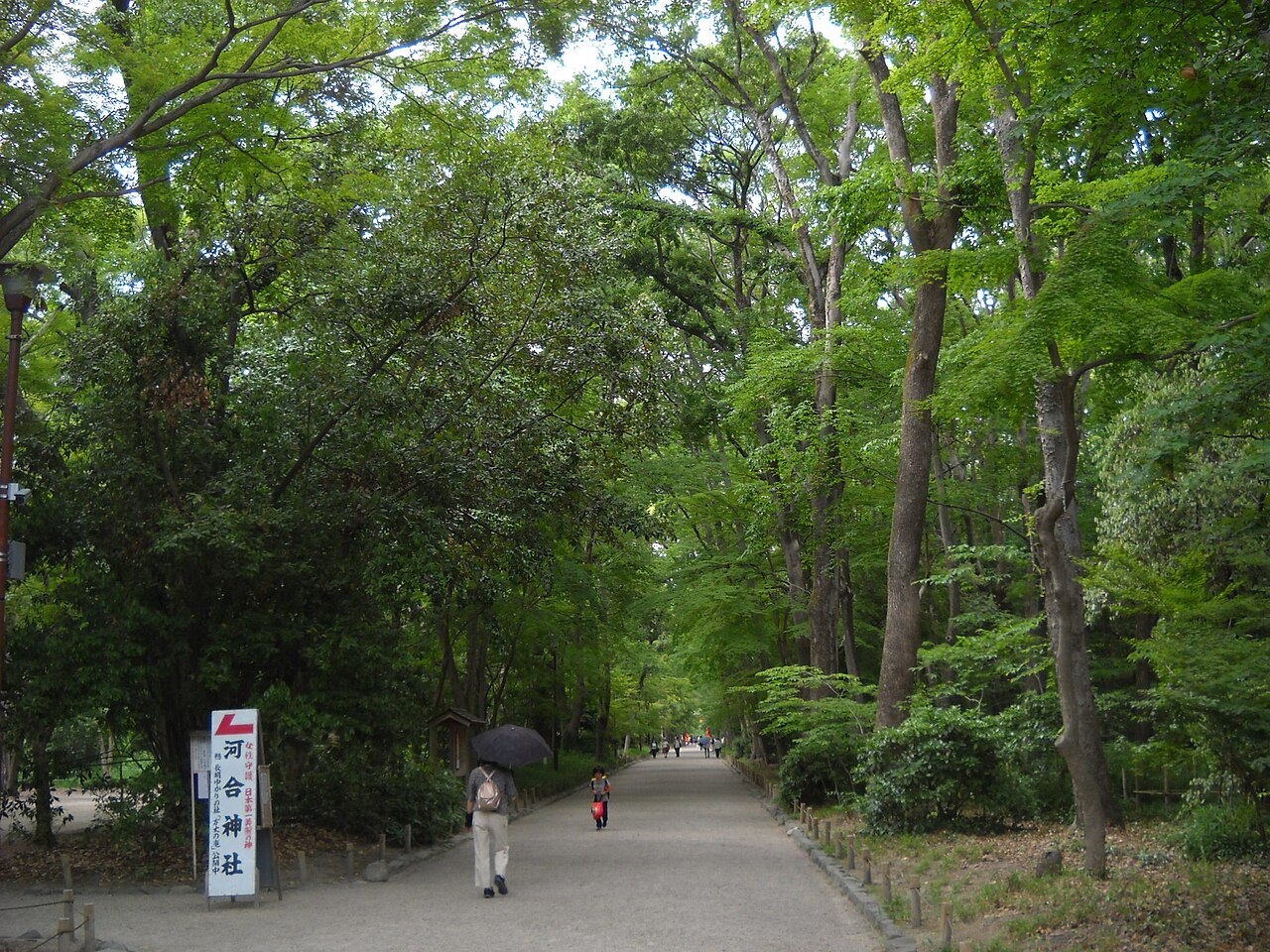
Looking up along the forest in autumn, visitors see a tunnel of maple leaves in their autumn colors. The trees of the Tadasu no Mori change color in that season, and the foliage spreads through the inside of the forest. Under snow, the grounds are described as silent, with sound gone and the scene turned the color of snow.
The Mitarashi Pond: Foot-Dipping, Spring Water and Candles
Around the summer Doyo no Ushi no Hi, the Mitarashi Pond is a place to step into, because the foot-dipping rite called Ashitsuke Shinji is held there each year.
Paying the candle offering comes first, at the reception on the east side inside the tower gate. Next, visitors receive a shoe bag at the shoe-removal area and take off their shoes and socks there. After that, candles are handed out, and each person receives a candle before going on to the water.
Entering the Mitarashi Pond holding the candle is the stage that follows. Once in the pond, visitors dip their feet in its spring water and offer the lit candle. During the pond walk, they are requested to avoid stopping to take photographs. The custom behind the rite is to put the feet in the river in the forest on that day and pray for health.
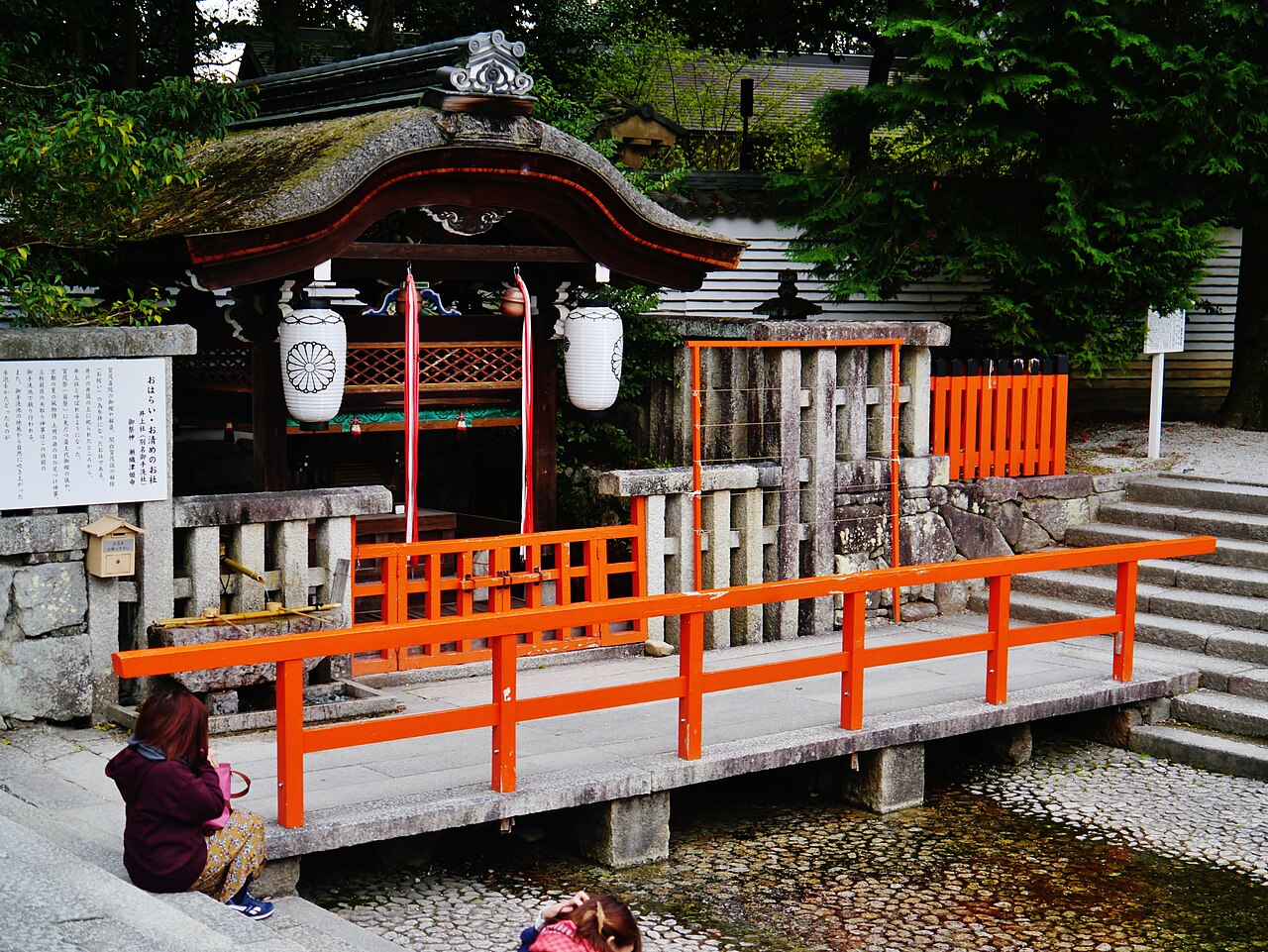
Looking at the pond in the Doyo period, visitors see clear spring water bubbling up around it and from the riverbed. The shape of those rising bubbles, modeled as dumplings, is said to be the origin of mitarashi dango. The pond lies in front of Inoue-sha, and the river downstream from it is called the Mitarashi river.
Inside the Tower Gate: Prayer Rituals, the Oiden and the Jingu-ji Ruins
Inside the tower gate, a prayer ritual and the special viewing of the Oiden are the choices that give a visit more to do than crossing the precinct.
Joining a prayer ritual starts at the reception on the day itself, because prayer rituals are accepted on the day only and reservations are not accepted. Once reception is completed, visitors are guided in after the prayer rituals ahead of them have finished. The ritual itself lasts a short while.
Looking toward the main halls, visitors face the halls of a parent and a child deity. Kamo-takezunu-no-mikoto is enshrined in the west main hall and his child deity Tamayori-hime-no-mikoto in the east. According to the Yamashiro no Kuni Fudoki, Tamayori-hime picked up a red-painted arrow that came down the Kamo River while she was purifying herself, became pregnant and gave birth to a deity.
Looking in on the special viewing, visitors can see the Oiden, where offerings to the deities were cooked, and its well house. The Jingu-ji ruins, the remains of a temple that stood within the shrine, come with a walking path. In the ruins viewing area stands a reconstruction of the hermitage of Kamo no Chomei. A separate carriage house displays Aoi Festival materials.
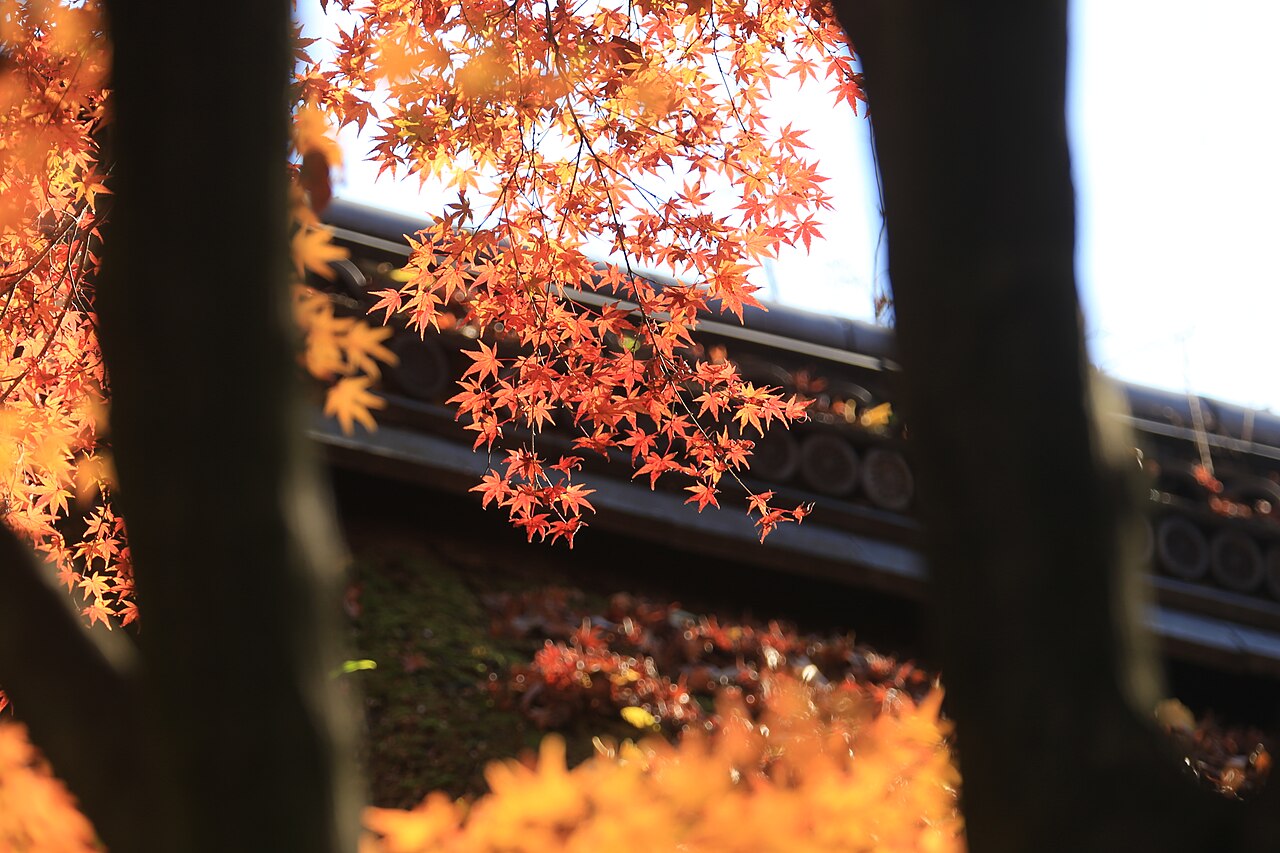
Stopping near the tower gate in spring, look for the cherry blossoms that bloom beside the stone there. In autumn the trees in the precinct around the gate change color, so the shrine buildings and the autumn foliage can be seen together. Travelers planning to come back in another season can look at places to stay in Kyoto.
Matchmaking Shrines, the Korin Plum and the Small Shrines
Travelers drawn to matchmaking customs, to painting or to unusual trees have reason to slow down at Aioi-sha, the Korin no Ume and the renri-no-sakaki.
Stopping at Aioi-sha, visitors find matchmaking ema votive plaques and matchmaking omikuji fortunes themed on the Tale of Genji. The renri-no-sakaki is a tree in which separate trees are joined partway up, and it is regarded as a symbol of matchmaking. A young tree has sprouted at its base.
Looking at the plum tree called Korin no Ume, visitors see the model for a folding screen painting by the artist Ogata Korin. Futaba-aoi, the plant essential to the Aoi Festival, grows naturally in the Aoi no Niwa garden. Around the shrine also called Hiraki-sha, every planted tree has jagged leaves like holly, the source of that name.
Festival Days: Yabusame, Hina-nagashi, Kobudo and the Used-Book Fair
Because these rites keep fixed days each year, such as yabusame on the third of May, seeing them means planning the trip around the shrine calendar.
Watching yabusame means going to the horse track in the Tadasu no Mori, where it is held every year on the third of May as a preliminary rite of the Aoi Festival. Riders wear the hunting attire of court nobles and samurai. From horseback they shoot kaburaya arrows at targets. The Aoi Festival itself is held every year on the fifteenth of May.
Watching the Saio-dai Misogi comes first on the fourth of May, at the Mitarashi Pond in front of Inoue-sha. Public viewing of that rite is possible, and no application is required. The Kobudo dedication then takes place on the same day at the Maiden and Hashiden. There, martial arts such as naginata, swordsmanship, jujutsu and iai can be seen directly.
Watching the Hina-nagashi doll-floating rite means heading to the Mitarashi river within the shrine grounds on the third of March. The dolls floated on the river wear kimono of washi paper. Their faces are formed from rolled clay coated with gofun. In mid-August a used-book fair is held in the Tadasu no Mori.
Getting to Shimogamo Shrine, Hours and Fees
New to rural buses and one-man trains? See how to ride them, step by step.
City Bus from Kyoto Station and from Kitaoji Station runs to a stop in front of the shrine, and a guided walk through Tadasu no Mori is one way to see the forest with a guide. The table lists the routes, hours and fees.
| Item | Details (as listed) |
|---|---|
| From Kyoto Station | City Bus routes four and two hundred five; adults two hundred thirty yen, children one hundred twenty; IC cards accepted |
| From Kitaoji Station | City Bus routes one and two hundred five |
| From Demachiyanagi Station | twelve minutes on foot |
| Taxi from Kyoto Station | two to three thousand yen; about twenty minutes |
| Parking | west lot open twenty-four hours; five hundred yen for the first hour, then three hundred yen per thirty minutes |
| Hours | inside the tower gate six thirty to five; Kawai Shrine six thirty to four thirty; may change for rituals |
| Fees and times | prayer reception nine to four thirty, no reservation; Oiden special viewing ten to four, one thousand yen per adult |
Thinking of staying overnight?
Compare places to stay near Kyoto →
Disclosure: This post may contain affiliate links. If you book through them, we may earn a commission at no extra cost to you.