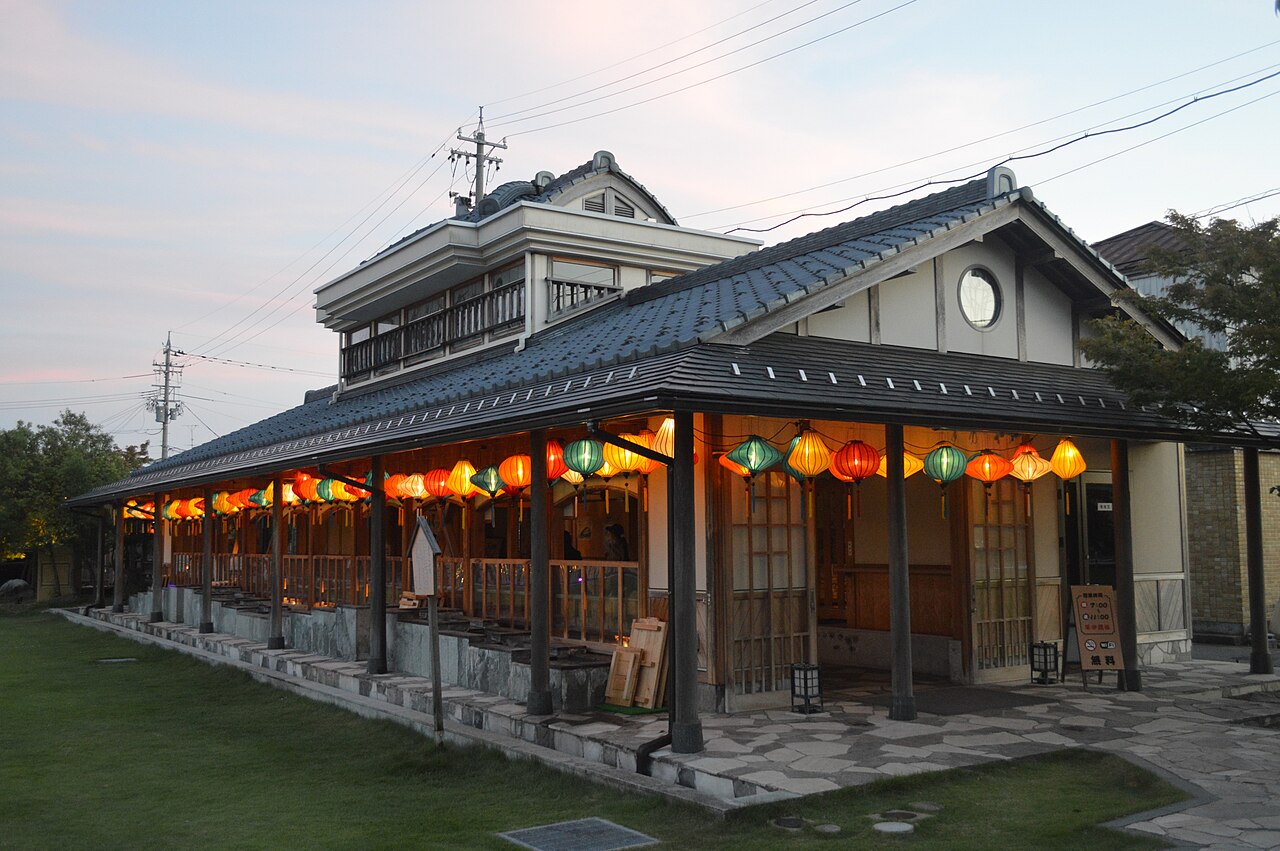
At Awara Onsen, a visit can begin with bare feet in the Ashiyu foot bath, where baths of different temperatures are filled by freely flowing source springs. In the inns, the bath water is described as fine-textured at one house and as leaving skin smooth at another. During the Yoru-moude event, the reason to stay on is a walk through the lit town, lantern in hand, toward the Yakushi halls and shrine.
Soaking Your Feet at the Ashiyu Foot Bath and Making a Hot Spring Egg
Start at Ashiyu if a foot soak is the goal: its baths vary in temperature, and towels are sold from a vending machine.
Soaking at Ashiyu, in Awara Onsen Yunomachi Hiroba, means choosing among baths of different temperatures. The foot bath uses source waters of more than one quality, flowing freely. Move from bath to bath to compare them.
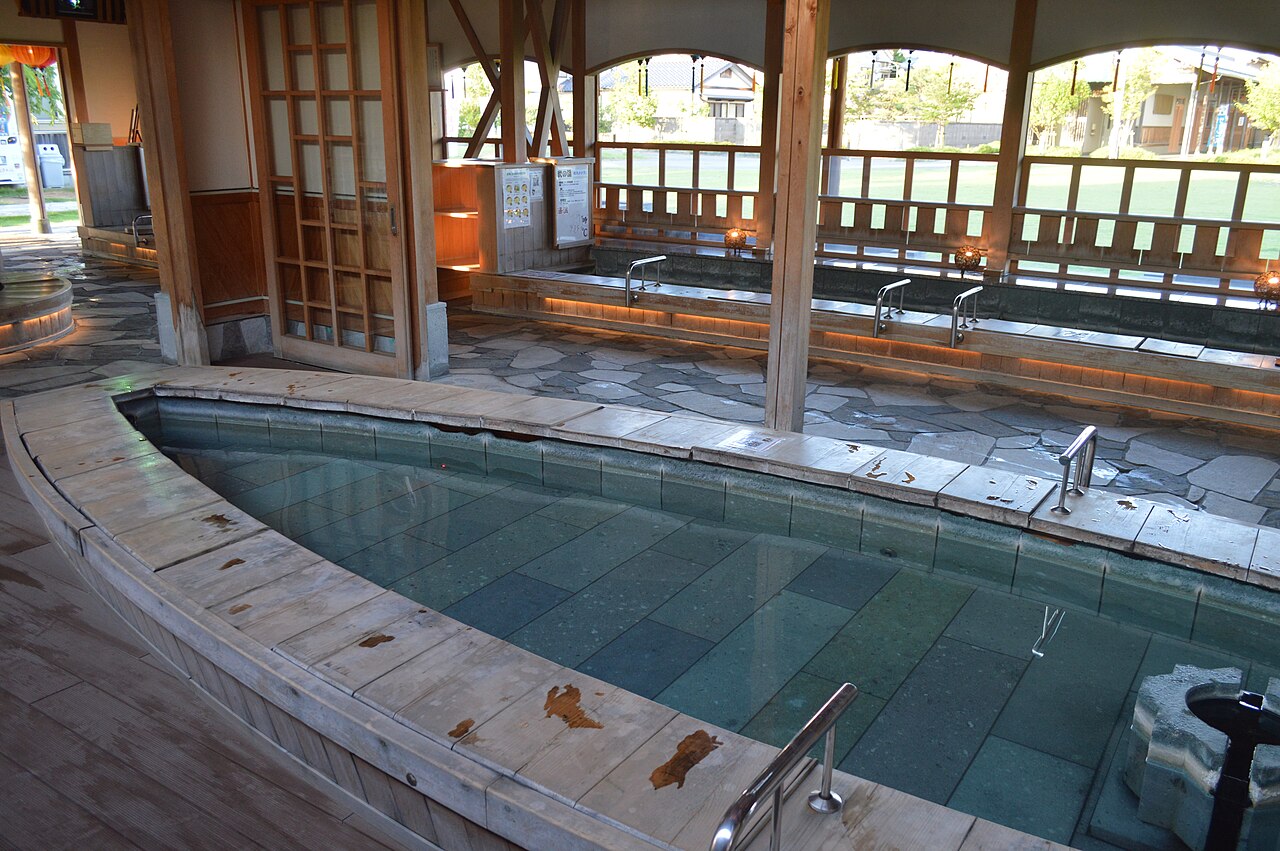
Look at the building itself, built entirely of hinoki cypress. Ashiyu also makes generous use of Shakudani stone from Fukui Prefecture. See the stained glass light panels, which depict plum blossoms, iris flowers and geisha.
Buy a towel from the vending machine at Ashiyu instead of packing one. Warm the feet in the baths, then check the notice board for the dates of a foot-reflexology massage. The massage is offered at Ashiyu after the feet have been warmed.
Making a hot spring egg is the other hands-on stop in town. Write a name or draw an illustration on the shell, then soak the egg in the hot spring. A shop in town takes visitors who want to make the eggs, and a facility in town lets them draw a picture of their choice.
Bathing in Awara Onsen Inn Baths: Soft Water, Sulfur Smell and Waterfall Sound
Travelers who choose a bath by the texture of its water have reason to compare inns here, because each lodging draws on its own wells.
Bathing here changes from inn to inn, as the hot spring components differ slightly by facility. The lodgings each keep a style of their own. The hot spring began when a well sunk in a rice paddy for irrigation gave warm, salty water.
Compare one inn's bath water, listed as soft and fine-textured, with another's weakly alkaline water, which is said to leave skin smooth after bathing. Elsewhere the spring water is called mellow. A women's large bath at yet another inn has water described as a white veil of micro bubbles.
Notice the sulfur smell at some inns, where the spring is listed as colorless, transparent sodium-calcium-chloride water. Listen in one inn's dome bath, where bathers hear the sound of a waterfall while they soak. At another inn the source water is cooled to a suitable temperature before it is poured into the tub.
Choose Hakuwaso for a garden open-air bath, for men and for women, with natural hot spring water. Awara Onsen Matsuya Senzen has a floor of guest rooms with open-air baths. One inn offers a barrier-free private bath with a sauna.
Strolling the Hot Spring Town in Yukata, Kimono or a Maiko Transformation
Pick the yukata set for geta and a hair ornament, the kimono plan for its choice of kimonos, or the maiko and geigi plan for makeup and a wig.
Renting a yukata covers the whole outfit rather than the robe alone. A yukata rental plan includes the yukata with geta, a kinchaku bag and a hair ornament, then kitsuke dressing and tabi socks. Leave bags behind, because luggage storage and snack coupons are part of the plan.
Choosing a kimono comes at the start of a kimono rental plan. The plan includes zori sandals and a drawstring bag with the kimono, dressing, tabi socks and luggage storage. Walk the lit town in a kimono with a lantern in hand when the evening event is running.
Dressing as a maiko or geigi follows a set order. Makeup comes at the start, then the wig, then a kimono chosen from several types and the dressing itself. Take photos once the dressing is finished; removing the wig and makeup and changing back into regular clothes comes last.
Following Lantern Light to the Three Yakushi Halls and Shrines
If the Yoru-moude event is running during a stay, borrow a hand-held lantern after sunset and walk to the Yakushi halls and shrine that are illuminated for it.
Following the Yoru-moude route begins at either of its starting points, a street in town or Awara Onsen Yunomachi Hiroba. Borrow a hand-held lantern during the event period at a hall in the town square, at no charge. Next, set out on the route, which covers the Yakushi halls and shrine of the onsen town.
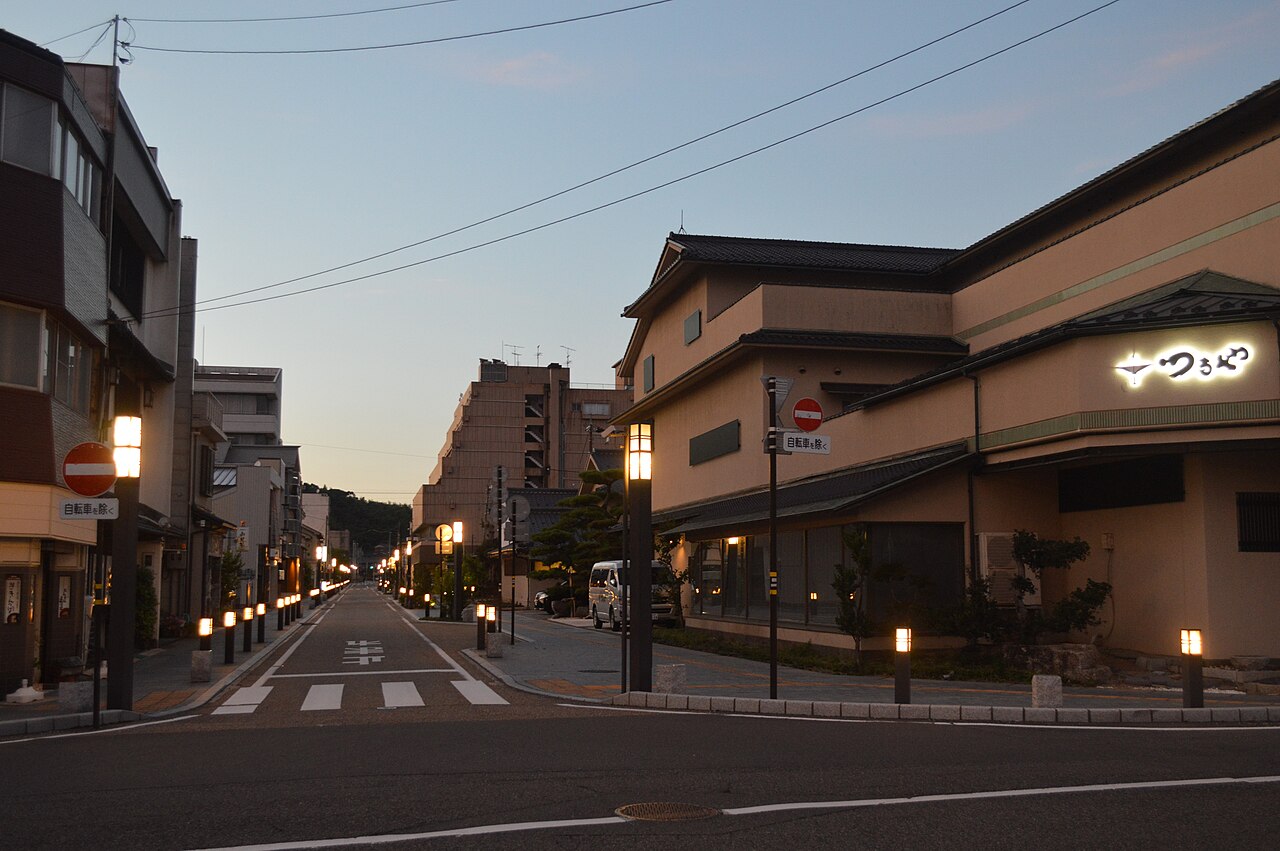
Walk to Funatsu Onsen Yakushido, Futamo Onsen Yakushido and Tanaka Onsen Yakushi Shrine, the sites that the Yoru-moude walk lights up. The lighting for the walk begins at sunset. Visiting all of them is said to bring protection from illness, long life and well-being.
Listen for music on evenings when a twilight concert is held, with the Yakushi sites of the onsen town as its stage. Visitors walk through the town by lantern light during the concert. Stop in Awara Onsen Yunomachi Hiroba for bamboo lanterns, carved from bamboo tubes in various sizes for a separate light event.
Eating Echizen Crab, Yatai Grills and Local Sweets
Echizen crab is tied to a fishing season that opens in November, whereas Yukemuri Yokocho, the yatai village, is about ramen and teppanyaki stalls.
Ordering crab here starts with the names. Echizen crab is the term for male snow crab landed at ports in Fukui Prefecture, and the female is called Seiko-gani. Look for the yellow tag carried by snow crab landed in the prefecture. A fully reservation-based crab restaurant operates in town.
Ordering katsu over rice brings a runny egg placed on the rice instead of over the cutlet, so the katsu stays crispy to the end. Hormone Udon uses plump, springy offal, and a gyoza set pairs a chewy skin with juicy meat juices. Squeeze lime onto tacos for a refreshing taste.
Walk the stalls of Yukemuri Yokocho, which include ramen and teppanyaki shops. Choose hand-wrapped dumplings seared to a crisp surface or ramen on a pork-bone broth. Taste several sakes poured into separate ochoko cups, with the aroma and flavor of each explained during the tasting. One has an aroma like grapefruit and another like green apple.
Grilling dango yourself is the point of a sweet set at eXcafe, where the customer cooks the dumplings on a shichirin charcoal burner. The grilled dango has a toasty aroma. Choose items with a snack coupon from the sweets of shops around the town, or buy a dorayaki with a moist dough and plenty of red bean paste.
Getting to Awara Onsen, Foot Bath Hours and Seasons
New to rural buses and one-man trains? See how to ride them, step by step.
Times, fares and dates are as listed, and crab season dates may change by year. Rooms in the hot spring town are listed in places to stay in Awara Onsen.
| Item | Details (as listed) |
|---|---|
| From the station | About ten minutes by taxi or bus from JR Awara Onsen Station; the Hokuriku Shinkansen from Kanazawa takes about thirty minutes |
| Ashiyu foot bath | Open seven to twenty-three, year-round with no closing days; about ten to thirty minutes suggested; two-minute walk from Awara Yunomachi Station |
| Echizen Railway pass | One-day free ticket, twelve hundred yen for adults and six hundred yen for children |
| Echizen crab season | Fishing from November sixth to around March twentieth; Seiko-gani to around December thirty-first; Seiko-gani from three thousand yen |
| Lantern event | Yoru-moude is listed through November thirtieth, twenty twenty-six; lanterns lent free from six to ten in the evening at a hall in the square |
| Yukata rental | Three thousand yen per person, booked from two people; the yukata must be returned by sixteen thirty |
| Area taxi | Daily nine to seventeen, last reception sixteen thirty; five hundred yen per section bought in advance; not running December twenty-ninth to January third |
Thinking of staying overnight?
Compare places to stay near Awara, Fukui, Japan →
Disclosure: This post may contain affiliate links. If you book through them, we may earn a commission at no extra cost to you.