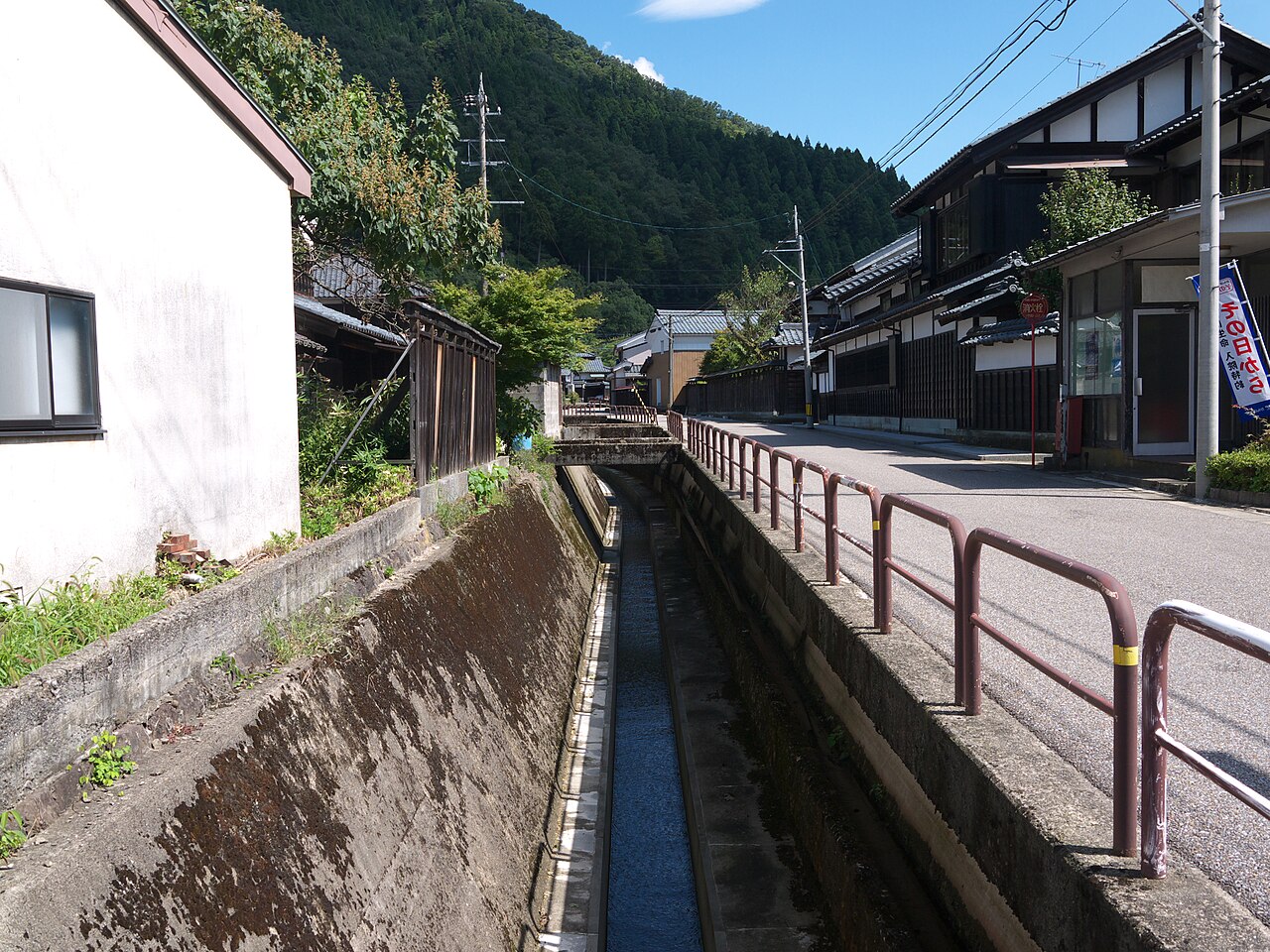
Echizen in Fukui is a town of makers: washi paper, forged knives and lacquered wooden chests are made in workshops here, and the knife village among them is built so that the work and the makers' hands stay in full view. The reward of a visit is seeing a sheet of paper take shape between two people working in step, then sitting down to Echizen oroshi soba, the local soba eaten with grated daikon. Begin on the papermaking lane of Imadate, watch sheets being formed in the washi workshops, stop at Otaki Shrine, then turn to Takefu Knife Village and the furniture makers' street and finish with that bowl of soba. It suits travellers who want to watch craft done at the maker's pace and try a little of it themselves.
The Papermaking Lane of Imadate
Visitors to Imadate start on the lane of the washi village, where the facilities connected with paper are gathered, among them a papermaking experience centre and a restored papermaking house.
The restored house is a papermaking home from the mid-Edo period, moved here and rebuilt, and inside it the whole sequence can be followed: kozo and mitsumata prepared as raw material, sheets formed with traditional tools, and wet paper drying on boards in the sun or indoors.
The paper museum picks up the story on its second floor, where the history and culture zone introduces living national treasures and master craftsmen and shows papers designated as important tangible folk cultural properties next to well-used tools. One local product to know about is made by applying egoma oil to many layers of washi and then drying and maturing it over several years. If time is short, take the restored house first and the museum second, since the tools mean more once you have seen them in use.
Inside the Washi Workshops
Inside the workshops, visitors watch raw material scooped into a sieving frame and moved lengthwise and crosswise, the craftspeople working in step as large sheets are made one after another. At one workshop two adults move a large frame together in rhythm to form a single sheet.
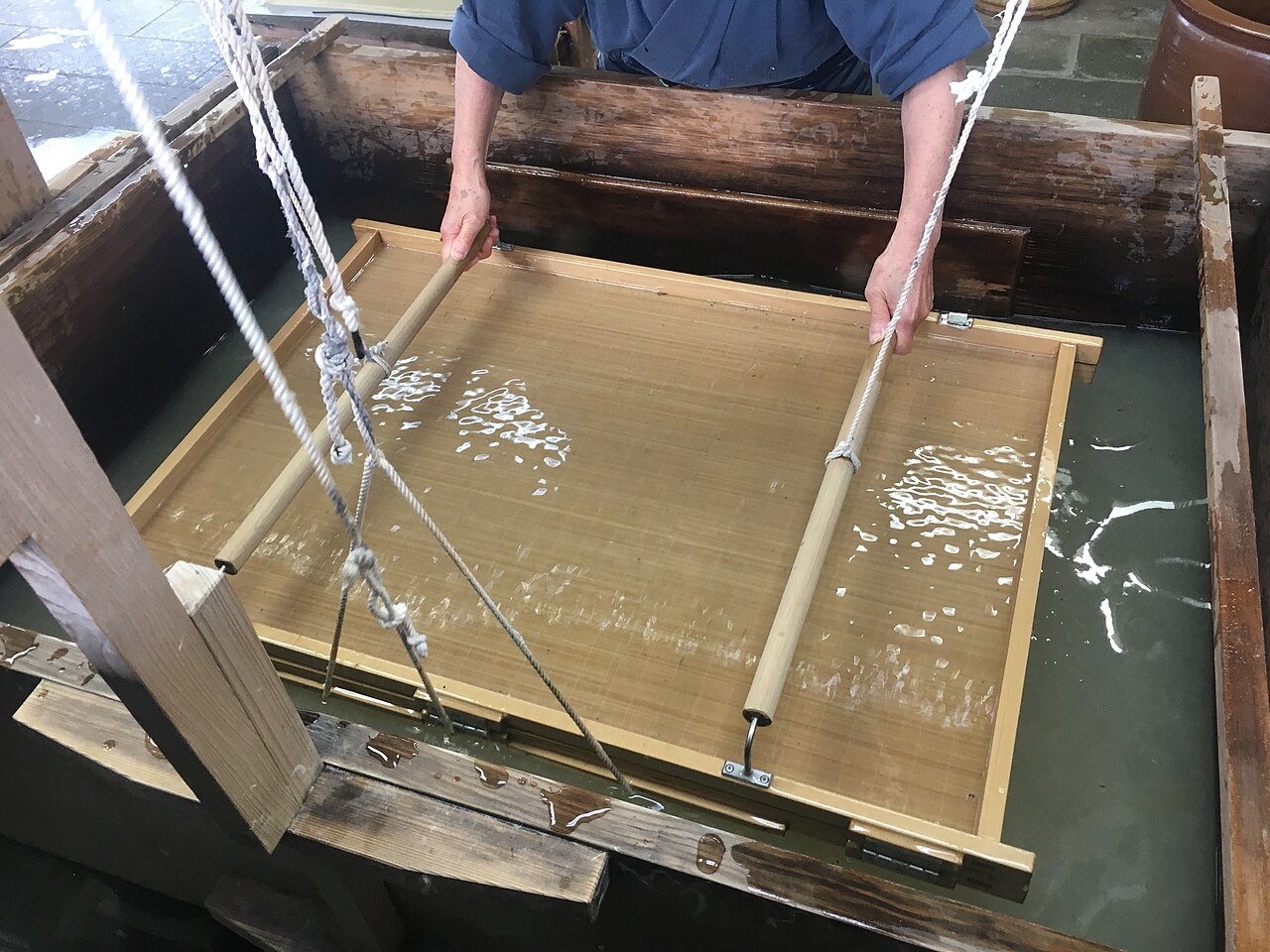
At another workshop three women work together, making two sheets by hand and pasting them together, and the finished sheets come one after another. The thin, translucent kozo paper made there goes on to wrap and line Japanese sweets.
Before that, harvested material is steamed in a kettle, the bark peeled, and the black outer layer scraped away to leave white bark. Each sheet is then stuck onto a ginkgo board and dried in a warm room, and tiny specks invisible to the eye are picked out of the plain washi one at a time. At one workshop crisp paper is passed through a machine or crumpled by hand until it changes into something like soft cloth. See the sheet-forming first and the finishing after, so the order of the craft stays clear.
Otaki Shrine and the Paper Deity
Otaki Shrine in Imadate greets visitors with shrine buildings rebuilt in the late Edo period under a cypress-bark roof that combines a hip-and-gable form with curved and triangular gables. The front of the worship hall carries carvings of lions and dragons, the first thing to look for when you reach the buildings.
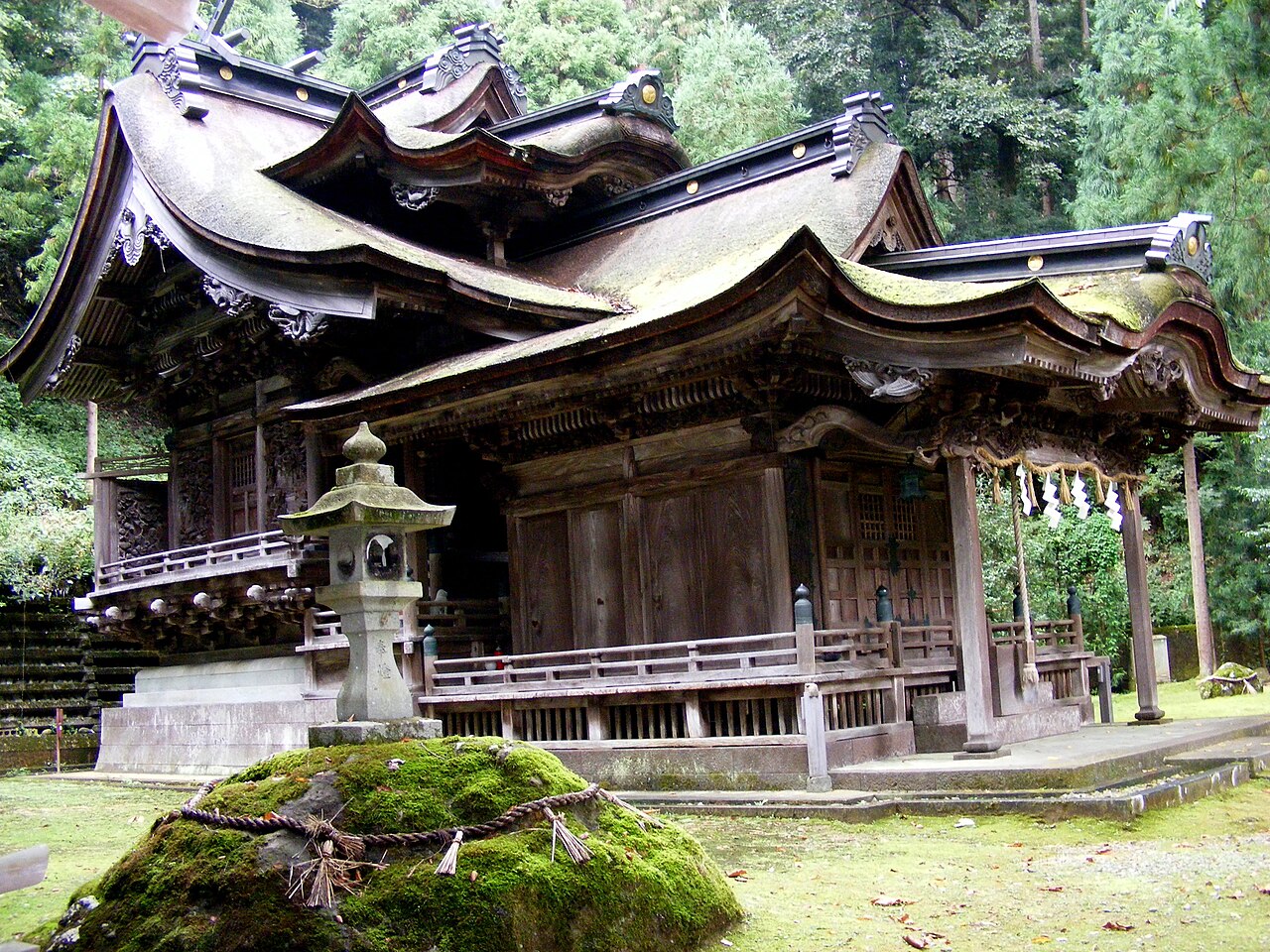
Walk around to the sides and rear of the worship hall, where the carvings turn to scenes from Chinese tales. The shrine building has a complex roof form, and the area including the summit can be walked as a historic site, so the visit need not end at the worship hall.
Legend says that a princess appeared upstream of the river and taught the villagers the art of papermaking, and she is enshrined here as the paper deity, which makes the carved hall in front of you the shrine of the craft you watched in the workshops. Come after the workshops rather than before, since what you watched there is what gives the shrine its meaning.
Takefu Knife Village and Echizen Uchihamono
Takefu Knife Village gathers Echizen uchihamono craftspeople in one shared workshop, built so that their work scenes and their hands are fully visible, and visitors can watch or try knife making.
One maker at the village forges each blade one by one by hand, with the fire-forging technique. At another workshop a craftsperson checks each knife for fine irregularities and chips along the edge and re-sharpens it in several stages. Hands-on sessions in key chain making and sharpening are offered as well, so even a short visit can include some work of your own.
Echizen Uchihamono Kaikan explains the history and the production process of Echizen uchihamono with panels inside the hall. The craft is said to go back to a Kyoto swordsmith who forged sickles for nearby farmers, and the fire-forging and hand-finishing kept for about seven hundred years are what you see at work in the village. Read the panels first if you can, since the stages they describe are the ones you will then see in the makers' hands.
Furniture, Chopsticks and Echizen Tansu
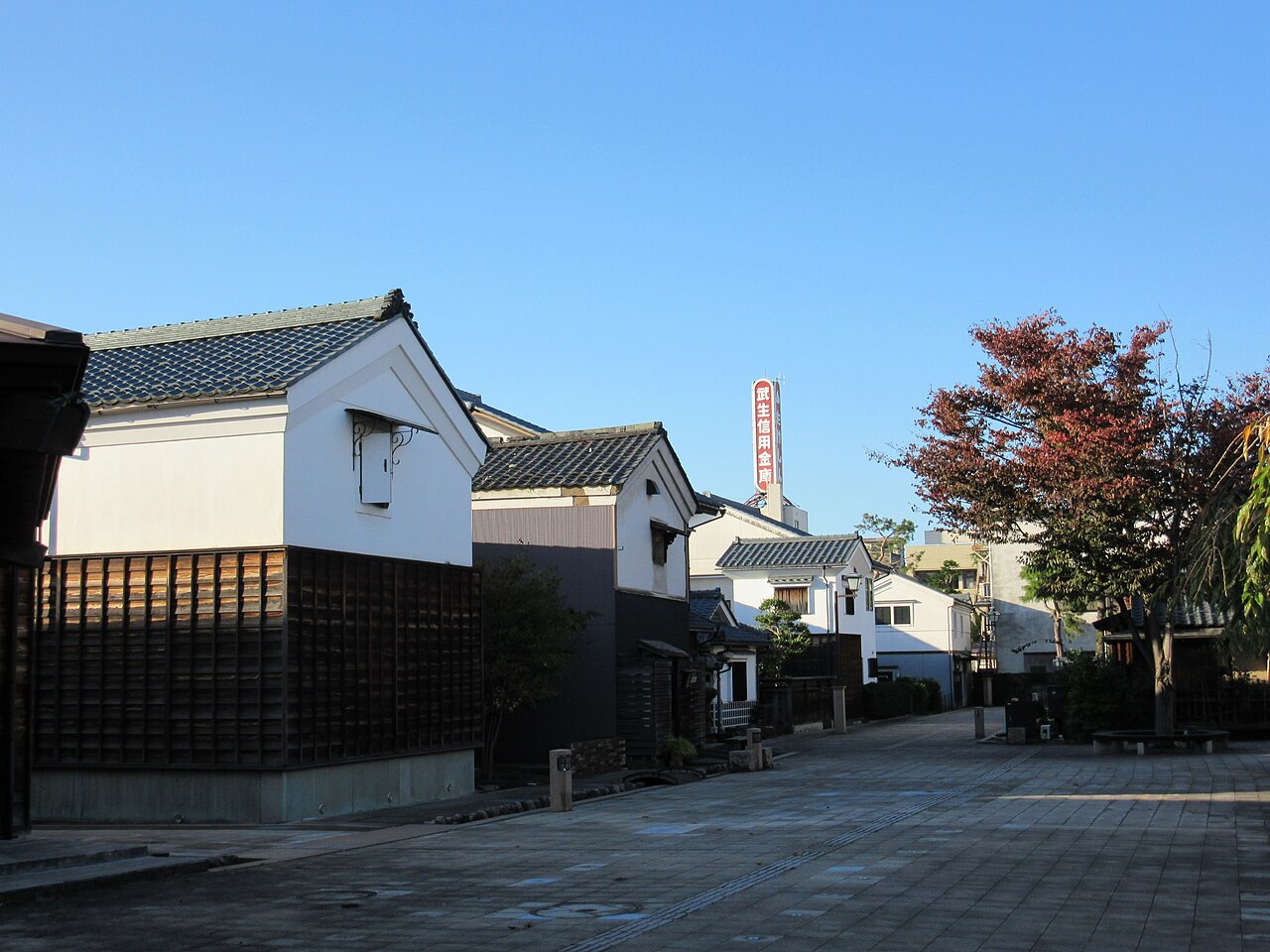
Takefu has a short street where furniture makers, sellers and joinery shops gather, and a slow walk along it is a good way to see the furniture trade.
One workshop on the street lets visitors make their own chopsticks from the offcuts produced when furniture is made. A jig developed by the workshop's representative lets even first-time users of a plane cut cleanly, one chopstick at a time, so the pair you take away is your own work.
The same street is home to Echizen tansu, chests made by combining three local techniques: joinery that fits wood to wood, metal fittings worked with the blade-forging technique, and lacquering that protects the wood. Craftspeople making tansu settled here from the late Edo period onward, and their fittings often carry a pattern shaped like a boar's eye, easy to spot once you know to look for it. Workshop visits are offered too, and handling a plane first makes the joinery and forged fittings on a chest easier to appreciate.
Echizen Oroshi Soba and the Local Dishes
Echizen oroshi soba is the local soba of Fukui, eaten with grated daikon radish. The basic set is soba, grated daikon, dashi or raw soy sauce, and green onion and bonito flakes, and the sharpness and the way of eating vary from shop to shop.
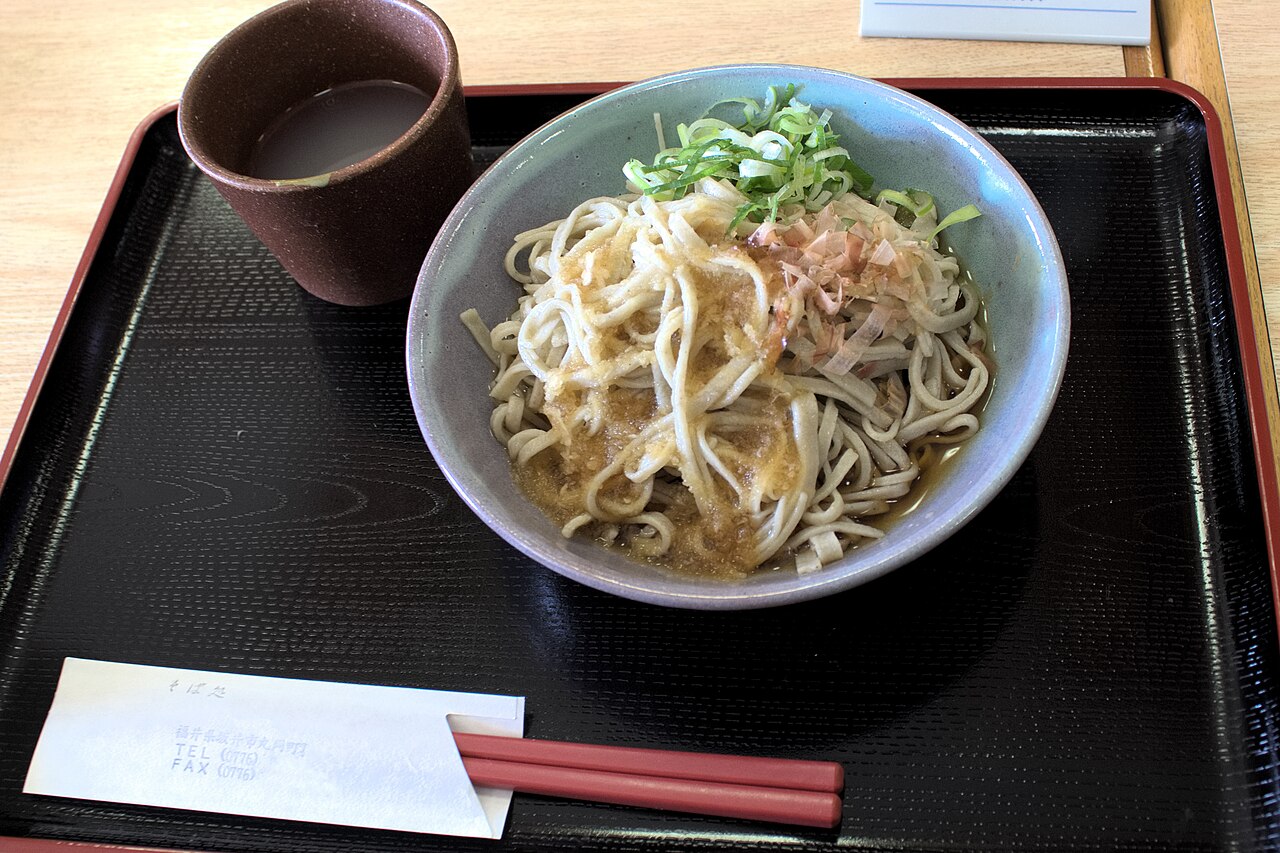
Coarsely ground oroshi soba made with Echizen City buckwheat flour is richly aromatic. The dish is said to have begun as a way to eat soba with grated daikon for health, devised after consulting a doctor of the castle town, and that daikon is what gives the bowl its bite.
Oroshi soba is one of Echizen's three major local gourmet dishes, alongside Volga rice and chuka soba, the latter with a clear, light soup. One restaurant tops its Volga rice with Fukui's sauce katsu and divides a kamameshi version into a rice bowl so you can change the flavour with two kinds of sauce. If you have room for one meal, make it oroshi soba and leave the other two for a second day. Those wanting that second day, and another shop's daikon to compare, can look at places to stay in Echizen.
Getting to Echizen
| Leg | How | Time and estimate |
|---|---|---|
| Tokyo to Echizen City | Hokuriku Shinkansen | About 3 hours 6 minutes |
| Osaka to Echizen City | Limited express via the Kosei Line, then the Hokuriku Shinkansen from Tsuruga | About 1 hour 41 minutes |
| Nagoya to Echizen City | Limited express via Maibara, then the Hokuriku Shinkansen from Tsuruga | About 1 hour 31 minutes |
| Kanazawa to Echizen City | Hokuriku Shinkansen | About 37 minutes |
| JR Takefu Station to the crafts information office | On foot | About 1 minute |
| JR Takefu Station to Echizen Uchihamono Kaikan | By car | About 15 minutes |
New to rural buses and one-man trains? See how to ride them, step by step.
Hours and Fees
| Place | What | Hours or fee |
|---|---|---|
| Papyrus House | Washi-making experience | 9:00-16:00, closed over the year-end and New Year period |
| Papyrus House | Coaster-size washi-making experience | 1,100 yen |
| Udatsu Craft House | Restored papermaking house | Closed Tuesdays and over the year-end and New Year period |
| Takefu Knife Village | Workshop and classes | 9:00-17:00 |
| Echizen Soba no Sato | Meals, including oroshi soba | 10:30-15:00 |
| Echizen City shared cycle | Rental, up to 4 hours | 770 yen, plus 110 yen per further 30 minutes |
Where to stay
Places to stay near Echizen, Fukui, Japan →
Disclosure: This post may contain affiliate links. If you book through them, we may earn a commission at no extra cost to you.