The Echizen Crab Museum lets visitors learn about the ecology of the brand crab and the fishing culture through hands-on exhibits. In the hand-forming course, visitors make an original piece such as tableware or a vase freely, using Echizen clay. From the open-air bath facing the Sea of Japan, visitors can watch the sun sinking into the horizon while soaking in the tub.
This route suits visitors who want hands-on crab exhibits, a pottery course using Echizen clay and an open-air bath facing the Sea of Japan, with Michi-no-Eki Echizen as the base of the coast.
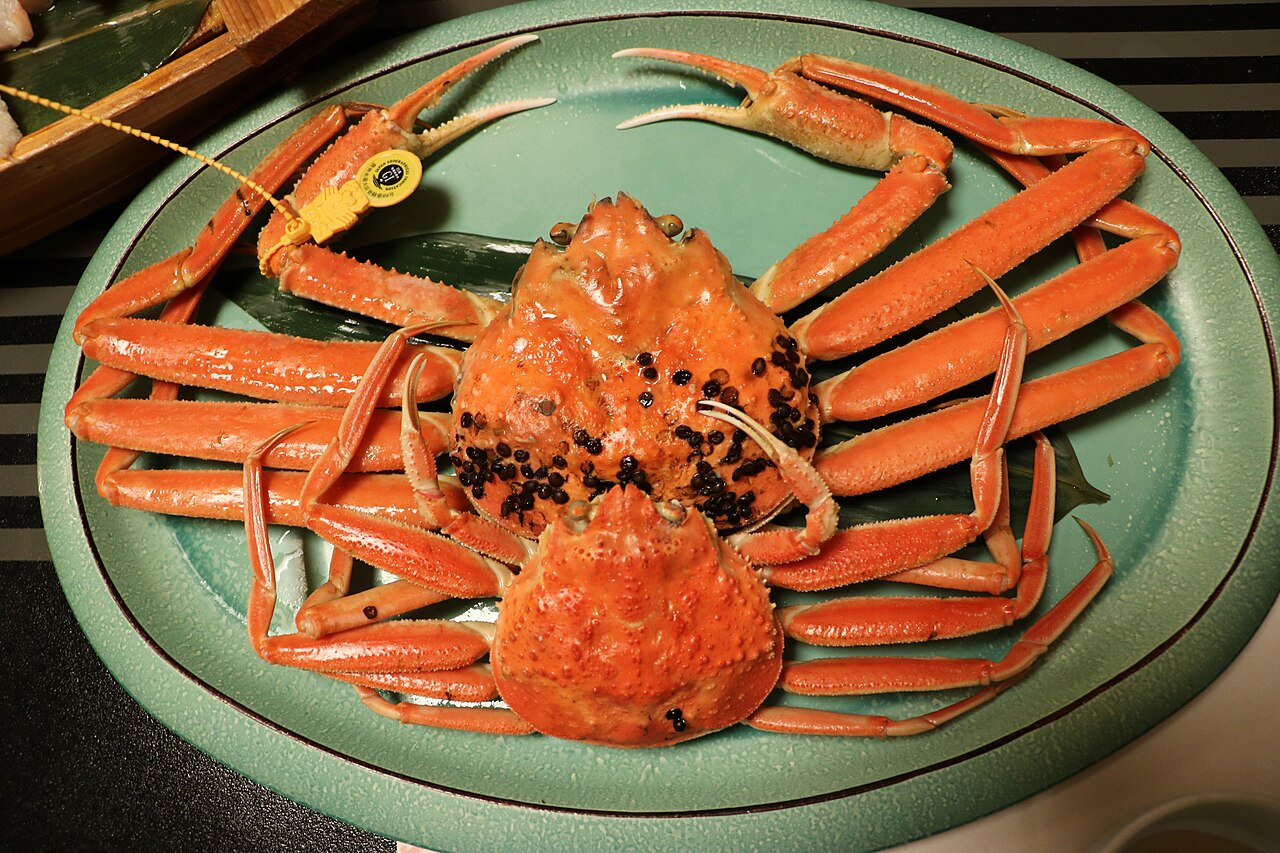
Echizen crab is the snow crab landed at Fukui Port, and it carries a yellow tag bearing the brand mark as proof.
| Time guide | Place | What you do | Walk or stay |
|---|---|---|---|
| Morning | Fukui | Arrive from Tokyo Station by Hokuriku Shinkansen | About two hours forty-nine minutes |
| Morning | Echizen Pottery Village | Ride the Fukutetsu bus from Takefu Station | Twenty-five minutes, then ten on foot |
| Midday | Michi-no-Eki Echizen | Crab museum and seafood dining | Sixty-five minutes from Takefu |
| Afternoon | Isaribi open-air bath | Soak facing the Sea of Japan | Next to the roadside station |
| Afternoon | Cape Echizen | Lighthouse, deck and daffodil slopes | Thirty to sixty minutes |
Shaping Clay at the Echizen Pottery Village
Visitors can try hand-forming and painting under staff guidance, in pottery-making sessions that beginners can join. In the hand-forming course, visitors make an original piece such as tableware or a vase freely, using Echizen clay.
Visitors can buy Echizen ware at a kiln direct-sales shop, at kilns and at galleries, from everyday tableware to one-of-a-kind pieces. The kiln direct-sales shop displays and sells about one thousand kinds of Echizen ware such as plates, bowls, beer mugs and wine cups. There is also a tea garden where visitors can drink matcha from an Echizen ware tea bowl.
In the pottery sculpture plaza, art works including pieces by Okamoto Taro and Isamu Noguchi are scattered among monuments made by Echizen ware kilns, fifteen pieces in total. The artists who moved into the village still keep workshops and galleries around the pottery village and carry on their creative work.
Visitors can stroll anywhere in the extensive ceramic park looking at the cherry blossoms during the blossom season, as cherry trees are planted in various parts. Echizen ware is counted as one of the Nihon Rokkoyo, the six ancient kilns, and its history goes back about eight hundred fifty years.
Exploring the Echizen Crab Museum
At the sea promenade zone, visitors can see living seafood and the fish of each season living off Echizen, in a space like being inside the sea. The tunnel aquarium there has been enlarged and a new tank added, where visitors can watch live fish and shellfish. Through hands-on exhibits, visitors can learn about the ecology of Echizen crab and the fishing culture.
At the picture aquarium, a fish picture drawn by the visitor swims in a tank on a large screen. At the crab-collecting corner, crab images floating on the floor move when stepped on, and visitors pick up rubbish on the sand beach to collect hidden crabs. The theatre conveys the difficulty and thrill of crab fishing with videos on a large multi-projection screen.
The crab-fishing simulator reproduces wave spray realistically, as if steering a real fishing boat, from leaving port to returning to port. The Echizen Crab Museum is described as a hands-on museum where visitors learn about Echizen crab by seeing, touching and playing. Male Echizen crabs live at around three hundred metres depth, and females a little shallower at around two hundred fifty metres.
Eating Echizen Crab and Seafood Bowls at Michi-no-Eki Echizen
Restaurants serving seafood dishes in the building and nearby let visitors eat Echizen crab and seasonal seafood. Inside Michi-no-Eki Echizen, Echizen crab, known as a winter delicacy, fresh seafood, dried fish, Echizen ware, local sake and sweets are displayed as souvenirs. The meat of the Echizen crab is packed in the shell, delicate and sweet, with rich crab miso held in the shell.
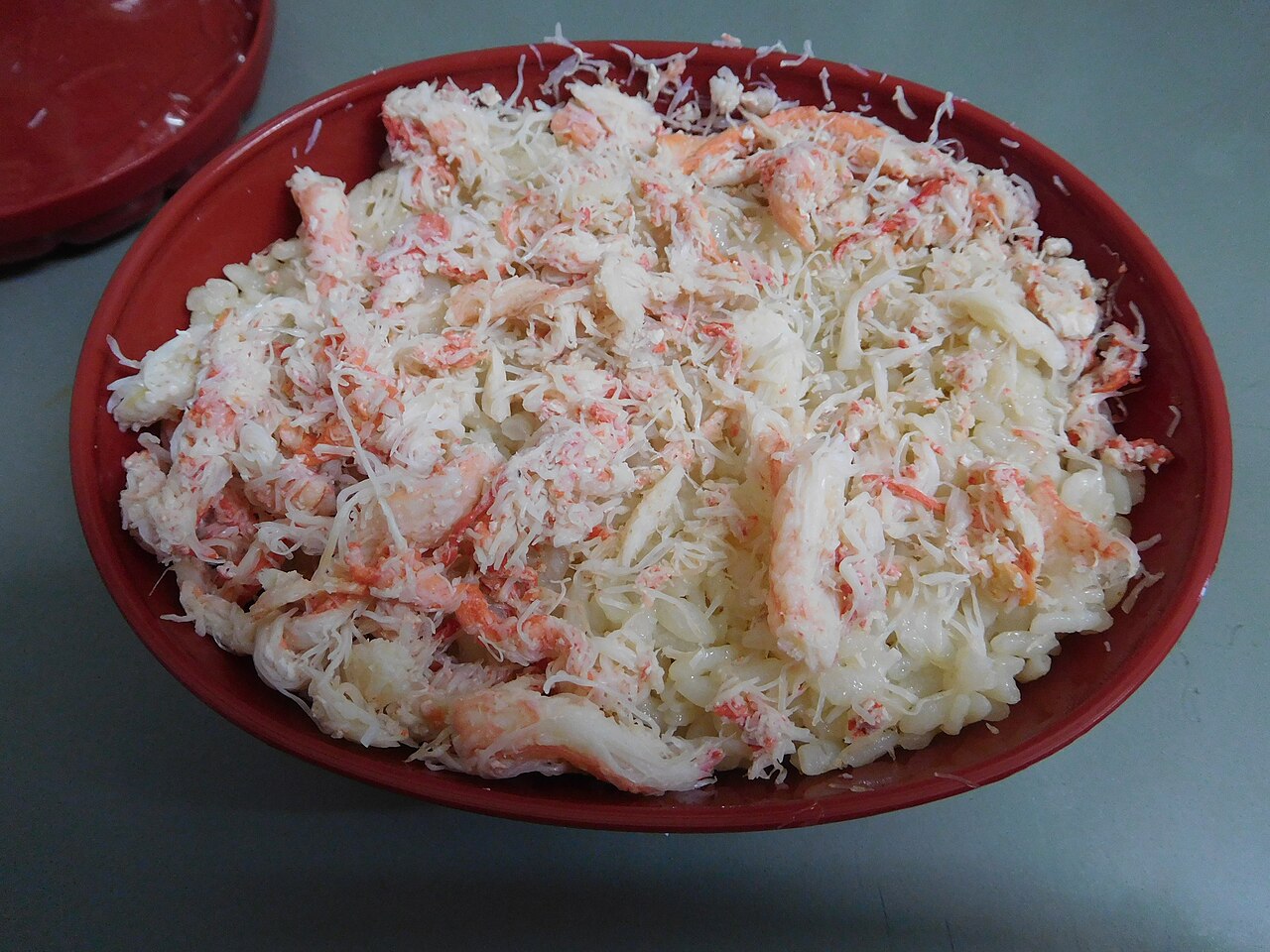
A seafood bowl made with the day's seasonal fish is served at shops along the Echizen coast. The fish used in the bowl changes with the day's purchase and the season. At one shop there are four kinds of the bowl, and each of them comes with miso soup and pickles.
The sweet shrimp meat is plentiful, and its sweetness spreads softly in the mouth. From the second-floor dining space of one shop, the Sea of Japan can be seen from the window. The female crab, seiko crab, carries outer eggs on the belly with a granular texture.
Crab fishing opens when the cold seasonal wind begins to blow. The fishing town becomes lively, and in-season Echizen crab are caught by bottom trawl net. Only male Zuwai crab carry the yellow tag that marks an Echizen crab. The male Echizen crab is called Echizen crab and the female seiko crab, while locally the male is zuwai and the female seiko.
Watching the Sunset from the Isaribi Open-Air Bath and Kuriya Viewpoint
Bathers in the natural hot spring of the open-air bath facing the Sea of Japan hear the sound of the waves. The view in front of the bath changes by time of day, with a blue shining sea in the daytime. In the evening the sun sinks to the horizon, and at night lights of fishing boats float in the view.
Visitors soaking in the tub can watch the sun sinking into the horizon from the open-air bath facing the Sea of Japan. The bath can be combined with the Echizen Crab Museum, seafood and souvenir shopping. For its water, the bath uses the natural hot spring of Echizen Town.
The Kuriya viewpoint stands on high ground in the Kuriya district, and from it the townscape and the Sea of Japan can be seen. From the bridge the Echizen coastline can be seen, and in the evening the lights of the town and the sun setting into the sea make a contrast.
Walking Cape Echizen and the Daffodil Fields
From the observation deck, visitors can look out over Tojinbo and the Tsuruga Peninsula. The deck stands on the uppermost part of the ridge leading to the cape. From it the daffodil field, the white lighthouse and the Sea of Japan can be seen all at once. A white lighthouse stands on the summit at the tip of the cape.
The grounds are easy to walk around, and visitors can spend time slowly in nature. In winter, Echizen daffodils bloom across the slopes around the cape. At full bloom, about fifteen million daffodils bloom in a six-hectare field.
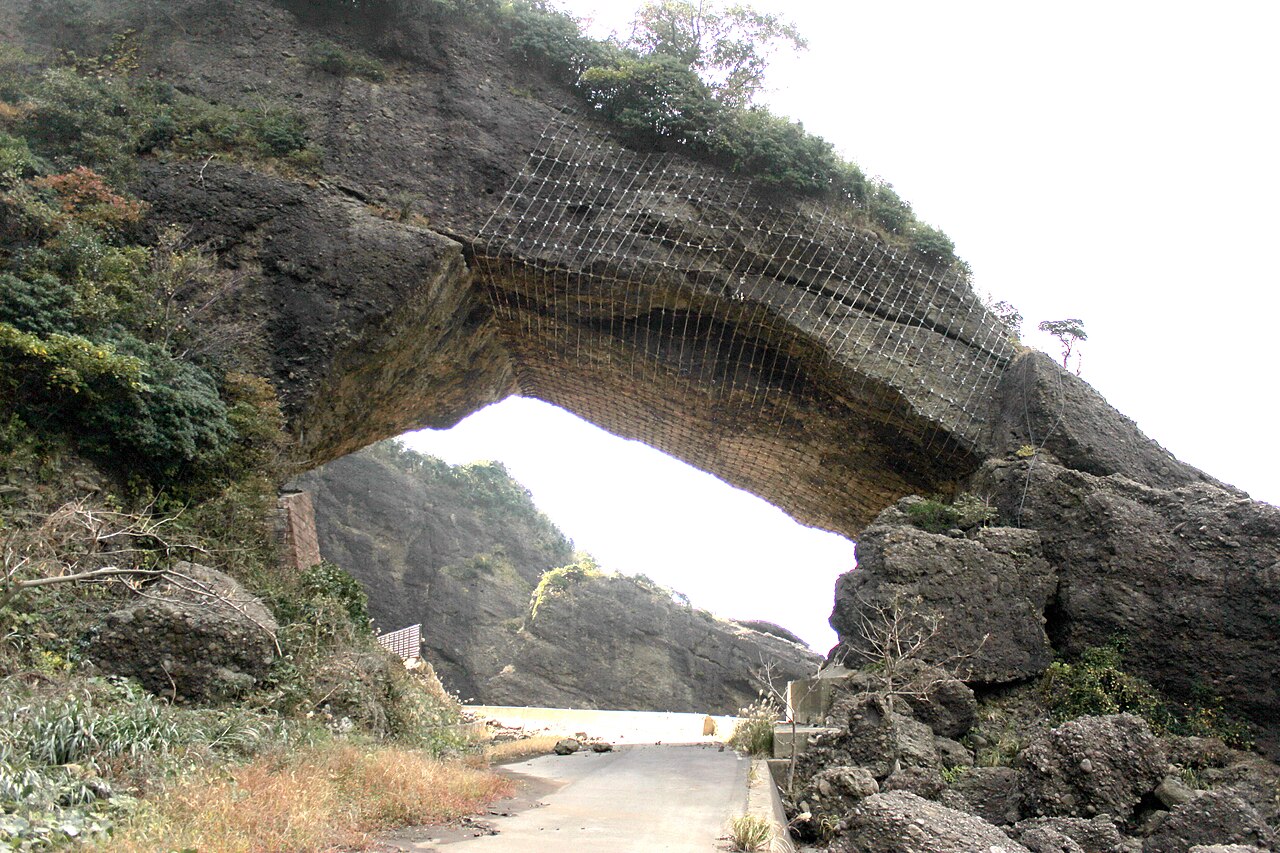
A cave in a large rock jutting into the sea has been hollowed by wind and wave erosion. The national road used to pass beneath the cave, and now a promenade has been built so that visitors can see it up close. At the cape, the rock face rises and rough waves strike it, and scattered reefs are part of the scenery.
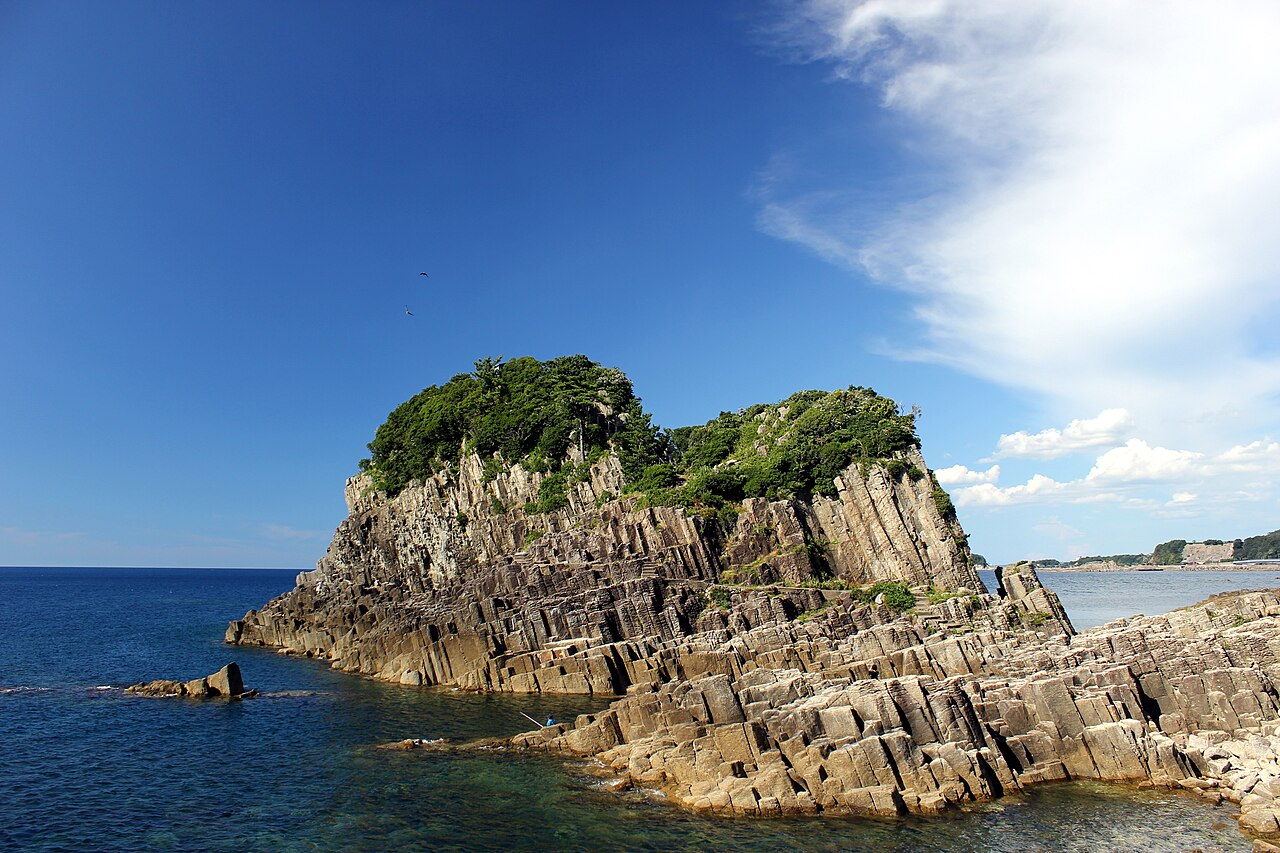
Twin-like rocks rise from the sea, and the sun can be seen setting between the two when timing coincides. Around the cape there is little town light, and on clear days a sky full of stars is visible. South of the cave, the tip of a great rock face is a seabird habitat, white with droppings that gave it its name.
Getting to the Echizen Coast
New to rural buses and one-man trains? See how to ride them, step by step.
| Route | Item | Detail |
|---|---|---|
| Tokyo Station, Hokuriku Shinkansen | To Fukui Station | About two hours forty-nine minutes |
| Tokyo Station, Tokaido Shinkansen | To Maibara | About two hours fifteen minutes |
| Maibara, limited express Shirasagi | To Tsuruga Station | About forty minutes |
| Tsuruga Station, Hokuriku Shinkansen | To Fukui Station | About twenty minutes |
| Takefu Station, Fukutetsu bus | To pottery village stop | About twenty-five minutes |
| Pottery village stop | To the village | Ten minutes on foot |
| Takefu Station, Fukutetsu bus | To Michi-no-Eki Echizen | About sixty-five minutes |
| Expressway interchange, by car | To Echizen Pottery Village | About thirty minutes |
| Fukutetsu bus | Payment | IC cards accepted |
| Tsuruga Station, Kanikani bus | Fare, one way, per person | One thousand two hundred yen |
| Kanikani bus | Season | December to the end of February |
| Kanikani bus | Not running | December thirty-first to January second |
| Kanikani bus | Advance arrangement | Through the facility, up to three days before |
| Kanikani bus, Course D | Leaves the coast | Eight fifty-five to nine fifty-five |
| Kanikani bus, Course D | Arrives at Tsuruga | About ten twenty-five |
| Kanikani bus, Course B | Leaves the coast | Fourteen-oh-five to fifteen-oh-five |
| Kanikani bus, Course B | Arrives at Tsuruga | About fifteen thirty-five |
| Cape Echizen | Free car park | About fifty cars |
For an overnight stay in the city of Fukui, browse places to stay in Fukui.
Hours and Fees
| Place | Item | Time or fee |
|---|---|---|
| Pottery village hot spring | Day bathing hours | Ten hundred to nineteen thirty |
| Pottery village hot spring | Last entry | Nineteen hundred |
| Pottery village hot spring | Closed | Mondays |
| Pottery village hot spring | Year-end closure | December twenty-ninth to January third |
| Echizen Crab Museum | Adult admission | Five hundred yen |
| Echizen Crab Museum | Child admission | Three hundred yen |
| Echizen Crab Museum | Hours | Nine hundred to seventeen hundred |
| Echizen Crab Museum | Closed | Every Tuesday |
| Echizen Crab Museum | Closed, summer holidays | No closure |
| Echizen Crab Museum | Closed, November to March | Second and fourth Tuesdays |
| Michi-no-Eki antenna shop | Hours | Nine hundred to seventeen hundred |
| Michi-no-Eki dining area | Hours | Nine hundred to seventeen hundred |
| Michi-no-Eki dining area | Last order | Sixteen hundred |
| Antenna shop and Isaribi bath | Closed | Every Tuesday |
| Antenna shop and Isaribi bath | Closed, November to March | Second and fourth Tuesdays |
| Isaribi open-air bath | Hours | Eleven hundred to twenty-one hundred |
| Isaribi open-air bath | Last entry | Twenty twenty |
| Isaribi open-air bath | Adult admission | Five hundred twenty yen |
| Isaribi open-air bath | Elementary school child | Three hundred ten yen |
| Isaribi open-air bath | Infant, from age three | Two hundred yen |
| Isaribi private bath | Adult, per hour | One thousand forty yen |
| Isaribi private bath | Elementary school child, per hour | Six hundred twenty yen |
| Isaribi private bath | Infant, per hour | Four hundred ten yen |
| Isaribi rest room | Three hours, weekdays | One thousand six hundred seventy yen |
| Isaribi rest room | Three hours, weekends and holidays | Two thousand three hundred yen |
| Isaribi rest room | Overtime, per hour | One thousand one hundred fifty yen |
| Echizen crab | Season | November sixth to March twentieth |
| Seiko crab | Season | November sixth to December thirty-first |
| Echizen Crab Festival | Held | Mid-November |
| Daffodils | Usual best time | Late December to around February |
| Daffodil Festival | Held | Mid-December to late January |
Fees and hours were checked against official sources on 15 November 2026.
Thinking of staying overnight?
Compare places to stay near Fukui, Fukui, Japan →
Disclosure: This post may contain affiliate links. If you book through them, we may earn a commission at no extra cost to you.