At Nabana no Sato, the illumination theme area shows a volcanic eruption that changes the scene, lions, zebras and giraffes running in herds, and an underwater scene with jellyfish, manta rays, penguins and whales. The same village holds the greenhouse of the Begonia Garden and its rose garden, the Sato no Yu baths with an outdoor bath, and a bakery filled with the scent of freshly baked bread. From the illumination to roses, baths and bread, all of it sits inside the same village.
Walking the Illumination: Light Tunnel, Theme Area and River of Light
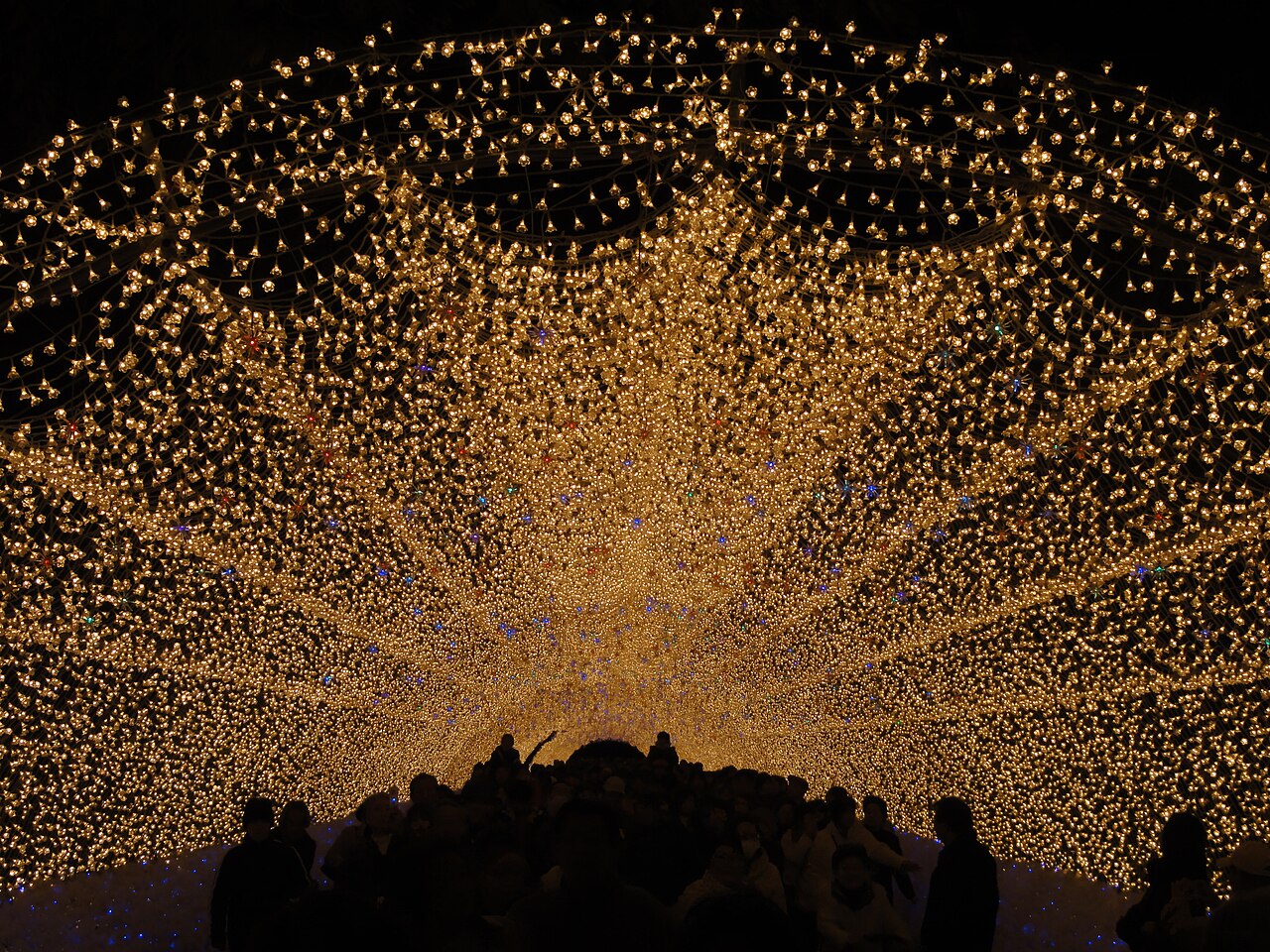
Walking through scenes built with real bulbs and LEDs, with no projection mapping, starts with the tunnel and goes on to the theme area and the water illumination on the pond. The tunnel stands at the entrance of Hana-hiroba, in front of the theme area. Its LED bulbs are based on petal-shaped warm lights.
Passing into the theme area, visitors see a volcanic eruption change the scene. Flamingos, elephants, crocodiles, hippos and colorful birds appear around the water of an oasis. Flower fairies then hand over to the next scene, where lions, zebras and giraffes run in herds. After that the scene moves underwater, and jellyfish, manta rays, penguins and whales appear.
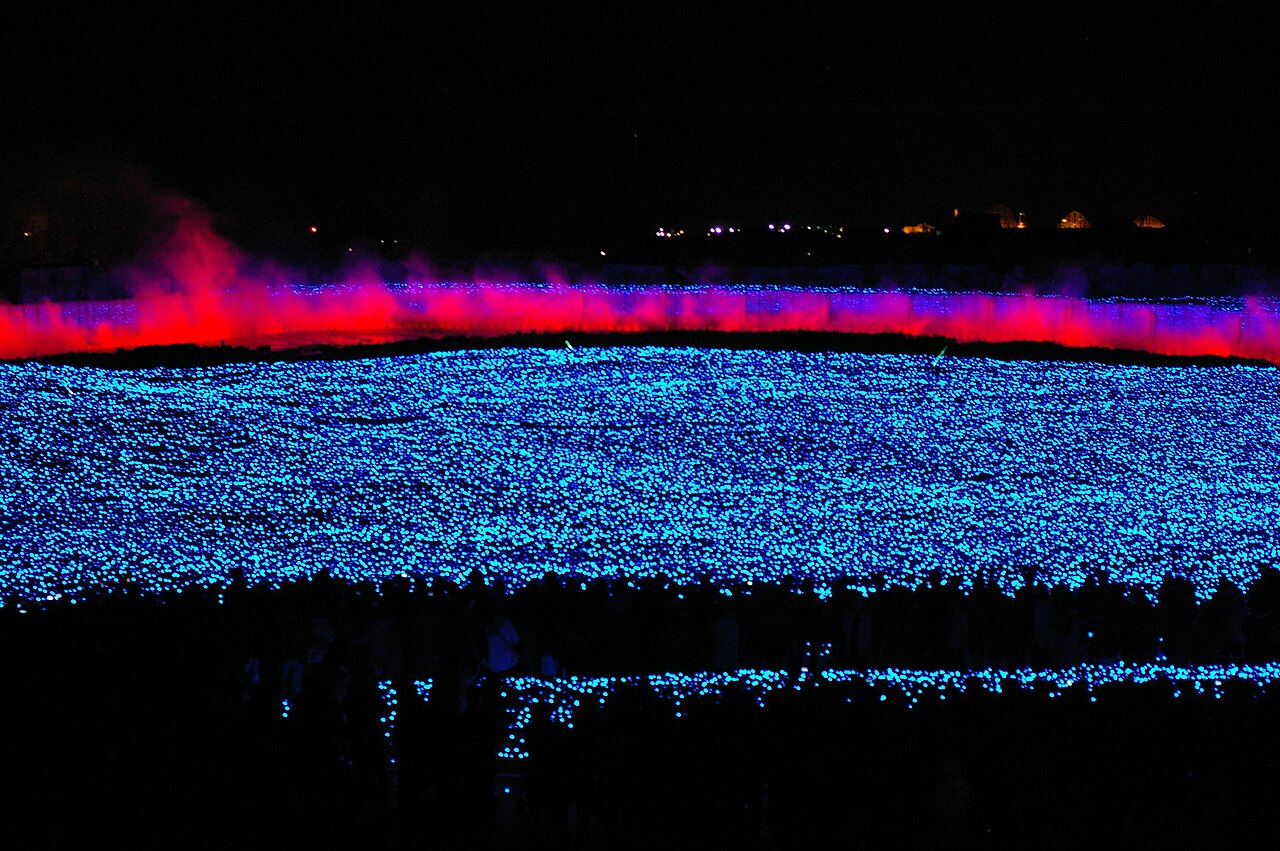
Following the Wild Flower Road, visitors continue on from the theme area. Beyond it, an oasis decorated with champagne-gold lighting spreads out. Solid figures of realistic animals, shaped with LEDs, appear in that oasis.
Stopping at the pond in the center of the park, visitors watch the water illumination. It is described as a shining river, wide and long in scale. The programme shows scenes of the seasons and various scenes of nature.
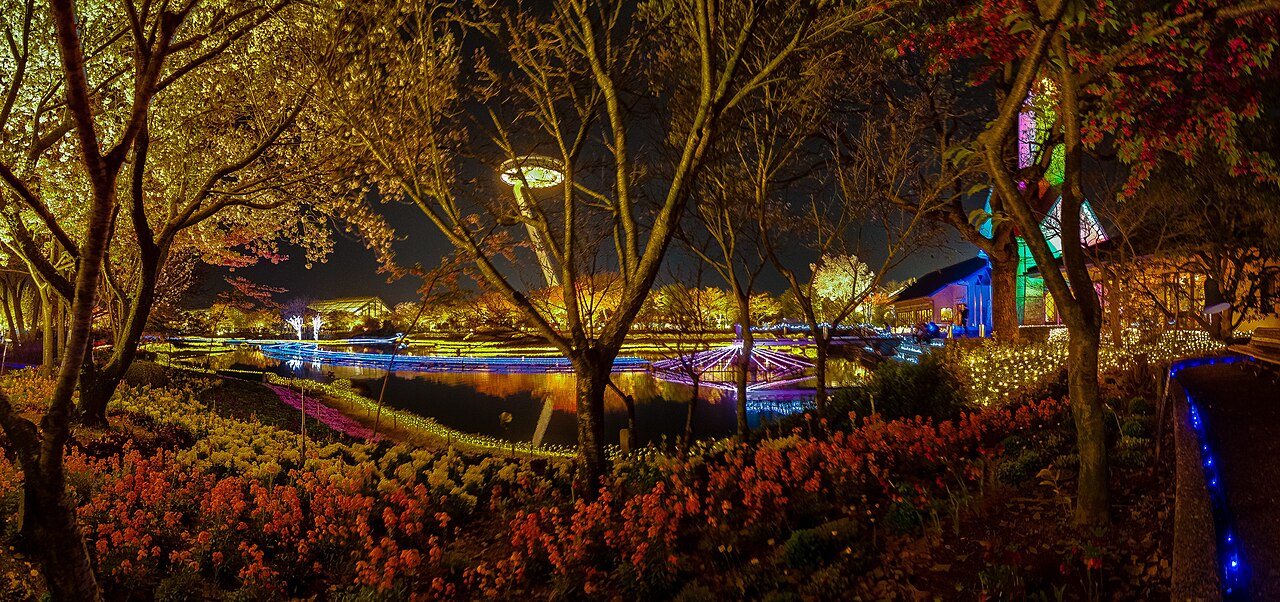
Taking Island Fuji, visitors stay seated on the bench while the platform at the top turns a full circle. The illumination below and the night view of the town are seen from there, with Nagashima Spaland to the south and central Nagoya to the east. Because the illumination is an evening event, staying the night makes it easy to see, and places to stay in Kuwana are listed for the area.
The Begonia Garden, the Rose Garden and the Water-Lily Pond
Choosing what to see in the Begonia Garden depends on the flower, since begonias are displayed there at all times and the rose garden is inside it. Tuberous begonias bloom in pots across the large greenhouse. The water-lily pond is near the entrance to another of the greenhouses.
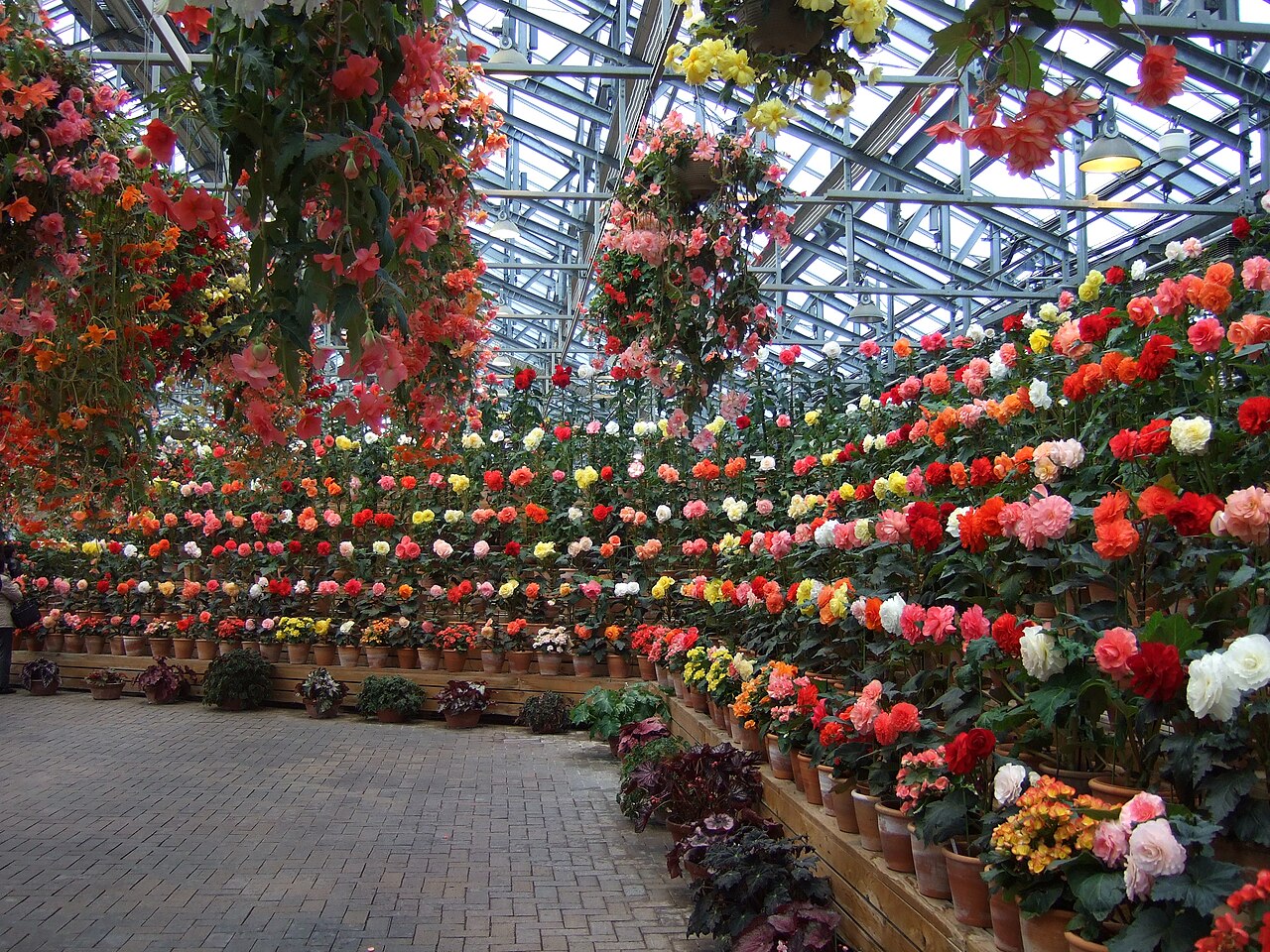
Joining the guided tour on a Saturday puts visitors with the garden's dedicated staff. The staff explain how to view the greenhouse, growing techniques and plant ecology. The tour is held on specific days.
Stopping for a drink, visitors find a cafe surrounded by begonias in the last zone of the greenhouse buildings. The Begonia Garden cafe serves a rose parfait and botanical drinks. A rose tea house is in its courtyard.
Stepping into the rose garden keeps visitors inside the Begonia Garden. The colors, shapes and scents of the flowers are on view, and fragrant English roses are among those in bloom. A stream flows through it. The roses are illuminated from around sunset, depending on the flowering state.
The Flower Field, Hydrangea Tunnel and Fireflies Through the Year
Following the flowers month by month runs from the plum garden and daffodils to tulips with cherry blossoms, then nemophila, then hydrangea and fireflies. The plum garden holds weeping plum trees that bloom in early spring. The plum and cherry blossom festival runs from late February to late March. Daffodils bloom at the base of those trees in late March.
Walking around Hana-hiroba in early April, visitors see cherry blossoms and tulips together. Somei Yoshino cherry trees are planted around the flower field. The tulips are lit up at night.
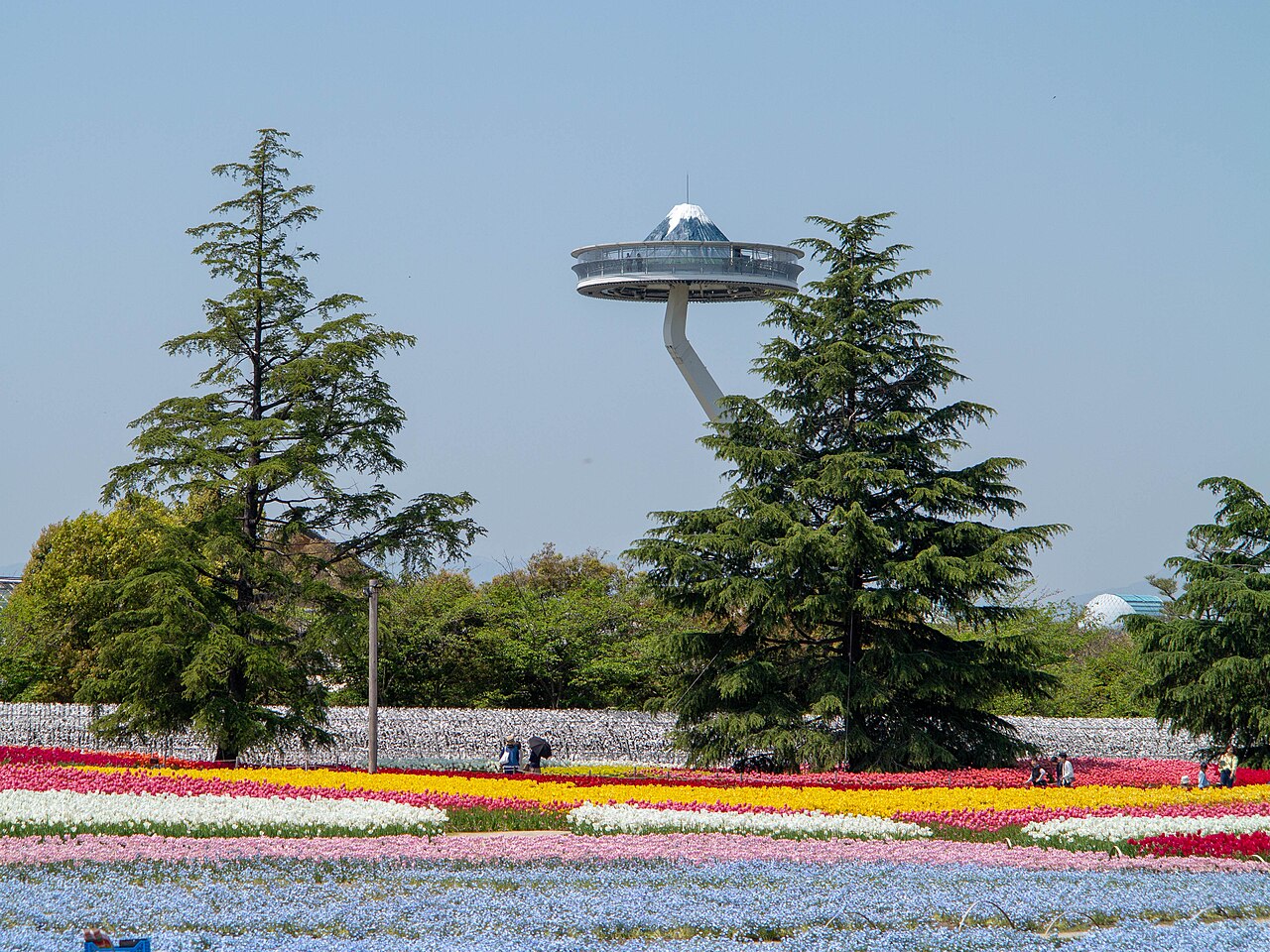
Looking across the flower field, visitors find the Nemophila Festival from mid-April to mid-May. The field is built on a gently sloped hill. Photos can be taken with the nemophila as background.
Walking the hydrangea and iris road from late May to late June, visitors pass pots of colorful and rare hydrangeas and irises along the tunnel walkway. The tunnel casts a gentle shade during the day. At night its lamps come on, set in petal-shaped sockets that imitate flower petals.
Watching fireflies happens at waterside areas near the walkways, where Genji fireflies and Heike fireflies are found. Genji fireflies come earlier, and Heike fireflies are listed for late June. Lighting is lowered where they fly, and visitors are asked not to make loud talking or loud noises. Cafe La Terrace has a few seats for watching them in June.
Fresh Bread, Firewood Pizza, Craft Beer and Crisp Tempura-Soba
Eating around the village sets a bakery filled with the scent of freshly baked bread against firewood pizza with crunchy dough and a Dunkel with the clean bitterness of roasted malt. Breads and handmade cakes are displayed at the counter every day. Drinks can be ordered in the shop with them, and the cafe corner sells soft serve ice cream.
Choosing melon bread means a type that changes depending on the time of year. Handmade breads shaped like animals are made as well. A souvenir package design also uses animals that appear in the illumination theme.
Ordering pizza at an Italian restaurant brings a firewood-baked dough with a crunchy texture. At a soba restaurant the frying oil is blended with sesame oil and other oils, and the dishes are served crisp. A Chinese restaurant has terrace rooms facing a garden.
Trying the craft beer takes visitors to the beer hall. The Dunkel is described as having a deep copper color, a sweet flavor, and a deep richness and aroma. A limited-quantity strawberry beer is described as combining the aroma and flavor of strawberries with the fruitiness and soft taste of a Weizen.
Tasting Yasunaga mochi, visitors get an elongated mochi filled with coarse red bean paste. Every piece is baked individually. It can be eaten with tea at the front of a souvenir shop, and many benches are provided around the shop.
Sato no Yu Hot Spring and the Lit Maples of Kagami-ike Pond
Taking a break in the water means Sato no Yu, with its outdoor bath, indoor bath, jacuzzi, cold bath and sauna. The source is a sodium bicarbonate spring that rises from underground. A falling-water bath is part of the set as well.
Stepping out of the bath, visitors find self-service tea and water in the post-bath lounge. A face towel and a bath towel are lent. People with tattoos, including stickers and paint, are refused entry.
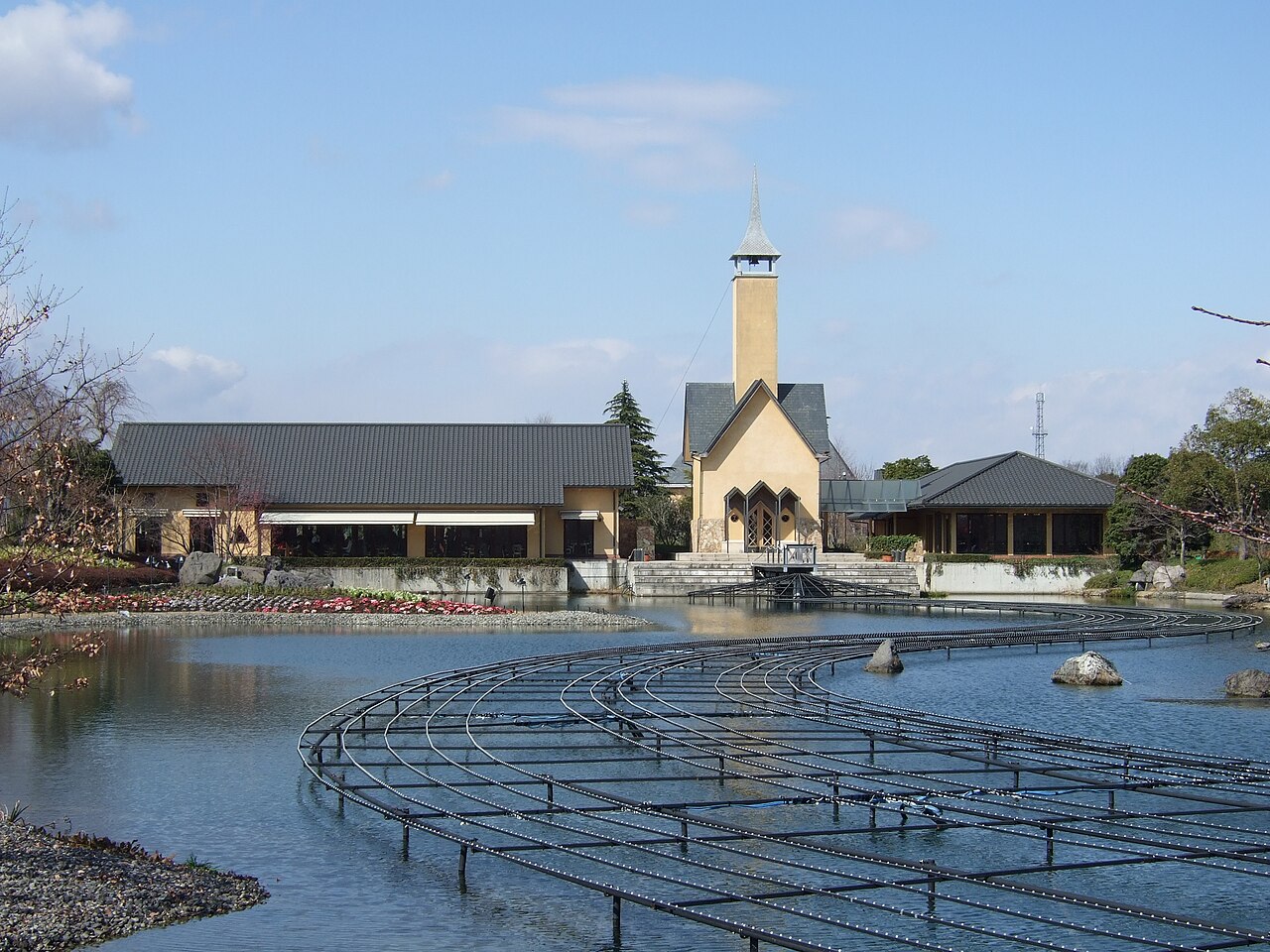
Looking at Kagami-ike pond, visitors stand in front of Sato no Yu. The illuminated autumn leaves are reflected on the surface of the pond. Warm lighting from above shines on the maples.
Getting to Nabana no Sato, Hours and Fees
New to rural buses and one-man trains? See how to ride them, step by step.
In twenty twenty-six, a Christmas special opening is held from December twenty-third to twenty-fifth on a date-specified ticket basis.
| Item | Details (as listed) |
|---|---|
| Getting there | Kintetsu express from Nagoya about seventeen minutes on some Saturdays and holidays; direct bus from Nagoya about thirty minutes |
| Village admission | check the Nabana no Sato website for your date |
| Illumination | listed until May thirty-first, twenty twenty-seven; closed January sixth and seventh |
| Hours | weekdays ten in the morning to nine at night; entry ends thirty minutes before closing |
| Begonia Garden | adults one thousand yen, elementary and junior high school children seven hundred; toddlers aged three and older free; included in the village ticket |
| Sato no Yu | opens at eleven; elementary school students and older one thousand three hundred yen, young children five hundred; added to the village admission |
| Parking | free, with five thousand seven hundred spaces |
Thinking of staying overnight?
Compare places to stay near Kuwana, Mie, Japan →
Disclosure: This post may contain affiliate links. If you book through them, we may earn a commission at no extra cost to you.