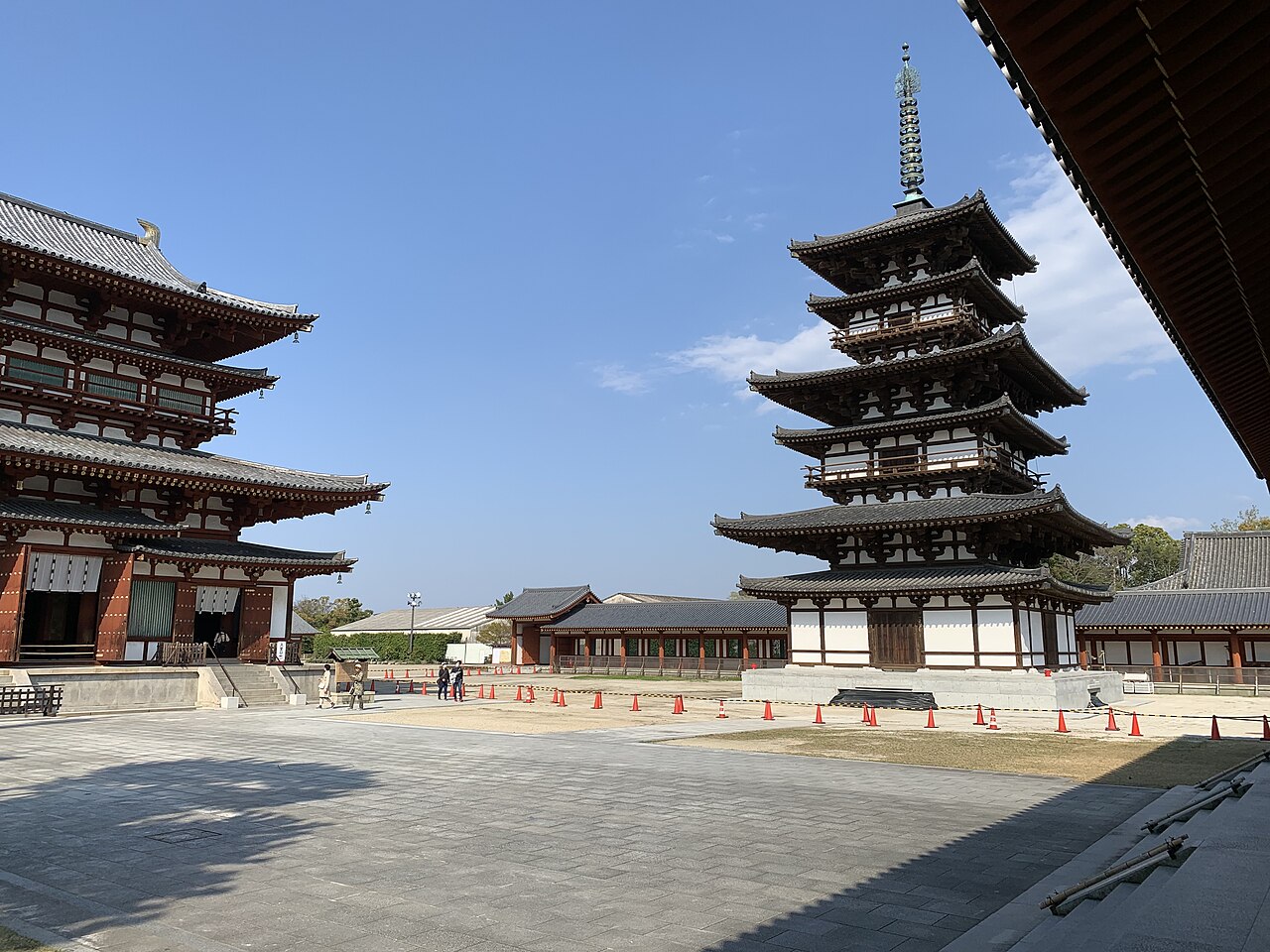
Copying a sutra by hand is possible every day in the sutra-copying hall at Yakushiji. The Golden Hall (Kondo) of Yakushiji enshrines Yakushi Nyorai on a white marble pedestal, and the base of the statue is carved with guardian deities. The Kondo of Toshodaiji holds a standing Senju Kannon beside the principal Rushana Buddha. On New Year's Eve, Toshodaiji rings its bell at the bell tower.
Yakushiji's Halls: the Golden Hall, the Toindo and the West Pagoda
Yakushiji's Kondo, Toindo and West Pagoda each hold statues.
Viewing the Kondo begins at the white marble pedestal, where Yakushi Nyorai is enshrined at the center with a bodhisattva on the right and another on the left. A relief of a strength deity, a motif that came from India, is carved at the center of all sides of the Yakushi Nyorai pedestal. Its lower frame carries the Chinese guardian deities of the east, south, west and north. The hall itself was restored as a full-scale hall in the Hakuho period style.
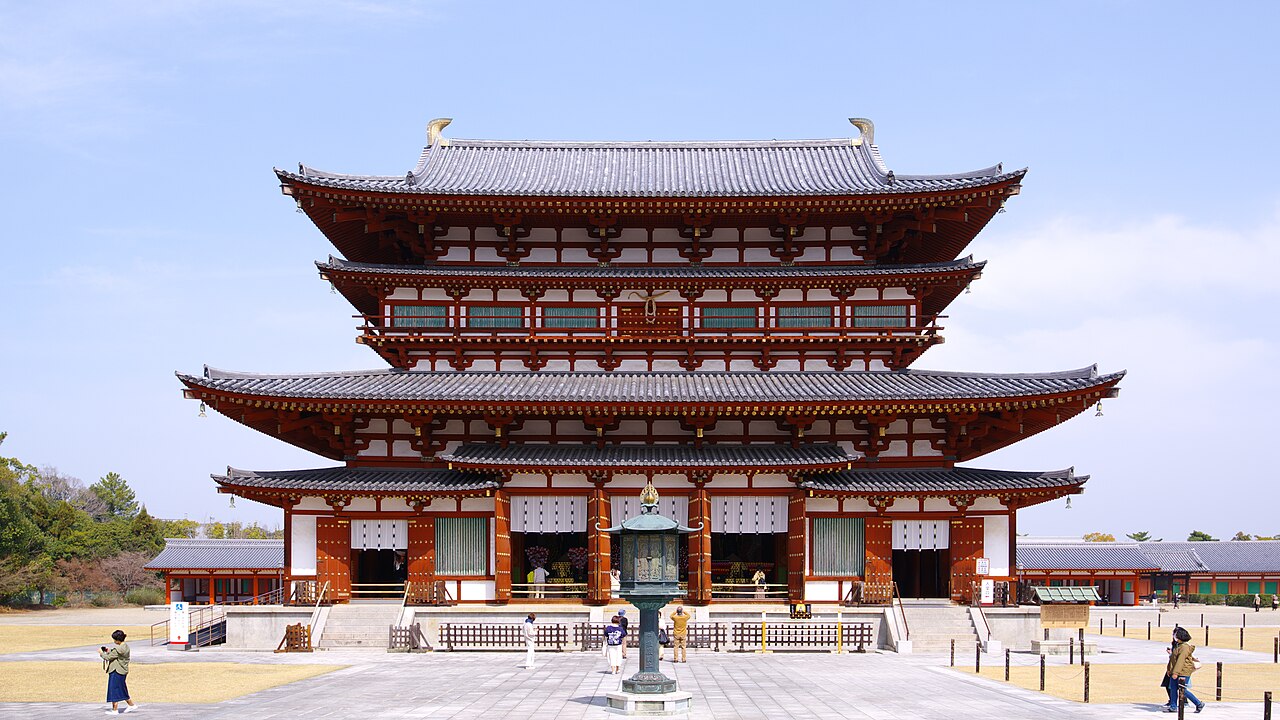
Moving on to the Toindo brings the Sho-Kannon into view, a national treasure with the Four Heavenly Kings standing guard on its sides. The guardians are made of cypress with the joined-wood technique, and their eyes are inlaid with crystal. Jikokuten stands to the east, Zochoten to the south, Komokuten to the west and Tamonten to the north, which places a guardian on all sides of the Sho-Kannon.
Visitors see statues of scenes from the life of Shaka in the West Pagoda. The scenes shown are the later ones of the life story: enlightenment, the sermon, nirvana and the division of relics. Read in that order, the statues follow a story, where the Kondo and the Toindo present enshrined figures.
Seeing the Genjo-sanzoin Garan depends on the calendar. The precinct, whose mural hall north of the Genjo Pagoda holds the Daito-saiiki mural tracing Xuanzang's journey, is accessible in set periods rather than year-round; the autumn period ends with November and the next comes in early January. In the Saisho-e, a rite held at Yakushiji, the voices of the lecturer and the reader resound through the hall, and the Miroku triad shows in the faint light of the lamps.
Yakushiji: Copying a Sutra by Hand
Yakushiji's sutra-copying hall offers chair seating and a model text laid under the paper.
Copying a sutra is offered daily at the sutra-copying hall of Yakushiji. Chair seating is available, so the practice does not require sitting on the floor. Visitors who came mainly for the statues gain an activity here as well as halls to look at.
Choosing a writing tool is left to the visitor: pencils and similar tools are accepted as well as a brush. The sutra-copying paper is laid over the model text for copying. Because the model sits under the sheet, the work is following the characters underneath rather than writing from memory, which keeps it within reach of someone who has never held a brush.
Joining the monthly sutra-copying meeting adds a talk by the head priest. The meeting is held every month on the Yakushi ennichi, the day tied to Yakushi Nyorai. For a visitor choosing between an ordinary day and that day, the difference is the talk, since the copying itself is available either way.
Attending Yakushiji in January puts Kichijoten at the center. A tea and incense gathering is held as an offering of the temple's New Year Buddhist service: a tea gathering takes place before Kichijoten, and named fragrances are burned at the incense seat. The gathering also includes a Dharma talk and a lottery, and a statue of Kichijoten is enshrined in the Kondo in January.
Toshodaiji: the Golden Hall, the Lecture Hall and Ganjin's Tomb
Toshodaiji pairs a Kondo with a Senju Kannon, a Lecture Hall with a seated Miroku and the tomb of Ganjin.
Looking into the Kondo of Toshodaiji shows the principal Rushana Buddha backed by a halo, with a standing Senju Kannon to its left and a standing Yakushi Nyorai to its right. With little time at Toshodaiji, this is the hall to start with, since the Rushana Buddha and both flanking statues are seen together. The Kondo and the Kodo were built in the Nara period.
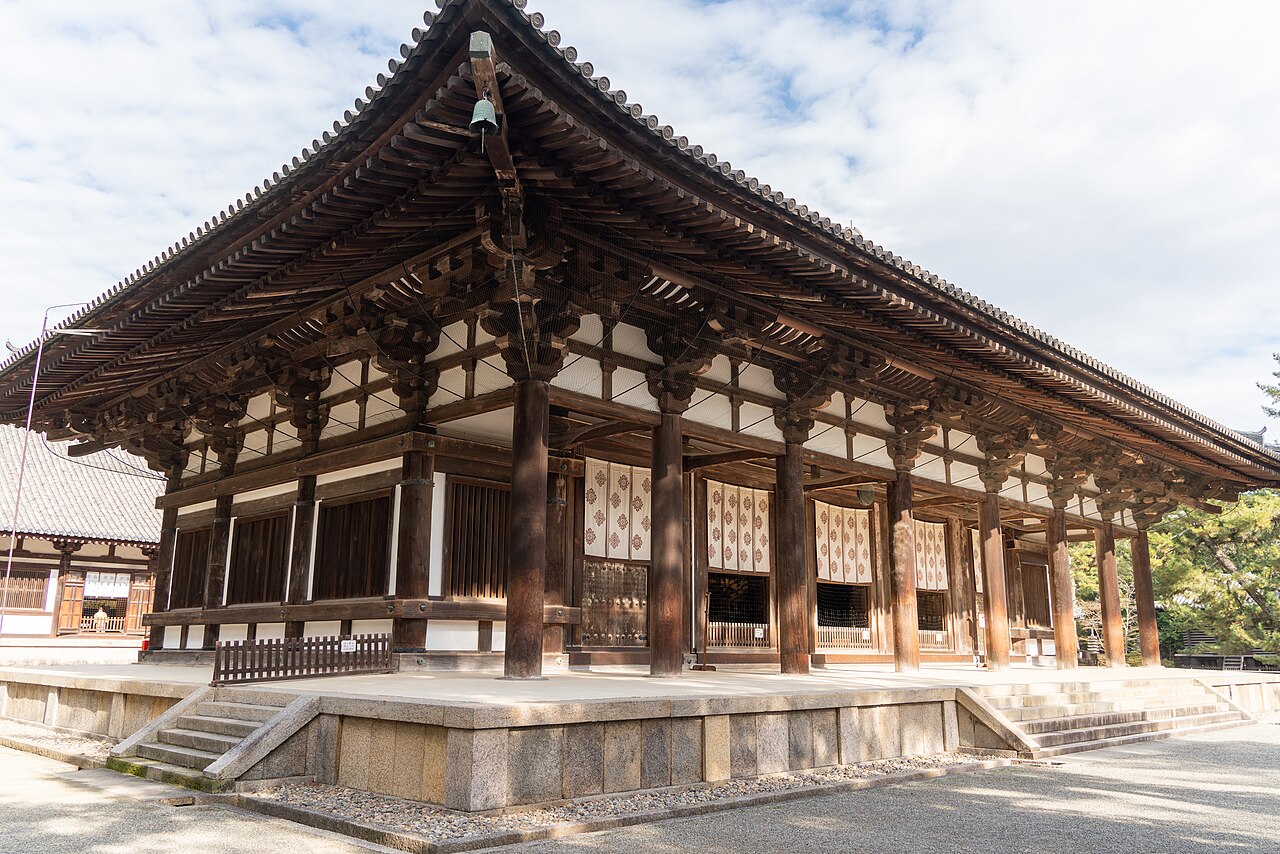
Continuing to the Kodo, the Lecture Hall, visitors find the seated Miroku as its main image, along with standing statues of Jikokuten and Zochoten and many other Buddhist statues. The Miroku is built in the joined-wood technique and has large, distinct facial features. A wooden statue in the same hall has a sturdy build modeled on Tang-dynasty Buddhist statues and is said to be the work of a Tang person who came to Japan with Ganjin.
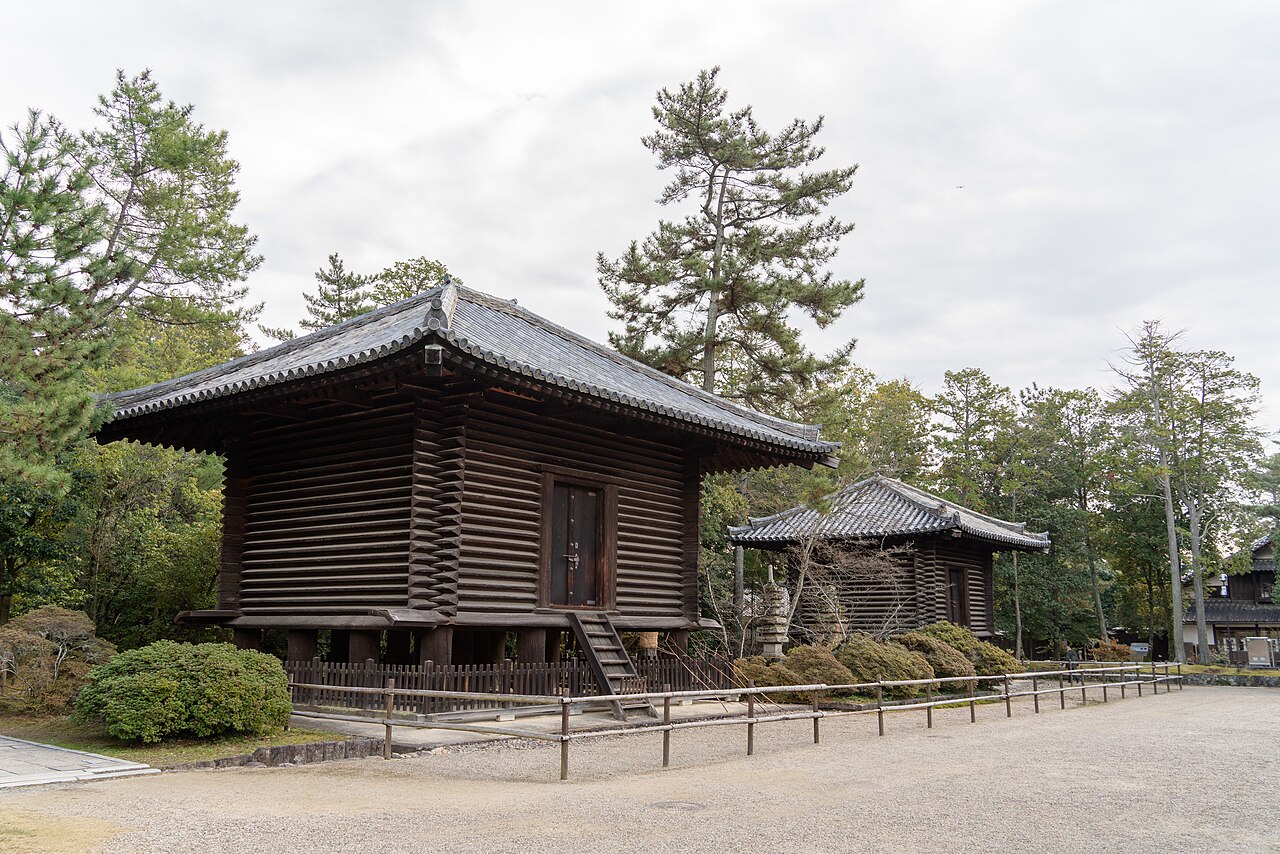
Walking to the north-east of the grounds leads to the tomb of Ganjin. Keika flowers sent from Yangzhou, his hometown, are planted in front of the tomb. The planting links the grave to the city Ganjin came from, which gives this part of the grounds a different subject from the statue halls: a person rather than an image.
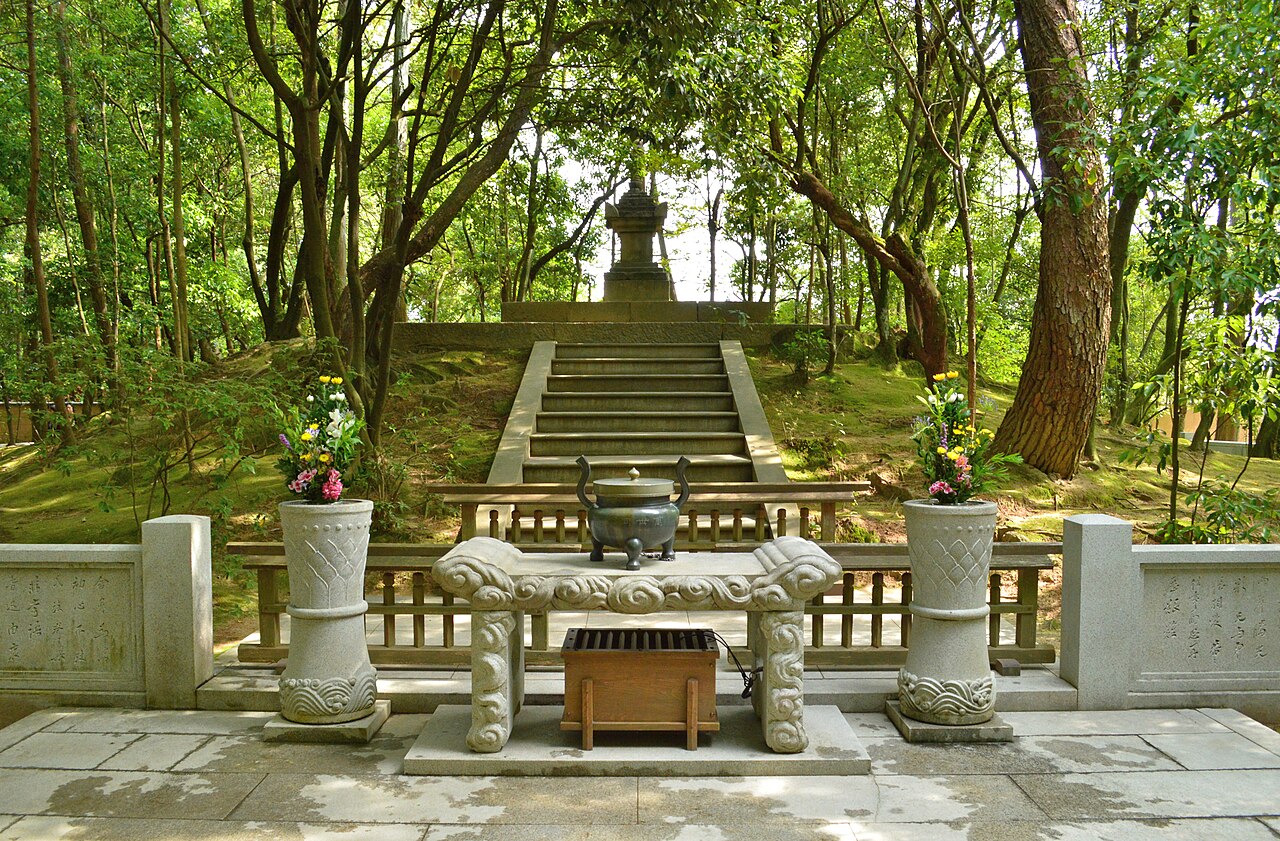
Hearing the bell is tied to a date: on New Year's Eve the bell at the bell tower is rung before midnight. On New Year's Day, just after midnight, monks gather on the veranda of the Raido and chant, then perform the New Year fire ritual, a goma, inside the hall, where the assembly chants until the end. A limited-period special goshuin of Senju Kannon with gold-leaf stamping is offered at the goshuin office in the grounds from November through March. For an overnight visit around the turn of the year, see places to stay in Nara.
Getting to Yakushiji and Toshodaiji: Walking Times, Fees and Opening Periods
New to rural buses and one-man trains? See how to ride them, step by step.
Details below follow the official guides. Yakushiji and Toshodaiji are within walking distance of each other, so both fit into the same visit.
| Item | Details |
|---|---|
| The Kintetsu station at Nishinokyo to Yakushiji | about two minutes on foot |
| Yakushiji to Toshodaiji | about nine minutes on foot |
| Toshodaiji admission | adults and university students one thousand yen; high school four hundred yen; junior high four hundred yen; elementary two hundred yen |
| Toshodaiji hours | eight thirty to five, reception until four thirty |
| Toshodaiji parking | paid lot for one hundred fifty cars, open eight to six |
| Genjo-sanzoin Garan at Yakushiji | open January one to fifteen, March one to June thirty, August thirteen to fifteen, September sixteen to November thirty |
| Toshodaiji special goshuin of Senju Kannon | November seven, twenty twenty-six to March thirty-one, twenty twenty-seven; one thousand yen |
For the deer park and the great temples, see the Nara Park day trip. For the old merchant streets, see Naramachi.
Thinking of staying overnight?
Compare places to stay near Nara →
Disclosure: This post may contain affiliate links. If you book through them, we may earn a commission at no extra cost to you.