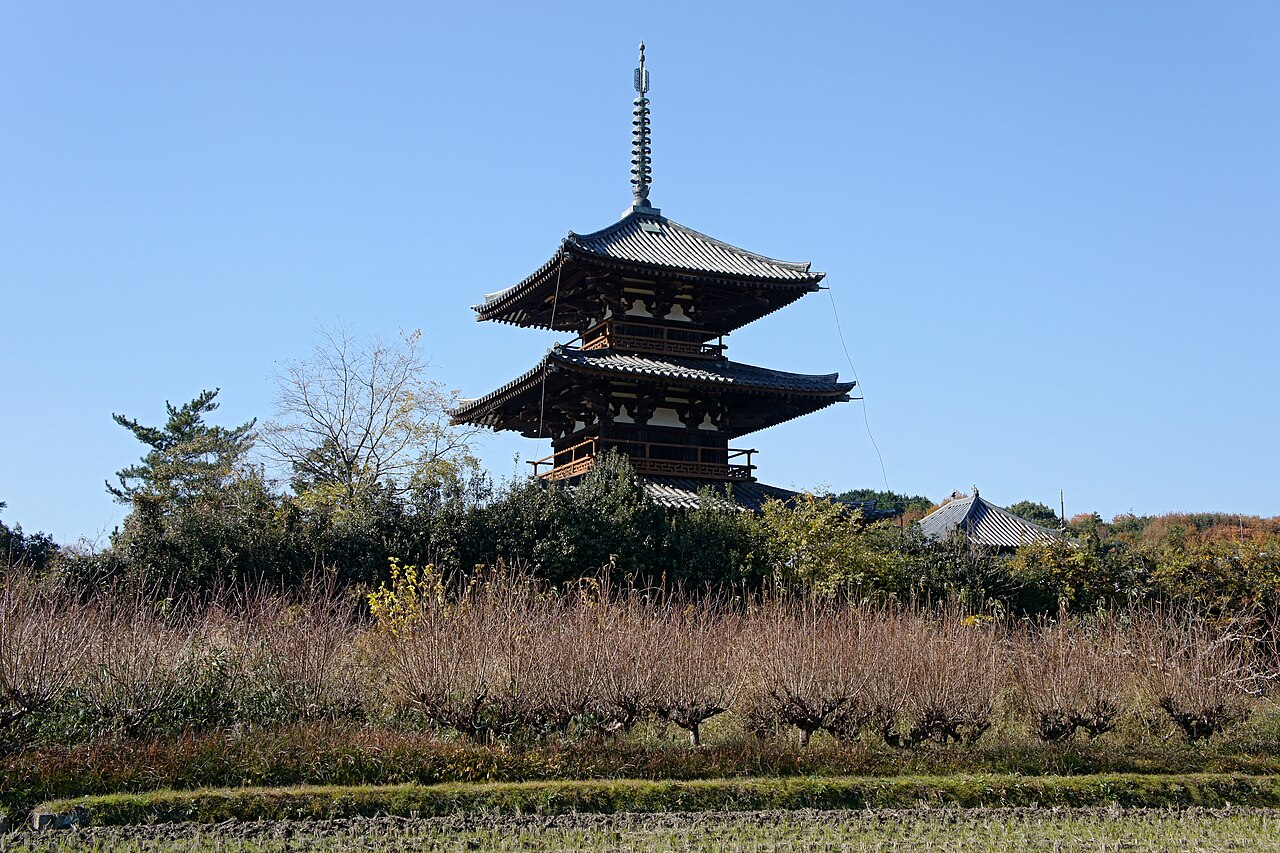
Horyuji and Hokiji were registered as the first World Heritage site in Japan. Prince Shotoku moved into the Ikaruga Palace and went on to found Horyuji. The three pagodas of Ikaruga are the Horyuji five-storey pagoda, the Horinji three-storey pagoda and the Hokiji three-storey pagoda.
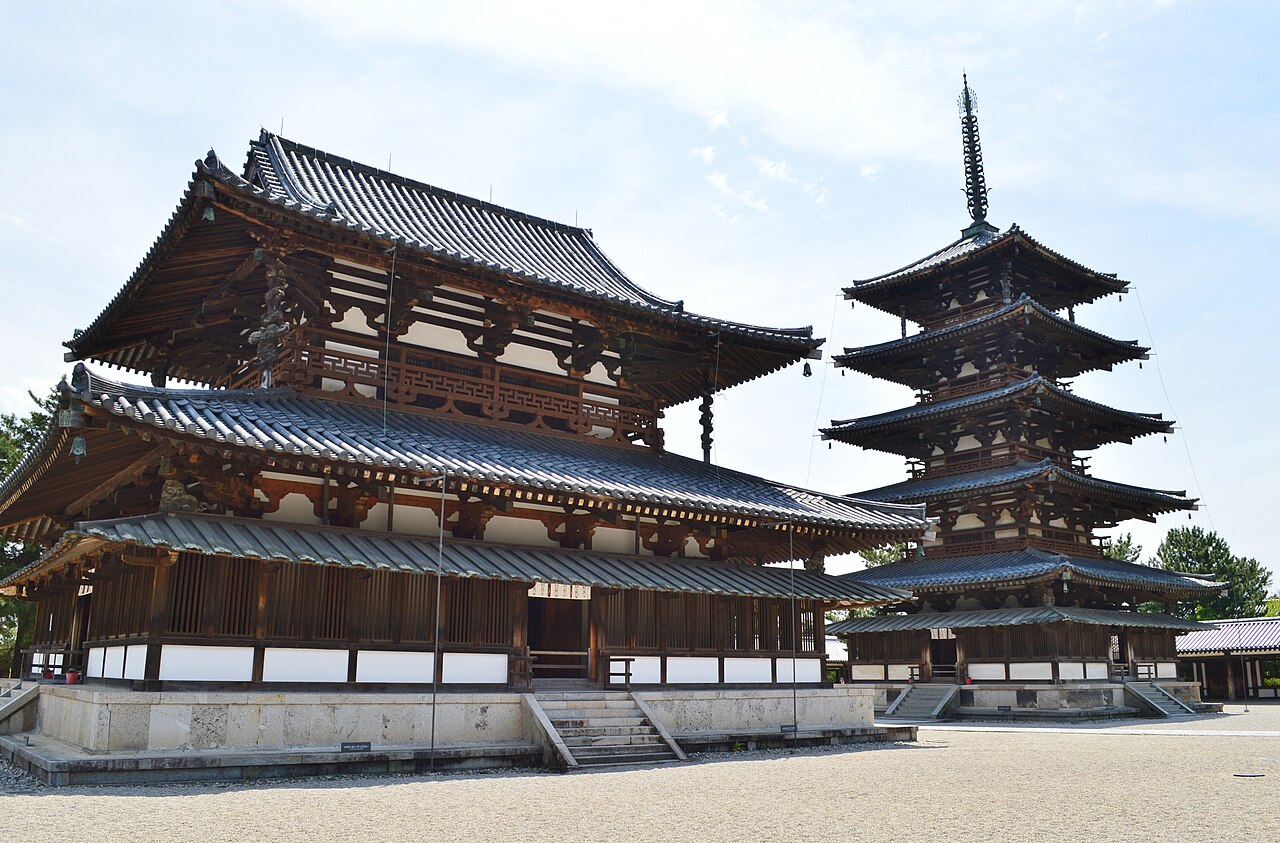
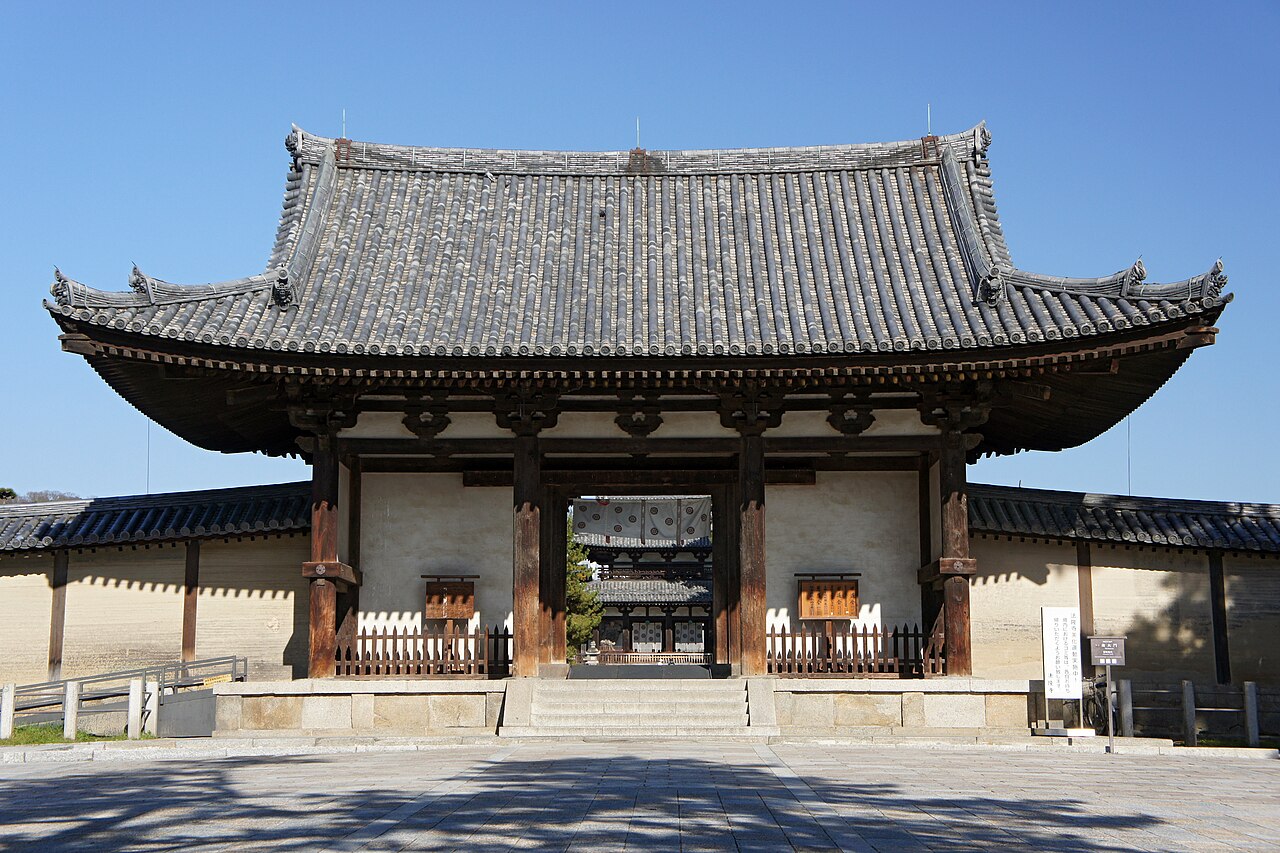
What Does Horyuji's Western Precinct Look Like? The Kondo, the Pagoda, the Middle Gate and the Cloister
The Kondo sets an irimoya-style two-tier tiled roof against the board-roofed mokoshi of its lower tier, with deep eaves rafters and cloud-shaped brackets in harmony. The cloister connects to the bell tower on the east, the Daikodo in the center and the sutra repository on the west, and surrounds the pagoda and Kondo standing side by side.
The Chumon, the Middle Gate, is the original entrance to the Saiin precinct, with deep eaves and a front four bays wide with two doorways. Like the Kondo, it has entasis columns and an upper-level balustrade with swastika-fret and split-brace designs.
The bronze bell hung in the bell tower dates from the early Nara period and is struck at annual rites.
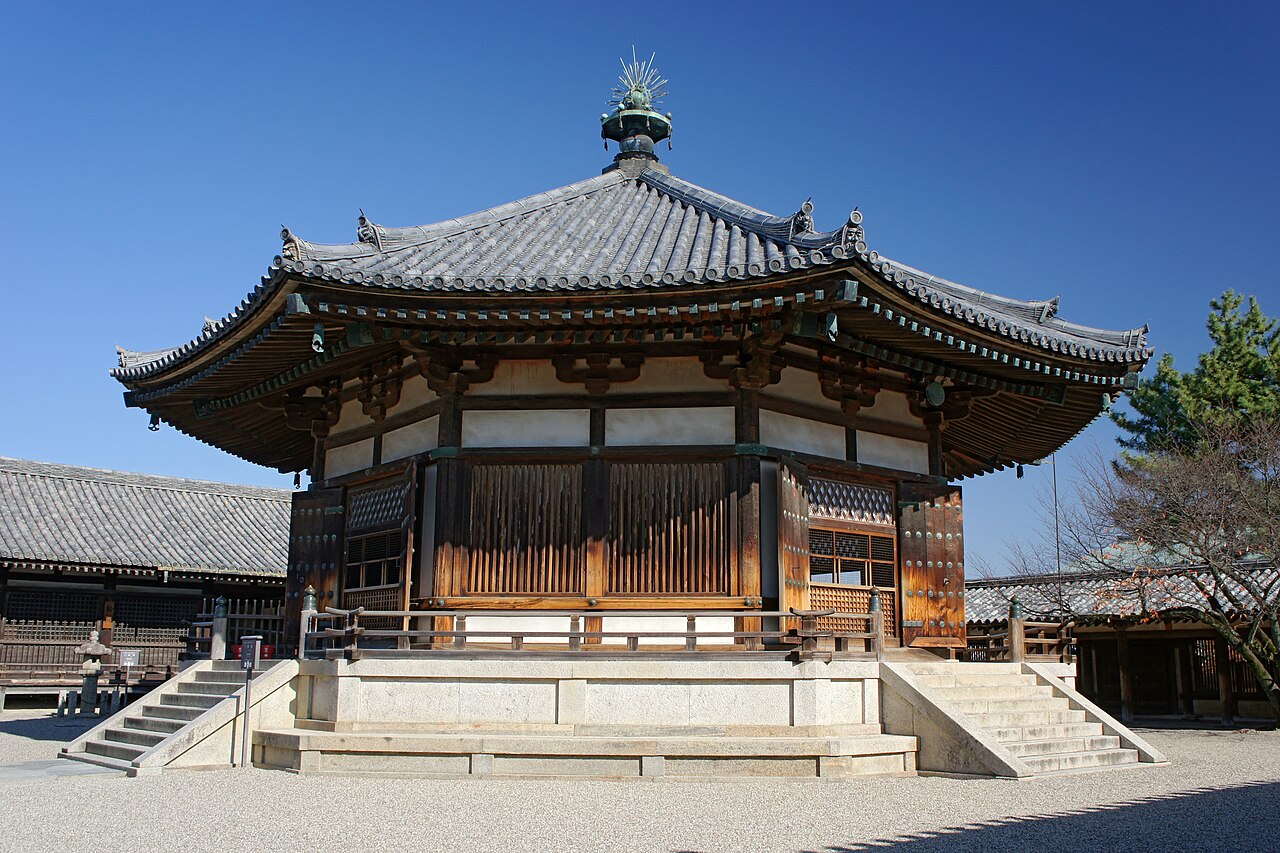
Where Is the Yumedono Kannon, and When Can You See It?
The secret Buddha of the Yumedono, the standing Kuse Kannon Bosatsu, is specially opened in spring from the eleventh of April to the eighteenth of May and in autumn from the twenty-second of October to the twenty-second of November.
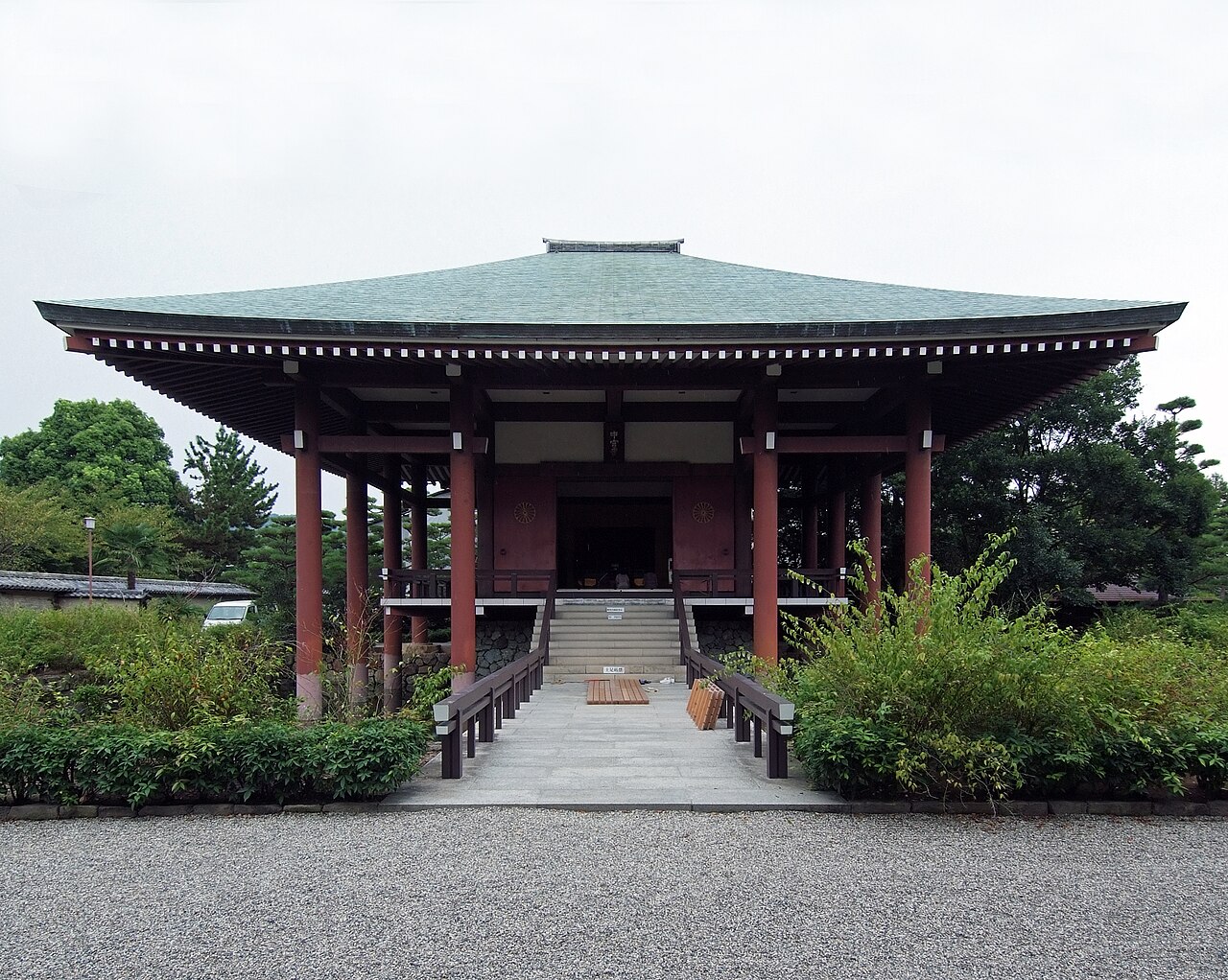
Which Kannon Is at Chuguji? A Pensive Half-Lotus Figure and the Tenjukoku Embroidery
The principal image of Chuguji is the National Treasure Bosatsu Hanka-zo, traditionally called the Nyoirin Kannon, a pensive half-lotus-seated figure. The statue sits in the half-lotus posture with the left foot hanging down and the right foot placed on the knee, the right hand bent with the fingertips lightly touching the cheek.
Chuguji was founded in the Asuka period about five hundred metres east of the site where it stands.
The Tenjukoku Mandala Embroidery was embroidered in the thirtieth year of Empress Suiko on the order of Tachibana no Oiratsume, consort of Prince Shotoku, and depicts the Tenjukoku where the prince is said to be reborn after his death.
The embroidery originally consisted of two hangings, with one hundred tortoiseshell shapes embroidered on it, each carrying four characters that together recorded the origin of its making.
The embroidery is worked in twisted threads of white, red, yellow, blue, green and purple on a base of purple silk gauze, in laid-stitch embroidery, and it retains vivid colours. The embroidery enshrined in the main hall is a replica, and the original is deposited at the Nara National Museum.
The embroidery is said to have been enshrined behind the principal image of the lecture hall. The nun Shinnyo found it in the Goufuzo of Horyuji and returned it to Chuguji.
What Are the Seasons Like Around Ikaruga? Hokiji's Pagoda in the Paddies, Spring Flowers and a Persimmon Verse
Cherry blossoms, rapeseed flowers, renge and yamabuki are listed among the flowers that colour the Ikaruga area in spring. The memorial service for the death day of Prince Shotoku and the Oeshiki announce spring in Ikaruga.
When the rice-planting season comes in early summer, the three-storey pagoda of Hokiji is reflected on the surface of the water in the paddies. In summer the hill behind Horyuji is covered in fresh green leaves.
Autumn in Ikaruga is described with the verse "If I eat a persimmon, a bell rings at Horyuji". In autumn, festivals take place, and special openings and public viewings are held.
The Hokiji lecture hall was rebuilt by a Hokiji monk. The principal image of the former lecture hall is enshrined in the storehouse, and its head and body trunk are carved from a single piece of cedar.
Where Does the Name Ikaruga Come From? A Bird and a Farmhouse-Style Information Centre
The name Ikaruga is said to come from the Ikaru bird, which gathered in flocks in this area. The Ikaru bird has a grey body and a glossy black head with a white patch at the centre of the wing flight feathers, and can be told apart from the starling by its thick beak.
Another theory says the name Ikaruga comes from a deity being enshrined as the local god.
The Horyuji i-Center is a two-storey tile-roofed building evoking a farmhouse of the Ikaruga countryside, with a roof slope given a swelling called mukuri. It provides information on the Rekishi Kaido and tourist information for the prefecture, and guides visitors around Ikaruga including Horyuji.
A volunteer group guides visitors around Horyuji in English and Chinese. For guided tours in foreign languages, reservations are requested at least three days in advance if possible.
Getting to Horyuji and Ikaruga
New to rural buses and one-man trains? See how to ride them, step by step.
| Route | Time |
|---|---|
| JR Nara Station to JR Horyuji Station | two hundred and thirty yen, about eleven minutes |
| JR Horyuji Station to the Nandaimon on foot | about twenty minutes |
| Horyuji Station to the Horyuji-sando stop by bus | about eight minutes |
| Horyuji-sando bus stop to the Nandaimon front on foot | about three minutes |
| Nandaimon to Chuguji on foot | about eight minutes |
| JR Horyuji Station north exit to the Horyuji i-Center on foot | about fifteen minutes |
| JR Horyuji Station south exit, Nara Kotsu bus route seventy-two | ends right next to the Horyuji i-Center |
If you would rather have the day arranged for you, look at guided tours around Horyuji.
Hours and Fees
| What | Detail |
|---|---|
| Horyuji, February twenty-second to November third | eight in the morning to five in the afternoon |
| Horyuji, November fourth to February twenty-first | eight in the morning to half past four |
| Horyuji reception | closes thirty minutes before the end of visiting hours |
| Horyuji admission (Saiin Garan, Daihozoin, Toin Garan), adults, university and high school students | two thousand yen |
| Horyuji admission, junior high and elementary school students | one thousand seven hundred yen and one thousand yen |
| Horyuji and Hokiji admission | cash only |
| Hokiji, February twenty-second to November third | eight thirty in the morning to five in the afternoon |
| Hokiji, November fourth to February twenty-first | eight thirty in the morning to four thirty in the afternoon |
| Hokiji admission, adults, university and high school students | five hundred yen |
| Chuguji, October first to March twentieth | nine in the morning to four in the afternoon, reception until a quarter to four |
| Chuguji, March twenty-first to September thirtieth | nine in the morning to half past four in the afternoon, reception until a quarter past four |
| Chuguji admission | six hundred yen for adults, three hundred yen for elementary school students |
| Horyuji i-Center | eight thirty in the morning to six in the evening, open all year |
Fees and hours were checked against official sources between 15 October 2026 and 19 November 2026.
Compare options
See partner pricing and availability →
Disclosure: This post may contain affiliate links. If you book through them, we may earn a commission at no extra cost to you.