Long before Kyoto, and before the great temples of Nara city, the Japanese state first took shape in a small basin of rice fields and burial mounds south of the Yamato plain. Asuka village is where that beginning survives above ground, and it rewards a slow day on a bicycle far more than any checklist.
The valley where the first capital stood
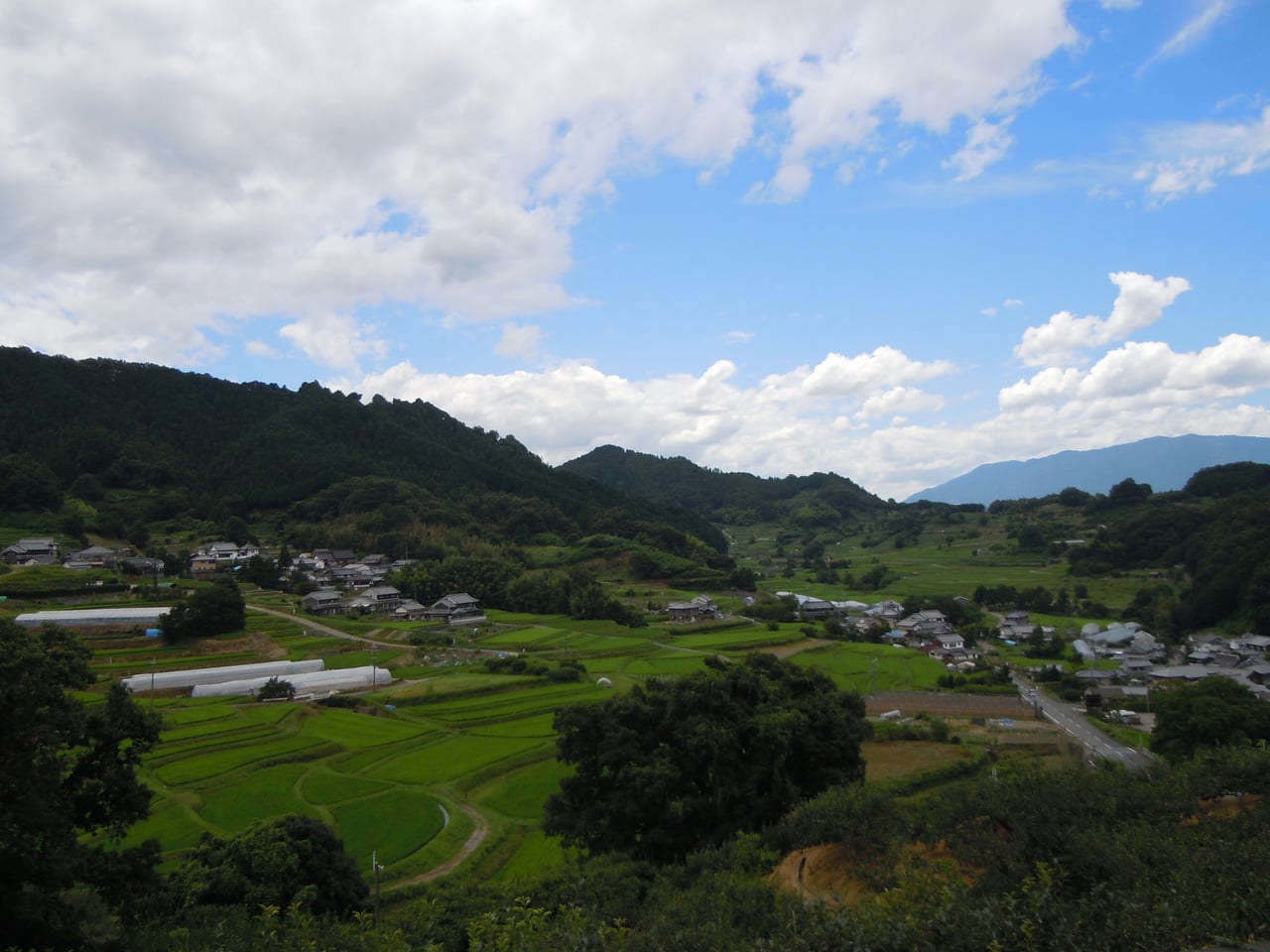
The village sits in the southern reaches of the Yamato basin, ringed on three sides by low wooded ranges. Farmland still runs right up to the monuments, and the scenery has long been called a primal landscape of Japan — the countryside as it looked before the cities came. The easiest way to take the whole of it in is from Amakashi Hill, a rise of about a hundred and fifty metres whose northern lookout gives a single sweep over the village paddies and the three low mountains of Yamato. From up there the layout of the day makes itself obvious.
Renting a bicycle for the day
Asuka Rental Cycle keeps offices at Asuka Station-mae, Kameishi, Ishibutai, and Kashihara, and a bicycle costs twelve hundred yen for the day. Asukabito-no-Yakata, the information hall run by the Asuka Tourism Association, is open from half past eight in the morning until five in the afternoon, and makes a sensible first stop for maps. The Asuka Historical Park Hall is open from half past nine until five, and closes at half past four from December through February.
Takamatsuzuka and its painted chamber
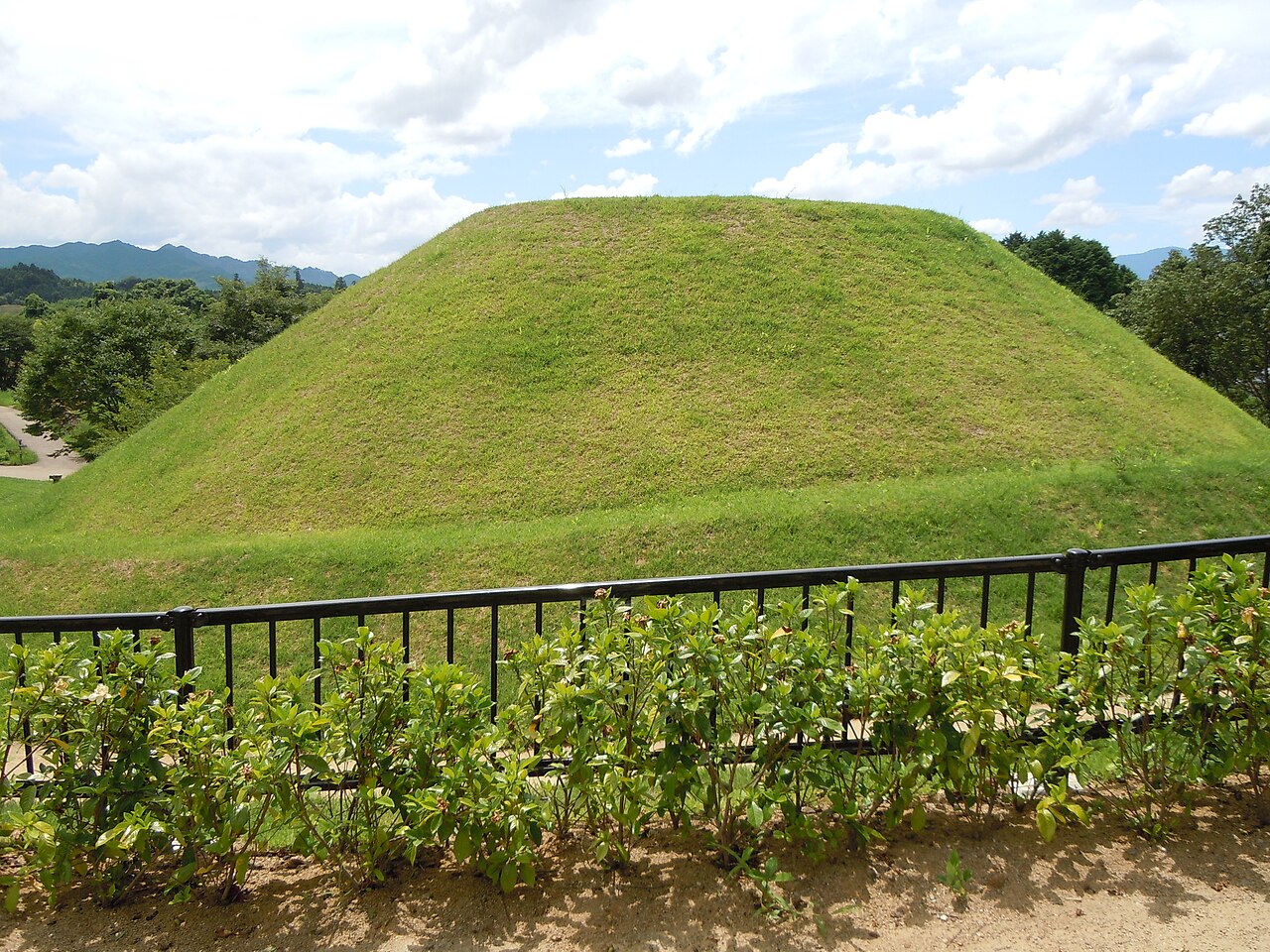
The mound itself is a modest grassy dome behind a low railing, and that modesty is the point: the painted court figures found within it are among the most famous images of ancient Japan. The Takamatsuzuka Wall Painting Museum is open from nine in the morning until five, with last entry at half past four. Admission costs three hundred yen for adults, one hundred and thirty yen for university and high-school students, and seventy yen for younger children. Few places ask you to slow down so pointedly as a dim room arranged around a single painted wall.
Where to stay
Disclosure: This post may contain affiliate links. If you book through them, we may earn a commission at no extra cost to you.
The stone chamber at Ishibutai
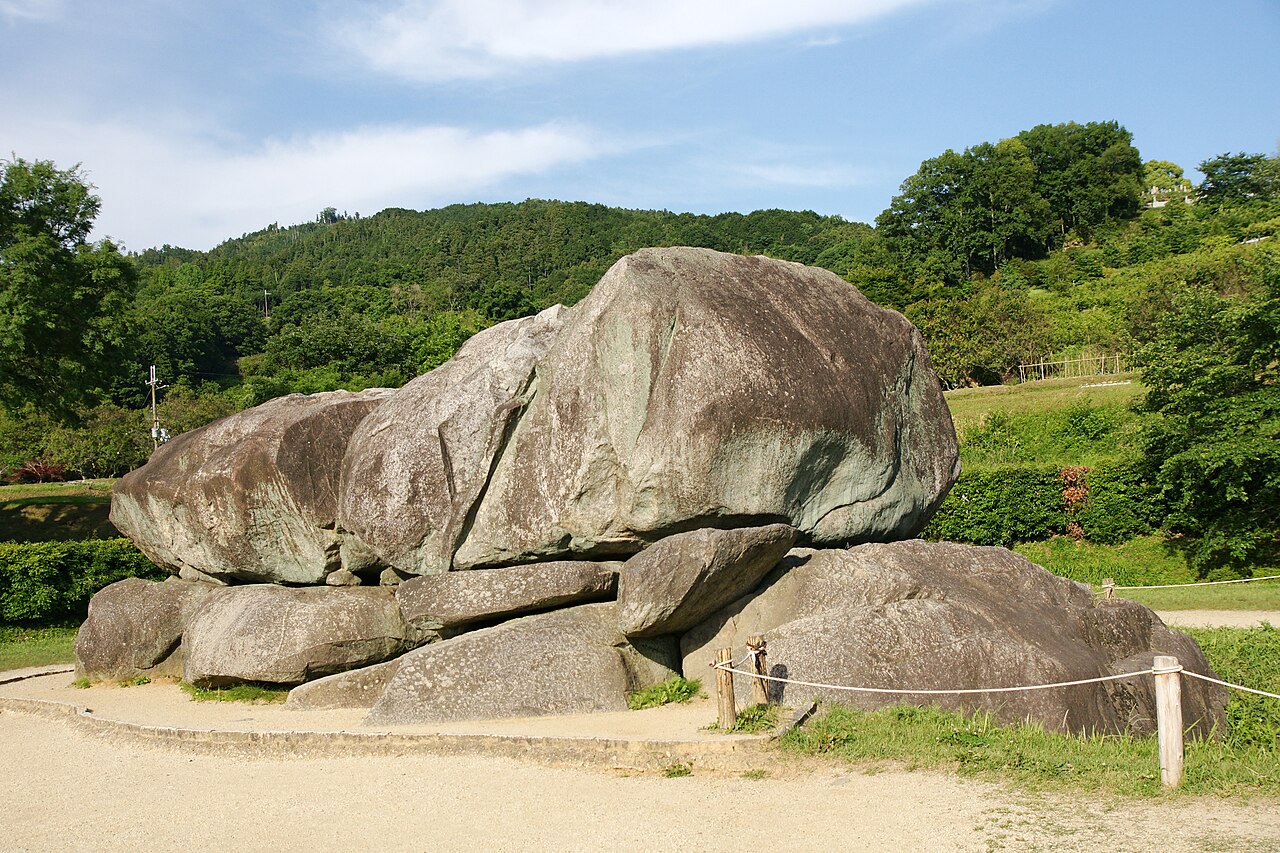
Ishibutai is a square mound that lost its earthen cover long ago, leaving a burial chamber of thirty-odd great granite blocks standing bare against the hillside — a special historic site of the nation. You can walk down into the chamber itself and stand under the capstone. The site is open from nine in the morning until five in the afternoon, with last entry at a quarter to five. Admission is five hundred yen for general visitors and university students, and two hundred yen for high-school students and younger. If mounded tombs pull at you, the enormous keyhole tombs of Sakai and Mozu make a natural companion trip. And if you would rather ride with someone who can read the stones for you, a guided day around Asuka links the mounds and temples without the map-checking.
Temples from the dawn of Japanese Buddhism
Asuka-dera was completed at the close of the sixth century at the wish of Soga no Umako, and counts as the first full-scale Buddhist temple in the country; over the centuries it has also carried the names Hoko-ji and Gango-ji. Its principal image, known as the Asuka Great Buddha, is held by tradition to be the oldest surviving Buddhist statue in Japan, made by the sculptor Kuratsukuri no Tori early in the seventh century. A short ride east, Oka-dera was founded by the priest Gien, and its seated Nyoirin Kannon is held to be the largest clay statue in the country, listed as an important cultural property. The temple's other name, Ryugai-ji, comes from a legend of a dragon sealed beneath its pond. For a different register of temple quiet, the valley temples of Ohara, north of Kyoto pair well with a night in the region.
Make it a quiet day
Footpaths and a dedicated cycling road link the sites, so the basin can be strung together on foot, by rental cycle, or by local transport at whatever pace the day suggests. South of the village centre, the terraced paddies of Inabuchi step down the slope in roughly three hundred small fields, first cut between the Heian and Muromachi periods and counted among Japan's hundred famous terraced landscapes. In autumn their banks redden with wild spider lilies against the ripening rice and the green of the hills. For lunch, the Asuka Yume-ichi market keeps a dining room upstairs serving set meals built around ancient strains of rice. Café Kotodama, in a sake warehouse some two hundred years old and renovated by a couple who moved to the village, suits the slower end of the afternoon. On the way back, stop by the Sakafune stone, whose carved channels remain honestly unexplained — a press for oil, a course for water, nobody is sure. That unresolved quality is very Asuka: the village does not perform its age, it simply lets you ride past it. If the mood carries you deeper into old Japan afterwards, the outer-shrine walk at Ise follows the same unhurried logic.