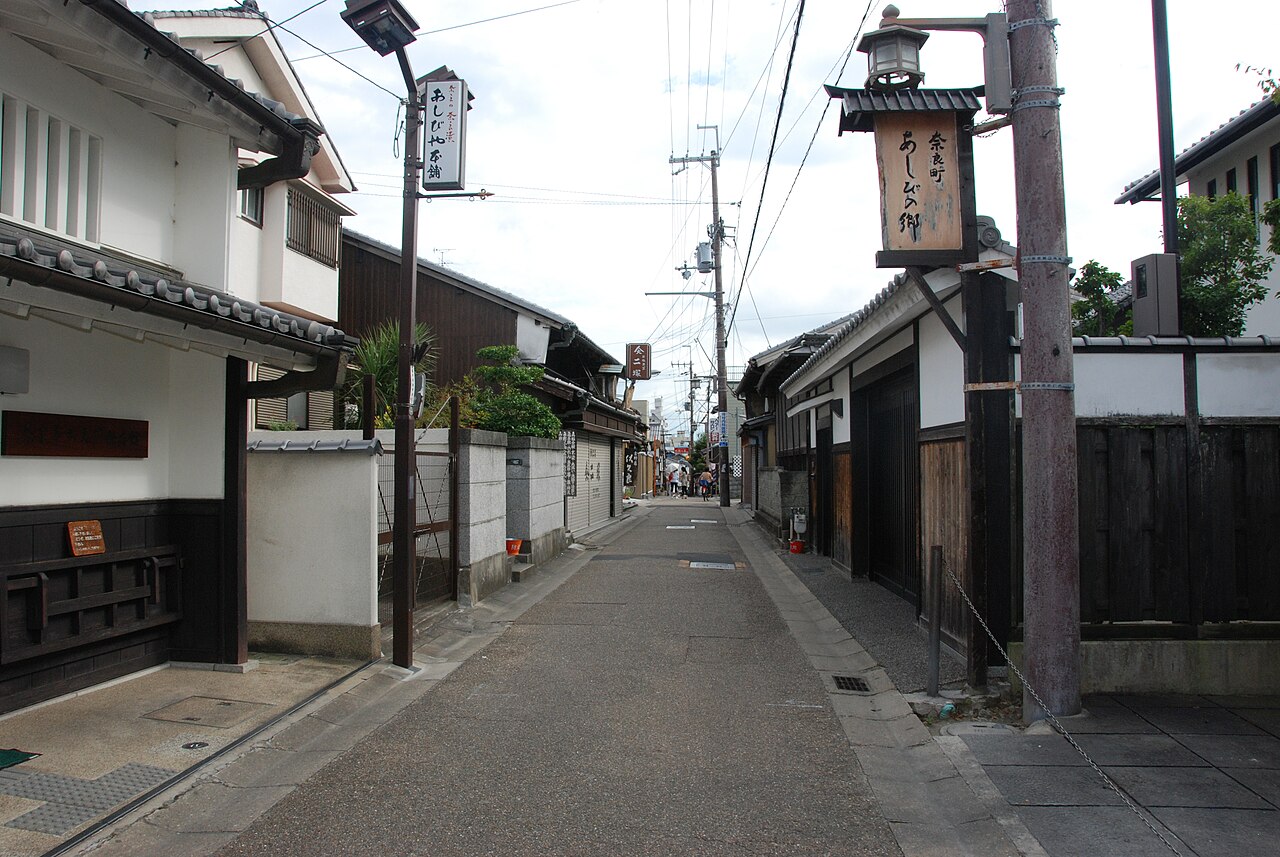
Red doll-shaped charms in the form of a monkey hang from the eaves of houses and shops in Naramachi. Naramachi was formerly the precinct of Gangoji and still retains traces of the Edo period, and the temple's Gokurakudo, a National Treasure, has roof tiles from the Asuka period that still exist. A townhouse to step inside, Edo-period toys to touch and play with, freshly made kuzu sweets and tempura fried in front of the diners share the same town.
Gangoji: the Gokurakudo, Stone Buddhas and Horin-kan
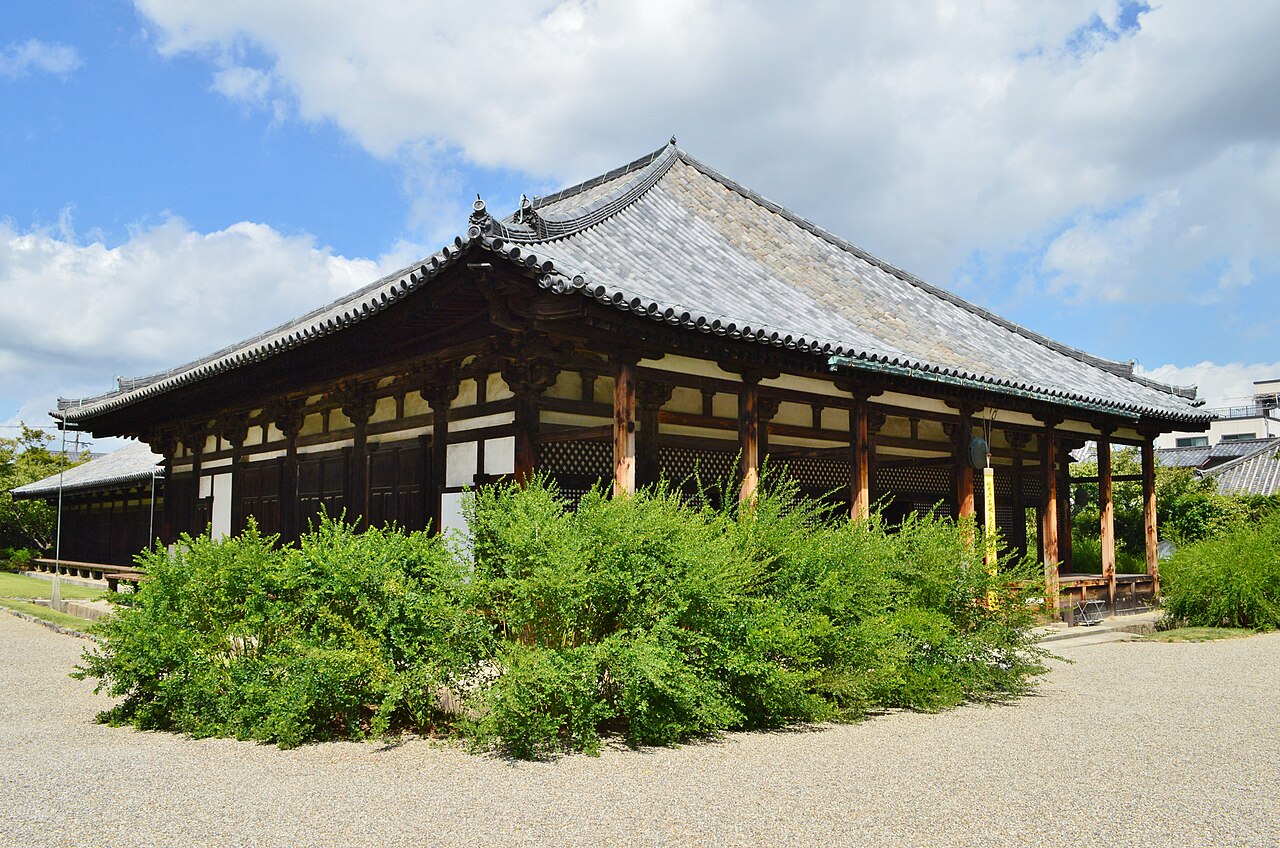
Looking for a main hall that keeps Asuka-period roof tiles, beside a field of memorial pagodas and Buddhas, leads to Gangoji. The Gokurakudo and the Zen hall are National Treasures. The principal image of the Gokurakudo is Amida Nyorai within the Chiko Mandala, a Pure Land painting. Jizo Bodhisattva statues are enshrined in front of the mandala.
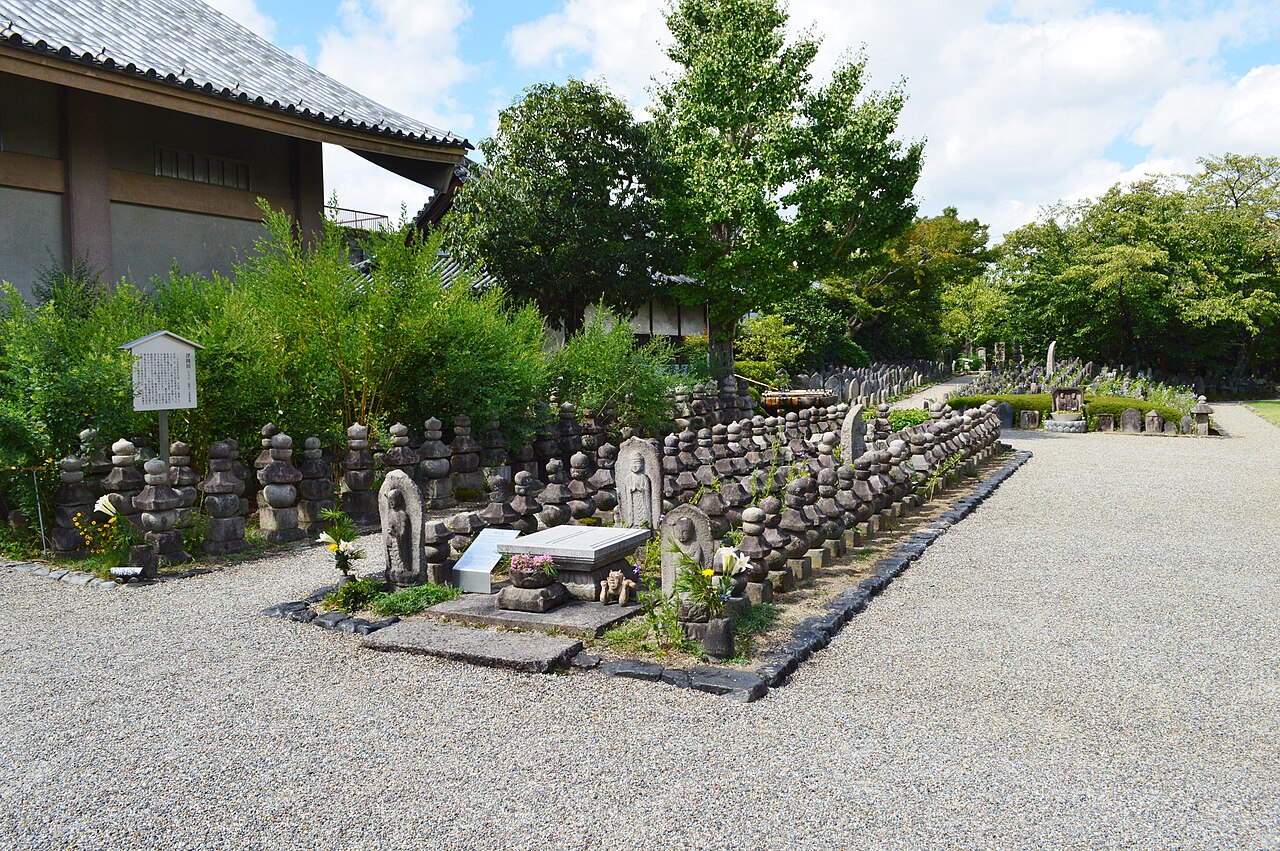
Stepping into the precinct's group of stone pagodas and Buddhas shows memorial objects from the medieval period to the Edo period. Large numbers of such Buddhas and folk-faith materials have been found within the precinct. The Mandokuyo lamp service is held in this field.
Visiting Horin-kan adds a Nara-period wooden five-story miniature pagoda to the visit. Horin-kan also houses a wooden seated Amida Nyorai statue. Medieval folk-faith materials are kept in the same building.
Looking up Gangoji on a map turns up another temple of the same name in Nara City. The Gangoji described here stands at Naka-in-cho, where the Gokurakudo remains. Gangoji's predecessor was Hokoji, at Asuka village, which was rebuilt at its present site and renamed Gangoji when the capital moved to Heijo-kyo.
Gangoji Through the Year: Setsubun, Hanamatsuri and the Lamps of Jizo-e
Seeing a ceremony at Gangoji depends on the date, because Setsubun-e, Hanamatsuri and Jizo-e each have a fixed day. Setsubun-e is held on February third. At the ceremony, the Namikiri Fudo Myoo and Hozanji Tankai Fudo Myoo statues are moved to the main hall. Ascetics then perform a saito dai-goma ritual and fire-walking practice in the temple grounds.
Joining the fire-walking is possible for members of the general public as well as the ascetics. Participants walk over wood laid across the collapsed goma altar. After that, beans are thrown while calling out that both fortune and demons are welcome in.
Pouring amacha on the Buddha is what visitors do at Hanamatsuri on May eighth, when a hanamido flower hall is displayed in front of the main hall. Amacha is also served to worshippers. Hydrangea is listed as blooming in June, lotus from July to August and bush clover from mid-September to late September.
Visiting on the twenty-eighth of each month coincides with a prayer goma listed for the Fudo image in the Shoshibo's dirt-floor area. The Zeshin-kai zazen session is held monthly in the Zen hall. The Kaeru-ishi memorial service is listed for July seventh.
Watching the Jizo-e Mandokuyo is possible on August twenty-third and twenty-fourth. Lamp dishes inscribed in ink with prayers are filled with rapeseed oil, and the rush-grass wicks are lit. Because the Jizo-e lamps are an evening event, staying the night makes them easy to see, and places to stay in Nara are listed for the area.
Naramachi Koshi-no-ie, Nigiwai-no-ie and Hands-On Crafts
Stepping inside a townhouse is possible at the Naramachi Koshi-no-ie, which can be seen from both outside and inside, or at the Naramachi Nigiwai-no-ie with its tea room and storehouse. The Naramachi Koshi-no-ie reproduces a traditional townhouse. Visitors can look at it from the street and then step inside.
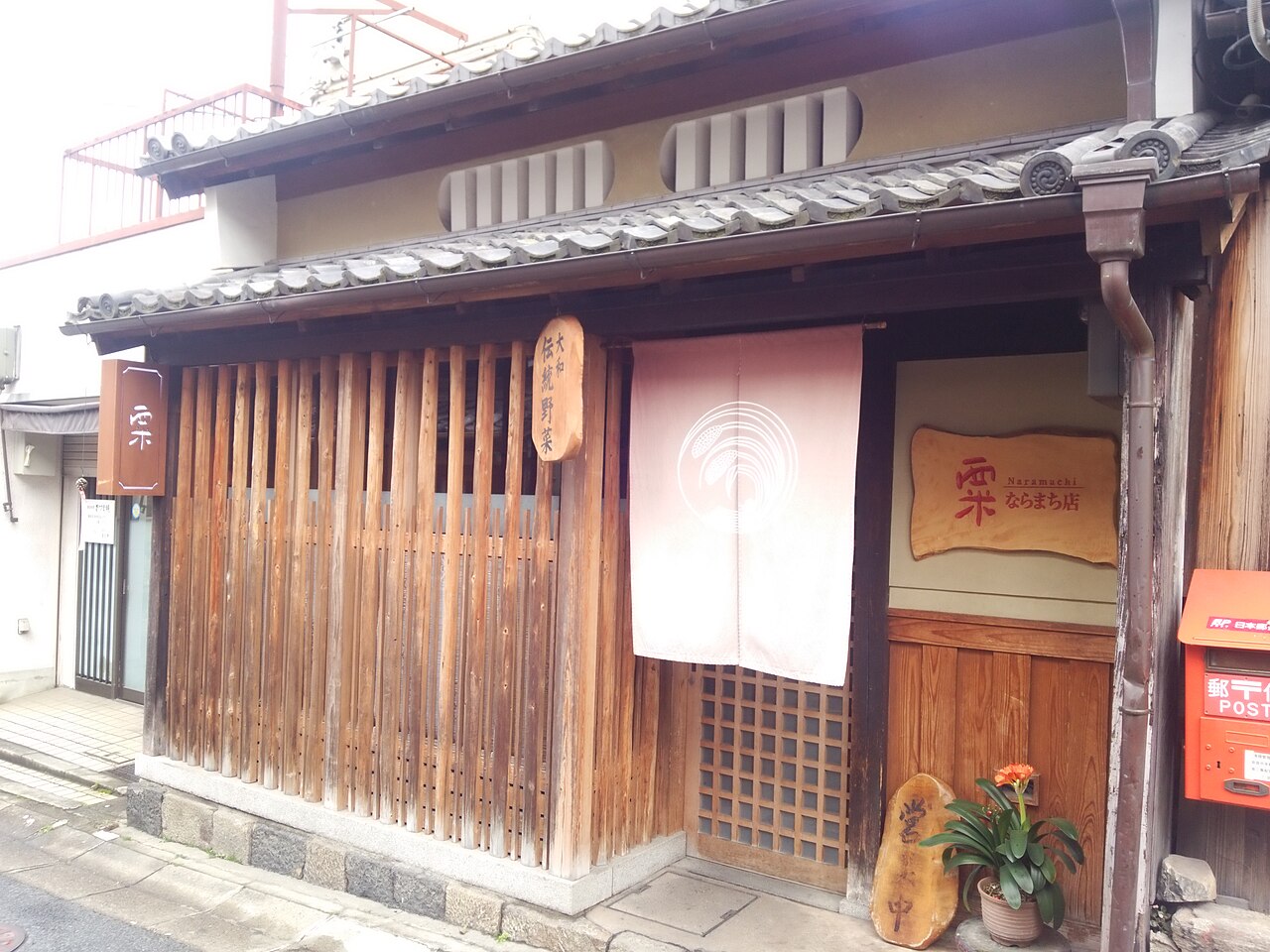
Walking through the Naramachi Nigiwai-no-ie, a renovated machiya, takes in Japanese-style rooms, a tea room and a storehouse. A passage through the house, an inner courtyard and a garden are part of it. Tea gatherings through the seasons, rakugo and concerts are held there, along with cooking rice on a kamado.
Touching and playing with toys from the Edo period is what a toy museum in Naramachi is for. Karakuri toys are displayed there and can be played with. Visitors can then make a karakuri toy in the workshop, where a making class is held monthly.
Looking around the Nara Craft Museum shows mainly traditional Nara craft items. Works by artists active in Nara and artists with ties to Nara are sold there. Craft-making workshops and demonstrations are held regularly as events.
Koshin-do, the Monkey Charms and Goryo Shrine
Taking home a keepsake of Naramachi points to the Migawari-zaru, the monkey charm sold at the Naramachi Museum. Koshin-do, a community hall that enshrines Shomen Kongo, has the charm hung at its entrance. Its hall is normally closed to the public and opened during annual events. Monkey figures and cloth dolls, regarded as messengers of Koshin-san, are displayed there.
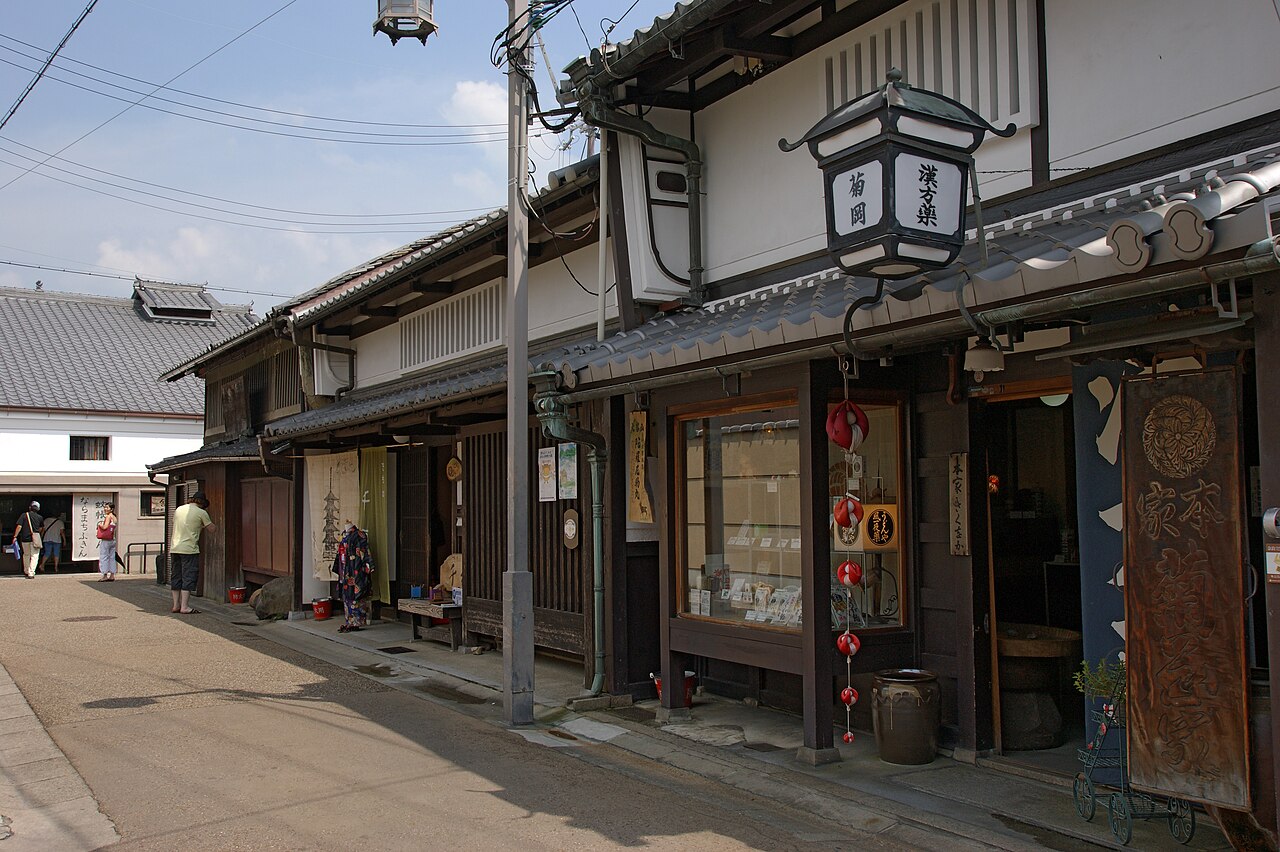
Looking at the eaves shows the Migawari-zaru hung as a charm against evil, because it takes on misfortune in the owner's place. The tradition is to hang as many as there are family members. The doll is shaped like the monkey messenger of Koshin-san, who drives away disasters and illness.
Stopping at the Naramachi Museum shows Buddhist statues, folk tools and painted signboards. The founder's family converted part of their home into the private museum. The Migawari-zaru sold there is an original product of the Naramachi Museum.
Passing through the south gate of Goryo Shrine puts Shusse Inari Shrine on the left. Worshippers making wishes tie red cords at the feet of the komainu flanking that gate. Cherry blossoms and peonies bloom in the precincts, and seasonal goshuin with fine detailing are available.
Kuzu Sweets, Baked Sweet Potato and Tempura at the Counter
Choosing a dessert in Naramachi points to kuzu, and choosing a meal points to tempura fried at a counter. Kasuga-an lists satsuma-yaki, kuzu mochi and matcha shiratama azuki. Shofuku-an, another shop, lists a matcha set and cold or hot matcha.
Eating kuzu sweets freshly made is possible at a sweets shop in Naramachi. The shop is in a townhouse. Its kuzu-kiri and kuzu mochi are made entirely with Yoshino hon-kuzu.
Trying baked sweet potato leads to a specialist shop where a craftsman ages the potatoes. The shop bakes them with its own method. With that method, the potato itself produces various sugars.
Watching tempura being fried is part of the meal at a counter tempura restaurant. Tempura made with seasonal ingredients is served freshly fried. The sound and aroma of the frying in front of the diners are present, and the dishes are served dish by dish.
Taking a counter seat at a Japanese-cuisine restaurant puts diners where the lively calls of the head chef and his younger brother can be heard. The restaurant cooks with mountain ingredients harvested in Kinki. Its seafood is ordered from across the country.
Getting to Naramachi, Hours and Fees
New to rural buses and one-man trains? See how to ride them, step by step.
The facilities in the table keep different weekly closing days, so a visit across several of them can be planned around the listed days.
| Item | Details (as listed) |
|---|---|
| On foot to Gangoji | about fifteen minutes from Kintetsu Nara Station; about twenty minutes from JR Nara Station |
| Gangoji | nine to five; regular admission: adults seven hundred yen, junior and senior high school students five hundred, elementary school students three hundred |
| Naramachi Koshi-no-ie | nine to five; closed Mondays; about twenty minutes on foot from Kintetsu Nara or JR Nara Station |
| Naramachi Nigiwai-no-ie | nine to five; closed Wednesdays and from December twenty-ninth to January third |
| Naramachi Museum | ten to four; the displays are free of charge |
| Nara Craft Museum | ten to six, last admission half past five; closed Mondays and from December twenty-sixth to January fifth |
| Karakuri toy museum | nine to five; closed Wednesdays and from December twenty-ninth to January third |
Thinking of staying overnight?
Compare places to stay near Nara →
Disclosure: This post may contain affiliate links. If you book through them, we may earn a commission at no extra cost to you.