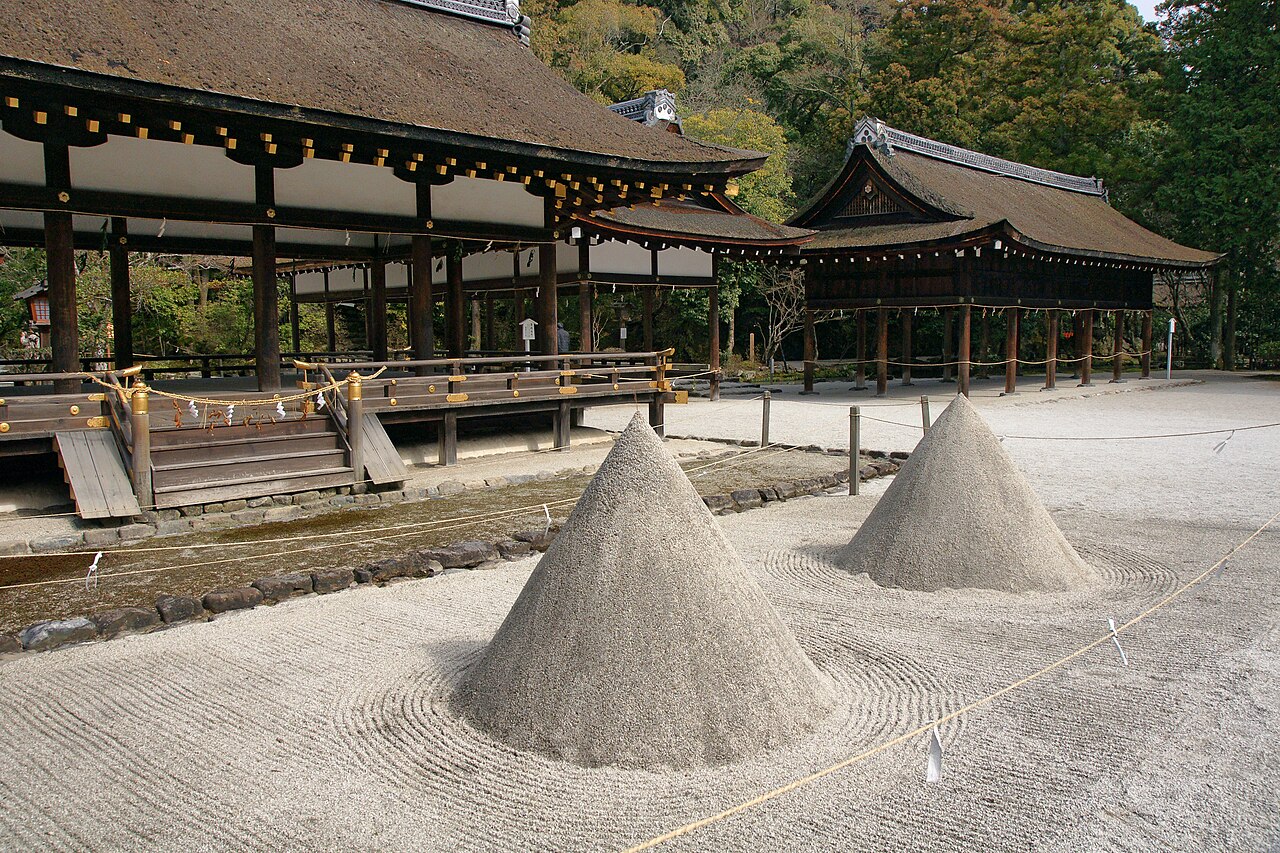
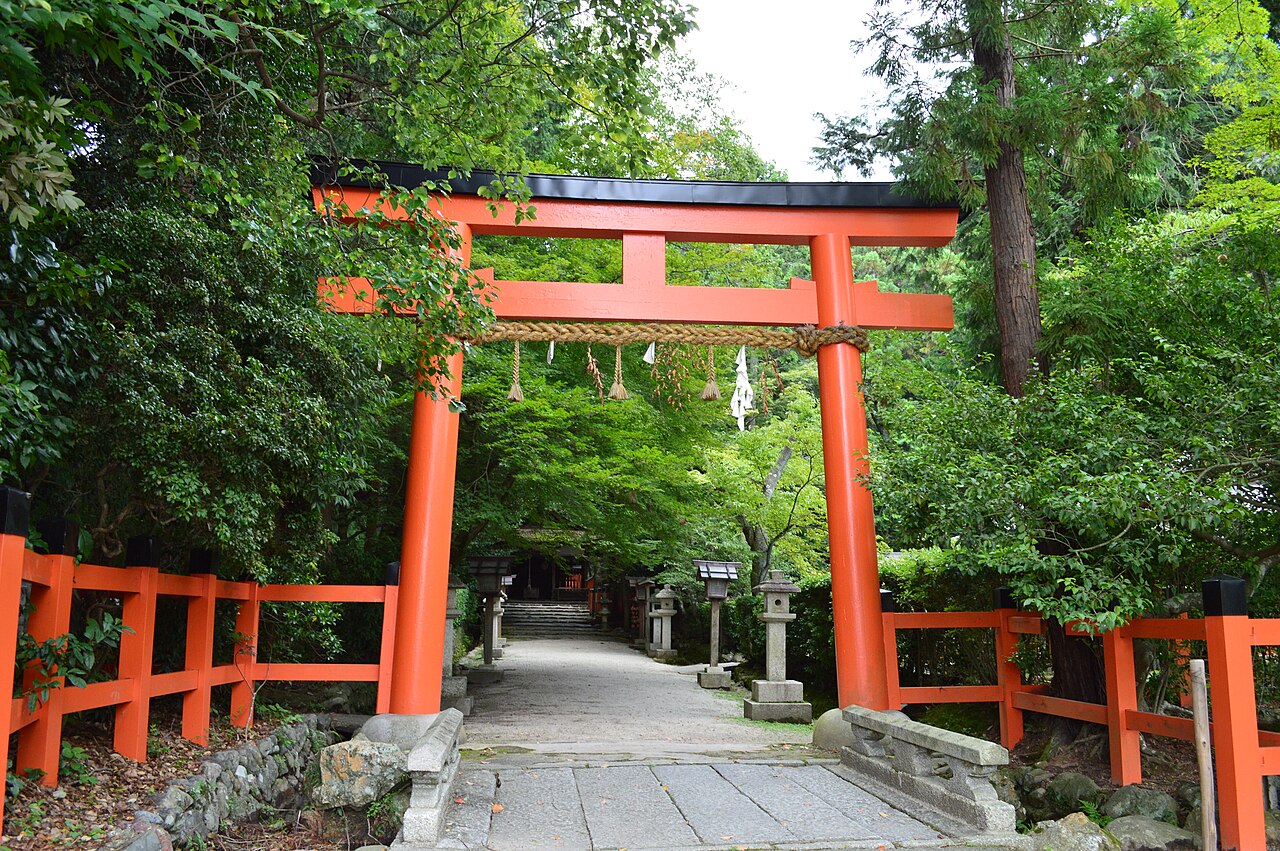
Walking in through the Ninotorii gate leads straight to a tatesuna sand cone that is shaped after Mount Kamiyama. Shrine-priest houses stand in a row along the river that flows out from the grounds, each marked by a gable decoration. Suguki-zuke, the pickle of Kamigamo, is made from nothing but suguki-na and salt and gets its sourness from lactic fermentation. A yakimochi shop wraps red bean paste in rice cake and grills it until browned on both sides.
Walking the Grounds of Kamigamo Shrine
The tatesuna sand cones, the Romon gate and a Shingu Shrine whose gate is drawn back on set Sundays make up a walk through the grounds, with special worship for those who want to go further in.
Walking in through the Ninotorii gate puts the tatesuna sand cones directly ahead, each representing the mountain Kamiyama and carrying a pair of pine needles set on its top as yin and yang. The grounds map lists the Romon, Hosodono and Hashidono among the buildings and the Nara-torii and Tamabashi among the structures, and Katayama-miko Shrine, also known as Kataoka-sha, stands near the Romon gate. The deity of the shrine is said to have descended from heaven onto Kamiyama, and the start of the festival there is said to be the origin of Kamigamo Shrine.
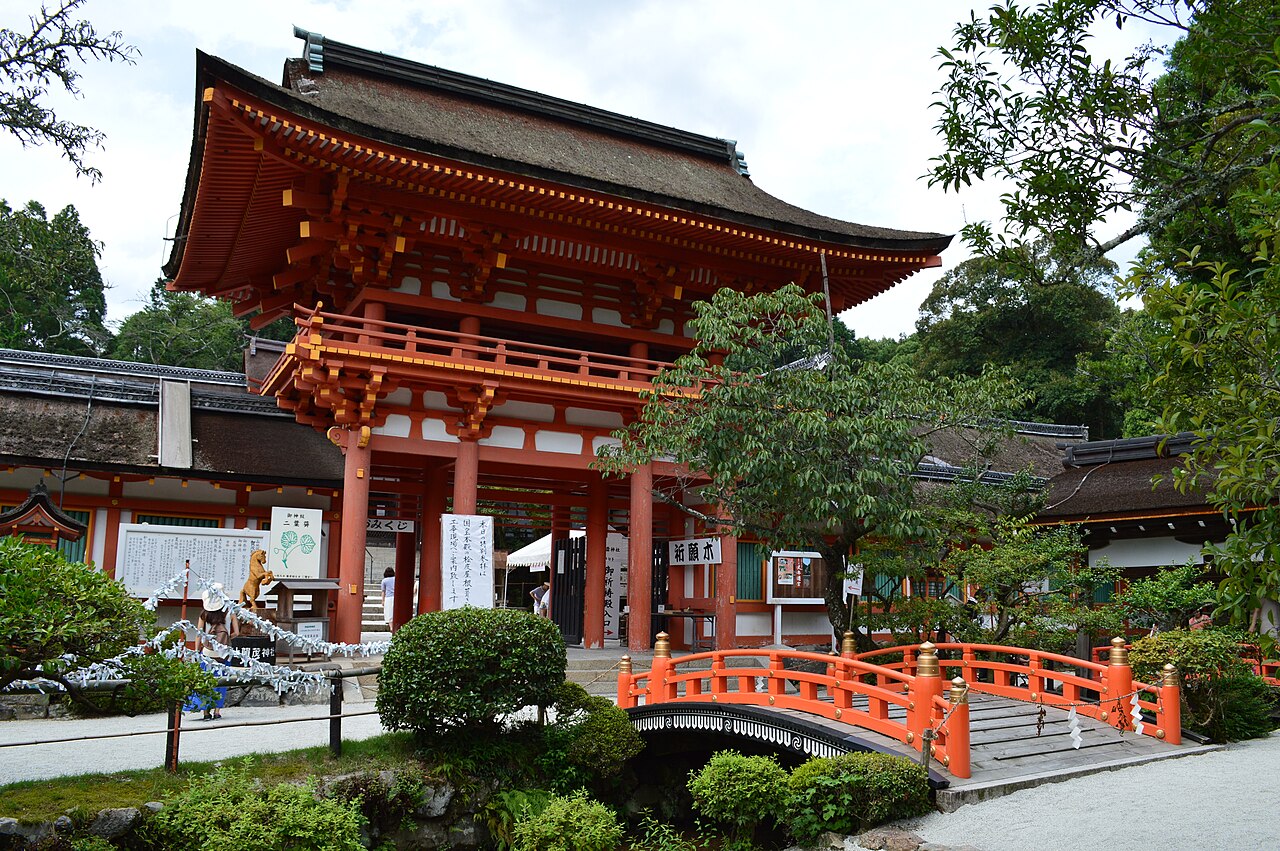
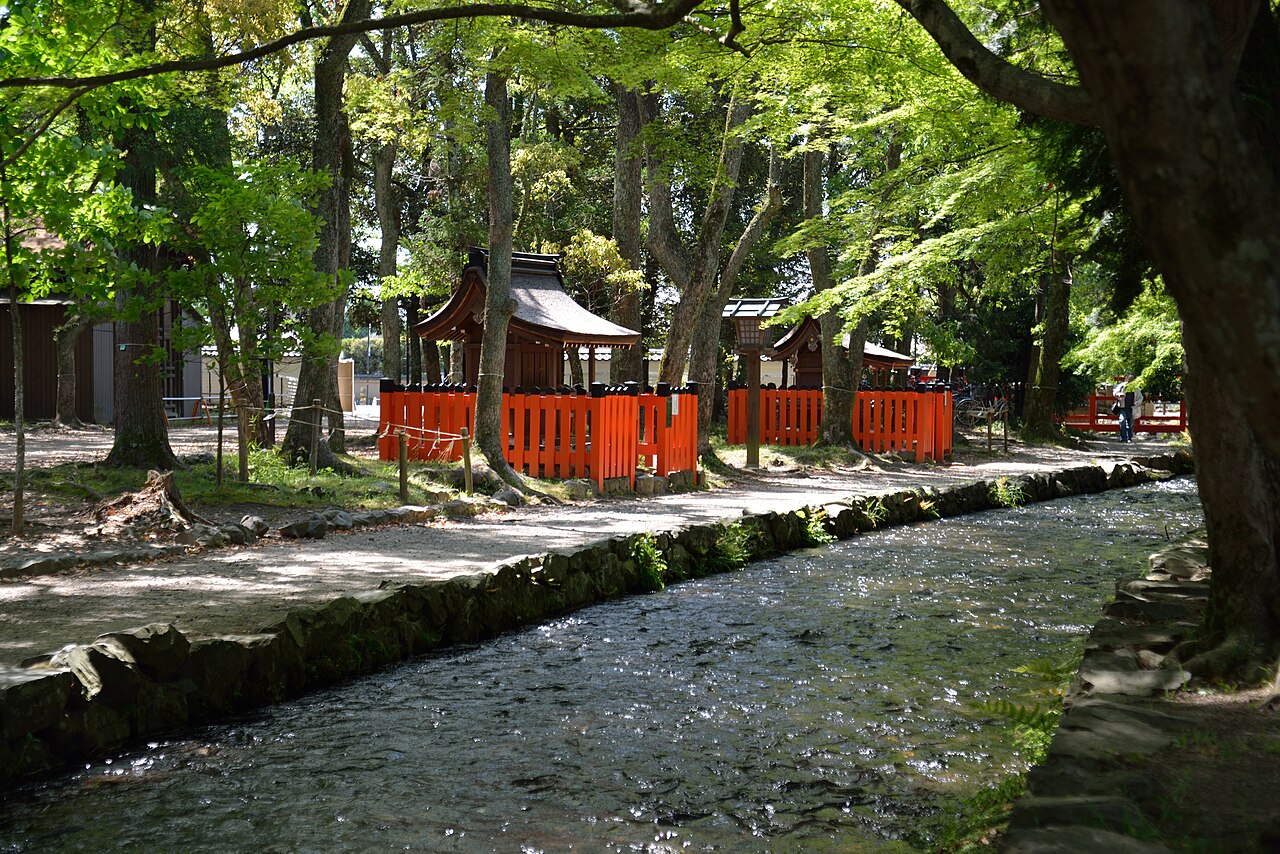
Passing deeper into the grounds leads to Shingu Shrine, a sub-shrine in the inner part whose deity is revered as a dragon deity governing water. Its front gate is normally kept shut and worship is from in front of the gate, but on set Sundays each month the gate is drawn back and a kagura prayer with the miko dance is performed. At the year-end purification rite, paper figures carrying the impurities of the later part of the year are floated into the small stream in the grounds.
Joining the special worship, when it is being held, means following a shrine priest into an area that is normally off limits to visitors. Participants receive purification in the Naorai-den, where the myth of the birth of the enshrined deity is explained, and can then enter the area in front of the Gonden. Shrine treasures on permanent display in another building are shown to participants alone. Reception is on the left after passing through the Romon on weekdays, and at a dedicated desk on the left at the top of the stone steps beyond it on Saturdays, Sundays and public holidays.
Strolling Shake-machi and Ota Shrine Beside Kamigamo Shrine
Shake-machi lines a river beside the shrine, and Ota Shrine, an auxiliary shrine outside the grounds, adds a marsh of kakitsubata.
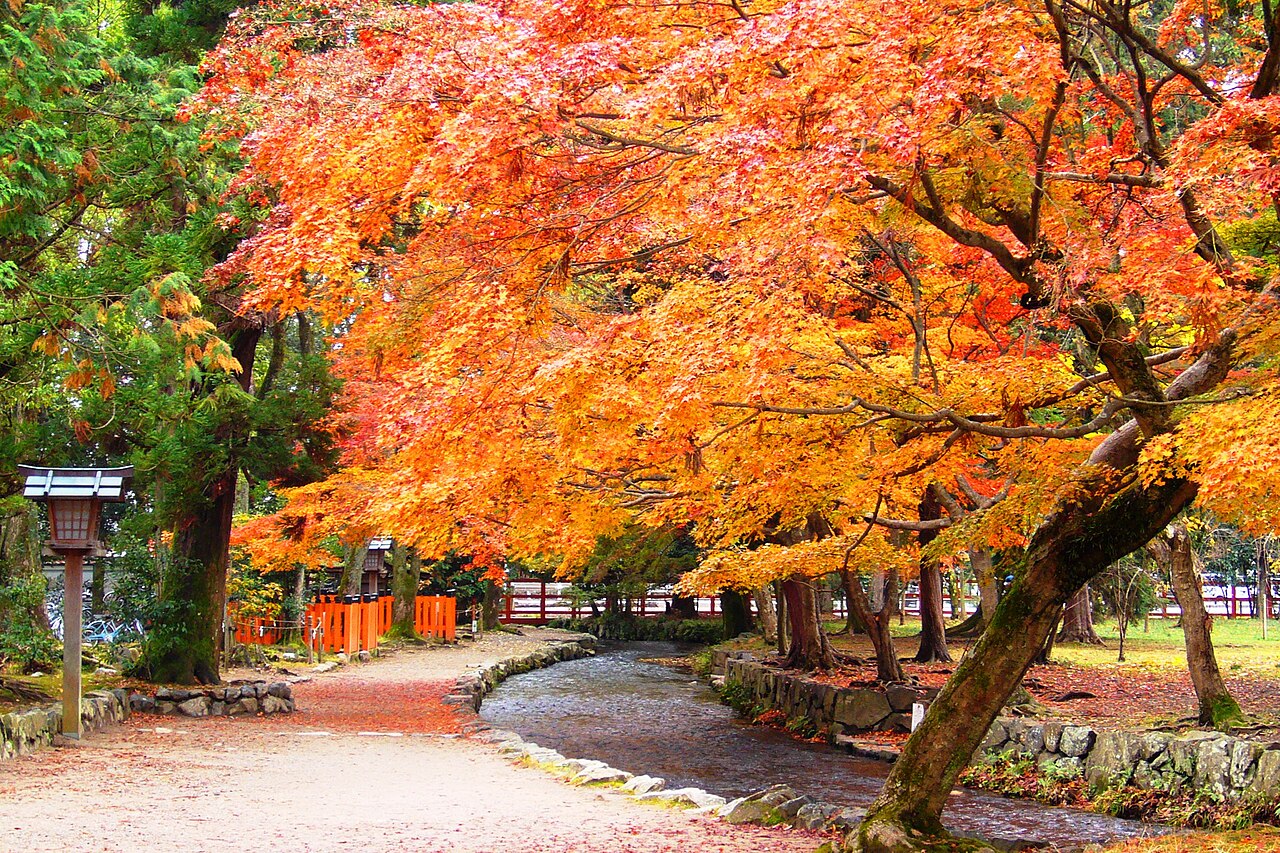
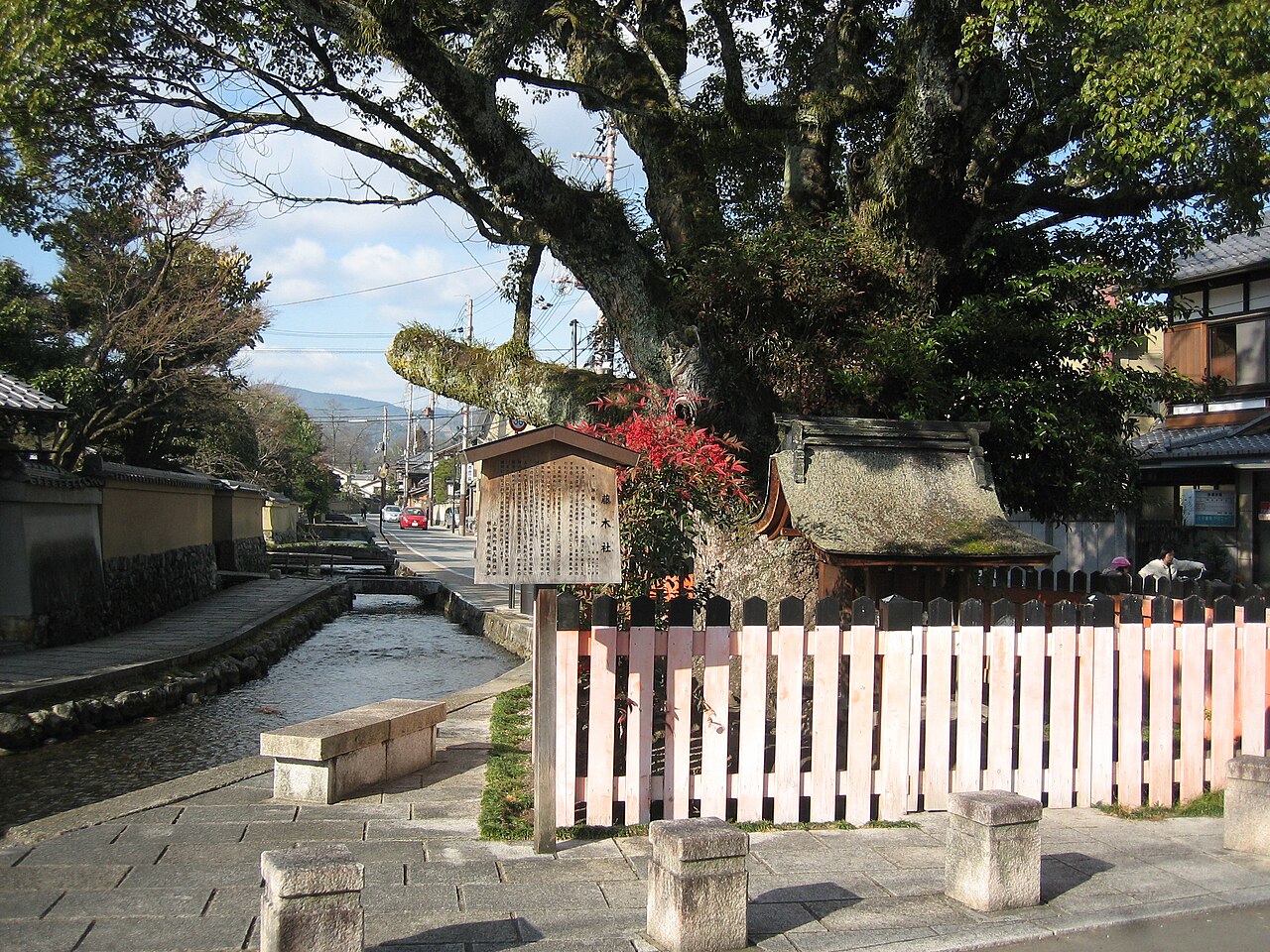
Strolling along the river that flows out from the shrine precincts brings a row of shake, the residences of shrine priests, into view. Each carries a distinctive gable decoration, which is the detail to look for on the walk. Earthen bridges, earthen walls, gates and front-garden trees join the residences to form the Shake-machi landscape.
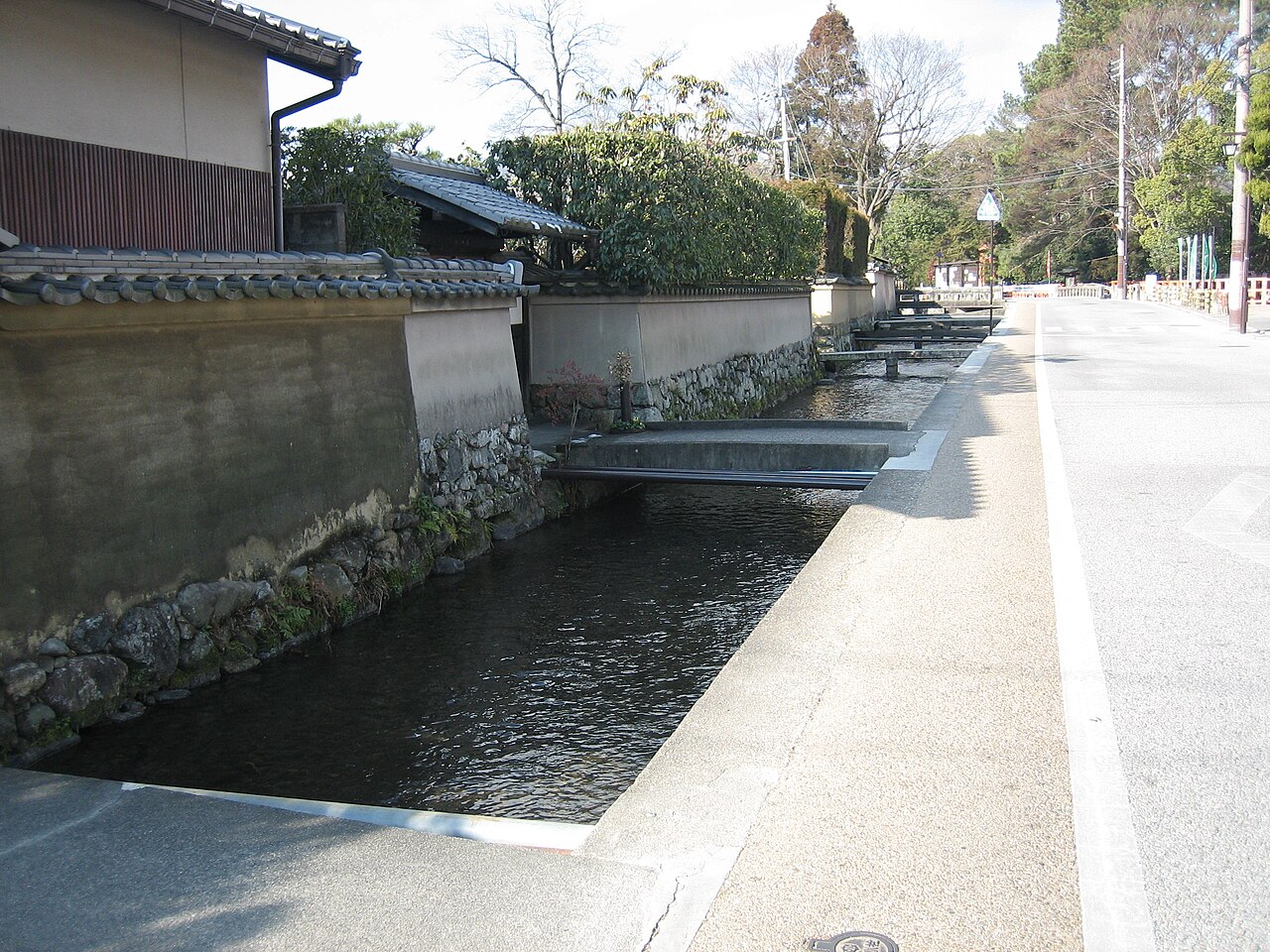
Stepping into the garden of a former shrine-priest house shows how these homes use the river: the garden takes water from it and runs it as a stream for a winding-stream banquet. A stone arrangement in the same garden is modeled on the descent rock of Kamiyama, the mountain of Kamigamo Shrine. Suguki cultivation is said to have begun in the shrine-priest houses of Kamigamo, and a pickle shop stands right beside the shrine.
Continuing east of Kamigamo Shrine reaches Ota Shrine, an auxiliary shrine outside the precincts that enshrines a deity appearing in Japanese mythology. On the east side of its approach lies the Ota marsh, where a colony of kakitsubata grows wild and is designated a National Natural Monument. The satokagura of Ota Shrine, a kagura performed by miko, is a registered intangible folk cultural property of Kyoto City.
Tasting Suguki Pickle, the Sour Taste of Kamigamo
Suguki-zuke, fermented in a warm room, is the food that ties Kamigamo's shrine-priest houses to the table.
Tasting suguki-zuke means tasting fermentation: the pickle is made from nothing but suguki-na and salt, and its characteristic is a sour taste produced by lactic acid bacteria. Suguki-na is a strain of turnip grown in fields in Kamigamo and the area around it. The root is conical, and the leaves are thick, dark green and outsized for the root.
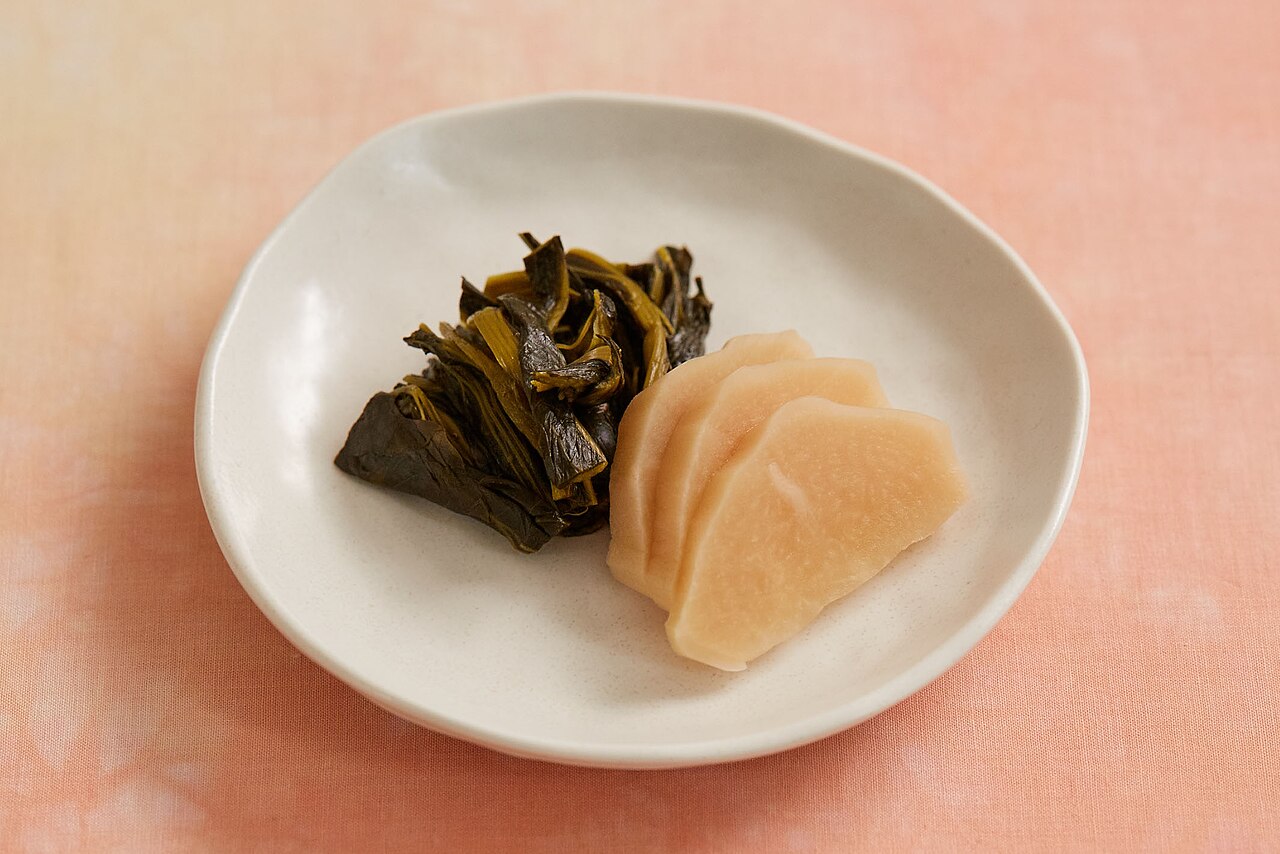
Peeling comes early in the work, and when a harvested suguki is peeled, smooth skin appears. The roots are then covered thickly with salt in a large barrel and left for a day and a night, and the following day each root is washed before the main pickling. There salt is sprinkled on every layer, leaves and a lid go on top, and a weight is applied with a lever press. After that the suguki is placed in a warm room to ferment.
Looking for suguki-zuke leads back to Kamigamo itself, because the fermentation technique has been handed down within the Kamigamo area alone and the Narita shop states that it makes its suguki-zuke on Kamigamo land. Another vegetable tied to the district is the Kamo eggplant, a late-maturing variety grown mainly in Kamigamo. Its fruit is perfectly round, with soft skin and firm flesh.
Eating Yakimochi, the Grilled Rice Cake of Kamigamo
Yakimochi grilled until browned on both sides is the sweet to look for around the shrine.
Eating yakimochi starts with the rice cake itself, which is the same mochi that serves as the offering food of Kamigamo Shrine. The rice is Habutae glutinous rice grown in Shiga, and the cake is wrapped around bean paste made in house. That coarse paste is made with large azuki beans from Tokachi in Hokkaido and a high-grade sugar.
Trying a different yakimochi shop brings a version in which coarse red bean paste is wrapped in rice cake and grilled until browned on both sides. At the Kamigamo main shop of the maker described above, red rice is coloured with nothing but the cooking liquid of azuki beans, without colouring additives, and it is sold at that shop and nowhere else. Travellers who want an evening and a morning around the shrine can compare places to stay in Kyoto.
Getting to Kamigamo Shrine
New to rural buses and one-man trains? See how to ride them, step by step.
Details below follow the official guides. Check the garden row before a winter visit, since its yearly season ends in December.
| Item | Details |
|---|---|
| Ninotorii gate | opens five thirty in the morning and closes at five in the afternoon |
| Romon gate and grant office | open eight in the morning to four forty-five in the afternoon; prayer reception nine to four |
| From Kyoto Station | City Bus route four to the stop in front of the shrine, right next to the shrine |
| From Kitayama Station | City Bus route four to the same stop, or about twenty-five minutes on foot |
| From Kitaoji Station | City Bus route thirty-seven, then about five minutes on foot from the stop |
| Parking | worshippers' lot open six in the morning to ten at night on normal days; exit possible all day |
| Garden of a former shrine-priest house | every day from March fifteenth to December eighth each year |
For the other Kamo shrine, see the Shimogamo Shrine guide. For a trip into the mountains north of the city, see the Kurama and Kibune day trip guide.
Thinking of staying overnight?
Compare places to stay near Kyoto →
Disclosure: This post may contain affiliate links. If you book through them, we may earn a commission at no extra cost to you.