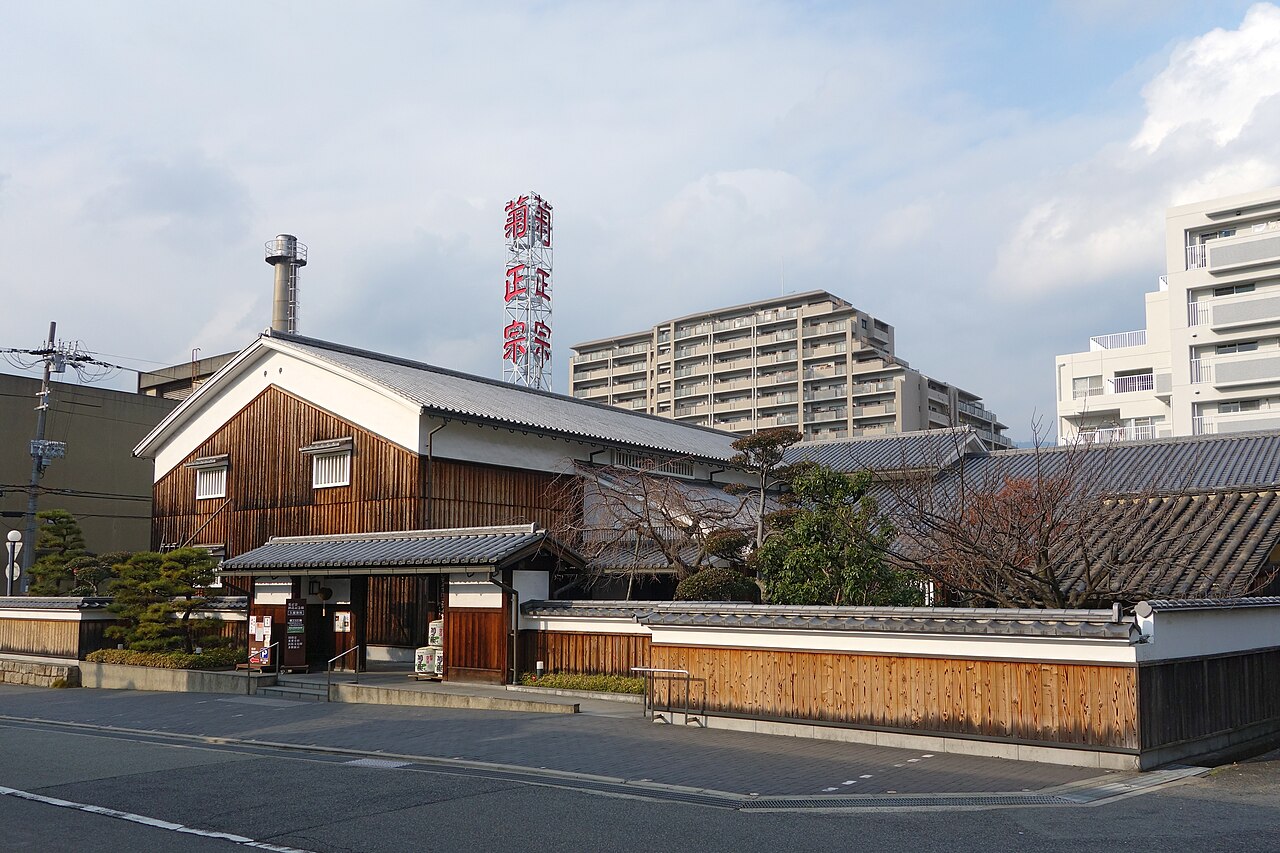
By Hanshin train, Uozaki Station is about twenty-five minutes from Umeda and about ten minutes from Sannomiya. At Hamafukutsuru Ginjo Workshop, the whole brewing process can be watched behind glass on an actual production line. At Kikumasamune Sake Brewery Museum, the brewing tools on display were actually used in Nada and are designated national important tangible folk cultural property.
Kikumasamune Sake Brewery Museum
The brewing exhibition room at Kikumasamune Sake Brewery Museum holds sake-making tools from Nada that were actually used, all designated national important tangible folk cultural property. Among them stand huge sake barrels and a vessel once used for steaming the rice.
Through these tools, visitors learn how the brewery workers lived and worked, and how the traditional brewing method was carried out. Beyond the exhibition room hang a large signboard cut from a single board and the throne where Emperor Showa sat. A giant panel with a portrait of a beautiful woman completes that group of exhibits.
At the tasting corner, visitors can try unheated, undiluted sake and seasonal sake, among others. The museum also offers its original sweet soft serve ice cream, though it can sell out. Limited sake and original goods are also on sale at the museum for visitors to take home. If the brewing tools are the draw, give the exhibition room its time before heading to the tasting corner.
Hamafukutsuru Ginjo Workshop
Hamafukutsuru Ginjo Workshop was fitted with equipment that lets visitors see the whole brewing process behind glass. Because the workshop is an actual production line, the work visible differs by the time of year, day of the week and time of day.
Along the glass, visitors hear the voice of the fermenting sake and stand in the sweet scent of real moromi. A corner inside the workshop explains the sake-making process with panels and videos. A separate exhibit shows the brewing tools that have been used since the Edo period. Depending on the day, the scenes include the preparation of the brew and the quality check of freshly pressed sake. Koji making is another stage that can come into view behind the same glass.
At the namazake tasting corner, visitors can taste clear, freshly pressed limited namazake and compare it by rice and by method. The paid tasting bar pours selected sake, and the corner that sells rare sake by measure offers sake that brewers alone once tasted. Those who do not drink are offered homemade amazake and local cider instead. The direct-sales corner sells sake and many original products that are available at this workshop alone.
Sakuramasamune Memorial Hall Ouen
Sakuramasamune Memorial Hall Ouen fills its exhibition space with a video of the traditional brewing process and with tools that trace four hundred years since the brewery's founding. Old signboards and old sake bottles with their labels fill the rest of the space.
Visitors can make an original sake label of their own with Ouen as the backdrop. From the exhibition space, visitors go on to the shop within the same hall. The dining hall at Ouen serves dishes from lunch through to kaiseki, including a sake-brewery-style pot dish. The label-making pairs well with lunch at the dining hall for anyone staying through midday.
Hakutsuru Sake Brewery Museum
Hakutsuru Sake Brewery Museum keeps a sake brewery building from the early Taisho era as it was. The building made sake for decades before brewing there ended, and the museum now stands inside its former brewing space.
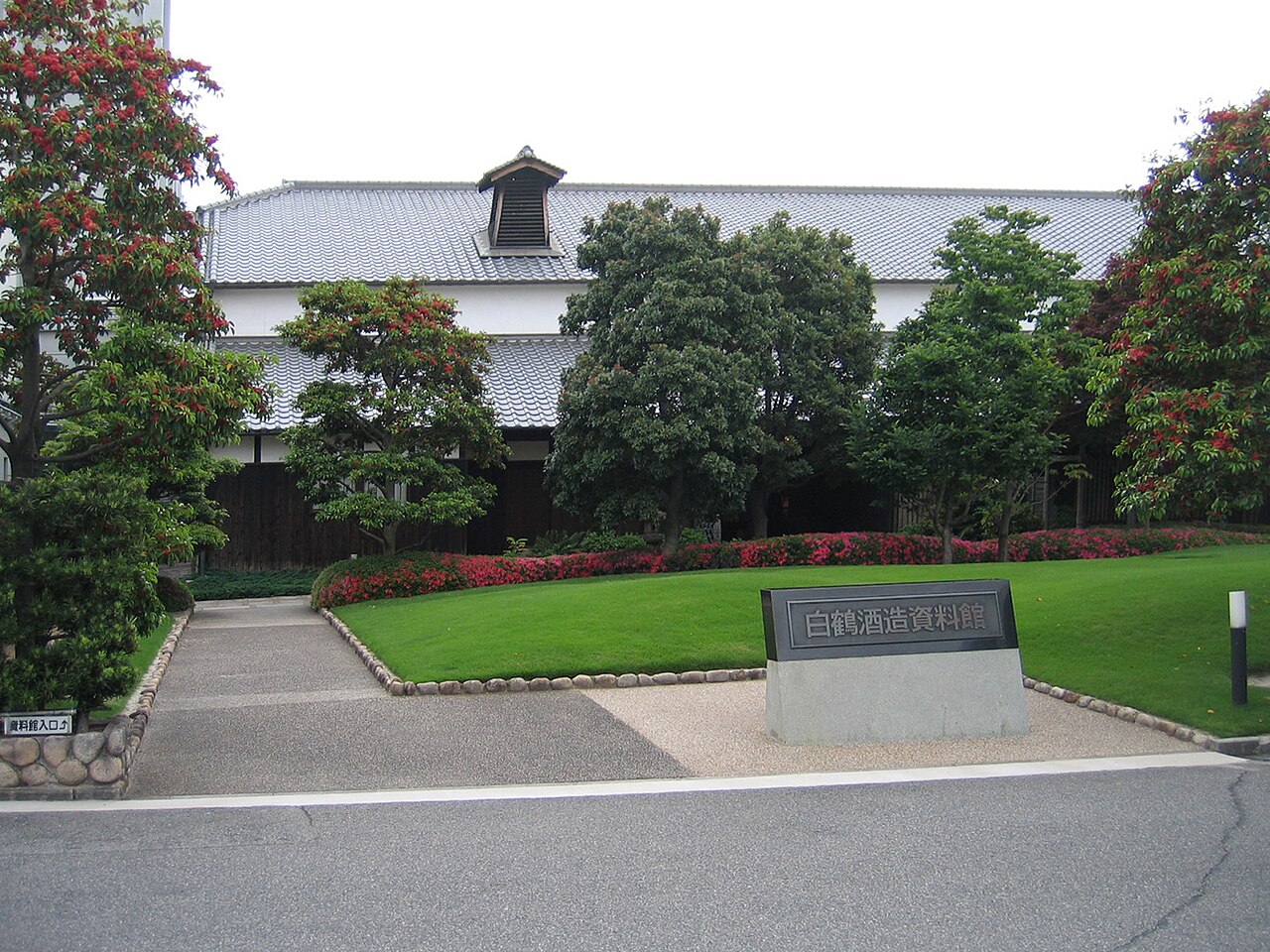
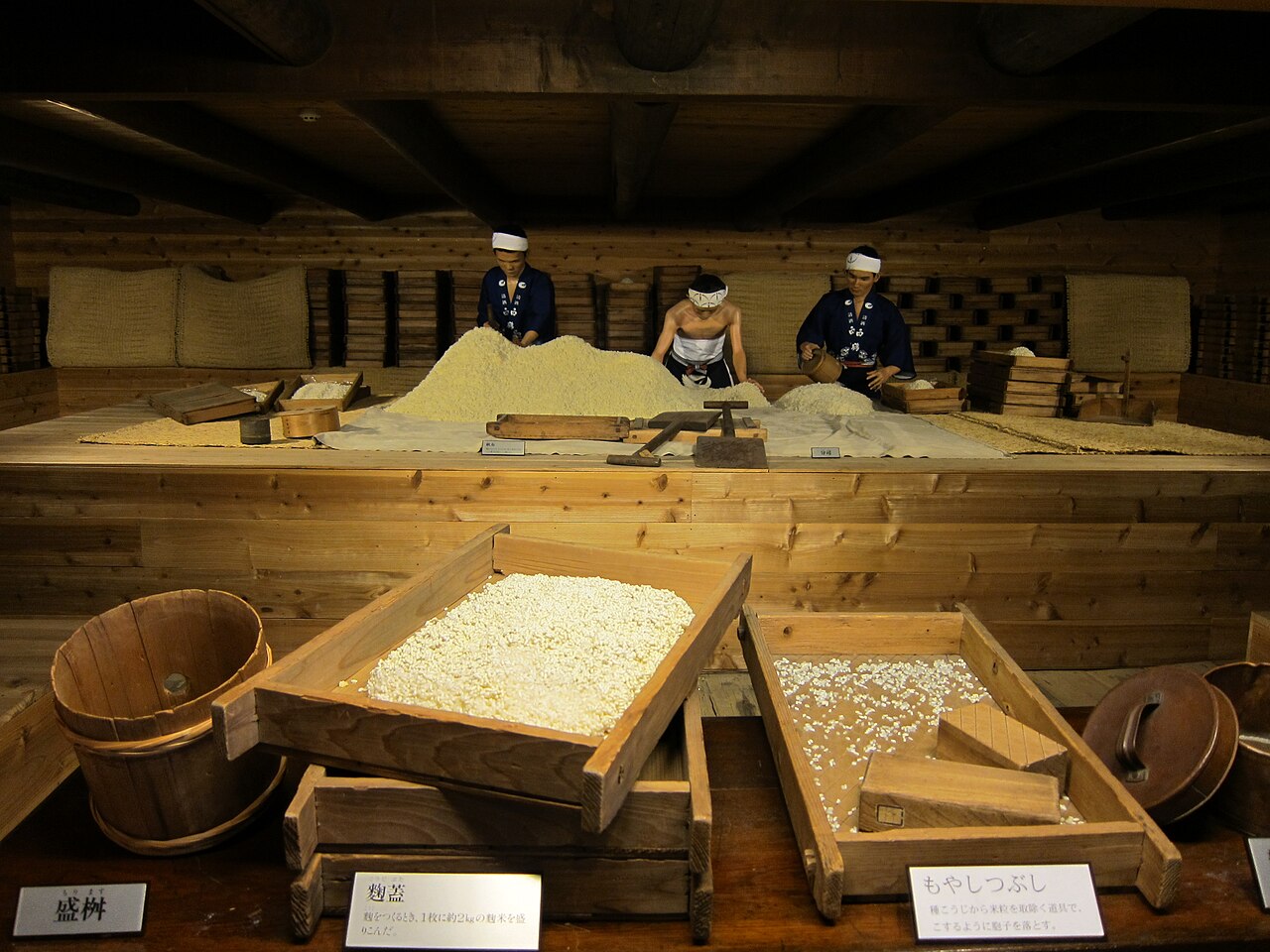
Inside, the traditional sake brewing process is reproduced with life-size figures and the tools of the trade. A projection mapping theater in the museum expresses the four seasons of sake brewing. Visitors who want to see the brewing steps acted out rather than read about them get that from the figures and the theater.
Kobe Shushinkan
Kobe Shushinkan brews its own house sake and spreads across four kura, one of which is the brewing kura itself. In the brewing kura, the sake-making process can be followed on video and then through glass into the working brewery.
At the brewery shop next door, the full range of the house sake can be tasted and bought in one place. Limited sake from the house range is sold at that shop alone. The same shop serves special soft serve ice cream and sweets made with sake lees.
At the restaurant kura, kaiseki cuisine built on local ingredients is served, and the tofu on the menu is homemade. With kaiseki at the restaurant kura added to the tastings at the shop, Kobe Shushinkan covers a full meal as well as a drink.
To stay overnight in the area, browse places to stay in Nada.
Getting to Nada
New to rural buses and one-man trains? See how to ride them, step by step.
| Leg | How | Time or cost |
|---|---|---|
| Hanshin Sumiyoshi Station to Hakutsuru Sake Brewery Museum | On foot | About 5 minutes. About 15 minutes on foot from JR Sumiyoshi Station |
| Hanshin Uozaki Station to Kikumasamune Sake Brewery Museum, Hamafukutsuru Ginjo Workshop and Sakuramasamune Memorial Hall Ouen | On foot | About 10 minutes to the first two. About 5 minutes to Ouen |
| Hanshin Ishiyagawa Station to Kobe Shushinkan | On foot | About 8 minutes. About 5 minutes by taxi from Hanshin Mikage Station |
Hours and Fees
| Place | What | Hours or fee |
|---|---|---|
| Hakutsuru Sake Brewery Museum | Hours | 9:30 to 16:30, with entry until 16:00 |
| Kikumasamune Sake Brewery Museum | Hours | 9:30 to 16:30, with a possible change on the last day of the year. Closed on Tuesdays and over the year-end and New Year period (from April 2026). Sessions at the sake cup exhibition hall at 11:10 in the morning and at 2:10 and 3:10 in the afternoon by advance booking, about 30 minutes each |
| Kobe Shushinkan | Hours and paid visit | Brewery shop 10:00 to 18:30 (closed January 1 to 3). Paid brewery visit led by brewery staff at 3,300 yen per person, tax included. The visit runs from 16:30 to 17:30 as a special plan |
| Hamafukutsuru Ginjo Workshop | Hours | 10:00 to 17:00, last order at the paid tasting bar 16:15; closed on Mondays and open on national holidays; admission free |
| Sakuramasamune Memorial Hall Ouen | Hours | Shop 10:00 to 19:00, closed on Tuesdays. Cafe 10:00 to 18:00, last order 17:00, closed on Tuesdays. Restaurant 11:30 to 3:00 in the afternoon and 5:00 to 10:00 in the evening, closed on Tuesdays |
Fees and hours were checked against official sources on 9 November 2026.
Thinking of staying overnight?
Compare places to stay near Nada, Kobe →
Disclosure: This post may contain affiliate links. If you book through them, we may earn a commission at no extra cost to you.