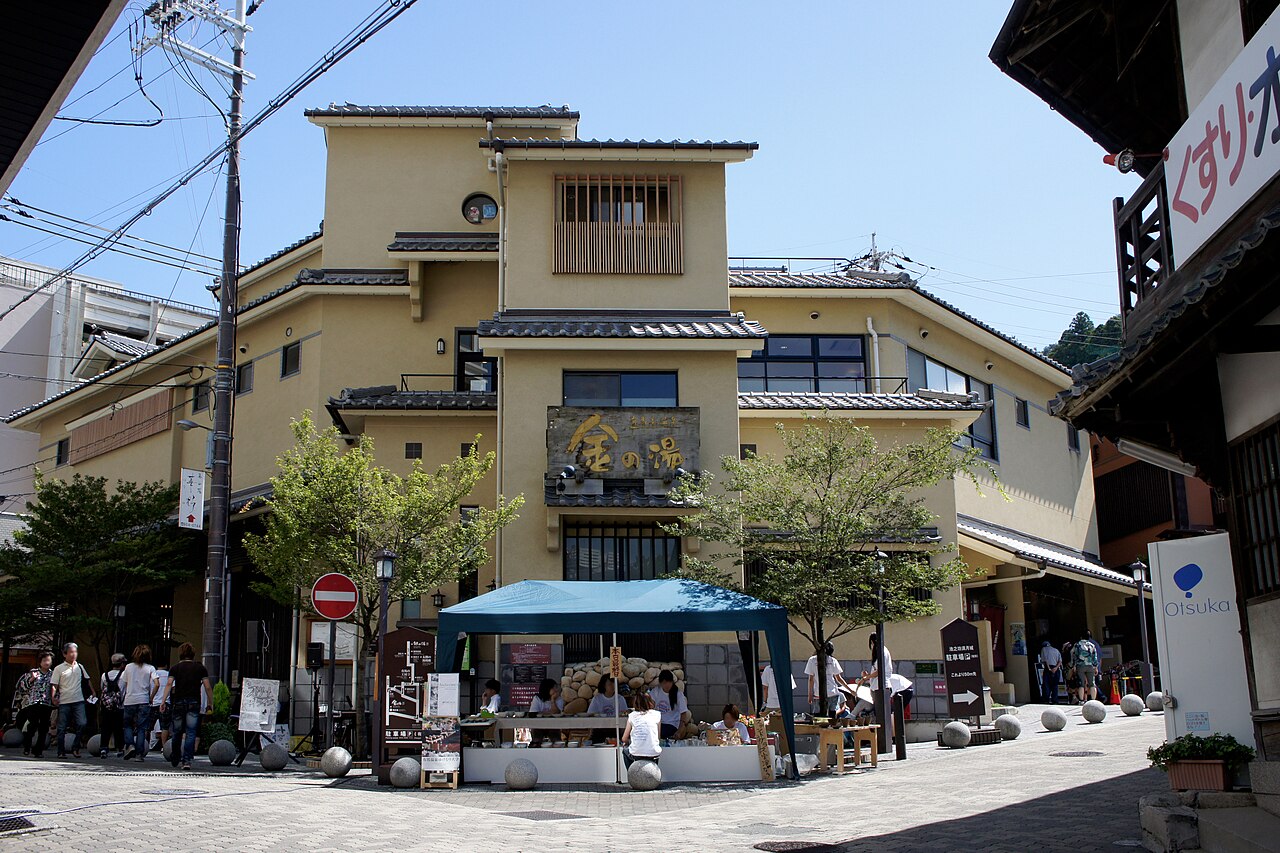
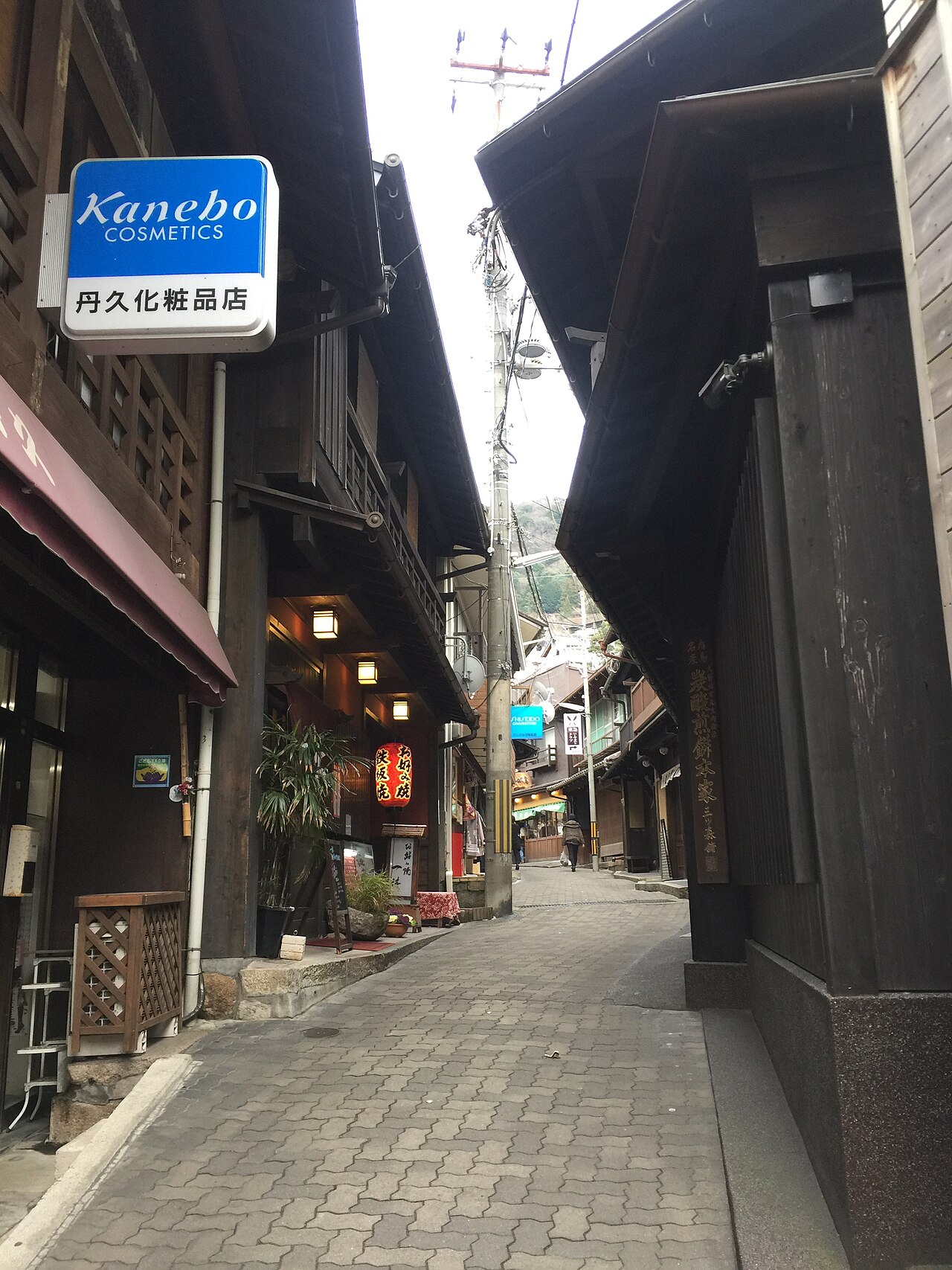
The old town of Arima Onsen is a knot of narrow, winding streets set among mountains, and that terrain gives the town its atmosphere. On a walk through the back alleys, a visitor may hear the sound of shamisen or taiko from geisha practicing. Kin-no-yu stands almost in the centre of Arima Onsen.
This route runs from Kin-no-yu and Gin-no-yu through the old-town lanes and the sweet and sansho shops to Zuiho-ji Park, and leaves out the Rokko Arima Ropeway and the Arima Stamp Culture Museum.
Visitors can watch whole sansho grains turn to powder in a stone mill.
| Time guide | Place | What you do | Walk or stay |
|---|---|---|---|
| Morning | Arima Onsen | Arrive from Sannomiya, changing at Tanigami | Thirty minutes |
| Morning | Old town | Follow the standard guided walk past the spring sources | About two hours |
| Morning | Kin-no-yu | Soak in the brown Kinsen water | Five minutes on foot |
| Midday | Gin-no-yu | Walk on and try the steam sauna | Five minutes on foot |
| Afternoon | Zuiho-ji Park | Walk under the maple leaves | Walk or stay |
Soaking in the Golden Spring at Kin-no-yu and the Silver Spring at Gin-no-yu
At Kin-no-yu, visitors soak in the brown Kinsen spring, a water rich in iron and salt. The town's spring page says that the salt sticks to the skin and forms a thin film. The silver spring, Ginsen, is described as a hot spring that contains carbonic acid.
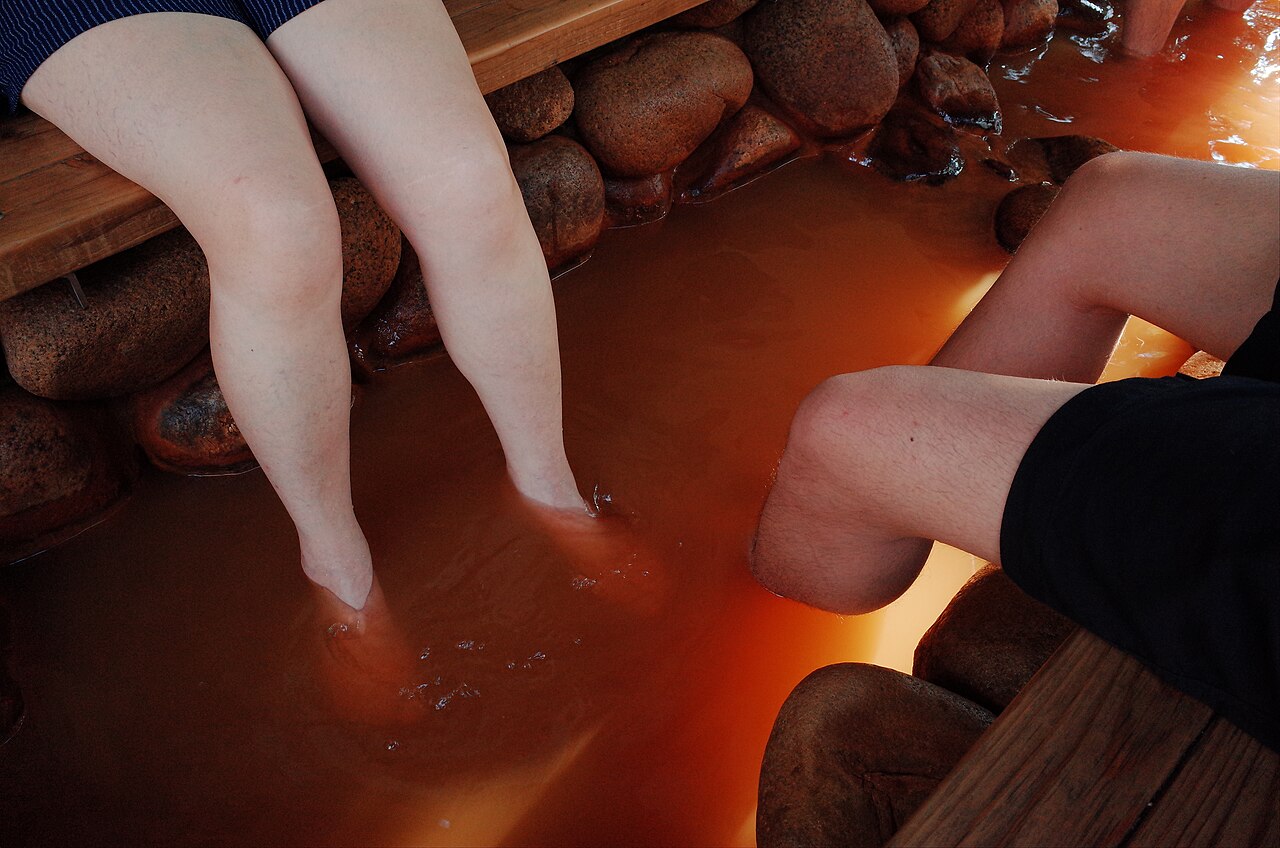
At Gin-no-yu, visitors can try out a steam sauna that is modelled on Hideyoshi's steam bath. The bath itself uses silver spring water, a colourless and transparent hot spring that blends carbonated spring and radium spring water.
Visitors choosing where to bathe have two public outer baths to pick from, Kin-no-yu and Gin-no-yu. The Gin-no-yu building has a Japanese-style appearance that matches the atmosphere of the temple-town area where shrines and temples gather. Kin-no-yu suits visitors who want the brown iron-and-salt Kinsen water, and Gin-no-yu those who want a steam sauna modelled on Hideyoshi's steam bath.
Walking Past Steaming Spring Sources to Arima Tenjin and Nenbutsu-ji
Visitors who come to see the spring source in the grounds of Arima Tenjin find white steam rising thickly from it. The hot spring wells up inside the shrine grounds, and the setting is described as wrapped in steam. For those who come to pray or to see the source, the Arima Tenjin tea house prepares homemade Arima onsen eggs, oyaki and various drinks.
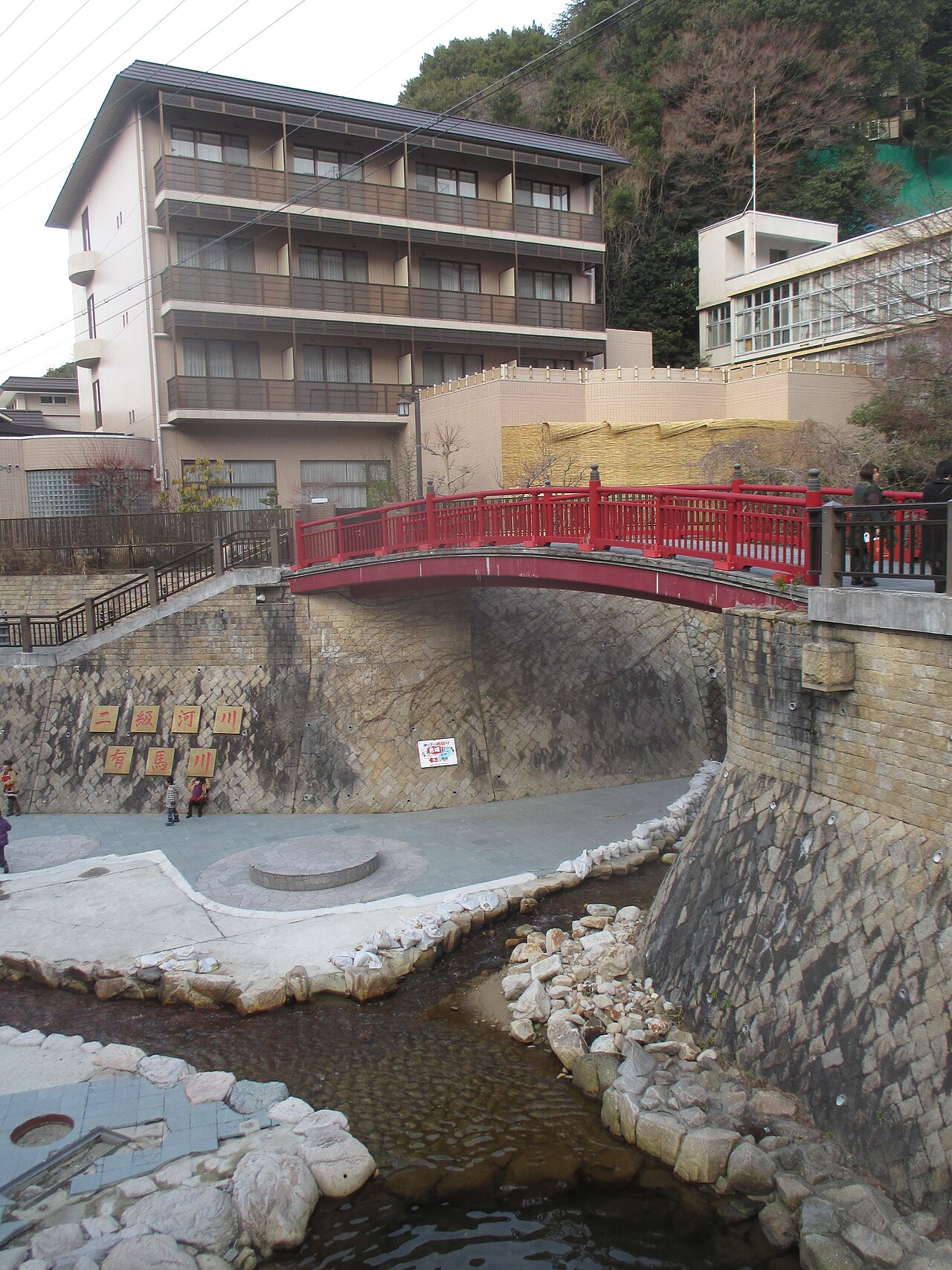
Visitors who follow the standard guided route walk past spring sources, shrines and temples along the way. Several old road markers from the Edo period still exist, and visitors can see them in the streets of Arima. Guests call geiko to each ryokan, and once a banquet begins the geiko greet the guests and go to their seats.
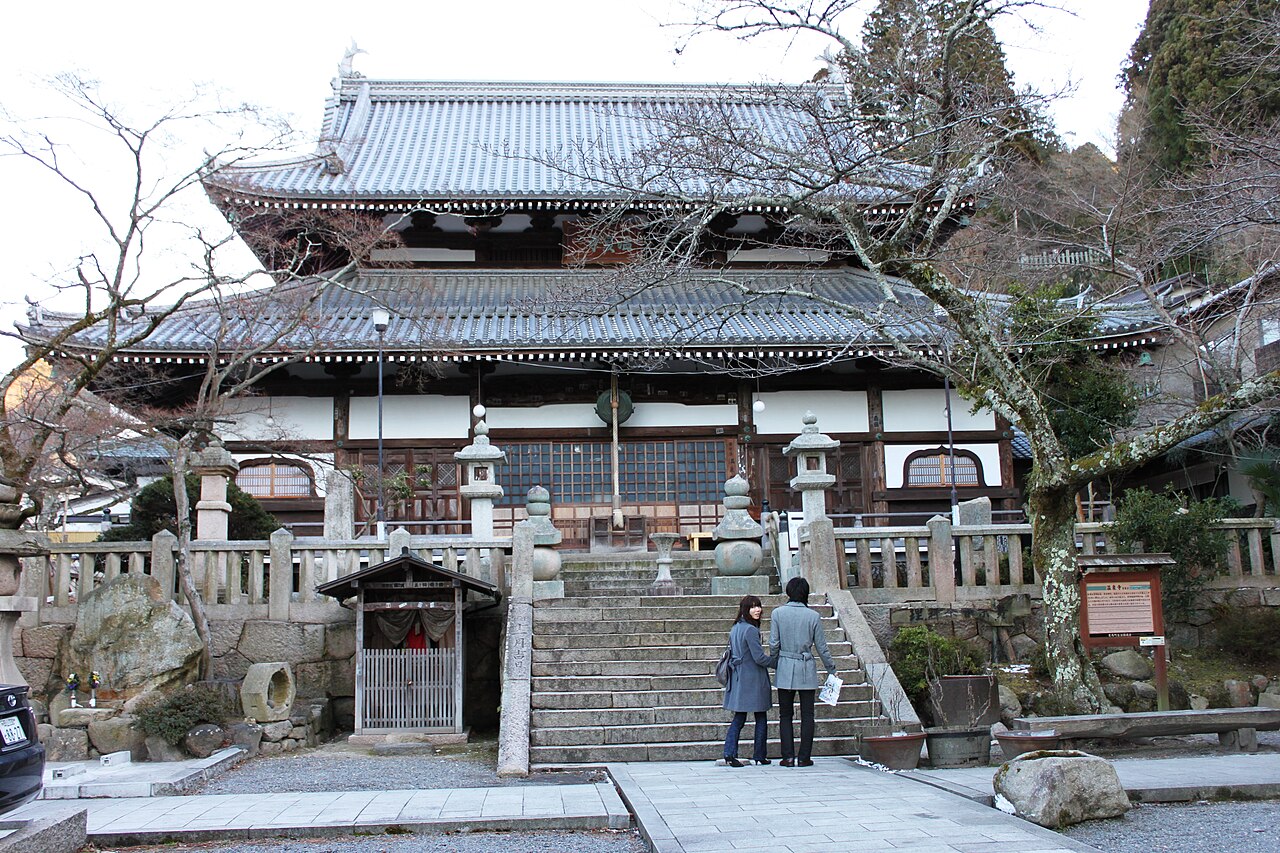
At Nenbutsu-ji, visitors can drink tea, or have curry limited to ten servings, in a tatami room facing the sala garden. The Nenbutsu-ji site is said to be the former villa of Nene, the principal wife of Hideyoshi. Arima Tenjin suits visitors who want steam rising around a spring source, and Nenbutsu-ji those who want tea in a tatami room.
Catching a Trout and Tasting Sansho, Tempura and Senbei Along the Lanes
At a fishing pond fed by a clear stream, visitors catch young trout that are cooked as fried trout at a tea house in the grounds. The tea house also offers single dishes alongside the dishes made from the trout a visitor has caught. For a different meal, a lunch restaurant inside a hotel in the town centre serves udon.
Visitors who step inside a sansho (Japanese pepper) specialty shop meet the scent of sansho ground in a stone mill. A fresh sansho scent fills the shop, which offers tasting samples and works to widen the uses of Arima sansho. Tasting samples are also prepared at a shop run directly for the Arima sweet.
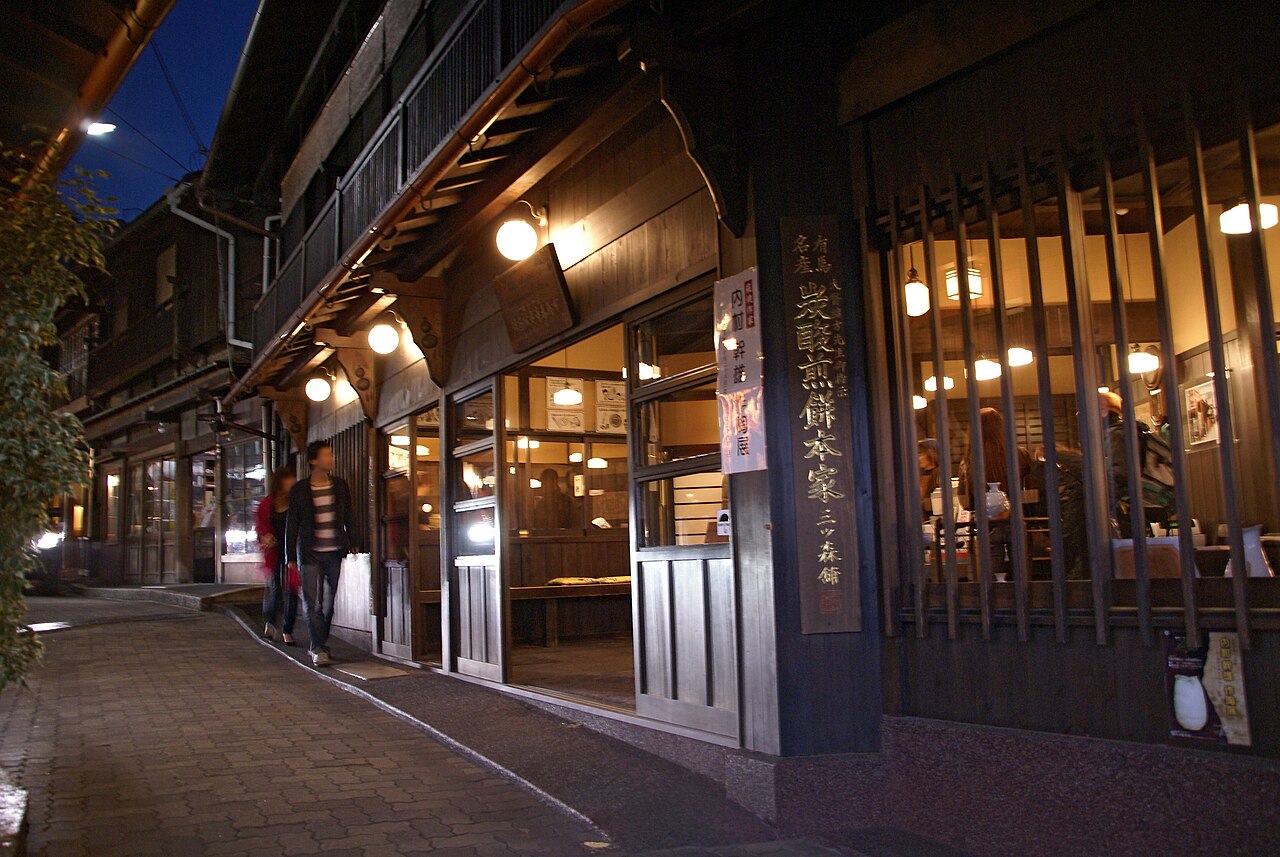
At a senbei shop, visitors can taste a freshly baked senbei, and freshly made ones are wrapped and sold on the spot. The front of a tempura shop displays colourful tempura, which is served freshly made with rising steam. The trout pond suits visitors who want to eat what they have caught, and the senbei shop those who want to taste a freshly baked one.
Writing With the Doll Brush and Playing at the Arima Toy Museum
Visitors who take up the doll brush to write find that a doll shows its face as they do. Glossy coloured thread is wound around the brush in two patterns, and the town's craft page also notes the beauty of the brush shaft.
Sen no Rikyu, visiting Arima with Hideyoshi, asked for a tea ceremony utensil, and the bamboo craft made for him is the Arima basket. Orders for the basket still come in from people who practise the tea ceremony. The Arima Kago Honten shop describes itself as making and selling the Arima basket, a craft passed down from the Momoyama period.
At the Arima Toy Museum, at the start of Yumoto-zaka, visitors can play in a play space beside displays of mainly European toys. They press buttons to watch automata move and see the history and production process of Japanese tin toys. The Arima Toy Museum suits visitors who want to press buttons and watch automata move, and play in a space made for it.
Looking Up at Red Umbrellas and Maple Leaves at Zuiho-ji Park
Past the gate of Zuiho-ji Park, the view opens onto maple leaves, which visitors can look at from the Momiji Chaya tea house. At the tea house, red traditional umbrellas stand in a line under the maple leaves. On sunny days, visitors can eat and drink there while looking at light coming through gaps in the trees and at maple leaves in many colours.
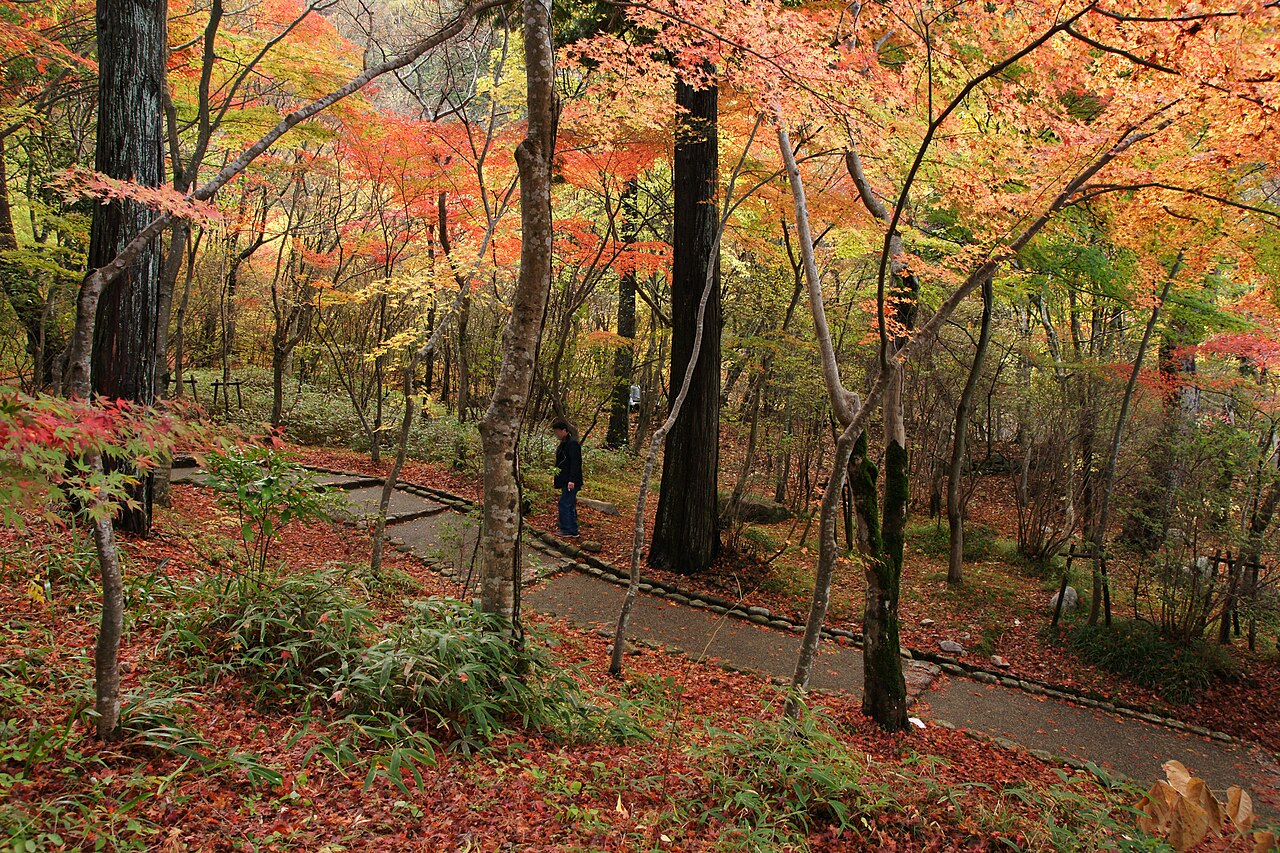
Visitors at the tea house can order from a menu that lists wine and hot coffee among other items. The Momiji Chaya tea house in Zuiho-ji Park opens only in the autumn-leaf season. A go board said to have been used by Hideyoshi remains in the garden.
Zuiho-ji Park lies on the mountain side to the east of the Arima Onsen town. The temple was abolished in the early Meiji period, yet a gate said to have been moved from a castle remains in the city park. Zuiho-ji Park suits visitors who want to look at maple leaves in many colours from a tea house with red umbrellas under the trees.
Getting to Arima Onsen
New to rural buses and one-man trains? See how to ride them, step by step.
| Route | Item | Detail |
|---|---|---|
| JR Osaka Station | Train via Sannomiya, Tanigami and Arimaguchi | About one hour |
| Hankyu/Hanshin Umeda Station | By train to Arima Onsen | About one hour twenty minutes |
| Sannomiya Station | Subway to Tanigami, then Shintetsu Arimaguchi | About thirty minutes |
| Shin-Osaka Station | By train to Arima Onsen | About one hour ten minutes |
| Shin-Kobe Station | Subway Tanigami, Shintetsu Arimaguchi | About thirty minutes |
| Shin-Kobe Station | Highway bus Arima Express | About forty-five minutes |
| JR Himeji Station | Via Sannomiya, Tanigami and Arimaguchi | About one hour thirty minutes |
| Arima Onsen Station | To Kin-no-yu | Five minutes on foot |
| Arima Onsen Station | To Gin-no-yu | Five minutes on foot |
For an overnight stay in Arima Onsen, browse places to stay in Arima Onsen.
Hours and Fees
| Place | Item | Time or fee |
|---|---|---|
| Kin-no-yu | Hours | Eight a.m. to ten p.m. |
| Kin-no-yu | Last entry | Nine thirty p.m. |
| Kin-no-yu | Closed | Second and fourth Tuesdays, January first |
| Kin-no-yu | Adult, weekdays in brackets | Eight hundred yen (six hundred fifty) |
| Gin-no-yu | Hours | Nine a.m. to nine p.m. |
| Gin-no-yu | Last entry | Eight thirty p.m. |
| Gin-no-yu | Closed | First and third Tuesdays, January first |
| Gin-no-yu | Adult, weekdays in brackets | Seven hundred yen (five hundred fifty) |
| Kin-no-yu, Gin-no-yu | Public holidays | Open; closed the next day |
| Both baths | Combined ticket, towel on weekdays | Twelve hundred yen |
| Fishing pond | Fishing, per rod, three trout included | Eighteen hundred yen |
| Fishing pond | Hours, March to November | Nine a.m. to five p.m. |
| Fishing pond | Hours, December to February | Nine thirty to four thirty p.m. |
| Fishing pond | Closed, March–November / December–February | Wed–Thu / Wed–Fri |
Fees and hours were checked against official sources on 16 November 2026.
Thinking of staying overnight?
Compare places to stay near Arima Onsen, Kobe →
Disclosure: This post may contain affiliate links. If you book through them, we may earn a commission at no extra cost to you.