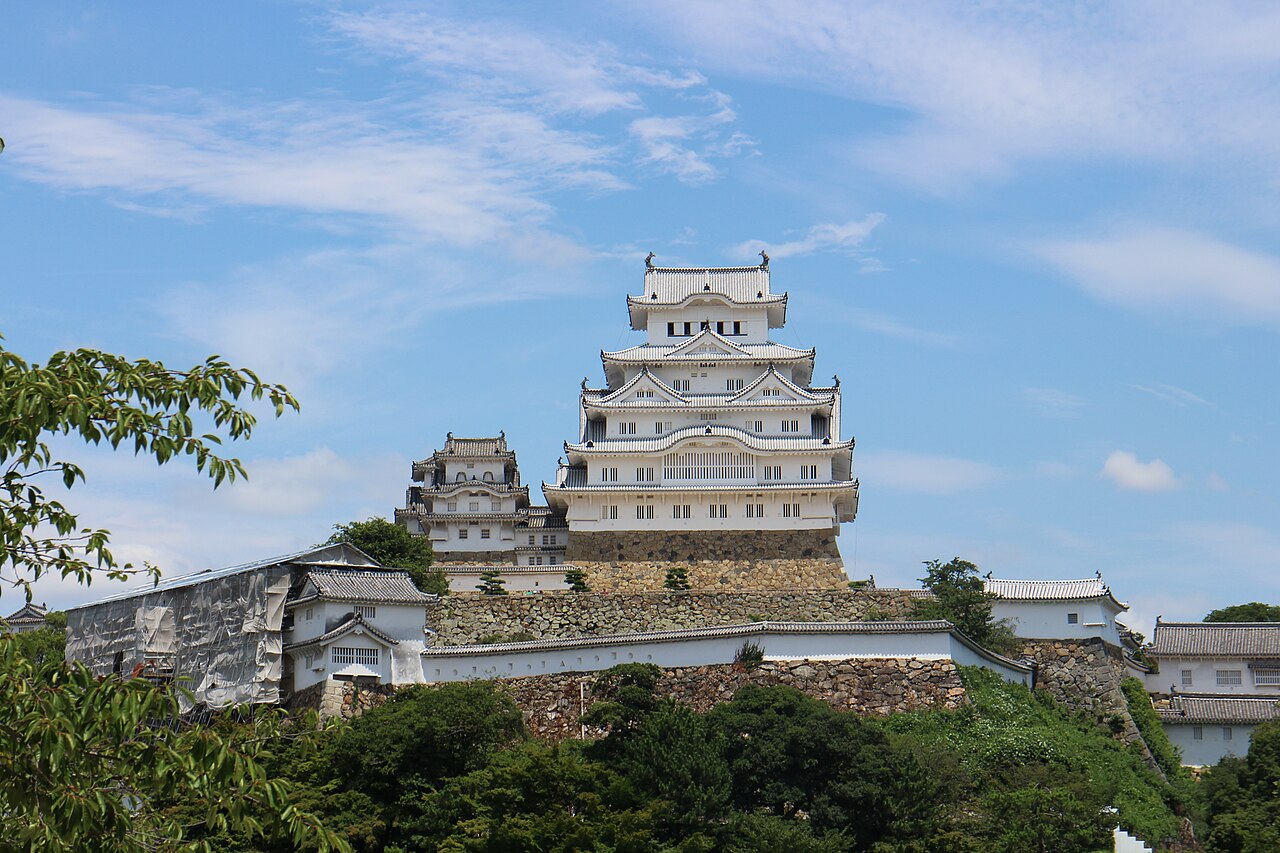
Himeji is the day trip that works from almost anywhere in western Japan: a short ride on the Shinkansen, a straight walk up a broad avenue, and the white keep of Himeji Castle growing larger ahead of you the whole way. This guide covers the journey from Tokyo, Nagoya, Kyoto and Osaka, the walk or loop bus ride from the train to the castle gate, what the castle and Kokoen Garden cost and when to go, and what to look for inside the walls.
Getting to Himeji from Tokyo, Nagoya, Kyoto and Osaka
Himeji has both Shinkansen and JR Special Rapid services, so you can choose between speed and a slower, simpler ride. Not every Nozomi stops at Himeji, so check the stopping pattern before you board.
| Starting point | Train | Approximate time to Himeji |
|---|---|---|
| Tokyo | Shinkansen Nozomi | about three hours ten minutes |
| Nagoya | Shinkansen Nozomi | about one hour twenty minutes |
| Kyoto | Shinkansen Nozomi | about forty-four minutes |
| Kyoto | JR Special Rapid | about one hour twenty-five minutes |
| Shin-Osaka | Shinkansen | about twenty-eight minutes |
| Osaka | JR Special Rapid | about fifty-seven minutes |
From Osaka the Special Rapid is the relaxed choice and still gets you there in under an hour. From Tokyo the Nozomi makes Himeji possible in one long day, though a night somewhere in Kansai takes the pressure off.
Walking up Otemae-dori to the castle
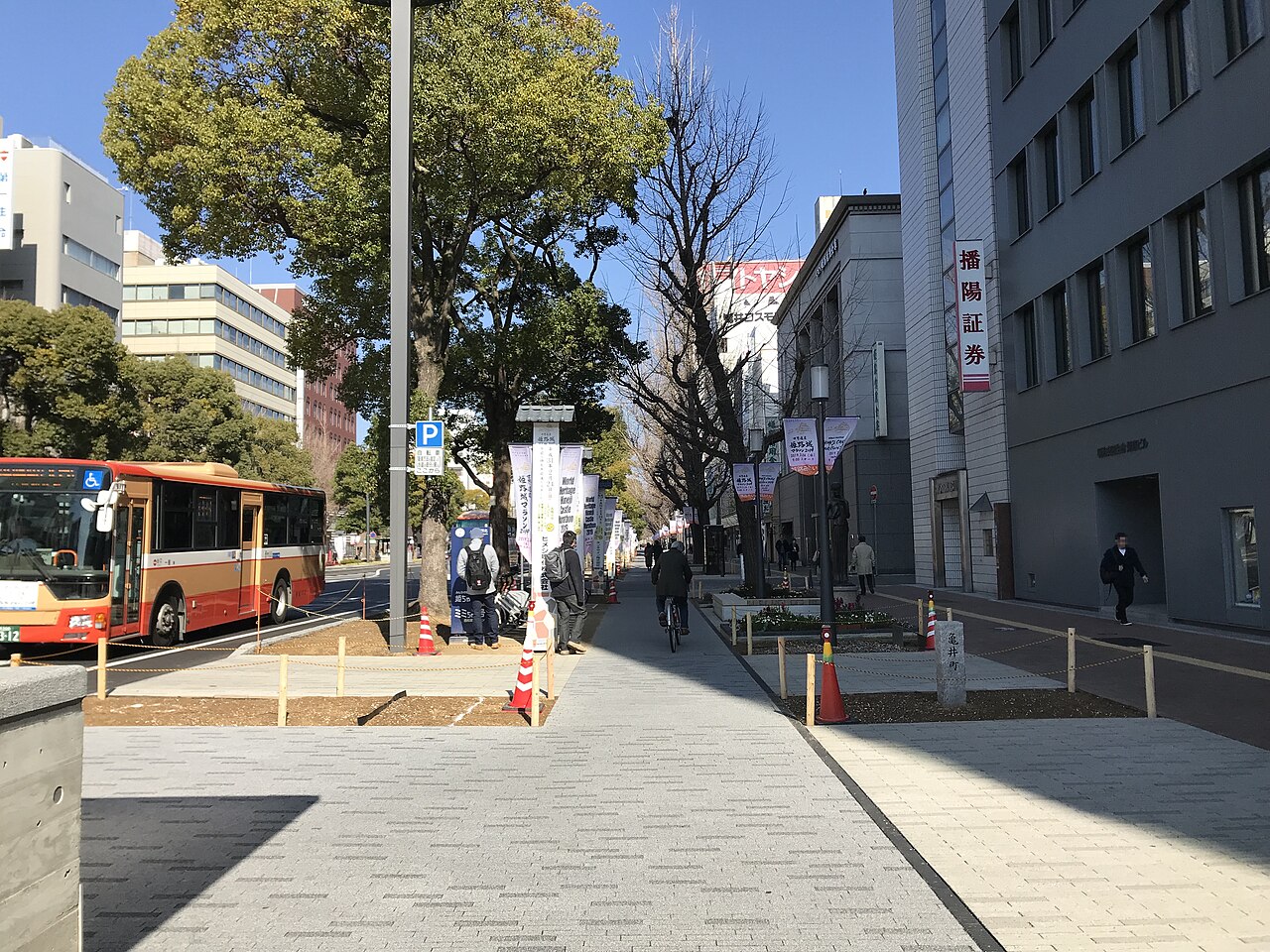
Both JR Himeji Station and Sanyo Himeji Station are a twenty-minute walk from the castle. Leave JR Himeji by the north exit and keep going straight up Otemae-dori, the wide avenue that points directly at the keep. The city limits the height of buildings around the castle to protect the view and has widened the pavements along the avenue, so the walk is simple and the keep stays in sight almost the whole time.
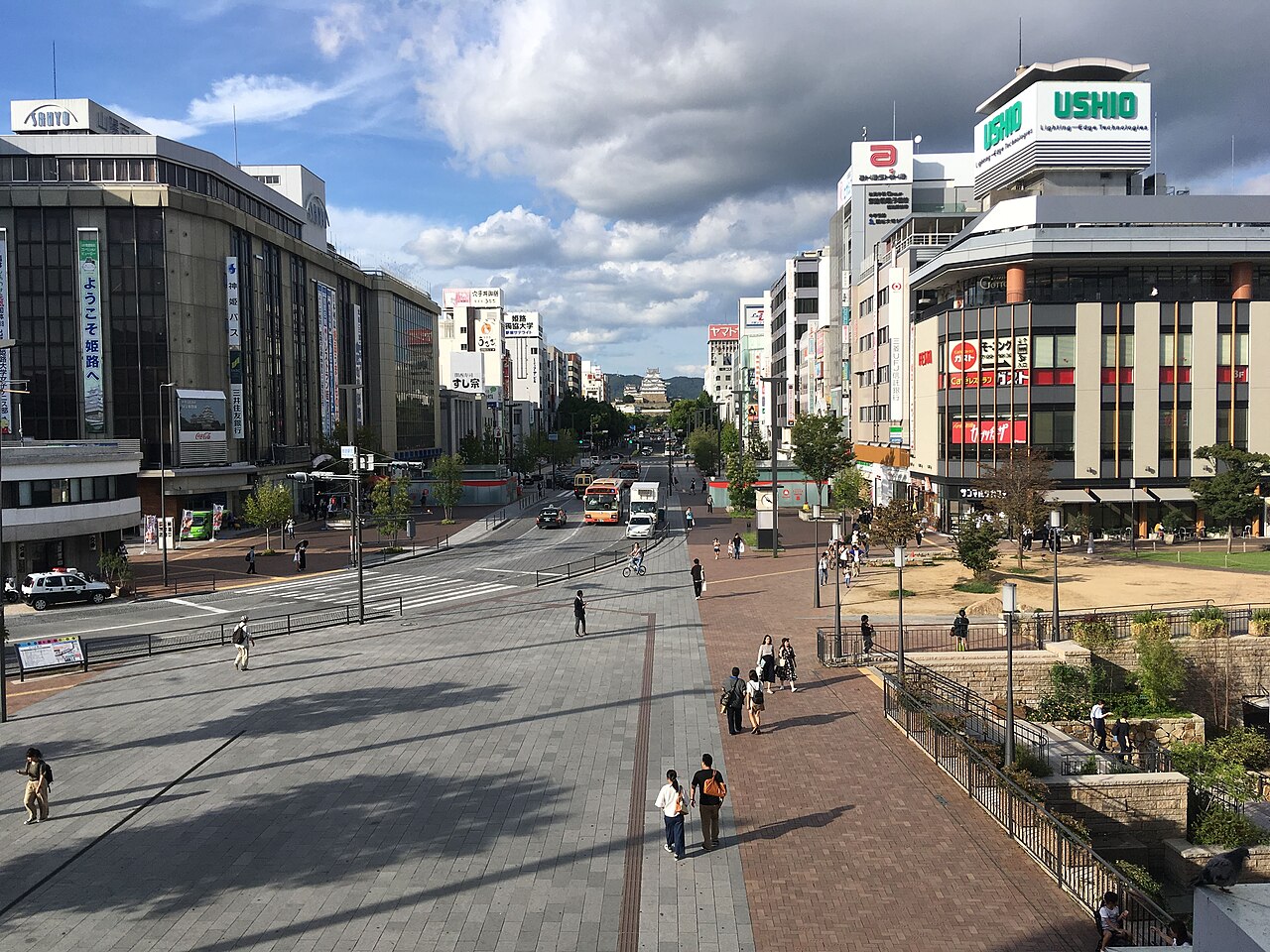
If you would rather ride, Shinki Bus services from the north exit stop at Otemon-mae, and from there it is about a five-minute walk to the castle. The tourist loop bus that circles the castle area charges two hundred and ten yen per ride for adults and one hundred and ten yen for children. The castle's address, if you need it for a map, is sixty-eight Honmachi, Himeji City, Hyogo Prefecture.
Tickets, times and closed days
The castle and the garden keep almost the same calendar.
- Himeji Castle: nine in the morning to five in the afternoon, with last entry at four in the afternoon. From June the first to August the thirty-first the castle stays open until six, with last entry at five. Closed only on December the twenty-ninth and thirtieth.
- Kokoen Garden: nine in the morning to five in the afternoon, with last entry at half past four in the afternoon. Closed on December the twenty-ninth and thirtieth.
Tickets are straightforward:
- Himeji Castle: two thousand five hundred yen for general visitors aged eighteen and over, and free for anyone under eighteen. Residents of Himeji aged eighteen and over pay one thousand yen.
- Castle and Kokoen combined ticket: two thousand six hundred yen, so the garden adds only a little to the price of the castle alone.
Times and prices here follow what the castle and the garden publish, and both can change, so check official information before visiting.
If you prefer to have the keep explained as you climb, you can compare guided Himeji Castle tours before you go.
Where to stay
Places to stay near Himeji, Hyogo, Japan →
Disclosure: This post may contain affiliate links. If you book through them, we may earn a commission at no extra cost to you.
Inside the keep: what to look for
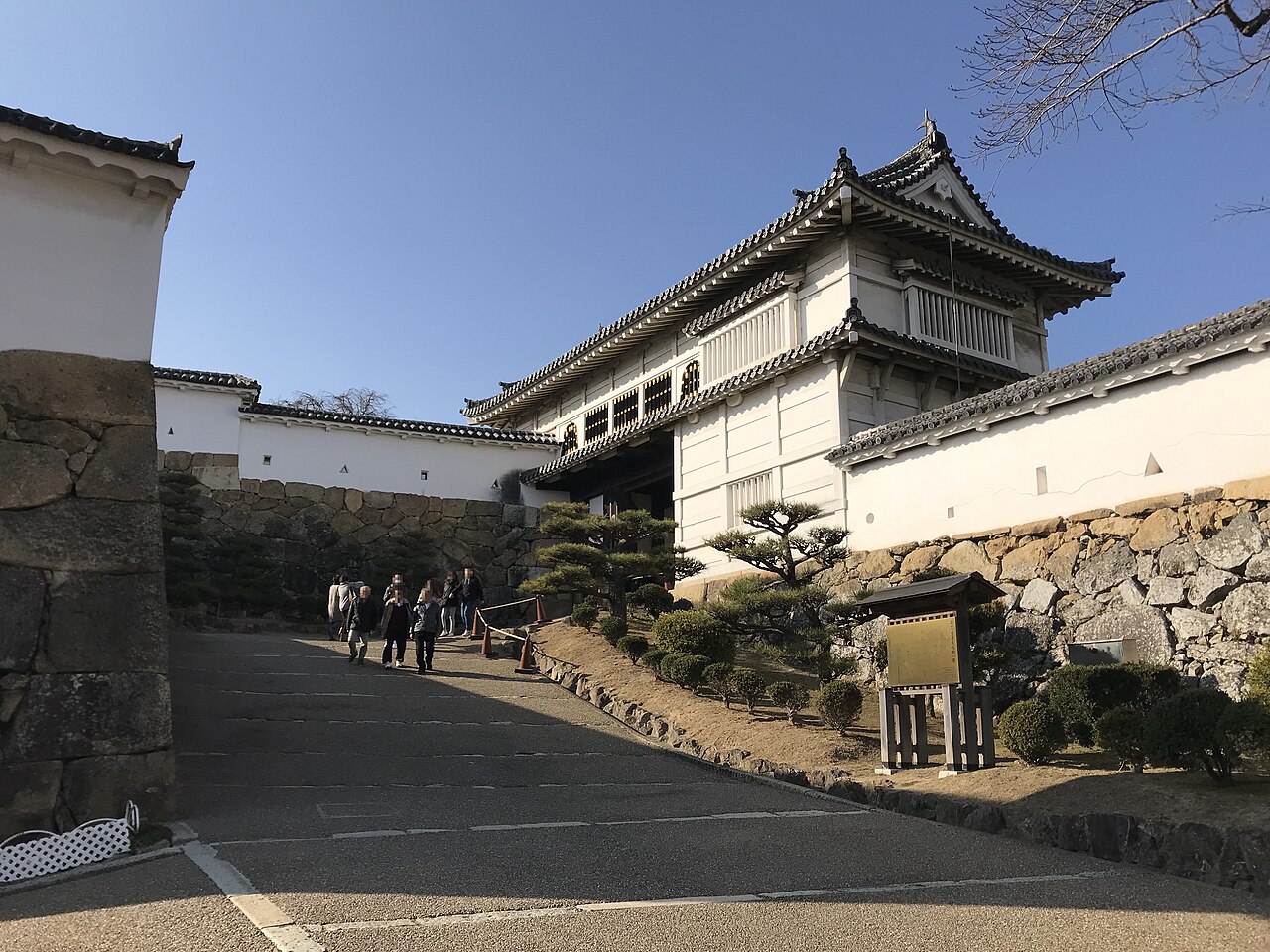
The visitor route begins at the Hishi Gate, the largest gate in the castle. Beyond it the path divides, one way towards the West Bailey and the other towards the main keep.
The main keep looks like five storeys from outside, but inside there are seven levels, six above ground and one below, built as four stacked blocks. It is linked to three smaller keeps, east, north-west and west, by four connecting galleries, a layout known as a linked-keep arrangement. Those four keeps and four galleries, eight buildings in all, still stand and are designated National Treasures, while seventy-four further turrets, gates and sections of moat are Important Cultural Properties.
Two great pillars run from the basement up to beneath the top floor, one east and one west, giving the structure its resistance to sideways shaking. Each is about twenty-four point six metres tall and ninety-five centimetres across at the base, and between them they carry a keep estimated at around five thousand seven hundred tonnes. Look too for the defensive details behind the elegant exterior: projecting lattice windows with openings for dropping stones, inner corridors with loopholes for guns, raised stone-throwing platforms about a metre and a half high, and concealed rooms whose loopholes point inward. Beauty outside, a fighting machine inside.
On the top floor sits the small Osakabe Shrine. Ikeda Terumasa first built it near another gate to calm strange happenings inside the castle, and it was moved into the keep in the Meiji era. It is said that from up here people below look no bigger than an inch and horses smaller than beans.
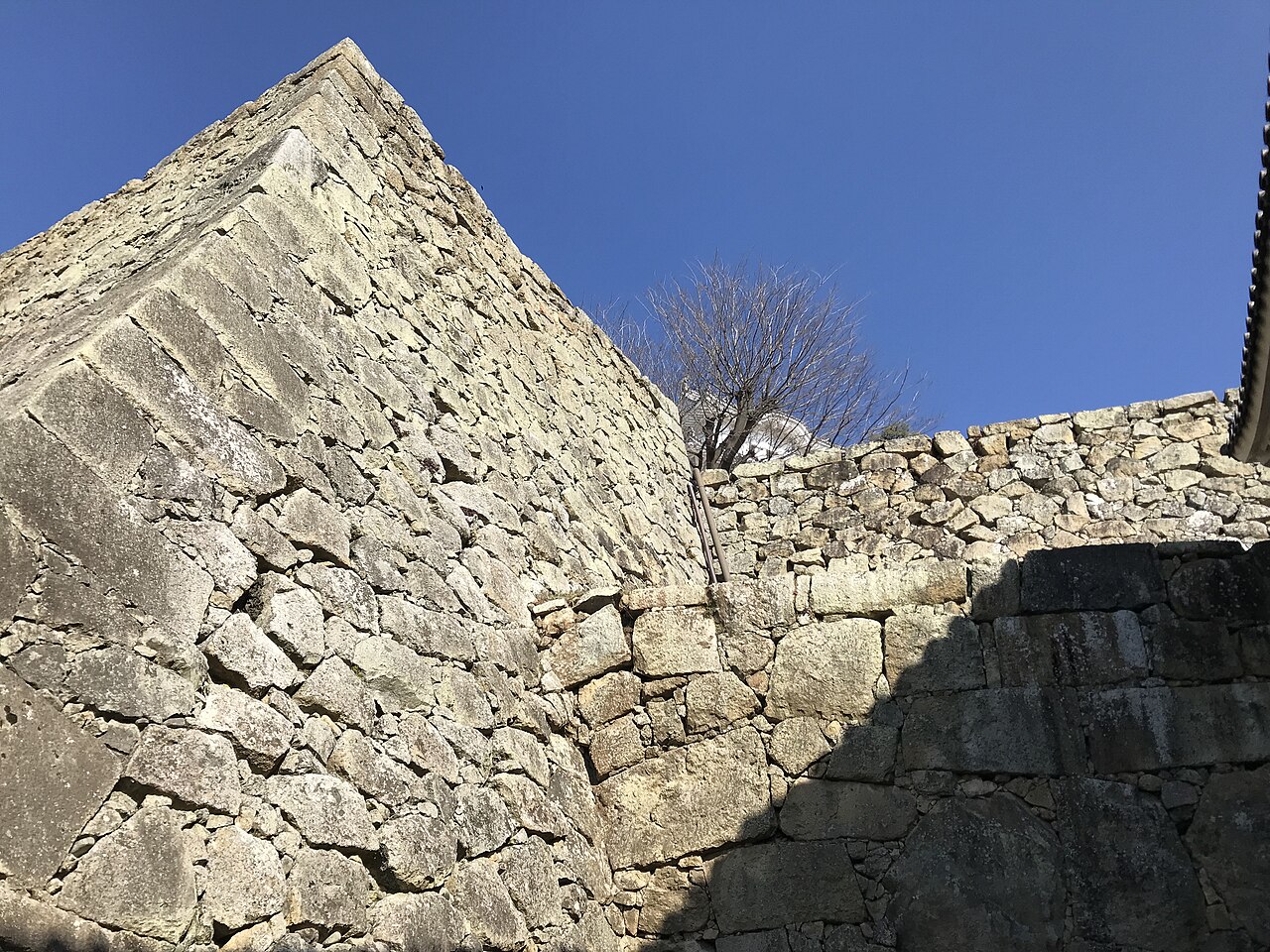
On the way down, look at the stone walls themselves. Short of building stone, the builders worked in stone coffins, gravestones and Jizo statues brought from graveyards nearby, and the wall beside the Bizen Gate includes a stone coffin.
In the West Bailey, the long Hyakken Corridor runs from the Wa Turret to the Cosmetic Turret. It was added in sixteen eighteen, paid for from the dowry of Princess Sen, and it makes a calmer counterpart to the keep.
A short history of the White Heron Castle
The nickname comes from the walls: every outer surface is finished in white plaster, and the gleaming result was likened to a white heron, Hakuro-jo in Japanese. The first fortress here is credited to Akamatsu Sadanori in the Jowa era of the Nanboku-cho period, and the Akamatsu family held it for generations. After Hashiba Hideyoshi destroyed the Bessho clan at Miki in the Tensho years he moved in and raised a three-tiered keep, later remembered as the Taiko-maru.
Ikeda Terumasa, rewarded for his part at the Battle of Sekigahara with the Harima domain of five hundred and twenty thousand koku, rebuilt the castle with the finest techniques of the day. The keep completed in sixteen hundred and nine is the one that stands today, and the work earned him the name of master castle builder. Under the Tokugawa shoguns Himeji became the castle town of the Sakai family, lords of one hundred and fifty thousand koku, and the castle was decommissioned after the Meiji Restoration. A guidebook from the end of the Meiji era notes that climbing the keep then required special permission.
It is said that during the air raid of nineteen forty-five, which flattened most of the city centre, an incendiary bomb landed on the main keep but failed to go off, and the keep survived. Two major restorations, the Showa repairs from nineteen fifty-six to nineteen sixty-four and the Heisei repairs from two thousand nine to two thousand fifteen, have kept it standing, and in nineteen ninety-three it was inscribed as a UNESCO World Heritage site, among the first in Japan.
Kokoen Garden and two quiet detours
Kokoen lies just west of the castle and borrows the keep and the wooded West Bailey as its backdrop. It is a stroll garden built around ponds, laid out on the ground plan of the west residence, samurai houses and lanes that Honda Tadamasa set out in sixteen eighteen, so the old plot boundaries and passages still shape the way you move through it. Nine separate gardens and a belt of trees make up the whole.
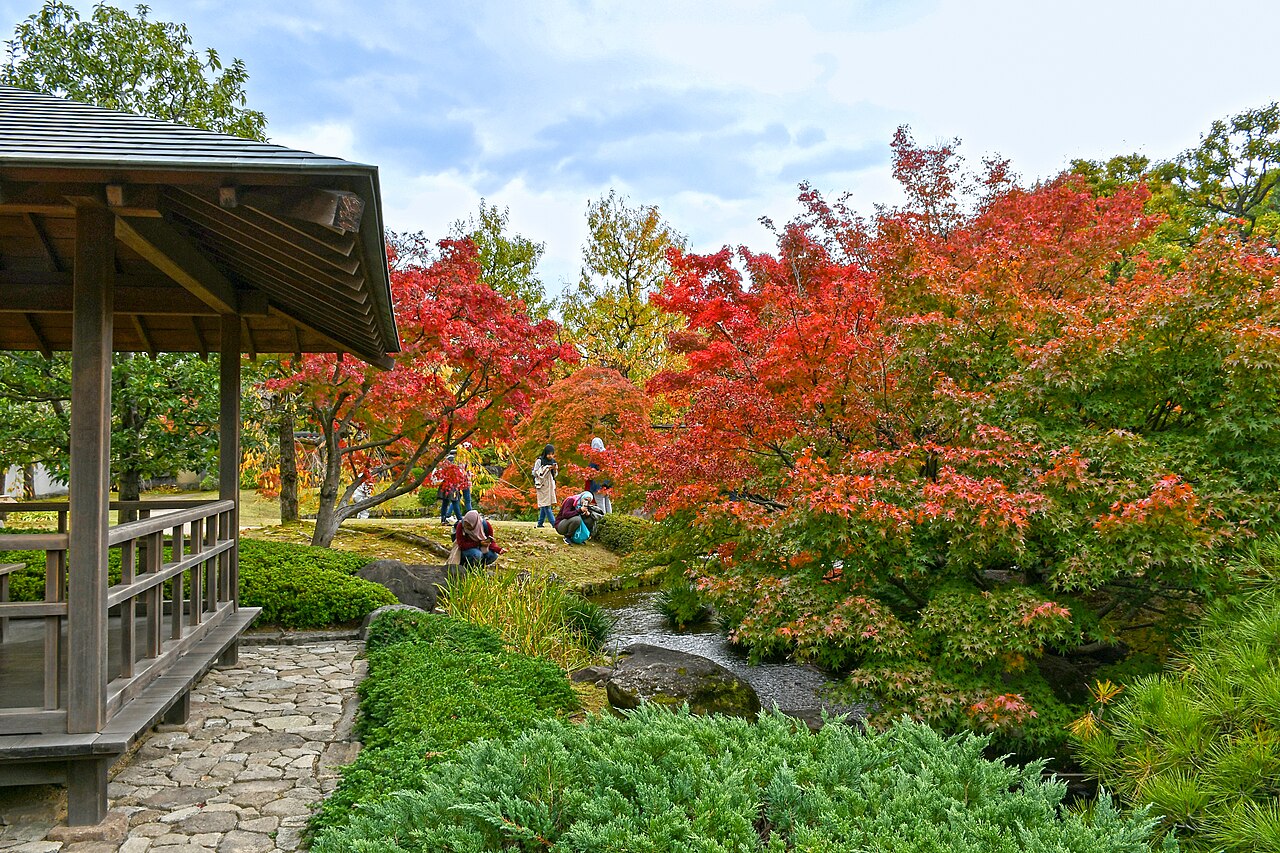
Two detours keep the quiet going. West of Kokoen, Keifukuji Park sits on the hillside of Keifukuji-yama, and its viewing terrace, chosen as one of the Ten Views of World Heritage Himeji Castle, takes in the West Bailey, the main keep and the west small keep in a single sweep. And on the castle's west side, Senhime's Path runs north to south between the western middle moat and the Senba River, free to walk, lined with cherry and maple, with a statue of Princess Sen near Ichinohashi bridge.
Evening light and where to stay
If you stay into the evening, the castle is lit in white from sunset until midnight every day, with a special fifteen-minute display at eight and again at nine. From across the moat the keep stands out against the dark.
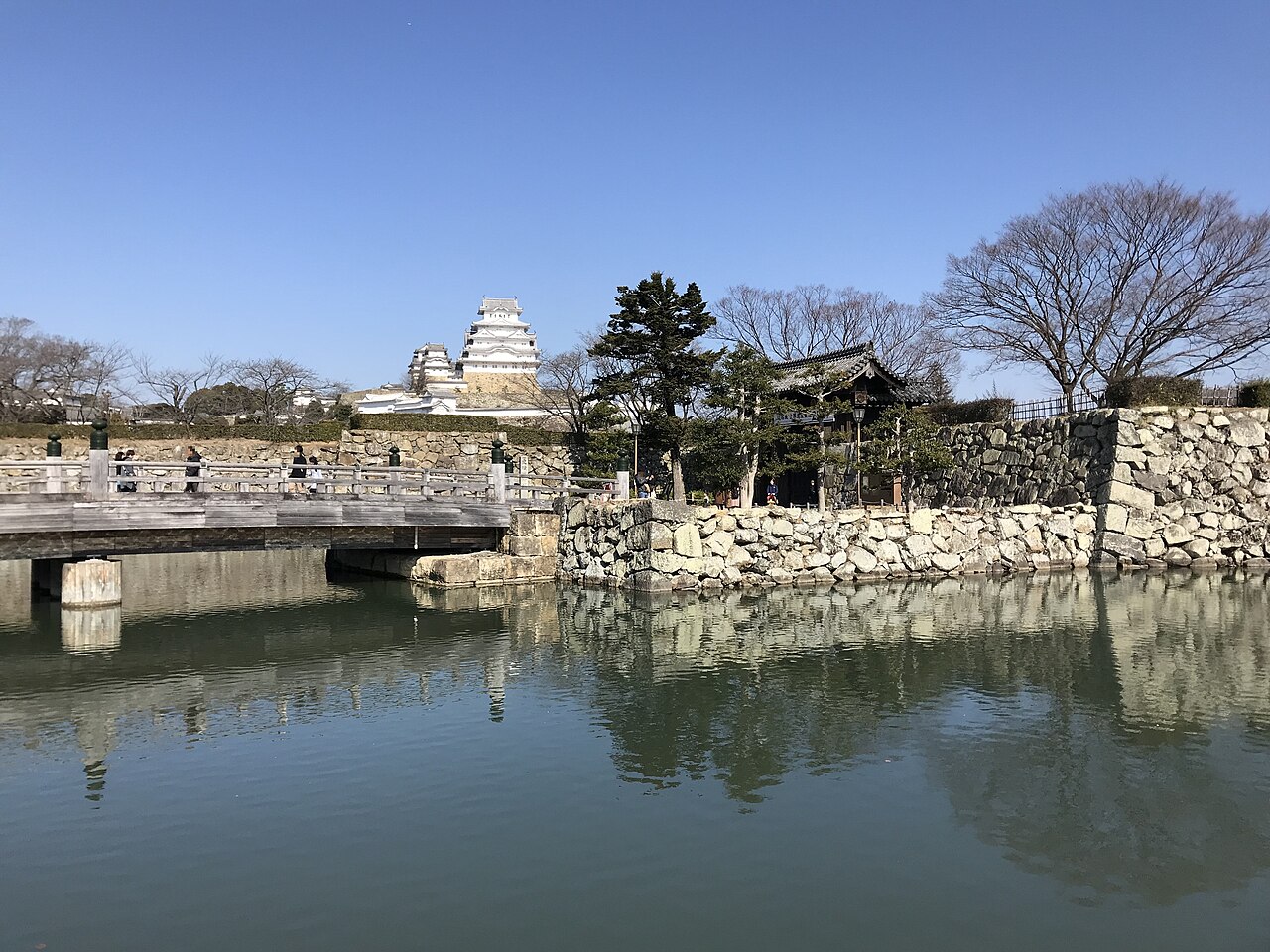
Staying over turns the day trip into something slower: the morning walk up Otemae-dori, Kokoen first thing, and the lit keep at night. Find a place to stay in Himeji if that sounds like your pace.