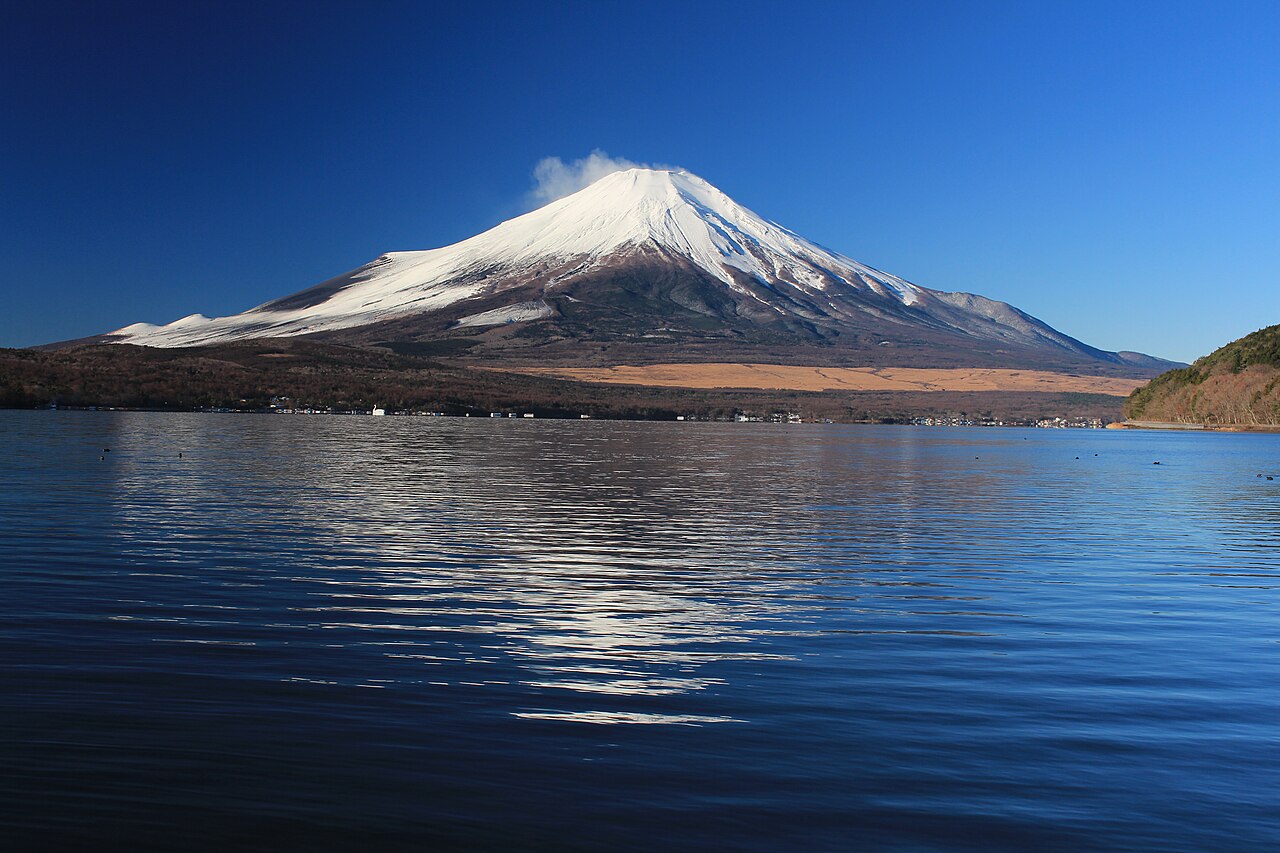
A walk along the shore of Lake Yamanaka brings Mt Fuji into view across the water, and a cycling road follows almost the whole shoreline. On the promenades and hiking courses visitors can listen to the sounds created by nature, and the Panorama-dai viewpoint looks down on Lake Yamanaka with Mt Fuji beyond it. Paddlers move forward standing on a board, and after dark guides lead a walk to watch flying squirrels. From mid-October to about the end of February, the sun lines up with the summit of Mt Fuji at sunset here, a view called Diamond Fuji.
Walking and Cycling the Lakeshore, Then Watching Diamond Fuji at Sunset
The shore works as a single outing in sequence: ride the cycling road, stop at a lakeside park and the view of Mt Fuji, then stay for Diamond Fuji at sunset.
Cycling the shore road takes riders almost all the way around the lake. Rental bicycles are available. The road around Yamanakako village passes through greenery, with a cool breeze coming off the water.
Strolling the maintained paths of a lakeside park suits an unhurried pace. Maple, zelkova and Fuji cherry trees line the promenade. Cherry blossoms bloom in spring and hydrangeas in summer at this quiet park by the shore.
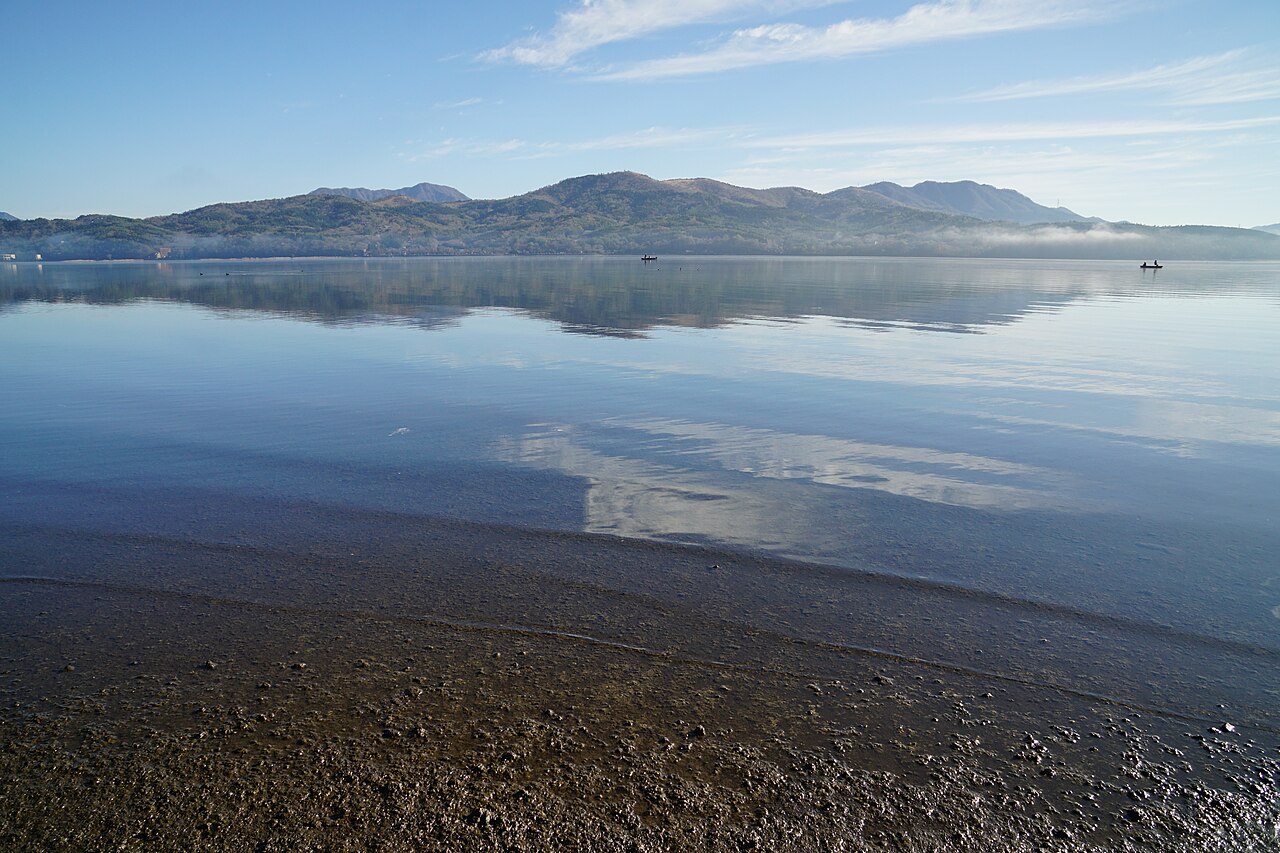
Looking across the water from another park on the shore, visitors see Mt Fuji on the far side. At the Hirano shore, swans can be seen all year round. Walking here comes with crisp mountain air, and the promenades carry the sounds created by nature.
Watching Diamond Fuji at Lake Yamanaka is a sunset event, when the sun overlaps the summit. After the December solstice the viewing spot moves back toward Panorama-dai. When there is no wind and the water surface is flat, the reflection may be seen together with the real sight.
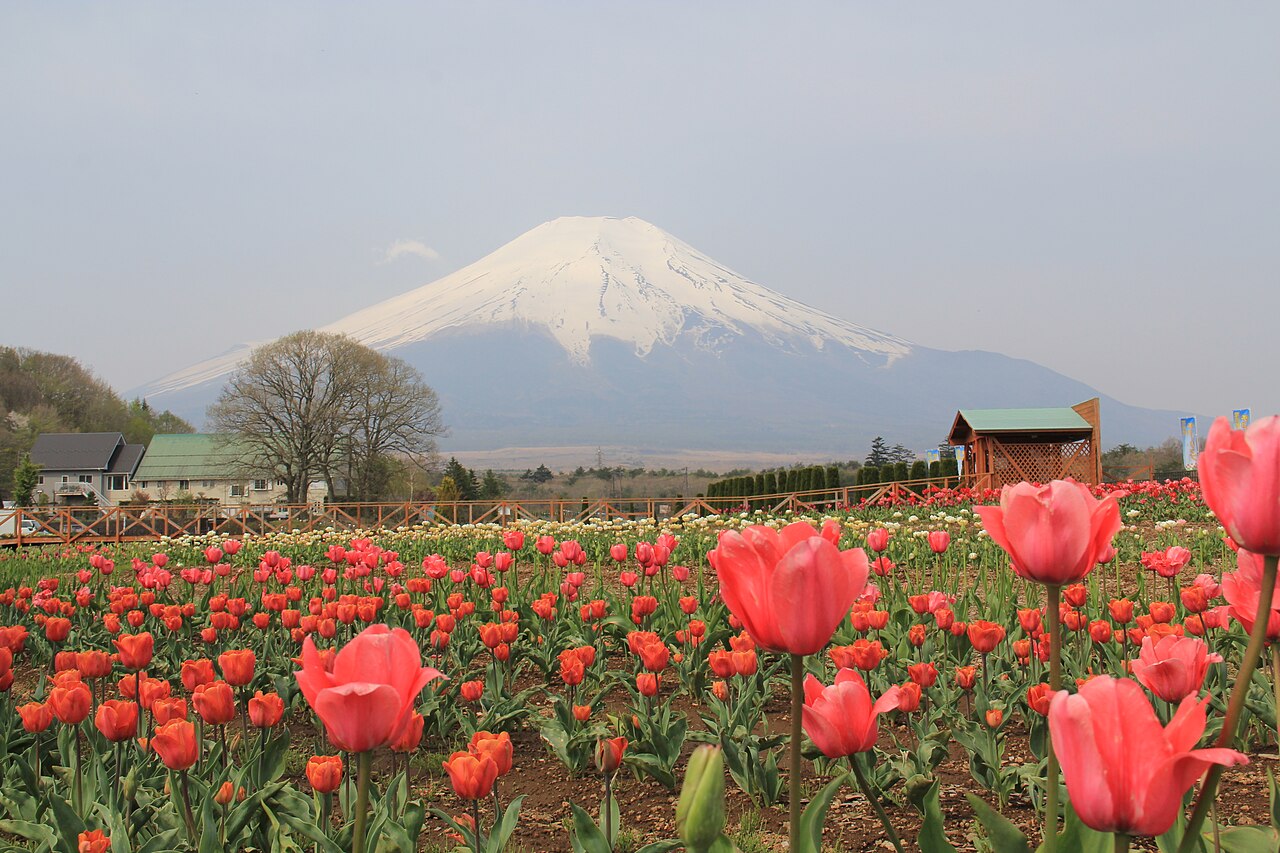
Visiting the flower park leads to outdoor flower fields with Mt Fuji behind them. Tulips lead the seasonal flowers, followed by sunflowers and then cosmos later in the year. The listed peak for the tulips is late April to early May, a sight for a later trip.
Climbing Ishiwari Shrine and Following the Ridge Routes to Panorama-dai
With energy left for a climb, the choice is between the steps to Ishiwari Shrine, the Mikuniyama course with its birdsong, and the Panorama-dai view of Lake Yamanaka and Mt Fuji.
Climbing to Ishiwari Shrine starts at a torii gate and a flight of steps. A rest point with a gazebo comes next, and further on stands the shrine, where a large rock is split in the shape of the character for stone. Passing through the crack is said to lead to the fulfillment of a great wish.
Following the Ohirayama hiking course, walkers pass the torii gate and keep to the signs along the national route. A bench and a table stand at a peak on the ridge, where hikers can rest. The ridge route continues over further peaks and ends at the flower park.
Walking the Mikuniyama and Panorama-dai hiking course links a chain of mountains south of Yamanakako village. The route descends from the Myojinyama summit to Mikuni Pass and continues to Mikuniyama, which spans Yamanashi, Shizuoka and Kanagawa. From spring to autumn, various flowers can be seen and birdsong heard on this gentle course.
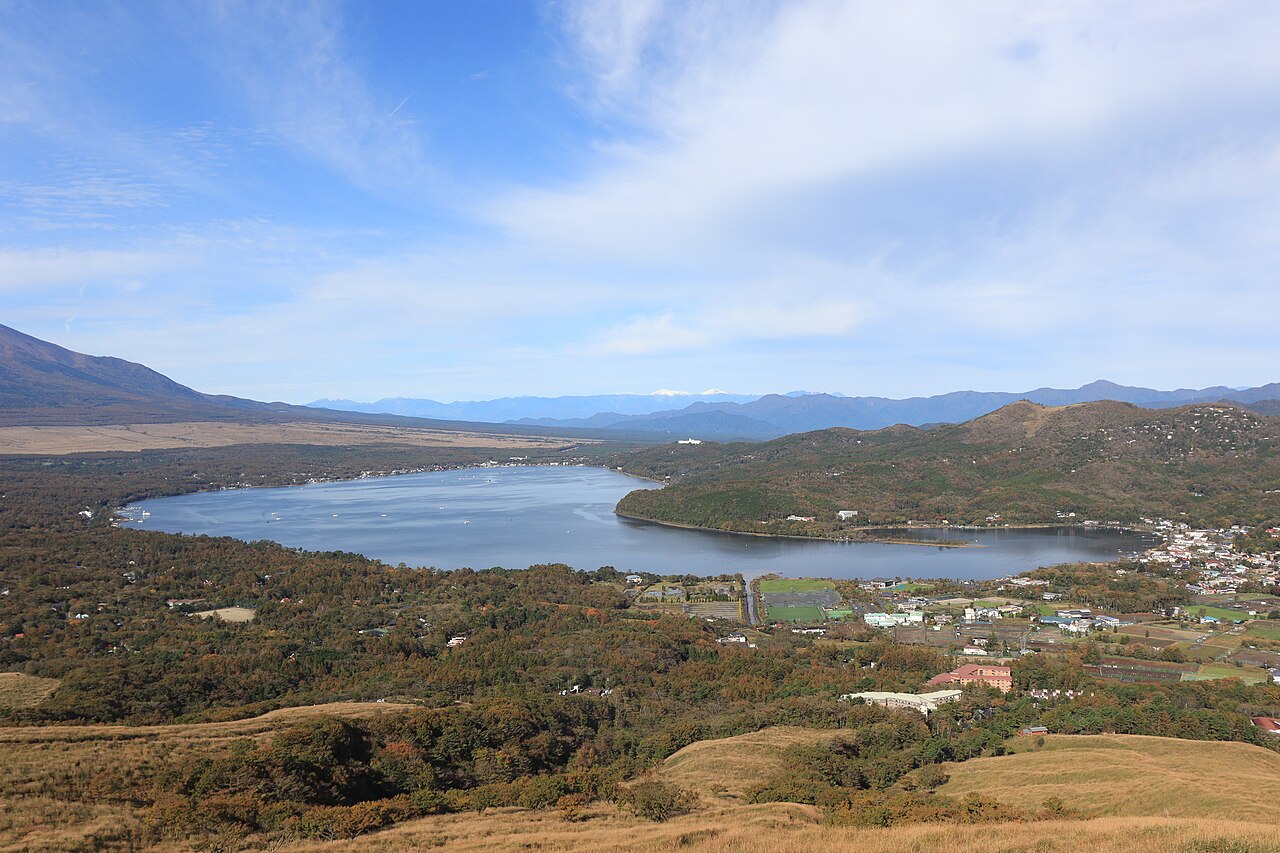
Standing at the Panorama-dai viewpoint, visitors see Lake Yamanaka below and Mt Fuji beyond it. The path onward passes through a susuki grass field to the Myojinyama summit. In autumn, pampas grass fields spread across the area.
Paddling, Fishing and Night Walks on Lake Yamanaka, Then the Winter Lights
Paddlers, anglers and night walkers each have their own way onto Lake Yamanaka: a stable board, a boat fishing plan, or a guided walk to watch flying squirrels.
Paddling on a stable board, participants stand and move forward stroke by stroke. In summer, SUP is done on the quiet lake surface. The same seasonal page also lists wakeboarding among the water activities.
Joining the fishing plan puts anglers in either a pedal boat or a rowboat. Staff explain how to use the fishing equipment and where on the water to try. The wakasagi season runs from September to the end of June.
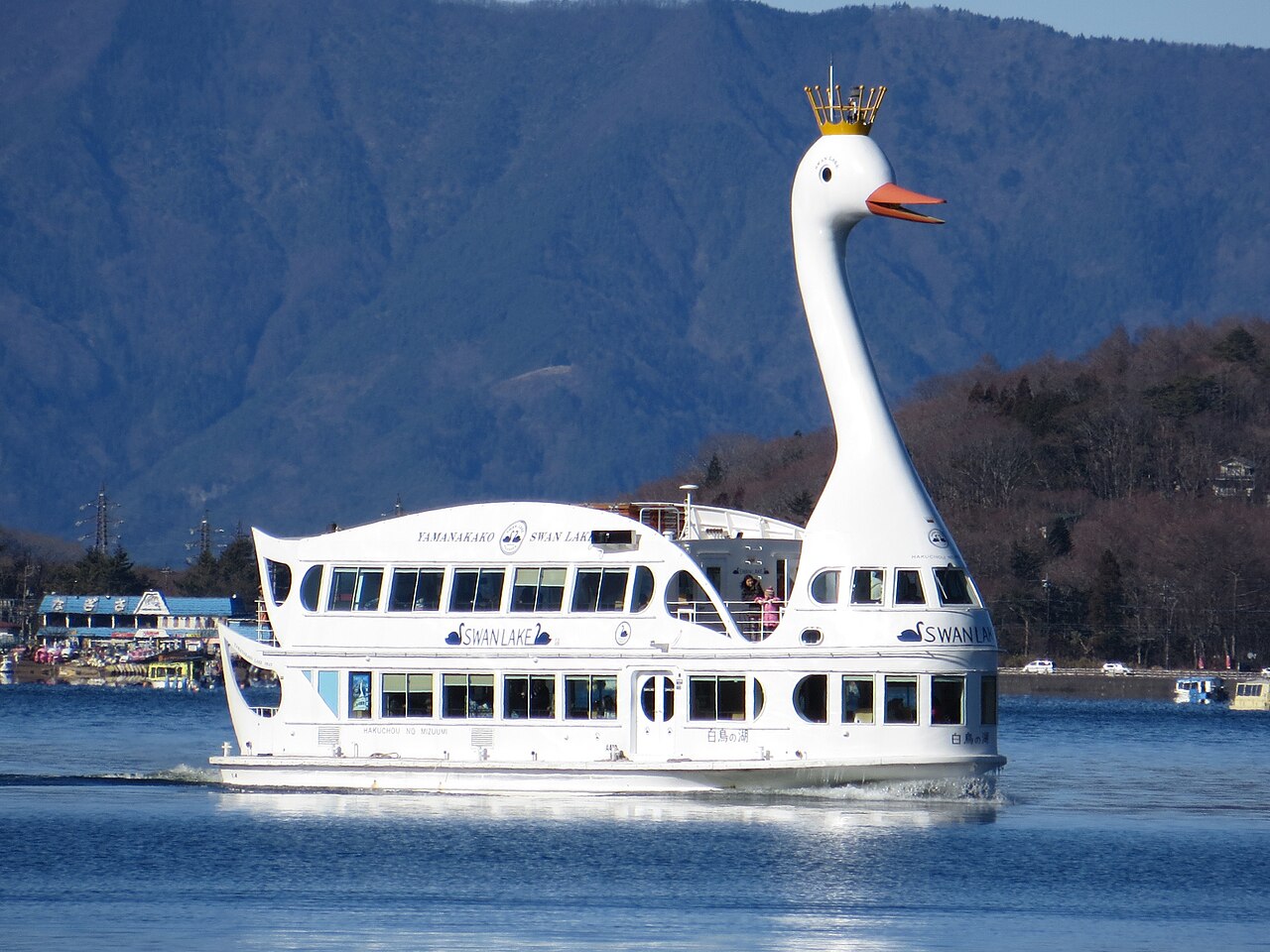
Climbing a ladder-type staircase like an airplane's, passengers board the KABA BUS. A marine screw is fitted at the rear, and operation may be cancelled depending on wind, thunder, fog and the water level. The Swan Lake sightseeing boat carries binoculars and a children's observation seat with a steering wheel.
Setting out after dark, walkers follow a guide on the night walk for watching flying squirrels. In the star watching program, a guide leads participants to the starry sky. Nights at Lake Yamanaka are cold throughout the year, and the program page advises cold-weather clothing in every season.
Waiting for February brings the Ice Candle Festival, held by the Yamanakako Tourism Association every year in that month and listed for February thirteenth, twenty twenty-seven. Ice candles are lit when the evening coloring ends, then sky lanterns and fireworks go up with Mt Fuji behind them. The Illumination Fantaseum returns to the flower park each year, on the dates tabled below.
Spending a Rainy Day in the Bungaku no Mori Park and a Glass Workshop
When the weather turns, the museums along the paths of the Bungaku no Mori park and a glass-blowing workshop are the options under a roof.
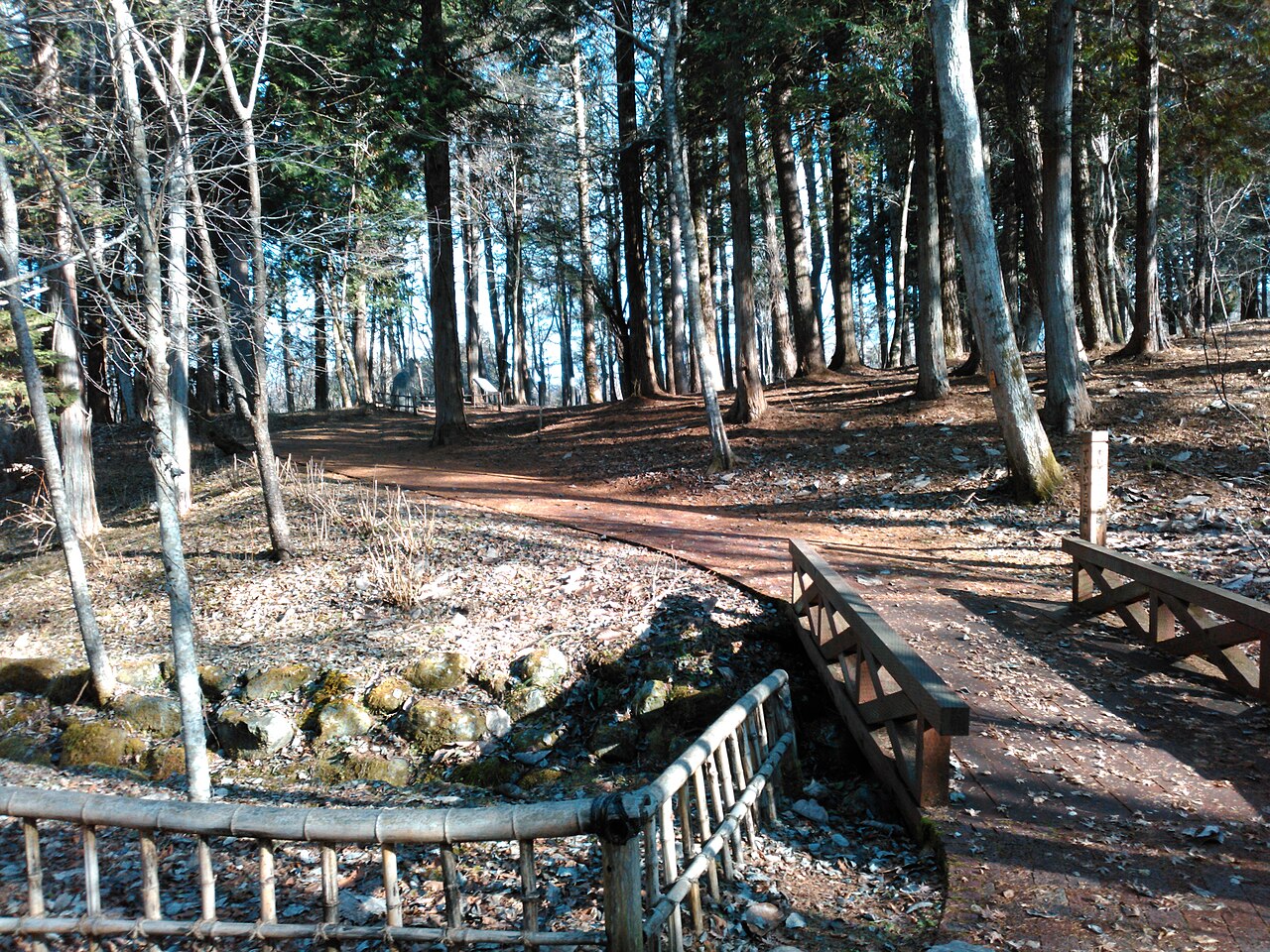
Walking the paths of the Bungaku no Mori park leads through the trees. Replica haiku and tanka monuments related to Lake Yamanaka are scattered along the way. Wild birds can be observed at the park, with bird song and the scent of the forest.
Visiting the Yukio Mishima Literary Museum, guests see an exterior and courtyard modeled on his Tokyo residence. The museum stands on the shore of Lake Yamanaka, which appears in several of Mishima's works. An exhibition room fills the ground floor and a reading room sits upstairs.
Entering the Soho Fureai-kan, visitors look at handwritten manuscripts. The Soho Fureai-kan stands near a villa that Tokutomi Soho kept on the shore of Lake Yamanaka. Materials related to his friends, among them political figures, literati and painters, are displayed alongside.
Stepping into the haiku house, visitors enter a relocated Edo-period private house where haiku gatherings are held. Handwritten shikishi and tanzaku by a haiku poet with ties to Lake Yamanaka are exhibited there. A folk-tool hall in the same park shows farm tools and folk implements once used in the village.
Blowing glass at the workshop, participants shape molten glass on the end of a pipe into a cup in the form of Mt Fuji. In sandblasting, sand blown onto the surface makes a pattern appear. The carved parts turn frosted with a soft texture.
Getting to Lake Yamanaka, Fares and Winter Event Dates
New to rural buses and one-man trains? See how to ride them, step by step.
| Item | Details (as listed) |
|---|---|
| Express bus from Shinjuku | About two hours fourteen minutes from Shinjuku; adult fare to the Hirano stop is two thousand six hundred fifty yen |
| Fujikko-go circular bus | Adult one-day pass is one thousand eight hundred yen; the Asahigaoka bus terminal ticket window is open nine o'clock to sixteen o'clock |
| Cycling lap | A full lap by bicycle takes a little over one hour depending on the person; rental bicycles are available |
| Ishiwari Shrine | Reached on foot, up four hundred three steps and about thirty more minutes of walking; not reachable by car |
| Diamond Fuji | Listed from mid-October to the end of February; at Lake Yamanaka the sun lines up with the summit at sunset |
| Ice Candle Festival | Listed for Saturday, February thirteenth, twenty twenty-seven |
| Illumination Fantaseum | Event period is listed as December first, twenty twenty-six, to January eleventh, twenty twenty-seven |
For an overnight stay, see places to stay in nearby Fujiyoshida.
Thinking of staying overnight?
Compare places to stay near Fujiyoshida, Yamanashi, Japan →
Disclosure: This post may contain affiliate links. If you book through them, we may earn a commission at no extra cost to you.