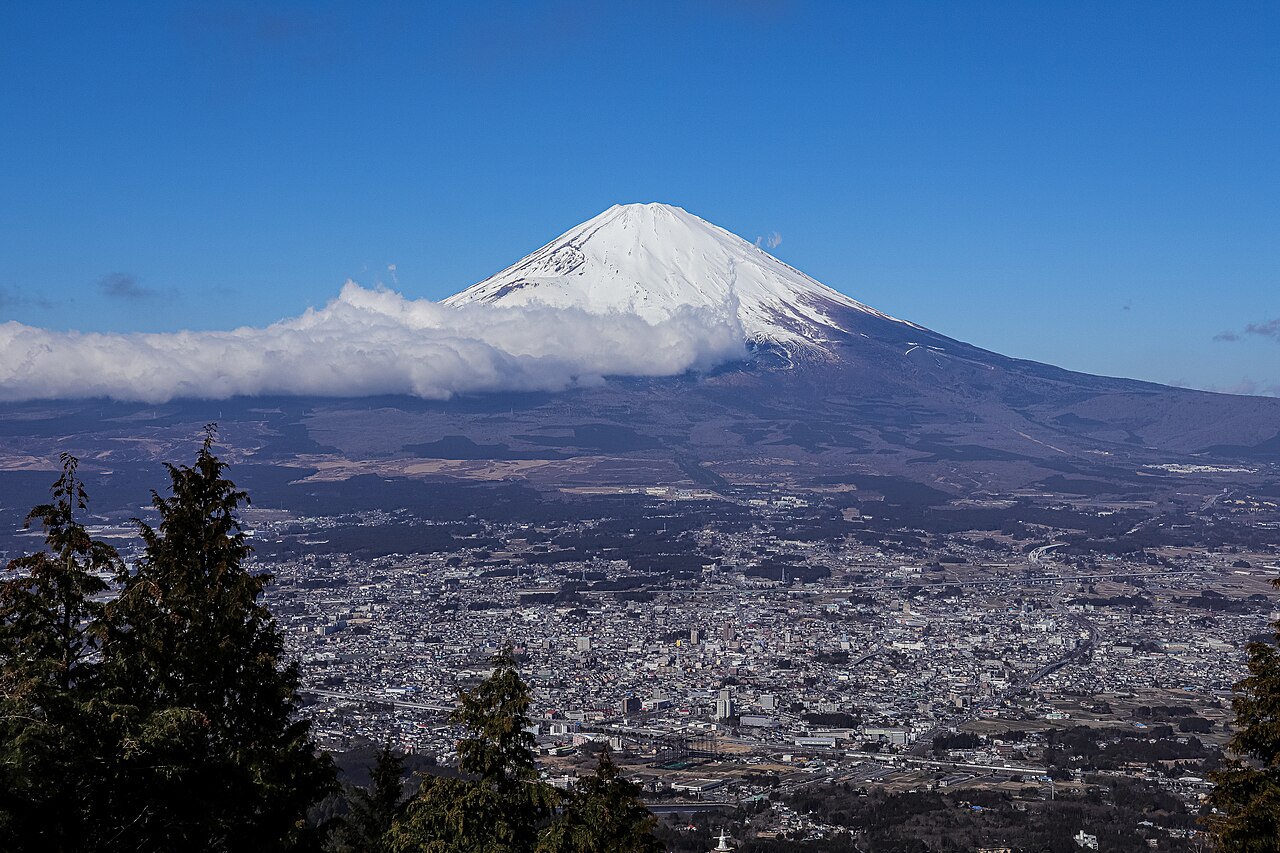
Otome Pass looks straight at Mount Fuji, with the town of Gotemba laid out beneath it. The former Kishi House in Higashiyama carries sukiya design into every room, down to its rough-lattice shoji. The dish to eat here is Mikuriya soba, a noodle handed down in the Gotemba area. A lava tunnel formed by an eruption of Mount Fuji adds a cave to enter after the viewpoints.
Gotemba City has designated five places as Mount Fuji viewing heritage sites, so travelers who want the mountain first can start at a viewpoint, then add the former Kishi House in Higashiyama, a bowl of Mikuriya soba or the lava tunnel.
Mount Fuji Views in Gotemba: Otome Pass, the Gotemba-guchi Trail and Diamond Fuji
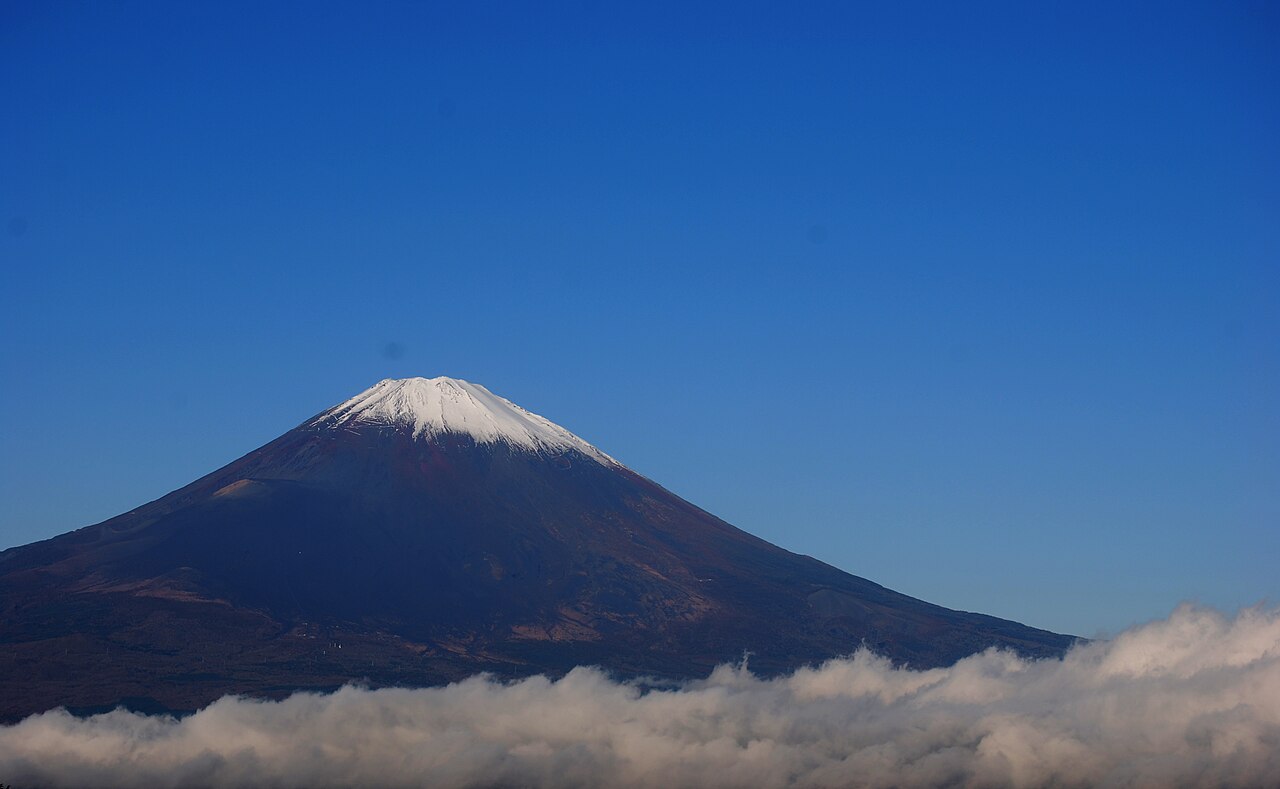
At Otome Pass, on the outer rim of Hakone, the view faces Mount Fuji head-on, and the Gotemba cityscape lies below it. Town and summit share the same view here because Gotemba is a green highland city at the east foot of the mountain. The city itself counts five places as Mount Fuji viewing heritage sites.
From the Gotemba-guchi trail, Futago-yama is visible on the left, and Hoei-zan juts out above it like a separate peak. Higher up the trail, Lake Yamanaka comes into view on the right, and looking back takes in the mountains of Tanzawa, Hakone and Izu together with Ashitaka-yama. The trail starts at Taro-bo, an area of volcanic gravel where the Sunabashiri descent trail joins.
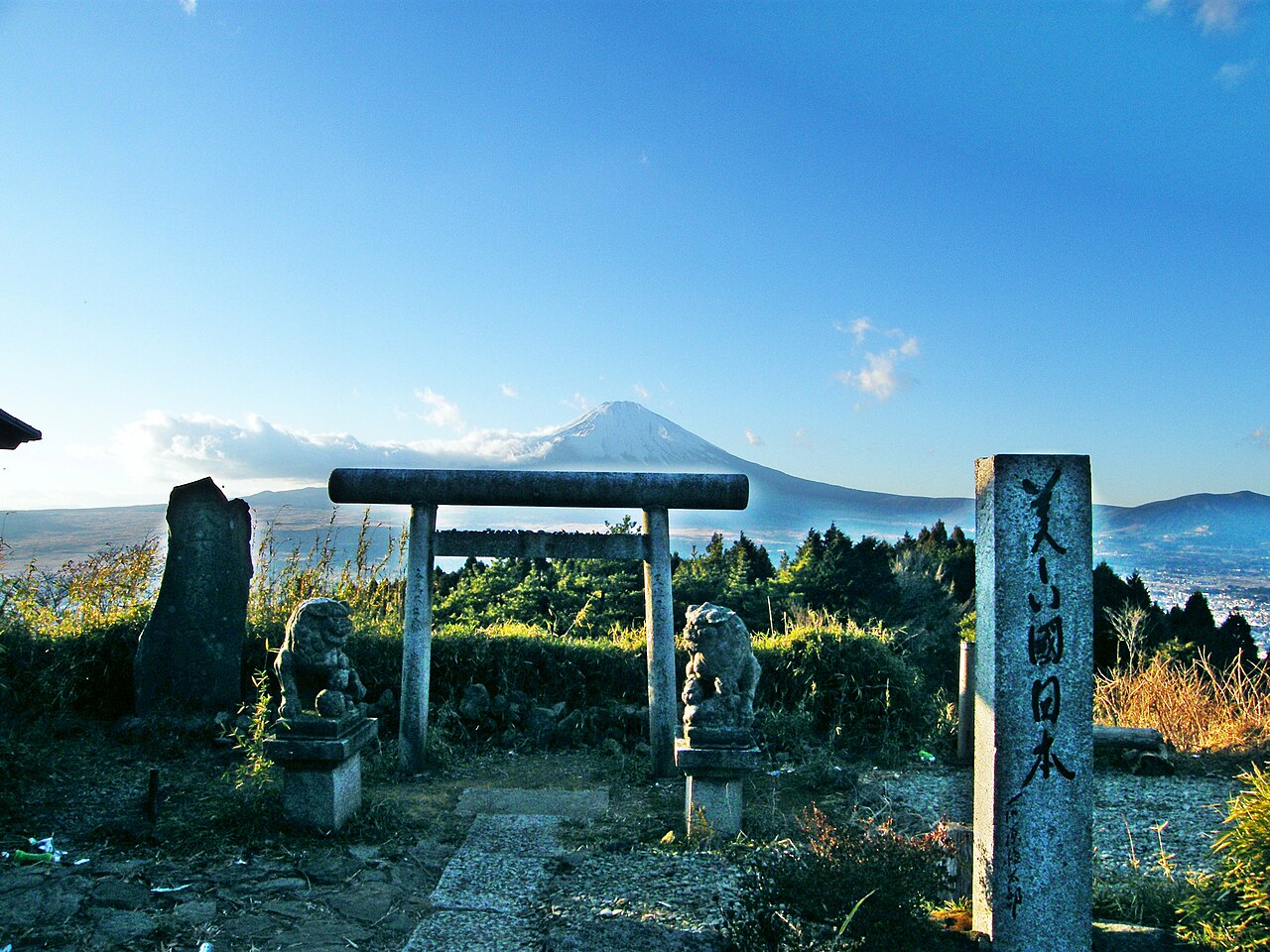
On the days of Diamond Fuji, the sun sets exactly at the summit of Mount Fuji. The sight lasts about two minutes, from the moment the sun touches the summit until it has set completely. It returns to the same place, on the same day and at the same time every year.
At Fuji Butsushari-to Peace Park, the plantings change with the seasons, from spring cherry blossoms to autumn leaves, with Mount Fuji alongside. Choose the pass when the town and the mountain should share one view, the Gotemba-guchi trail when the slopes and the surrounding ranges matter more, and Diamond Fuji when the goal is the sun setting exactly on the summit.
Gardens, a Historic House and Cherry Trees Around Gotemba
The Higashiyama and Ninooka district gathers Chichibunomiya Memorial Park, the former Kishi House in Higashiyama, Fuji Butsushari-to Peace Park and Ninooka Shrine. Among the four, the Kishi House is the one to see first for anyone curious about interiors, since its rooms are detailed down to the shoji and the transom. The district's places to stay come with views of Mount Fuji and hot springs.
Inside the former Kishi House, rough-lattice shoji appear in each room and the dining room has push-in doors. The Japanese-style room leaves out the hanging posts and opens up the transom, which makes the room look cleaner. The architect planned the house to combine the beauty of traditional sukiya architecture with the functions of a modern residence, and the entrance hall uses modern materials such as vinyl chloride and aluminum.
Beyond the rooms, the Kishi House has a garden, and the property is a nationally registered tangible cultural property. It was built in nineteen sixty-nine as the private residence of Kishi Nobusuke, who served as prime minister, and was donated to Gotemba City in two thousand three.
Along the road leading to Chichibunomiya Memorial Park, more than two hundred cherry trees line the way. Fuji Butsushari-to Peace Park has about one thousand, among them Somei Yoshino, weeping cherry, Gotemba cherry and double-flowered cherry, and Gotemba Kogen Toki no Sumika has three thousand two hundred seventy, including eighty-year-old Somei Yoshino and Kawazu cherry.
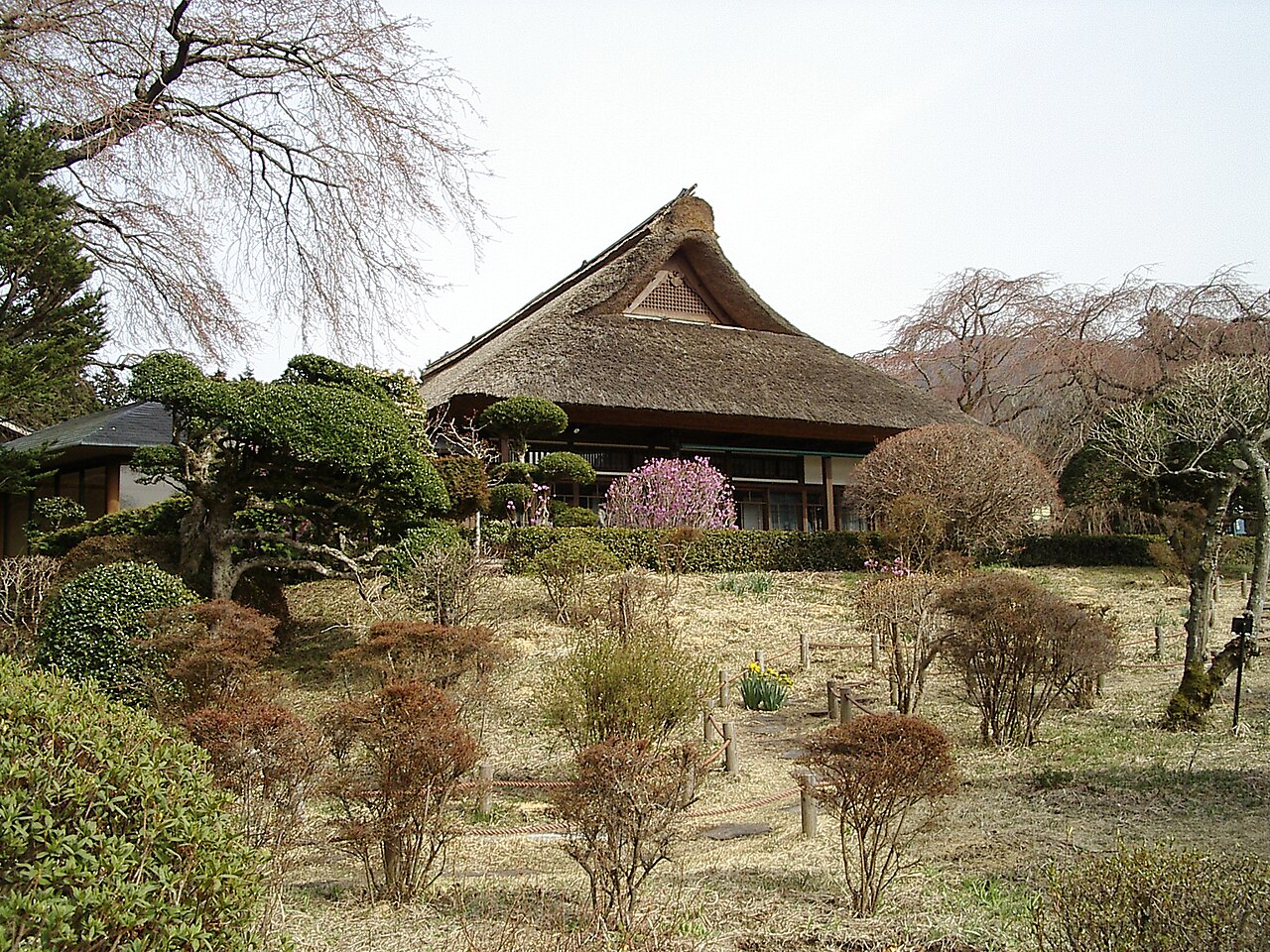
Travelers who care about architecture can give the Kishi House priority, and those who come for cherry trees can pick by scale, from a lined road to grounds that count their trees in the thousands.
Soba, Pork Steak and Local Beer: Eating in Gotemba
Mikuriya soba arrives in a large bowl, and the custom is to slurp the noodles, soup and toppings together. The noodles are bound with yamaimo and jinenjo and have a smooth texture and a plain taste, and the broth uses chicken. In the Gotemba area, handmade soba is also the dish served to guests on celebratory occasions, a custom that ties the bowl to this region.
At a soba-making workshop in Gotemba, buckwheat flour, wheat flour and mountain yam are mixed. For a dish rooted in the region, start with Mikuriya soba; choose the pork steak or the local beer when a meat dish or a drink is the goal.
At the Chinese restaurant quan, the chili peppers, Sichuan pepper and doubanjiang are all ordered from Sichuan, and a dry-style pot dish without soup is made by coating the ingredients in house-made ganguo sauce. TOKIBACO serves a Fujinokuni pork steak with a cream sauce of brown-rice soy sauce koji, made using Gotemba Koshihikari rice.
At a restaurant in Toki no Sumika, the local beer is made with Mount Fuji spring water and German technology, and the kitchen grills steak and spare ribs. The resort's fountain show began as a reproduction of the fountain show at the Palace of Versailles, and water from the fountain may splash on visitors depending on the wind direction.
Lava Tunnel, Waterfall and Shrine Groves in Gotemba
At the reception of the lava tunnel, helmets and lights are available to borrow. The tunnel is a cave formed by an eruption of Mount Fuji, which makes it a stop where the mountain is something to enter and not just to view. On the walking course for wild birds in the same grounds, the bird sankocho and the woodpecker akagera may appear for those who are lucky.
In the central urban area of Gotemba, a waterfall forms where clear water gushes from a crack in exposed lava. On the grounds of a shrine, old cedar, oak, zelkova and camellia trees form a grove. Begin with the lava tunnel, where helmets and lights can be borrowed, and move on to the waterfall or the shrine grove.
Gotemba Premium Outlets with Mount Fuji in View
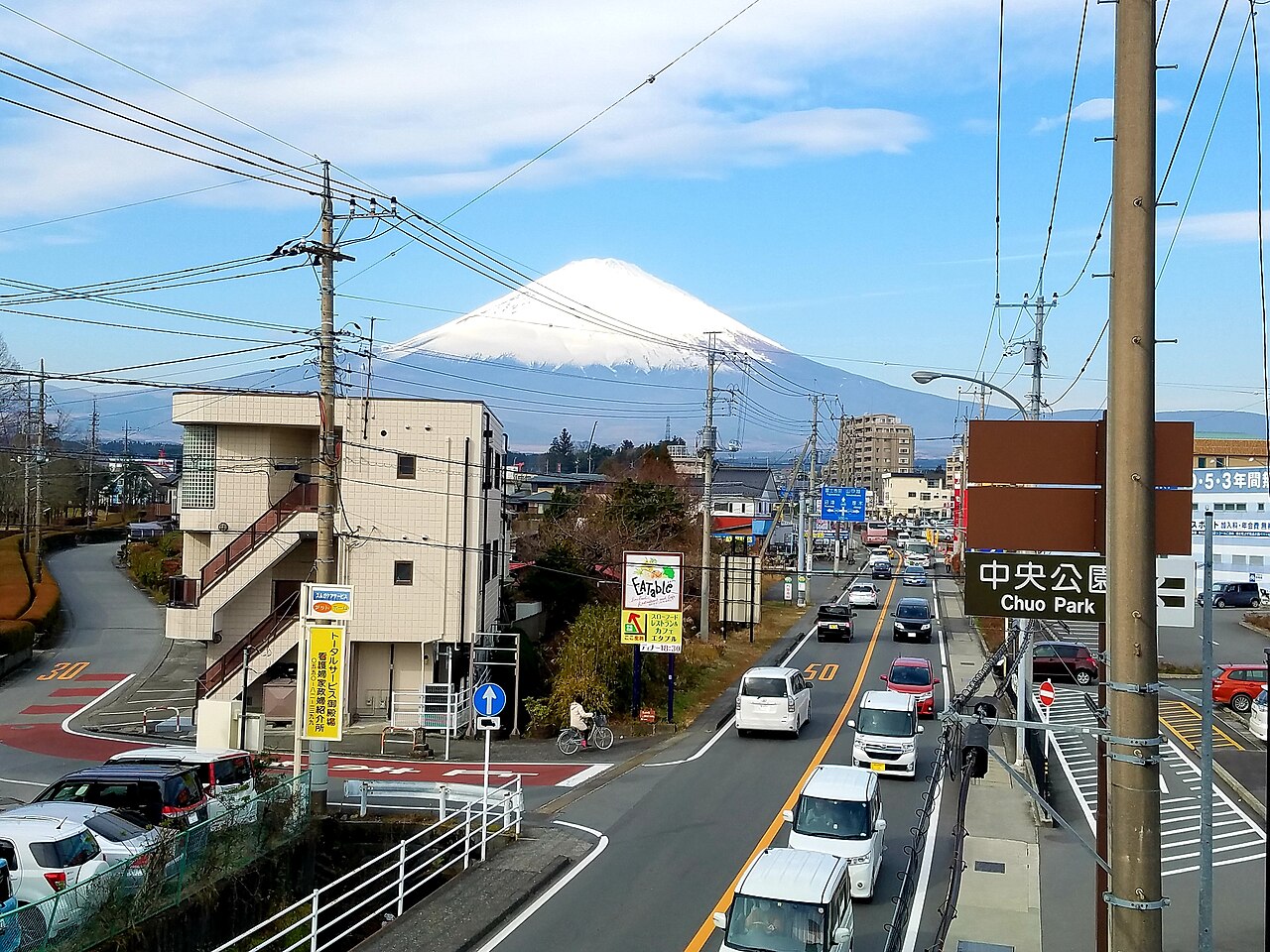
From within Gotemba Premium Outlets, Mount Fuji can be seen. The site brings together about two hundred ninety brands and restaurants with a hot spring, a hotel and a mini amusement park. That park, at HILL SIDE, has a good view and rides such as a merry-go-round and Drop Twist, a tower-type ride that repeats sudden drops, rises and spins.
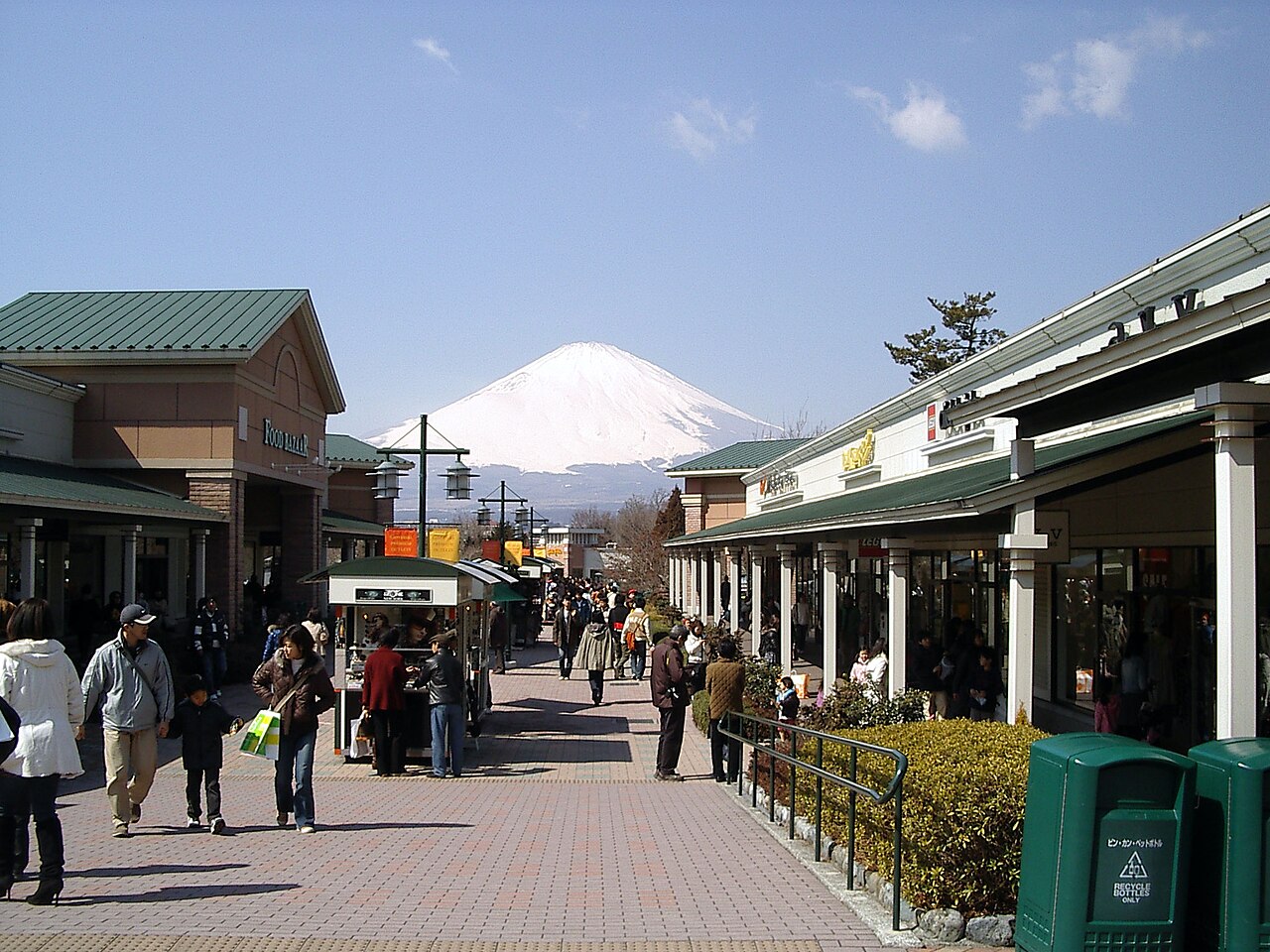
In the WEST zone, a playground has play equipment where children can move their bodies. Families can pair the rides at HILL SIDE with that playground, and anyone can look for Mount Fuji from inside the outlets. The outlets are one of the large visitor facilities of a city that sits adjacent to the Hakone and Fuji Five Lakes sightseeing areas.
Getting to Gotemba
New to rural buses and one-man trains? See how to ride them, step by step.
| Route | Item | Detail |
|---|---|---|
| Bus | Fujikyu bus from Gotemba Station to Chichibunomiya Memorial Park, one way; the bus is bound for Gotemba Premium Outlets | two hundred ten yen |
| Shuttle bus | Free shuttle bus from Gotemba Station to Chichibunomiya Memorial Park | leaves at nine forty in the morning and arrives at nine fifty; in principle not operated on Mondays |
| Car from Tokyo | Tokyo IC on the Tomei Expressway to Gotemba IC / Ashigara SIC | about sixty-five minutes |
| Car from the interchange | Tomei Gotemba IC to Chichibunomiya Memorial Park | three minutes by car, or ten minutes on foot |
If you would rather stay overnight, places to stay in Gotemba is a place to start.
Hours and Fees
| Place | Item | Time or fee |
|---|---|---|
| Gotemba Premium Outlets | Opening hours | ten in the morning to eight in the evening |
| Chichibunomiya Memorial Park | Hours by season | April: nine in the morning to five in the afternoon, entry until four thirty; May and September to March: nine to four thirty, entry until four; June to August: nine to five thirty, entry until five |
| Chichibunomiya Memorial Park | Admission | three hundred yen for general visitors; one hundred fifty yen for elementary and junior high school students |
| The former Kishi House in Higashiyama | Hours, days closed and admission | ten in the morning to five in the afternoon from October to March; closed every Tuesday (the following day if Tuesday is a public holiday) and from December twenty-ninth to January third; three hundred yen |
| Lava tunnel grounds | Hours and admission | eight thirty in the morning to five in the afternoon from February to October, eight thirty to four thirty from November to January; two hundred yen for adults, one hundred yen for children |
| Fountain show venue at Toki no Sumika | Admission | one thousand three hundred yen for adults, seven hundred yen for elementary school students |
Fees and hours were checked against official sources on 20 November 2026.
Thinking of staying overnight?
Compare places to stay near Gotemba, Shizuoka, Japan →
Disclosure: This post may contain affiliate links. If you book through them, we may earn a commission at no extra cost to you.