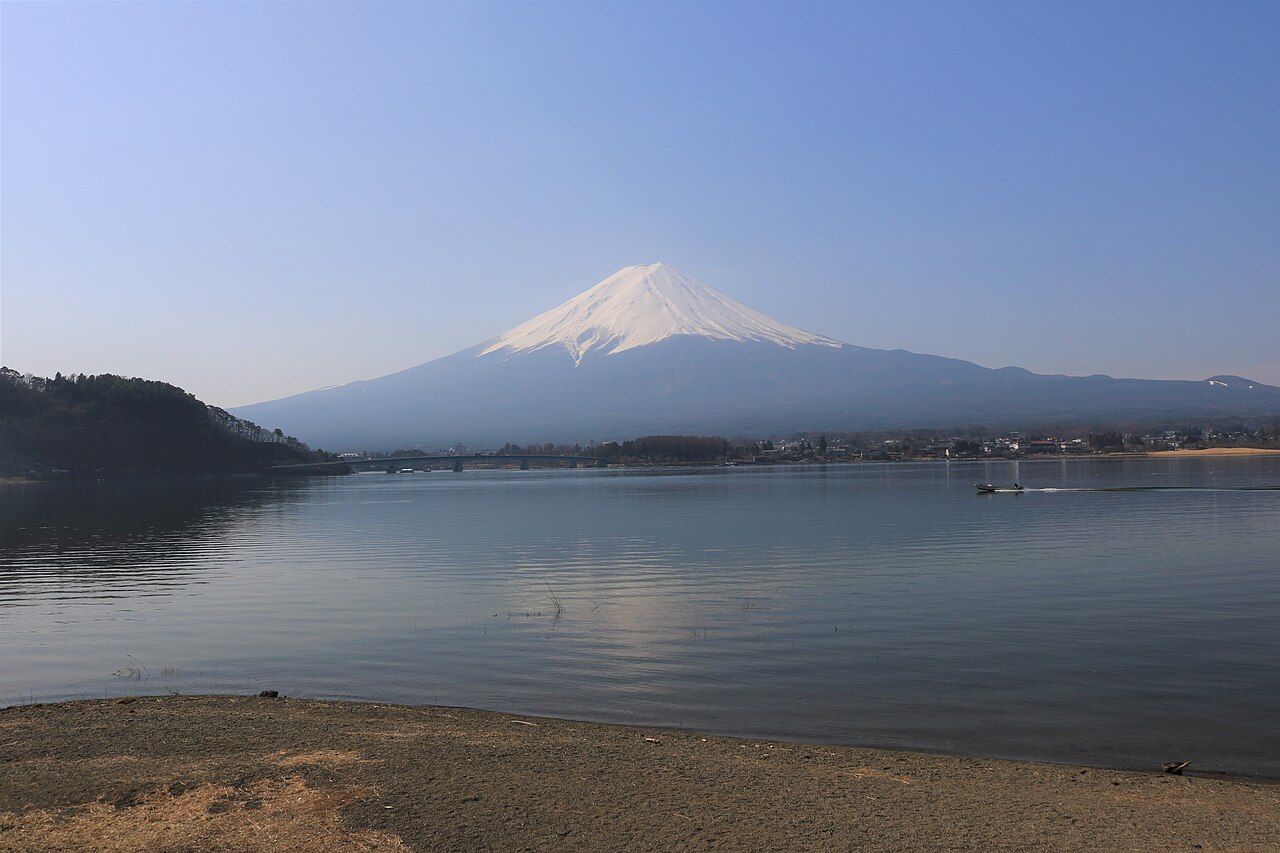
This guide sticks to the routes out from Shinjuku and central Tokyo, the Kachikachiyama Ropeway, the Itchiku Kubota Art Museum, and Kawaguchi Asama Shrine with its Fuji viewpoint. It leaves aside Tabi no Eki Kawaguchiko Base, Sakurai Udon, FUJIYAMA COOKIE, the Music and Forest Museum, Fuji Omuro Sengen Shrine, and Arakura Fuji Sengen Shrine over in Fujiyoshida.
Getting to Lake Kawaguchi
From Shinjuku, the simplest way in is the Fuji Kaiyu (Fuji Excursion) limited express, which runs straight through to Kawaguchiko Station with no transfer at Otsuki. Plan around it, though: only a small number of these through services run, so if the timing does not suit, the Otsuki route below works just as well.
That route uses any JR Chuo Line limited express from Shinjuku to Otsuki, then a transfer to the Fujikyu Railway line for the ride on to Kawaguchiko. If you would rather not change at all, the Chuo Highway Bus on the Fuji Five Lakes route leaves from Busta Shinjuku, the expressway bus terminal, and runs to Kawaguchiko Station.
| Route | Figure |
|---|---|
| Fuji Kaiyu (Fuji Excursion) limited express, Shinjuku to Kawaguchiko through service, fastest run | 1 hour 53 minutes |
| Fuji Kaiyu (Fuji Excursion) limited express, Shinjuku to Kawaguchiko, through fare one way | 4,200 yen |
| JR Chuo Line limited express, Shinjuku to Otsuki | about 60 minutes |
| Fujikyu Railway line, Otsuki to Kawaguchiko, ordinary fare one way | 1,170 yen |
| Limited express surcharge on the Fujikyu section (Otsuki to Shimoyoshida, Fujisan, Fuji-Q Highland or Kawaguchiko) | 600 yen adult, 400 yen child |
| Chuo Highway Bus, Fuji Five Lakes route, Busta Shinjuku to Kawaguchiko Station | about 100 minutes |
Whichever way you arrive, Kawaguchiko Station is the point that everything else in this guide hangs off. Check the timetable for your return before you leave the platform: the through services are the ones that take real planning, so it is worth knowing which departure you are aiming for well before the afternoon ends.
Where to stay
Places to stay near Fujikawaguchiko, Yamanashi →
Disclosure: This post may contain affiliate links. If you book through them, we may earn a commission at no extra cost to you.
Riding the Kachikachiyama Ropeway
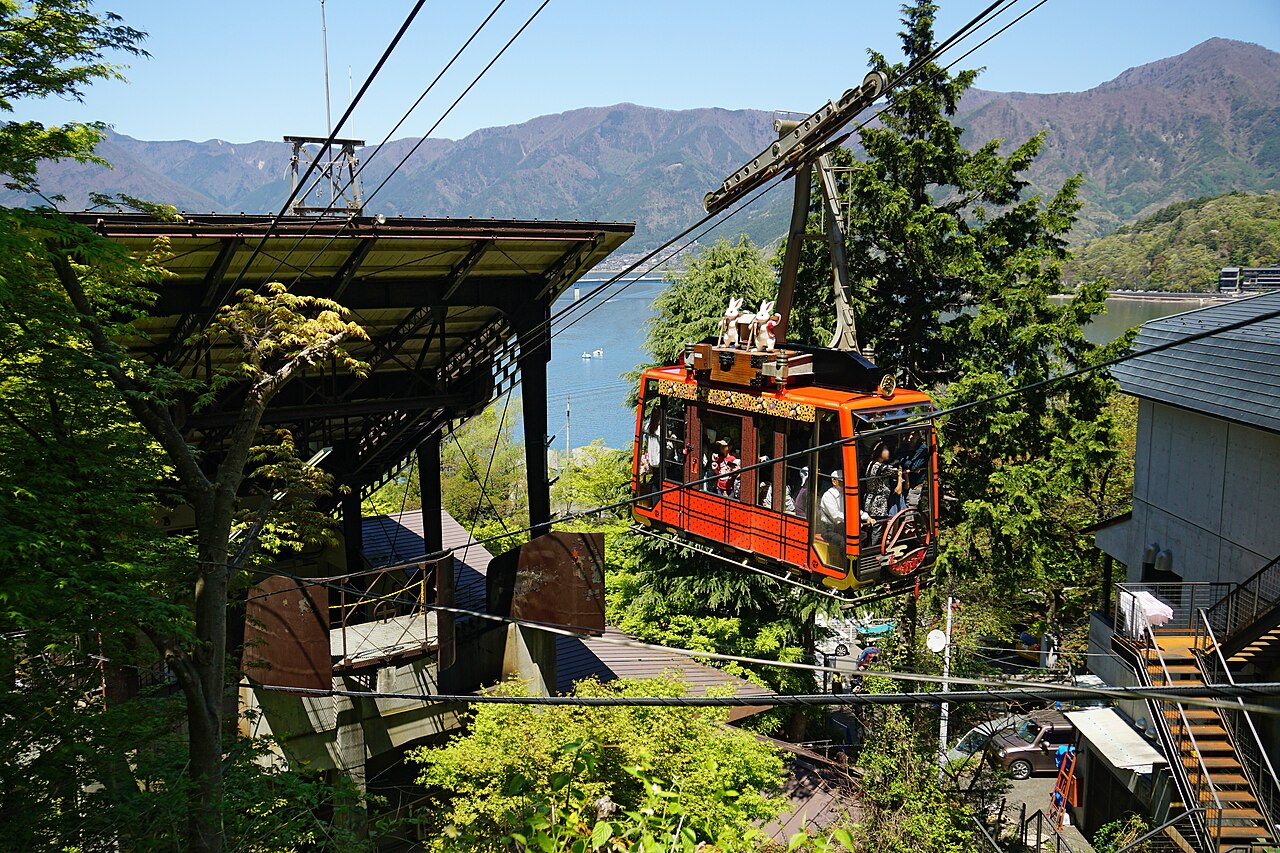
The Kachikachiyama Ropeway carries you from the lakeside up to Tenjozan Park (Mount Tenjo Park) on the hill above the lake. The little cars rise through the trees with Lake Kawaguchi spreading out behind them, and the fare table below covers both round-trip and one-way tickets, with a reduced rate for children.
| Ticket | Fare |
|---|---|
| Adult, round trip | 1,000 yen |
| Child, round trip | 500 yen |
| Adult, one way | 600 yen |
| Child, one way | 300 yen |
If you would rather not juggle tickets and timetables yourself, day tours of Kawaguchiko are another way to see the lake in a single day from Tokyo; what each one includes varies from operator to operator, so read the itinerary carefully before you choose and weigh it against the fares set out above.
The Itchiku Kubota Art Museum
The Itchiku Kubota Art Museum is a museum devoted to the craft of textile dyeing, and it is the stop in this guide that most rewards checking the clock. Its opening hours shift with the season, so the table below gives both patterns; in either case the last admission comes half an hour before closing time.
| Period | Hours | Last admission |
|---|---|---|
| April to November | 10:00 to 17:00 | 16:30 |
| December to March | 10:00 to 16:30 | 16:00 |
In practice that means the museum sits better before the ropeway or the shrine than after them, especially from December to March, when the last admission arrives well before the end of the afternoon. Give it the late morning, and keep the outdoor stops for whatever daylight remains.
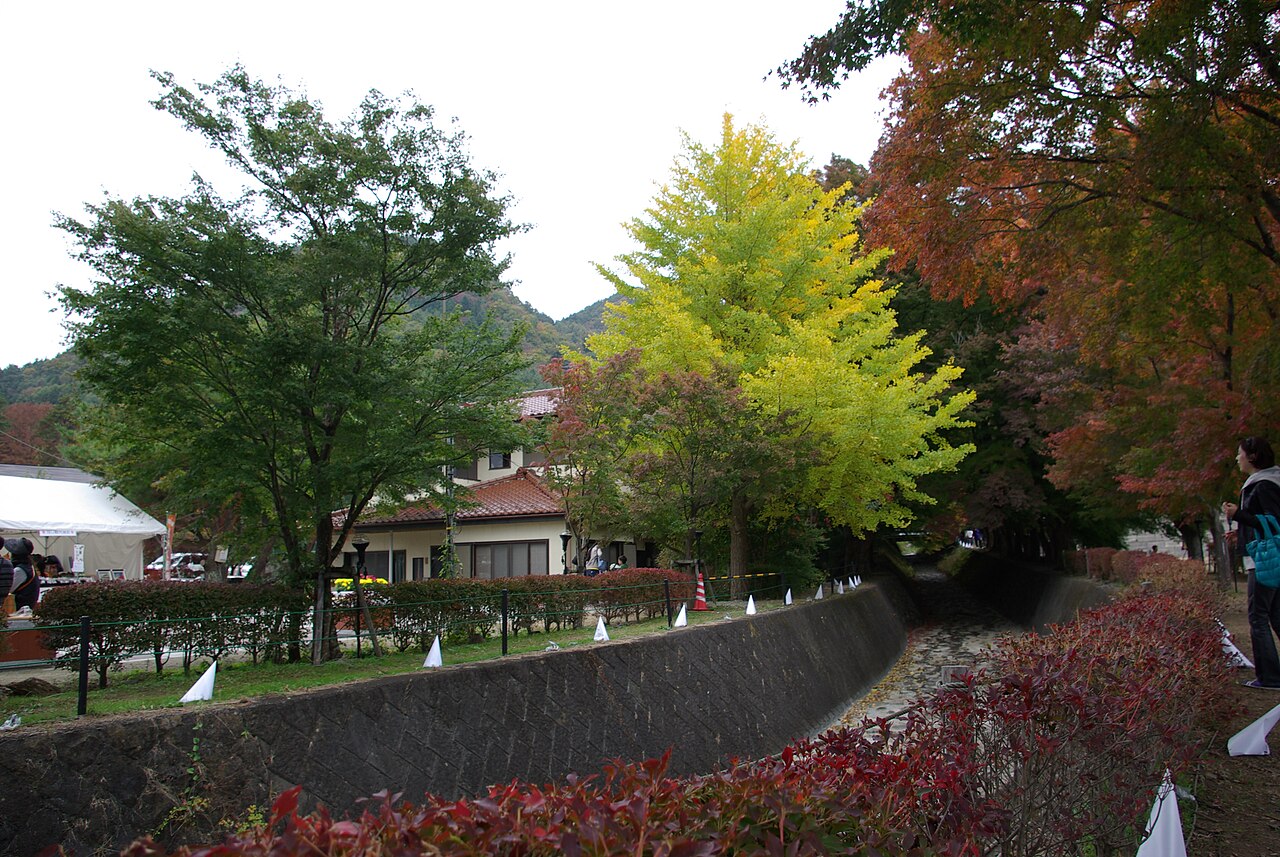
Kawaguchi Asama Shrine and a Quiet Fuji Viewpoint
Kawaguchi Asama Shrine was founded in eight sixty-five, in the Heian period, after the great Jogan eruption of Mount Fuji, to calm the mountain and protect the realm. It ranks as a myojin taisha, one of the great shrines of the ancient Engishiki register, and its main hall follows the ikkensha nagare-zukuri style, a single-bay form of shrine architecture.
The grounds hold the Nanahon-sugi, seven huge cedars; two lean together as the married-couple cedars of Izanagi and Izanami, a symbol of marital harmony. The worship hall's plaque is said to carry calligraphy by Emperor Daigo. An inner shrine, Haha no Shirataki, offers ascetic practice beneath a cascade, and on the mountain side a torii marks the Fuji viewpoint.
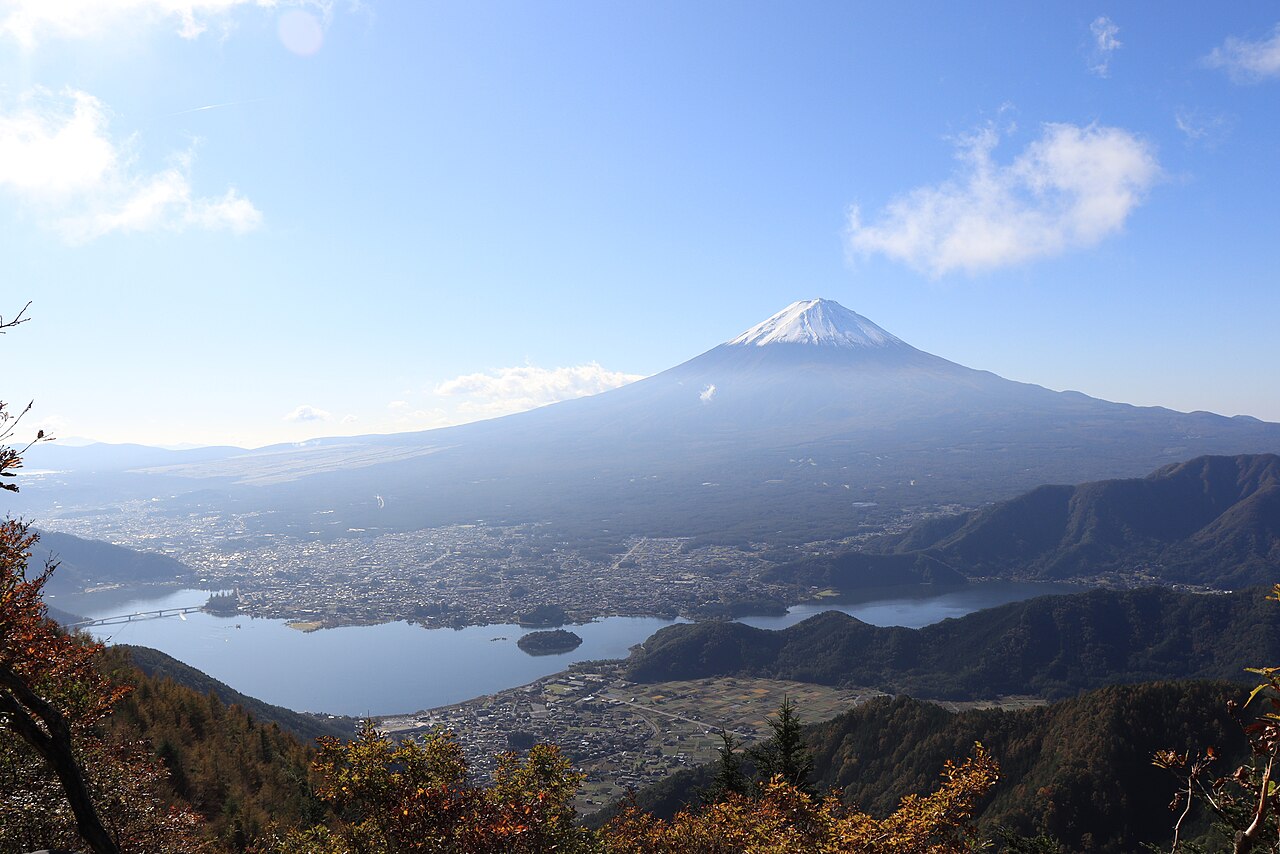
The viewpoint sits on high ground overlooking Lake Kawaguchi. The torii frames Mount Fuji above and the lake below; because it stands apart from the mountain the shrine venerates, few visitors come and it stays quiet. Early morning and dusk are said to be especially striking, and places to stay near Lake Kawaguchi make an early start simple.