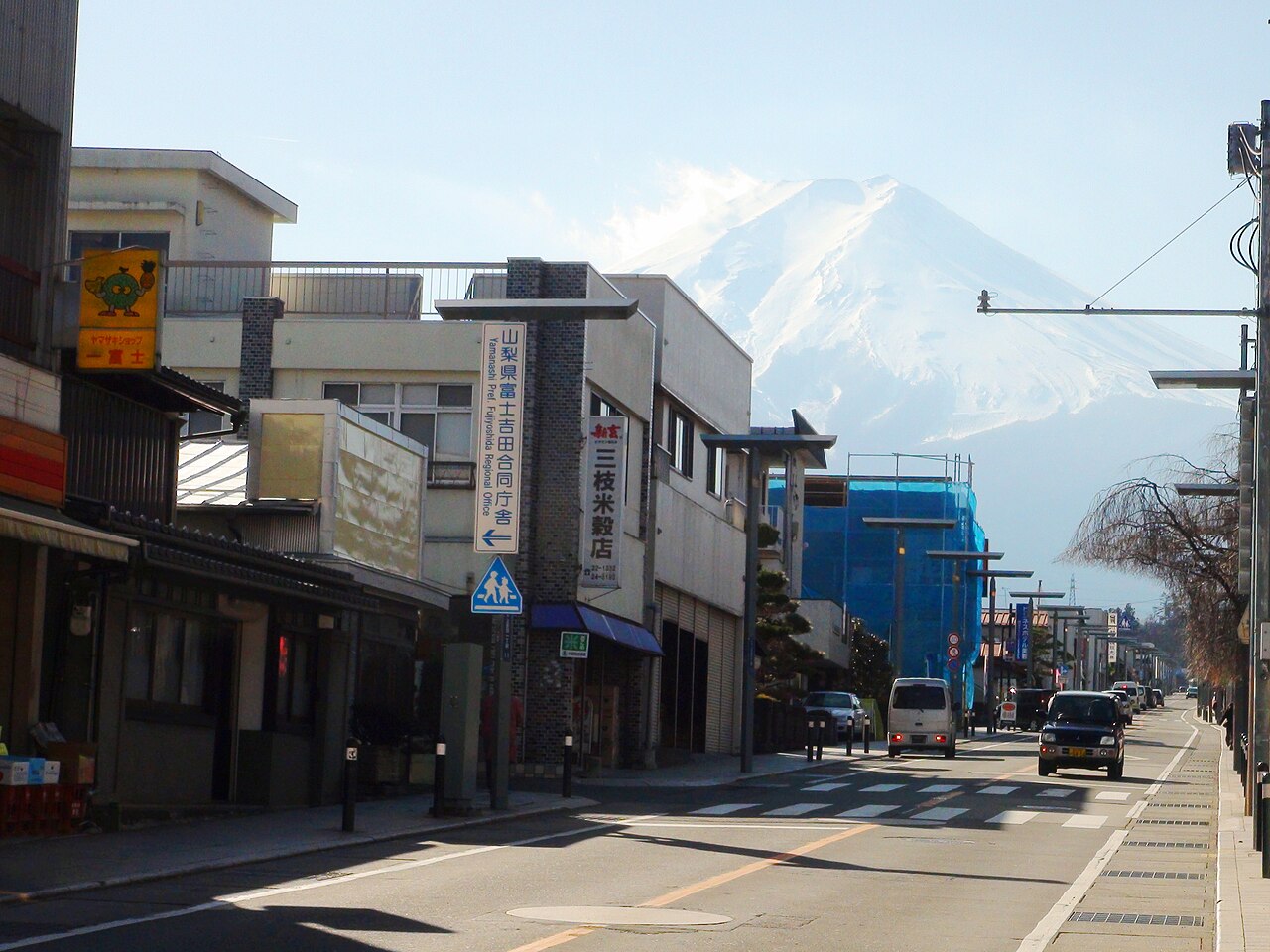
Fujiyoshida grew up around the Oshi, hosts who took worshippers of Mt. Fuji into their own homes, served their meals and prayed on their behalf. Walk Honcho-dori in Shimoyoshida and the mountain appears large at the end of the street among shopfront signs, lanterns and tangled electric wires. The town's firm Yoshida udon is said to go back to its weaving era, and at the edge of town an approach under thick-trunked cedars and stone lanterns leads toward Kitaguchi Hongu Fuji Sengen Shrine.
Oshi Houses and the Old Pilgrim Lodging Town
The Oshi town begins with the houses: an Oshi took worshippers of Mt. Fuji into the family home as lodgers, fed them and prayed on their behalf, and from the Edo to the Meiji periods such houses stood in a row here. At the former Togawa residence the main building dates from the Edo period, and items from its days as a pilgrim lodge remain where they were.
The house sits back from the main street and is reached along a narrow approach path, and beyond the inner gate a small stream for purification rites still flows with a sound.
A rest area in the Oshi town keeps a diorama of the late Edo townscape, putting the house back into its row. KONOHANA, a cafe in a restored Oshi residence, keeps traces of that history in a Japanese-modern setting. The Oshi town's own cafe lists mitarashi dango and meisui warabi mochi alongside coffee. See the house first, pause at the stream, then sit down to the dango.
Honcho-dori, Old Shops and Mt. Fuji at the End of the Street
Honcho-dori runs through the centre of Fujiyoshida toward Mt. Fuji, and the mountain shows large at the far end among shopfront signs, lanterns and tangled electric wires. At one intersection a curve mirror catches Mt. Fuji and a person in the same frame, and because the street is lined with shops and homes, visitors are asked to take their photos quietly.
A confectionery shop keeps the old signboard from its days as a sake shop, with Showa-style lettering, so the earlier trade is still readable. KURA HOUSE joins two storehouses built about eighty years ago to a renovated old private house.
The observation deck of the Fujisan Radar Dome Hall gives a close view of Mt. Fuji rising among the trees, and two telescopes on the rooftop of the Fujisan Museum take in Mt. Fuji and the town. Onishi Nikuten sells Mt. Fuji-shaped croquettes to eat freshly fried on the spot. Walk the street first, then go up to the deck: the view at street level explains what the higher one adds.
Retro Lanes, Yakitori Skewers and Hand-Dripped Coffee
The retro lanes behind Honcho-dori hold several dozen shops: izakaya, yakitori shops, jazz bars, kappo restaurants and snack bars. Lantern light and old-style signboards remain as part of a Showa-retro townscape, and the lanterns of the yakitori shops stand out among them.
At Bindo the skewers are chicken, vegetables and seafood, eaten with plenty of the proprietress's spicy miso. Yakitori here is mainly salt plus spicy miso, the taste differs from shop to shop, and the shops are close enough to hop between.
FUUTO COFFEE AND BAKE SHOP serves homemade dorayaki and lemon cake, with the coffee hand-dripped one cup at a time. A market once drew merchants from across the country to a nearby quarter, and at night they went out into this same district, where lantern light still remains. Take salt at the first shop and spicy miso at the second, since the seasoning changes between them. If the lantern light, old signboards and shop-to-shop variety make one visit feel short, look at places to stay in Fujiyoshida before planning a second.
Kitaguchi Hongu Fuji Sengen Shrine and Its Cedar Approach
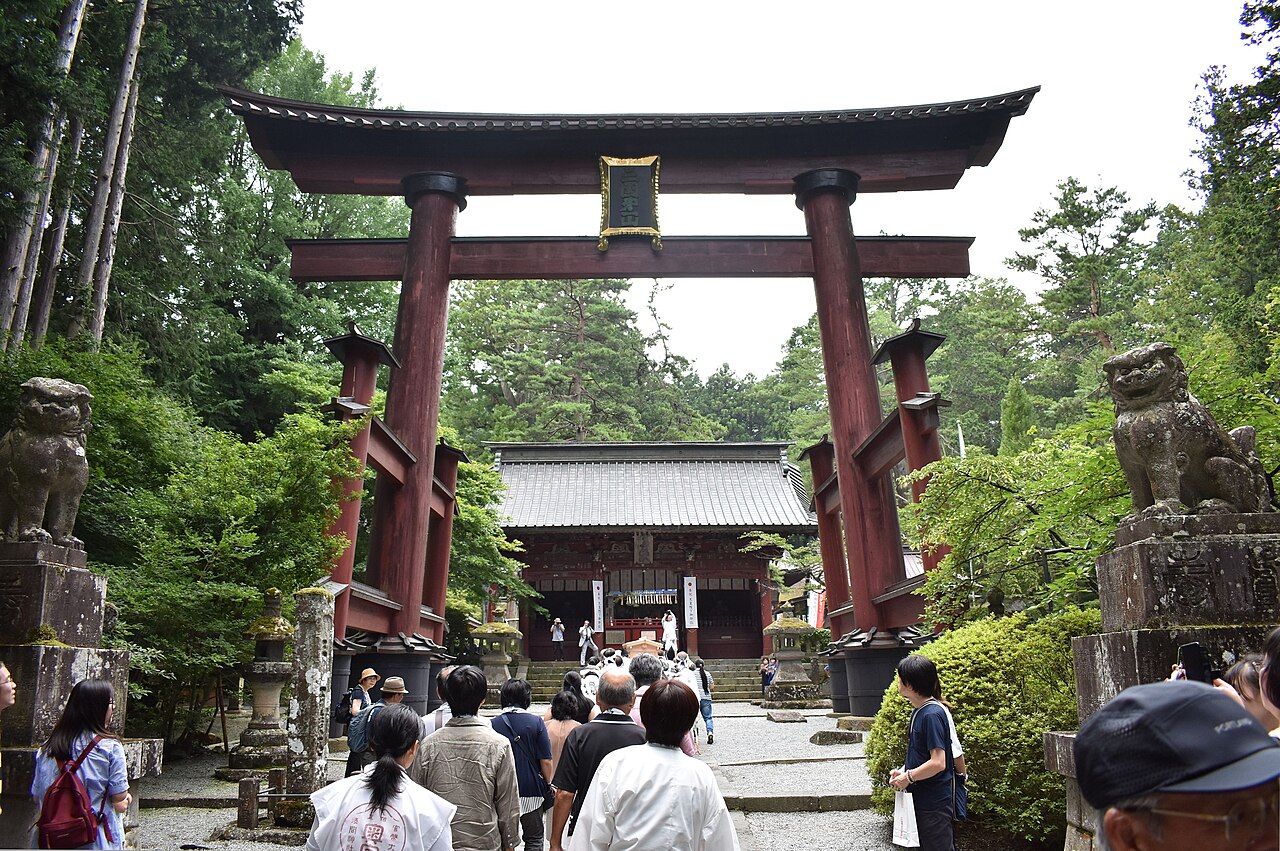
The shrine's approach runs under a cedar forest of thick trunks, with stone lanterns on both sides of the path, and leads to the great torii. Before worship, visitors wash their hands at the temizuya, where cold Mt. Fuji snowmelt flows from a dragon's mouth.
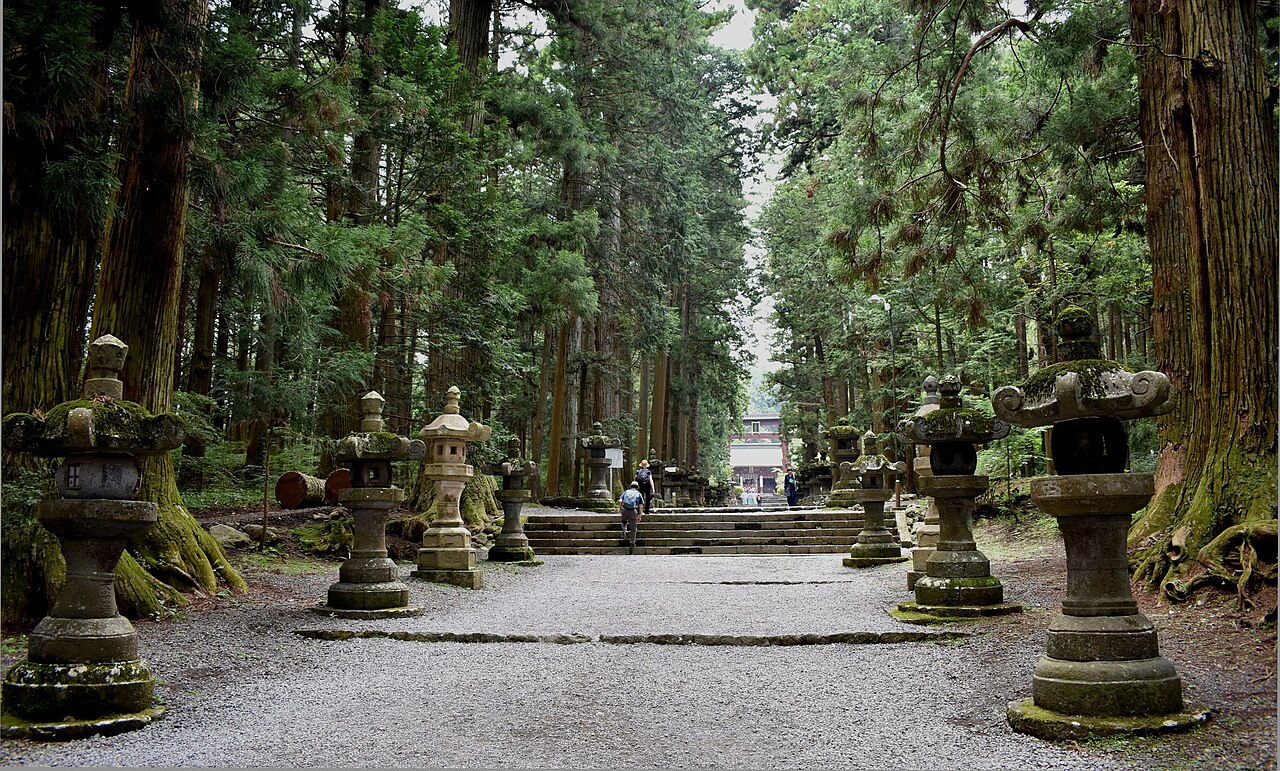
On both sides of the worship hall stand two sacred trees about one thousand years old, and eleven buildings of the shrine are designated Important Cultural Properties, so the buildings you pass are protected heritage, not a backdrop to the trees. Seven shrines at the foot of Mt. Fuji hand out a small token as proof of worship, and those who gather all seven receive a pilgrimage completion certificate.
In Shimoyoshida, a small Sengen shrine has a handwashing pavilion whose dragon sits on a stone shaped like Mt. Fuji, so on a clear day two Mt. Fujis, one large and one small, can be photographed together. Take the approach first, then the water, then the hall and its trees: the cedars and lanterns set the scale for what follows.
Yoshida Udon, Suridane and Horse Meat
Yoshida udon asks you to chew: the noodles are firm and chewy, and that firmness is said to date back to the weaving era, when men kneaded the dough with full strength in place of the women at the looms. Fujiyoshida kept many horses to carry loads, so horse meat was cheap and eating it is said to have taken root, which is why simmered horse meat tops a standard bowl.
That bowl comes in a rich broth of soy sauce and miso, topped with boiled cabbage and sweet-savory horse meat, usually as kake udon or tsuke udon. Sakurai udon serves square-edged, slightly thin noodles with a springy, dense chew.
Suridane, the table condiment, comes powdered on sansho pepper or shichimi or semi-liquid on chili oil, and diners add it little by little to change the flavor. Shops differ in noodle firmness, broth, toppings and suridane, so order the standard bowl plain at the first and change the suridane at the second.
Weaving Workshops, Dyeing and Fuji Groundwater
Fujiyoshida's weaving workshops let visitors make an original stole on an automatic loom, or try hand weaving and see a Swedish hand loom. Dyeing is on offer too: plant dyeing with Japanese madder, and tie-dyeing, for which you may bring your own T-shirt.
The shop at the Fujisan Museum sells woven neckties and towels alongside Mt. Fuji souvenirs, weaving being the traditional industry of Fujiyoshida. Smaller sessions turn kinran-donsu fabric into a goshuincho stamp book or its scraps into a glass coaster, with covered buttons and shibori dyeing too.
At Michi-no-Eki Fujiyoshida the water-drawing spot has five taps, the water comes just by turning the tap, and it is classified as ultra-soft. Kanayama Falls on the Katsura River carries Mt. Fuji underground water from Lake Yamanaka and Oshino Hakkai, coming down as two falls, and in autumn the iroha maples colour around them. Try a loom or a dye bath first, then fill a bottle on the way out, so cloth and water both go home with you.
Getting to Fujiyoshida
| Leg | How | Time and estimate |
|---|---|---|
| Shinjuku to Fujisan Station | Fujikyu highway bus | Adults from 2,200 yen. Children from 1,100 yen |
| Fujisan Station to the former Togawa residence | On foot | About 10 minutes |
| The station in Shimoyoshida to a shop on Honcho-dori | On foot | About 5 minutes |
| The station in Shimoyoshida to FabCafe Fuji | On foot | About 7 minutes |
| Honcho 2-chome intersection to a small Sengen shrine | On foot | About 5 minutes |
| Shimoyoshida area model course | On foot | About 2 hours |
New to rural buses and one-man trains? See how to ride them, step by step.
Hours and Fees
| Place | What | Hours or fee |
|---|---|---|
| Former Togawa residence | Hours and closing days | 9:30 to 17:00, with entry until 16:30 at the latest. Closed Tuesdays (the next day if Tuesday is a national holiday) and over the year-end and New Year period |
| Former Togawa residence | Admission | 100 yen for adults. 50 yen for elementary, junior high and high school students |
| Rest area in the Oshi town | Hours and closing days | 10:00 to 16:00; closed Tuesdays |
| Cafe in the Oshi town | Menu prices | Coffee 300 yen. Mitarashi dango 150 yen. Meisui warabi mochi 350 yen |
| Yoshida udon | Typical bowl | Around 500 yen |
Where to stay
Places to stay near Fujiyoshida, Yamanashi, Japan →
Disclosure: This post may contain affiliate links. If you book through them, we may earn a commission at no extra cost to you.